
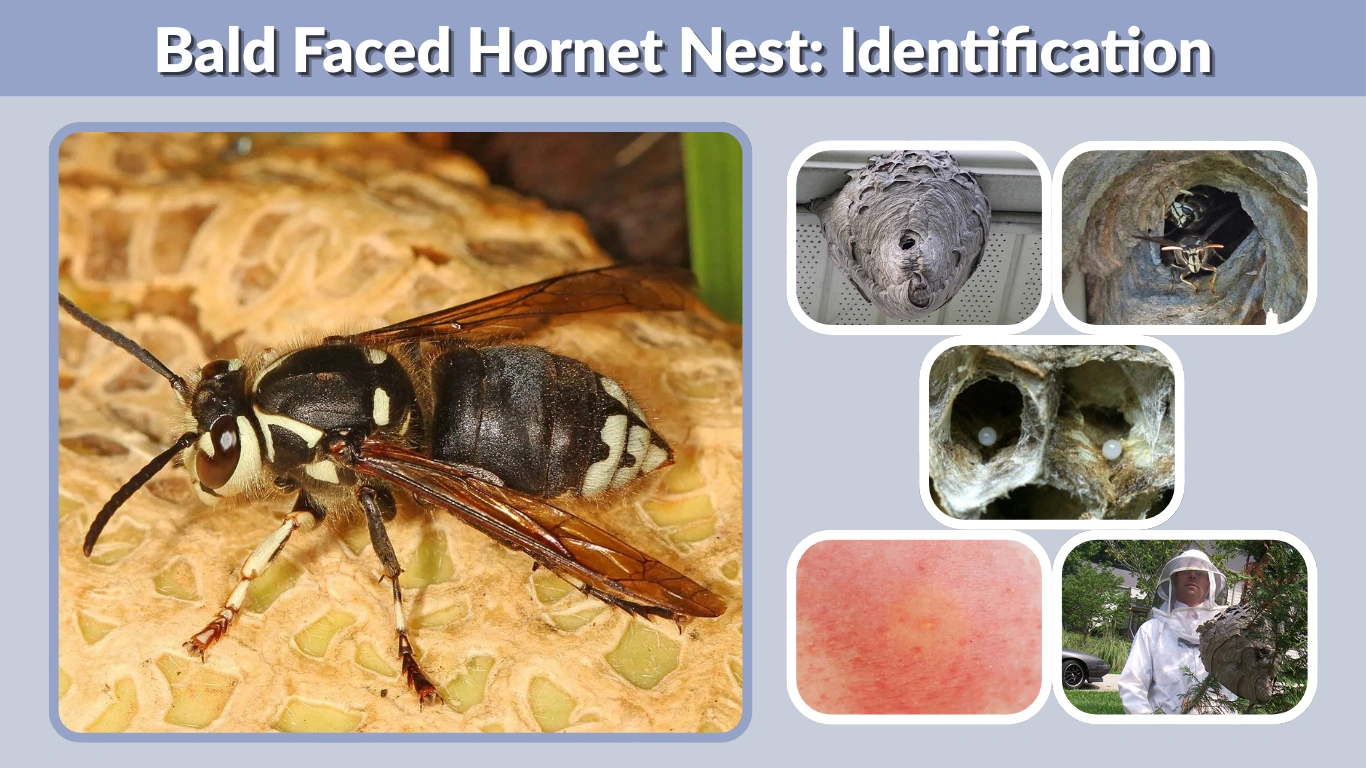
A bald faced hornet nest is one of the most recognizable insect nests found in North America. These large, gray, paper-like nests often hang from tree branches, roof edges, or shrubs and can house hundreds of hornets. Despite their name, bald-faced hornets are not true hornets but a type of aerial yellowjacket wasp. Because these insects aggressively defend their nests, many homeowners want to learn how to identify them, where they are built, and how to deal with them safely.
What Is a Bald Faced Hornet?
The bald-faced hornet (Dolichovespula maculata) is a large black-and-white wasp known for its distinctive markings and aggressive nest defense. Although it is commonly called a hornet, it is actually a species of aerial yellowjacket.
These insects live in social colonies and build large paper nests that can become very noticeable during the summer months.
Scientific Classification
Like other wasps and hornets, the bald-faced hornet belongs to the Vespidae family. This family includes many social wasps that live in organized colonies.
- Kingdom: Animalia
- Phylum: Arthropoda
- Class: Insecta
- Order: Hymenoptera
- Family: Vespidae
- Genus: Dolichovespula
- Species: Dolichovespula maculata
Because they are social insects, bald-faced hornets work together to build nests, gather food, and protect their colony.
Why It’s Called a “Hornet”
The name “bald-faced hornet” can be misleading. True hornets belong to the genus Vespa, but bald-faced hornets belong to the genus Dolichovespula.
They earned the name because of their large size, hornet-like appearance, and their extremely defensive behavior around their nests.
Physical Characteristics
Bald-faced hornets are easy to recognize because of their bold black-and-white coloration.
Key features include:
- Mostly black body
- White or ivory markings on the face and abdomen
- Distinct white “bald” face
- Body length between 12 and 20 millimeters
Their bright white facial markings are what give them their “bald-faced” name.
What Does a Bald Faced Hornet Nest Look Like?
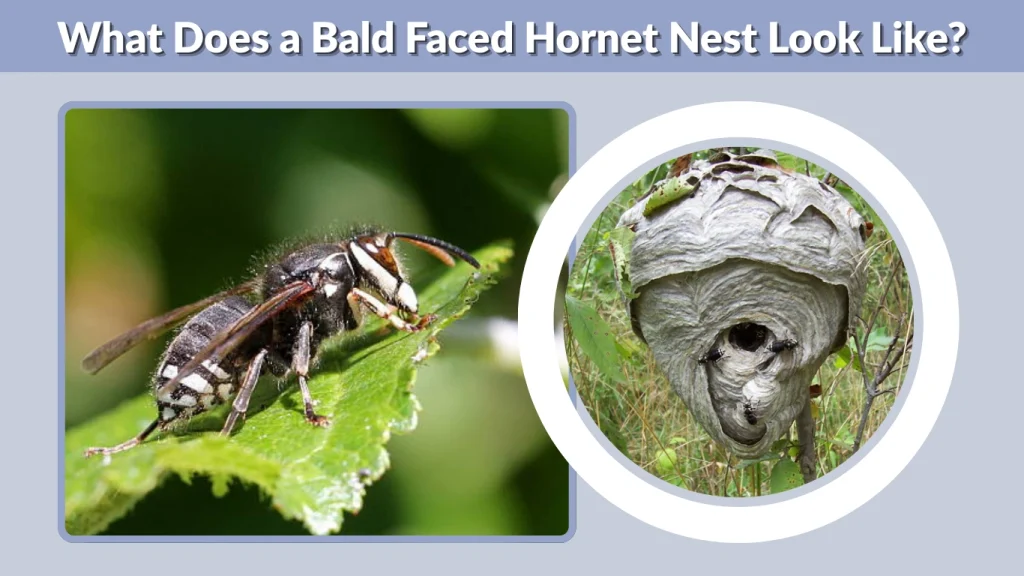
One of the easiest ways to identify bald-faced hornets is by looking at their nests. These nests are very different from the open comb nests built by paper wasps.
Nest Appearance
A bald faced hornet nest is typically gray and football-shaped. The nest has a layered paper texture that looks similar to weathered cardboard.
The nest is made from chewed wood fibers mixed with saliva. Worker hornets scrape wood from fences, trees, and buildings, then chew the fibers into a pulp that hardens into paper-like material.
This process allows the hornets to construct large but lightweight nests.
Unique Structural Features
Bald-faced hornet nests have several unique structural characteristics.
First, the nest is fully enclosed in a protective outer layer called an envelope. This envelope shields the colony from weather and predators.
Second, the nest contains several horizontal comb layers inside. These combs hold the developing larvae and pupae.
Finally, the nest usually has a single entrance hole near the bottom. Worker hornets guard this entrance and monitor any movement near the nest.
Bald Faced Hornet Nest Size
The size of a bald-faced hornet nest can grow dramatically during the summer.
At the beginning of the season, the nest may be only the size of a golf ball or small orange. As the colony grows, workers continue expanding the structure.
By late summer, a mature nest may reach 14–24 inches in height and about 10–12 inches wide. At this stage, the nest can house hundreds of worker hornets.
Because of their large size and hanging shape, mature nests are often very visible in trees or on buildings.
Where Bald Faced Hornets Build Their Nests
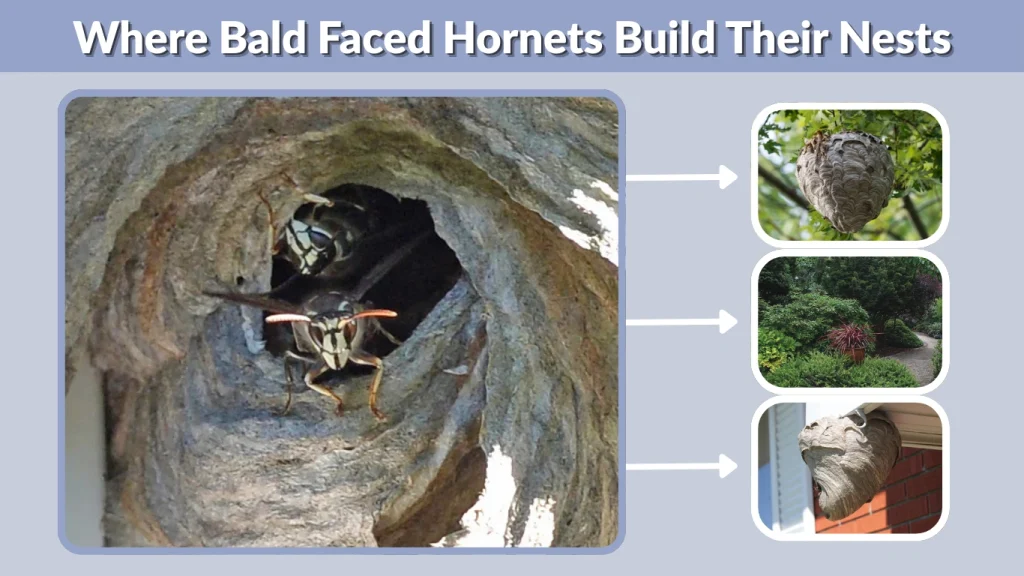
Bald-faced hornets prefer to build nests in locations that provide protection and good visibility. Unlike many other wasps that nest underground, these hornets usually construct their nests above ground.
Common Nest Locations
You may find bald-faced hornet nests in a variety of places, including:
- Tree branches
- Large shrubs or bushes
- Roof eaves
- Sheds and barns
- Utility poles
Because their nests hang in open areas, they are often easier to spot than underground nests.
Preferred Habitat
Bald-faced hornets are commonly found in forest edges, suburban yards, and parks. These environments provide plenty of insects for food and suitable locations for nest construction.
They are particularly attracted to areas with trees and wooden structures, since these materials provide the fibers needed to build their nests.
Why They Choose Elevated Locations
Elevated nest locations provide several advantages for the colony.
First, being above ground protects the nest from many predators such as rodents or ground-dwelling animals.
Second, height allows worker hornets to easily monitor the surrounding area and quickly detect potential threats.
Finally, elevated nests make it easier for workers to launch defensive attacks if the colony is disturbed.
Bald Faced Hornet Nest Life Cycle
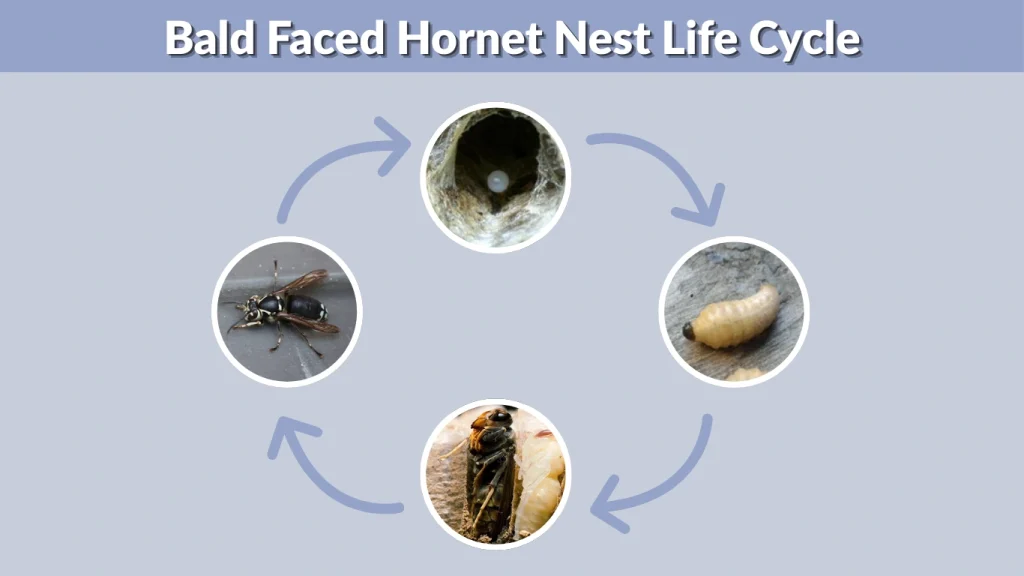
The life cycle of a bald-faced hornet colony follows a seasonal pattern. Each year, a new colony is started by a single queen.
Queen Emergence in Spring
During winter, fertilized queens survive by hiding in protected locations such as tree bark, logs, or leaf litter. When temperatures warm in spring, the queen emerges and begins searching for a suitable nesting site.
Once she finds a location, the queen begins building the first small nest by chewing wood fibers and forming paper cells.
She then lays the first batch of eggs inside these cells.
Worker Development
The eggs hatch into larvae, which the queen feeds with captured insects. After several weeks, the larvae develop into adult worker hornets.
These workers take over most colony duties, including gathering food, building the nest, and caring for the next generation of larvae.
As more workers emerge, the colony grows rapidly.
Colony Expansion in Summer
During the summer months, the bald-faced hornet colony expands quickly. The queen continues laying eggs while the workers focus on hunting insects and enlarging the nest.
Workers collect wood fibers to expand the outer paper envelope and build additional comb layers inside the nest. By mid-to-late summer, the colony may contain 400 to 700 worker hornets. At this stage, the nest becomes much larger and hornet activity around it increases.
Large colonies are also much more defensive, especially when the nest is approached too closely.
Reproductive Stage in Fall
As autumn approaches, the colony begins producing reproductive hornets rather than worker hornets. These include new queens and male hornets.
The new queens leave the nest to mate with males. After mating, they search for sheltered places to survive the winter. Meanwhile, the original queen, workers, and males gradually die as temperatures drop.
By the time winter arrives, the nest is usually empty and inactive.
Bald Faced Hornet Nest Behavior and Defense
Bald-faced hornets are known for their strong defensive behavior. While they usually ignore people who stay far from the nest, they react quickly if they sense a threat.
Highly Defensive Colonies
Worker hornets are responsible for protecting the nest. When a potential threat approaches, guard hornets may fly out to investigate.
If the colony feels threatened, several hornets may attack at once. Unlike honeybees, bald-faced hornets can sting repeatedly because their stingers do not detach after a sting.
This ability makes them effective defenders of their colony.
Warning Signs of an Active Nest
Before approaching any suspected hornet nest, it is important to recognize signs that the nest is active.
Common warning signs include:
- Frequent hornet traffic flying in and out of the nest
- A loud buzzing sound around the nest area
- Guard hornets hovering near the entrance
If these signs are present, it is best to keep a safe distance.
How Far They Will Chase
When defending their nest, bald-faced hornets may chase intruders for 20 to 30 feet or more. In some cases, they may pursue threats even farther before returning to the nest.
Because of this defensive behavior, disturbing a nest can quickly lead to multiple stings.
Are Bald Faced Hornet Nests Dangerous?
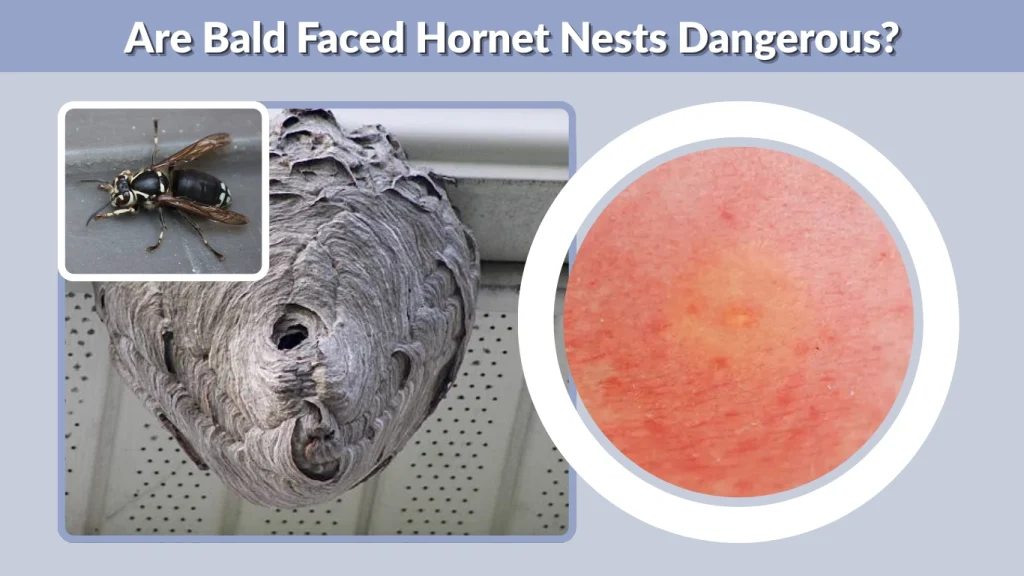
Bald-faced hornets can be dangerous if their nest is disturbed, but they rarely attack people without a reason.
Sting Characteristics
Their sting is painful and can cause swelling, redness, and irritation. Since they can sting multiple times, a person may receive several stings if they accidentally disturb a nest.
Risk to Humans and Pets
Most healthy adults recover from hornet stings without serious complications. However, multiple stings or allergic reactions can cause serious health problems.
Children and pets are especially vulnerable because they may unknowingly approach a nest.
When They Become Aggressive
Bald-faced hornets are most aggressive during late summer and early fall, when the colony is at its largest size. At this time, hundreds of workers are actively defending the nest.
For this reason, it is best to avoid any nests discovered during these months.
Bald Faced Hornet Nest vs Other Wasp Nests
Many people confuse bald-faced hornet nests with other wasp nests. However, several features make them easy to identify.
Bald Faced Hornet Nest vs Paper Wasp Nest
Paper wasps build small nests with exposed combs that look like upside-down umbrellas. These nests are open and do not have a protective outer layer.
In contrast, bald-faced hornets build fully enclosed nests with a thick paper envelope surrounding the combs.
Bald Faced Hornet Nest vs Yellowjacket Nest
Yellowjackets typically build nests underground in abandoned rodent burrows or soil cavities.
Bald-faced hornets, however, prefer elevated locations such as trees, shrubs, and building structures.
Bald Faced Hornet Nest vs True Hornet Nest
True hornets, such as the European hornet, may also build paper nests. However, their nests are usually located inside hollow trees or wall cavities rather than hanging openly from branches.
Bald Faced Hornet Nest Removal
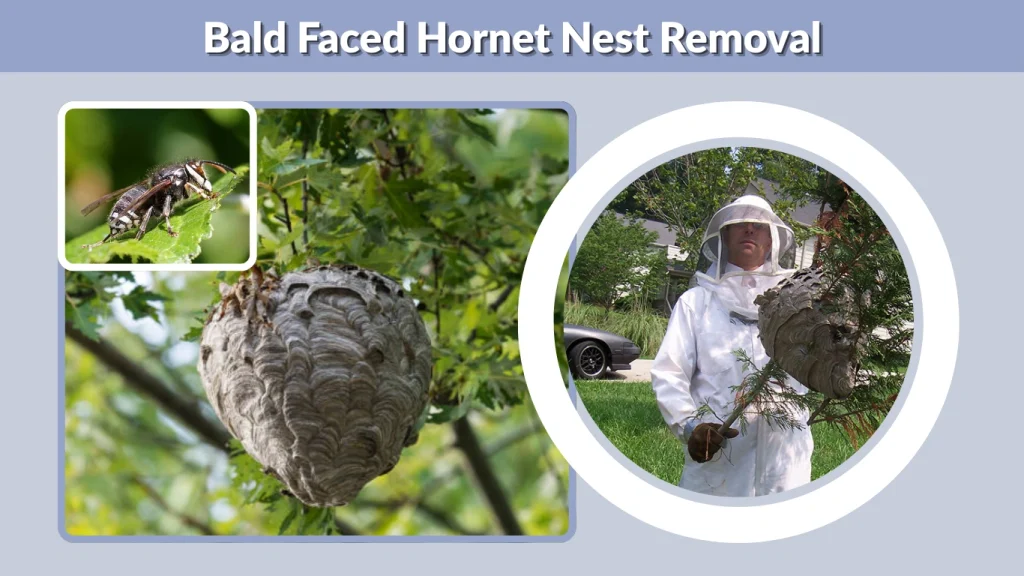
Removing a bald-faced hornet nest can be dangerous and should be done with caution.
When Removal Is Necessary
Nest removal may be necessary if the nest is located:
- Near doorways or walkways
- Close to windows or outdoor living spaces
- In areas frequently used by children or pets
If the nest is far from human activity, it is often safer to leave it undisturbed.
Professional Pest Control
Hiring professional pest control is usually the safest option. Pest control specialists have protective equipment and specialized tools that allow them to remove nests safely.
Professionals often perform removal at night when hornets are less active.
DIY Removal Risks
Attempting to remove a nest without proper equipment can result in multiple stings. Because bald-faced hornets defend their colony aggressively, DIY removal is generally not recommended.
What Happens to Bald Faced Hornet Nests in Winter?
One interesting fact about bald-faced hornet nests is that they do not last forever.
Colony Dies Off
When cold weather arrives, most members of the colony die. Only newly fertilized queens survive by hiding in protected locations during winter.
Old Nests Are Not Reused
The following spring, surviving queens build completely new nests rather than returning to old ones.
Empty Nests
Once winter arrives and the colony is gone, the old nest becomes harmless. These empty nests sometimes remain attached to trees or buildings throughout the winter months.
Interesting Facts About Bald Faced Hornet Nests
Bald-faced hornet nests are remarkable structures with several fascinating characteristics.
Nests Can Hold Hundreds of Hornets
A fully developed nest can contain hundreds of workers, making it one of the largest wasp colonies found in many parts of North America.
Built from Recycled Wood Fiber
Hornets scrape small fibers from wood surfaces such as fences and tree bark. These fibers are mixed with saliva to form a strong paper material.
Nests Are Engineering Marvels
Despite being lightweight, hornet nests are surprisingly strong and well-designed. Their layered structure protects the colony from weather and predators.
Important Predators
Although they can be dangerous near their nests, bald-faced hornets also play an important ecological role. They help control pest insect populations by hunting flies, caterpillars, and other insects.
Conclusion
Bald-faced hornet nests are impressive structures built by highly organized insect colonies. These gray, football-shaped nests can grow quite large during the summer and may house hundreds of hornets. While the insects are beneficial predators that help control pests, their nests can pose a risk if disturbed. Understanding how to identify these nests, where they are commonly found, and how hornets behave around them can help people stay safe while appreciating the fascinating behavior of these remarkable insects.
