
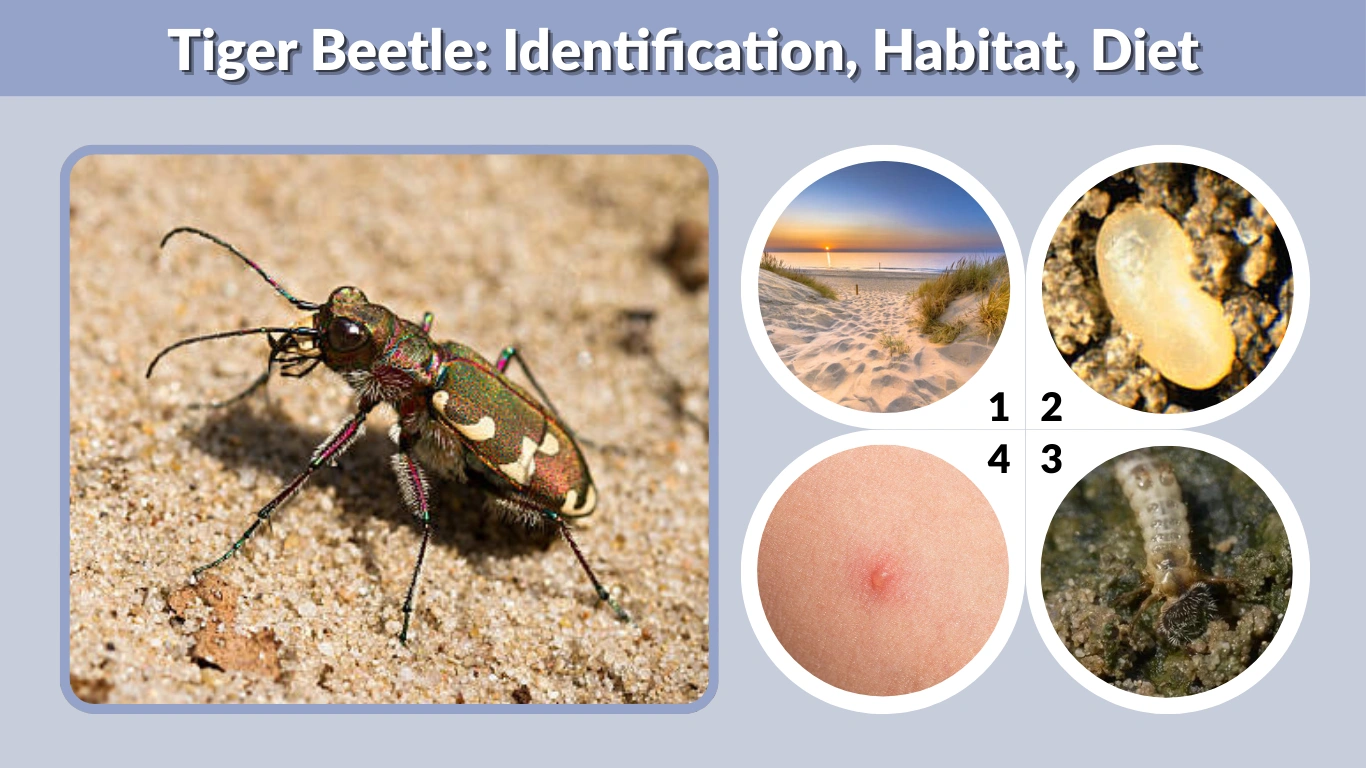
Tiger beetles are fast-moving predatory insects known for their striking colors, sharp mandibles, and incredible running speed. These beetles are often seen darting across sandy paths, riverbanks, and open trails while hunting smaller insects. Their aggressive hunting style and keen eyesight make them one of the most efficient insect predators in nature. Tiger beetles also play an important role in maintaining ecological balance by controlling pest populations. This guide explains their identification, habitat, diet, life cycle, and whether tiger beetles are dangerous to humans.
What Is a Tiger Beetle?
A tiger beetle is a predatory beetle belonging to the family Cicindelidae. These insects are well known for their speed, powerful jaws, and bright metallic colors. The name “tiger beetle” comes from their aggressive hunting behavior, which resembles that of larger predators like tigers.
Tiger beetles are considered some of the most active hunters among insects. They chase down prey quickly and capture it using their strong mandibles. Their large eyes provide excellent vision, helping them track moving insects while running at high speeds.
These beetles are commonly found in sunny, open habitats such as sandy paths, beaches, and forest trails. Because they rely on sight and speed for hunting, they prefer areas with plenty of sunlight and open ground.
Physical Characteristics
Tiger beetles have several distinctive features that make them easy to recognize.
Common characteristics include:
- Slender bodies
- Long legs built for running
- Large, bulging compound eyes
- Powerful curved mandibles
- Metallic or brightly colored wing covers
Most tiger beetles measure between 10 and 20 millimeters in length. Their bodies may appear green, blue, bronze, or brown, often with white or cream-colored markings on their wings.
The large eyes of tiger beetles allow them to detect movement quickly, which is essential for hunting prey.
Tiger Beetle Identification
Identifying a tiger beetle is relatively easy if you know what to look for. Unlike many other beetles, tiger beetles are extremely active and often run quickly across the ground.
Key identification clues include:
- Fast running behavior
- Bright metallic body colors
- Long legs and narrow body
- Large eyes that cover much of the head
- Prominent mandibles
They often stop suddenly while running, then continue moving again. This run-and-stop movement pattern is a typical hunting behavior of tiger beetles.
Tiger Beetle Speed
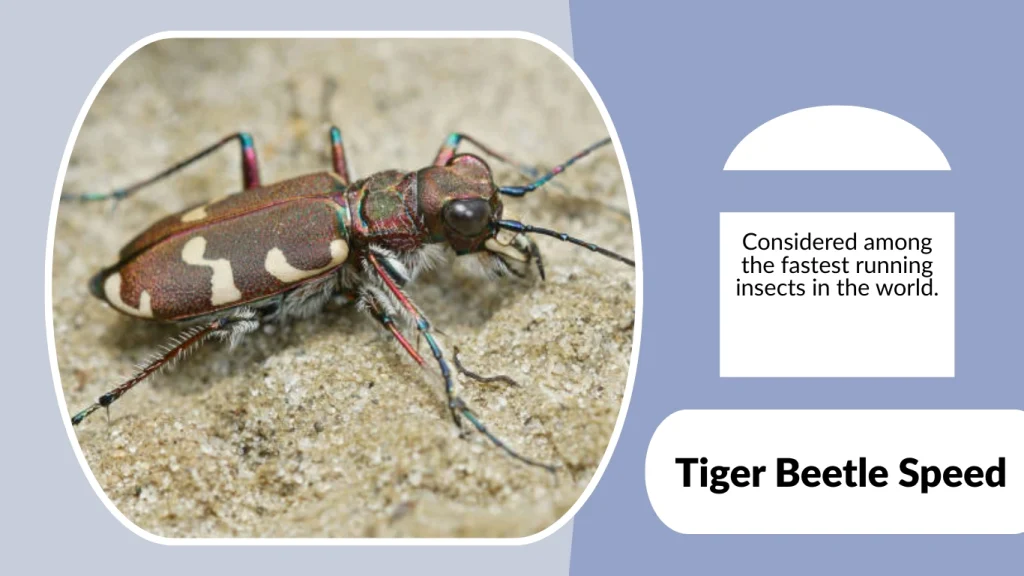
One of the most fascinating traits of tiger beetles is their incredible speed. Relative to their body size, tiger beetles are considered among the fastest running insects in the world.
Some species can run so fast that their eyes temporarily lose the ability to process visual information, forcing them to stop briefly before continuing the chase.
Why Tiger Beetles Are So Fast
Tiger beetles have several physical adaptations that help them move quickly.
These include:
- Long, powerful legs designed for sprinting
- Lightweight bodies
- Strong muscles for rapid movement
- Excellent vision for detecting prey
These features allow tiger beetles to chase and capture fast-moving insects on the ground.
How Tiger Beetles Hunt Using Speed
Tiger beetles are active hunters rather than ambush predators. They typically patrol open ground searching for prey.
Their hunting strategy involves:
- Spotting prey with their large eyes
- Sprinting rapidly toward the target
- Stopping briefly to refocus vision
- Capturing the prey with strong mandibles
This hunting technique makes tiger beetles extremely efficient predators in their environment.
Tiger Beetle Habitat
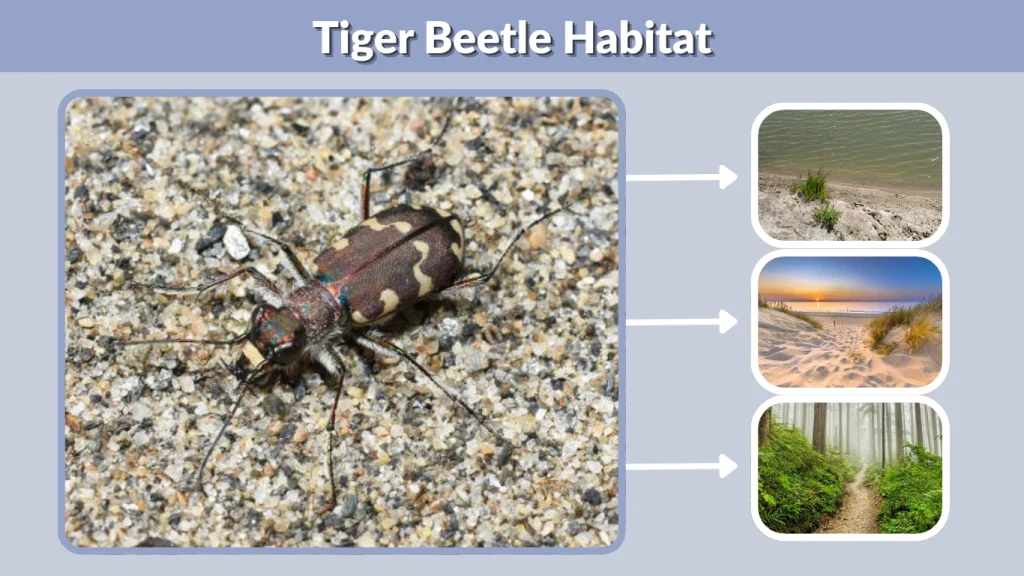
Tiger beetles live in many parts of the world, but they prefer environments where they can easily hunt and move quickly.
Where Tiger Beetles Live
Common habitats for tiger beetles include:
- Sandy riverbanks
- Coastal dunes
- Forest trails
- Open grasslands
- Desert areas
- Dirt paths and roadsides
These habitats provide the loose soil and open space tiger beetles need for hunting and reproduction.
Because they depend on warm temperatures for activity, tiger beetles are usually most active during sunny days.
Geographic Distribution
Tiger beetles are found across much of the world. There are more than 2,600 species known globally.
They occur in regions such as:
- North America
- South America
- Europe
- Asia
- Africa
- Australia
Different species have adapted to different climates, from deserts to tropical forests.
Environmental Conditions They Prefer
Tiger beetles typically thrive in areas that provide both hunting opportunities and suitable soil for their larvae.
They prefer environments with:
- Warm temperatures
- Open, sunny ground
- Loose sandy or dusty soil
- Low vegetation
These conditions allow both adult beetles and larvae to hunt effectively.
Tiger Beetle Diet
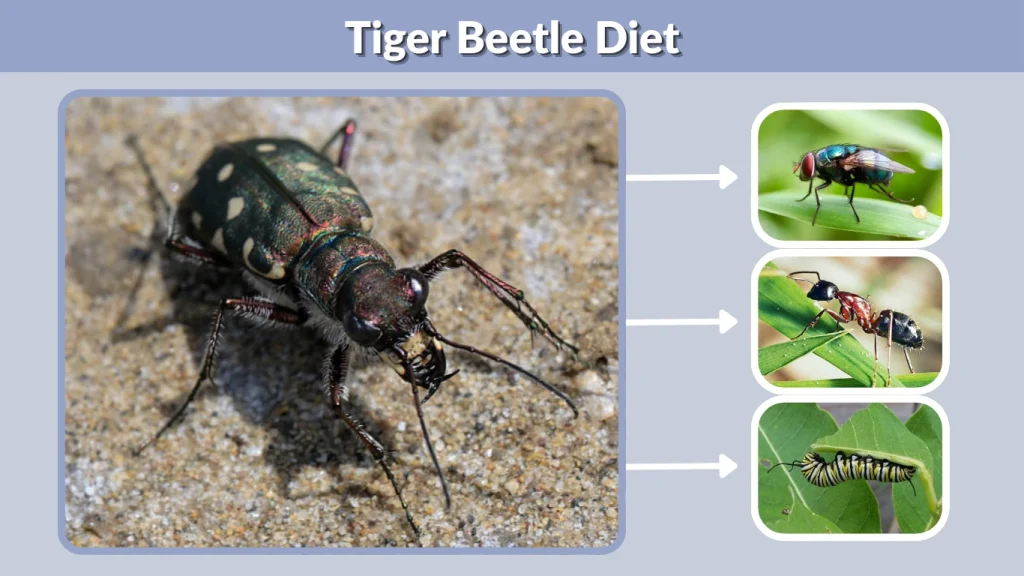
Tiger beetles are carnivorous insects, meaning they feed on other animals rather than plants. Their diet mainly consists of smaller insects and arthropods.
What Tiger Beetles Eat
Adult tiger beetles commonly prey on:
- Ants
- Small beetles
- Flies
- Spiders
- Caterpillars
- Other small insects
Because of their speed and strong jaws, tiger beetles can quickly capture prey that other insects might miss.
Their feeding behavior makes them beneficial predators, as they help control insect populations in natural ecosystems.
Hunting Behavior
Tiger beetles are highly visual hunters. Instead of waiting for prey to come close, they actively search for moving insects on the ground.
Their hunting process usually involves:
- Scanning the ground for movement
- Sprinting rapidly toward prey
- Grabbing prey with their mandibles
- Consuming the prey immediately
This aggressive hunting style is one reason they are compared to larger predators like tigers.
Tiger Beetle Life Cycle
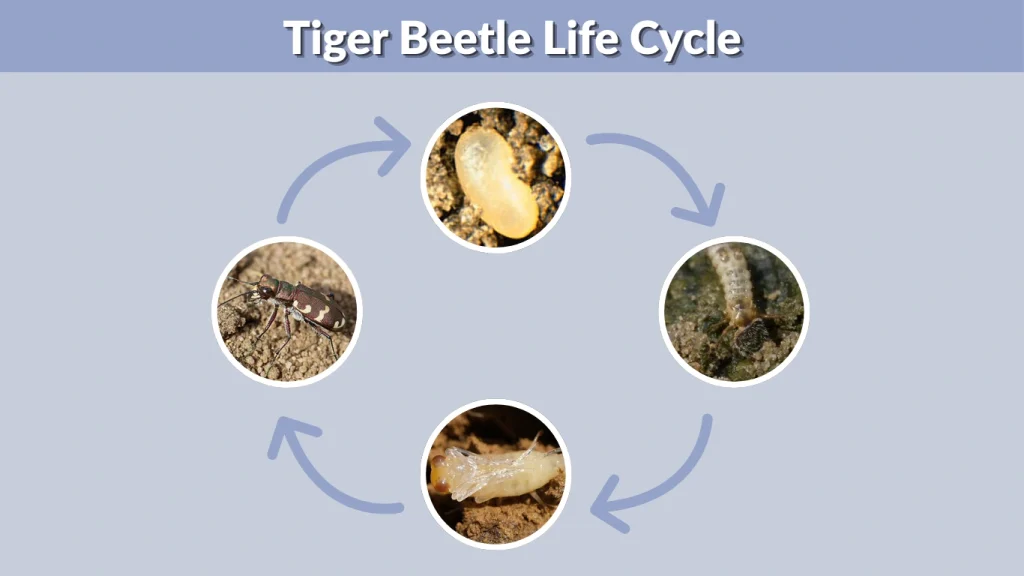
Like most beetles, tiger beetles develop through a process called complete metamorphosis. Their life cycle includes four stages:
- Egg
- Larva
- Pupa
- Adult
Each stage has unique behaviors and characteristics.
Egg Stage
Female tiger beetles lay their eggs individually in the soil. The eggs are usually placed in sandy or loose ground where the larvae can easily dig burrows after hatching.
After a short incubation period, the eggs hatch into larvae that begin their underground life.
Tiger Beetle Larvae
Tiger beetle larvae live in vertical burrows in the soil. These burrows serve as both shelter and hunting sites.
The larva waits near the entrance of its burrow for insects to pass by. When prey approaches, the larva quickly grabs it and pulls it into the burrow to eat.
This ambush hunting strategy allows the larva to capture prey without leaving its protective tunnel.
Unique Adaptations of Tiger Beetle Larvae
Tiger beetle larvae have several fascinating adaptations that help them survive underground and capture prey efficiently.
One of their most interesting features is the presence of hook-like structures on their backs. These hooks help anchor the larva inside its burrow when struggling prey tries to escape. By bracing itself against the burrow walls, the larva can hold onto prey without being pulled out.
Other important adaptations include:
- A large, flat head used to block the burrow entrance
- Strong mandibles for gripping prey
- Sensitive body hairs that detect vibrations in the soil
These features allow the larva to act as an effective ambush predator, even while remaining mostly hidden underground.
Pupa Stage
After completing its larval development, the tiger beetle enters the pupal stage. During this stage, the insect undergoes a dramatic transformation.
The larva creates a chamber inside the soil where it becomes inactive. Inside this chamber, the body reorganizes and gradually develops into the adult form.
This stage may last several weeks, depending on environmental conditions such as temperature and moisture. Once the transformation is complete, the adult beetle emerges from the soil and begins its active life above ground.
Adult Stage
Adult tiger beetles are highly active predators. After emerging from the soil, they begin searching for prey almost immediately.
These beetles are most active during warm and sunny conditions, when insects are abundant. Adults may live for several months, during which they hunt, mate, and reproduce.
Their powerful legs allow them to run quickly across open ground, while their strong mandibles help them capture and consume prey.
Tiger Beetle Bite
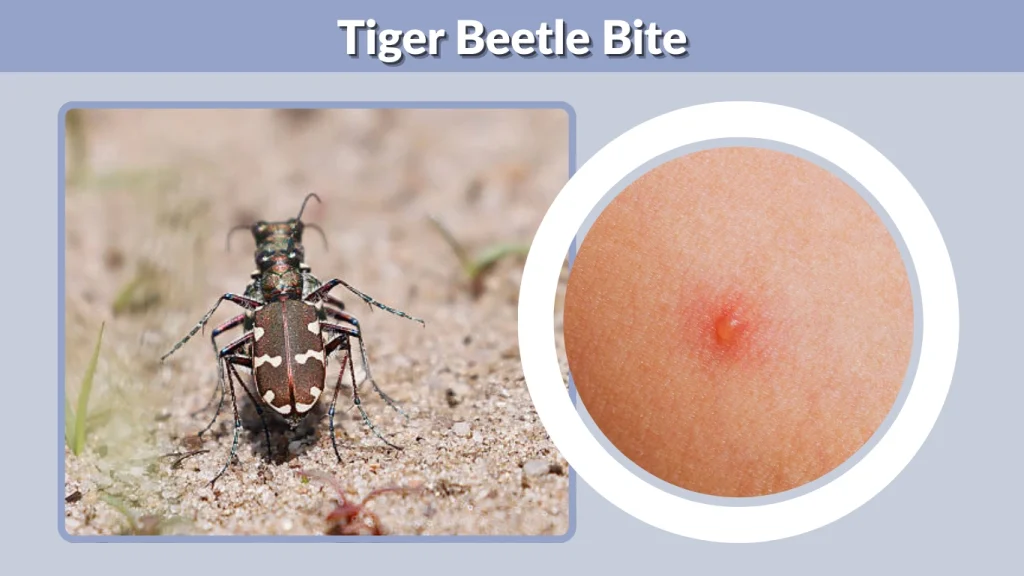
Although tiger beetles are predators, they rarely interact with humans. However, they may bite if handled or threatened.
Do Tiger Beetles Bite Humans?
Tiger beetles are not aggressive toward people. In most cases, they will simply run away when disturbed. However, if someone picks up a tiger beetle, it may deliver a defensive bite using its strong mandibles.
The bite is usually harmless and feels similar to a small pinch.
Tiger Beetle Bite Symptoms
If a tiger beetle bites, the symptoms are typically mild and temporary.
Common effects may include:
- A small pinch sensation
- Minor redness on the skin
- Slight irritation
Unlike some insects, tiger beetles do not inject venom and are not considered medically dangerous.
What to Do If Bitten
If a tiger beetle bite occurs, simple first aid is usually sufficient.
Basic steps include:
- Wash the affected area with soap and water.
- Apply an antiseptic if needed.
- Avoid scratching the area.
In most cases, the irritation disappears within a short time.
Interesting Tiger Beetle Facts
Tiger beetles are among the most fascinating insects because of their speed, vision, and hunting abilities.
Some interesting facts include:
- There are more than 2,600 species of tiger beetles worldwide.
- Some species can run the equivalent of several hundred body lengths per second.
- Tiger beetles have some of the largest eyes relative to body size among insects.
- Their larvae live underground for one to three years before becoming adults.
- Many species have metallic colors, including green, bronze, and blue.
Because of their striking appearance and behavior, tiger beetles are often studied by entomologists and insect enthusiasts.
Are Tiger Beetles Dangerous?
Tiger beetles are generally harmless to humans. While they may bite if handled, their bite is not dangerous and usually causes only mild irritation.
In fact, tiger beetles are considered beneficial insects because they help control populations of smaller insects that might otherwise become pests.
Their presence in an ecosystem often indicates a healthy natural environment with good biodiversity.
Conservation of Tiger Beetles
Some tiger beetle species face threats due to environmental changes and habitat loss.
Threats to Tiger Beetles
Several factors can affect tiger beetle populations, including:
- Habitat destruction
- Pollution
- Urban development
- Climate change
Because many species depend on specific habitats such as sandy beaches or riverbanks, even small environmental changes can affect their survival.
Importance in Ecosystems
Tiger beetles play an important ecological role as top insect predators in their habitats. By feeding on smaller insects, they help maintain balanced ecosystems.
Scientists often consider tiger beetles to be indicator species, meaning their presence can reflect the health of the environment.
How to Identify Tiger Beetles in the Wild
If you want to observe tiger beetles in nature, knowing where and when to look can help.
Tips for spotting tiger beetles include:
- Look for them on sunny trails or sandy ground.
- Watch for quick movements across open soil.
- Observe areas near rivers, beaches, or dry paths.
- Approach slowly, as tiger beetles may quickly run or fly away.
Their bright metallic colors often make them easy to notice once you know what to look for.
FAQs
How fast can a tiger beetle run?
Some tiger beetle species can run up to about 5 miles per hour relative to their body size, making them one of the fastest insects on Earth.
What do tiger beetle larvae eat?
Tiger beetle larvae feed on small insects and arthropods that pass near their burrows.
Are tiger beetles beneficial insects?
Yes. Tiger beetles help control populations of other insects and contribute to ecological balance.
Where do tiger beetles live?
They are commonly found in sandy or open habitats such as beaches, trails, riverbanks, and grasslands.
Do tiger beetles bite humans?
They may bite if handled, but the bite is harmless and usually feels like a small pinch.
Conclusion
Tiger beetles are remarkable insects known for their speed, sharp vision, and predatory behavior. From their burrow-dwelling larvae to their fast-running adult stage, these beetles display fascinating adaptations that help them survive and hunt effectively. Although they may bite if handled, tiger beetles are not dangerous to humans and are actually beneficial predators in many ecosystems. Understanding their habitat, diet, and life cycle can help people appreciate the important role these insects play in nature.
