
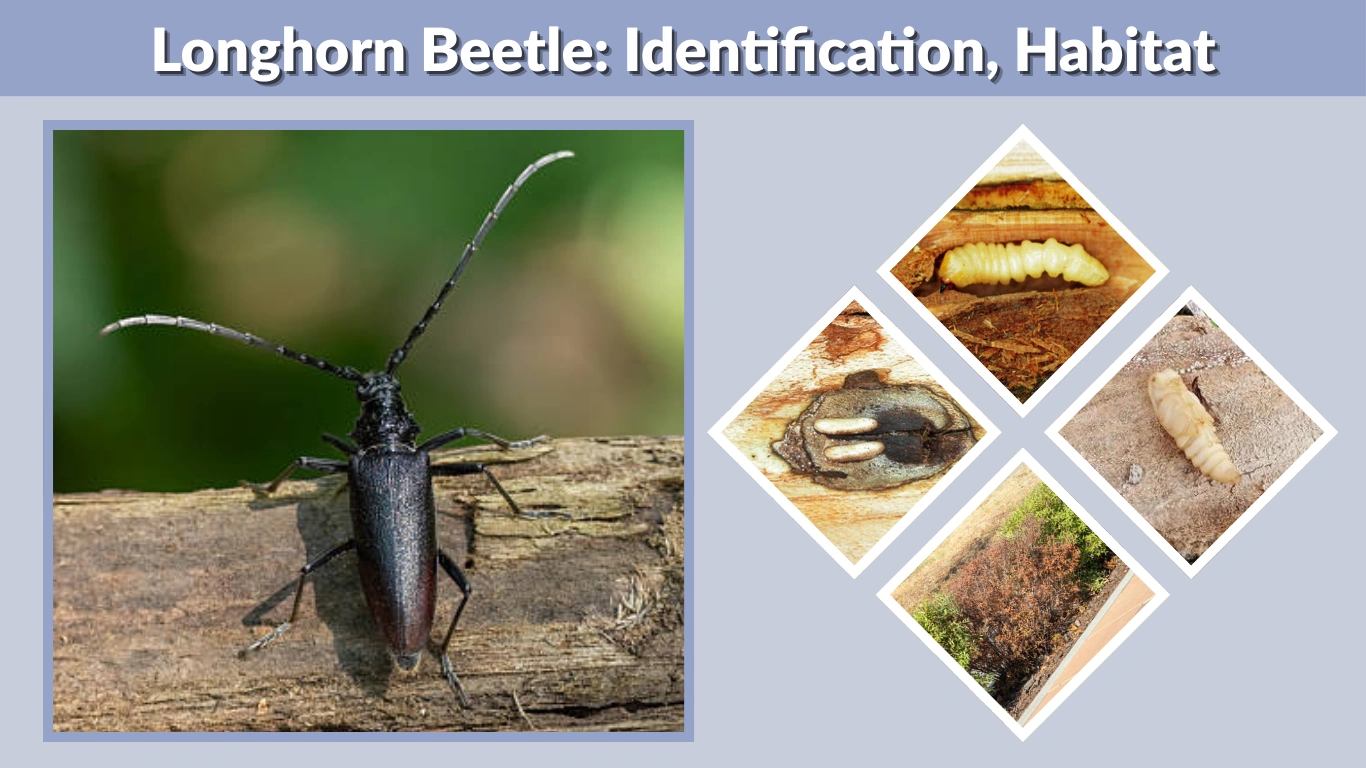
Longhorn beetles are fascinating insects known for their extremely long antennae and unique body shapes. They belong to the beetle family Cerambycidae, which includes thousands of species found across the world. These beetles are often associated with forests and wooden structures because their larvae develop inside wood. While many species play an important role in breaking down dead trees, some can damage living trees or timber. Understanding longhorn beetle identification, habitat, and whether they bite can help people recognize and manage these insects.
What Is a Longhorn Beetle?
A longhorn beetle is a type of beetle belonging to the Cerambycidae family, a large group that includes more than 35,000 species worldwide. These beetles are best known for their long antennae, which can sometimes grow longer than their bodies.
Longhorn beetles are commonly found in forests, wooded areas, and places where trees or wood are present. Many species play an important ecological role by helping break down dead trees and recycling nutrients back into the environment. However, certain species can also become pests because their larvae feed on wood.
Scientific Classification
Longhorn beetles are classified within the animal kingdom as insects. Their scientific classification is:
- Kingdom: Animalia
- Phylum: Arthropoda
- Class: Insecta
- Order: Coleoptera
- Family: Cerambycidae
Because this family contains thousands of species, longhorn beetles vary widely in size, color, and pattern. Despite these differences, they all share certain key features that make them easy to recognize.
Key Characteristics
Longhorn beetles have several distinctive physical traits that set them apart from other beetles.
- Very long antennae, often as long as or longer than the body
- Elongated cylindrical bodies
- Hard wing covers, known as elytra
- Strong jaws, which help them chew plant material or wood
Their colors vary depending on the species. Some are plain black or brown, while others have bright patterns or markings that help them blend into their surroundings.
Longhorn Beetle Identification
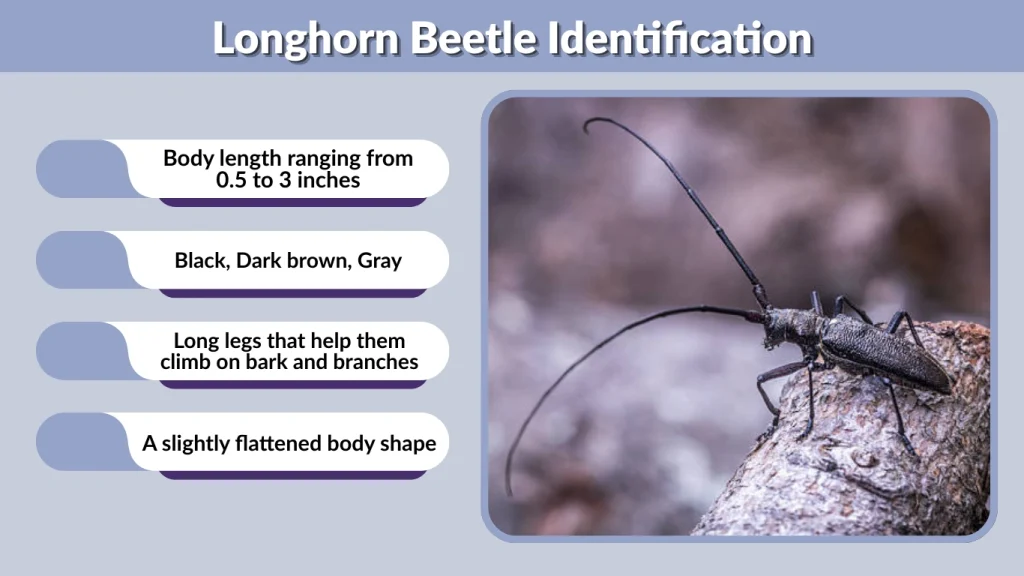
Identifying a longhorn beetle usually involves observing its body shape, antennae length, and coloration. Because there are many species, their appearance can vary, but certain features remain consistent across the group.
Physical Appearance
Most longhorn beetles have a body length ranging from 0.5 to 3 inches, although some tropical species can grow even larger. Their bodies are typically long and narrow compared to other beetles.
Common color variations include:
- Black
- Dark brown
- Gray
- Patterned combinations of white, yellow, or orange
Their wings are protected by a pair of hard covers called elytra, which shield the delicate flight wings underneath.
Distinctive Features
One of the most recognizable characteristics of longhorn beetles is their extremely long antennae. In many species, the antennae are longer than the beetle’s body. These antennae contain sensory organs that help the beetle detect food, mates, and environmental signals.
Other distinguishing features include:
- Long legs that help them climb on bark and branches
- A slightly flattened body shape
- Large mandibles used for chewing wood or plant material
Because of these traits, longhorn beetles are often referred to as “long-horned beetles.”
Common Species Examples
There are thousands of longhorn beetle species, but some are more well-known than others.
Asian Longhorn Beetle
This invasive species is known for its black body with white spots and very long black-and-white antennae. It can cause serious damage to hardwood trees.
Pine Sawyer Beetle
Pine sawyer beetles are commonly found in forests where pine trees grow. Their larvae tunnel through pine wood and help break down dead trees.
Banded Longhorn Beetle
This species has distinctive bands across its body and is often found on flowers where it feeds on pollen and nectar.
Longhorn Beetle Life Cycle

Like many beetles, longhorn beetles go through complete metamorphosis, which includes four stages: egg, larva, pupa, and adult. Each stage plays a different role in the beetle’s development.
Egg Stage
The life cycle begins when a female longhorn beetle lays eggs in cracks or crevices in tree bark. She carefully chooses locations where the larvae will have access to food once they hatch.
The eggs are usually small and difficult to see. After being laid, they typically hatch within one to two weeks, depending on environmental conditions such as temperature and humidity.
Larval Stage
Once the eggs hatch, the larvae emerge. These larvae are commonly referred to as wood-boring larvae because they tunnel into the wood of trees or logs.
The larvae have soft, pale bodies and strong jaws that allow them to chew through wood fibers. During this stage, they feed continuously and create tunnels inside the tree.
This stage is usually the longest part of the life cycle, sometimes lasting several months or even years depending on the species.
Pupa Stage
After the larva has finished feeding and growing, it enters the pupa stage, which is the transformation stage between larva and adult. During this stage, the larva stops feeding and prepares to change into an adult beetle.
The pupa usually develops inside the wood tunnels created by the larva. It remains inactive while its body undergoes major internal changes. Wings, legs, antennae, and other adult features form during this period.
The pupa is typically pale cream or whitish in color and does not move much. This stage generally lasts several weeks, depending on the species and environmental conditions such as temperature and humidity.
Adult Stage
Once development is complete, the adult longhorn beetle emerges from the pupal case. The newly emerged beetle may appear lighter in color at first, but its body gradually darkens and hardens as the exoskeleton fully develops.
Adult longhorn beetles usually chew their way out of the wood, leaving small round or oval exit holes in the tree bark or wood surface.
During the adult stage, the beetles focus mainly on:
- Finding mates
- Reproducing
- Dispersing to new host trees
Adult longhorn beetles are capable of flying and may travel to nearby trees or wooden structures to lay eggs. Their lifespan as adults can range from a few weeks to several months, depending on the species.
Longhorn Beetle Habitat
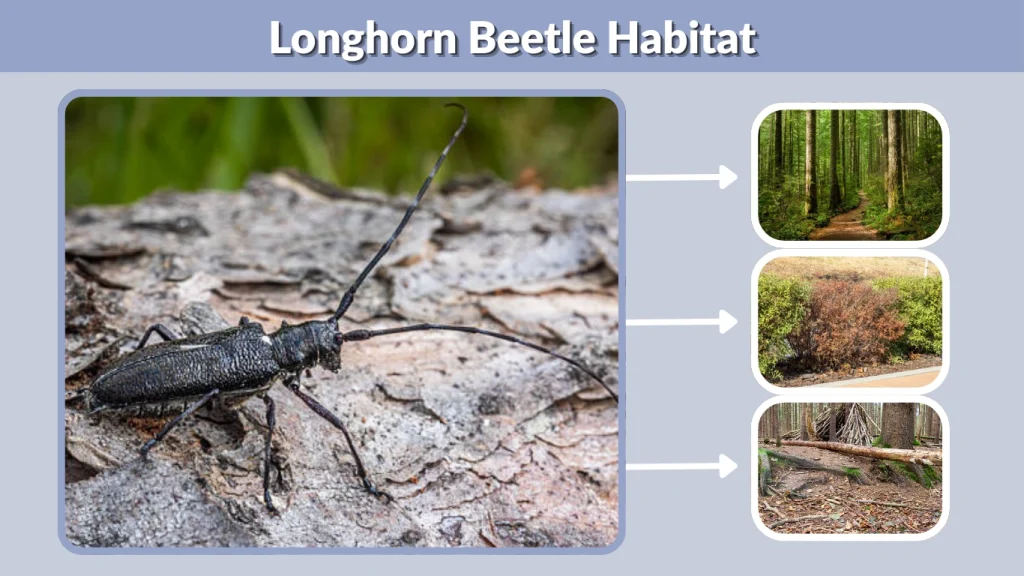
Longhorn beetles are most commonly found in forests, woodlands, and areas with abundant trees. Because their larvae develop inside wood, these beetles prefer habitats where dead, dying, or freshly cut trees are available.
Different species may occupy different environments, but most longhorn beetles share similar habitat preferences that provide shelter, food, and suitable places for reproduction.
Natural Habitat
In natural ecosystems, longhorn beetles typically live in places where wood is plentiful. These areas allow the larvae to develop safely inside tree trunks or branches.
Common natural habitats include:
- Forests and wooded areas
- Dead or dying trees
- Fallen logs and tree stumps
- Tree bark and branches
Many species are especially active during the warmer months when trees produce sap and plant growth is abundant. Adult beetles may often be seen on tree trunks, branches, or flowers.
Urban and Human Environments
Longhorn beetles can also appear in places where humans store or use wood. When firewood, lumber, or wooden materials are present, these beetles may move into nearby areas.
They are sometimes found in:
- Parks and gardens
- Firewood piles
- Wooden fences or structures
- Timber storage areas
Although adult beetles are usually harmless, their larvae can cause damage when they bore into wood. For this reason, some species are considered pests in forestry and landscaping.
Global Distribution
Longhorn beetles have a wide global distribution. They are found on nearly every continent except Antarctica.
Large populations exist in:
- North America
- Europe
- Asia
- South America
- Africa
Many tropical regions have especially high numbers of longhorn beetle species because of the large diversity of trees and warm climates.
Do Longhorn Beetles Bite?
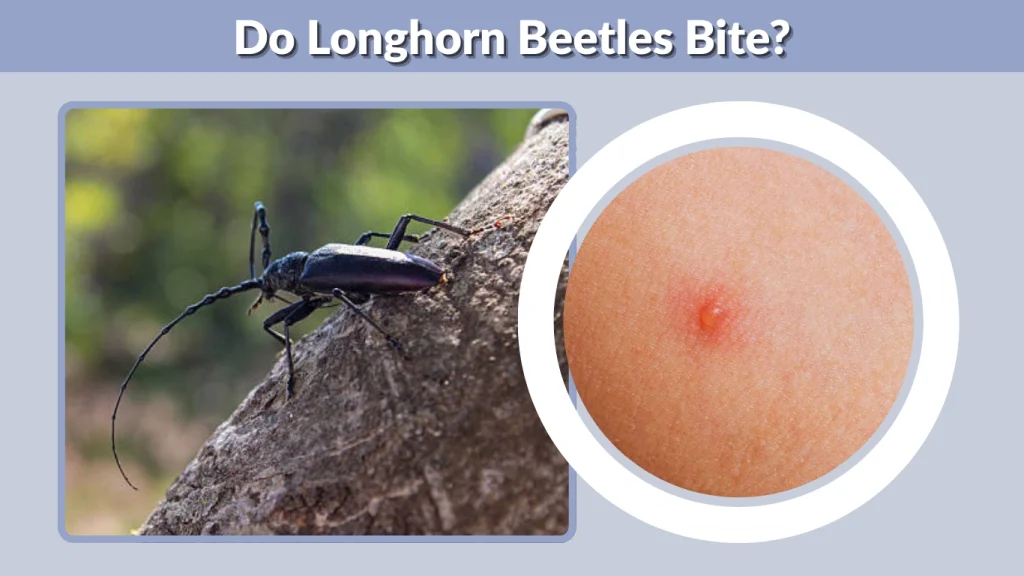
Many people worry about whether longhorn beetles can bite. In general, these beetles are not aggressive toward humans and rarely bite unless they are handled or threatened.
Can Longhorn Beetles Bite Humans?
Longhorn beetles do have strong jaws, which they normally use to chew plant material or wood. Because of these strong mandibles, they can bite if disturbed or picked up.
However, biting is uncommon because these beetles usually try to escape rather than defend themselves.
Are Longhorn Beetle Bites Dangerous?
If a longhorn beetle bites, the bite is usually mild and not dangerous. These beetles do not have venom and do not transmit diseases to humans.
A bite may cause:
- Minor pain or irritation
- Slight redness on the skin
Most bites heal quickly without medical treatment.
When Bites May Occur
Bites are most likely to occur in situations where the beetle feels threatened, such as:
- When someone picks up the beetle
- When the insect is trapped against the skin
- When it is disturbed in its natural habitat
Avoiding direct handling is usually enough to prevent bites.
Are Longhorn Beetles Harmful to Trees?
Although adult longhorn beetles are generally harmless, their larvae can cause damage to trees. This damage occurs because the larvae feed inside the wood.
Damage Caused by Larvae
Longhorn beetle larvae are known as wood borers. They tunnel through the inner parts of trees as they feed, creating long channels inside the wood.
This activity can lead to:
- Weakened tree structures
- Reduced tree growth
- Increased vulnerability to disease
In severe cases, large infestations can kill trees or cause significant structural damage to timber.
Invasive Species Risks
Some longhorn beetle species are considered invasive pests. One of the most well-known examples is the Asian longhorn beetle, which has caused serious damage to forests and urban trees in several countries.
These invasive species can spread quickly because they reproduce rapidly and attack many different types of trees.
For this reason, forestry officials often monitor and control certain longhorn beetle populations to protect forests.
Interesting Longhorn Beetle Facts
Longhorn beetles are remarkable insects with several unique features and adaptations.
Here are some interesting facts about them:
- There are more than 35,000 known species of longhorn beetles worldwide.
- Some species have antennae that are two to three times longer than their bodies.
- Longhorn beetle larvae can live inside wood for several years before becoming adults.
- Many species help recycle nutrients in forests by breaking down dead trees.
- Adult longhorn beetles are often attracted to flowers, tree sap, and plant material.
These characteristics make longhorn beetles important contributors to forest ecosystems.
FAQs
What is a longhorn beetle?
A longhorn beetle is an insect from the Cerambycidae family, known for its long antennae and elongated body. These beetles are commonly found in forests and areas where trees grow.
How do you identify a longhorn beetle?
Longhorn beetles can be identified by their long antennae, narrow bodies, and hard wing covers. Many species also have distinctive color patterns or markings.
Where do longhorn beetles live?
Longhorn beetles typically live in forests, wooded areas, and places where trees or wooden materials are present, such as parks, gardens, and firewood piles.
Do longhorn beetles bite humans?
Longhorn beetles rarely bite humans. If they do bite, the bite is usually mild and not dangerous.
Are longhorn beetles dangerous?
Longhorn beetles are generally harmless to people, but their larvae can damage trees by tunneling through wood.
