
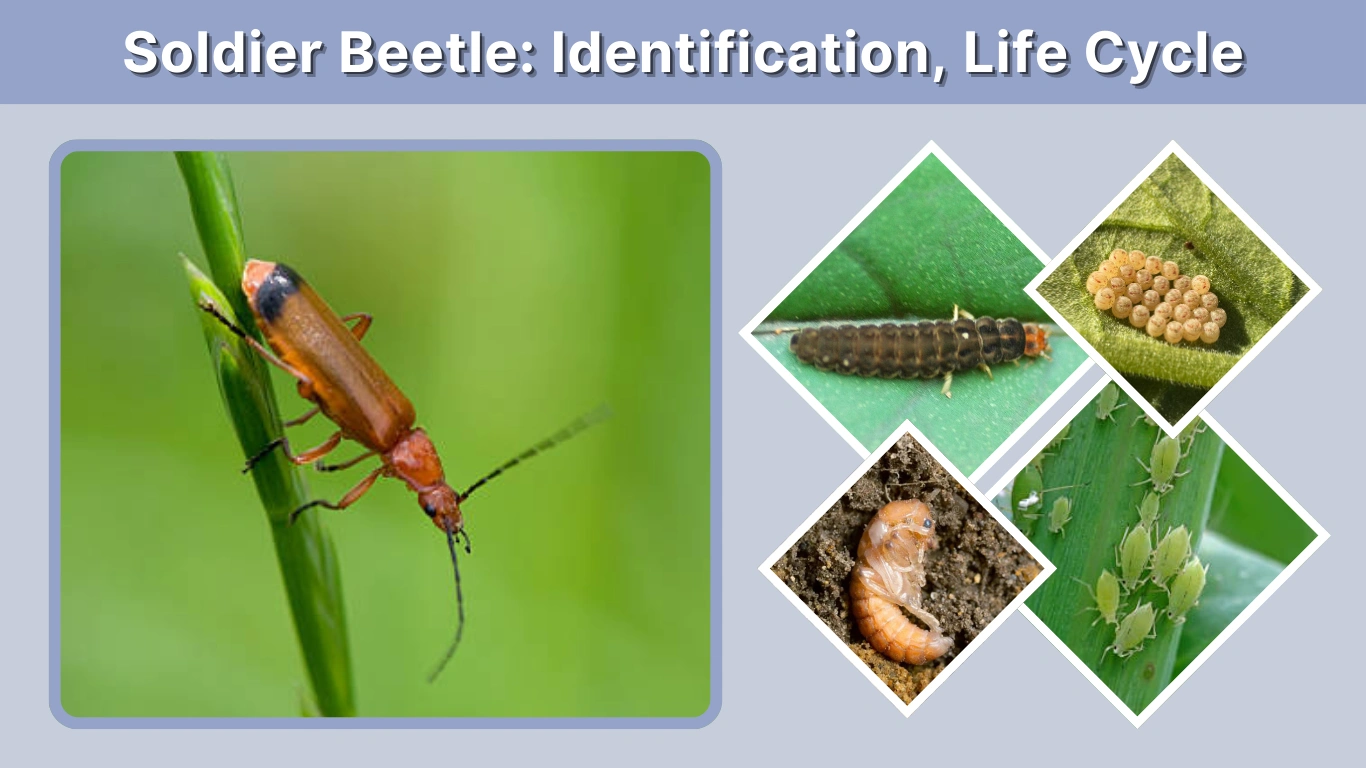
Soldier beetles are soft-bodied insects commonly found in gardens, meadows, and fields during warm seasons. They belong to the family Cantharidae and are often recognized by their bright colors and slender bodies. These beetles are beneficial insects because they feed on pests such as aphids and other small insects. Soldier beetles are also frequent visitors to flowers where they feed on nectar and pollen. Understanding their identification, behavior, and life cycle helps highlight their important role in nature.
Soldier Beetle Identification
Physical Characteristics
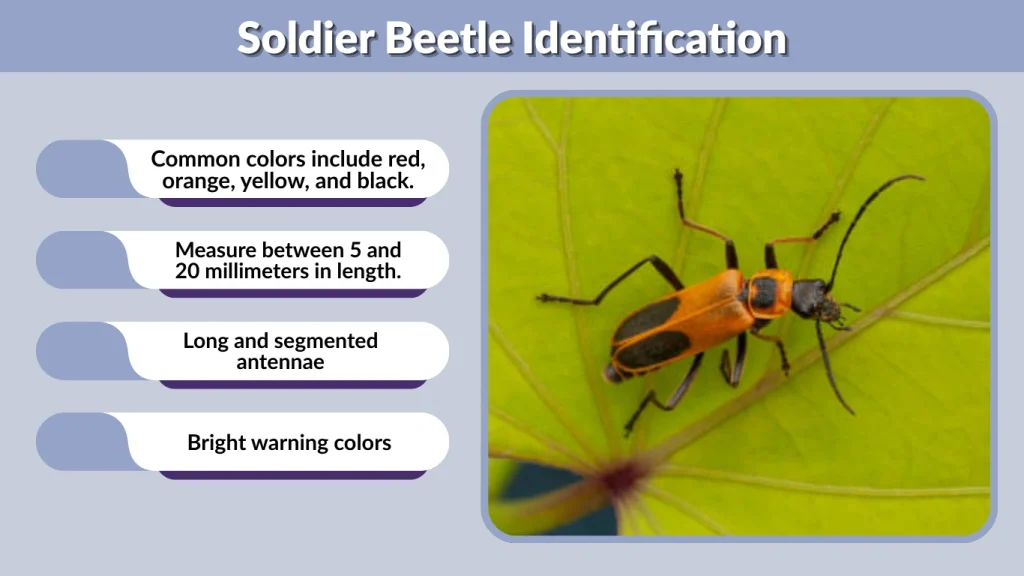
Soldier beetles are medium-sized insects with a soft, flexible body. Unlike many beetles that have hard shells, soldier beetles have wing covers that feel softer and more leathery. Because of this feature, they are sometimes called leatherwings.
Their bodies are typically elongated and narrow, allowing them to move easily among flowers and plants. The color of soldier beetles varies depending on the species, but common colors include red, orange, yellow, and black. Many species also have dark markings on their wings or body.
Most soldier beetles measure between 5 and 20 millimeters in length. Their legs are long and slender, which helps them climb plants and move quickly while searching for food.
Key Identification Features
There are several characteristics that make soldier beetles easy to identify in the wild. One of their most noticeable traits is their soft wing covers, which are much more flexible than those of many other beetle species.
Other key features include:
- Long and segmented antennae
- A narrow, elongated body shape
- Bright warning colors
- Soft, leathery wing covers
- Long legs designed for climbing plants
These physical traits help soldier beetles survive in environments where they hunt for small insects and feed on flower nectar.
Differences from Similar Beetles
Soldier beetles are sometimes confused with other insects because of their similar appearance. One insect that they are often mistaken for is the firefly. While fireflies can produce light through bioluminescence, soldier beetles do not have this ability.
Another insect that looks somewhat similar is the blister beetle. However, blister beetles usually have harder bodies and can release chemicals that irritate the skin. Soldier beetles, in contrast, are harmless to humans and generally considered beneficial insects.
Because soldier beetles frequently visit flowers and plants, they are easy to observe in gardens and natural areas during summer months.
Soldier Beetle Habitat

Natural Habitats
Soldier beetles live in a wide range of natural environments. They are most commonly found in gardens, meadows, grasslands, and woodland edges. These habitats provide plenty of flowers and small insects, which serve as their primary food sources.
They are particularly active in areas where flowering plants are abundant. The presence of nectar and pollen attracts adult beetles, while the soil and leaf litter provide suitable conditions for their developing larvae.
Where Soldier Beetles Are Commonly Found
Adult soldier beetles are often seen resting or feeding on flowers, leaves, and plant stems. They are especially common on flowering plants such as goldenrod, daisies, and other summer blooms.
Because they hunt for small insects, soldier beetles are also found in areas where pest insects are plentiful. This makes them helpful allies in gardens and agricultural environments.
Global Distribution
Soldier beetles are widely distributed around the world. Many species live in North America, Europe, and Asia, although they can also be found in other temperate regions.
Different species adapt to different climates, but most prefer environments with warm temperatures and abundant vegetation.
Soldier Beetle Diet
Adult Diet
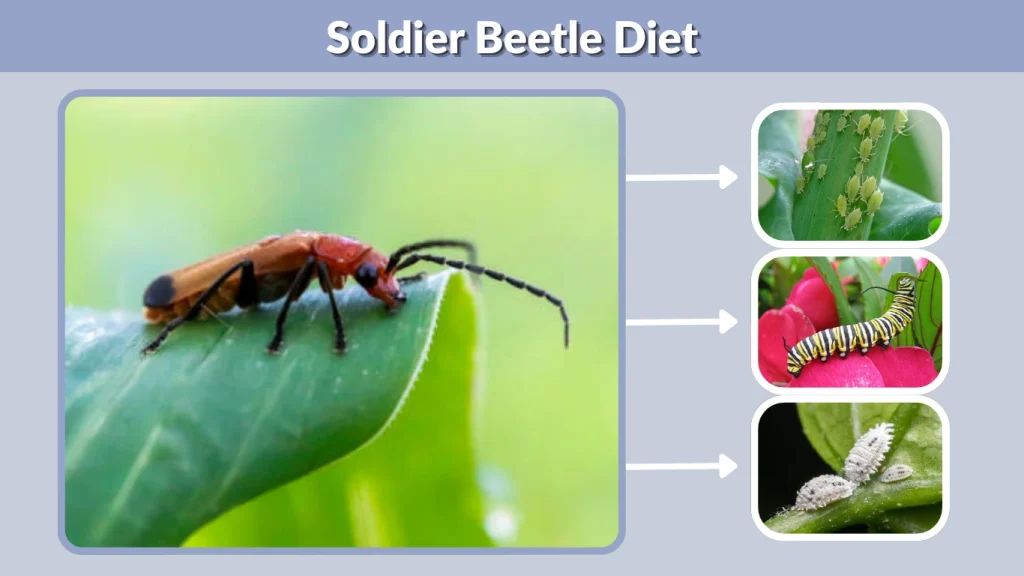
Adult soldier beetles feed on a mixture of plant materials and small insects. Their diet commonly includes nectar and pollen from flowers, which provide energy for their daily activities.
In addition to plant material, they also prey on small insects such as aphids, caterpillars, and other soft-bodied pests. This feeding behavior makes soldier beetles valuable for natural pest control.
By consuming harmful insects, soldier beetles help maintain the balance of insect populations in gardens and agricultural areas.
Larval Diet
The larvae of soldier beetles live mainly in the soil or beneath leaf litter. During this stage, they are active predators and feed on small insects, insect eggs, and other tiny organisms found in the soil.
Larval soldier beetles play an important role in controlling pest populations at ground level. Their feeding activity helps reduce the number of harmful insects before they reach adulthood.
Because both adults and larvae feed on pest insects, soldier beetles are considered beneficial insects that support healthy ecosystems.
Soldier Beetle Life Cycle
Egg Stage
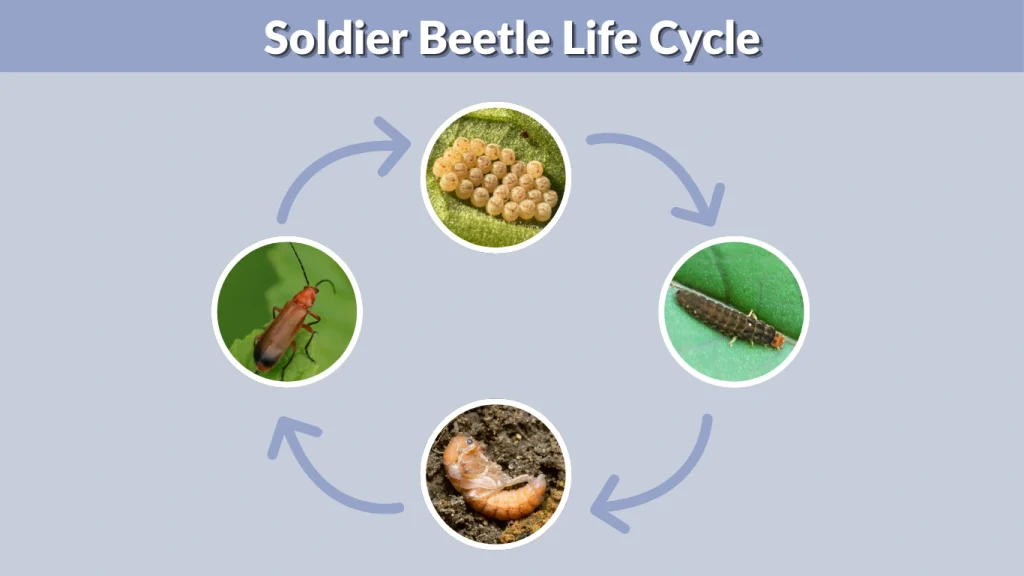
The life cycle of a soldier beetle begins when the female lays her eggs in moist soil, leaf litter, or decaying plant material. These locations provide protection and a suitable environment for the developing larvae. The eggs are small and usually hidden within the soil or organic debris, which helps keep them safe from predators.
After a short incubation period, the eggs hatch into larvae. The exact time it takes for the eggs to hatch can vary depending on temperature and environmental conditions.
Larval Stage
Once the eggs hatch, the larvae emerge and begin their active feeding stage. Soldier beetle larvae are elongated, dark-colored, and slightly hairy, which helps distinguish them from adult beetles.
During this stage, the larvae live mostly in the soil, where they hunt for small insects, insect eggs, and other tiny organisms. They are effective predators and help control many harmful pests found in garden soil.
The larval stage can last several months and often continues through colder seasons. In some regions, soldier beetle larvae overwinter in the soil, remaining active during mild periods until conditions are favorable for development.
Pupal Stage
When the larvae reach full size, they enter the pupal stage, during which they transform into adult beetles. This stage usually takes place in the soil or within sheltered areas such as leaf litter.
Inside the pupal case, the larva undergoes a major transformation. Its body structure changes as wings, legs, and other adult features develop. This stage typically lasts a few weeks before the adult beetle is ready to emerge.
Adult Stage
After completing the pupal stage, the adult soldier beetle emerges from the soil. Adults are most active during the summer months, when flowers are abundant.
During this stage, the beetles feed on nectar, pollen, and small insects. They are commonly seen on flowers where they search for food and mates. After mating, females lay eggs in suitable soil environments, beginning the life cycle again.
Soldier Beetle Facts
Soldier beetles are fascinating insects with several interesting characteristics. One of their most notable traits is their soft wing covers, which give them the nickname leatherwings. Unlike many beetles that have hard shells, their flexible wings allow them to move easily among plants and flowers.
Another interesting fact is that soldier beetles are considered beneficial insects for gardens. Both adults and larvae feed on pest insects such as aphids, helping reduce harmful insect populations naturally.
Although they resemble fireflies in appearance, soldier beetles do not produce light. Fireflies belong to a different beetle family and are known for their bioluminescent abilities.
Soldier beetles also play a small role in pollination. As they move from flower to flower feeding on nectar and pollen, they may transfer pollen between plants, helping support plant reproduction.
Importance of Soldier Beetles
Benefits in Gardens
Soldier beetles are highly valued by gardeners and farmers because they act as natural pest controllers. By feeding on aphids, caterpillars, and other harmful insects, they help reduce the need for chemical pesticides.
Their presence in gardens often indicates a healthy ecosystem where beneficial insects are thriving.
Ecological Importance
Beyond pest control, soldier beetles contribute to the balance of insect populations within natural ecosystems. Their larvae help regulate soil-dwelling insects, while adults help control pests found on plants.
Additionally, their occasional role in pollination supports plant diversity and the growth of flowering plants.
Conclusion
Soldier beetles are helpful and fascinating insects that play an important role in many ecosystems. Their soft-bodied structure, bright coloration, and presence on flowers make them easy to recognize in gardens and natural habitats.
From their early stages as predatory larvae in the soil to their active adult life feeding on flowers and insects, soldier beetles contribute significantly to pest control and ecological balance. Understanding their identification, life cycle, and behavior highlights why these insects are considered valuable allies in maintaining healthy gardens and natural environments.
