

Botflies are parasitic insects that infest mammals, including humans and animals, using them as hosts for their larvae. With different species adapted to various hosts and regions, each type has a unique life cycle, bite effects, and habitat. Here, you’ll discover 8 types of botflies—complete with bite details, habitat, identification tips, and pictures to help you recognize and understand these fascinating yet unsettling parasites.
1. Dermatobia hominis (Human Botfly)

Dermatobia hominis, commonly known as the human botfly, is a parasitic insect found in Central and South America. It is notorious for its unusual method of using other insects to deliver its eggs to human and animal hosts. Once inside the skin, the larvae grow and feed on the host’s tissue before emerging.
Identification
- Scientific Name: Dermatobia hominis
- Common Name: Human botfly
- Family: Oestridae
- Region: Central and South America
- Adult Appearance: Bumblebee-like with a robust, hairy body and metallic blue sheen
- Lifecycle Carrier: Typically uses mosquitoes or other biting insects to transfer eggs
Life Cycle
The human botfly follows a fascinating parasitic lifecycle. The adult female captures another insect, such as a mosquito, and glues her eggs to its body. When this carrier insect bites a warm-blooded animal, the host’s body heat causes the eggs to hatch. The emerging larvae then burrow painlessly into the skin, where they remain for 6 to 12 weeks. After feeding on tissue, the larvae exit the skin and drop to the ground to pupate in the soil.
Symptoms in Humans
Infestation by Dermatobia hominis causes a boil-like swelling that can be painful and irritating. Many people report a sensation of movement within the lump. A small central hole is usually visible, which the larva uses for breathing. If untreated, it can lead to infection or scarring.
Treatment
To treat a botfly larva under the skin, the primary goal is safe removal. Medical professionals may use petroleum jelly, tape, or occlusive dressings to cut off the larva’s air supply, forcing it to surface. In more difficult cases, surgical removal is necessary. After extraction, the area must be disinfected to avoid secondary infections or complications.
2. Gasterophilus intestinalis (Horse Botfly)
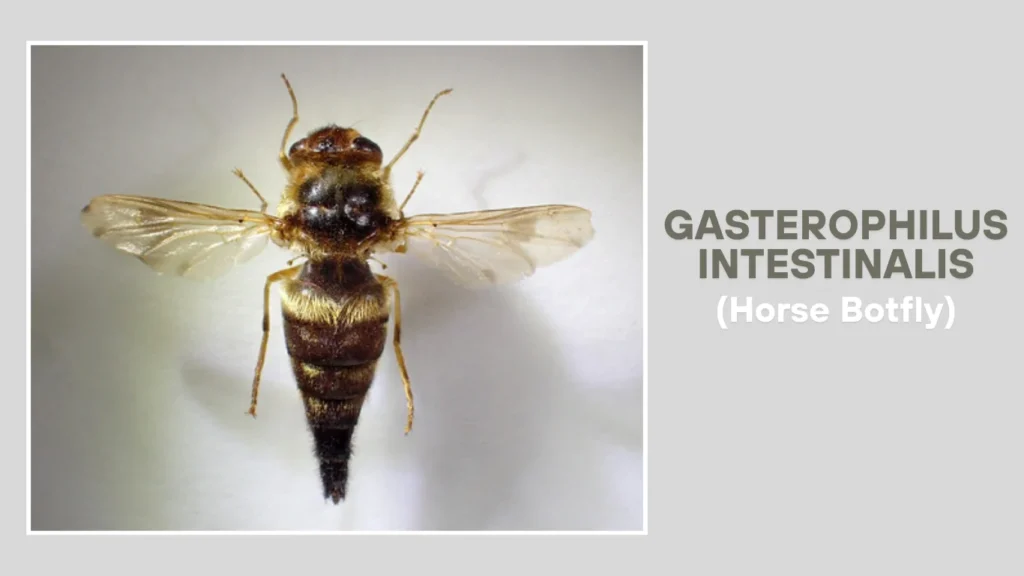
Gasterophilus intestinalis, widely known as the horse botfly, is a parasitic fly species that targets horses and other equines. Unlike the human botfly, this species directly lays eggs on the host’s body. The larvae migrate to the horse’s mouth and later to the stomach, where they mature and eventually pass out through feces to pupate in soil.
Identification
- Scientific Name: Gasterophilus intestinalis
- Common Name: Horse botfly
- Family: Oestridae
- Host: Primarily horses and donkeys
- Adult Appearance: Resembles a small honeybee, with yellow-brown hairs and dark bands on the abdomen
- Egg Placement: Yellowish eggs laid on the horse’s legs, shoulders, or face
- Geographic Range: Found worldwide where horses are present, especially in temperate regions
Life Cycle
The female horse botfly lays her eggs on the hair of the horse, often around the legs. When the horse licks or grooms itself, the warmth and moisture from the tongue stimulate the eggs to hatch. The larvae then migrate to the mouth, embedding themselves in the gums or tongue before moving to the stomach. Here, they attach to the stomach lining and remain for several months, feeding until they are ready to exit via the feces and pupate in the ground.
Symptoms in Horses
Infestation with Gasterophilus intestinalis can cause oral irritation, stomach ulcers, and digestive discomfort in horses. Behavioral signs include excessive licking, rubbing of the face or legs, and in severe cases, colic. The eggs on the legs can also cause skin irritation before hatching.
Treatment
Controlling Gasterophilus intestinalis involves a combination of egg removal and deworming.
- Manual Egg Removal: Use a bot knife or pumice stone to scrape off eggs from the horse’s coat before they hatch.
- Anthelmintics: Administering medications such as ivermectin or moxidectin helps eliminate larvae already inside the horse’s system.
- Stable Management: Regular grooming and pasture management reduce the risk of reinfestation.
3. Cuterebra fontinella (Rodent Botfly)
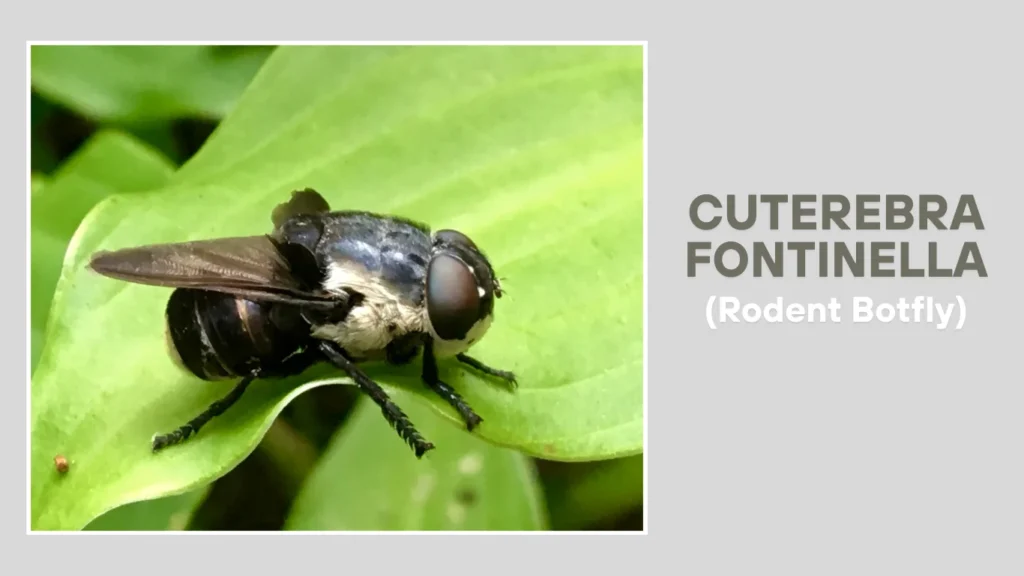
Cuterebra fontinella is a species of botfly commonly found in North America. It primarily targets wild rodents and rabbits but can occasionally infest domestic pets such as cats and dogs. Unlike the human or horse botfly, this species lays its eggs near the entrances of animal burrows, allowing the larvae to attach to a passing host.
Identification
- Scientific Name: Cuterebra fontinella
- Common Name: Rodent botfly
- Family: Oestridae
- Primary Hosts: Rodents (e.g., mice, squirrels) and rabbits; accidental hosts include cats and dogs
- Adult Appearance: Robust and bee-like, with dark coloration and no functioning mouthparts
- Egg Placement: Near burrow openings or animal trails
- Region: Widely distributed in the United States and southern Canada
Life Cycle
Adult Cuterebra flies do not feed and are short-lived. The female lays her eggs near rodent burrows or along pathways frequently used by small mammals. When a potential host brushes past, the larvae hatch and penetrate the skin directly. Inside the host, the larvae form warbles—fist-sized swellings under the skin—where they develop for several weeks. Once mature, they emerge through a breathing hole and fall to the ground to pupate.
Symptoms in Animals
Pets or wild animals infested by Cuterebra fontinella typically develop large, painful lumps with visible breathing holes. These warbles may ooze fluid and can become infected if not treated. In rare cases, larvae may migrate abnormally within the host, leading to serious complications like brain or respiratory issues, especially in cats.
Treatment
Treatment focuses on careful removal of the larva and proper wound care.
- Veterinary Extraction: A vet should remove the larva to avoid rupturing it, which could cause severe allergic reactions or infection.
- Cleaning and Antibiotics: After removal, the wound is cleaned and may require antibiotics or anti-inflammatory medication.
- Prevention: Limiting pets’ access to rodent-infested areas during peak seasons (late summer and early fall) helps reduce risk.
4. Oestrus ovis (Sheep Botfly)

Oestrus ovis, known as the sheep botfly or sheep nasal botfly, is a parasite that primarily targets sheep and goats. Unlike most other botflies, Oestrus ovis females give birth to live larvae rather than laying eggs. These larvae are directly deposited into the nostrils of the host, where they cause respiratory irritation and infection.
Identification
- Scientific Name: Oestrus ovis
- Common Name: Sheep botfly, Sheep nasal botfly
- Family: Oestridae
- Primary Hosts: Sheep, goats (rarely humans)
- Adult Appearance: Grayish and hairy, resembling a small housefly
- Larval Location: Nasal passages and sinuses
- Region: Found worldwide in sheep-raising regions, especially in warm and dry climates
Life Cycle
The adult female does not lay eggs but instead ejects live larvae (larviposition) into or near the nostrils of a sheep or goat while in flight. The larvae migrate through the nasal passages into the sinuses, where they feed on mucus and tissue for several weeks. After maturing, they are sneezed out by the host and pupate in the soil. Adult flies emerge in warm months to restart the cycle.
Symptoms in Sheep and Goats
Infected animals often show signs of respiratory distress such as frequent sneezing, nasal discharge, and head shaking. Heavy infestations can cause severe irritation, sinus infections, and breathing difficulty. In extreme cases, larvae may migrate to the brain, leading to neurological symptoms and even death.
Treatment
Controlling Oestrus ovis involves both treatment of infected animals and prevention during fly seasons.
- Antiparasitic Medication: Ivermectin is commonly used to kill larvae within the nasal passages.
- Timing: Treatment is most effective in late summer or early autumn before pupation occurs.
- Fly Control: Reducing exposure through fly repellents and proper grazing management helps prevent future infestations.
5. Cephenemyia stimulator (Deer Botfly)
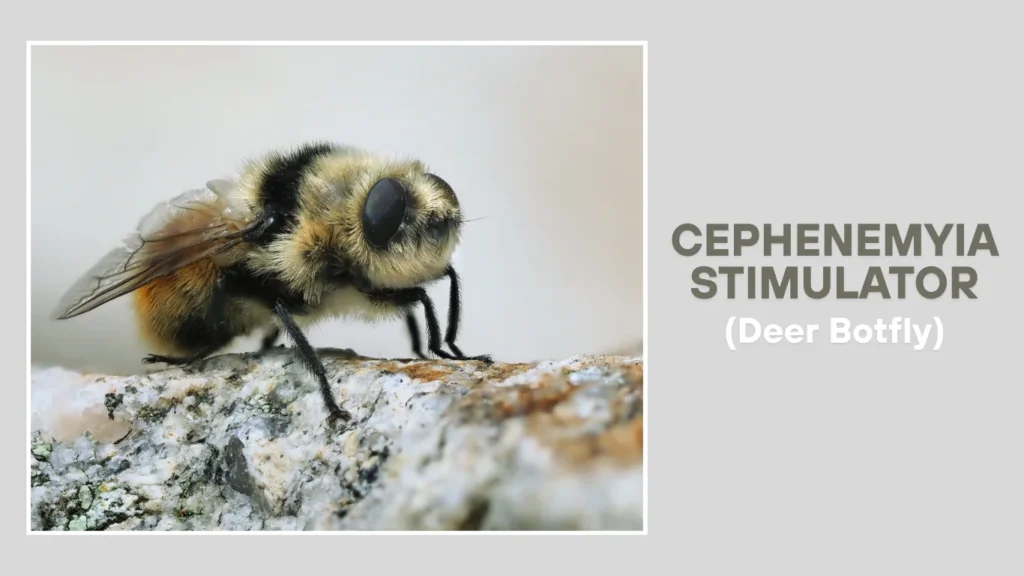
Cephenemyia stimulator, commonly referred to as the deer botfly, is a parasitic fly that targets wild deer, particularly roe deer in Europe. This species has a dramatic and rapid method of larval delivery, often launching larvae into the nostrils of the host while in flight. The larvae develop in the nasal and throat cavities, sometimes causing significant discomfort.
Identification
- Scientific Name: Cephenemyia stimulator
- Common Name: Deer botfly
- Family: Oestridae
- Primary Hosts: Roe deer (and occasionally other deer species)
- Adult Appearance: Large, bee-like fly with a furry body and muted yellow-brown coloration
- Larval Location: Nasal passages, pharynx, and upper respiratory tract
- Region: Europe, especially common in central and eastern regions where roe deer are abundant
Life Cycle
Unlike egg-laying flies, the female Cephenemyia stimulator ejects live larvae directly into or near the deer’s nostrils during mid-flight. The larvae migrate to the nasal cavities and throat, where they attach to mucous membranes and grow by feeding on secretions. After several weeks or months, mature larvae are sneezed out by the deer and pupate in the soil. Adults emerge in summer to repeat the cycle.
Symptoms in Deer
Affected deer may exhibit heavy nasal discharge, frequent sneezing, head shaking, and signs of respiratory irritation. In severe infestations, larvae can block airways, cause labored breathing, and reduce the deer’s feeding efficiency, impacting its overall health.
Treatment
There are no direct treatments available for wild deer; however, in controlled populations or research contexts:
- Antiparasitic Treatments: Ivermectin or similar drugs may be used in managed deer herds.
- Population Control: Maintaining healthy, balanced deer populations and minimizing stress helps reduce the spread and severity of infestations.
- Monitoring: Wildlife biologists may monitor larvae prevalence to assess herd health.
6. Gasterophilus nasalis (Nose Botfly of Horses)
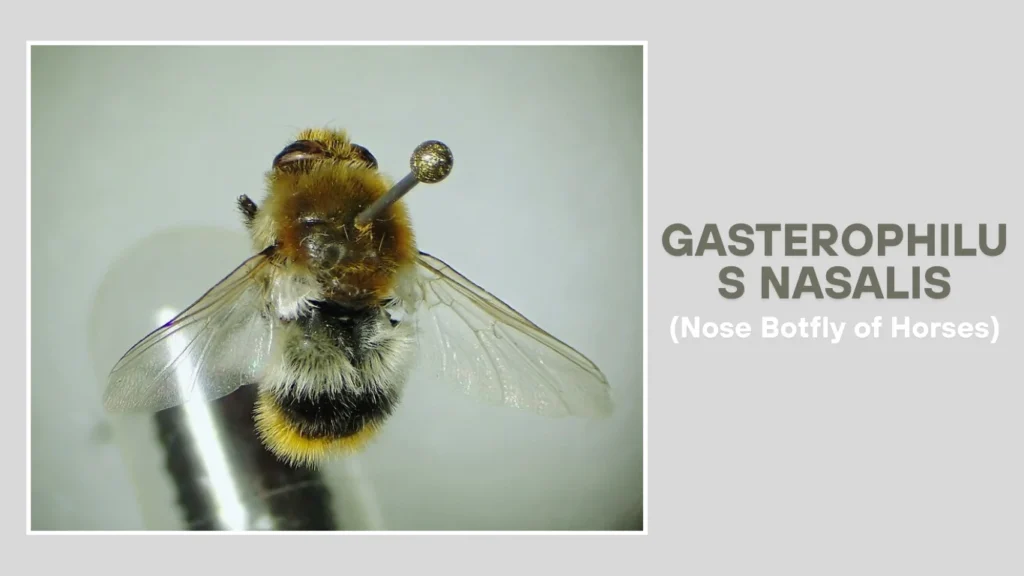
Gasterophilus nasalis, often called the nose botfly, is a species of botfly that specifically targets horses and donkeys. It is one of several Gasterophilus species but is distinguished by its preferred egg-laying site and larval development path through the horse’s mouth and digestive tract. It causes discomfort and potential health issues if left untreated.
Identification
- Scientific Name: Gasterophilus nasalis
- Common Name: Nose botfly (of horses)
- Family: Oestridae
- Primary Hosts: Horses and donkeys
- Adult Appearance: Bee-like appearance, smaller than a housefly, with a yellowish body and dark bands
- Egg Placement: Around the jaw, under the chin, and neck areas
- Region: Found globally, especially in areas with active horse populations
Life Cycle
The adult female lays yellowish eggs around the jaw and neck region of horses. When the horse grooms or scratches those areas, the warmth and moisture of its mouth stimulate the eggs to hatch. The larvae penetrate the mucous membranes of the lips, gums, or tongue and migrate to the stomach or duodenum. They attach to the gastrointestinal lining for several months before passing out in feces to pupate in the soil. Adult flies emerge after pupation and start the cycle anew.
Symptoms in Horses
Horses infested with Gasterophilus nasalis may experience irritation and inflammation in the mouth or stomach. Common symptoms include excessive drooling, difficulty eating, behavioral changes, and occasional colic symptoms. Heavy infestations may also result in gastric ulcers or digestive blockages.
Treatment
Effective management includes both preventative and reactive approaches:
- Manual Egg Removal: During grooming, a bot knife or abrasive block can help remove eggs from the jaw and neck.
- Deworming: Use anthelmintic medications such as ivermectin or moxidectin in late summer or early autumn to target larvae before winter hibernation.
- Fly Control: Reducing fly exposure through physical barriers and repellents can minimize egg-laying opportunities.
7. Hypoderma lineatum (Cattle Warble Fly)

Hypoderma lineatum, commonly known as the cattle warble fly, is a parasitic fly species that primarily targets cattle. Its larvae migrate through the animal’s body, eventually forming painful swellings (called warbles) on the back. This fly is a major concern in livestock management due to its impact on animal health and hide value.
Identification
- Scientific Name: Hypoderma lineatum
- Common Name: Cattle warble fly
- Family: Oestridae
- Primary Hosts: Cattle (rarely horses and humans)
- Adult Appearance: Resembles a bumblebee with black and yellow markings; fast-flying and rarely seen
- Egg Placement: Eggs are laid on the hairs of the lower legs
- Region: Found in North America, Europe, and parts of Asia
Life Cycle
The adult fly lays its eggs on the hairs of a cow’s legs. When the animal’s body heat triggers hatching, the larvae burrow into the skin and begin a months-long migration through the connective tissues of the host. Eventually, they settle under the skin along the back, forming visible lumps (warbles). After maturing, they cut breathing holes through the skin, exit, drop to the ground, and pupate in soil. Adult flies emerge in spring or early summer.
Symptoms in Cattle
Infected cattle may show signs such as restlessness, kicking at their legs (due to egg irritation), and the development of large, painful swellings on their backs. These warbles can cause damage to hides and reduce meat quality. In some cases, larval migration may result in systemic illness or allergic reactions.
Treatment
Controlling Hypoderma lineatum is essential for herd health and livestock value:
- Insecticides: Pour-on or injectable treatments with ivermectin or similar compounds can kill larvae during their migration phase.
- Timing: Treatment is best done in late summer or early fall to prevent larvae from reaching the back.
- Fly Control Measures: Managing adult fly populations through traps or sprays reduces egg-laying activity.
- Hide Management: Early treatment prevents warble formation and minimizes hide damage.
8. Hypoderma bovis (Northern Cattle Grub)
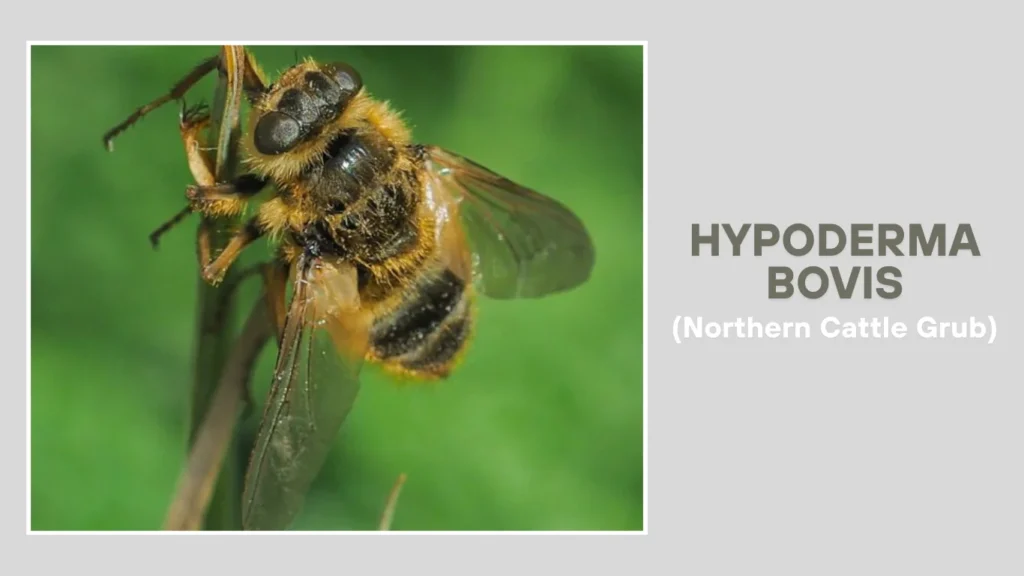
Hypoderma bovis, also known as the northern cattle grub, is closely related to Hypoderma lineatum and shares a similar lifecycle. However, it differs in its larval migration path and timing. This species causes significant economic losses in cattle farming due to hide damage and meat trimming during processing.
Identification
- Scientific Name: Hypoderma bovis
- Common Name: Northern cattle grub
- Family: Oestridae
- Primary Hosts: Cattle (occasionally other large mammals)
- Adult Appearance: Large, hairy fly resembling a bee, with black and yellow coloring
- Egg Placement: On the legs or flanks of cattle
- Region: Common in the Northern Hemisphere, including Europe, North America, and parts of Asia
Life Cycle
The female fly lays eggs on the hairs of cattle, usually on the flanks or legs. Once hatched, the larvae penetrate the skin and migrate along nerve pathways and through the spinal canal toward the animal’s back. After several months, they form swellings or “warbles” under the skin along the midline of the back. Upon maturation, the larvae exit through holes, fall to the ground, and pupate in the soil before emerging as adults the following spring.
Symptoms in Cattle
Infestations with Hypoderma bovis often lead to painful lumps along the back, discomfort, and stress. The larvae’s migration through the body, especially near the spinal cord, may cause neurologic signs or even temporary paralysis in severe cases. Warbles reduce the commercial value of hides and meat and can cause secondary infections.
Treatment
Effective control and prevention of Hypoderma bovis involve:
- Systemic Insecticides: Use of ivermectin or similar medications in late summer or early autumn kills larvae before they reach sensitive tissues.
- Proper Timing: Treating before larval migration reaches critical areas like the spinal cord is vital.
- Fly Control Programs: Reducing adult fly populations in pastures lowers infestation risk.
- Regular Monitoring: Observing cattle during fly season helps catch early signs of egg-laying or larval entry.
Botfly Bite: Symptoms and Treatment
Botfly bites are not like typical insect bites or stings. Instead of piercing the skin for blood, botflies deposit larvae that invade the skin tissue and develop beneath it. The process can be painful, alarming, and medically concerning if not handled properly. This section explains how botfly bites occur, the symptoms they cause, and how to treat them.
How a Botfly Bite Happens
Botflies use a unique reproductive strategy. Most species—like the human botfly (Dermatobia hominis)—do not lay eggs directly on the host. Instead, they lay eggs on carrier insects such as mosquitoes or ticks. When the carrier insect lands on a warm-blooded animal or human, the body heat triggers the eggs to hatch, and the tiny larvae burrow into the skin through hair follicles or open pores.
This process is usually painless, so the host may not notice the infestation until symptoms begin.
Common Bite Symptoms
Once inside the skin, the larva begins to grow and feed on tissue. This causes a boil-like swelling, medically referred to as a furuncular lesion. Symptoms typically include:
- A raised, red lump with a central puncture hole
- Pain, tenderness, or itching
- Sensation of movement within the skin
- Oozing or fluid discharge from the hole
- Inflammation and possible secondary bacterial infection
In some cases, the swelling may resemble an infected bug bite, making misdiagnosis possible.
Identifying a Botfly Bite
The following signs can help identify a botfly larva under the skin:
- A single, firm lump that gradually enlarges
- A visible breathing hole in the center of the lesion
- The lesion does not respond to typical anti-inflammatory or antibacterial treatments
- Increased pain or movement inside the swelling, especially at night
Botfly bites are most common in tropical and subtropical regions, particularly in Central and South America, where species like Dermatobia hominis are native.
Treatment and Removal
Proper treatment is essential to prevent complications:
- Suffocation Method: Covering the breathing hole with petroleum jelly, adhesive tape, or bacon fat can cut off air, forcing the larva to surface for extraction.
- Surgical Removal: A medical professional can use a scalpel or forceps to remove the larva entirely.
- Aftercare: Clean the wound thoroughly and apply antibiotics to prevent infection. Tetanus boosters may be recommended.
Avoid squeezing the lesion, as this may rupture the larva, increasing the risk of infection and allergic reaction.
Summary
Botflies are parasitic insects with unique lifecycles, targeting mammals—including humans, horses, and cattle. This article covers 8 well-known species, their identification, habitats, bite effects, and treatments. Recognizing symptoms like boil-like swellings and understanding proper removal methods is essential to avoid complications. Awareness of their habitats and life stages helps in preventing infestations effectively.
