

Hornet stings vary in pain, reaction, and danger depending on the species involved. From the aggressive bald-faced hornet to the powerful sting of the Asian giant hornet, each type presents unique symptoms and risks. This guide breaks down 12 different hornet stings, helping you identify the hornet, recognize symptoms, and take proper treatment steps—whether for yourself or even your pet.
1. Bald-Faced Hornet Sting

The bald-faced hornet sting is known for its intense, burning pain and aggressive delivery. These hornets are protective of their nest and can sting multiple times without losing their stinger. While the sting is usually not dangerous to most people, it can be very painful and alarming, especially when multiple stings occur.
Identification
- Black body with white markings on the face and thorax
- Measures around ½ to ¾ inch in length
- Smooth stinger, allowing repeated stings
- Nests are large, football-shaped, and typically found hanging from trees, shrubs, or building eaves
- Common in North America during late spring to early fall
Bald-Faced Hornet Sting Reaction
The reaction to a bald-faced hornet sting can be quite intense. Most people experience sharp, immediate pain followed by redness and swelling. The sting injects venom that causes localized inflammation. In some cases, especially after multiple stings, individuals may feel dizzy, nauseous, or develop more serious symptoms. Reactions are typically localized but can become systemic in allergic individuals.
Bald-Faced Hornet Sting Symptoms
- Immediate, burning pain
- Redness and warmth at the sting site
- Swelling that may increase over 24–48 hours
- Itching and a firm, raised bump
- In allergic cases: hives, difficulty breathing, facial swelling, or anaphylaxis
Bald-Faced Hornet Sting Treatment
To treat the sting, first wash the area with soap and water to remove any venom residue and prevent infection. Apply a cold compress or ice pack wrapped in a cloth for 10–15 minutes to reduce swelling and numb the pain. Over-the-counter antihistamines like diphenhydramine can help with itching, and pain relievers like ibuprofen or acetaminophen can reduce discomfort. If signs of a severe allergic reaction appear—such as difficulty breathing or swelling of the face—seek emergency medical help immediately.
2. European Hornet Sting

The European hornet sting is painful and can cause significant swelling and irritation. This species, larger than most native wasps, is less aggressive unless provoked, but when it does sting, the effects can be intense due to its potent venom and deep sting penetration.
Identification
- Reddish-brown head with yellow and black striped abdomen
- About 1 to 1.5 inches in length
- Smooth stinger capable of repeated stings
- Nests are often hidden in wall voids, attics, or hollow trees
- Active mostly at night and attracted to lights
European Hornet Sting Reaction
A sting from a European hornet usually causes immediate, sharp pain. The venom can lead to inflammation, redness, and swelling at the sting site. Some people may experience a mild feverish feeling or nausea after being stung. While not as aggressive as bald-faced hornets, European hornets can defend their nest with multiple stings if disturbed.
European Hornet Sting Symptoms
- Intense pain immediately after the sting
- Noticeable swelling and redness
- Raised, warm bump at the site
- Itching or tenderness
- In rare cases: headache, dizziness, or shortness of breath in sensitive individuals
European Hornet Sting Treatment
Begin by cleaning the sting area thoroughly with soap and water. Apply a cold compress to reduce pain and swelling. Oral antihistamines can help manage itching, and anti-inflammatory medications like ibuprofen may relieve pain and swelling. Avoid scratching the sting site to prevent infection. Seek medical help immediately if any signs of allergic reaction or severe discomfort develop.
3. Asian Giant Hornet Sting

The Asian giant hornet, often referred to as the “murder hornet,” delivers one of the most painful and dangerous stings of any insect. Native to East Asia, its sting is not only extremely painful but also potentially life-threatening in cases of multiple stings or allergic reactions due to its powerful venom.
Identification
- Very large size: 1.5 to 2 inches long
- Orange-yellow head with prominent eyes and black-and-yellow striped abdomen
- Smooth stinger, approximately 6 mm long, capable of repeated stings
- Nests typically found underground or in hollow tree trunks
- Known for highly aggressive defense of their nests
Asian Giant Hornet Sting Reaction
The sting causes immediate, excruciating pain that is often described as burning or like a hot nail driven into the skin. The venom contains neurotoxins and cytolytic peptides, which can damage tissue and trigger severe allergic responses. Multiple stings may lead to systemic toxicity, kidney damage, or even death in extreme cases.
Asian Giant Hornet Sting Symptoms
- Sudden, intense burning pain
- Rapidly spreading swelling and redness
- Skin may feel warm, hard, and bruised
- Headache, dizziness, or nausea in some cases
- Severe reactions: difficulty breathing, chest tightness, anaphylactic shock
Asian Giant Hornet Sting Treatment
Wash the sting site thoroughly with soap and water. Apply a cold compress immediately to reduce swelling and pain. Take oral antihistamines to counteract itching and inflammation, and use pain relievers as needed. Do not delay medical attention if multiple stings occur or if any symptoms of an allergic reaction develop. Individuals with a known insect venom allergy should use an epinephrine auto-injector (EpiPen) and seek emergency help immediately.
4. Japanese Giant Hornet Sting
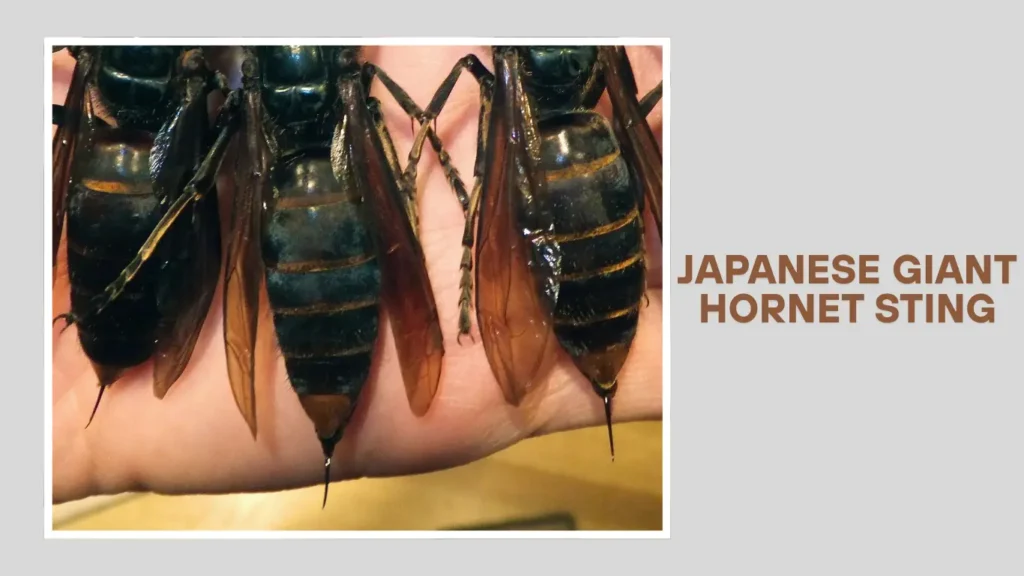
Closely related to the Asian giant hornet, the Japanese giant hornet delivers an equally intense sting. This species is notorious in Japan for causing more insect-related deaths than any other, primarily due to allergic reactions and multiple stings from aggressive swarm attacks.
Identification
- Grows up to 2 inches long
- Large yellow-orange head with dark brown thorax and yellow-black banded abdomen
- Stinger is long and smooth, capable of repeated use
- Commonly nests underground or in decayed tree roots
- Aggressive when defending their territory or nest
Japanese Giant Hornet Sting Reaction
The sting results in instant, piercing pain that intensifies within minutes. The venom is both cytotoxic and neurotoxic, capable of damaging tissue and impacting the nervous system. In severe cases, multiple stings can lead to renal failure or cardiac arrest if not treated quickly.
Japanese Giant Hornet Sting Symptoms
- Intense, radiating pain at the sting site
- Rapid swelling that can spread beyond the sting area
- Skin discoloration or bruising
- Nausea, headache, or feverish symptoms
- Severe allergic responses: hives, throat swelling, difficulty breathing, drop in blood pressure
Japanese Giant Hornet Sting Treatment
Clean the sting area thoroughly with soap and water. Apply a cold compress to minimize swelling and pain. Take oral antihistamines and painkillers such as ibuprofen to manage discomfort. If multiple stings occur or symptoms worsen quickly, seek immediate medical attention. An epinephrine injection may be required in cases of anaphylaxis. Hospitalization is often necessary for multiple stings or systemic reactions.
5. Yellow-Legged Hornet Sting

The yellow-legged hornet (Vespa velutina), an invasive species in parts of Europe and Asia, is feared for its painful sting and threat to honeybee populations. Though less venomous than the Asian giant hornet, its sting can still cause significant discomfort and allergic reactions in sensitive individuals.
Identification
- Slightly smaller than native hornets, about ¾ inch to 1 inch long
- Dark brown or black body with a distinctive yellow band on the rear abdomen
- Yellow legs give this hornet its name
- Nests are usually aerial, large, and often found in tall trees or building eaves
- Aggressive near nest sites and capable of repeated stings
Yellow-Legged Hornet Sting Reaction
The sting is sharply painful and can cause significant swelling. These hornets can attack in groups if their nest is disturbed, increasing the risk of multiple stings. The venom contains enzymes that irritate tissues and can trigger allergic responses in sensitive individuals.
Yellow-Legged Hornet Sting Symptoms
- Immediate stinging or burning sensation
- Swelling and redness localized to the sting area
- Itching and mild skin irritation
- Possible dizziness or nausea after multiple stings
- In rare cases: anaphylactic shock or difficulty breathing
Yellow-Legged Hornet Sting Treatment
Start by cleaning the affected area with soap and water. Apply a cold compress for 10–15 minutes to control swelling and ease pain. Oral antihistamines can help reduce itching and allergic responses. Pain relievers such as acetaminophen or ibuprofen may be used if needed. If symptoms escalate or signs of a severe allergic reaction appear, seek emergency medical attention immediately.
6. Murder Hornet Sting

The “murder hornet” is a nickname given to the Asian giant hornet due to its lethal potential and painful sting. While the term is more media-driven than scientific, it refers to the same species: Vespa mandarinia. However, in regions where the term is popularized, it’s often used to highlight particularly aggressive sting cases.
Identification
- Very large: up to 2 inches in length
- Orange-yellow head with large black eyes
- Black thorax and striped yellow-black abdomen
- Smooth, long stinger that allows multiple stings
- Nests typically underground, but may also be in tree hollows
Murder Hornet Sting Reaction
The sting delivers a large dose of venom and causes a deep, burning pain that can be excruciating. It contains neurotoxins and cytolytic peptides that damage tissue and nerves. In some cases, a swarm attack can lead to multiple stings, resulting in serious medical emergencies including organ failure.
Murder Hornet Sting Symptoms
- Severe, hot needle-like pain at the sting site
- Widespread redness and swelling
- Bruising or skin discoloration
- Possible fever, dizziness, or nausea
- Severe allergic symptoms: difficulty breathing, hives, swelling of the face or throat, anaphylaxis
Murder Hornet Sting Treatment
Immediately wash the sting site to prevent infection. Apply a cold compress or ice wrapped in a cloth to reduce pain and swelling. Antihistamines can control allergic itching, and anti-inflammatory medications (like ibuprofen) can reduce discomfort. For multiple stings or any signs of systemic reaction, seek emergency care without delay. People with insect sting allergies should always carry an epinephrine auto-injector.
7. Black Hornet Sting

The term “black hornet” can refer to various dark-colored wasps or hornets, such as black variations of the bald-faced hornet or certain solitary wasps. While not a distinct species, the sting effects are similar to those of other aggressive hornets and can be quite painful and inflammatory.
Identification
- Entirely black or dark-bodied hornet
- May resemble a bald-faced hornet without the white markings
- Similar in size: ½ to ¾ inch long
- Nests are often aerial, found in trees, attics, or under eaves
- Capable of stinging repeatedly without losing its stinger
Black Hornet Sting Reaction
The black hornet sting results in sudden, sharp pain, followed by swelling and irritation. The venom includes enzymes that break down cell membranes, leading to inflammation and discomfort. Though not usually life-threatening, multiple stings can cause intense pain and risk of allergic reaction.
Black Hornet Sting Symptoms
- Quick onset of burning pain
- Localized swelling and redness
- Tender, warm area surrounding the sting
- Mild itching or stinging sensation
- Allergic symptoms (rare): hives, breathing difficulty, swelling in face or throat
Black Hornet Sting Treatment
Start by cleaning the sting site with soap and water to remove venom and prevent infection. Apply an ice pack wrapped in a cloth for 10–15 minutes to reduce pain and swelling. Antihistamines may help relieve itching and inflammation. Use pain relievers like ibuprofen for added comfort. Monitor for signs of allergy, and if symptoms worsen or spread, seek medical attention immediately.
8. Ground Hornet Sting

Ground hornets, often confused with ground wasps or cicada killers, refer to hornet species that nest in the soil. These hornets are typically more solitary but can become aggressive if their underground nest is disturbed, delivering painful stings.
Identification
- Large hornet or wasp-like insect, usually 1 to 1.5 inches long
- Yellow and black striped abdomen or solid black appearance depending on species
- Nest entrance is a small hole in the ground, often surrounded by loose dirt
- Active in sunny, dry soil areas such as lawns or gardens
- Capable of repeated stings without losing the stinger
Ground Hornet Sting Reaction
A sting from a ground hornet delivers a sharp, piercing pain that may feel like a sudden burn. Due to the hidden nature of the nest, people often receive multiple stings before realizing they’ve disturbed a nest. The venom can cause significant swelling and irritation.
Ground Hornet Sting Symptoms
- Sudden, intense pain at the sting site
- Swelling that may spread quickly around the area
- Redness and warmth
- Itchiness or tingling sensation
- In sensitive individuals: nausea, lightheadedness, or allergic symptoms
Ground Hornet Sting Treatment
Clean the area with soap and water to prevent infection. Apply a cold compress or ice wrapped in cloth for 10–15 minutes to reduce swelling and pain. Antihistamines may ease itching, and anti-inflammatory pain relievers such as ibuprofen can reduce discomfort. Watch for allergic reactions; if symptoms such as throat tightness or trouble breathing occur, get emergency medical help immediately.
9. Red Hornet Sting

The red hornet isn’t an officially recognized species but often refers to hornets or wasps with reddish or rust-colored bodies, such as certain European or tropical hornet varieties. These hornets are aggressive defenders of their nests and deliver powerful, painful stings.
Identification
- Reddish-brown or rust-colored body
- Size ranges from ¾ to 1.25 inches
- Often confused with paper wasps or European hornets
- Nest may be aerial (in trees, bushes, or buildings) or hidden in wall voids
- Stinger is smooth and allows repeated stings
Red Hornet Sting Reaction
The sting from a red hornet causes sharp, burning pain and significant swelling. The venom can break down cell tissue, triggering local inflammation and irritation. While not usually deadly, the sting is particularly painful and may cause moderate to severe skin reactions.
Red Hornet Sting Symptoms
- Intense pain right after the sting
- Swelling and redness around the sting site
- Local warmth and a firm, raised bump
- Itching, tingling, or tenderness
- In allergic individuals: difficulty breathing, dizziness, facial swelling
Red Hornet Sting Treatment
Clean the sting site thoroughly with soap and cool water. Apply a cold compress to reduce swelling and numb the pain. Antihistamines like diphenhydramine can help relieve itching and redness. Use ibuprofen or acetaminophen for pain relief. In case of allergic symptoms or multiple stings, seek medical attention promptly.
10. Northern Giant Hornet Sting
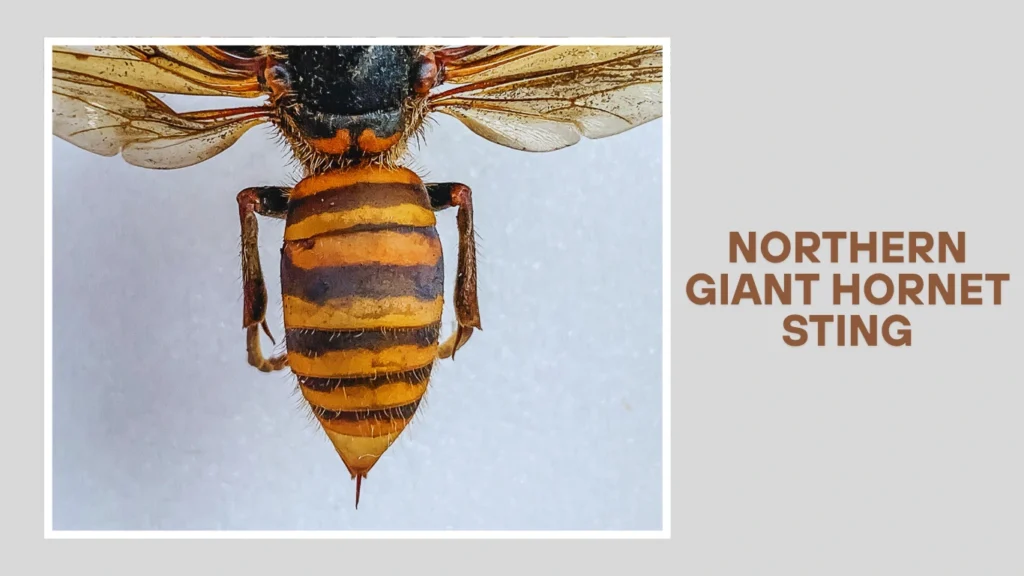
The Northern giant hornet is a recently adopted name for the species previously known as the Asian giant hornet (Vespa mandarinia). Found in parts of Asia and now spotted in North America, this hornet’s sting is infamous for its size, toxicity, and pain.
Identification
- Enormous hornet: 1.5 to 2 inches in length
- Bright orange-yellow head with large black eyes
- Broad black thorax and striped yellow-black abdomen
- Smooth, needle-like stinger, around 6 mm long
- Nests in underground burrows or rotting tree bases
Northern Giant Hornet Sting Reaction
This hornet delivers a deep, piercing sting that injects a large amount of venom. The sting causes severe localized pain and systemic reactions in some individuals. The venom includes neurotoxins and cytolytic enzymes that can cause tissue damage and in rare cases, organ failure if stung repeatedly.
Northern Giant Hornet Sting Symptoms
- Intense, sharp pain at the sting site
- Large, swollen area that may feel hot and hard
- Skin may become red, bruised, or even necrotic in severe cases
- Possible fever, fatigue, or dizziness
- Severe allergic symptoms: shortness of breath, hives, facial swelling, anaphylaxis
Northern Giant Hornet Sting Treatment
Immediately wash the sting area with soap and cool water. Apply a cold pack to manage swelling and pain. Oral antihistamines and topical creams can reduce itching and inflammation. If multiple stings occur or signs of allergic reaction develop, call emergency services immediately. People with venom allergies should use an epinephrine auto-injector if available.
11. Lesser Banded Hornet Sting

The lesser banded hornet (Vespa affinis) is a widespread species found across Asia and parts of Australia. It’s known for its aggressive behavior when disturbed and can deliver multiple painful stings due to its unbarbed stinger.
Identification
- Medium to large hornet: about 0.8 to 1 inch long
- Black body with yellow or orange bands on the abdomen
- Nests are often aerial—hanging from tree branches, roofs, or under overhangs
- Active during the day and more aggressive during nesting season
- Capable of repeated stings
Lesser Banded Hornet Sting Reaction
The sting from a lesser banded hornet produces sharp, intense pain and visible swelling. The venom is not considered deadly in most cases, but it can cause strong allergic reactions or discomfort, especially after multiple stings.
Lesser Banded Hornet Sting Symptoms
- Burning or stabbing pain at the sting site
- Redness and inflammation
- Swelling that may extend beyond the sting area
- Local heat and a raised bump
- Allergic symptoms: rash, hives, difficulty breathing (in rare cases)
Lesser Banded Hornet Sting Treatment
Clean the area thoroughly with mild soap and water. Apply a cold compress or ice pack to reduce pain and limit swelling. Oral antihistamines like loratadine or diphenhydramine can relieve itching and allergic response. For pain, use acetaminophen or ibuprofen. If the sting results in a severe allergic reaction, seek emergency medical attention immediately.
12. Dog Hornet Sting Reaction

While not a specific hornet species, hornet stings on dogs are a common concern for pet owners. Dogs are naturally curious and may disturb a nest unknowingly, resulting in one or more painful stings. Because dogs can’t explain their symptoms, recognizing the signs and responding quickly is crucial.
Identification
- Dogs may suddenly yelp, scratch, bite, or paw at the sting site
- Common sting areas: face, nose, ears, paws, or belly
- Swelling or redness may be visible
- Nests may be nearby—in bushes, trees, ground, or eaves
Dog Hornet Sting Symptoms
- Local swelling and redness
- Whimpering or licking the affected area
- Drooling or vomiting (especially after multiple stings)
- Hives or welts on the skin
- Severe symptoms: difficulty breathing, collapse, pale gums, or swollen face (signs of anaphylaxis)
Dog Hornet Sting Treatment
Immediately move your dog away from the nest area. Apply a cold compress to the sting site to reduce pain and swelling. Monitor for signs of a severe allergic reaction. Administer antihistamines only under a vet’s direction. If your dog shows difficulty breathing, vomiting, or facial swelling, visit an emergency vet immediately. Multiple stings may require IV fluids and antivenom treatment in a clinical setting.
FAQ: Hornet Sting Questions Answered
1. How do you treat a hornet sting at home?
Start by washing the sting area with soap and cool water to reduce the risk of infection. Apply a cold compress for 10–15 minutes to reduce pain and swelling. Over-the-counter antihistamines can help with itching, and pain relievers like ibuprofen or acetaminophen can ease discomfort. Avoid scratching the sting site to prevent further irritation. If symptoms worsen or signs of allergy appear, seek medical attention.
2. What does a hornet sting look like after 24 to 48 hours?
A hornet sting may appear as a raised, red, and swollen area with a firm bump at the center. Within 24 to 48 hours, the swelling may increase, and the area can feel warm and tender. Mild bruising or itching may also develop. In non-allergic reactions, symptoms generally subside after two to three days.
3. Can a hornet sting more than once?
Yes, hornets have smooth stingers and can sting multiple times without harming themselves. Unlike honeybees, which lose their stinger, hornets can repeatedly inject venom, making them especially dangerous if provoked or defending their nest.
4. What is the difference between a hornet sting and a wasp sting?
Hornet stings are typically more painful than wasp stings due to the higher venom volume and deeper penetration. Hornet venom can also cause more severe swelling and allergic reactions. However, both types of stings share similar treatment protocols and risks.
5. How long does swelling from a hornet sting last?
Swelling from a hornet sting usually peaks within the first 24–48 hours. For most people, the swelling gradually decreases and resolves within 3–7 days. In cases of larger local reactions or mild allergies, swelling may persist slightly longer. If swelling worsens after 48 hours or spreads significantly, consult a healthcare provider.
