

Orange butterflies are hard to miss—their fiery wings light up gardens, fields, and forests with every flutter. I’ve listed 15 stunning orange butterflies in this guide that stand out for their color, pattern, and charm. Whether you’re a casual observer or a butterfly enthusiast, these species are a joy to watch and even easier to admire.
1. Monarch Butterfly
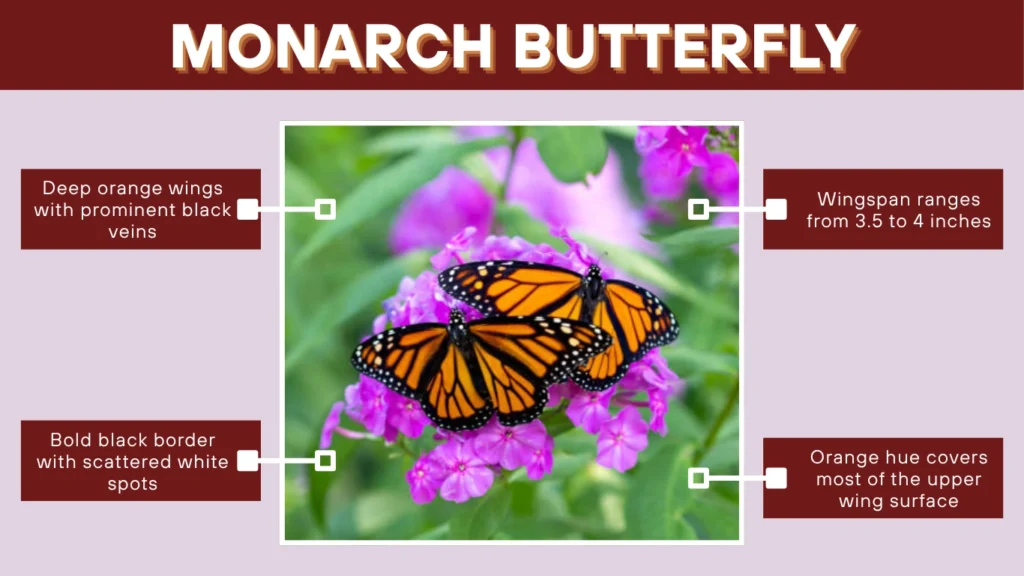
The Monarch Butterfly is one of the most iconic and admired orange butterflies in the world. Its deep orange wings, bordered in black and patterned with white spots, make it unmistakable in flight. The vivid orange not only enhances its beauty but also serves as a warning to predators about its toxicity.
Identification
- Deep orange wings with prominent black veins
- Bold black border with scattered white spots
- Underside is lighter orange with brown tones
- Wingspan ranges from 3.5 to 4 inches
- Orange hue covers most of the upper wing surface
Color Pattern
The Monarch’s orange coloration is rich and vibrant, especially on the upper side of the wings. This fiery orange is sharply contrasted by dark black veins that run through each wing, giving it a stained-glass appearance. The orange tone fades slightly on the underside but still dominates the color palette.
Habitat
Monarchs are commonly found in open, sunny environments like meadows, prairies, gardens, and roadsides. Milkweed is essential for their reproduction and is often found in these areas.
Behavior
They are active fliers and often glide smoothly over long distances. During migration, they can travel up to 3,000 miles. They feed mainly on nectar from wildflowers, especially those that bloom in open fields.
2. Julia Heliconian
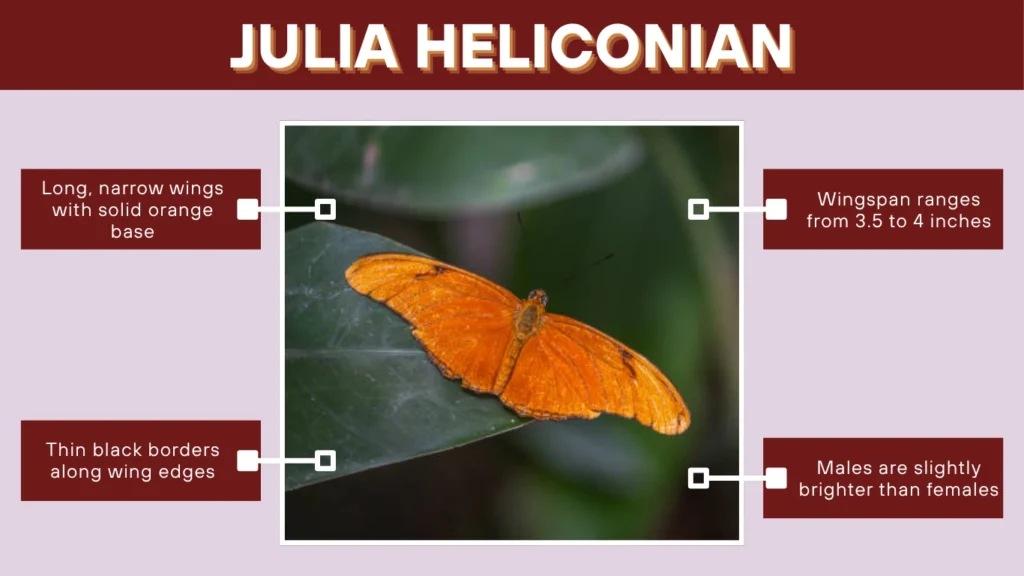
The Julia Heliconian is a striking butterfly known for its long, narrow wings drenched in vivid orange. Unlike other butterflies with patterned wings, the Julia’s wings are almost entirely orange with minimal black, making its appearance sleek and elegant.
Identification
- Long, narrow wings with solid orange base
- Thin black borders along wing edges
- Wingspan ranges from 3.5 to 4 inches
- Males are slightly brighter than females
- Underside is duller with pale brown-orange tone
Color Pattern
The Julia Heliconian showcases a clean and bold orange color across its wings. The minimal black borders accentuate the richness of the orange, especially in sunlight. Its wings look almost flame-like in motion, and the absence of dark vein lines gives it a smooth and glowing finish.
Habitat
This butterfly is often found in tropical and subtropical environments, including gardens, forests, and near water sources in Central and South America, as well as the southern United States.
Behavior
The Julia is a strong and agile flier. Males are known for patrolling territories and may be seen hovering near nectar sources. They often perch with wings fully open to absorb sunlight.
3. Gulf Fritillary
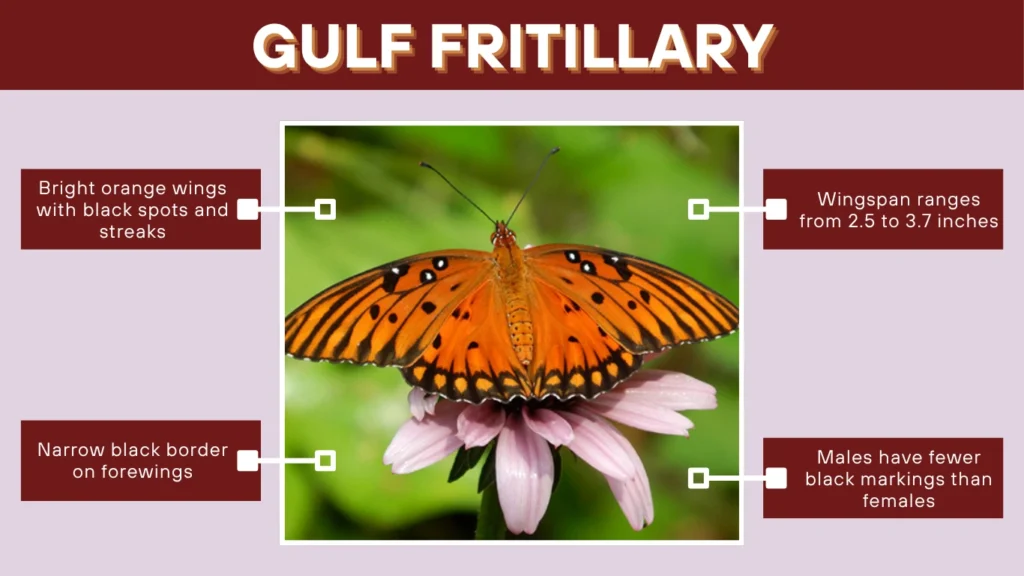
The Gulf Fritillary is a vibrant butterfly known for its bright orange wings and silver-spotted underwings. It’s commonly seen fluttering around gardens and open fields, especially where passionflower vines grow.
Identification
- Bright orange wings with black spots and streaks
- Narrow black border on forewings
- Underside is tan with large metallic silver spots
- Wingspan ranges from 2.5 to 3.7 inches
- Males have fewer black markings than females
Color Pattern
The Gulf Fritillary’s upper wings are painted in brilliant pumpkin-orange, speckled with neat black spots and lines. This contrast creates a bold, eye-catching pattern. The bright orange intensifies when seen under sunlight, while the undersides surprise with reflective silver patches.
Habitat
It prefers open, sunny areas like meadows, gardens, parks, and roadsides—especially places where passionflower, the larval host plant, is available.
Behavior
Gulf Fritillaries are fast and direct fliers. They’re commonly seen basking with open wings or sipping nectar from zinnias, lantanas, and other garden flowers.
4. Orange Sulphur
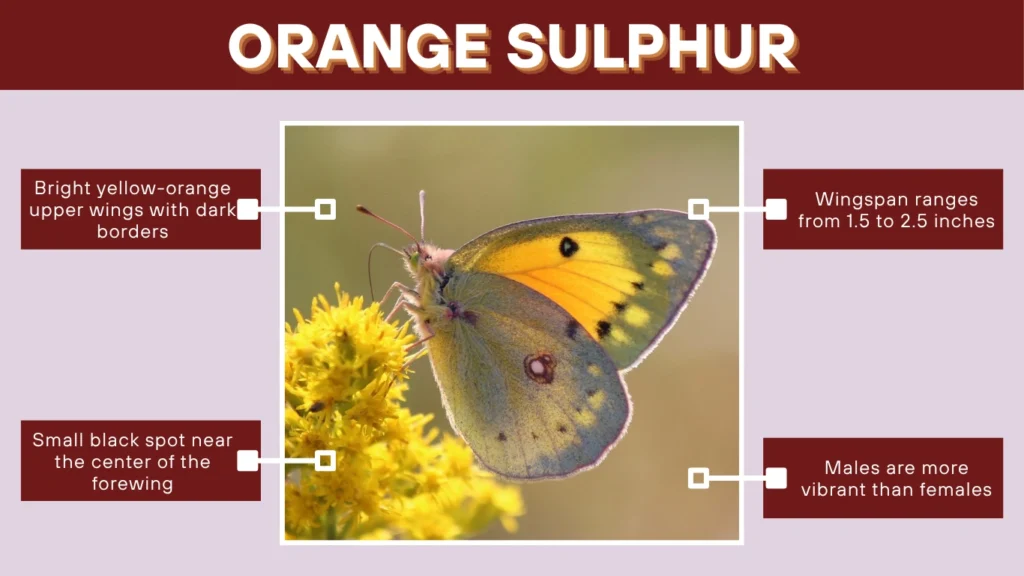
The Orange Sulphur, also known as the Alfalfa Butterfly, is a widespread species with a soft yet vivid orange tone across its wings. It often flies low over fields and meadows, blending in beautifully with blooming wildflowers.
Identification
- Bright yellow-orange upper wings with dark borders
- Small black spot near the center of the forewing
- Underside is mottled orange with occasional white spots
- Wingspan ranges from 1.5 to 2.5 inches
- Males are more vibrant than females
Color Pattern
The Orange Sulphur has a warm orange-yellow coloration that intensifies under direct sunlight. The orange is most visible on the upper wings and contrasts with the charcoal-gray outer edges, giving it a framed look. The tone may vary slightly between individuals but remains dominantly orange across the forewings.
Habitat
Found in open habitats like fields, gardens, pastures, and roadsides across North America, especially in areas where legumes such as alfalfa and clover grow.
Behavior
These butterflies are highly active and often seen fluttering just above the ground. They frequently visit flowering plants for nectar and are known to bask in the sun with wings partially open.
5. Baltimore Checkerspot
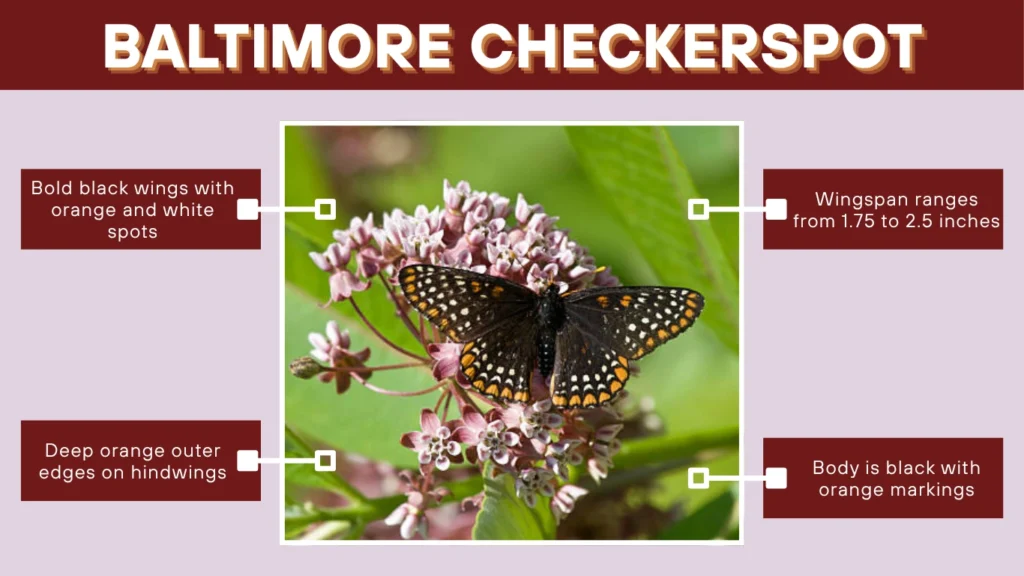
Although often associated with black and white, the Baltimore Checkerspot features a stunning deep orange tone that highlights its bold, checkered wings. It’s a rare beauty that thrives in wetland areas.
Identification
- Bold black wings with orange and white spots
- Deep orange outer edges on hindwings
- Wingspan ranges from 1.75 to 2.5 inches
- Body is black with orange markings
- Underside has more muted orange and tan patterning
Color Pattern
The Baltimore Checkerspot’s orange is not dominant but strikingly placed, especially around the wing margins and near the forewing tips. These orange highlights glow against the deep black background, creating a high-contrast and regal appearance. The hint of orange is subtle yet elegant.
Habitat
This butterfly is typically found in wet meadows, marshes, and areas with turtlehead plants—the preferred larval host. It is less commonly seen compared to other orange species.
Behavior
Baltimore Checkerspots tend to stay low to the ground and are most active in the morning and late afternoon. They are deliberate in flight and may spend long periods basking or feeding.
6. Tawny Emperor
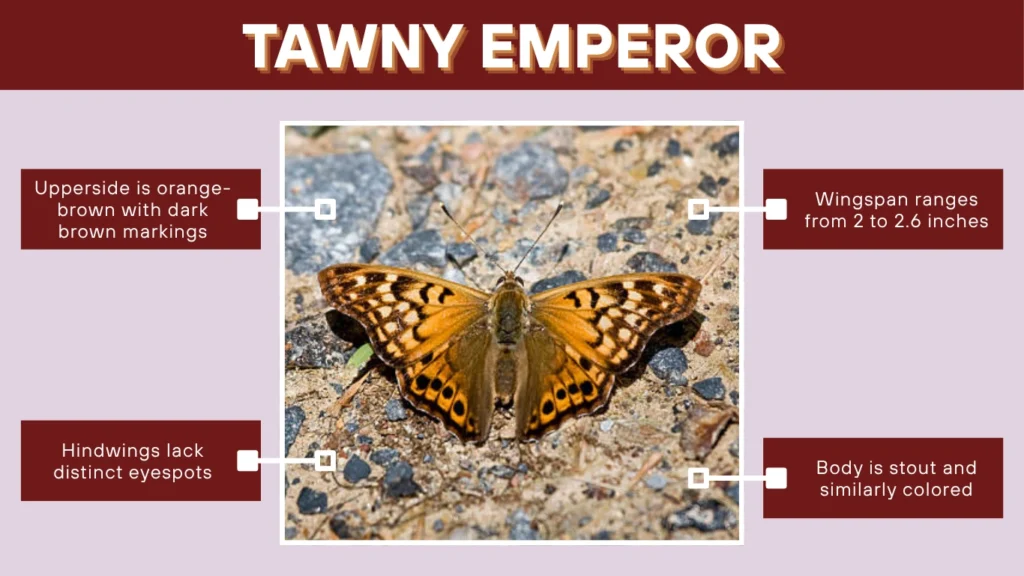
The Tawny Emperor is a handsome butterfly with warm, tawny-orange wings and subtle earthy patterns. While it may not be as vividly orange as others, its soft and blended orange tones give it a rustic, natural beauty.
Identification
- Upperside is orange-brown with dark brown markings
- Hindwings lack distinct eyespots
- Underside is paler with shades of gray, brown, and orange
- Wingspan ranges from 2 to 2.6 inches
- Body is stout and similarly colored
Color Pattern
The Tawny Emperor displays a muted yet rich orange hue across its wings, merging with brown tones in a marbled effect. The orange is especially noticeable in the central parts of the wings and appears more vibrant under sunlight. This warm coloration helps it camouflage among dry leaves and tree bark.
Habitat
Often found in wooded areas, city parks, and near hackberry trees—the host plant for its caterpillars. It thrives in shaded spots with access to moisture and decaying fruit.
Behavior
Rather than visiting flowers, Tawny Emperors prefer feeding on sap, rotting fruit, or animal droppings. They’re agile and quick in flight and often rest on tree trunks or the ground.
7. Painted Lady
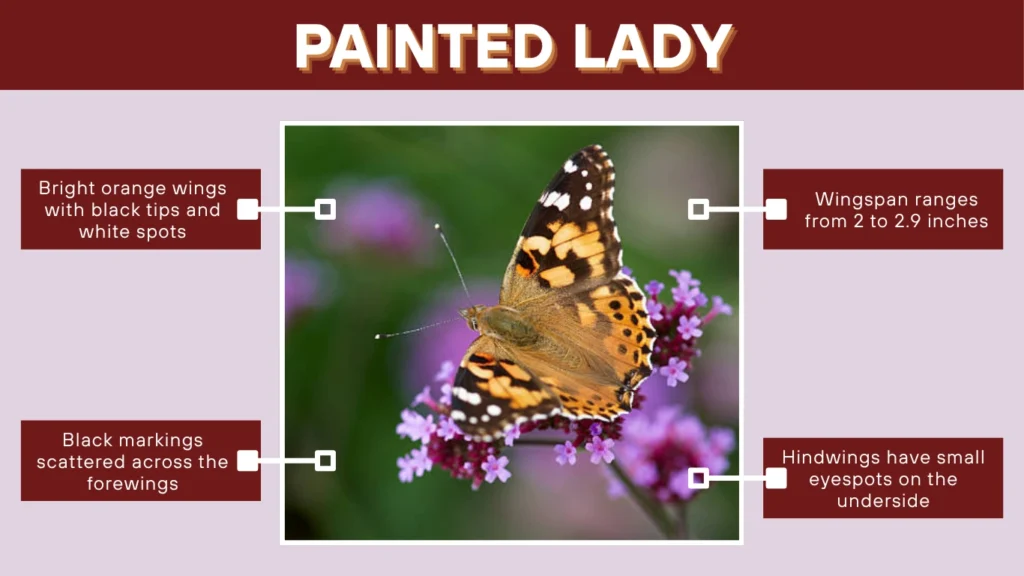
The Painted Lady is a globally widespread butterfly with a brilliant orange base accented by black and white markings. It’s one of the most adaptable and frequently seen butterflies across many continents.
Identification
- Bright orange wings with black tips and white spots
- Black markings scattered across the forewings
- Underside has intricate brown and gray patterns
- Wingspan ranges from 2 to 2.9 inches
- Hindwings have small eyespots on the underside
Color Pattern
The orange on the Painted Lady is lively and fiery, covering most of the upper forewings and hindwings. Contrasted by black blotches and white dots on the forewing tips, the orange looks even more intense. Its pattern is bold and busy, but the orange always stands out as the dominant hue.
Habitat
This butterfly is found in gardens, open fields, roadsides, and even deserts. It thrives in sunny environments and feeds on nectar from a wide variety of plants.
Behavior
Painted Ladies are strong migrants and can travel long distances. They are active fliers, often seen fluttering from flower to flower, and are especially attracted to thistles and daisies.
8. Viceroy (Orange Morph)
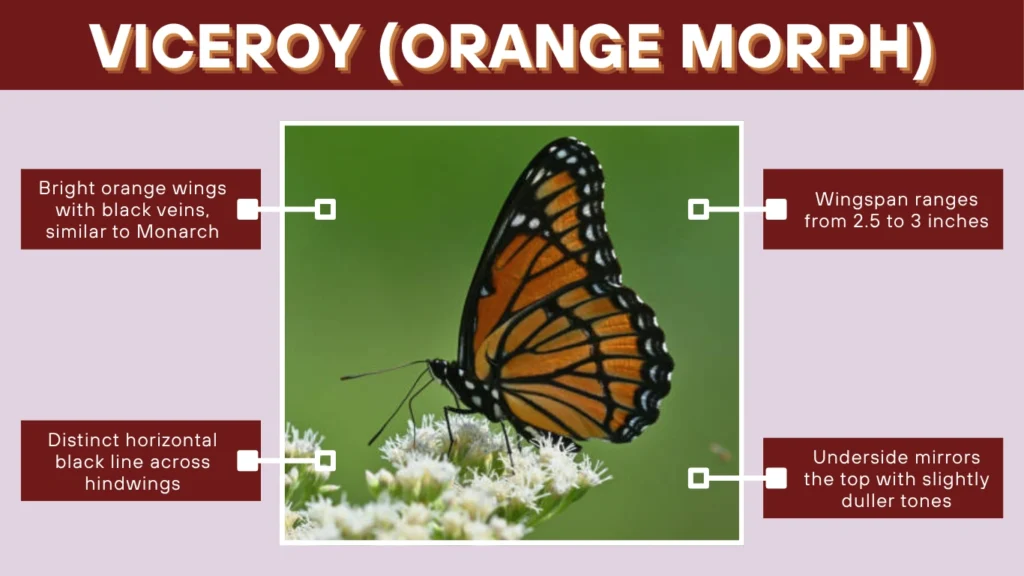
The orange morph of the Viceroy Butterfly is a regional variation that closely resembles the Monarch but is slightly smaller and features a distinct black line across the hindwings. Its vibrant orange coloring can make it easily mistaken for its toxic cousin.
Identification
- Bright orange wings with black veins, similar to Monarch
- Distinct horizontal black line across hindwings
- Wingspan ranges from 2.5 to 3 inches
- White spots on the black borders
- Underside mirrors the top with slightly duller tones
Color Pattern
The orange morph of the Viceroy boasts a deep, rich orange tone that dominates the wings. Its pattern is nearly identical to the Monarch but the orange can sometimes appear slightly redder or more saturated. The horizontal black line is the main distinguishing feature, slicing across the hindwings and giving it a signature look.
Habitat
Found near water bodies like swamps, marshes, and lakes where willow and poplar trees—the larval host plants—are abundant.
Behavior
The Viceroy is a strong flier but tends to stay closer to the ground compared to the Monarch. It often rests with its wings open and actively feeds on nectar, decaying fruit, and even dung.
9. American Copper
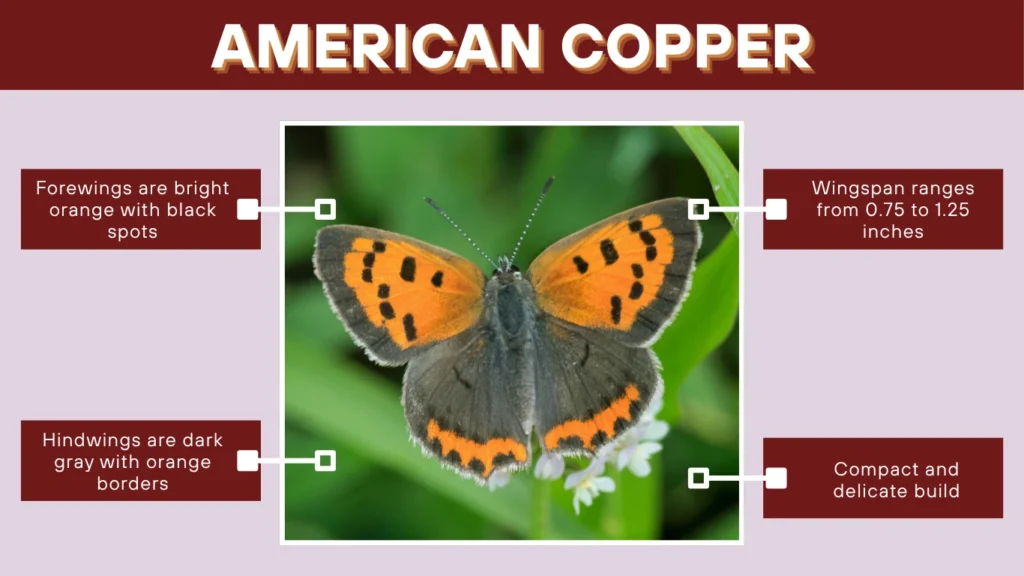
The American Copper is a small butterfly, but what it lacks in size, it makes up for in brilliant color. Its bright, fiery orange wings with sharp black spots are easy to spot when basking in the sun.
Identification
- Forewings are bright orange with black spots
- Hindwings are dark gray with orange borders
- Underside is light gray with subtle spots
- Wingspan ranges from 0.75 to 1.25 inches
- Compact and delicate build
Color Pattern
The forewings of the American Copper glow in a vibrant, coppery-orange tone that shimmers in sunlight. The contrast between the orange and dark gray hindwings makes the color pop even more. Its small size enhances the intensity of the orange when viewed up close.
Habitat
Found in open grassy areas, meadows, pastures, and along roadsides throughout North America. It favors places where sheep sorrel or curly dock grows—its larval food source.
Behavior
These butterflies are fast fliers and stay low to the ground. They often rest with their wings open, especially on sunny mornings, and are attracted to small wildflowers and moist ground.
10. Variegated Fritillary
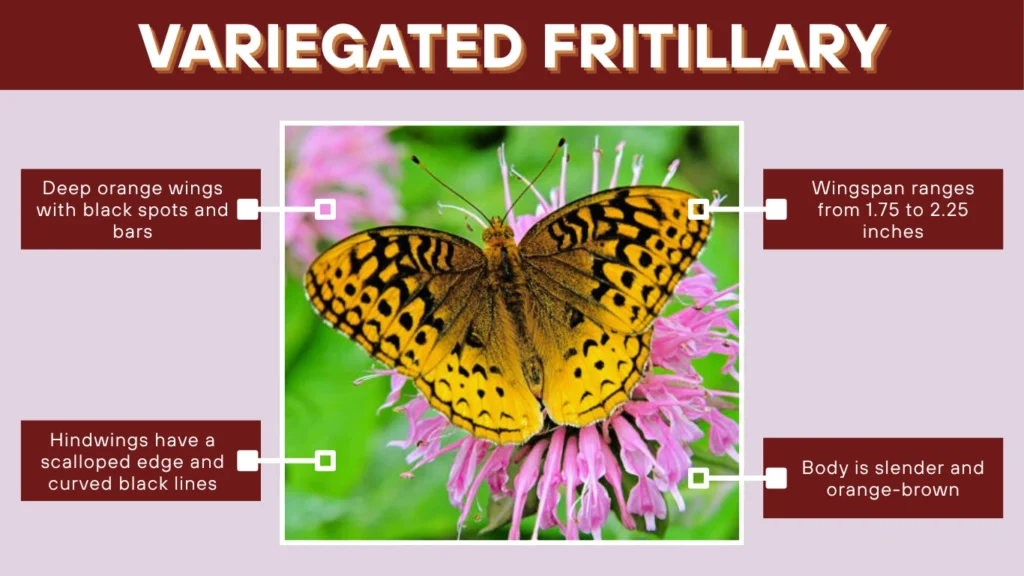
The Variegated Fritillary is a dynamic butterfly with a mix of bold orange and intricate black patterns across its wings. Its detailed markings and consistent orange coloration make it one of the most eye-catching fritillaries in North America.
Identification
- Deep orange wings with black spots and bars
- Hindwings have a scalloped edge and curved black lines
- Underside is brown and tan with less prominent markings
- Wingspan ranges from 1.75 to 2.25 inches
- Body is slender and orange-brown
Color Pattern
The base color is a warm, burnt orange, layered with dark black patterns in the form of dots, dashes, and outlines. This butterfly’s name comes from its “variegated” or multi-patterned appearance, but the orange dominates the visual experience on the upper side of the wings.
Habitat
Often seen in open fields, gardens, disturbed grounds, and roadsides. It prefers areas with host plants like passionflower, violets, and plantains.
Behavior
Variegated Fritillaries are active and strong fliers. They move frequently, landing briefly to feed or rest, and are drawn to nectar-rich flowers in sunny environments.
11. Queen Alexandra’s Sulphur
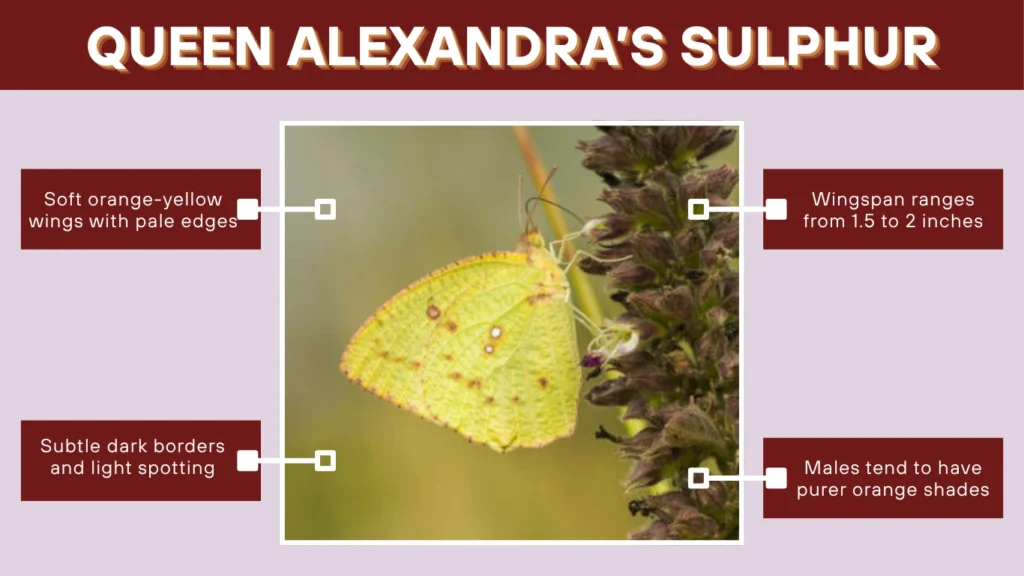
Queen Alexandra’s Sulphur is a lesser-known but beautifully colored butterfly, displaying glowing orange-yellow wings with soft accents. It’s named in honor of royalty and lives up to its noble name with its elegant flight and bright tones.
Identification
- Soft orange-yellow wings with pale edges
- Subtle dark borders and light spotting
- Wingspan ranges from 1.5 to 2 inches
- Underside is lighter with faint markings
- Males tend to have purer orange shades
Color Pattern
This butterfly’s wings shimmer with a soft, golden-orange hue, blending gradually into pale edges. The coloration is smooth and lacks strong contrasts, giving it a graceful and airy appearance in flight. Its glow is more pastel than fiery, making it stand out in a field of blooms.
Habitat
Found in sunny grasslands, gardens, and meadows where host plants like clover and wild legumes are abundant.
Behavior
It’s a gentle and fluttery flyer, often staying close to flowers and low vegetation. It spends most of its time feeding on nectar and soaking in the warmth of the sun.
12. Peacock Pansy (Dry Season Form)
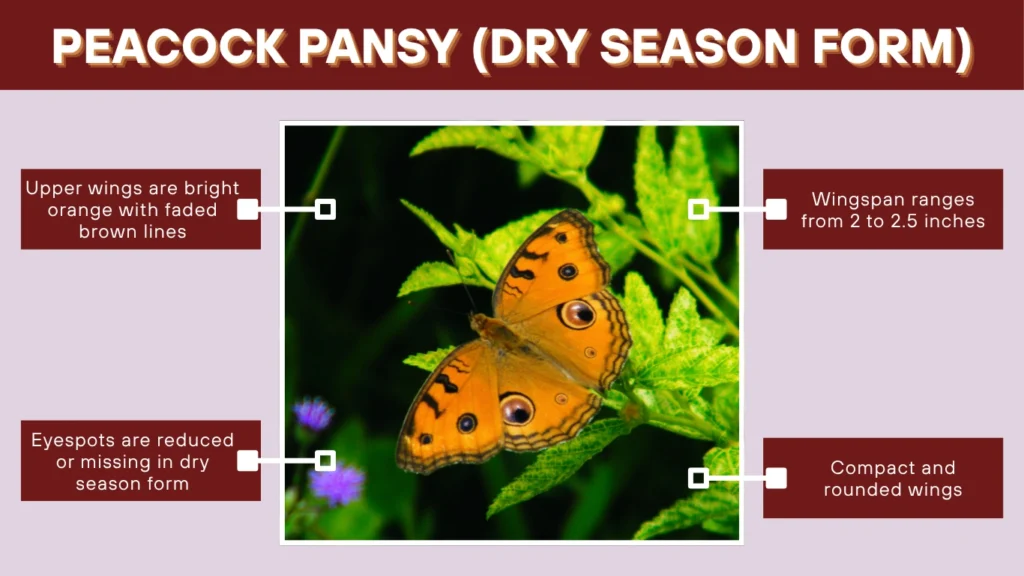
The Peacock Pansy, especially in its dry season form, shows off a glowing orange base with subtle patterns. During this season, its usual bold eyespots fade, allowing the orange tones to dominate its wings.
Identification
- Upper wings are bright orange with faded brown lines
- Eyespots are reduced or missing in dry season form
- Underside is dull brown for camouflage
- Wingspan ranges from 2 to 2.5 inches
- Compact and rounded wings
Color Pattern
In the dry season, the Peacock Pansy’s orange coloration becomes the centerpiece. The wings are bathed in a warm, golden-orange tone, highlighted by soft, blurred brown veins and markings. The absence of strong eyespots allows the orange to stand out more prominently than in the wet season.
Habitat
Commonly found in open fields, gardens, forest edges, and grassy roadsides throughout South and Southeast Asia.
Behavior
They prefer sunny areas where they can bask with wings fully open. Their behavior shifts between seasons, with more active flight patterns during cooler months and more basking in hotter periods.
13. Juno Longwing
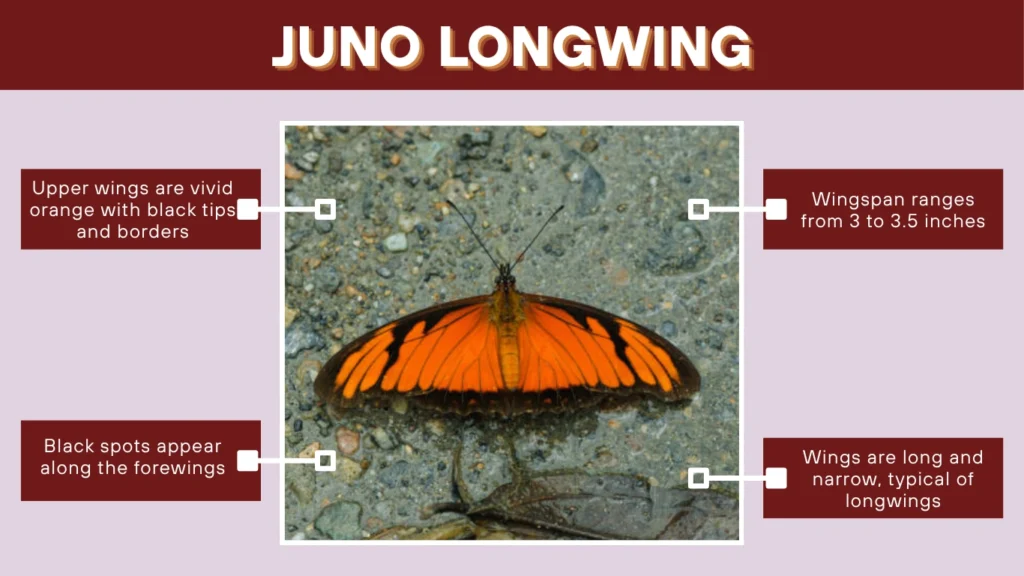
The Juno Longwing is a tropical butterfly with elongated wings painted in brilliant orange. Its sleek appearance and striking black accents make it a standout species in butterfly gardens and wild habitats alike.
Identification
- Upper wings are vivid orange with black tips and borders
- Black spots appear along the forewings
- Underside is paler with orange-brown tones
- Wingspan ranges from 3 to 3.5 inches
- Wings are long and narrow, typical of longwings
Color Pattern
The orange on the Juno Longwing is bold and vibrant, taking center stage across most of the wings. Black edging along the tips creates contrast, and the clean lines give the butterfly a sharp, refined appearance. In flight, the orange shines against the green background of tropical foliage.
Habitat
Found in tropical and subtropical regions, especially near forest clearings, riversides, and butterfly gardens in Central and South America.
Behavior
Juno Longwings are graceful fliers and often seen gliding slowly through sunlit clearings. They regularly visit passionflower vines and flowering plants for nectar.
14. Comma Butterfly (Summer Form)
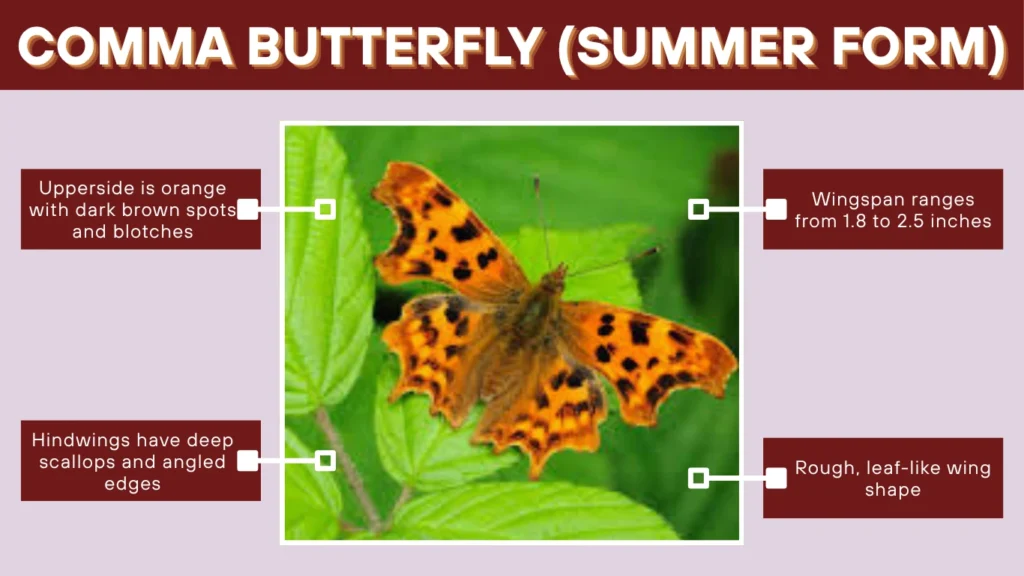
The Comma Butterfly in its summer form displays a rich, burnt-orange color with jagged wing edges and dark markings. Its angular wings and rustic tones give it a wild, woodland charm.
Identification
- Upperside is orange with dark brown spots and blotches
- Hindwings have deep scallops and angled edges
- Underside is mottled brown with a small white comma-shaped mark
- Wingspan ranges from 1.8 to 2.5 inches
- Rough, leaf-like wing shape
Color Pattern
The summer form of the Comma Butterfly boasts a warm, russet-orange tone with an earthy feel. The orange color is mottled and shadowed with irregular black markings, mimicking the appearance of autumn leaves. This natural camouflage helps it blend in, especially while resting on tree bark or ground cover.
Habitat
Usually found in woodlands, hedgerows, and along forest paths. It prefers areas with nettles or hops, which serve as host plants for its caterpillars.
Behavior
Comma Butterflies are sun-loving and often bask with wings open. Their erratic flight and preference for dappled light make them harder to spot unless resting or feeding on sap and fruit.
15. Large Copper
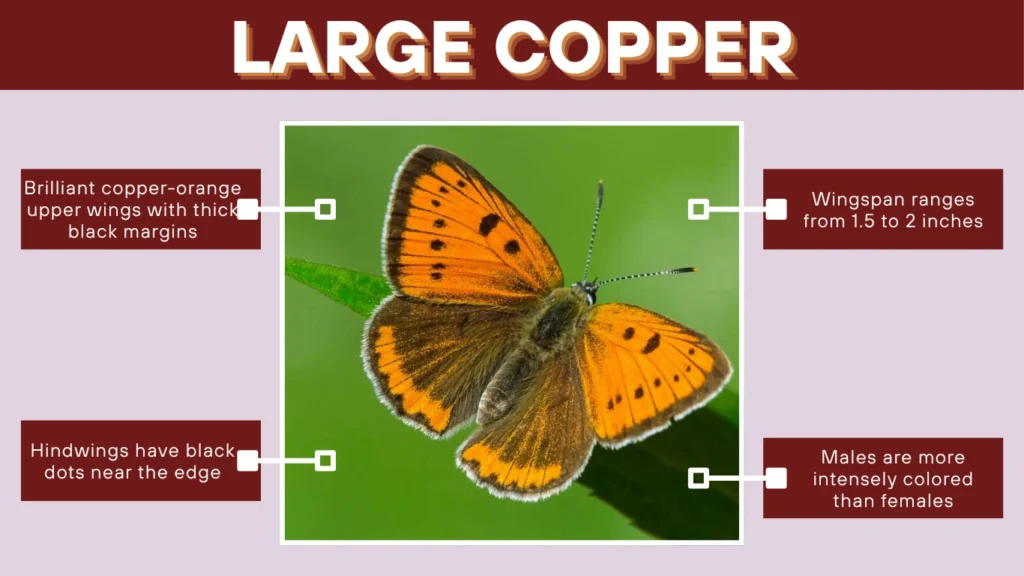
The Large Copper is a stunning butterfly with gleaming orange wings bordered by dark black. It’s one of the brightest and most intense orange butterflies found in Europe, treasured for its vivid, metallic-like glow.
Identification
- Brilliant copper-orange upper wings with thick black margins
- Hindwings have black dots near the edge
- Underside is pale gray with small black dots
- Wingspan ranges from 1.5 to 2 inches
- Males are more intensely colored than females
Color Pattern
This butterfly’s orange is fiery and reflective, almost metallic in appearance. The deep black edging makes the central orange even more striking. The upper wings appear like molten copper in the sunlight, giving this species its fitting name.
Habitat
Typically found in wetlands, meadows, and marshy fields in Europe and parts of Asia where its host plants, mainly docks and sorrels, are available.
Behavior
The Large Copper is territorial and energetic, often seen fluttering low among grass and flowers. It’s attracted to damp areas and sunny spots where it can both bask and feed.
FAQs
1. What butterfly is bright orange with black markings?
The Monarch Butterfly and the Gulf Fritillary are classic examples. Both have bold orange wings with dark black veins or spots, making them stand out in gardens and fields.
2. Are all orange butterflies poisonous?
Not all, but some, like the Monarch and Viceroy, are toxic or mimic toxic species. Their orange color acts as a warning sign to predators, a survival strategy known as aposematism.
3. Which small butterfly has copper-orange wings?
That would be the American Copper or the Large Copper. Though small, their wings shine brightly with a bold coppery-orange tone.
4. How can I tell a Monarch from a Viceroy?
Look for the black line across the hindwings—Viceroys have it, Monarchs don’t. Otherwise, they look very similar, especially the orange morph of the Viceroy.
5. What flowers attract orange butterflies?
Orange butterflies love nectar-rich blooms like milkweed, lantana, zinnias, thistles, and coneflowers. Native plants specific to your region will attract them more effectively.
