

The UK is home to a wide variety of butterflies, from bold, colorful garden visitors to subtle woodland species. Whether you’re walking through a meadow, exploring a hedgerow, or relaxing in your garden, you’re likely to spot some of these fascinating insects. Here’s a list of 20 butterflies commonly found across the UK, each with its own charm, habitat, and behavior.
1. Red Admiral
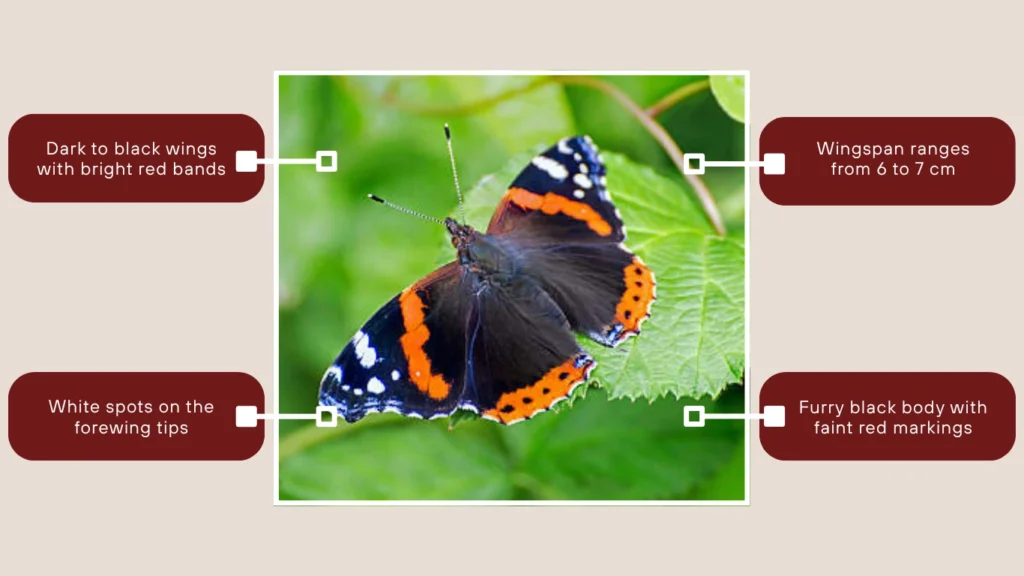
The Red Admiral is one of the most recognizable butterflies in the UK, known for its striking appearance and widespread presence. It’s a migratory species but is also capable of overwintering in mild conditions, making it a common sight from spring to late autumn.
Identification
- Dark to black wings with bright red bands
- White spots on the forewing tips
- Wingspan ranges from 6 to 7 cm
- Furry black body with faint red markings
- Underside is mottled brown with hints of red and blue
Habitat
The Red Admiral is highly adaptable and found in various habitats including gardens, parks, woodland edges, hedgerows, meadows, and coastal areas. It favors sunny spots with plenty of nectar-rich flowers and fallen fruit.
Region in the UK
Widespread across all parts of the UK—from southern England to northern Scotland, including Wales, Northern Ireland, and offshore islands. It’s particularly common in southern and coastal regions during the summer migration.
Behavior
Red Admirals are confident and often territorial. They fly with strong, direct movements and are frequently seen basking in sunlight on walls, tree trunks, or stones. They feed on buddleia, ivy blossom, and overripe fruit. In autumn, they’re known to gather in large numbers in gardens and orchards.
2. Peacock
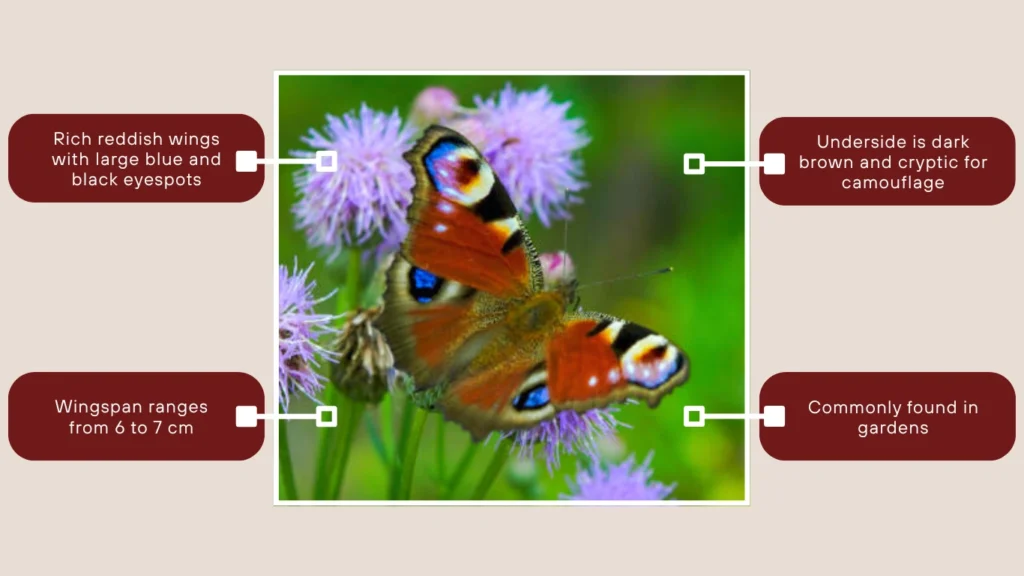
The Peacock butterfly is one of the UK’s most eye-catching species, famous for its dramatic eyespots that resemble a peacock’s feathers. It’s often among the first butterflies seen in spring due to its ability to hibernate through the winter.
Identification
- Rich reddish wings with large blue and black eyespots
- Wingspan ranges from 6 to 7 cm
- Underside is dark brown and cryptic for camouflage
Habitat
Commonly found in gardens, woodland clearings, meadows, parks, hedgerows, and along sunny tracks. Prefers areas rich in nectar plants and nettles for caterpillar food.
Region in the UK
Widespread throughout the UK, including England, Scotland, Wales, and Northern Ireland. It’s one of the most commonly seen butterflies across both rural and urban areas.
Behavior
Peacocks are confident, often sunbathing with wings open. The eyespots help deter predators, and they produce a hissing sound when threatened. Adults hibernate in sheltered places like sheds and tree hollows and reappear on warm early spring days.
3. Small Tortoiseshell
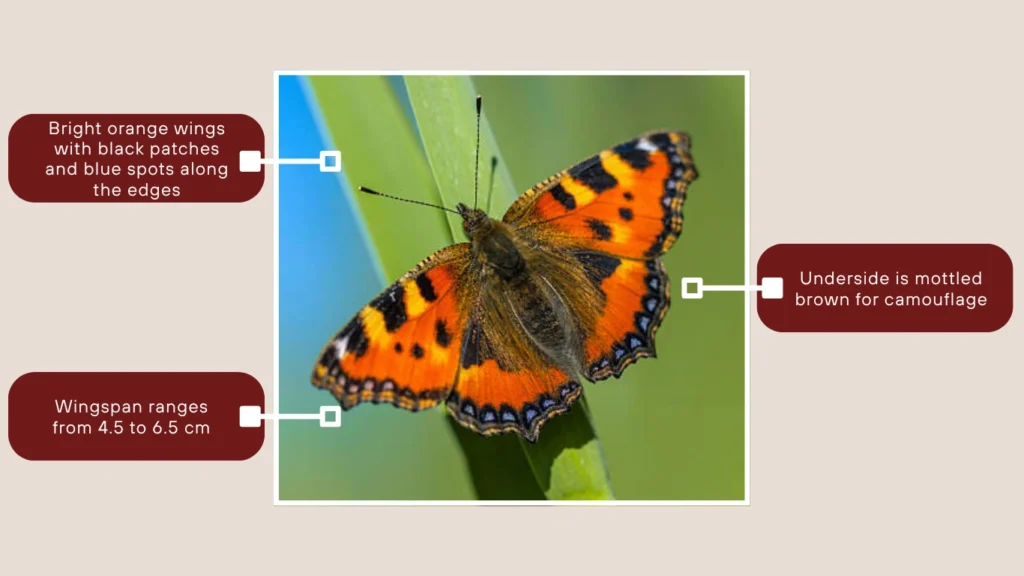
The Small Tortoiseshell is a vibrant and familiar butterfly across the UK. Its striking orange and black pattern makes it easily recognizable, and it’s a frequent garden visitor throughout the warmer months.
Identification
- Bright orange wings with black patches and blue spots along the edges
- Wingspan ranges from 4.5 to 6.5 cm
- Underside is mottled brown for camouflage
Habitat
Found in gardens, hedgerows, open countryside, grassy meadows, and urban green spaces. Nettles are essential for its larvae, making it common in places where these plants grow wild.
Region in the UK
Occurs throughout the UK, from southern England to northern Scotland, including Wales and Northern Ireland. It’s particularly widespread in lowland areas.
Behavior
Small Tortoiseshells are active and fast fliers. They are often seen feeding on garden flowers like buddleia and sedum. They hibernate over winter and are commonly seen flying on warm spring days. Males are territorial and may chase away other butterflies from their chosen spots.
4. Comma
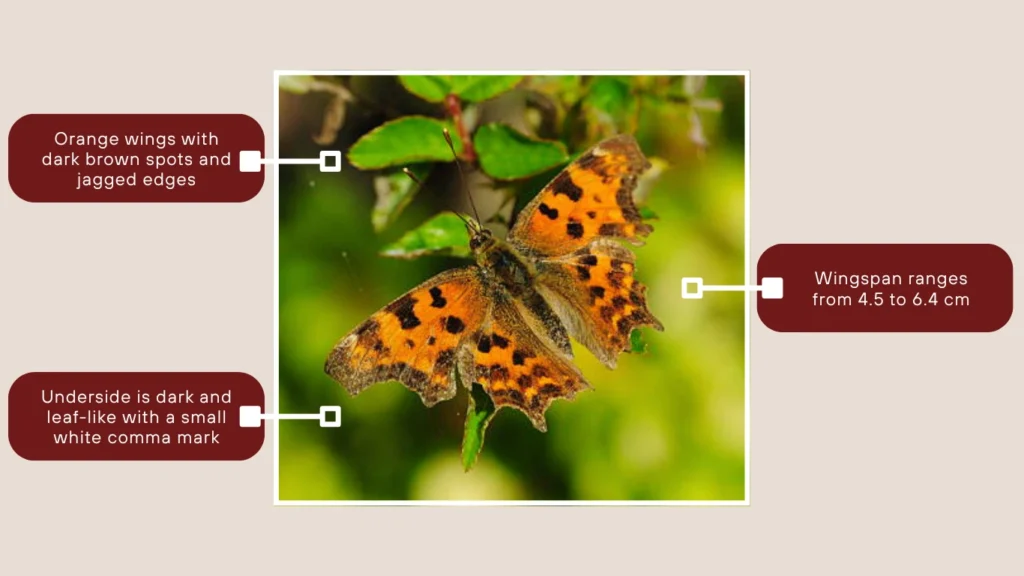
The Comma butterfly is easily recognized by its ragged wing edges and the small white ‘comma’-shaped mark on the underside of its hindwings. Its unique silhouette helps it blend in with dried leaves, offering great camouflage.
Identification
- Orange wings with dark brown spots and jagged edges
- Underside is dark and leaf-like with a small white comma mark
- Wingspan ranges from 4.5 to 6.4 cm
Habitat
Prefers woodland edges, hedgerows, gardens, scrublands, and sunny clearings. It thrives in places with stinging nettles and hop plants, which serve as food for its caterpillars.
Region in the UK
Found widely across England and Wales, with increasing sightings in southern Scotland and parts of Northern Ireland due to range expansion in recent years.
Behavior
The Comma is a sun-loving butterfly that basks with wings open. It hibernates through winter and reappears early in spring. Its territorial behavior includes perching in sunny spots and chasing away intruders.
5. Painted Lady
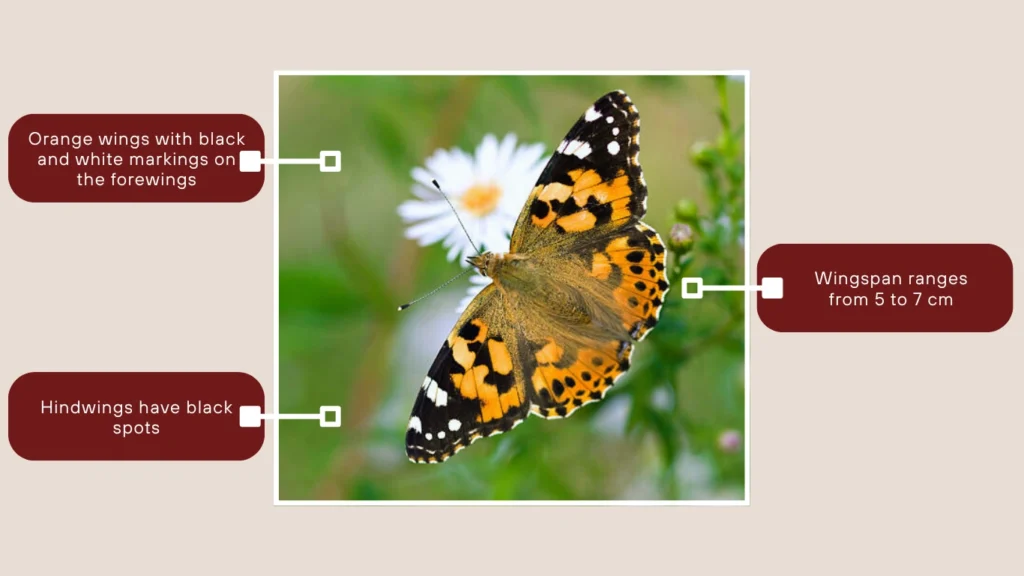
The Painted Lady is a well-known migratory butterfly that travels thousands of miles from North Africa to the UK each year. It’s admired for its beautiful coloration and long-distance endurance.
Identification
- Orange wings with black and white markings on the forewings
- Hindwings have black spots
- Wingspan ranges from 5 to 7 cm
Habitat
Extremely adaptable—found in gardens, parks, meadows, coastal areas, and open countryside. It breeds in areas with thistles, mallows, and nettles.
Region in the UK
Can be seen across the UK, including England, Wales, Scotland, and Northern Ireland—especially during large migration years when they arrive in massive numbers.
Behavior
Painted Ladies are powerful, fast fliers. They don’t hibernate but instead migrate in multiple generations. They’re frequently seen feeding on flowers such as thistles, buddleia, and knapweed, and are known for their non-stop activity during warm weather.
6. Brimstone
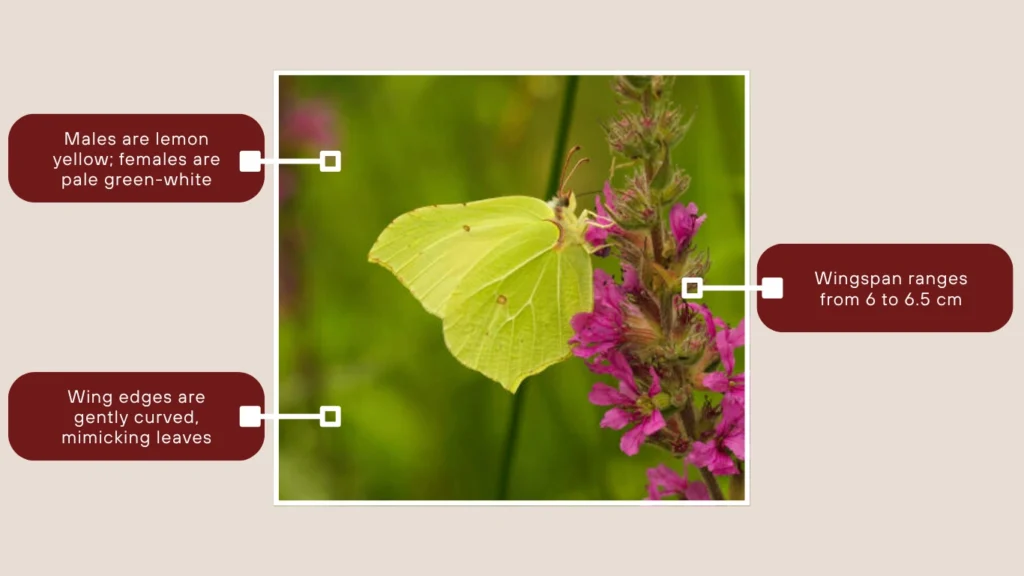
The Brimstone is often considered the first sign of spring in the UK, thanks to its early emergence from hibernation. Males are bright yellow, while females are pale greenish-white, and both resemble leaves when at rest.
Identification
- Males are lemon yellow; females are pale green-white
- Wing edges are gently curved, mimicking leaves
- Wingspan ranges from 6 to 6.5 cm
Habitat
Found in woodlands, hedgerows, scrublands, and country lanes, especially where buckthorn and alder buckthorn grow—these are the main food plants for the caterpillars.
Region in the UK
Widespread across southern and central England and Wales. Less common in northern England and rarely seen in Scotland and Ireland.
Behavior
Brimstones are strong, purposeful fliers. Adults hibernate in dense vegetation and can be seen flying on sunny winter days. Males patrol for mates in spring, and both sexes are commonly seen feeding on early-blooming flowers like primroses and bluebells.
7. Large White
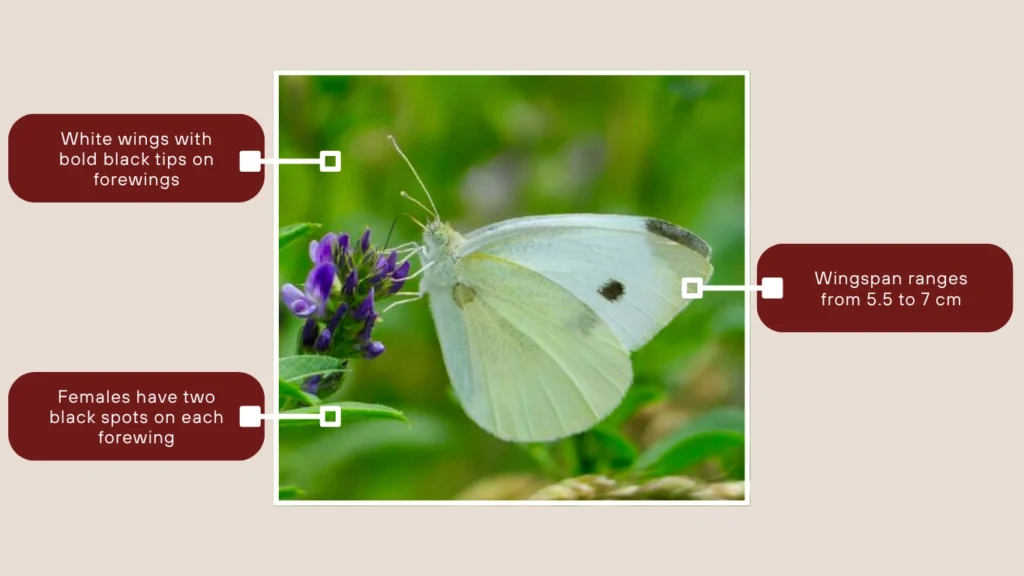
The Large White, sometimes called the “cabbage white,” is a common butterfly in UK gardens and farmland. Its caterpillars are well-known for feeding on brassicas, making it a familiar sight to vegetable growers.
Identification
- White wings with bold black tips on forewings
- Females have two black spots on each forewing
- Wingspan ranges from 5.5 to 7 cm
Habitat
Thrives in gardens, parks, farmland, allotments, and meadows. Especially common near cultivated crops like cabbage, broccoli, and kale.
Region in the UK
Widespread and common throughout England, Wales, Scotland, and Northern Ireland. Active from early spring to late autumn.
Behavior
Large Whites are strong, fluttery fliers that travel over long distances. They lay eggs in clusters on host plants, and their caterpillars can be seen feeding in groups. Adults frequently visit nectar-rich flowers and are often seen basking or gliding through open areas.
8. Small White
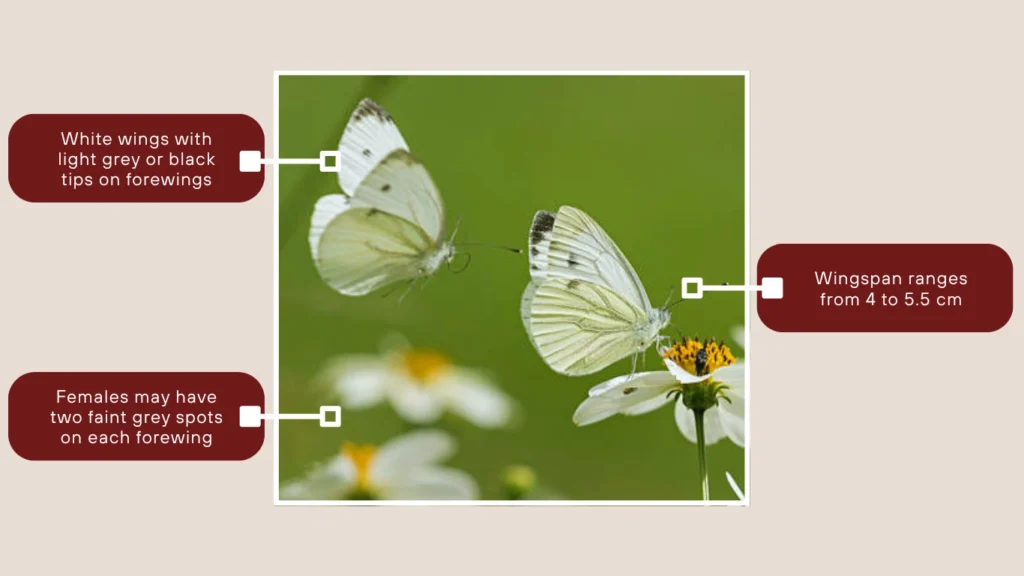
The Small White is a close relative of the Large White and another familiar sight in gardens and open spaces. While similar in appearance, it’s slightly smaller and less boldly marked. It’s often seen fluttering among flowers or laying eggs on brassica plants.
Identification
- White wings with light grey or black tips on forewings
- Females may have two faint grey spots on each forewing
- Wingspan ranges from 4 to 5.5 cm
Habitat
Common in gardens, parks, farmland, grasslands, and roadside verges. It prefers sunny areas with access to flowering plants and cultivated crops like cabbage or mustard.
Region in the UK
Widespread throughout the UK, including England, Wales, Scotland, and Northern Ireland. It is one of the UK’s most commonly seen butterflies.
Behavior
The Small White is an active, fluttery flier often seen from early spring to late autumn. It lays eggs singly on host plants and is frequently spotted visiting flowers such as dandelions, clover, and lavender. It’s less likely to cluster in groups compared to the Large White.
9. Green-veined White
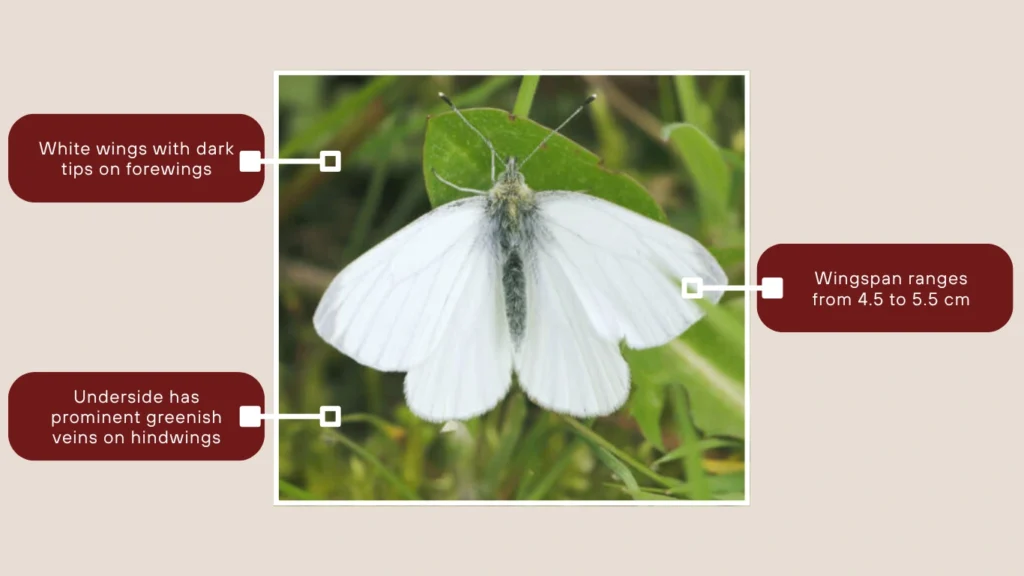
The Green-veined White is a delicate and often overlooked butterfly that’s easily mistaken for the Small White. A closer look reveals the distinctive greenish veining on the underside of its wings, which helps it blend into grassy environments.
Identification
- White wings with dark tips on forewings
- Underside has prominent greenish veins on hindwings
- Wingspan ranges from 4.5 to 5.5 cm
Habitat
Favors damp meadows, grassy woodland rides, hedgerows, riverbanks, and marshy ground. It thrives where wildflowers grow in moisture-rich soil.
Region in the UK
Widespread and common throughout the UK, including England, Scotland, Wales, and Northern Ireland.
Behavior
Flies with a fluttery movement, often low to the ground. Prefers wild, less disturbed areas. Adults are seen from April to September and frequently feed on wildflowers like cuckooflower, garlic mustard, and dandelion.
10. Orange-tip
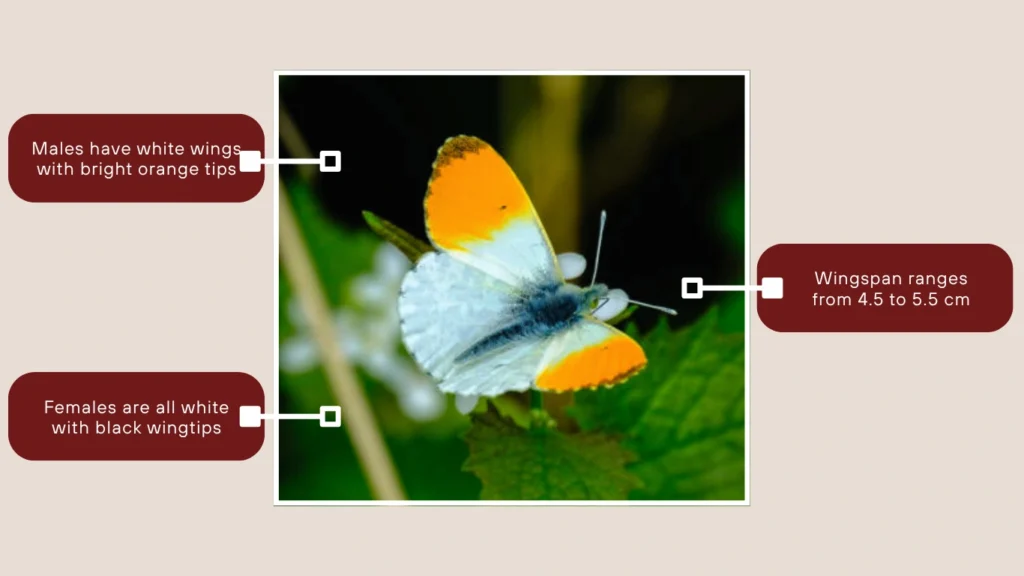
The Orange-tip is one of the most cheerful signs of spring, especially the males with their vivid orange-tipped forewings. Females lack the orange but still show the same lovely green pattern on the underside of the hindwings.
Identification
- Males have white wings with bright orange tips
- Females are all white with black wingtips
- Both sexes have green mottling on the underside of hindwings
- Wingspan ranges from 4.5 to 5.5 cm
Habitat
Common in hedgerows, woodland edges, meadows, gardens, and grassy lanes. Favors areas with wildflowers like cuckooflower and garlic mustard, which are also its larval food plants.
Region in the UK
Widespread in England and Wales, locally common in southern Scotland, and less frequent in Northern Ireland.
Behavior
Orange-tips are early spring butterflies, flying from March to June. Males are highly active and patrol sunny paths in search of females. They feed on wildflowers and are often seen resting with wings closed to show off their green-veined undersides.
11. Common Blue
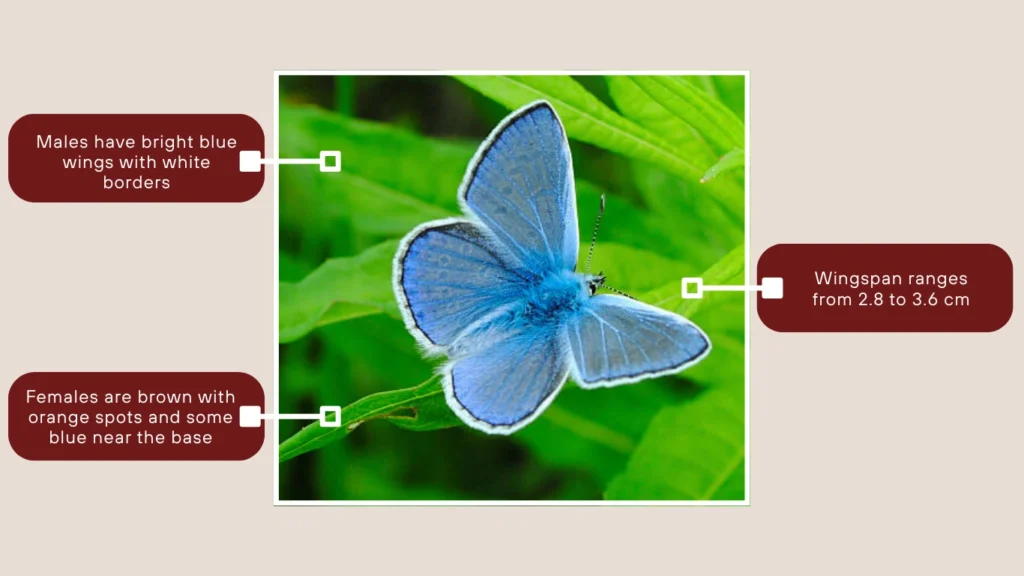
The Common Blue is the UK’s most widespread blue butterfly, instantly recognizable by the vivid sky-blue wings of the male. Females are more brown with orange and blue hints, making the species easy to spot in a variety of grassy habitats.
Identification
- Males have bright blue wings with white borders
- Females are brown with orange spots and some blue near the base
- Underside is pale with black and orange spots
- Wingspan ranges from 2.8 to 3.6 cm
Habitat
Favors grasslands, meadows, roadside verges, coastal dunes, and even urban parks. Loves areas with wildflowers and short grass where bird’s-foot trefoil grows—the main food plant for caterpillars.
Region in the UK
Widespread across all of the UK, including England, Wales, Scotland, and Northern Ireland. Especially common in southern and coastal areas.
Behavior
Common Blues fly low and fast, often basking with wings open in sunny patches. Males are active and patrol in search of mates, while females stay closer to egg-laying sites. Seen from late spring through summer, sometimes in two or more broods per year.
12. Holly Blue
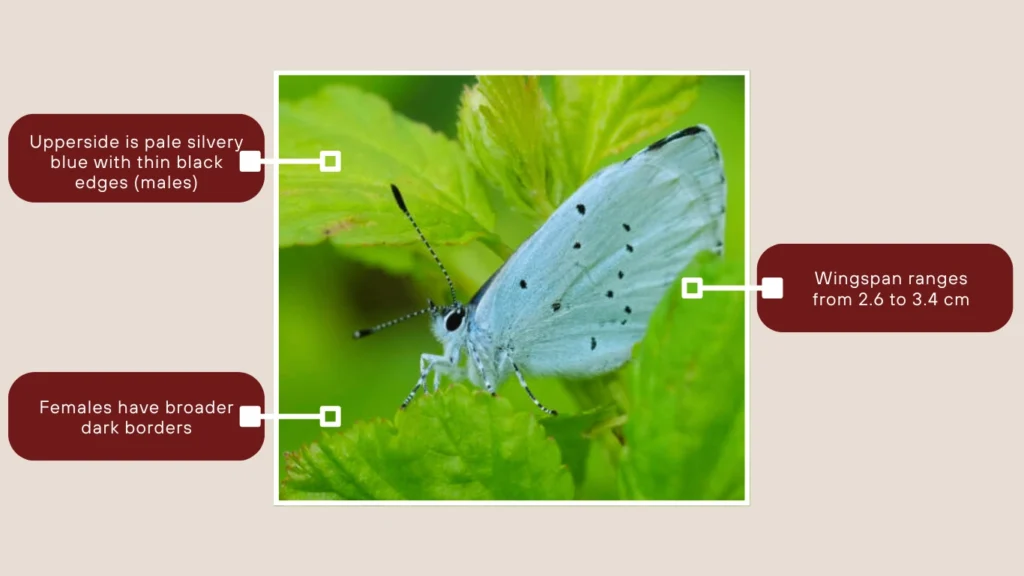
The Holly Blue is a bright, silvery-blue butterfly often seen flitting around garden shrubs and hedgerows. Unlike the Common Blue, it tends to fly higher and is often the first blue butterfly seen in spring.
Identification
- Upperside is pale silvery blue with thin black edges (males)
- Females have broader dark borders
- Underside is pale blue-grey with black spots
- Wingspan ranges from 2.6 to 3.4 cm
Habitat
Found in gardens, parks, woodland edges, hedgerows, and churchyards. It lays eggs on holly in spring and ivy in summer, hence its name.
Region in the UK
Widespread in southern England and Wales, spreading into the Midlands and parts of northern England. Also found in Northern Ireland and some parts of Scotland.
Behavior
Holly Blues are fast and fluttery, often flying high around shrubs and trees. They have two broods per year—spring and late summer—and are commonly seen feeding on bramble, hawthorn, and ivy flowers.
13. Small Copper
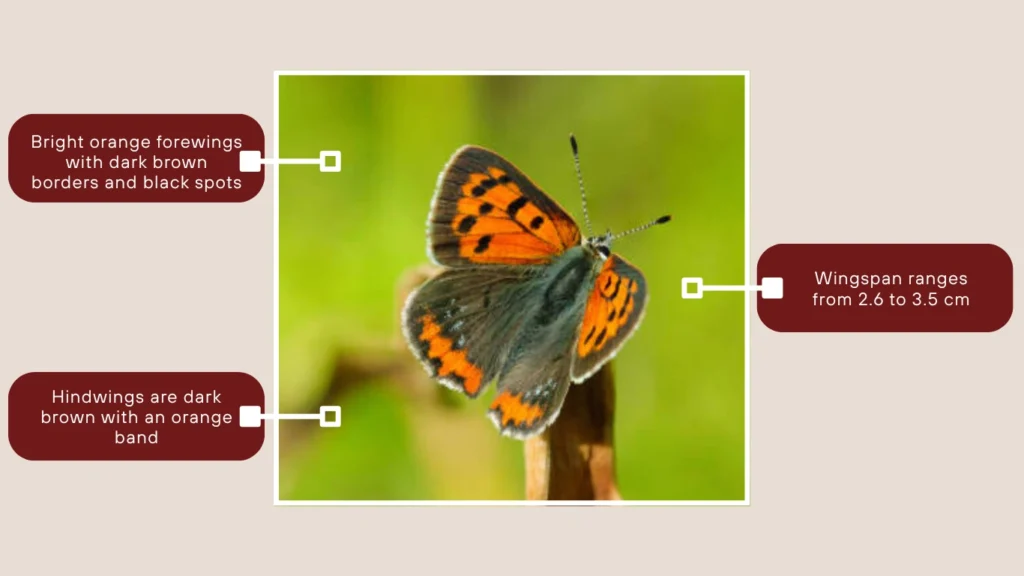
The Small Copper is a bright, fiery butterfly with striking orange wings and dark brown borders. Though small in size, it stands out beautifully in sunny grasslands and meadows across the UK.
Identification
- Bright orange forewings with dark brown borders and black spots
- Hindwings are dark brown with an orange band
- Wingspan ranges from 2.6 to 3.5 cm
Habitat
Prefers sunny open habitats like grasslands, heathlands, roadside verges, allotments, and brownfield sites. It’s closely associated with sorrel and dock plants, which serve as food for its caterpillars.
Region in the UK
Widespread throughout the UK, including England, Wales, and much of Scotland. Also found in parts of Northern Ireland.
Behavior
Small Coppers are territorial and often perch low on sunlit vegetation. They’re active from spring through autumn and may produce up to three broods per year in southern regions. Males chase off rivals aggressively despite their small size.
14. Speckled Wood
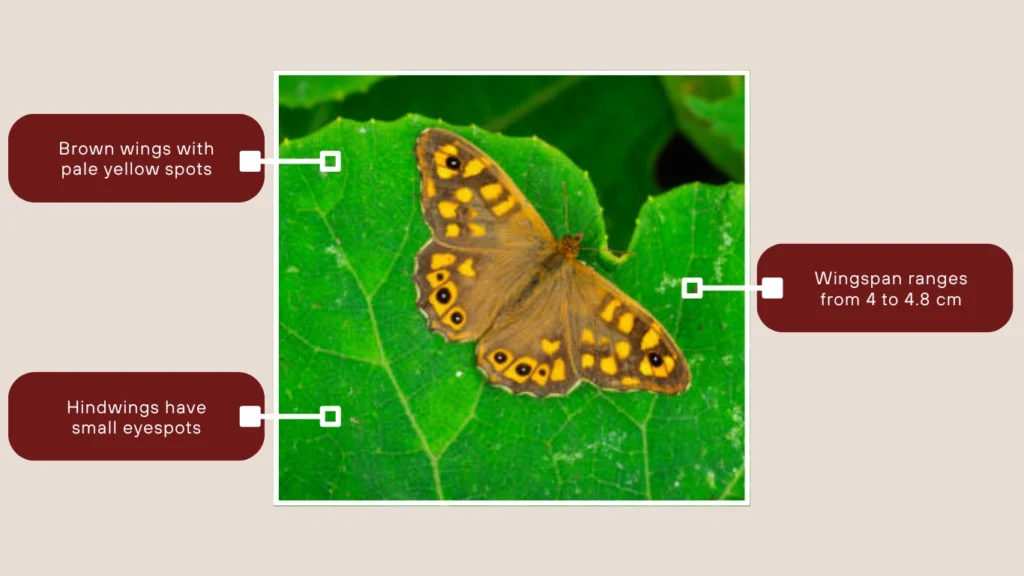
The Speckled Wood is a woodland butterfly that prefers dappled shade. It’s well-camouflaged with brown wings covered in creamy-yellow spots, allowing it to blend in with leaf litter and bark.
Identification
- Brown wings with pale yellow spots
- Hindwings have small eyespots
- Wingspan ranges from 4 to 4.8 cm
Habitat
Found in woodland rides, forest edges, shaded gardens, and hedgerows. Especially fond of areas with filtered sunlight and plenty of grass for its caterpillars.
Region in the UK
Widespread in England, Wales, and southern Scotland. Its range is expanding northward and into Northern Ireland.
Behavior
Unlike most butterflies, Speckled Woods often fly in shaded areas. Males perch and defend territories, chasing away intruders in spiraling flights. They’re active from spring to early autumn and often feed on aphid honeydew rather than flowers.
15. Meadow Brown
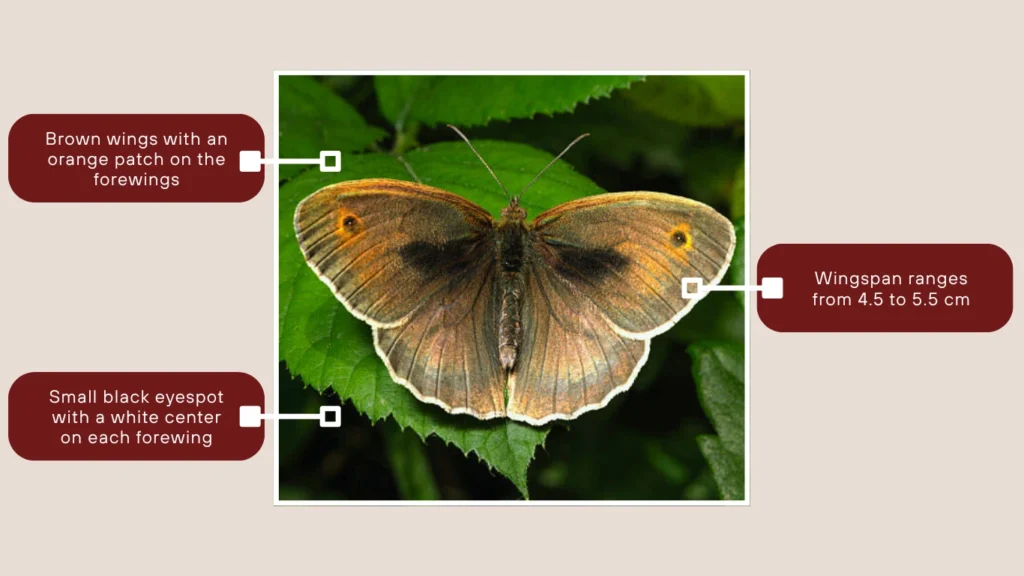
The Meadow Brown is one of the UK’s most common and widespread butterflies. Its subtle coloring and relaxed flight make it a familiar sight in summer grasslands and wildflower meadows.
Identification
- Brown wings with an orange patch on the forewings
- Small black eyespot with a white center on each forewing
- Underside is pale brown with subtle patterning
- Wingspan ranges from 4.5 to 5.5 cm
Habitat
Found in grasslands, meadows, roadside verges, coastal dunes, parks, and even large gardens. It thrives in places with long grass, which supports its caterpillars.
Region in the UK
Widespread across all parts of the UK—England, Wales, Scotland, and Northern Ireland. Extremely common in lowland areas during summer.
Behavior
Flies with a slow, fluttering motion and often rests with wings closed. Active from June to September. It feeds on wildflowers like knapweed, bramble, and thistles and can be seen even on overcast days.
16. Gatekeeper
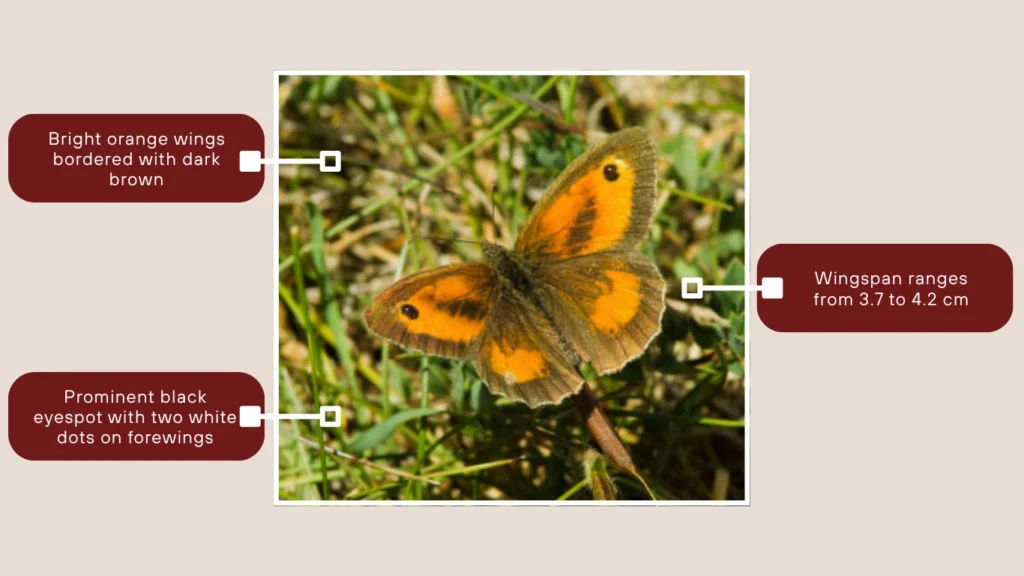
The Gatekeeper, also known as the Hedge Brown, is a warm orange-and-brown butterfly often seen along field edges and hedgerows. It’s smaller and more active than the Meadow Brown and prefers sunny, sheltered spots.
Identification
- Bright orange wings bordered with dark brown
- Prominent black eyespot with two white dots on forewings
- Hindwings are brown with orange near the base
- Wingspan ranges from 3.7 to 4.2 cm
Habitat
Commonly found along hedgerows, woodland edges, grassy paths, scrubland, and garden borders—especially where bramble and long grass grow together.
Region in the UK
Widespread in southern and central England and Wales. Less common in northern England and rare in Scotland and Northern Ireland.
Behavior
Flies in July and August with a quick, flickering flight. Often rests with wings open and feeds on nectar from bramble, ragwort, and marjoram. Males are territorial and actively patrol small sunny patches.
17. Ringlet
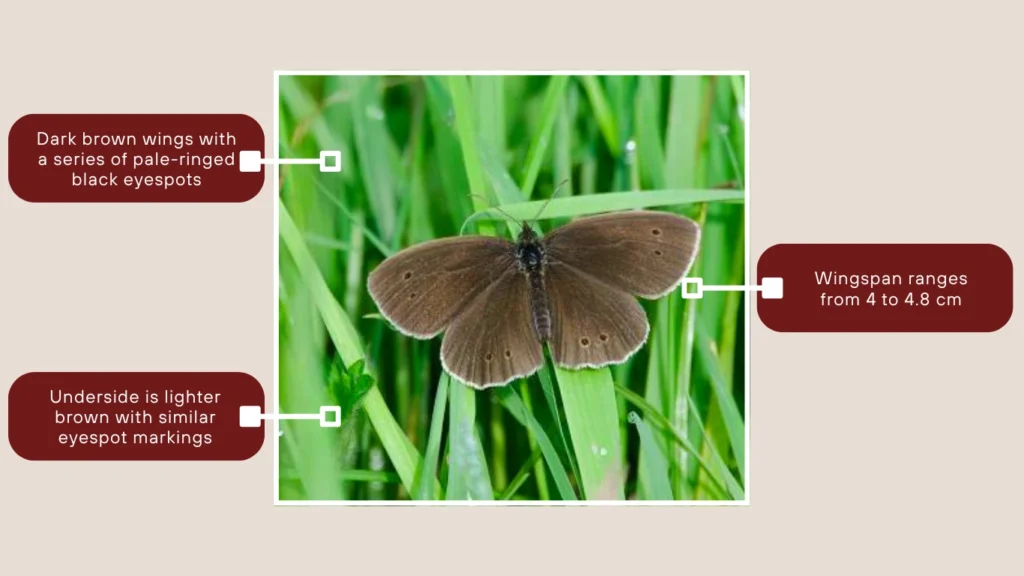
The Ringlet is a dark, velvety brown butterfly with distinctive eye-spots along its wing edges. It’s especially easy to spot in dull weather, as it’s one of the few butterflies that remains active even on cloudy days.
Identification
- Dark brown wings with a series of pale-ringed black eyespots
- Underside is lighter brown with similar eyespot markings
- Wingspan ranges from 4 to 4.8 cm
Habitat
Favors damp, shady grassy places such as woodland rides, meadows, field edges, and overgrown hedgerows. Often found in areas with long, lush grass.
Region in the UK
Widespread throughout England and Wales, extending into southern and central Scotland. Also found in parts of Northern Ireland.
Behavior
Flies low among tall grasses with a slow, bouncing flight. Adults are most active in July and August and often settle quickly when disturbed. Caterpillars feed on various grasses, particularly cock’s-foot and false brome.
18. Marbled White
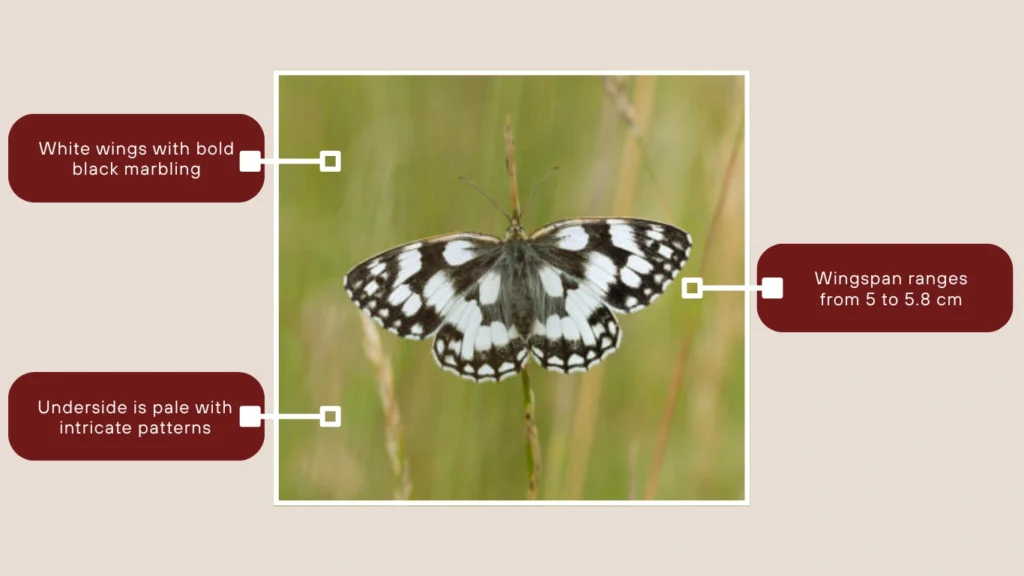
The Marbled White is a striking black-and-white butterfly that stands out in summer grasslands. Despite its name, it’s not a “white” but belongs to the same family as the Browns and Ringlets.
Identification
- White wings with bold black marbling
- Underside is pale with intricate patterns
- Wingspan ranges from 5 to 5.8 cm
Habitat
Prefers chalk and limestone grasslands, meadows, and road verges with tall grasses and wildflowers. Often seen where knapweed, thistle, and scabious grow.
Region in the UK
Mostly found in southern and central England. Locally distributed in Wales. Rare in northern England and not found in Scotland or Northern Ireland.
Behavior
Flies from late June through July. Males are very active and patrol large areas, while females are more secretive. Adults feed on nectar-rich flowers and often perch with wings open to absorb warmth.
19. Small Skipper
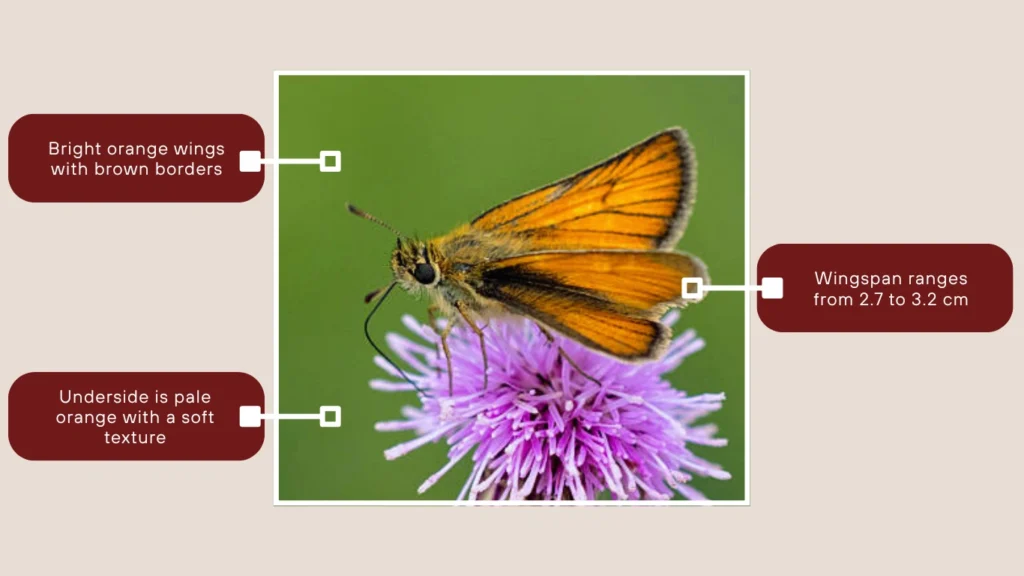
The Small Skipper is a fast, darting butterfly often seen resting on tall grass stems. Its warm orange coloring and compact size make it a charming sight in summer meadows and grassy fields.
Identification
- Bright orange wings with brown borders
- Underside is pale orange with a soft texture
- Antennae tips are hooked
- Wingspan ranges from 2.7 to 3.2 cm
Habitat
Prefers tall grasslands, meadows, roadside verges, and field edges—especially where Yorkshire fog grass (its caterpillar food plant) is present.
Region in the UK
Widespread in southern and central England and Wales. Scattered records in parts of northern England. Absent from most of Scotland and Northern Ireland.
Behavior
Flies low and fast with a zigzag motion. Often rests on grasses with wings half-open. Active from late June to early August and feeds on nectar from thistles, knapweed, and clover.
20. Large Skipper
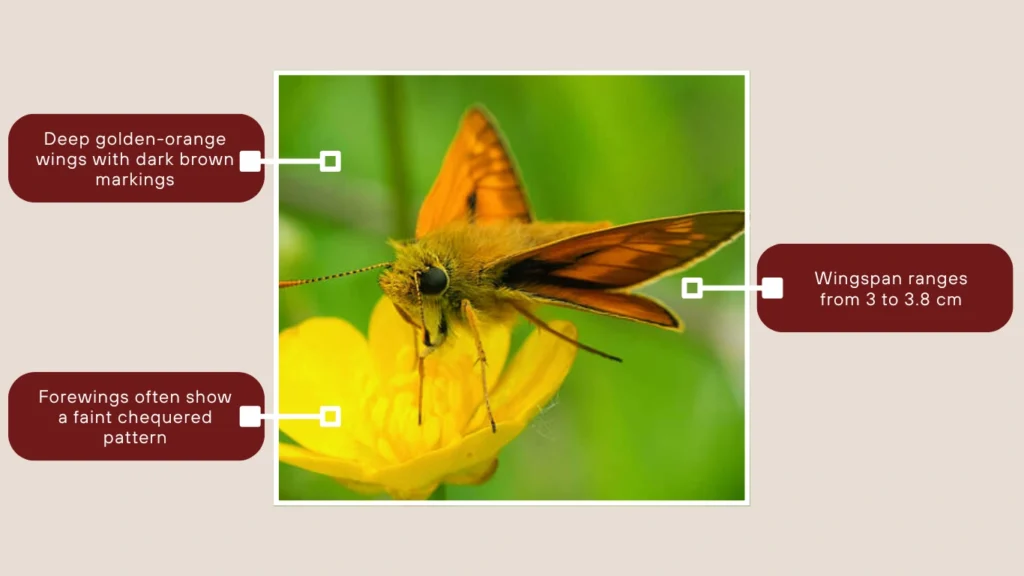
The Large Skipper is slightly bigger and more robust than the Small Skipper. With its rich golden-orange wings and mottled patterns, it adds a touch of vibrancy to summer grasslands.
Identification
- Deep golden-orange wings with dark brown markings
- Forewings often show a faint chequered pattern
- Antennae are hooked at the tips
- Wingspan ranges from 3 to 3.8 cm
Habitat
Found in tall, unmanaged grasslands, hedgerows, woodland clearings, and grassy riverbanks. It prefers areas with coarse grasses like cock’s-foot and false brome.
Region in the UK
Common in England and Wales, with scattered populations in southern Scotland. Rare in Northern Ireland.
Behavior
Flies in quick, darting bursts and often rests with wings angled open. Males are territorial and patrol small sunny patches. Adults are seen from mid-June to August and feed on bramble, thistle, and other nectar-rich plants.
FAQs
When is the best time to see butterflies in the UK?
Most butterflies are active between April and September, with peak activity during warm, sunny days in July and August.
How can I attract butterflies to my garden?
Plant nectar-rich flowers like buddleia, lavender, and marjoram. Also, leave some wild areas or nettles for caterpillars to feed on.
Do all butterflies in the UK hibernate?
No, only some species like the Peacock, Small Tortoiseshell, and Brimstone hibernate as adults. Others overwinter as eggs, larvae, or pupae.
What’s the difference between a moth and a butterfly?
Butterflies usually fly by day and have clubbed antennae, while moths are often nocturnal with feathery or straight antennae. However, there are exceptions.
Are butterfly numbers declining in the UK?
Yes, many species have declined due to habitat loss, climate change, and pesticide use. Conservation efforts are helping, but awareness and garden-friendly practices are important.
