

European hornets are large, buzzing insects that often cause alarm when spotted around homes, trees, or lights at night. While they’re less aggressive than many think, their sting and nest behavior raise real concerns. This FAQ covers the 30 most common and important questions about European hornets—from their appearance and danger to nesting habits, diet, and how to safely handle them if they show up near your property.
Identification & Appearance of European Hornets

European hornets (Vespa crabro) are the largest true hornets found in North America. Despite their intimidating size and buzzing sound, they can be recognized by their unique body structure, colors, and nesting style. Below are detailed answers to the most common questions about their physical traits and nests.
What does a European hornet look like?
European hornets are large wasps that measure between 1 to 1.5 inches (25–38 mm) in length. Their body has a robust build with a reddish-brown head and thorax and yellow-and-black striped abdomen, giving them a classic wasp-like appearance.
Key identification features:
- Coloration: Reddish-brown head and thorax, yellow abdomen with black stripes
- Wings: Brownish and slightly smoky in color
- Eyes: Deeply notched or kidney-shaped
- Antennae: Curved in females, slightly straighter in males
- Stinger: Only females sting; the stinger is smooth and can be used multiple times
Unlike yellowjackets, European hornets fly more slowly and with a deep buzzing sound. They are also active both day and night, which sometimes surprises people who see them near porch lights after dark.
How big do European hornets get?
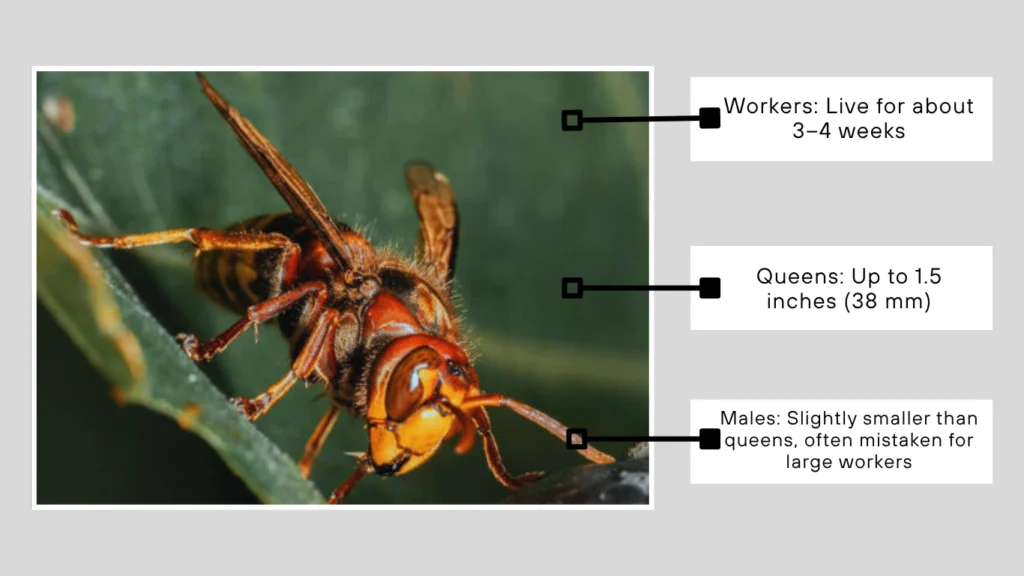
European hornets are among the largest stinging insects in North America. Here’s a size breakdown:
- Workers: 0.75 to 1 inch (19–25 mm)
- Queens: Up to 1.5 inches (38 mm)
- Males: Slightly smaller than queens, often mistaken for large workers
Their size alone can make them intimidating, but it also helps in distinguishing them from common yellowjackets, which are usually under 0.5 inches.
What does a European hornet nest look like?
European hornet nests are large, papery structures made from chewed wood fibers mixed with saliva, forming a material similar to paper-mâché. Unlike many other wasps, European hornets prefer to build their nests in hollow spaces, such as:
- Hollow trees
- Wall voids or attics
- Sheds or outbuildings
- Occasionally underground in protected areas
Nest features:
- Color: Tan to gray
- Shape: Oval or football-shaped, but may look irregular when inside a cavity
- Texture: Papery with visible layered cells inside
- Size: Can grow to the size of a basketball or larger by late summer
You might not always see the entire nest, especially if it’s hidden inside walls or trees. However, if you observe frequent hornet activity near a hole or opening, it’s likely a nest is nearby.
Danger, Sting & Aggression

European hornets are often feared due to their size and ability to sting multiple times. While they are not naturally aggressive toward humans, they will defend their nest fiercely if threatened.
Are European hornets dangerous?
Yes, European hornets can be dangerous if provoked. Their sting delivers venom that causes pain, swelling, and sometimes allergic reactions. They are most dangerous when defending their nest, especially in late summer when colonies are at peak population. However, they do not seek out humans to attack and usually avoid unnecessary confrontation.
Can a European hornet kill you?
Fatal encounters with European hornets are extremely rare. However, multiple stings or an allergic reaction (anaphylaxis) can be life-threatening without medical attention. People with known insect sting allergies should avoid nests and seek immediate care if stung.
How painful is a European hornet sting?
A sting from a European hornet is moderately to severely painful. The sensation is often described as a burning or throbbing pain at the site. Redness and swelling may last for a day or two. Pain severity depends on the number of stings and the person’s sensitivity to venom.
Do European hornets sting?
Yes, European hornets sting to defend themselves or their colony. The stinger is smooth, meaning they can sting multiple times without dying. Only females have stingers, and they will not sting unless disturbed or trapped.
How aggressive are European hornets?
European hornets are not aggressive unless their nest is disturbed. They typically ignore humans and focus on hunting insects or scavenging sugary substances. However, if you get too close to a nest, they may become defensive and attack in groups. Always maintain distance from known nesting sites.
Behavior & Activity

European hornets exhibit unique behaviors compared to other wasps. They are active both day and night and are often seen flying toward lights after dark, which can confuse or alarm people unfamiliar with their habits.
Are European hornets nocturnal?
European hornets are partially nocturnal. Unlike many other wasps, they remain active at night and can be seen hunting or flying during dark hours. Their eyes are adapted to low-light conditions, allowing them to function after sunset.
Are European hornets attracted to light?
Yes, European hornets are attracted to light. They often fly around porch lights, windows, or street lamps at night. This behavior is similar to moths and is one of the reasons people notice them more during evening hours.
Do European hornets remember faces?
There is no scientific evidence suggesting that European hornets can recognize or remember human faces. Some studies on other wasp species suggest limited facial recognition within their own kind, but not toward humans. Most hornet behavior toward people is reactive, not memory-based.
Nesting & Range
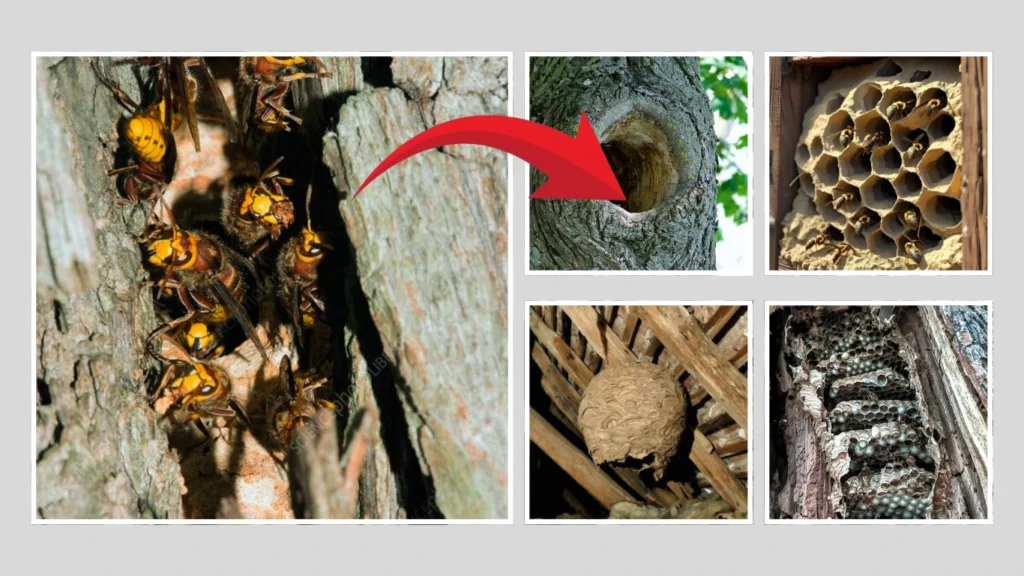
European hornets prefer to build their nests in sheltered, enclosed spaces and can travel significant distances from their colony in search of food. Understanding their nesting habits helps with safe removal and prevention.
Where do European hornets nest?
European hornets usually nest in dark, protected cavities. Common nesting sites include:
- Hollow trees
- Wall voids in houses or barns
- Attics and sheds
- Inside abandoned beehives
They avoid open, exposed areas and build nests out of chewed wood pulp that resembles paper.
Do European hornets nest in the ground?
While rare, European hornets can build nests in the ground, especially if the site offers a hidden cavity or burrow. However, they typically prefer above-ground enclosed spaces like tree hollows or wall cavities.
How far do European hornets travel from their nest?
European hornets can travel up to 1,000 feet (about 300 meters) from their nest in search of food and water. Most foraging occurs within a 300 to 500 feet radius, but they may go farther if resources are scarce.
How to find a European hornet nest?

To locate a European hornet nest:
- Watch their flight path: Hornets often return to their nest in a straight line.
- Observe entry points: Look for repeated activity near holes in trees, walls, or rooflines.
- Listen for buzzing: A faint but constant buzzing sound may come from inside walls or trees.
Caution is advised. Do not attempt to open walls or trees yourself—contact a professional if removal is needed.
Diet & Predation
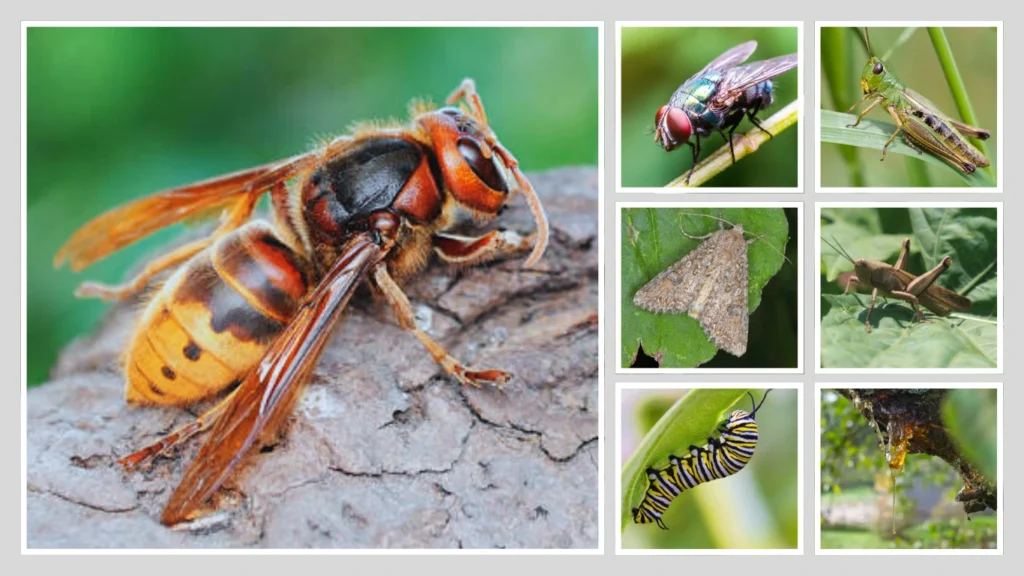
European hornets are carnivorous hunters and scavengers. Their diet includes a wide variety of insects, but they also feed on sugary substances from fruits and tree sap. They play a complex role in the ecosystem—both as predators and occasional threats to beneficial insects.
What do European hornets eat?
European hornets eat both insects and plant-based sugars. Their diet includes:
- Flies, grasshoppers, moths, and other wasps
- Caterpillars and crickets
- Tree sap and honeydew
- Ripe fruit (especially apples, pears, and plums)
- Occasionally, meat scraps and garbage if accessible
Workers hunt for live prey to feed larvae, while adults consume more sugary substances for energy.
Do European hornets kill honey bees?
Yes, European hornets can kill honey bees, but they are not as aggressive toward bee colonies as Asian hornets. They may:
- Prey on individual honey bees near hives
- Raid beehives for honey or larvae if food is scarce
However, they generally prefer easier prey and do not specialize in bee attacks like some invasive hornet species. They are still considered a potential threat to pollinators when colonies grow large.
What attracts European hornets?
European hornets are attracted to:
- Sugary foods and drinks
- Fruit trees and fallen fruit
- Outdoor lights at night
- Insect activity (they follow prey)
- Saps or wounds on trees
Avoid leaving fruit or sweet liquids exposed outdoors, especially in late summer when their foraging intensifies.
Life Cycle & Seasons
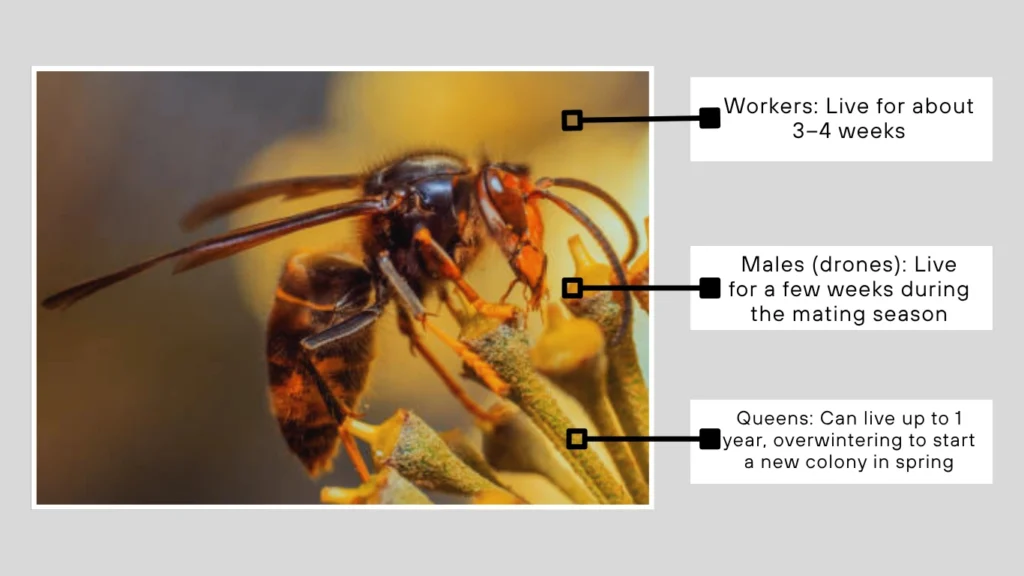
European hornets follow a seasonal life cycle that revolves around their nest’s development. Their presence is most noticeable during late summer and early fall when the colony reaches its peak.
How long do European hornets live?
The lifespan of European hornets depends on their role:
- Workers: Live for about 3–4 weeks
- Males (drones): Live for a few weeks during the mating season
- Queens: Can live up to 1 year, overwintering to start a new colony in spring
Each generation within the nest serves a different function and lives for a specific duration.
When do European hornets die off?
European hornet colonies begin to die off in late fall or early winter, usually after the first hard frost. As temperatures drop:
- Workers and males die off naturally
- The fertilized queen leaves the nest to hibernate alone in a protected spot like soil, logs, or tree bark crevices
Old nests are not reused the next year; new colonies are built from scratch by the queen in spring.
Do European hornets hibernate?
Only fertilized queens hibernate. They enter a dormant state in late fall and remain hidden through winter. The rest of the colony (workers and males) does not survive the cold season. When spring arrives, the queen emerges to start building a new nest and laying eggs.
Control, Removal & Safety
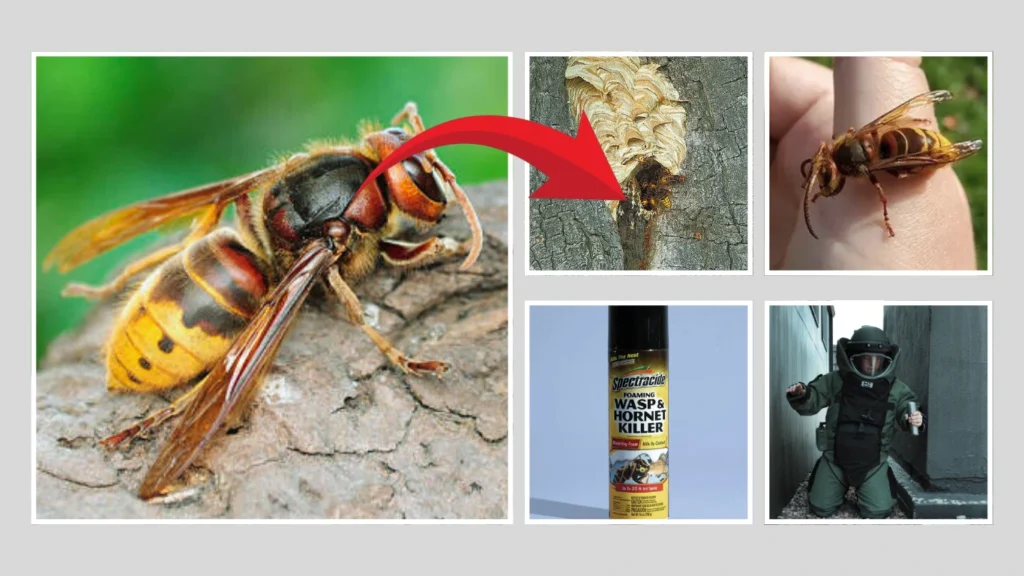
Managing European hornets requires caution due to their ability to sting repeatedly and defend their nests aggressively. Removal should be handled carefully, especially when dealing with large colonies near homes or high-traffic areas.
How to get rid of European hornets?
To get rid of European hornets safely:
- Identify the nest location from a distance
- Avoid disturbing the nest during the day
- Use hornet-specific aerosol sprays at night when they’re less active
- Wear protective clothing if attempting DIY removal
- Call a professional pest control service for large or hidden nests
Avoid sealing entry points before confirming all hornets are gone, or trapped hornets may chew through walls to escape.
How to get rid of a European hornet nest?
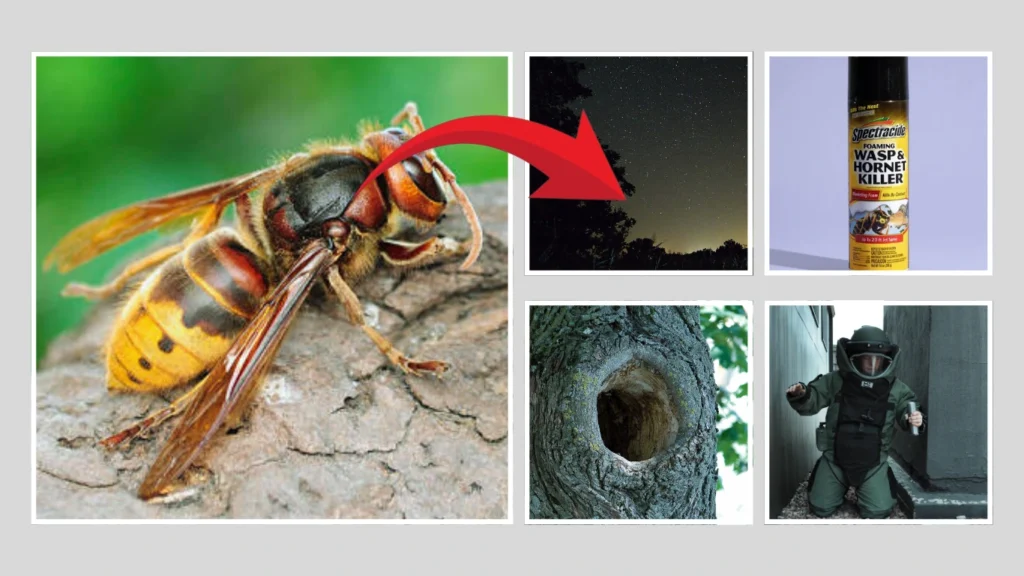
To remove a nest:
- Wait until after dark when hornets are inside and sluggish
- Spray a long-range wasp/hornet killer directly into the nest opening
- Monitor for a couple of days for continued activity
- Once no activity is seen, carefully remove the nest using gloves and protective gear
- Dispose of the nest in a sealed plastic bag
Do not attempt to burn or flood the nest. If the nest is in a wall void or tree, contact professionals.
What kills European hornets?
Common methods include:
- Insecticide sprays labeled for wasps and hornets
- Dust insecticides for wall voids or tree cavities
- Professional-grade traps or baits
- Freezing or removal of inactive nests in winter
Direct physical removal without protection is not recommended due to the risk of swarming.
How to keep European hornets away?
Prevent hornet problems by:
- Sealing entry points in walls, soffits, and attic vents
- Removing fallen fruits and cleaning sugary residues outdoors
- Avoiding bright outdoor lights at night
- Installing yellow “bug lights” that attract fewer insects
Keeping the environment less attractive to hornets discourages nesting and foraging near your property.
How to treat a European hornet sting?
If stung:
- Clean the area with soap and water
- Apply ice to reduce pain and swelling
- Take antihistamines for itching or minor allergic reactions
- Use hydrocortisone cream to calm inflammation
Seek emergency medical attention if you experience:
- Difficulty breathing
- Dizziness or fainting
- Swelling of face or throat
These may be signs of anaphylaxis.
Invasiveness & U.S. Presence
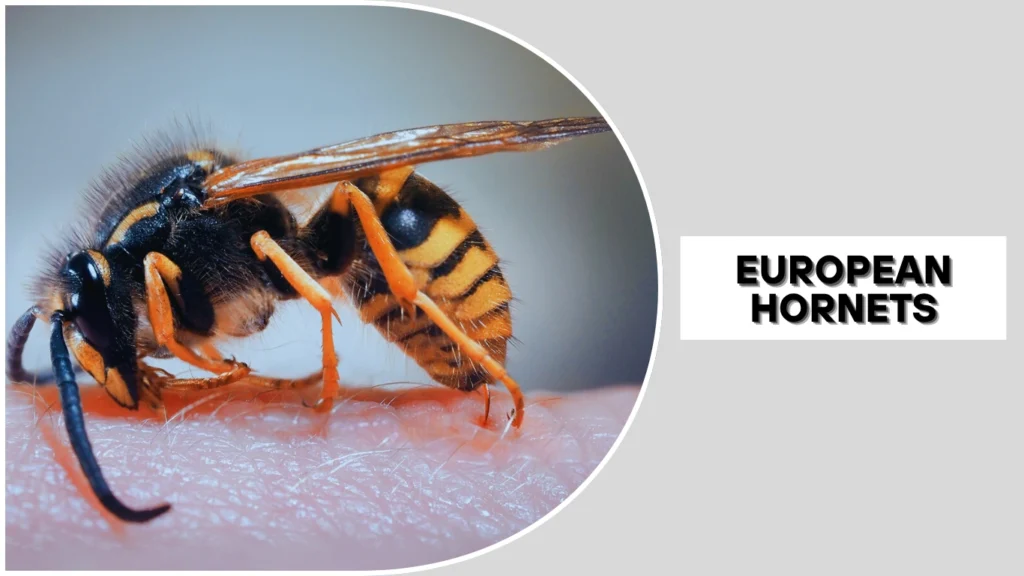
European hornets are not native to North America. They were introduced in the 1800s and have since established stable populations across parts of the United States. Their presence raises concerns about local ecosystems and potential threats to native insects.
Are European hornets invasive in the US?
Yes, European hornets (Vespa crabro) are considered invasive in the United States. They were accidentally introduced from Europe in the mid-19th century and have since spread across the eastern and central U.S. While they do not reproduce as aggressively as some invasive species, they compete with native wasps and occasionally prey on beneficial insects like honey bees.
How did European hornets get to North America?
European hornets were likely introduced accidentally through cargo ships in the 1800s, possibly carried in wood products or produce shipments. Once in the U.S., they adapted well to temperate climates and forested environments, allowing them to spread steadily.
Are European hornets found in Pennsylvania or Virginia?
Yes, European hornets are well-established in both Pennsylvania and Virginia, along with much of the eastern United States. They are commonly reported in wooded suburban and rural areas, especially in regions with old trees, barns, or other cavity-nesting opportunities. Sightings are most frequent between July and October.
What happens if you get stung by a European hornet?
A sting from a European hornet typically causes:
- Immediate pain at the sting site
- Redness and swelling
- Itching or burning sensation
- A firm bump that may last for a few days
In most cases, the reaction is mild to moderate. However, for individuals who are allergic to wasp stings, symptoms may escalate to:
- Hives beyond the sting site
- Swelling of the lips, throat, or tongue
- Shortness of breath
- Dizziness or nausea
- Anaphylaxis (a life-threatening condition)
If any severe reaction symptoms appear, seek emergency medical attention immediately. Carrying an epinephrine auto-injector (EpiPen) is advised for those with known sting allergies.
