
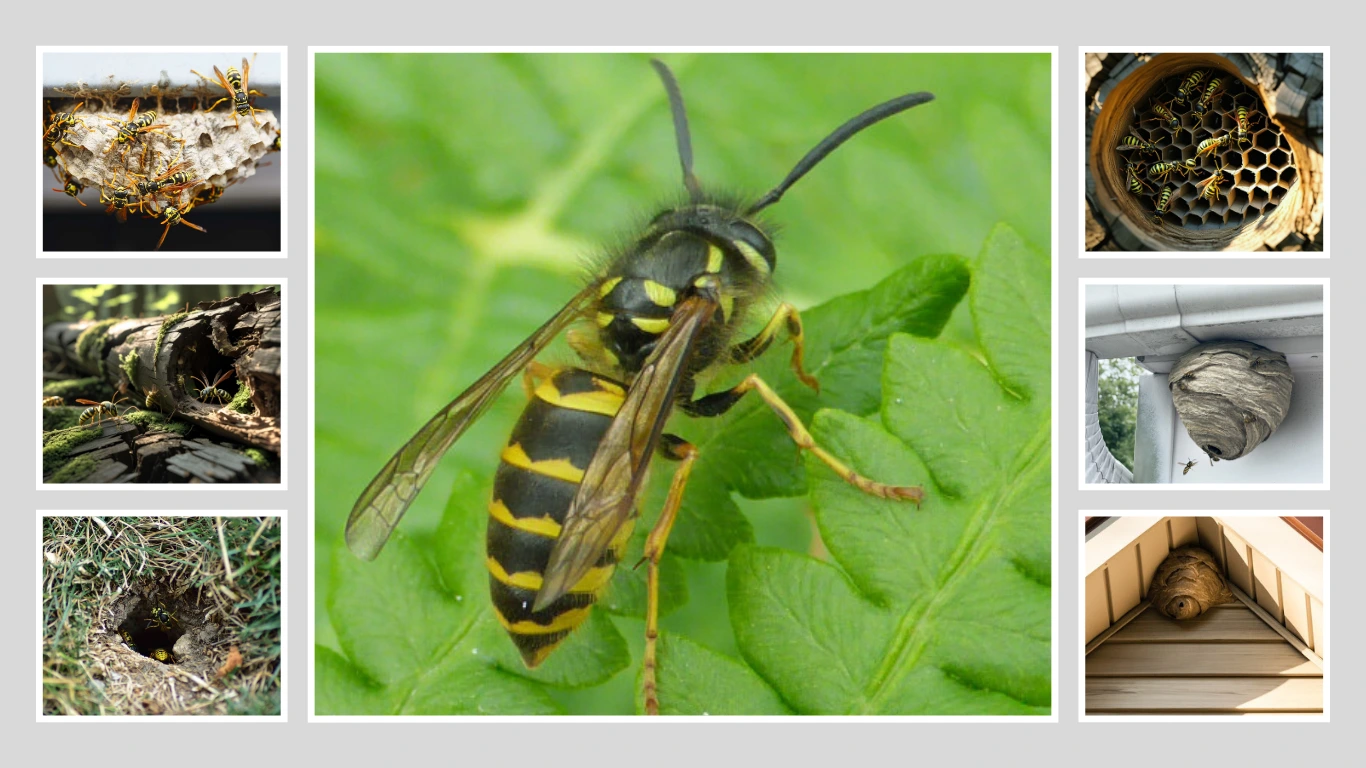
Wasps are one of the most recognized insects in gardens, parks, and outdoor spaces—especially during the warmer months. Among them, the common wasp (Vespula vulgaris) is a widespread species found throughout Europe and in other parts of the world. Despite their sometimes-aggressive behavior, these insects play an essential role in pollination and pest control. But where exactly do they live?
To understand the habits and behavior of common wasps, it’s important to look at their preferred environments, nesting choices, and seasonal patterns.
What Are Common Wasps?

Common wasps are part of the social wasp family, meaning they live in large colonies rather than alone. These colonies can include thousands of individuals, organized under a single queen. The two most well-known species often grouped under “common wasps” are:
- Common wasp (Vespula vulgaris)
- German wasp (Vespula germanica)
Both species are very similar in appearance—yellow and black banded bodies, narrow waists, and smooth stingers. They are known for their nest-building behavior, aggressive defense of their nests, and frequent visits to human food during late summer.
Where Do Common Wasps Live in the Wild?

In natural settings, common wasps typically live in quiet, protected spaces that are close to food sources such as insects, nectar, and fruit. Their habitat preferences include:
1. Forest Edges and Woodlands
These areas offer plenty of dead wood and shaded spots for building nests. Wasps may also hunt other insects here, helping to keep pest populations in check.
2. Underground Burrows
Common wasps frequently reuse abandoned rodent holes or small hollows under rocks and tree roots. These underground nests are cool, dark, and secure, making them ideal for colony growth.
3. Grasslands and Meadows
These open habitats are rich in flowering plants, which offer nectar and prey. Wasps may build nests at ground level or beneath tall vegetation.
4. Bushes or Hollow Logs
In dense vegetation or hollow tree trunks, wasps find safety from predators and harsh weather while staying close to food.
These wild habitats are typically chosen based on shelter availability, low disturbance, and proximity to food.
Where Do Common Wasps Nest in Urban and Human Areas?

In towns and cities, common wasps have adapted surprisingly well to human environments. These locations offer abundant food sources and many safe nesting spots, including:
1. Attics and Roof Spaces
Warm and undisturbed, lofts and roof voids are perfect for queen wasps to start colonies. These locations also help insulate the nest from harsh outdoor temperatures.
2. Wall Cavities and Ceilings
Hollow spaces between walls provide enough room for a nest to grow while remaining hidden from sight. People often only notice these nests by hearing buzzing or seeing increased wasp activity.
3. Garages, Sheds, and Outbuildings
These structures are commonly used for nesting, especially if left open or infrequently used. Wasps may build nests under shelves, behind equipment, or under roof eaves.
4. Decks, Eaves, and Roof Overhangs
The underside of outdoor structures often provides shaded, dry spaces with direct access to gardens or picnic areas—ideal for foraging wasps.
5. Underground in Gardens
Just like in the wild, wasps may nest in soil or compost heaps, often going unnoticed until the nest is disturbed.
These urban nests bring wasps closer to human activity, which increases the chance of conflict, especially during late summer when colonies are at full strength and food is scarce.
Nesting Behavior of Common Wasps

Common wasps are skilled builders, and their nests are made from a paper-like substance created by chewing wood fibers mixed with saliva. These nests can range in size from a small golf ball in early spring to large structures over 12 inches (30 cm) across by late summer, sometimes housing thousands of individuals.
Key Nesting Facts:
- Nest initiation: A single fertilized queen emerges from hibernation in early spring and begins building the nest by herself.
- Location choice: She selects warm, protected areas that are close to food and water.
- Colony growth: As the first generation of workers matures, they take over nest-building, foraging, and defense, allowing the queen to focus entirely on laying eggs.
- Nest shape: Most nests are round or oval and contain multiple layers of comb inside a protective outer shell.
By mid to late summer, the nest reaches its peak population. Toward autumn, the nest will produce new queens and males, which leave to mate and begin the cycle again elsewhere the following year.
Seasonal Habitat Changes
The location and visibility of wasps change drastically throughout the year due to their seasonal life cycle:
Spring
- Queen emergence: After overwintering in sheltered places (under bark, attics, cracks), queens emerge in spring.
- They search for new nest sites and begin small nests alone.
Summer
- Colony expansion: Worker wasps maintain and defend the nest, and foraging becomes more intense.
- Wasps are active near flowers, gardens, trash bins, and outdoor food sources.
Autumn
- Aggression increases: As food becomes scarce, wasps become more aggressive and may hover near sugary drinks, fruit trees, or picnics.
- The nest produces new reproductive members.
- By late autumn, the colony collapses, and only newly mated queens survive by finding a place to hibernate.
Winter
- All workers and old queens die off.
- Nests are not reused, even if still intact the following spring.
Geographic Distribution of Common Wasps
The common wasp (Vespula vulgaris) and its close relative, the German wasp (Vespula germanica), are found across various regions:
Native Range
- Europe: Widespread in forests, meadows, and urban settings.
Introduced Regions
- New Zealand and Australia: Considered invasive, with large populations in forests and human structures.
- North America: Especially in Canada and the northern U.S., German wasps are well-established.
Habitat Adaptability
These species can survive in temperate to cool climates, making them successful in a wide range of environments. Urban expansion and global trade have helped spread them globally.
How to Identify a Wasp Nest in Your Area
Identifying a wasp nest early can prevent unpleasant encounters later. Here’s what to look for:
Signs of a Nearby Nest:
- Frequent wasp activity in one area (e.g., around your shed or eaves)
- Buzzing or humming sounds from a wall or attic
- Visible entry point, like a small hole in siding, with wasps flying in and out
What a Nest Looks Like:
- Round or teardrop-shaped, with a papery texture
- Light brown or gray in color
- Found hanging in sheltered areas or underground
Warning: Never attempt to remove or disturb a nest yourself, especially during peak season (late summer). Wasps are highly defensive and may attack in large numbers. Always contact a licensed pest control professional for safe removal.
Conclusion
Common wasps are highly adaptable insects that build their nests in a variety of natural and man-made environments. From woodlands and underground burrows to attics and sheds, these resourceful creatures choose nesting sites that provide safety, warmth, and access to food.
