

Thrips are tiny, slender insects that can cause serious damage to crops, ornamentals, and garden plants. With over 25 known species affecting agriculture and horticulture worldwide, understanding each type is essential for effective pest control. In this guide, we’ve listed 25 types of thrips—complete with their identification traits, preferred host plants, the damage they cause, and practical control methods to help you protect your plants year-round.
1. Western Flower Thrips

The Western Flower Thrips (Frankliniella occidentalis) is a major agricultural pest found worldwide. It feeds on a wide range of crops and ornamentals, and is notorious for spreading plant viruses, particularly the Tomato Spotted Wilt Virus (TSWV).
Identification
- Tiny, slender insect about 1–1.5 mm long
- Body color ranges from pale yellow to dark brown
- Adults have narrow fringed wings with dark bands
- Nymphs are wingless and lighter in color
- Often found hiding in flowers or leaf folds
Host Plants
This species affects more than 500 types of plants. Common hosts include tomatoes, strawberries, peppers, lettuce, and many greenhouse ornamentals like petunias and gerberas.
Damage Caused
Western Flower Thrips scrape plant tissues and suck out the contents, leaving silvery or bronze streaks and spots. Infested buds may fail to open, fruits can be deformed, and foliage may appear distorted. Their biggest threat is virus transmission, particularly TSWV.
Control Methods
Effective control includes using reflective mulches to deter them, releasing beneficial predators like Orius insidiosus, and spraying with insecticidal soaps or spinosad-based products. Regular monitoring with sticky traps helps track their presence early.
2. Onion Thrips
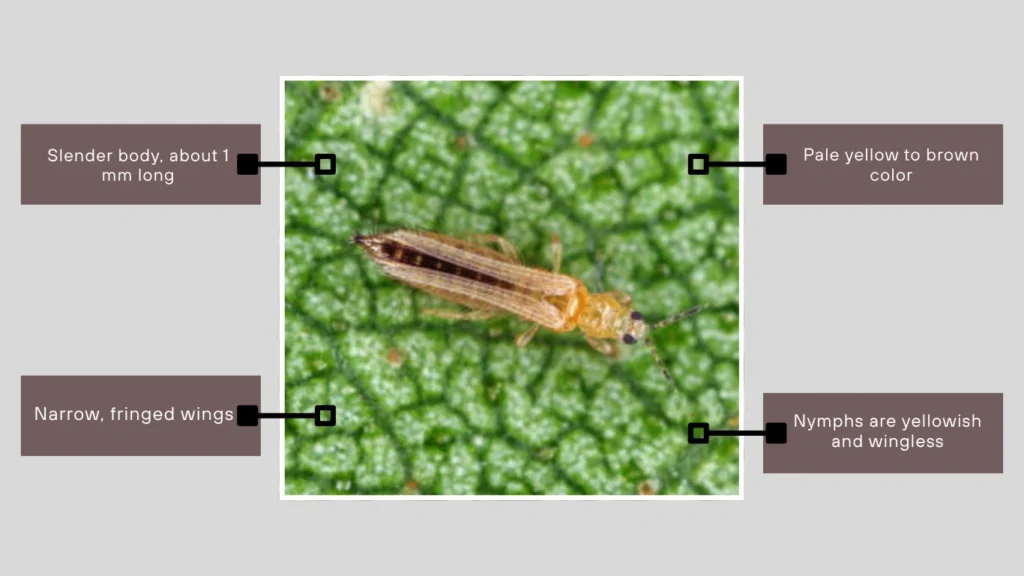
Onion Thrips (Thrips tabaci) are among the most destructive thrips species, especially for onion, garlic, and leek crops. They are common in warm, dry climates and are known to reduce both yield and quality of vegetables.
Identification
- Slender body, about 1 mm long
- Pale yellow to brown color
- Narrow, fringed wings
- Nymphs are yellowish and wingless
- Difficult to spot without a hand lens
Host Plants
They primarily infest onions, leeks, garlic, cabbage, and various ornamental plants. They may also appear on cucurbits and carrots during dry periods.
Damage Caused
Onion Thrips feed by piercing the plant tissue and sucking the juices, causing silvery patches and curling on leaves. In onions, this results in stunted growth, reduced bulb size, and increased vulnerability to fungal diseases.
Control Methods
Use reflective mulches, maintain field hygiene, and avoid planting near infested fields. Insecticides like spinetoram and neem oil are effective, and rotating crops can reduce populations over time.
3. Tobacco Thrips

Tobacco Thrips (Frankliniella fusca) are known for their role in transmitting the Tomato Spotted Wilt Virus. They affect both field crops and greenhouse plants, especially in southern regions of the United States and tropical zones.
Identification
- Small size, approximately 1.2 mm
- Brown or dark-colored body
- Adults have thin, fringed wings
- Nymphs are pale yellow and soft-bodied
- Often found on young leaves and flowers
Host Plants
This species targets tobacco, peanuts, cotton, and many vegetable crops. They also infest flowers like marigolds and zinnias.
Damage Caused
Tobacco Thrips cause leaf scarring, distorted growth, and stunted seedlings. More critically, they transmit viruses like TSWV, making them a serious threat in virus-sensitive crops.
Control Methods
Early planting and row covers help minimize infestation. Introducing natural predators such as predatory mites and minute pirate bugs can suppress populations. Insecticidal soaps and systemic insecticides are used in heavy infestations.
4. Greenhouse Thrips
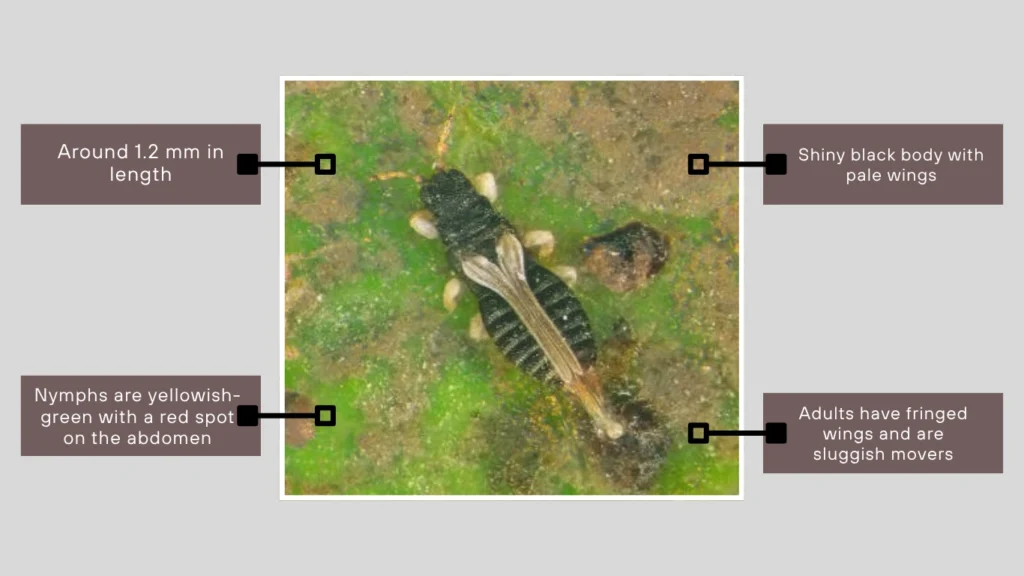
Greenhouse Thrips (Heliothrips haemorrhoidalis) are common in warm, humid environments, especially in greenhouses and indoor plant settings. They are slow-moving compared to other thrips and primarily affect ornamental plants.
Identification
- Around 1.2 mm in length
- Shiny black body with pale wings
- Nymphs are yellowish-green with a red spot on the abdomen
- Adults have fringed wings and are sluggish movers
- Often cluster on the undersides of leaves
Host Plants
They favor ornamental plants like azalea, gardenia, ferns, citrus, and avocado. They are frequently found in nurseries and indoor gardens.
Damage Caused
Greenhouse Thrips feed on leaves, causing silvering, yellowing, or dark scarring. They leave black fecal spots, which further reduces the plant’s aesthetic value. Severe infestations can cause defoliation and plant death.
Control Methods
Maintain good ventilation and reduce humidity in greenhouses. Prune and destroy infested plant parts. Use sticky traps for monitoring, and apply horticultural oils or insecticidal soaps to suppress populations.
5. Chili Thrips

Chili Thrips (Scirtothrips dorsalis) are highly invasive and damaging to a wide range of crops and ornamental plants. They are known for their rapid spread and resistance to many pesticides.
Identification
- Tiny, 1 mm long or less
- Pale yellow body with dark wings
- Narrow fringed wings with few veins
- Nymphs are lighter and wingless
- Best viewed with a magnifying tool
Host Plants
They infest chili, cotton, peanuts, grapes, strawberries, tea, and various ornamental plants like roses and hibiscus.
Damage Caused
Chili Thrips cause bronzing, curling, and distortion of young leaves and shoots. They can affect fruit development and lead to scarring or cracking. Their feeding often results in stunted growth and significant crop loss.
Control Methods
Monitor with blue sticky traps, remove infested plant parts, and apply insecticides like spinetoram or abamectin. Introducing predators like Amblyseius swirskii also helps with biological control.
6. Palm Thrips

Palm Thrips (Parthenothrips dracaenae) are often found on tropical and subtropical plants, especially palms and dracaenas. They are primarily a cosmetic pest but can cause significant damage in large infestations.
Identification
- About 2 mm long
- Dark brown to black body
- Narrow, fringed wings
- Nymphs are lighter with red eyes
- Usually found on leaf undersides
Host Plants
Commonly infest palms, dracaenas, orchids, and other ornamental foliage plants grown indoors or in tropical environments.
Damage Caused
Feeding causes silvery streaks, scarring, and browning on leaves, especially along the midrib. Heavy infestations may lead to leaf curling and premature leaf drop, affecting plant health and appearance.
Control Methods
Remove and discard infested leaves. Improve air circulation around plants. Insecticidal soap or neem oil sprays are effective for light infestations. Introduce natural predators for long-term control in enclosed spaces.
7. Banded Greenhouse Thrips

Banded Greenhouse Thrips (Hercinothrips femoralis) are commonly found in greenhouses and indoor environments. They are known for their distinctive banded wings and slow movement compared to other thrips.
Identification
- Approximately 1.3 mm long
- Dark brown body with two pale wing bands
- Nymphs are pale yellow with red eyes
- Adults are slow and tend to cluster
- Found on the underside of leaves
Host Plants
They feed on a variety of ornamental plants, including begonias, chrysanthemums, ferns, and orchids. They also appear on certain vegetables under greenhouse conditions.
Damage Caused
Feeding causes silvery streaks, yellowing, and eventual browning of leaves. Leaf surfaces may become distorted and covered in black specks of excrement. They reduce plant vigor and aesthetic value.
Control Methods
Prune affected leaves and use sticky traps to monitor population levels. Maintain low humidity and improve air movement. Apply insecticidal soaps or oils, and introduce predators like Orius or predatory mites.
8. Melon Thrips
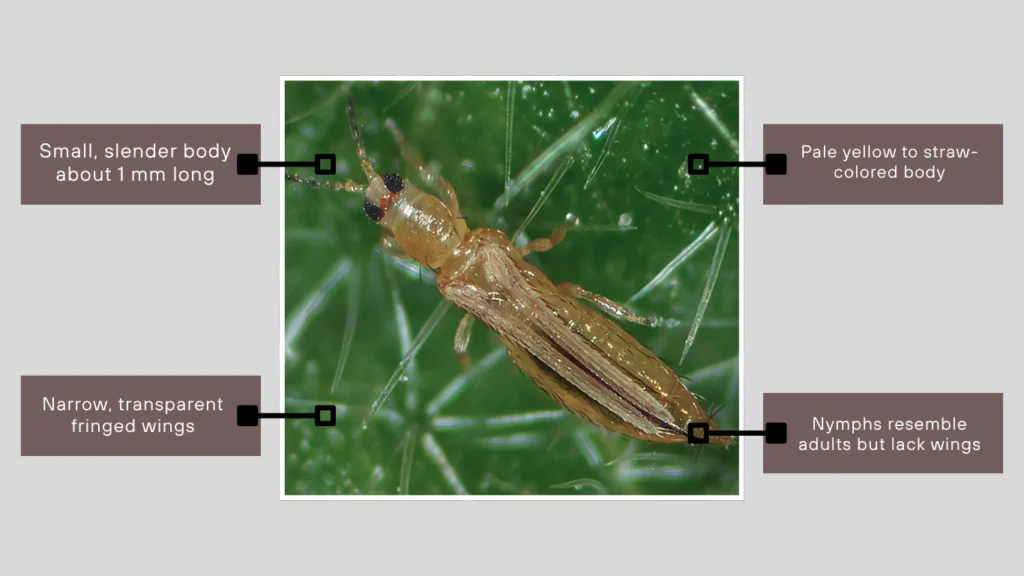
Melon Thrips (Thrips palmi) are a serious pest in tropical and subtropical regions, especially in vegetable crops. They are known for their rapid population growth and ability to spread viruses like Tomato Spotted Wilt Virus (TSWV) and Groundnut Bud Necrosis Virus (GBNV).
Identification
- Small, slender body about 1 mm long
- Pale yellow to straw-colored body
- Narrow, transparent fringed wings
- Nymphs resemble adults but lack wings
- Often hide in flower buds and leaf curls
Host Plants
Melon Thrips infest cucurbits (melon, cucumber, squash), eggplants, peppers, beans, and ornamentals. They are highly adaptable and can affect over 100 plant species in favorable conditions.
Damage Caused
They feed on tender plant parts, leading to leaf curling, scarring, and stunted growth. Their feeding disrupts cell structure, causing silvering of leaves and deformed fruits. As vectors, they pose an even larger threat to crop yield by transmitting plant viruses.
Control Methods
Use blue sticky traps for early detection. Rotate crops and avoid planting susceptible crops consecutively. Apply systemic insecticides and use neem-based sprays. Natural predators like Amblyseius swirskii and Beauveria bassiana fungus are helpful in biological control.
9. Avocado Thrips
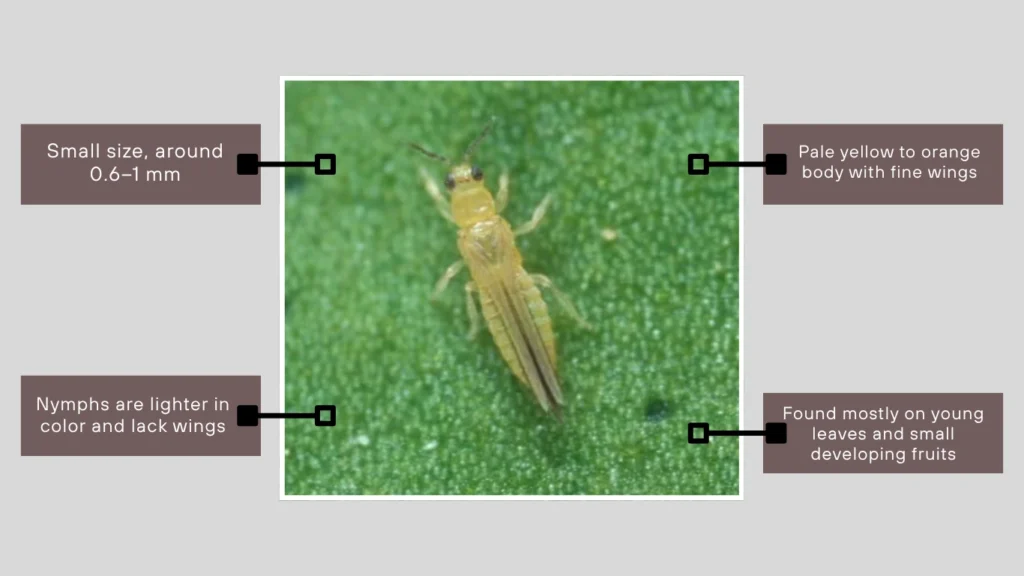
Avocado Thrips (Scirtothrips perseae) is a major pest of avocado orchards, particularly in California and Mexico. Their feeding directly affects the fruit’s marketability, causing blemishes that reduce quality and value.
Identification
- Small size, around 0.6–1 mm
- Pale yellow to orange body with fine wings
- Nymphs are lighter in color and lack wings
- Found mostly on young leaves and small developing fruits
- Often hidden under curled leaves or fruit scars
Host Plants
Primarily targets avocado trees but has occasionally been observed on citrus and other subtropical trees under certain conditions.
Damage Caused
Thrips puncture fruit surfaces and leaf tissues with their mouthparts, leaving irregular scarring on the fruit called “alligator skin.” Severe infestations cause fruit drop, curled leaves, and compromised photosynthesis due to leaf distortion.
Control Methods
Monitor thrips populations with yellow sticky traps and inspect new foliage frequently. Use horticultural oil or insecticides like spinosad when needed. Encourage natural enemies like lacewings and minute pirate bugs to keep populations low. Pruning dense canopies can also reduce ideal thrips habitats.
10. Citrus Thrips

Citrus Thrips (Scirtothrips citri) are a significant pest of citrus crops, particularly in arid and semi-arid regions. Their feeding affects young fruit and foliage, reducing both aesthetic value and marketability.
Identification
- Very small, around 1 mm in length
- Pale yellow to orange body
- Narrow fringed wings
- Nymphs are smaller and lack wings
- Typically found on young leaves and fruit
Host Plants
Mainly attack citrus varieties such as oranges, lemons, and mandarins. They may also infest other plants like pomegranate, persimmon, and grapes in close proximity to citrus orchards.
Damage Caused
They feed on young fruit, creating a silvery or brownish ring around the fruit’s stem end, known as “halo damage.” This scarring affects the cosmetic quality of the fruit, although it usually doesn’t impact taste.
Control Methods
Apply foliar insecticides during peak thrips activity in spring and early summer. Use monitoring traps and time applications carefully. Encourage beneficial insects like predatory mites and avoid excessive nitrogen fertilization, which can lead to more tender growth and higher infestation.
11. Red-banded Thrips
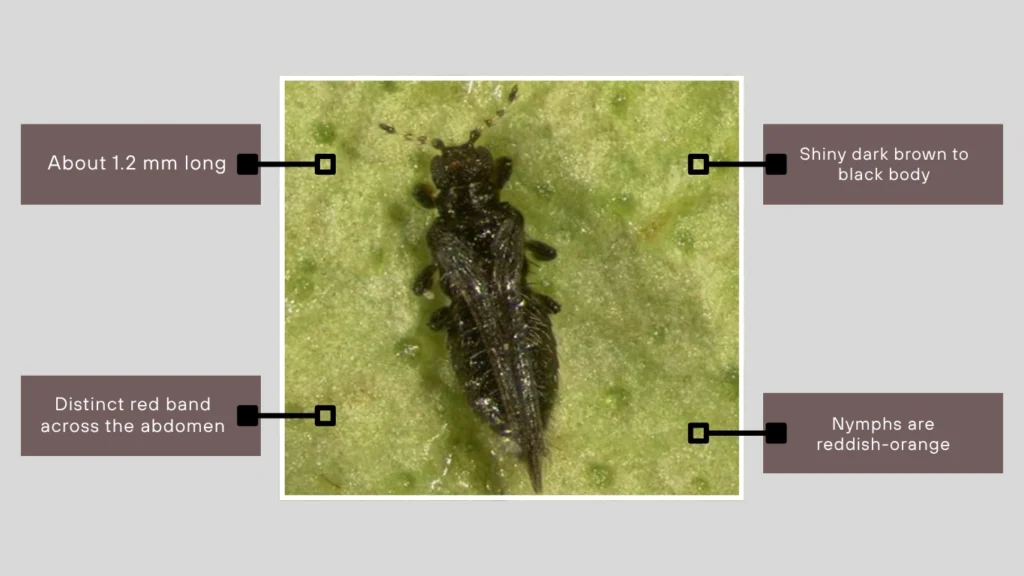
Red-banded Thrips (Selenothrips rubrocinctus) are visually striking thrips found in tropical and subtropical regions. They primarily target fruit trees, causing leaf bronzing and defoliation.
Identification
- About 1.2 mm long
- Shiny dark brown to black body
- Distinct red band across the abdomen
- Nymphs are reddish-orange
- Usually located on undersides of leaves
Host Plants
They prefer mango, avocado, cacao, guava, and various ornamental plants. These thrips are a particular problem in hot, humid environments with dense foliage.
Damage Caused
Feeding causes reddish-brown discoloration and bronzing of leaves, followed by leaf curling and drop. They also damage young shoots and flowers, reducing fruit set and yield over time.
Control Methods
Remove and destroy infested leaves. Prune trees to improve airflow and reduce humidity. Apply horticultural oils or insecticides such as abamectin or pyrethroids if infestation is severe. Encourage natural enemies like lady beetles and lacewings for sustainable control.
12. Rose Thrips

Rose Thrips (Thrips fuscipennis) are a common pest of ornamental flowers, especially roses. They cause severe cosmetic damage to blooms, making them a major concern for both home gardeners and commercial flower producers.
Identification
- Small, about 1–1.5 mm long
- Slender body, pale yellow to dark brown
- Adults have fringed wings and are fast-moving
- Nymphs are yellowish and lack wings
- Often hide deep within flower buds and petals
Host Plants
They mainly target roses but also infest other flowering plants such as peonies, dahlias, and lilies. They are frequently found in greenhouses and outdoor gardens.
Damage Caused
Feeding leads to discolored, deformed, or prematurely dropped petals. Flower buds may fail to open, and the blooms may appear scorched or tattered. They reduce the aesthetic and market value of ornamental flowers.
Control Methods
Deadhead affected flowers and use fine mesh covers during peak season. Apply insecticidal soaps or neem oil sprays. Introduce natural predators like Orius insidiosus to keep populations in check. Maintain healthy plant spacing to improve air circulation.
13. Banana Rust Thrips

Banana Rust Thrips (Chaetanaphothrips signipennis) are a serious pest in banana plantations, particularly in tropical climates. They are known for causing cosmetic blemishes on fruit skins, making the bananas unmarketable.
Identification
- About 1 mm in size
- Brown body with feathery wings
- Nymphs are lighter in color and wingless
- Adults often hide beneath the outer layers of banana fruit
- Best identified during fruit inspection
Host Plants
Their primary host is banana, but they can also be found on plantain and other large-leaved tropical plants in proximity to banana crops.
Damage Caused
They feed under the banana’s outer peel, creating rusty or reddish-brown streaks and blotches. Though the damage is superficial, it significantly lowers the fruit’s commercial value. In severe infestations, entire hands of bananas can be rejected for export.
Control Methods
Remove banana leaf trash from the plantation floor. Use fruit bagging with treated polyethylene sleeves. Apply appropriate systemic insecticides before bunch formation. Monitor regularly during fruit development to prevent widespread damage.
14. Cuban Laurel Thrips
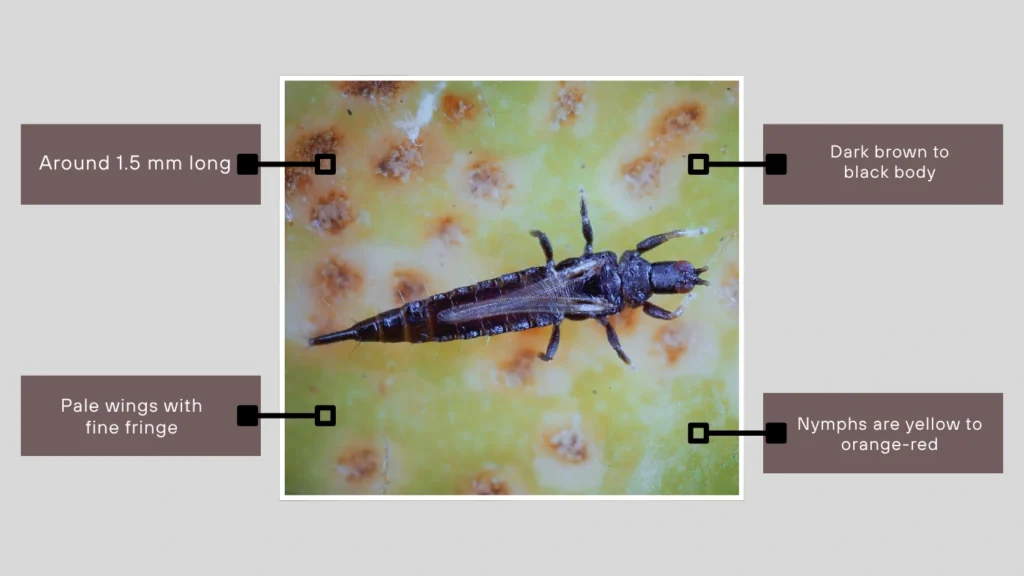
Cuban Laurel Thrips (Gynaikothrips ficorum) are commonly associated with ornamental Ficus plants. They are notorious for causing leaf distortion and unsightly galls on indoor and outdoor decorative shrubs.
Identification
- Around 1.5 mm long
- Dark brown to black body
- Pale wings with fine fringe
- Nymphs are yellow to orange-red
- Usually found curled inside galled leaves
Host Plants
Primarily infest Ficus benjamina, Ficus nitida, and other laurel-type ficus varieties. Often seen in urban landscaping, greenhouses, and indoor plantings.
Damage Caused
Feeding causes leaves to curl, thicken, and form purplish galls or blisters. Over time, the leaves become deformed and drop prematurely, reducing the plant’s appearance and health.
Control Methods
Remove and destroy heavily infested leaves. Use systemic insecticides for long-term control. For lighter infestations, apply horticultural oil or insecticidal soap. Avoid excess nitrogen fertilization, which encourages tender growth preferred by thrips.
15. Green Peach Thrips

Green Peach Thrips (Myzus persicae thrips mislabel; likely a common name confusion but used in regional descriptions) are occasionally referenced in ornamental and vegetable crop settings, though this name is more properly linked to aphids. However, in some contexts, this name is applied regionally to general green-colored thrips species.
Identification
- Small and slender, about 1 mm
- Light green to yellowish body
- Clear, narrow wings with fringe
- Nymphs are wingless and similarly colored
- Often found on tender shoots and leaf undersides
Host Plants
They infest stone fruits (peach, nectarine), tomatoes, potatoes, lettuce, and ornamental plants. They’re more problematic in greenhouse settings with soft, lush growth.
Damage Caused
Feeding results in bronzing and curling of leaves, flower deformation, and delayed plant growth. In some regions, they may also be suspected of transmitting plant viruses.
Control Methods
Encourage beneficial insects like green lacewings and predatory mites. Use sticky traps for early detection. Apply neem oil, insecticidal soap, or rotate selective insecticides to reduce resistance buildup. Maintain crop hygiene and avoid over-fertilizing.
16. Japanese Flower Thrips

Japanese Flower Thrips (Thrips setosus) are native to Asia but have spread to Europe and North America. They primarily target ornamental flowers and are a concern in greenhouses due to their rapid reproduction.
Identification
- Around 1.2 mm long
- Dark brown to black body
- Pale wings with distinctive bristles
- Nymphs are yellow to orange and wingless
- Found mostly on flower buds and young shoots
Host Plants
Common hosts include azalea, hydrangea, chrysanthemum, and other ornamental flowers. They can also affect strawberries and tomatoes in greenhouses.
Damage Caused
Feeding leads to distorted flower petals, browning at the edges, and bud abortion. Leaves may appear bronzed or flecked. In severe cases, overall plant vigor declines, and flowering is significantly reduced.
Control Methods
Use sticky traps to monitor adult thrips. Remove and discard affected flowers and buds. Apply biological controls like predatory mites or Orius bugs, and consider low-toxicity insecticides for severe outbreaks.
17. Pea Thrips
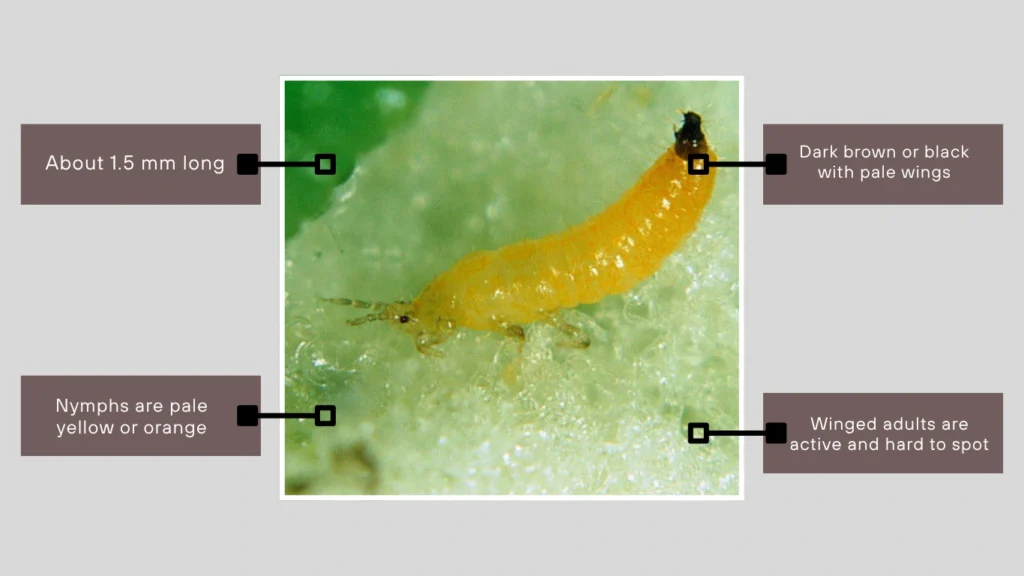
Pea Thrips (Kakothrips pisivorus) are a notable pest of legume crops in Europe and parts of Asia. They are particularly damaging during the flowering stage, where they affect yield and seed quality.
Identification
- About 1.5 mm long
- Dark brown or black with pale wings
- Nymphs are pale yellow or orange
- Winged adults are active and hard to spot
- Commonly hidden in pea flowers and pods
Host Plants
Primarily infest peas, but can also be found on lentils, beans, and vetch. They thrive in dry, warm growing conditions.
Damage Caused
They feed on flowers and young pods, causing browning, withering, and malformed seeds. Infested flowers often fail to develop into pods, significantly reducing crop yields.
Control Methods
Monitor early during flowering with sticky traps. Encourage natural enemies like hoverflies and lady beetles. Use insecticides during peak flowering if thresholds are exceeded. Crop rotation and removal of crop residues help reduce overwintering populations.
18. Bean Thrips

Bean Thrips (Caliothrips fasciatus) are a seasonal pest primarily found in the southwestern United States and Mexico. While not always economically significant, they are occasionally intercepted in produce shipments, causing concern for exporters.
Identification
- Approximately 1.2–1.5 mm in length
- Dark body with light banding on wings
- Nymphs are yellow-orange and wingless
- Adults are agile and may fly when disturbed
- Typically found on leaves and pods of beans
Host Plants
Their main hosts include snap beans, lima beans, cotton, citrus, and various legumes. They also occur on avocado, leading to postharvest export rejections due to quarantine regulations.
Damage Caused
Bean Thrips cause silvering and scarring of leaves, flower abortion, and pod deformities. While field damage is often limited, their presence on exported crops can lead to shipment rejections or delays.
Control Methods
Control typically involves regular field scouting and early insecticide applications. Prune host weeds and manage surrounding vegetation. Use blue sticky traps for monitoring and employ biological agents like Amblyseius swirskii in greenhouses.
19. Gladiolus Thrips

Gladiolus Thrips (Thrips simplex) are highly specific to gladiolus plants and are a common problem in bulb storage and cultivation, particularly in ornamental flower farms and greenhouses.
Identification
- Slender, about 1.3 mm long
- Yellowish-brown body with fringed wings
- Nymphs are pale yellow and wingless
- Often hide within flower sheaths or inside bulbs
- Detected by visual inspection during flowering or storage
Host Plants
Their primary host is gladiolus, but they may occasionally affect irises and related bulbous plants.
Damage Caused
They feed on leaves, flowers, and corms, resulting in silver streaks, dried flower tips, and pitting or rotting of bulbs in storage. Severe infestations can render flower spikes unsellable and reduce bulb quality for future planting.
Control Methods
Disinfect bulbs before storage using hot water or fumigation. Monitor crops with sticky traps and remove damaged leaves. Use systemic insecticides during active growing periods and rotate crops in flower beds to reduce recurring infestations.
20. Tea Thrips

Tea Thrips (Scirtothrips dorsalis) are one of the most damaging pests in tea plantations, also affecting a wide range of horticultural and vegetable crops. They thrive in warm, humid climates and are known for their adaptability and rapid population growth.
Identification
- Tiny, around 1 mm long
- Pale yellow to brown body
- Narrow fringed wings with minimal veins
- Nymphs are pale and wingless
- Commonly found on young shoots and the underside of leaves
Host Plants
Though best known for infesting tea plants, they also attack cotton, chili, grapes, and various ornamentals like roses and hibiscus.
Damage Caused
They feed on young leaves and shoots, causing bronzing, leaf curling, and tip burn. In tea plants, this leads to reduced leaf quality, affecting both yield and taste. Severe infestations may stunt plant growth entirely.
Control Methods
Prune infested shoots regularly. Use reflective mulches and blue sticky traps to reduce colonization. Apply neem oil, abamectin, or spinetoram in rotation to prevent resistance. Encourage biological control agents like predatory mites.
21. Marigold Thrips

Marigold Thrips (Frankliniella schultzei) are commonly found in ornamental gardens and flower farms. They favor marigolds but also affect other flowering plants, leading to visible damage on petals and young leaves.
Identification
- Small, about 1.2 mm long
- Yellow to brown body
- Narrow, feathered wings
- Nymphs are light-colored and wingless
- Usually found within flower buds and leaf folds
Host Plants
Mainly target marigolds but also infest zinnias, dahlias, sunflowers, and some vegetable crops like tomatoes and beans.
Damage Caused
Feeding causes petal discoloration, flower distortion, and blotching. Leaves may exhibit silvery streaks, and flower buds often fail to open or open irregularly, reducing the decorative value of the plants.
Control Methods
Pinch off affected flowers and use insecticidal soaps. Monitor populations with blue sticky cards. Apply neem-based sprays or introduce natural predators like Orius species and green lacewings. Maintain plant spacing to reduce moisture buildup.
22. Karnal Bunt Thrips

Karnal Bunt Thrips is not an officially recognized thrips species. The term “Karnal bunt” actually refers to a fungal disease (Tilletia indica) of wheat. However, in some regions, local growers may refer colloquially to thrips infesting bunt-affected wheat crops as “Karnal Bunt Thrips.” This entry is provided for clarification but not based on an entomologically identified species.
Identification
- Likely a misidentified or local name for grain or grass thrips
- Small, slender-bodied, around 1 mm
- Color ranges from yellowish to dark brown
- Found on wheat heads and inside grain sheaths
- Identification must be confirmed by entomological survey
Host Plants
Commonly associated with wheat, especially in fields affected by Karnal bunt. May also be found on barley or grasses in the same environment.
Damage Caused
Feeding can lead to silver streaks and shriveling of grain heads. While their direct damage is minimal, they may exacerbate fungal disease spread by wounding plant tissue.
Control Methods
Crop rotation and use of resistant wheat varieties are essential. Monitor thrips populations during flowering. Apply targeted insecticides if infestation levels are high. Control surrounding weed grasses that may serve as alternative hosts.
23. Yellow Tea Thrips

Yellow Tea Thrips (Scirtothrips dorsalis) is often considered a color morph or variant of the general Tea Thrips, particularly abundant in hot and dry climates. It causes extensive damage to tender tea shoots and other horticultural crops.
Identification
- Tiny, slender body around 1 mm
- Bright yellow to light orange color
- Narrow wings with fine fringes
- Nymphs are paler and lack wings
- Often cluster on young, unfolding leaves
Host Plants
Primarily tea plants, but also seen on pepper, cotton, mango, strawberry, and rose. Found in tropical and subtropical zones where temperatures are high.
Damage Caused
Causes leaf curling, yellowing, and bronzing of tea shoots. On ornamental plants, it leads to bud drop, reduced flowering, and stunted growth. Severe infestations reduce crop quality and commercial value.
Control Methods
Use neem-based insecticides or spinosad during early infestation. Prune and destroy infested plant parts. Use blue sticky traps for monitoring. Promote natural predators like predatory mites and lacewings for ongoing biological control.
24. Orchid Thrips
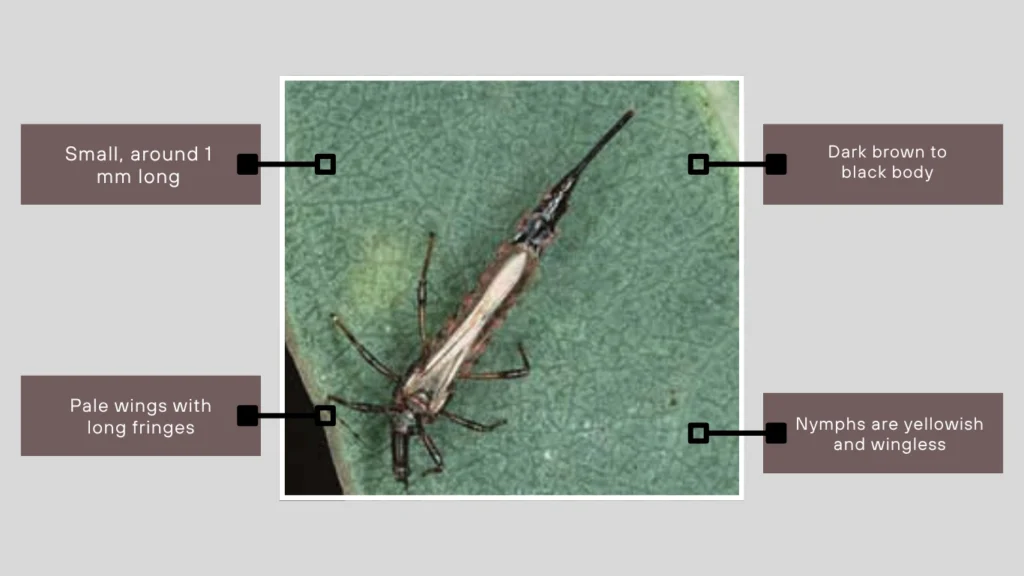
Orchid Thrips (Dichromothrips corbetti) are a significant pest of orchid plants, especially in greenhouses and nurseries. They are highly destructive to flower buds, petals, and young foliage.
Identification
- Small, around 1 mm long
- Dark brown to black body
- Pale wings with long fringes
- Nymphs are yellowish and wingless
- Found deep within flower buds and young leaves
Host Plants
Primarily affect orchid species such as Phalaenopsis, Dendrobium, and Cattleya. They may also infest other tropical flowering plants in similar conditions.
Damage Caused
Feeding causes silvery or bleached streaks on petals, browning at the edges, and bud abortion. Flowers may fail to open or appear distorted, reducing ornamental value and commercial appeal.
Control Methods
Regular inspection of buds and new growth is essential. Use fine-mesh screens to exclude thrips in greenhouse environments. Apply insecticidal soaps, neem oil, or spinosad. Remove and discard affected flowers to prevent spread.
25. Corn Thrips

Corn Thrips (Frankliniella williamsi) are common in cornfields across tropical and subtropical regions. They are not usually a major pest but can contribute to leaf damage and serve as virus vectors under certain conditions.
Identification
- About 1–1.2 mm in length
- Pale yellow to brown body
- Narrow wings with short fringe
- Nymphs are paler and wingless
- Typically found along corn leaf axils and sheaths
Host Plants
Mainly infest maize (corn), but may also be found on sorghum, grasses, and nearby vegetable crops, especially during early growth stages.
Damage Caused
Feeding leads to white or silver streaks on leaves, curling, and distortion. In heavy infestations, young plants may appear stunted. They can also facilitate the transmission of viral diseases in corn.
Control Methods
Control weeds and grassy borders around cornfields. Use blue sticky traps for early detection. Apply targeted insecticides during the early growth phase if populations exceed thresholds. Encourage natural predators to keep numbers in check.
