

Stoneflies are freshwater insects known for their sensitivity to water quality and importance in aquatic ecosystems. With over 20 families and numerous species worldwide, each type of stonefly plays a unique ecological role. This guide explores 23 types of stoneflies, detailing their appearance, habitat, and life cycle. Whether you’re a nature enthusiast, angler, or biologist, understanding these insects can offer deeper insight into stream health and biodiversity.
1. Common Stonefly (Perla marginata)

The Common Stonefly is a widespread species found in cool, fast-flowing streams and rivers across Europe and parts of Asia. It is an important bioindicator of water quality due to its sensitivity to pollution and low oxygen levels.
Identification
- Body length: 20–30 mm
- Color: Yellowish-brown with darker markings
- Two long cerci (tail-like appendages)
- Clear wings folded flat over the body
- Long antennae and strong legs
Habitat
They prefer clean, well-oxygenated streams with gravel or rocky bottoms. Nymphs live beneath submerged stones or debris, while adults are often found resting on rocks or vegetation near the water.
Life Cycle
The nymph stage lasts about 1–3 years, depending on environmental conditions. After molting multiple times, the nymph emerges from the water to become a winged adult. Adults live only a few weeks, primarily to mate and lay eggs.
Ecological Role
Common Stoneflies are a key food source for fish like trout. As nymphs, they help break down organic matter and serve as bioindicators for healthy freshwater systems.
2. Giant Stonefly (Pteronarcys dorsata)
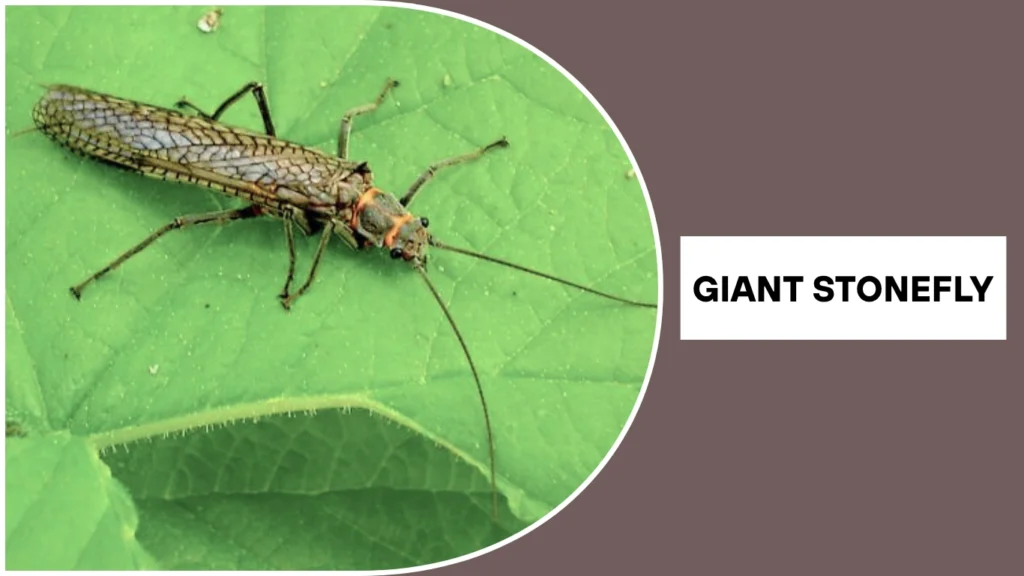
The Giant Stonefly, also known as the Salmonfly, is one of the largest stonefly species in North America. Found in clean, fast-moving streams and rivers, this species is especially important to fly fishers because trout feed heavily on the nymphs and emerging adults.
Identification
- Body length: 40–60 mm
- Color: Dark brown to black with orange markings
- Broad, flattened body with long antennae
- Two long cerci at the rear
- Wings: Dark and veined, folded flat when at rest
Habitat
Giant Stoneflies are native to North American rivers and large streams with cold, oxygen-rich water. Nymphs live under rocks in riffles, often in areas with high current flow and gravel bottoms.
Life Cycle
Their life cycle spans 2 to 4 years. Nymphs are slow-growing and molt multiple times before emerging. Adults typically appear in late spring to early summer, climbing out of the water to shed their exoskeleton and fly. Adults live just 1–2 weeks.
Ecological Role
Nymphs are detritivores and shredders, feeding on decaying leaves and plant matter. They play a major role in nutrient cycling and serve as an essential food source for trout, birds, and other aquatic predators.
Fly Fishing Relevance
Imitations of Pteronarcys nymphs and adults are popular in fly fishing. Trout often feed aggressively on adult Salmonflies during the hatch, making this a key time for anglers.
3. Golden Stonefly (Hesperoperla pacifica)

The Golden Stonefly is a medium to large species commonly found in western North America. It is highly valued among anglers and ecologists due to its abundance in clean streams and its distinctive golden coloration.
Identification
- Body length: 25–40 mm
- Color: Golden-yellow to light brown
- Black markings on thorax and head
- Long antennae and twin cerci
- Wings: Clear with visible veins, held flat over the body
Habitat
Golden Stoneflies inhabit clear, cold rivers and streams, particularly in mountainous regions. Nymphs are usually found under rocks or in submerged leaf litter, and they prefer habitats with moderate to fast currents.
Life Cycle
The complete life cycle takes about 1 to 2 years. Nymphs go through multiple molts. When mature, they crawl to dry surfaces to molt into winged adults. Adults typically emerge in late spring or early summer and live about 1–3 weeks.
Ecological Role
Nymphs are predators and scavengers, feeding on algae, detritus, and small aquatic invertebrates. Their presence indicates good water quality, and they are an important part of the food chain for fish and amphibians.
Fly Fishing Relevance
Golden Stonefly imitations are essential for trout fishing, especially during hatches in spring. Both nymph and adult patterns are widely used by fly anglers.
4. Little Brown Stonefly (Nemoura spp.)

Little Brown Stoneflies are small, early-emerging species commonly found in cold, well-oxygenated streams across North America and Europe. They are often among the first aquatic insects to appear in late winter or early spring.
Identification
- Body length: 5–10 mm
- Color: Brown to dark brown
- Two slender cerci
- Narrow wings with fine veins, held flat over the body
- Long, thin antennae
Habitat
These stoneflies favor cool, shaded streams with rocky or gravelly substrates. Nymphs hide under stones or in leaf packs, where they feed and develop.
Life Cycle
The lifecycle is relatively short, typically 1 year. Nymphs develop over fall and winter and emerge in early spring. Adults are weak fliers and often seen crawling on snow near stream banks, earning them the nickname “snowflies.”
Ecological Role
Nymphs are shredders, feeding on decomposing leaves and contributing to nutrient cycling. They are a food source for early-season fish, birds, and amphibians when other insects are scarce.
5. Winter Stonefly (Capniidae spp.)
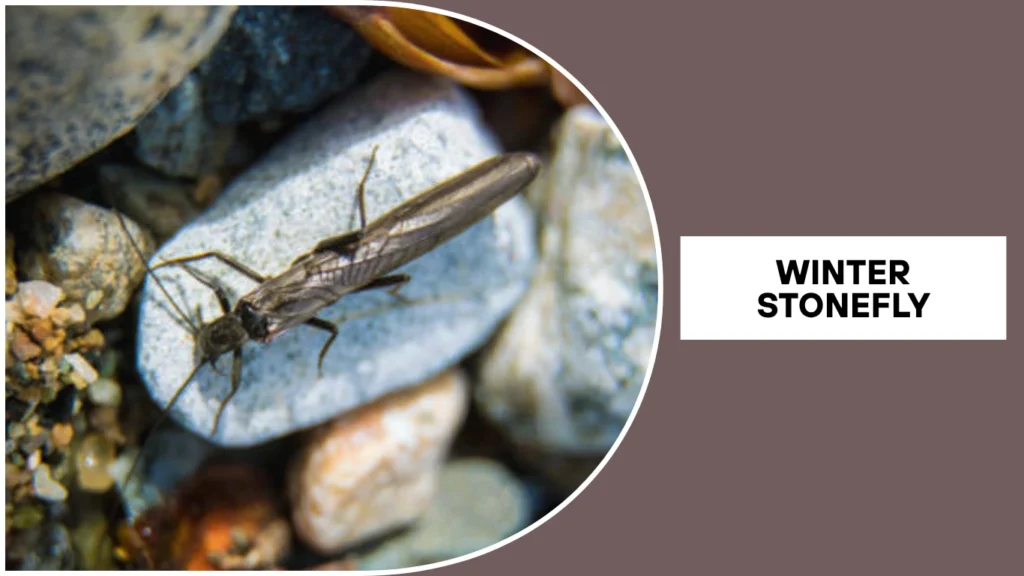
Winter Stoneflies are a group of small, cold-tolerant stoneflies that emerge and reproduce during the coldest months of the year, sometimes even walking across snow.
Identification
- Body length: 5–9 mm
- Color: Dark brown to black
- Wings long, narrow, and held over the back
- Long antennae and cerci
- Compact, cylindrical body
Habitat
They inhabit small, forested streams with stable flow and cold temperatures. Nymphs prefer leaf packs and gravel beds where they remain active under the ice.
Life Cycle
Most species complete their life cycle in 1 year. Eggs hatch in late spring, and nymphs grow through summer and fall. Adults emerge from December to March, often seen walking across snowbanks during warm spells.
Ecological Role
Winter Stoneflies are important indicators of excellent water quality. Their presence during winter helps support trout and other fish species when other food sources are limited. Nymphs help break down organic matter, playing a role in stream nutrient dynamics.
6. Spring Stonefly (Taeniopterygidae spp.)

Spring Stoneflies are early-season insects, emerging just as winter ends. They are among the first aquatic insects to hatch, making them an important food source for fish in early spring.
Identification
- Body length: 8–12 mm
- Color: Dark brown to black
- Broad, rounded wings with distinct veins
- Two short cerci
- Long, thread-like antennae
Habitat
Found in cool, slow-moving forest streams and rivers. Nymphs live in leaf packs, silt-free gravel, and under submerged wood, where oxygen levels remain high even in winter.
Life Cycle
Most species have a 1-year life cycle. Eggs are laid in spring, hatch in summer, and nymphs grow through autumn and winter. Adults emerge from late February through April, often walking across snow or resting on streamside rocks.
Ecological Role
Nymphs feed on detritus and leaf litter, helping break down organic material. They’re key prey for trout during early-season feeding, especially in fly fishing areas.
7. Yellow Sally Stonefly (Isoperla spp.)

Yellow Sally Stoneflies are small, bright-colored stoneflies popular among anglers due to their frequent presence during summer months and trout’s tendency to feed on them.
Identification
- Body length: 10–15 mm
- Color: Pale yellow to greenish-yellow
- Wings clear, often slightly yellow-tinged
- Two short cerci
- Slender body with noticeable thoracic patterning
Habitat
They inhabit clear, fast-flowing streams and rivers, especially in mountainous areas. Nymphs cling to undersides of rocks or aquatic vegetation and are very active.
Life Cycle
Life cycle duration varies by species but typically spans 1 year. Nymphs develop during fall and spring, and adults emerge in late spring through summer. Adults are active fliers and can be found far from water.
Ecological Role
Nymphs are predators, feeding on smaller aquatic insects. Their bright adult stage provides an important food source for fish and insectivorous birds during warmer months.
8. Roach-like Stonefly (Peltoperlidae spp.)

Roach-like Stoneflies are named for their broad, flattened, and oval-shaped bodies that resemble cockroaches. They are adapted for clinging to rocks in fast-moving water and are most often found in forested mountain streams.
Identification
- Body length: 8–15 mm
- Color: Brown to reddish-brown
- Oval, flattened body shape
- Short cerci and antennae
- Wings fold flat over the back with a slight overlap
Habitat
They prefer cool, well-oxygenated streams with rocky substrates. Nymphs are typically found clinging to the undersides of submerged rocks and debris, especially in shaded forest streams.
Life Cycle
Roach-like Stoneflies typically complete their life cycle in 1–2 years. Nymphs are slow-moving and molt several times before emerging. Adults emerge in spring and are poor fliers, usually staying close to their natal streams.
Ecological Role
Nymphs are primarily shredders, feeding on leaf litter and playing a key role in the breakdown of organic matter. They serve as prey for fish, amphibians, and aquatic insects.
9. Willowfly (Leuctridae spp.)

Willowflies are slender, early-season stoneflies commonly found in cold, clean streams. Their emergence in late winter to early spring makes them a vital part of aquatic ecosystems during cold months.
Identification
- Body length: 5–10 mm
- Color: Dark brown to black
- Slim, cylindrical body
- Narrow wings that wrap tightly around the abdomen
- Two short cerci
Habitat
Willowflies inhabit small, shaded forest streams with a constant cold-water flow. Nymphs are found under stones and in submerged leaf packs, often in headwaters and spring-fed creeks.
Life Cycle
Most species have a 1-year life cycle. Nymphs grow through fall and winter, emerging as adults from late winter into early spring. Adults are commonly seen walking on snow or ice near streams.
Ecological Role
As detritivores, the nymphs break down plant material and contribute to nutrient cycling. Their emergence provides an early-season food source for fish like trout and aquatic birds when other insects are dormant.
10. American Salmonfly (Pteronarcys californica)

The American Salmonfly is one of the most iconic stonefly species in North America, especially popular among fly anglers. Its large size and synchronized emergence trigger intense trout feeding activity in western rivers.
Identification
- Body length: 40–50 mm
- Color: Dark brown to black with orange markings on the thorax and abdomen
- Prominent wing veins, wings fold flat
- Long antennae and cerci
- Stout, heavy-bodied appearance
Habitat
Found in cold, fast-flowing rivers and streams of the western U.S., especially in mountain regions. Nymphs dwell under large rocks in riffles and boulder-strewn channels.
Life Cycle
Takes 3 to 4 years to complete, making it one of the longest stonefly lifecycles. Nymphs grow slowly in the streambed, then crawl to the shore to molt into adults in late spring or early summer. Adults live about 1–2 weeks.
Ecological Role
Nymphs are key shredders in stream ecosystems and serve as a major food source for fish and aquatic birds. Their emergence is a critical seasonal event for fly fishing and river food webs.
11. Green Stonefly (Chloroperlidae spp.)

Green Stoneflies are small, brightly colored species common in high-elevation and cold-water streams. They are one of the most active stoneflies during summer months and are easily recognized by their lime-green or yellow-green coloration.
Identification
- Body length: 8–12 mm
- Color: Bright green to yellow-green
- Clear wings with delicate veins
- Long, thin legs and antennae
- Slender and agile appearance
Habitat
They live in clean, oxygen-rich mountain streams with rocky or gravel bottoms. Nymphs cling to submerged surfaces and are commonly found in riffles and shallow runs.
Life Cycle
Most Green Stoneflies have a 1-year lifecycle. Nymphs develop through winter and emerge as adults from late spring to midsummer. Adults are strong fliers and may be seen fluttering near vegetation or water surfaces.
Ecological Role
Nymphs are mostly predators and play a role in controlling populations of smaller aquatic invertebrates. They also provide seasonal food for fish and are useful indicators of water quality due to their pollution sensitivity.
12. Slender Winter Stonefly (Capnia spp.)
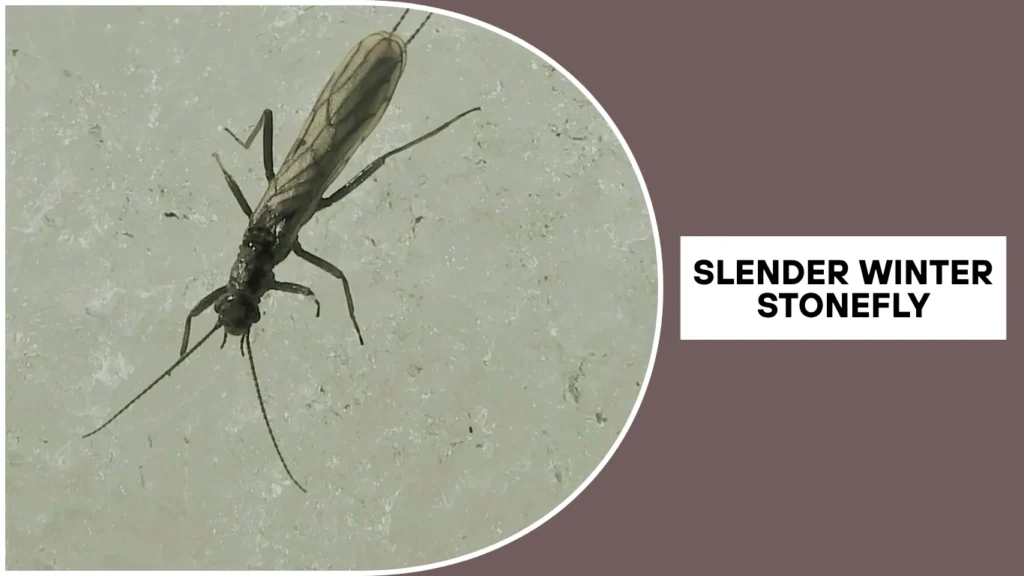
Slender Winter Stoneflies are tiny, cold-adapted insects that emerge and reproduce during winter, often seen crawling across snow-covered streambanks in late winter or early spring.
Identification
- Body length: 4–8 mm
- Color: Dark brown to black
- Thin, elongated body shape
- Narrow wings wrap tightly around the abdomen
- Short cerci and long antennae
Habitat
They prefer cold, high-quality mountain and forest streams, especially spring-fed headwaters. Nymphs reside in gravel, cobble, and organic debris, where oxygen levels remain high throughout the year.
Life Cycle
These stoneflies have a 1-year lifecycle, with eggs hatching in late spring. Nymphs develop during summer and fall, and adults emerge in late winter, often before snowmelt. Adults are poor fliers and are typically seen walking on snow.
Ecological Role
They help break down leaf litter and contribute to winter nutrient cycling in streams. Their emergence supports early spring predators like trout and dippers when few other insects are available.
13. Small Minnow Stonefly (Nemouridae spp.)

Small Minnow Stoneflies are diverse and widespread, commonly found in cool, forested streams. Their name refers to the nymphs’ resemblance to tiny swimming fish due to their shape and quick movement.
Identification
- Body length: 5–12 mm
- Color: Brown to dark brown
- Nymphs have a rounded body and bristled legs
- Two cerci and long antennae
- Adults with clear, veined wings folded flat
Habitat
They thrive in shallow, cold-water streams and creeks, especially those with abundant leaf litter and cobble. Nymphs prefer the undersides of stones and submerged wood debris.
Life Cycle
Typically has a 1-year lifecycle, with eggs hatching in summer. Nymphs develop through fall and winter, and adults emerge in early spring to early summer, depending on elevation and latitude.
Ecological Role
Nymphs act as shredders, feeding on detritus and aiding in decomposition of organic material. They’re important prey for small fish and aquatic insects and are useful indicators of moderately clean to pristine stream habitats.
14. Flatheaded Stonefly (Perlodidae spp.)

Flatheaded Stoneflies are medium to large predatory stoneflies found in cool, fast-moving streams. Their nymphs are recognized by their flattened heads and elongated bodies, adapted for clinging to rocks in turbulent water.
Identification
- Body length: 10–25 mm
- Color: Brown, tan, or mottled with dark patterns
- Flattened head and thorax in nymphs
- Adults with two long cerci and transparent wings
- Slender build with long legs and antennae
Habitat
They inhabit riffles of cold, clear streams and rivers, often in mountainous or forested regions. Nymphs are found clinging to submerged stones and wood in strong currents.
Life Cycle
Most species have a 1–2 year lifecycle. Nymphs are active predators of other aquatic insects. Adults emerge in spring or early summer, often seen on rocks and riparian vegetation near the stream.
Ecological Role
As predators, nymphs help regulate populations of smaller aquatic invertebrates. Their presence also indicates good water quality and healthy stream ecosystems. They are an important part of the aquatic food web.
15. Needlefly (Leuctra spp.)

Needleflies are small, slender stoneflies often seen in spring and early summer. They are closely related to Willowflies and are typically found in cold headwater streams.
Identification
- Body length: 5–10 mm
- Color: Dark brown to black
- Cylindrical, needle-like body
- Wings tightly wrapped around the abdomen
- Short cerci and fine antennae
Habitat
Needleflies prefer shaded, spring-fed forest streams, especially in upland areas with consistent cool water flow. Nymphs hide under stones and among submerged leaf litter.
Life Cycle
Most Needleflies have a 1-year lifecycle. Eggs hatch in late spring, nymphs develop through fall and winter, and adults emerge from late winter to early spring, often appearing before snow has fully melted.
Ecological Role
Nymphs feed on decomposing organic matter, helping maintain stream health through nutrient cycling. Their early emergence makes them a crucial food source for fish like brook trout during colder months.
16. Brown Willowfly (Taeniopteryx spp.)

Brown Willowflies are early-season stoneflies commonly found in temperate regions of North America and Europe. They emerge in late winter to early spring, often seen walking on snow near cold streams.
Identification
- Body length: 10–15 mm
- Color: Reddish-brown to dark brown
- Wings broad and flat, with distinct venation
- Slender antennae and short cerci
- Cylindrical body typical of early-season stoneflies
Habitat
They inhabit slow to moderate-flowing forested streams with abundant leaf litter and clean, cool water. Nymphs shelter under stones and debris, particularly in riffles and near streambanks.
Life Cycle
Most species complete their lifecycle in one year. Eggs hatch in spring, and nymphs develop through summer and autumn. Adults emerge from February to April, often during snowmelt.
Ecological Role
Nymphs function as shredders, breaking down leaf matter and supporting the detrital food web. Adults play a key role in early spring predator diets, including fish, birds, and amphibians.
17. Long-tailed Stonefly (Isogenus spp.)

Long-tailed Stoneflies are less commonly encountered species known for their extended cerci. They are typically found in undisturbed, high-quality rivers and streams in Europe and parts of North America.
Identification
- Body length: 12–18 mm
- Color: Brown with pale markings
- Very long cerci extending beyond the abdomen
- Transparent, folded wings with dark veins
- Long, fine antennae
Habitat
They thrive in cold, fast-flowing rivers and streams, usually in mountainous or upland regions. Nymphs cling to rocks in well-oxygenated riffles and are highly sensitive to pollution.
Life Cycle
They typically have a 1–2 year lifecycle, depending on species and habitat. Nymphs are active predators and scavengers. Adults emerge in late spring to early summer, remaining near their aquatic habitats.
Ecological Role
Nymphs contribute to aquatic predator-prey dynamics by feeding on smaller insects. Their presence is a reliable indicator of excellent water quality and low levels of organic pollution.
18. Western Stonefly (Calineuria californica)

The Western Stonefly is a striking, medium-to-large species found in the western United States, particularly in mountain streams. It is known for its distinctive coloration and importance to trout as seasonal prey.
Identification
- Body length: 20–30 mm
- Color: Golden-yellow to orange with bold black markings
- Two long cerci and long antennae
- Clear wings with dark veins, folded flat over the body
- Robust thorax with noticeable patterning
Habitat
Inhabits cold, clear rivers and streams in mountainous regions, especially in California, Oregon, and Washington. Nymphs are usually found under rocks in riffles and swift-flowing stretches.
Life Cycle
Western Stoneflies have a 1- to 2-year lifecycle. Nymphs are active from fall through spring. Adults emerge in late spring to early summer and are often seen near the water’s edge on rocks or vegetation.
Ecological Role
Nymphs feed on detritus and small invertebrates, contributing to nutrient recycling and food web stability. Adults are a valuable seasonal food source for trout and birds and are often imitated in fly fishing.
19. Northern February Red (Brachyptera putata)

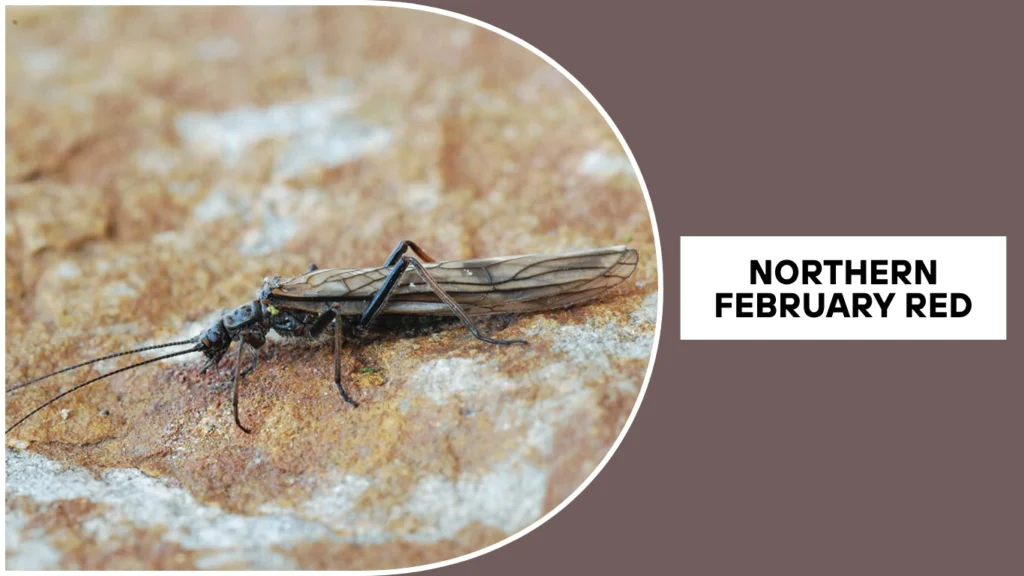
The Northern February Red is a rare and localized stonefly species found in parts of Scotland and Northern Europe. It is notable for its early emergence during the coldest months of the year.
Identification
- Body length: 8–12 mm
- Color: Reddish-brown with dark wings
- Compact, short-winged adult appearance
- Wings folded flat, often shorter than the abdomen
- Long antennae and short cerci
Habitat
Found in clean, fast-flowing upland rivers, often in remote moorland or mountainous areas. Nymphs live under stones in riffles and shallow edges of cool streams.
Life Cycle
This species has a 1-year lifecycle. Nymphs develop through the summer and fall. Adults emerge in February or even late January, making them one of the earliest flying aquatic insects.
Ecological Role
Their early emergence provides a crucial food source for fish like grayling and birds such as dippers. Their presence indicates excellent water quality and minimal environmental disturbance.
20. Early Brown Stonefly (Paraleuctra spp.)
Early Brown Stoneflies are small, cold-tolerant insects that emerge in late winter or early spring. They are commonly found in forested streams and are often among the first aquatic insects seen each year.
Identification
- Body length: 5–9 mm
- Color: Light to dark brown
- Wings wrap closely around the body
- Two short cerci and long, slender antennae
- Slender, cylindrical shape with subtle thoracic markings
Habitat
They inhabit shaded, spring-fed streams and cool woodland creeks, especially those with plenty of leaf litter and clean, stable flow. Nymphs are found among gravel and submerged organic matter.
Life Cycle
Early Brown Stoneflies have a 1-year lifecycle. Eggs hatch in late spring, and nymphs grow through summer and fall. Adults emerge in late winter to early spring, often walking on snow or ice near streams.
Ecological Role
These stoneflies help break down organic debris, contributing to stream nutrient cycling. Their emergence coincides with food shortages in the ecosystem, making them an important food source for early-feeding trout and aquatic birds.
21. Forestfly (Zwicknia spp.)

Forestflies are a group of small winter-emerging stoneflies that prefer pristine forested headwater streams. They are known for their cryptic behavior and subtle appearance.
Identification
- Body length: 4–8 mm
- Color: Dark brown to nearly black
- Wings are long and closely folded along the body
- Very short cerci
- Slender body with indistinct markings
Habitat
Forestflies are typically found in high-elevation, undisturbed forest streams with cold, clear water and dense riparian vegetation. Nymphs cling to rocks and woody debris in slow-flowing sections.
Life Cycle
They have a 1-year lifecycle, with nymphs developing during summer and fall. Adults emerge in late winter, often before snowmelt. They are weak fliers and usually stay close to the streambed.
Ecological Role
Forestfly nymphs feed on detritus and biofilm, contributing to ecosystem health in headwater environments. Their presence often signals undisturbed, high-quality freshwater habitats.
22. Appalachian Forestfly (Allocapnia spp.)

The Appalachian Forestfly is a winter-emerging stonefly found primarily in the eastern United States. It is one of the earliest insect indicators of clean, cold streams in the Appalachian region.
Identification
- Body length: 5–8 mm
- Color: Black to dark brown
- Narrow wings that wrap tightly around the body
- Two short cerci
- Slender and soft-bodied with minimal markings
Habitat
Found in small, spring-fed forest streams and headwaters across the Appalachian Mountains and eastern U.S. Nymphs cling to leaf packs, moss, and submerged stones in shaded, well-oxygenated water.
Life Cycle
Has a 1-year lifecycle, with eggs hatching in late spring. Nymphs grow slowly through summer and fall. Adults emerge in mid to late winter, often appearing on snow near stream edges.
Ecological Role
Nymphs feed on decomposing plant matter and contribute to leaf litter breakdown. Their presence is a sign of unpolluted, healthy streams, and they serve as important food for fish and birds during winter scarcity.
23. Twin-lobed Stonefly (Isoperla bilineata)

The Twin-lobed Stonefly is a vibrant, predatory stonefly found in clean, fast-flowing streams across North America. It’s known for its greenish coloration and role in stream predator dynamics.
Identification
- Body length: 12–16 mm
- Color: Bright yellow-green with two dark lines along the thorax
- Clear wings with visible veins
- Long antennae and twin cerci
- Slender, agile build
Habitat
Occurs in clear, rocky-bottomed streams and rivers, especially in mountainous or upland regions. Nymphs are typically found in riffles and fast-moving current, clinging to stones and logs.
Life Cycle
Lifecycle is usually completed in one year, with nymphs preying on smaller aquatic insects. Adults emerge in late spring to early summer, and are active near water, often flying between vegetation.
Ecological Role
As predators, Twin-lobed Stonefly nymphs help balance invertebrate populations in streams. Their presence is a sign of excellent water quality, and they are a seasonal food source for trout and insectivorous birds.
