

Cockroach eggs are small, hidden threats that can quickly lead to full-blown infestations. Understanding what they look like, where they’re found, and how they hatch is key to controlling these persistent pests. In this guide, you’ll learn everything about cockroach eggs—from identifying different types like German and American cockroach eggs to the best ways to eliminate and prevent them from spreading in your home.
What Are Cockroach Eggs?

Cockroach eggs are a key part of how infestations spread. Unlike some insects that lay individual eggs, cockroaches produce a capsule called an ootheca, which contains multiple eggs protected by a tough outer shell. These egg cases are often hidden in cracks, behind appliances, or near food sources, making them difficult to detect without close inspection.
Scientific Term: Ootheca (Egg Case)
The scientific name for the cockroach egg case is ootheca. It is a durable capsule that holds a cluster of eggs—sometimes up to 50—depending on the species. This case offers the eggs protection during their development.
Purpose of the Ootheca
The ootheca serves as a protective container that guards the eggs from moisture loss, predators, and even some chemical treatments. Some cockroaches carry the ootheca until hatching time, while others leave it in warm, dark, and secluded places.
Structure of the Egg Case
Typically, an ootheca is brown to reddish-brown and shaped like a small capsule or bean. It has a noticeable ridge along one side and may feel firm to the touch. In many cases, it is sticky enough to adhere to surfaces such as cardboard, wooden furniture, or even fabric, allowing cockroaches to hide them in plain sight.
Cockroach Reproduction Basics

Cockroaches reproduce rapidly, which is why infestations can grow out of control within weeks. Their reproductive system is efficient, and most species follow a similar pattern of internal fertilization and egg development, leading to frequent and prolific egg-laying cycles.
How Female Cockroaches Reproduce
Female cockroaches mate once and can produce eggs for the rest of their lives using stored sperm. After mating, fertilized eggs develop inside the female’s body and are enclosed within an ootheca before being carried or deposited.
Internal Fertilization and Egg Formation
Cockroach reproduction involves internal fertilization, where sperm is transferred directly into the female during mating. Once inside, the fertilized eggs form an ootheca that begins hardening shortly after exposure to air.
Frequency of Egg Production
Female cockroaches can produce multiple oothecae throughout their life. For example, a German cockroach may produce one ootheca every few weeks, each containing up to 40 eggs. This high reproductive rate contributes to fast-growing infestations.
Do All Species Carry Egg Cases?
Not all cockroaches carry their egg cases. German cockroaches often carry them until just before hatching, while American and brown-banded cockroaches typically deposit their oothecae in hidden locations. Some species, like the Madagascar hissing cockroach, retain the eggs internally until the young are ready to emerge.
What Do Cockroach Eggs Look Like?
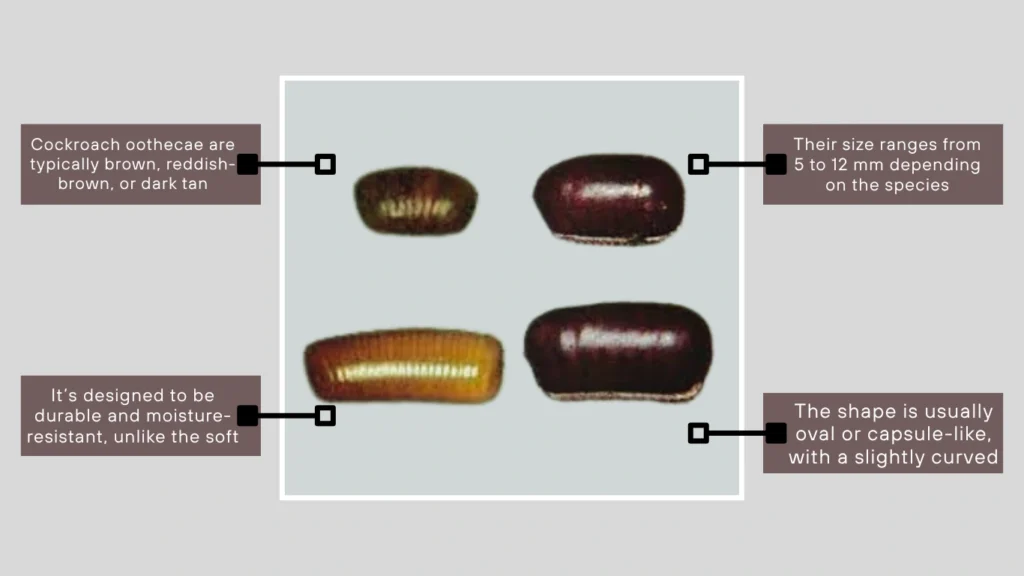
Cockroach eggs vary slightly by species, but most share some common features. They are usually enclosed in an ootheca—a protective capsule that contains multiple developing embryos. Recognizing these egg cases is key to identifying an infestation early.
Color, Size, and Shape of Cockroach Eggs
Cockroach oothecae are typically brown, reddish-brown, or dark tan. Their size ranges from 5 to 12 mm depending on the species. The shape is usually oval or capsule-like, with a slightly curved or ridged seam along one side.
Comparison of Ootheca vs. Individual Eggs
Individual cockroach eggs are rarely seen because they remain inside the ootheca until hatching. The ootheca itself is what most people encounter. It’s designed to be durable and moisture-resistant, unlike the soft, pale eggs within it.
Can You See Cockroach Eggs with the Naked Eye?
Yes, oothecae are visible to the naked eye. They may resemble small dried beans or brownish capsules. However, due to their hidden placement—behind furniture, inside cabinets, or in cracks—they can go unnoticed until hatching occurs.
Images or Diagrams Suggested Here
To aid identification, include labeled images of egg cases from different species such as German, American, and brown-banded cockroaches. A side-by-side comparison with scale references can help readers visually distinguish between types.
Size and Structure of the Ootheca (Egg Case)

Understanding the size and structure of cockroach egg cases helps with correct identification. Each species has a slightly different ootheca, which can indicate the type of infestation present.
Average Size by Species
- German cockroach: 6–9 mm long
- American cockroach: 8–10 mm long
- Brown-banded cockroach: 4–5 mm long
Each ootheca may contain 10 to 50 eggs, depending on species and environmental conditions.
Protective Outer Shell Explained
The ootheca is made of a tough, protein-based material that hardens after formation. It shields the eggs from physical harm, dehydration, and many chemical insecticides, making it highly effective for survival.
How It Sticks to Walls, Glue, Furniture, or Shoes
Some species produce sticky egg cases that adhere to surfaces like cardboard, wooden furniture, or even shoes. German cockroach egg cases, in particular, may be seen attached to vertical surfaces or embedded in soft materials like glue or paper folds.
Types of Cockroach Eggs by Species

Different cockroach species produce distinct oothecae in terms of size, shape, and behavior. Identifying the type of egg case can help determine which species is infesting your home and guide the best removal strategy.
a. German Cockroach Eggs
German cockroach oothecae are light brown and measure about 6–9 mm in length. Each case contains up to 40 eggs. Females often carry the egg case until one or two days before hatching, making this species especially challenging to control. The hatching period is around 20–30 days, depending on temperature and humidity.
b. American Cockroach Eggs
These egg cases are dark brown and slightly larger, around 8–10 mm long. Each ootheca holds 14–16 eggs. Females usually deposit them in hidden, warm, and humid areas like behind fridges, inside cabinets, or near drains. Eggs hatch within 6–8 weeks in ideal conditions.
c. Brown-Banded Cockroach Eggs
Smaller and lighter in color, brown-banded cockroach oothecae are around 4–5 mm and often have a yellowish-brown hue. They prefer to stick their egg cases on high surfaces such as ceilings, shelves, or inside furniture. Each case contains 10–18 eggs, and hatching occurs in about 30–90 days.
d. Hissing Cockroach & Madagascar Species
These species are ovoviviparous, meaning females retain the egg case inside their bodies until the young are ready to emerge. The egg case may still form internally, but it isn’t seen outside the body. The young are born live and appear as small, pale versions of adults, differing significantly from typical cockroach development.
Egg Hatching Process

The hatching process varies slightly by species and environmental conditions, but all cockroach eggs follow a basic development cycle inside the ootheca until they emerge as nymphs.
How Long Do Cockroach Eggs Take to Hatch?
Hatching time depends on the species and environment. German cockroach eggs hatch in 20–30 days, while American cockroach eggs may take 6–8 weeks. Brown-banded eggs take longer—up to 3 months in cooler conditions.
German Cockroach Hatching Timeline
German cockroaches have one of the fastest reproductive cycles. After the ootheca is formed, it takes roughly 3–4 weeks for the eggs to hatch. This rapid timeline contributes to their ability to cause infestations quickly.
Factors Affecting Development Speed
Temperature and humidity are the most important factors. Warm, moist environments accelerate egg development, while cold or dry conditions can delay or halt hatching.
Dormancy Period: How Long Can Eggs Stay Unhatched?
Some cockroach eggs can remain viable for several weeks or even months if environmental conditions are unfavorable. In certain cases, eggs may delay hatching until warmth and moisture return.
Cockroach Laying Behavior

Understanding how cockroaches lay their eggs can help in early detection and control. Different species exhibit varying behaviors when it comes to carrying, depositing, or hiding their oothecae.
How and When Females Lay Eggs
After mating, female cockroaches begin producing oothecae at regular intervals, depending on the species. Some lay eggs every few weeks, while others may take longer. Most species deposit their ootheca in dark, moist, and hidden areas where the eggs can develop undisturbed.
Do Cockroaches Carry Egg Cases?
Yes, some species like the German cockroach carry the egg case on the tip of their abdomen until shortly before hatching. Others, such as the American cockroach, deposit the ootheca in a safe location soon after it forms.
Can You See a Cockroach with an Egg Sack?
In species like the German cockroach, it’s possible to see the ootheca attached to the female’s body. It appears as a small, brown capsule protruding from the rear. Spotting this is a clear sign of an active infestation.
Cockroach Laying Eggs: Photos and Behavior
Females often become more secretive when preparing to lay or deposit egg cases. They look for tight crevices, glue seams, cardboard folds, or soft wooden surfaces. Observing this behavior or capturing images can help identify hotspots.
Cockroach Egg vs Poop: How to Tell the Difference

Cockroach eggs and feces can both appear as small dark objects, leading to confusion. However, they differ in shape, texture, and location. Being able to tell them apart is important for identifying active nesting sites.
Visual Comparison
Cockroach egg cases are generally smooth, oval, and ridged, while feces resemble pepper grains or coffee grounds. Feces are often irregular in shape and texture.
Shape, Location, Texture
- Egg Cases: Oval or capsule-shaped, rigid shell, may have a seam or ridge
- Poop: Grainy, soft to the touch, and irregular
Egg cases are typically hidden in secluded spots, whereas droppings may be scattered along baseboards, behind appliances, or under sinks.
Common Places to Check for Each
- Eggs: Inside electronics, behind picture frames, cracks in walls, cardboard, envelope glue
- Poop: Near food sources, kitchen cabinets, baseboards, behind fridges and stoves
Differentiating between the two helps determine whether you’re seeing signs of nesting or active movement and feeding.
Where Cockroach Eggs Are Found
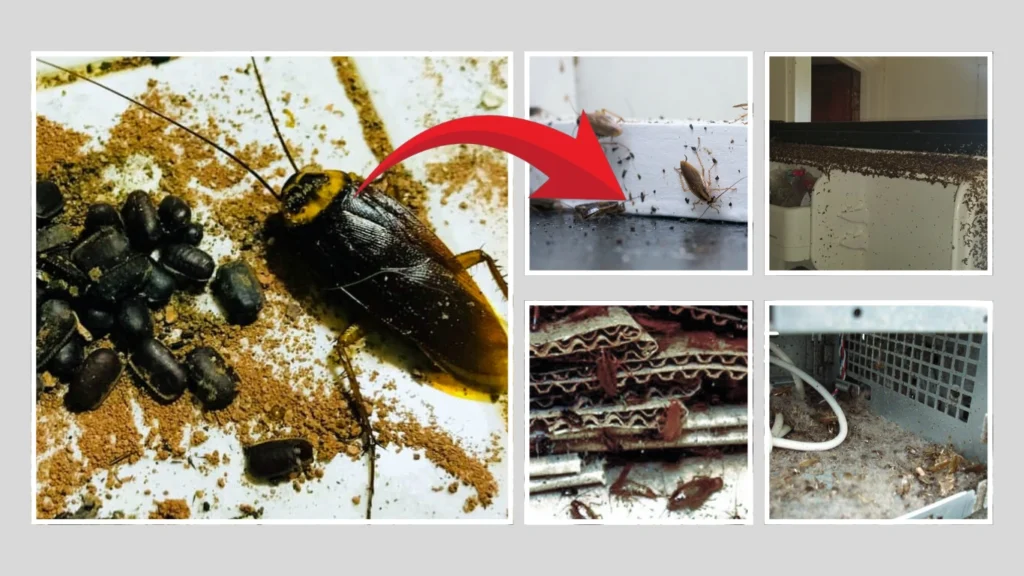
Cockroach eggs are often hidden in warm, dark, and protected areas—making them difficult to find without a thorough inspection. Understanding their preferred hiding spots can help you target eggs before they hatch.
Hidden Locations: Wall Cracks, Glue on Envelopes, Electronics
Cockroach oothecae are frequently found in:
- Wall cracks and baseboards
- Behind or under appliances
- In cardboard boxes, books, and furniture
- Inside electronics like TVs, printers, and game consoles
- Glued to envelope seals, packaging tape, or wood joints
These spots provide warmth and security, ideal for egg development.
Signs of Egg Presence
Look for small, capsule-shaped brown cases tucked into corners or along seams. You might also notice increased cockroach activity nearby or shed skins from hatched nymphs.
Can Eggs Stick to Clothes or Shoes?
Yes, though rare, egg cases can stick to shoes, clothing, or bags—especially if you’ve been in an infested area. This passive transfer can lead to spreading infestations to new locations like homes, offices, or cars.
Dangers of Cockroach Eggs
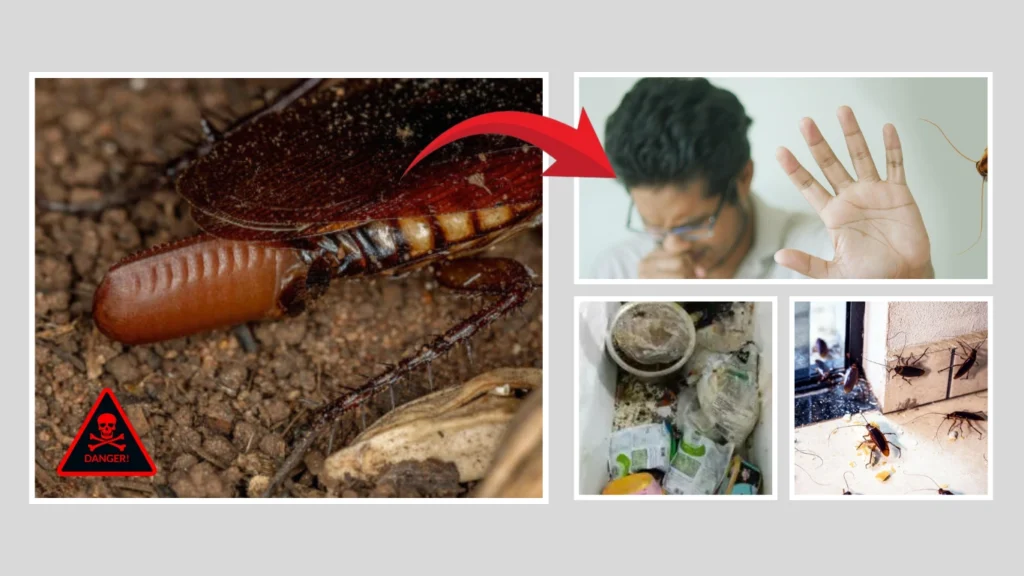
While cockroach eggs themselves don’t bite or sting, their presence signals a potential health risk. If left untreated, the eggs hatch into nymphs that contribute to a growing infestation, worsening the problem over time.
Allergens and Health Risks
Cockroach infestations, including egg casings and droppings, release allergens into the air. These allergens can trigger asthma, skin rashes, or allergic reactions—especially in children and sensitive individuals.
Can You Accidentally Eat a Cockroach Egg?
Although rare, cockroach eggs can contaminate food, especially in unclean kitchens or restaurants. They are small enough to go unnoticed if hidden in packaging, food containers, or surfaces not properly cleaned.
What Happens if Cockroach Eggs Hatch Indoors?
If eggs hatch indoors, you’ll soon have dozens of small nymphs exploring their surroundings. These young cockroaches quickly find hiding places and begin feeding, molting, and reproducing, which can turn a minor issue into a full infestation within weeks.
Parasitoid Wasp and Egg Predators
Nature has its own ways of controlling cockroach populations, including predators that target cockroach eggs. Among the most effective are parasitoid wasps, which play a key role in biological pest control.
Wasps That Lay Eggs Inside Cockroach Ootheca
Certain tiny wasps from the Evania and Aprostocetus genera are known to parasitize cockroach egg cases. These wasps locate oothecae, lay their eggs inside, and their larvae consume the developing cockroach embryos from within—preventing them from hatching.
Natural Biological Control Methods
These wasps are harmless to humans and are often introduced in agricultural or commercial settings to manage cockroach populations. They help reduce infestations naturally without the use of chemicals.
Other Insects That Eat Cockroach Eggs
In addition to wasps, some species of ants, spiders, and beetles may eat cockroach eggs if they come across them. However, their impact is less targeted and less reliable than that of parasitoid wasps.
Killing and Preventing Cockroach Eggs
Effective cockroach control involves more than killing the adults—you must also target and eliminate their eggs. This includes using the right products, tools, and strategies to prevent future infestations.
a. What Kills Cockroach Eggs?
- Heat: Temperatures above 120°F (49°C) can destroy eggs
- Freezing: Prolonged exposure to below-freezing temperatures kills them
- Vacuuming: Suction can remove and contain egg cases for disposal
- Commercial sprays: Some insecticides are formulated to penetrate oothecae
- Natural remedies: Boric acid, diatomaceous earth, and neem oil can help
b. Egg Removal Tips
To remove eggs:
- Search warm, hidden areas (e.g., behind appliances, drawers, electronics)
- Use gloves and paper towels to pick up oothecae
- Seal and discard them in outdoor trash
- Clean the area thoroughly to remove scent trails
Stepping on a cockroach doesn’t always destroy the eggs it carries, so physical removal is best.
c. Egg-Proofing Your Home
Prevent future egg deposits by:
- Sealing wall cracks, gaps in cabinets, and floorboards
- Reducing humidity and food waste
- Storing food in airtight containers
- Performing regular inspections and cleanings
These steps limit the availability of safe spaces for females to lay eggs.
Interesting Facts About Cockroach Eggs
Cockroach eggs may seem like a minor nuisance, but they are surprisingly complex and fascinating. From their numbers to how they’re used in scientific research, these egg cases reveal a lot about cockroach survival strategies.
How Many Eggs in One Case?
Depending on the species, a single ootheca can contain:
- German cockroach: Up to 40 eggs
- American cockroach: Around 14–16 eggs
- Brown-banded cockroach: Typically 10–18 eggs
Each female can produce multiple oothecae in her lifetime, greatly increasing the infestation risk.
How Many Eggs Per Day or Lifetime?
On average, a female German cockroach may produce one ootheca every 20–25 days and up to 300–400 eggs in her lifetime. With favorable conditions, a small population can turn into thousands in just a few months.
Can Cockroach Eggs Be Bought or Sold (for Feeding Reptiles)?
In some exotic pet markets, cockroach oothecae—especially from species like the Madagascar hissing cockroach—are sold as reptile feeders. However, live egg sales are often regulated or discouraged to prevent accidental infestations, especially with pest species like German or American cockroaches.
FAQs
What do German cockroach eggs look like?
German cockroach egg cases are light brown, about 6–9 mm long, and slightly curved with ridges along the side. Each ootheca holds up to 40 eggs and may be seen protruding from the female’s body before hatching.
What temperature kills cockroach eggs?
Cockroach eggs are killed by high heat above 120°F (49°C) or by prolonged freezing temperatures below 0°F (−18°C). These extremes damage the egg case and stop embryo development.
Can cockroach eggs hatch in your ear or wall?
While it’s a common myth, cockroach eggs cannot hatch inside a human ear. However, they can hatch inside walls, electronics, or any tight, hidden spaces in your home.
Can you prevent eggs from sticking to surfaces?
Yes. Cleaning surfaces regularly with soapy water or vinegar can help. Sealing cracks and avoiding clutter will also reduce the areas where egg cases can be glued or hidden.
How to tell if an egg has hatched?
A hatched ootheca appears split or open along its seam, often with a visible line or crack. If intact, the case is usually sealed and firm. Discard any suspicious capsules, hatched or not, to avoid risk.
