

Fire ants are aggressive, reddish-brown insects known for their painful stings and ability to form large colonies in yards, gardens, and even homes. Native to South America but now widespread, they’re considered a dangerous invasive species in many parts of the world. In this guide, you’ll find 55 essential FAQs covering fire ant identification, bite treatment, nesting habits, dangers, and removal methods.
Understanding Fire Ants
1. What are fire ants?

Fire ants are a group of aggressive ant species known for their reddish color and painful stings. The most common type is the red imported fire ant (Solenopsis invicta), which builds large mounds and aggressively defends its territory. They are known to swarm and sting anything they perceive as a threat.
2. Why are fire ants called fire ants?
They are called “fire ants” because of the burning pain caused by their stings. When they sting, they inject venom that creates a fiery, itching sensation that can last for hours or days. Their reddish appearance also contributes to the name.
3. How did fire ants get their name?
The name “fire ant” is derived from the intense burning feeling their sting produces. This painful reaction, combined with their reddish color and aggressive behavior, made the term “fire” an apt description used by scientists and locals alike.
4. What do fire ants look like?
Fire ants are typically reddish-brown with darker abdomens. They range in size from 1/16 to 1/4 inch (1.6–6 mm), with a visible stinger at the end of the abdomen. Workers vary in size and have a two-segmented waist and strong mandibles for biting.
5. How big are fire ants?

Worker fire ants vary in size between 1/16 and 1/4 inch long. Queens can grow up to 3/8 inch. Their size can depend on the colony’s age and health, but generally, fire ants are small yet highly coordinated when attacking intruders.
6. Are fire ants red?
Yes, fire ants are commonly reddish-brown or copper-colored, with darker brown or black abdomens. Their color is one of the main identifying traits, especially when compared to black pavement ants or carpenter ants. The color varies slightly by species.
7. Can fire ants be black?
While fire ants are mostly reddish, some species or individuals may appear darker—especially the abdomen. However, true black fire ants do not exist. If the ants are fully black, they are likely a different species, such as black garden ants or carpenter ants.
8. How fire ants look like?
Fire ants have a segmented body with six legs, bent antennae, and a stinger on their rear end. They look like typical ants but can be identified by their reddish color and aggressive swarming behavior. Their nests have no visible opening and form dome-shaped mounds.
9. What fire ants do?

Fire ants build large mounds in soil, invade homes for food, and attack when disturbed. They forage aggressively and use coordinated group behavior to protect their nest. When they sting, they inject venom that causes blisters, and multiple ants often sting at once.
10. What fire ants eat?
Fire ants are omnivores. They eat proteins (like insects, dead animals), sugary substances (like nectar or honeydew), and greasy foods. Indoors, they’re attracted to pet food, sweets, and crumbs. Their scavenging habits make them adaptable and invasive in both urban and rural environments.
Habitat and Distribution
11. Where do fire ants live?

Fire ants live in warm, sunny environments, primarily in soil. They prefer open fields, lawns, gardens, and roadsides. Nests are often found near structural foundations, sidewalks, or in yards. They avoid dense shade or deep woods, and their colonies can contain up to 250,000 workers.
12. Where fire ants live?
Fire ants typically live underground in dome-shaped mounds, which can reach up to 18 inches high. These mounds have no visible entrance, as workers enter and exit through underground tunnels. You’ll often find them in pastures, parks, playgrounds, and yards with soft, dry soil.
13. Where fire ants are found?
In the U.S., fire ants are found primarily in the southeastern states, including Texas, Florida, Georgia, Alabama, and the Carolinas. Their range is expanding into California, Arizona, and even parts of Australia, China, and Taiwan, due to their invasive nature and adaptability.
14. Where would you find fire ants?
You’ll find fire ants in yards, fields, sidewalks, and electrical boxes. Look for dome-shaped soil mounds in sunny areas, often without a central hole. Indoors, they may appear in kitchens or laundry rooms while foraging for food or water.
15. What states have fire ants?
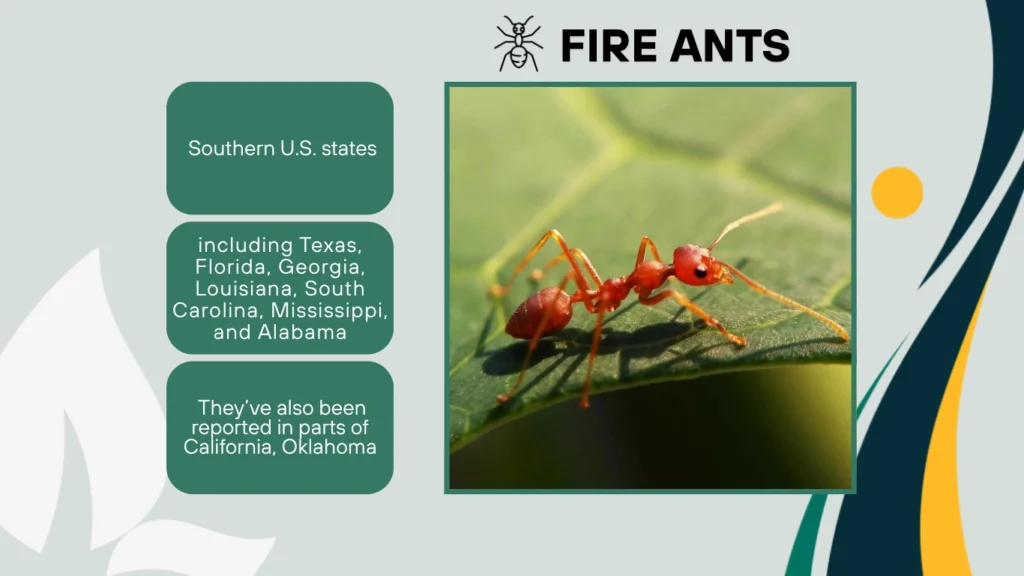
Fire ants are most prevalent in Southern U.S. states, including Texas, Florida, Georgia, Louisiana, South Carolina, Mississippi, and Alabama. They’ve also been reported in parts of California, Oklahoma, and Arkansas. Their range continues to expand due to human transportation and warmer climates.
16. Which states have fire ants?
As of now, over a dozen U.S. states have confirmed fire ant populations. These include states across the South and some in the West like California and New Mexico. Quarantine zones exist in affected areas to limit the spread of colonies through soil or landscaping materials.
17. Are fire ants in Ohio?
Fire ants are not yet widespread in Ohio, but isolated reports exist. The colder climate limits their survival and spread. However, as temperatures rise, fire ants may eventually establish small colonies in warmer microclimates or greenhouses.
18. Are fire ants in Michigan?
Fire ants are not native to Michigan, and their survival is limited by cold winters. Any sightings are likely from accidental transport and temporary. As of now, Michigan is not considered part of their stable range.
19. Are fire ants in Illinois?
Fire ants are not common in Illinois, though southern regions might see occasional activity. The northern climate isn’t ideal for their survival. However, with changing weather patterns, they may expand northward over time.
20. Are fire ants native to Texas?
Yes, fire ants are widespread in Texas, but they are not native. The red imported fire ant (Solenopsis invicta) was introduced from South America in the 1930s through shipping ports. Texas is now one of the most heavily infested states in the U.S.
Origins and Invasiveness
21. Where did fire ants come from?
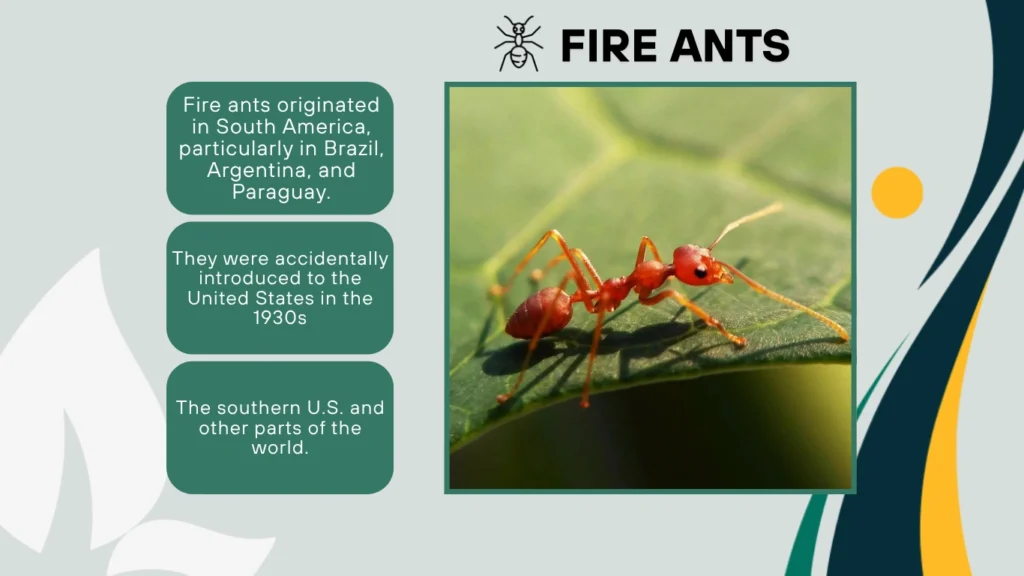
Fire ants originated in South America, particularly in Brazil, Argentina, and Paraguay. They were accidentally introduced to the United States in the 1930s, likely through shipping cargo in Mobile, Alabama. Since then, they’ve rapidly spread across the southern U.S. and other parts of the world.
22. Where did fire ants originally come from?
Fire ants originally came from South America, where they thrive in tropical and subtropical environments. In their native habitat, natural predators keep their populations in check. However, in places where they’re invasive, such as the U.S., they have fewer natural enemies and spread rapidly.
23. How did fire ants get to America?
Fire ants were unintentionally brought to America via cargo ships from South America in the 1930s. They entered through Mobile, Alabama, and found the warm southern climate ideal for colonization. Since their introduction, they’ve expanded aggressively across multiple states.
24. How did fire ants get to the US?
They arrived in the United States through shipping routes, likely in soil used as ballast in cargo ships. After landing in the southeastern U.S., they quickly spread, forming vast colonies in outdoor areas. Their ability to adapt and reproduce quickly makes them a successful invasive species.
25. Are fire ants invasive?
Yes, fire ants are considered one of the most invasive ant species in the world. Their aggressive behavior, rapid reproduction, and ability to outcompete native ants allow them to dominate ecosystems. They also threaten agriculture, wildlife, and human activities.
26. Are fire ants an invasive species?
Absolutely. Fire ants are listed as high-priority invasive pests in many countries. They displace native species, attack ground-nesting animals, damage crops, and pose serious health risks to humans and pets. Their spread is difficult to control once they become established.
27. When did fire ants come to America?
Fire ants arrived in the early 1930s, with the first confirmed population detected in Mobile, Alabama. They were likely transported through international cargo shipments and have since spread across much of the southern United States due to the favorable climate.
28. When did fire ants come to Texas?
Fire ants reached Texas by the 1950s, following their initial spread from Alabama. Texas’s warm climate, open fields, and urban expansion allowed them to thrive. Today, Texas is one of the most heavily infested states, with fire ants present in both urban and rural areas.
29. How did fire ants get to Australia?
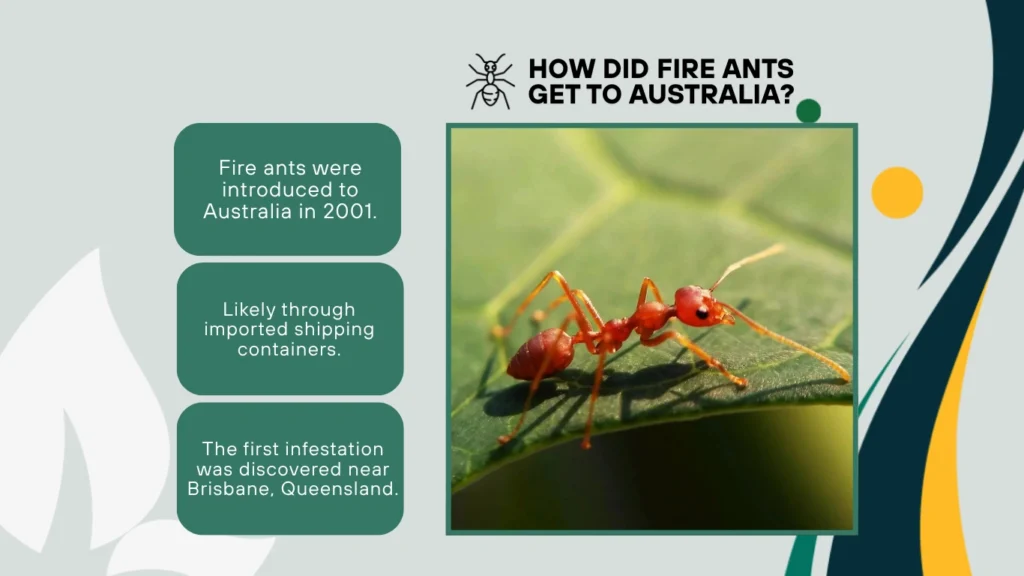
Fire ants were introduced to Australia in 2001, likely through imported shipping containers. The first infestation was discovered near Brisbane, Queensland. Since then, strict containment and eradication efforts have been put in place to prevent them from spreading further.
30. When were fire ants introduced to Australia?
Fire ants were first discovered in Australia in February 2001, near Brisbane. Authorities believe they arrived through international freight. Since their detection, fire ants have been classified as a serious biosecurity threat, with ongoing eradication programs in place across affected regions.
Wings, Reproduction, and Flight
31. Do fire ants have wings?
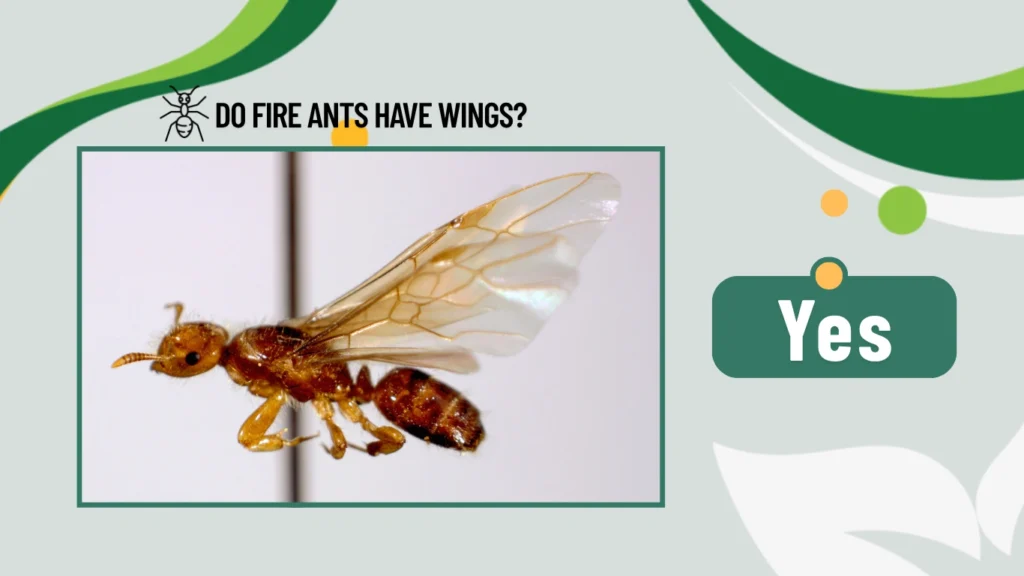
Yes, reproductive fire ants (males and queens) have wings. These ants participate in mating flights, often called nuptial flights, where they leave the nest to reproduce. After mating, males die, and queens shed their wings to start new colonies.
32. Can fire ants fly?
Only the winged reproductives (alates) can fly. Worker fire ants do not have wings and cannot fly. During warm weather, particularly after rain, males and queens fly to mate midair. Afterward, queens land and form new colonies underground.
33. Do fire ants fly?
Yes, during their reproductive stage, fire ants fly to mate. These mating swarms usually occur in spring or summer. The queens will then seek nesting sites, while the males die shortly after mating.
34. Which fire ants have wings?
Only males and virgin queens have wings. These are the reproductive members of the colony. Worker ants, which make up the majority of the colony, are wingless and stay on the ground to forage and protect the nest.
35. Do fire ants have stingers?
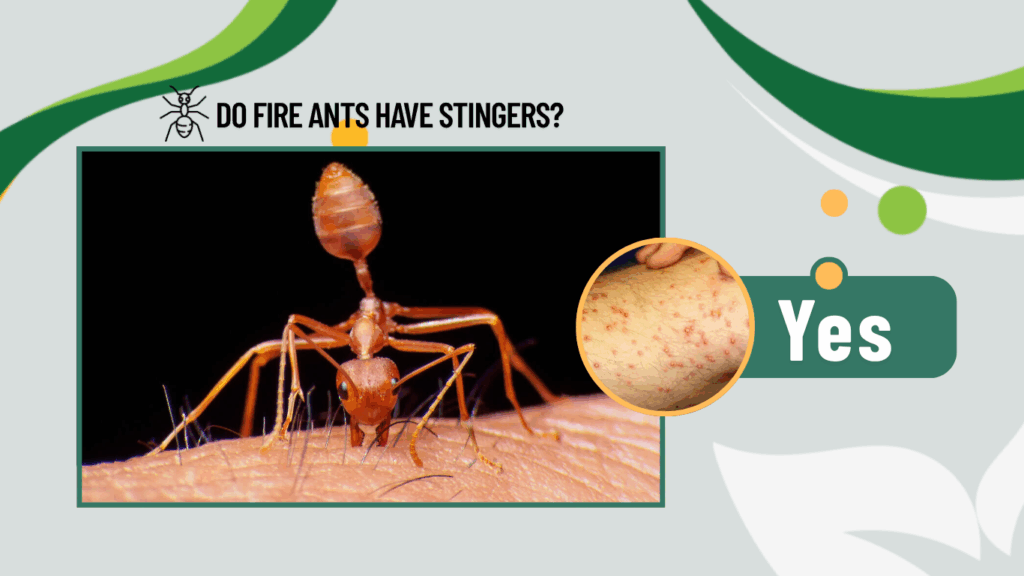
Yes, fire ants have powerful stingers located at the end of their abdomens. They use their mandibles to latch onto skin and sting repeatedly, injecting venom that causes intense pain, itching, and sometimes allergic reactions.
36. Do fire ants have venom?
Yes, fire ants produce alkaloid venom called solenopsin, which is responsible for the burning pain and pustules after a sting. In some individuals, the venom can trigger allergic reactions ranging from swelling to severe anaphylaxis.
37. Does fire ants have wings?
Grammatically corrected: Do fire ants have wings?
Yes, but only certain members of the colony. Winged males and queens use them during mating season, while worker ants are wingless and perform duties such as foraging and defending the nest.
38. Do fire ants have 2 sets of wings?
Yes, reproductive fire ants have two sets of wings—a forewing and a hindwing on each side. These help them during their nuptial flight. After mating, the queen loses her wings, while males die shortly after.
39. When do fire ants fly?

Fire ants typically fly during warm, humid conditions—often after a rainstorm in spring or early summer. These flights are part of their mating behavior. You may notice large swarms of winged ants during this time.
40. How do fire ants reproduce?
Fire ants reproduce through nuptial flights. Winged queens and males fly, mate midair, and then the queens fall to the ground, shed their wings, and burrow to start a new colony. A successful queen can lay thousands of eggs during her lifetime.
Bites, Stings, and Treatment
41. Do fire ants bite or sting?

Fire ants both bite and sting. First, they bite to grip your skin, then use their stinger to inject venom. This dual attack causes a burning sensation, redness, and often a white pustule at the sting site within a day.
42. Do fire ants sting?
Yes, fire ants have a venomous sting that causes a painful burning feeling—hence the name “fire” ants. The sting often results in itchy, fluid-filled pustules and may trigger allergic reactions in sensitive individuals.
43. How do fire ants bite?
Fire ants clamp onto the skin using their strong mandibles and then pivot their body to sting multiple times in a circular pattern. This technique allows them to inject venom efficiently while holding on tightly.
44. What do fire ant bites look like?
A fire ant bite usually develops into a red, swollen area that later forms a white, pus-filled blister. These pustules are a key identifier and may itch for days. Scratching can lead to infection or scarring.
45. Can fire ants kill you?

While rare, yes—fire ants can be deadly. In people with severe allergic reactions (anaphylaxis), multiple stings can cause shock, difficulty breathing, and even death without emergency treatment. For most people, they’re painful but not fatal.
46. Can fire ants kill a dog?
Yes, in extreme cases, fire ants can harm or even kill small pets, especially if the animal disturbs a nest and is stung repeatedly. Symptoms include swelling, breathing issues, vomiting, or collapse—prompt veterinary attention is critical.
47. Can fire ants kill trees?
Fire ants don’t eat trees, but they can damage roots, especially in young plants. They may build nests around the base of trees, disturb the soil, and interfere with root systems, which can weaken or kill seedlings or small plants.
48. Are fire ants deadly?
Yes, fire ants can be deadly—especially to those with allergies. Their venom can lead to serious medical emergencies in humans, pets, and wildlife. Even healthy individuals may suffer complications from multiple stings.
49. Can fire ant bites make you sick?

Yes, multiple stings can lead to nausea, dizziness, swelling, fever, or even infection. In allergic individuals, symptoms can escalate rapidly to anaphylaxis, which requires immediate medical treatment.
50. Are fire ants dangerous?
Yes, fire ants are very dangerous, not just for their sting but also because of their aggressive swarming behavior. They attack in large numbers and can severely harm children, pets, and people working outdoors.
Prevention and Control
51. How to get rid of fire ants naturally?

Natural methods include pouring boiling water directly into nests, using diatomaceous earth, or applying citrus oil or white vinegar. While these may reduce visible colonies, they often don’t reach the queen, so reinfestation is possible without consistent treatment.
52. How to kill fire ants in the yard?
To eliminate fire ants in the yard, use fire ant bait granules containing insect growth regulators, applied around the mound. You can also apply drench treatments directly on mounds. Repeat treatments may be needed for full colony removal.
53. Should you kill fire ants?
Yes, especially in areas where they’re invasive or pose health risks. Fire ants can be harmful to humans, pets, and native wildlife. Managing or removing colonies helps prevent bites, property damage, and ecological disruption.
54. When is the best time to spray for fire ants?
The best time is late spring to early summer, when ants are actively foraging but before peak reproduction. Treating in the morning or evening when ants are near the surface improves effectiveness. Repeat treatments may be needed.
55. Why are fire ants bad?

Fire ants are bad because they’re aggressive, invasive, and harmful to people, pets, plants, and native ecosystems. Their painful stings, ability to damage electrical systems, and competition with native species make them one of the most problematic pests globally.
