

Carpenter ants may look harmless, but they can quietly damage your home from the inside out. Unlike termites, they don’t eat wood—they tunnel through it to build nests. Spotting early signs like frass piles or rustling inside walls can save you from costly repairs. In this guide, you’ll learn 8 key signs of carpenter ants in your house and practical prevention methods to keep them away for good.
8 Signs of Carpenter Ants in Your Home
Carpenter ants are sneaky invaders that often go unnoticed until damage is already done. While they don’t consume wood like termites, they excavate smooth tunnels inside damp or decaying wood to build their nests. Spotting their early signs is crucial for protecting your home’s structural integrity.
Below are eight clear warning signs to help you detect a carpenter ant problem early.
1. Rustling or Clicking Sounds Inside Walls

If you hear faint rustling or soft clicking noises coming from your walls, especially at night, it could be a sign of carpenter ants tunneling through wood. These sounds are most noticeable in quiet areas and may resemble the noise of crinkling paper.
Carpenter ants are nocturnal and more active after sunset. When the colony is large enough, their movement inside hollowed wood can be heard without tools. Use a stethoscope or place your ear against the wall to detect subtle movements.
This sound is often misidentified as rodents, but carpenter ant noise is lighter and more localized. Pay attention to walls near kitchens, bathrooms, or anywhere with past water damage.
2. Presence of Frass (Ant Debris)

One of the most visible signs of a carpenter ant infestation is the presence of frass, which is a fine, sawdust-like material they expel while excavating wood. It often includes insect body parts, wood shavings, and debris, pushed out of small holes near their nesting site.
You may find frass on windowsills, under wooden beams, or beneath baseboards. Unlike termites that consume wood, carpenter ants clean out their tunnels and discard the waste. This makes frass a reliable and unique indicator of their activity.
If you see consistent piles of this powdery material, it’s a strong clue that a colony may be burrowed deep within your home’s structure.
3. Winged Ants Indoors (Swarmers)
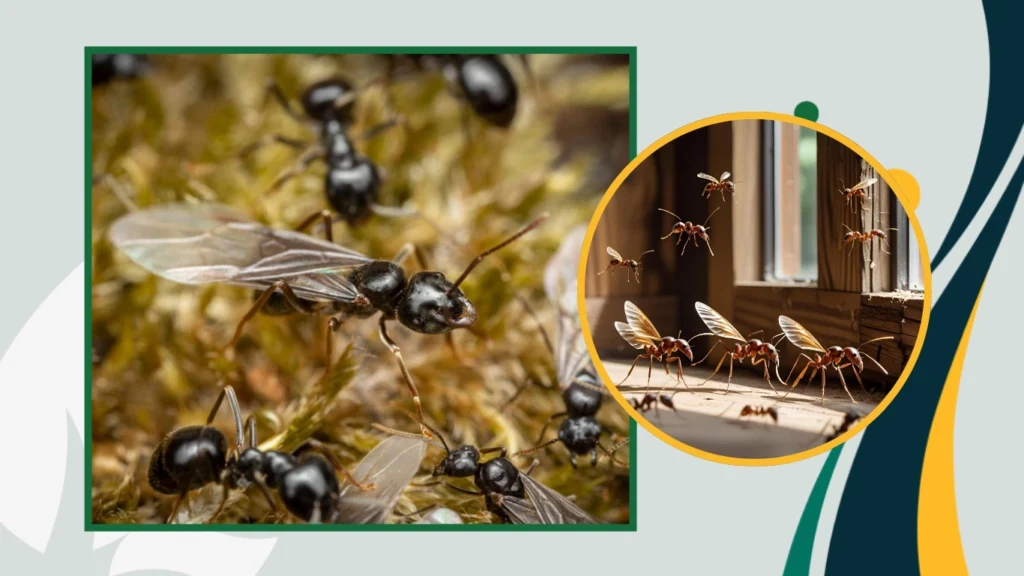
Seeing winged carpenter ants inside your home, especially near light sources or windows, is a major red flag. These are reproductive ants (called swarmers) that emerge to mate and start new colonies. Their presence indoors usually means a mature nest already exists in the house.
Swarmers are often confused with termites, but carpenter ants have elbowed antennae, a narrow waist, and unequal wing lengths. Spotting them in spring or early summer is most common, especially after rain.
If swarmers appear indoors year after year, it’s a sign that the main colony has been there for some time and is expanding.
4. Discarded Wings Near Windows or Doors
After swarmers mate, they shed their wings—leaving behind small, translucent wing piles on windowsills, floors, or under light fixtures. These wings are about half an inch long and often appear in clusters, signaling recent or active reproductive activity nearby.
Finding these discarded wings inside your house indicates that carpenter ants are not just entering from outside—they’re likely nesting within your walls or wooden structures.
It’s easy to dismiss these as from flies or termites, but closer inspection will help determine the true source. When paired with sightings of large black ants, it confirms their presence indoors.
5. Visible Carpenter Ant Trails
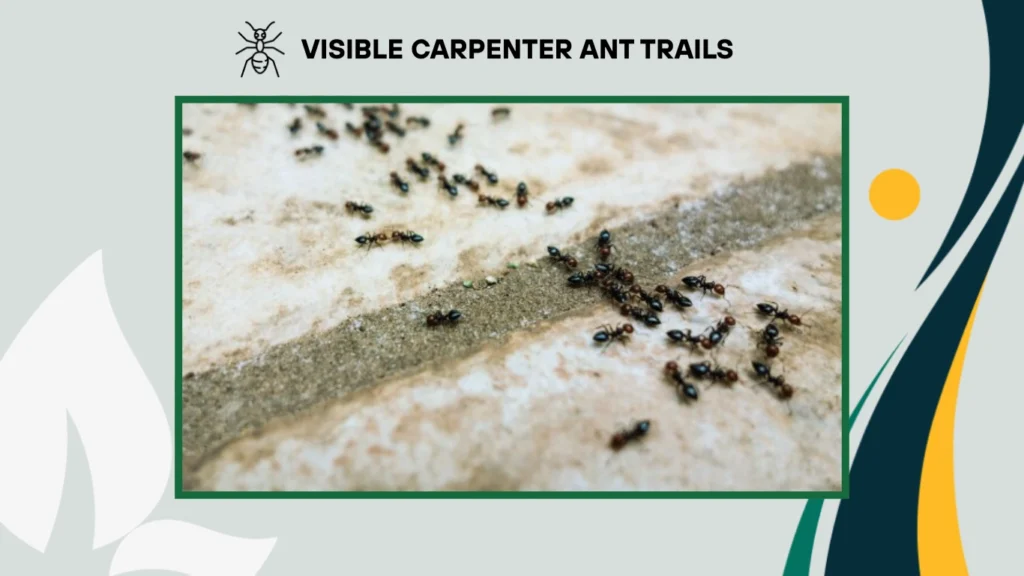
If you notice large black ants traveling in lines along walls, baseboards, or across countertops—especially at night—you may be seeing a carpenter ant trail. These ants often move between the nest and food or water sources, and they follow pheromone paths laid by other ants.
They prefer dark, damp areas like under sinks, along window frames, or near garbage bins. Outdoor trails might lead from trees or mulch piles into your home. While seeing a few ants may not seem serious, consistent traffic is a strong sign of a nearby nest.
Try following the trail to find where they’re coming from—it might lead to an entry crack, wall void, or even a rotting windowsill.
6. Soft Crunching Wood or Hollow-Sounding Walls
When carpenter ants nest inside structural wood, they hollow it out, leaving behind smooth, clean galleries. If you gently tap on affected wood and it sounds hollow—or worse, crumbles easily under pressure—it could be a sign of extensive internal tunneling.
Use the handle of a screwdriver to tap baseboards, door frames, or attic beams. Damaged areas may sound different compared to solid wood. You might also notice the wood feels soft or warped.
Over time, this damage weakens the structural integrity of your home, especially if left untreated.
7. Large Black Ants in Bathrooms or Kitchens
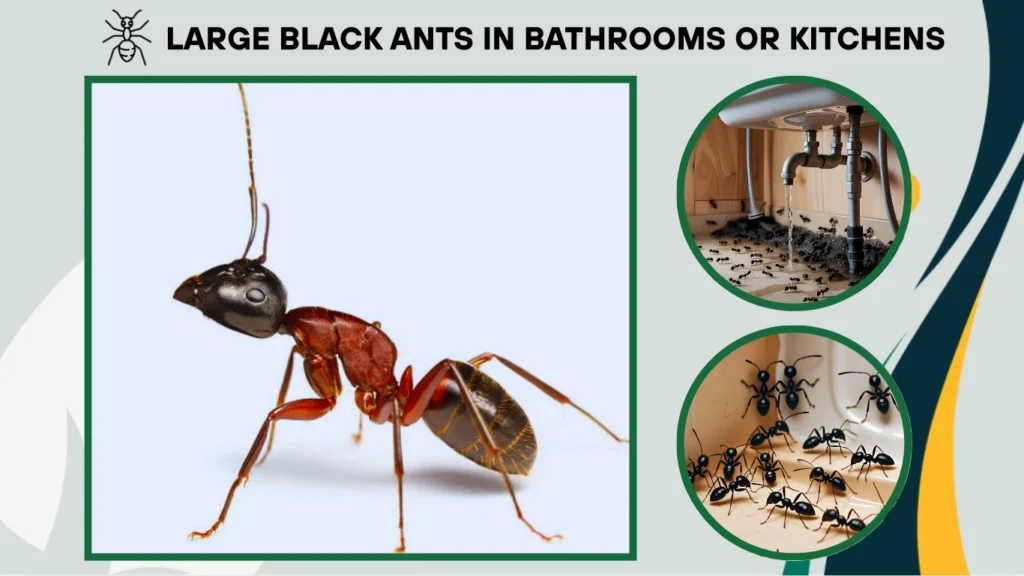
Moisture attracts carpenter ants. If you’re consistently seeing large black ants near sinks, bathtubs, dishwashers, or even AC units, it suggests they’re nesting close to a water source. Bathrooms and kitchens are common entry points due to leaky pipes and humid environments.
Unlike the smaller sugar ants, carpenter ants are larger—usually around 1/4 to 1/2 inch in length—and may appear more solitary. If you spot one, there are likely more nearby, especially during early morning or night.
Pay special attention to wood behind sinks, in wall cavities, or around windows—these are prime nesting spots.
8. Damaged Wood with Smooth, Clean Galleries
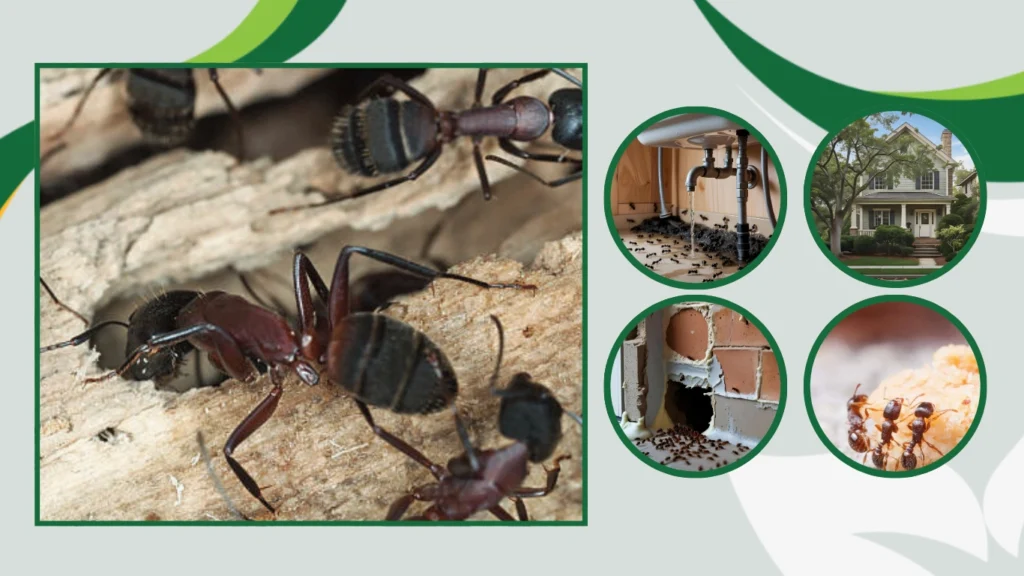
Unlike termites that leave rough, soil-lined tunnels, carpenter ants create smooth, sanded-looking galleries inside wood. These hollow spaces serve as nesting chambers and can often be found in wall studs, floor joists, or roof beams.
This type of damage is rarely visible on the surface. You might uncover it during a renovation or while inspecting soft, cracking wood. If you do break into an area and find clean tunnels with no mud or frass, it’s a clear sign of carpenter ants.
This sign usually appears later in an infestation—so if you reach this stage, it’s time to act quickly with professional help.
Effective Prevention Methods for Carpenter Ants
Carpenter ants can be tough to eliminate once they’ve established a colony inside your home. That’s why prevention is your best defense. By following these proven strategies, you can reduce the risk of infestation and keep your home protected long-term.
1. Eliminate Moisture Sources
Carpenter ants are drawn to damp wood and humid conditions. Start by fixing any leaky pipes, faucets, or roof damage. Use a dehumidifier in damp areas like basements or crawl spaces, and ensure proper ventilation in attics and bathrooms.
Also, inspect wooden window frames, door sills, and exterior siding for water damage. Replace rotting or wet wood as soon as possible to remove attractive nesting sites.
2. Trim Tree Branches and Shrubs Away from the House
Carpenter ants often travel from trees or shrubs into homes via overhanging branches or vines that touch your roof or siding. Trim vegetation back at least 1–2 feet from the house to eliminate these “bridges.”
Remove any dead trees, stumps, or large firewood piles near your home, as they can serve as satellite nests. Stack firewood off the ground and away from walls.
3. Seal Entry Points
Inspect your home for cracks, crevices, or gaps where ants might enter—especially around windows, doors, pipes, vents, and the foundation. Use caulk or expanding foam to seal even the smallest openings.
Install weather stripping on doors and windows, and repair damaged screens. Don’t overlook utility entry points or cable lines—ants are clever and persistent.
4. Store Food and Garbage Properly
Although carpenter ants don’t rely solely on indoor food, they will happily scavenge for sweets, grease, and pet food. Keep all food in sealed containers and clean up crumbs or spills promptly.
Empty trash bins regularly and keep lids tightly closed. Don’t leave pet food or water dishes out overnight, especially in kitchens or basements.
5. Use Ant Baits and Professional Treatment (If Needed)
For added protection, place ant bait stations around the home’s perimeter or near known entry points. Baits containing slow-acting poison are effective because ants carry the toxin back to the nest, eliminating the colony.
If signs of infestation persist, consult a pest control professional. They can identify the exact location of nests and apply targeted treatments safely and efficiently.
FAQs
1. Are carpenter ants more dangerous than termites?
While carpenter ants don’t eat wood like termites, they tunnel through it, weakening the structure over time. Termites typically cause more severe damage faster, but a large carpenter ant colony can still create costly issues, especially in moist or decaying wood. The key difference is that carpenter ants clean their tunnels, while termites fill them with mud or debris.
2. Can carpenter ants bite humans?
Yes, carpenter ants can bite, especially if their nest is disturbed. Their bite isn’t poisonous, but it can be painful. They sometimes spray formic acid into the wound, causing a burning sensation or mild irritation. While not medically dangerous, their bites can be unpleasant, especially for people with sensitive skin.
3. How do I know if I have carpenter ants or termites?
Carpenter ants are larger (¼ to ½ inch) and have bent antennae, narrow waists, and uneven wing pairs (if winged). Termites are smaller, with straight antennae, thick waists, and equal-length wings. Termites eat wood, leaving it filled with mud. Carpenter ants leave smooth, hollowed tunnels and piles of frass nearby.
4. Can I treat carpenter ant infestations myself?
For minor infestations, DIY treatments like baits, sprays, and sealing entry points may help. However, if you’re seeing frass, swarmers, or hearing noises inside walls, professional pest control is recommended. Experts can locate the nest and apply direct treatments, reducing the chances of reinfestation.
5. Do carpenter ants return after treatment?
Yes, carpenter ants can return if the underlying issues—like moisture, rotting wood, or easy access—aren’t resolved. After treatment, continue monitoring for ant activity and reinforce prevention strategies like sealing cracks, removing damp wood, and improving ventilation to ensure they don’t come back.
