
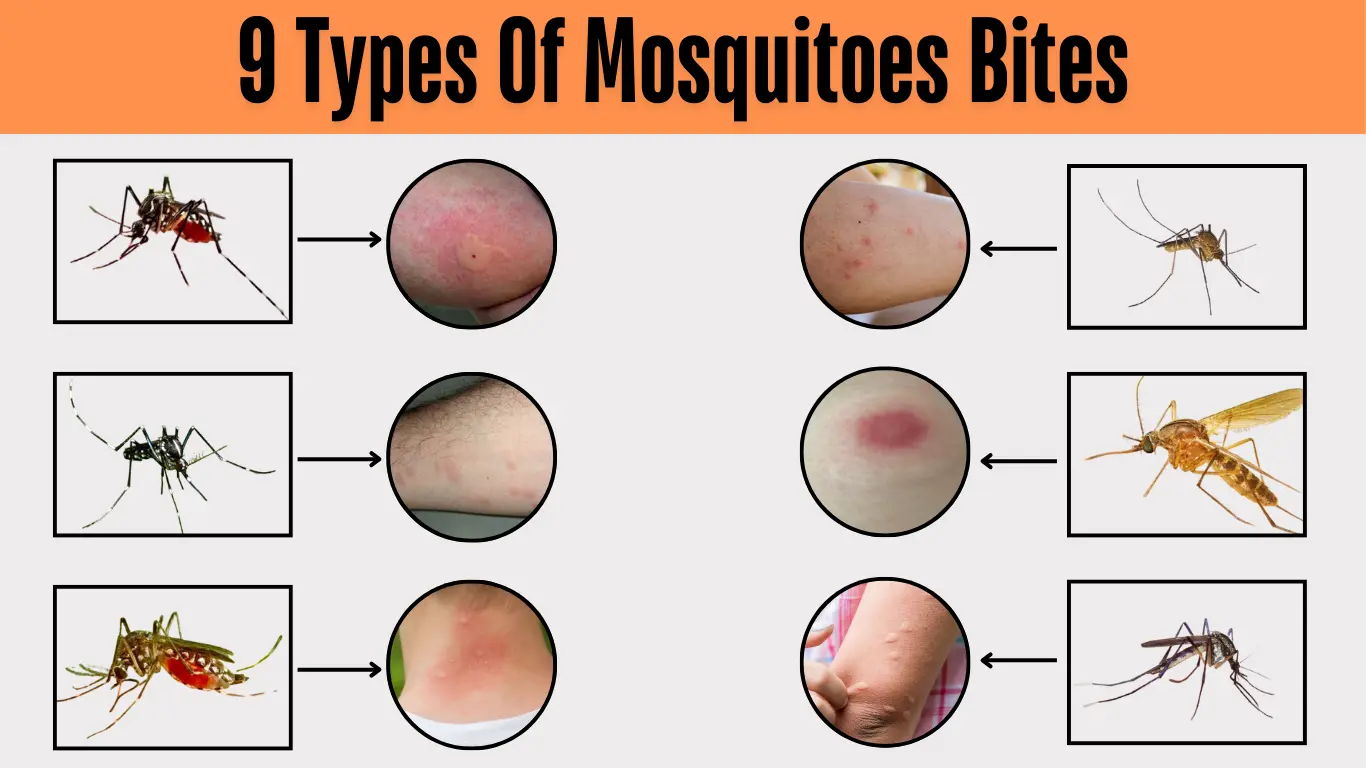
Mosquito bites may look similar, but different mosquito species leave distinct marks—and some can transmit serious diseases. In this guide, we’ll explore 9 common types of mosquitoes that bite humans, how to identify their bites, the symptoms to watch for, and treatment tips. Whether you’re dealing with itchy bumps or concerned about infections, this article helps you spot the difference—with pictures for easy identification.
1. Aedes Aegypti Mosquitoes Bites
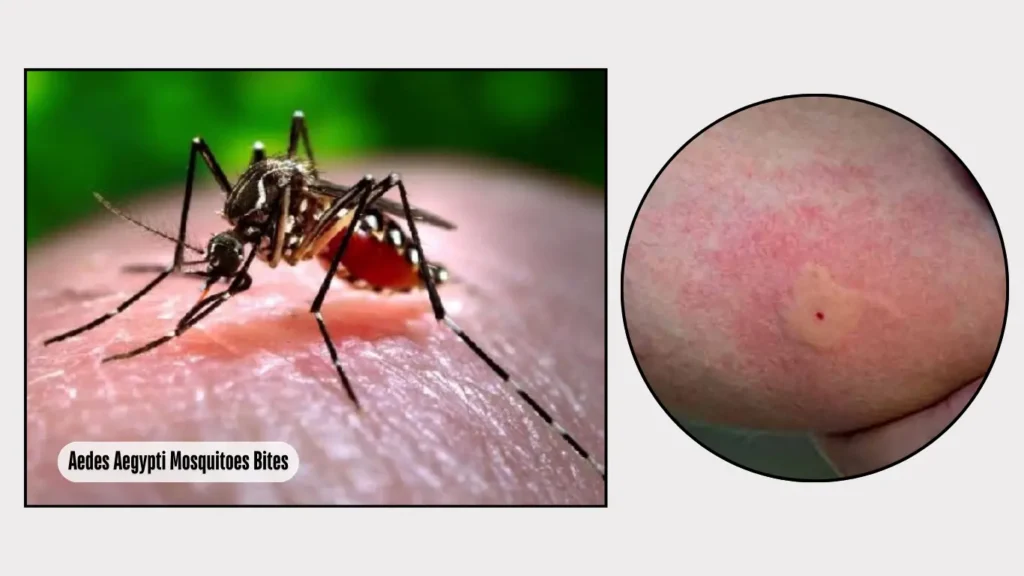
The Aedes aegypti mosquito, also known as the yellow fever mosquito, is a small, dark mosquito with white markings on its legs and body. This species is known for spreading serious diseases like dengue, Zika, chikungunya, and yellow fever. Understanding their bites is essential for early identification and treatment.
Aedes Aegypti mosquito bite look like
A bite from an Aedes aegypti mosquito typically appears as a small, round, red bump. It often has a tiny puncture mark at the center and may be slightly swollen. Unlike some other mosquito bites, Aedes bites are more intensely itchy and can become irritated quickly, especially if scratched.
Aedes Aegypti mosquito bite identification
To identify an Aedes aegypti bite, consider the timing and location. These mosquitoes bite during the day, especially early morning and late afternoon. They usually target exposed skin like ankles, arms, and neck. If you notice multiple itchy bumps in these areas after daytime outdoor activity, Aedes aegypti could be the culprit.
Aedes Aegypti mosquito bite symptoms
Common symptoms include:
- Intense itching
- Redness and swelling
- Small blister or rash (in sensitive skin)
In some cases, the bite may lead to flu-like symptoms, which could signal a mosquito-borne virus. Seek medical attention if you develop a fever, joint pain, or rash after being bitten.
Aedes Aegypti mosquito bites allergic reaction
Some people may experience a mild to moderate allergic reaction, resulting in larger swelling, prolonged itching, or even hives. In rare cases, anaphylaxis may occur, but it’s uncommon.
Aedes Aegypti mosquito bite treatment and relief
To relieve symptoms:
- Wash the area with soap and water
- Apply cold compress to reduce swelling
- Use anti-itch creams or calamine lotion
- Take antihistamines for allergic reactions
Avoid scratching to prevent infection. If symptoms worsen or signs of disease appear, consult a doctor immediately.
2. Aedes Albopictus Mosquito Bites
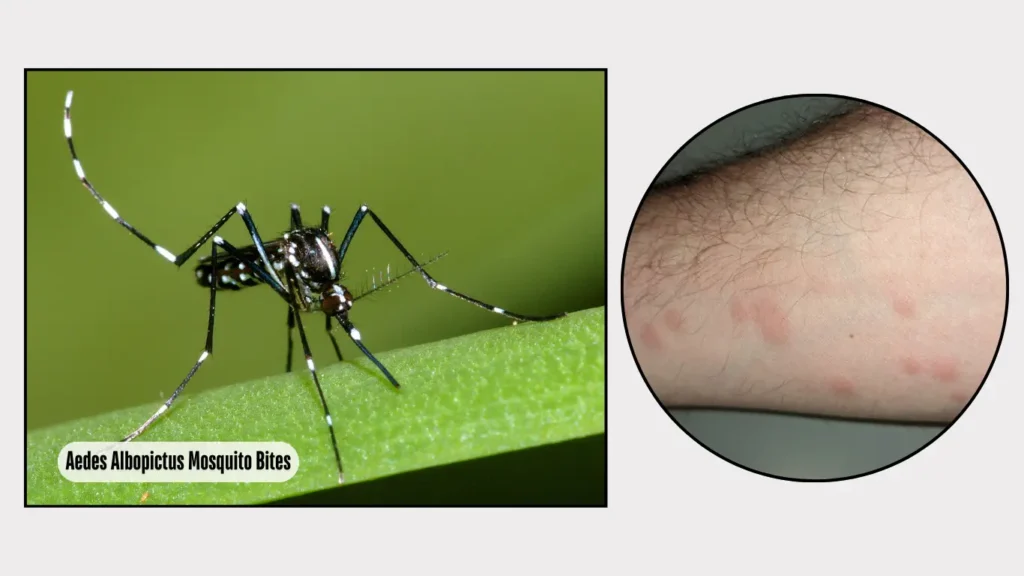
The Aedes albopictus, commonly known as the Asian tiger mosquito, is an aggressive daytime biter with black-and-white striped legs and body. It’s known for transmitting diseases like dengue, chikungunya, and Zika virus. Recognizing its bite and symptoms can help you act quickly and avoid complications.
Aedes Albopictus mosquito bite look like
Bites from Aedes albopictus usually appear as small, red, swollen bumps with intense itching. They may develop a small white center or look similar to other mosquito bites, but they tend to be more irritating and can appear in clusters.
Aedes Albopictus mosquito bite identification
Aedes albopictus bites are most likely to occur during daylight hours, especially early morning and late afternoon. These mosquitoes prefer outdoor, shaded areas and often bite ankles, legs, and arms. If you notice itchy red bumps after being outside during the day, it could be a sign of a tiger mosquito bite.
Aedes Albopictus mosquito bite symptoms
Typical symptoms include:
- Immediate itching or stinging sensation
- Red, swollen bump
- Burning or irritation if scratched
In cases of viral transmission, symptoms like fever, joint pain, or rash may appear a few days after the bite.
Aedes Albopictus mosquito bites allergic reaction
Some people may have stronger allergic responses, including:
- Larger swelling
- Blistering
- Prolonged redness and itch
In rare cases, people may experience breathing difficulty or anaphylaxis, which requires emergency care.
Aedes Albopictus mosquito bite treatment and relief
For relief:
- Clean the bite area with soap and water
- Apply cold compresses to reduce swelling
- Use anti-itch creams or hydrocortisone
- Oral antihistamines can help with allergic reactions
Avoid scratching to prevent infection. If you feel unwell after a bite, consult a healthcare provider immediately.
Absolutely! Here’s a detailed ~300-word write-up focused specifically on Anopheles mosquito bites, with accurate and clear information:
3. Anopheles Mosquito Bites

Anopheles mosquitoes are best known as the primary vectors of malaria, making them one of the most medically significant mosquito types in the world. Over 400 species of Anopheles exist, but about 30 to 40 species are known to transmit human malaria, with Anopheles gambiae being the most dangerous in Africa.
Anopheles mosquito bite look like
A bite from an Anopheles mosquito looks similar to other mosquito bites — a small, red, itchy bump that may appear soon after the bite. However, it’s not the bite itself that’s dangerous, but the parasite (Plasmodium) that may be transmitted during feeding.
Anopheles mosquito bite identification
These mosquitoes are nighttime feeders, most active between dusk and dawn. They usually rest at an angle, with their rear end raised higher than their head — a unique posture. They prefer to bite on exposed skin, often targeting legs, arms, and feet while you sleep.
Key signs:
- Bitten at night or early morning
- Multiple bites on exposed body parts
- Found in tropical and subtropical regions, especially near stagnant water
Anopheles mosquito bite symptoms
The initial bite causes:
- Itching and redness
- Mild swelling
However, if malaria is transmitted, symptoms usually appear 7 to 30 days later, including:
- Fever and chills
- Muscle aches
- Sweating, nausea, and fatigue
Anopheles mosquito bites allergic reaction
While rare, some people may experience:
- Larger localized swelling
- Persistent itching
- In extreme cases, allergic rashes or blistering
Anopheles mosquito bite treatment and relief
To treat the bite:
- Clean with soap and water
- Apply anti-itch cream or cold compress
- Take antihistamines if swelling is significant
If you suspect malaria symptoms, seek immediate medical attention. Early diagnosis and treatment are crucial.
4. Culex Pipiens Mosquito Bites

Culex pipiens, commonly referred to as the common house mosquito, is widespread in temperate regions around the world. It is a night-biting mosquito known to transmit diseases such as West Nile virus, St. Louis encephalitis, and lymphatic filariasis in some areas.
Culex Pipiens mosquito bite look like
The bite from a Culex pipiens mosquito usually appears as a small red bump with mild to moderate itching. Compared to Aedes mosquitoes, their bites are generally less aggressive and less likely to cause intense irritation unless scratched repeatedly.
Culex Pipiens mosquito bite identification
Culex pipiens mosquitoes are most active after sunset and throughout the night. They breed in stagnant water, including rain barrels, gutters, and sewage water. If you’re experiencing bites primarily at night, especially while sleeping, this mosquito could be responsible.
Identification tips:
- Bites occur at night
- Often found indoors or near human dwellings
- Prefer ankles, feet, and lower legs
Culex Pipiens mosquito bite symptoms
Symptoms include:
- Itchy, red bump
- Swelling around the bite area
- In rare cases, if infected, symptoms of West Nile virus may develop, such as:
- Fever
- Headache
- Body aches
- Neurological symptoms (in severe cases)
- Fever
Culex Pipiens mosquito bites allergic reaction
Some individuals may have:
- Stronger swelling
- Persistent itching
- Rarely, a rash or hives
These are usually mild and can be managed with basic care.
Culex Pipiens mosquito bite treatment and relief
To relieve symptoms:
- Wash with soap and water
- Apply cold compress
- Use calamine lotion or hydrocortisone cream
- Take oral antihistamines for itching
If you notice unusual symptoms after a bite, especially fever or confusion, consult a doctor for possible viral infection screening.
5. Culex Quinquefasciatus Mosquito Bites

The Culex quinquefasciatus, or southern house mosquito, is common in tropical and subtropical regions. It thrives in urban areas, especially where stagnant water is present. This mosquito is a known night biter and a vector for diseases like West Nile virus, St. Louis encephalitis, and lymphatic filariasis.
Culex Quinquefasciatus mosquito bite look like
Bites from this mosquito appear as small, red, raised bumps. The itching can range from mild to moderate, but in sensitive individuals, the bite area may become more inflamed and sore if scratched frequently.
Culex Quinquefasciatus mosquito bite identification
These mosquitoes are most active from dusk to dawn, often biting people indoors while sleeping. They breed in polluted or dirty water, such as drains, septic tanks, and standing water around homes.
Key signs:
- Bites occur overnight or early morning
- Often found in urban or residential areas
- Target lower legs, feet, arms, and neck
Culex Quinquefasciatus mosquito bite symptoms
Symptoms usually include:
- Itching and swelling
- Red bump at the bite site
- If infected with a virus or parasite, symptoms like:
- Fever, fatigue
- Swollen lymph nodes
- Skin rash may appear days later
- Fever, fatigue
In the case of lymphatic filariasis, long-term infection can cause severe swelling (elephantiasis).
Culex Quinquefasciatus mosquito bites allergic reaction
Allergic reactions may include:
- Larger localized swelling
- Burning sensation
- Itchy welts that last several days
Severe allergies are rare but possible.
Culex Quinquefasciatus mosquito bite treatment and relief
Recommended relief methods:
- Clean the area with soap and warm water
- Apply cold compress or ice pack
- Use anti-itch creams or topical antihistamines
- Take oral antihistamines for stronger reactions
Seek medical attention if symptoms of viral infection develop after a bite.
6. Psorophora Mosquito Bites
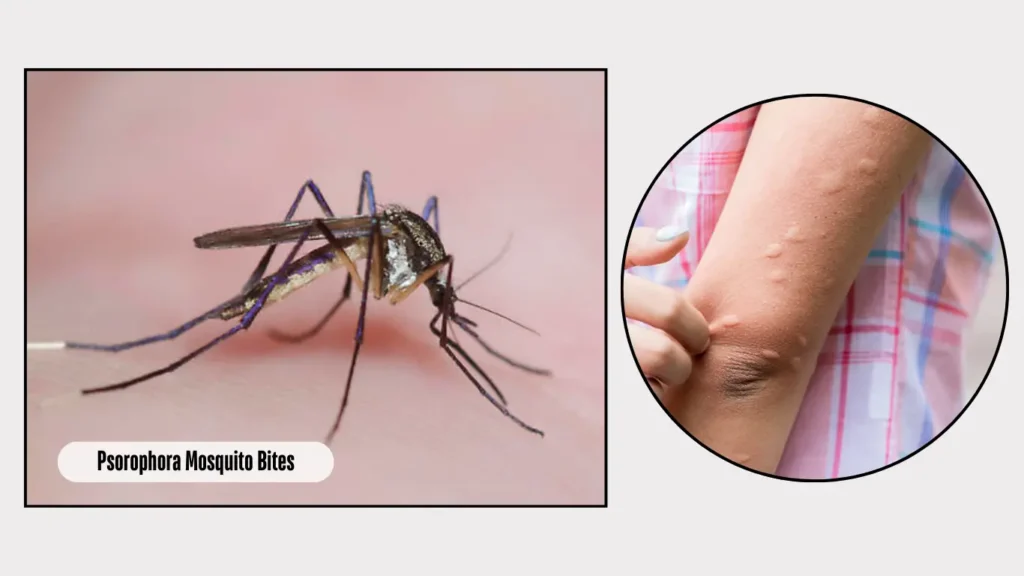
Psorophora mosquitoes are large, aggressive mosquitoes found mainly in North and South America. They are known for their painful bites, strong flying ability, and tendency to attack in large numbers. Unlike some other mosquitoes, Psorophora species can bite both day and night.
Psorophora mosquito bite look like
The bite from a Psorophora mosquito is often larger and more swollen than bites from other species. It may appear as a raised, red bump, with intense itching and a burning sensation. Due to their size and aggressive feeding behavior, their bites are often more painful.
Psorophora mosquito bite identification
These mosquitoes are most active:
- During daytime, especially after heavy rains
- In flooded or temporary water areas, like rain puddles and ditches
- Known to swarm humans and animals
Key identifiers:
- Bites are often more painful
- Occur during outdoor activities
- Can appear in clusters or multiple areas
Psorophora mosquito bite symptoms
Typical symptoms include:
- Immediate pain or stinging
- Redness, swelling, and itching
- Larger bump than average mosquito bite
In most cases, Psorophora bites don’t transmit disease, but they can cause secondary infections if scratched excessively.
Psorophora mosquito bites allergic reaction
Some individuals may experience:
- Excessive swelling or inflammation
- Blistering or rash
- Persistent itching for several days
Though rare, allergic reactions can require medical attention if severe.
Psorophora mosquito bite treatment and relief
Treatment includes:
- Washing the area thoroughly with soap and water
- Applying a cold compress to reduce pain and swelling
- Using anti-itch cream or hydrocortisone
- Taking oral antihistamines for itching or allergic response
Avoid scratching to prevent infection. If swelling worsens or signs of infection appear, consult a doctor.
7. Ochlerotatus Mosquito Bites
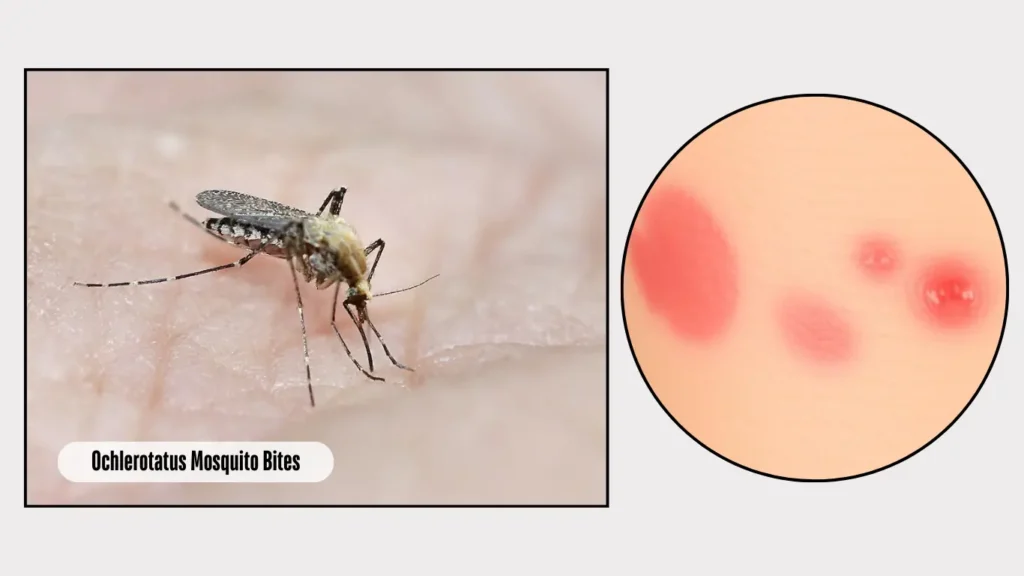
Ochlerotatus mosquitoes were formerly part of the Aedes genus but are now classified separately. Many species in this group are aggressive human biters and are commonly found in forests, marshes, floodplains, and residential areas. Some are vectors of diseases such as encephalitis and West Nile virus.
Ochlerotatus mosquito bite look like
Bites from Ochlerotatus mosquitoes appear as red, itchy bumps, sometimes larger than average. They may develop faster swelling and cause more irritation, especially if scratched. In some sensitive individuals, the bite may resemble a small welt or rash.
Ochlerotatus mosquito bite identification
These mosquitoes are typically:
- Daytime or crepuscular biters (active at dawn and dusk)
- Found in areas with standing water or temporary floodwaters
- Known to swarm after heavy rains or floods
Bites are usually:
- On exposed skin, like arms, legs, neck
- More common in outdoor environments
- Sometimes in clusters if multiple mosquitoes attack
Ochlerotatus mosquito bite symptoms
Common symptoms include:
- Intense itching
- Red, swollen bump
- Burning or irritation
Although they are nuisance biters, some species can transmit La Crosse encephalitis or West Nile virus in certain regions.
Ochlerotatus mosquito bites allergic reaction
Some people experience:
- Larger swelling
- Persistent itching
- In rare cases, blisters or secondary rash
Severe allergic reactions are uncommon but possible in sensitive individuals.
Ochlerotatus mosquito bite treatment and relief
For relief and treatment:
- Wash the area with mild soap and water
- Apply a cold compress to reduce swelling
- Use anti-itch creams, calamine lotion, or hydrocortisone
- Take antihistamines if itching is strong
8. Coquillettidia Mosquito Bites

Coquillettidia mosquitoes are medium to large-sized mosquitoes that breed in marshy, vegetated wetlands, where their larvae attach to aquatic plant roots for air. While not as aggressive as some other mosquito types, certain species of Coquillettidia do bite humans, especially in humid, lowland environments.
Coquillettidia mosquito bite look like
The bite from a Coquillettidia mosquito appears as a small, red, raised bump that may itch or sting. Their bites are often described as mild to moderate, but some people experience longer-lasting irritation, especially if multiple bites occur.
Coquillettidia mosquito bite identification
These mosquitoes are:
- Mostly active during the evening and night
- Found near marshes, swamps, and lakes with abundant plant growth
- Known to bite humans and animals, but are not primary biters
Key bite indicators:
- Bites occur outdoors, especially near wetland areas
- Often felt in early evening
- Less frequent indoors unless near breeding sites
Coquillettidia mosquito bite symptoms
Common symptoms include:
- Itching and mild redness
- Swelling in sensitive skin
- In rare cases, if the mosquito is infected, there may be a risk of West Nile virus or eastern equine encephalitis in specific regions
Coquillettidia mosquito bites allergic reaction
Although generally mild, some individuals may experience:
- Wider swelling around the bite area
- Irritation lasting more than a day
- Small blisters or rash (less common)
Coquillettidia mosquito bite treatment and relief
For bite relief:
- Clean the area with mild soap and water
- Apply a cool compress to reduce swelling
- Use anti-itch creams like calamine or hydrocortisone
- Take oral antihistamines if you feel very itchy
Avoid scratching to prevent infection. If unusual symptoms follow the bite, seek medical care — especially in areas with known virus outbreaks.
9. Wyeomyia Mosquito Bites

Wyeomyia mosquitoes are a group of small mosquitoes found mainly in Central and South America, parts of the southeastern United States, and the Caribbean. They often breed in natural containers like pitcher plants, bromeliads, or tree holes filled with water. Although they are not major vectors of disease, some species in this genus do bite humans.
Wyeomyia mosquito bite look like
Bites from Wyeomyia mosquitoes are generally mild and appear as small, red, itchy bumps. These bites are less painful than those from larger mosquitoes, but they may still cause irritation, especially in people with sensitive skin.
Wyeomyia mosquito bite identification
These mosquitoes:
- Are usually found in forested or jungle-like areas
- Are more common in humid, tropical environments
- Can bite during the day or twilight hours
Bites are usually:
- Located on exposed skin, like legs, arms, or neck
- Not clustered, as they don’t swarm aggressively like Psorophora
- More likely when hiking or camping in wet, shaded forests
Wyeomyia mosquito bite symptoms
Common symptoms include:
- Itching and redness
- Mild swelling
- In rare cases, if scratched excessively, secondary infection may occur
Currently, Wyeomyia mosquitoes are not known to transmit major human diseases, although they can carry viruses that affect animals in specific regions.
Wyeomyia mosquito bites allergic reaction
Allergic reactions are usually mild, but may involve:
- Larger local swelling
- Longer-lasting itching
- Occasionally, rash or minor blistering
Wyeomyia mosquito bite treatment and relief
For treatment:
- Clean the bite site with soap and water
- Apply a cool compress
- Use anti-itch creams or natural remedies like aloe vera
- Take antihistamines if irritation is persistent
Wyeomyia bites are rarely dangerous but can be a nuisance. Prevention with insect repellent is advised in infested areas.
