
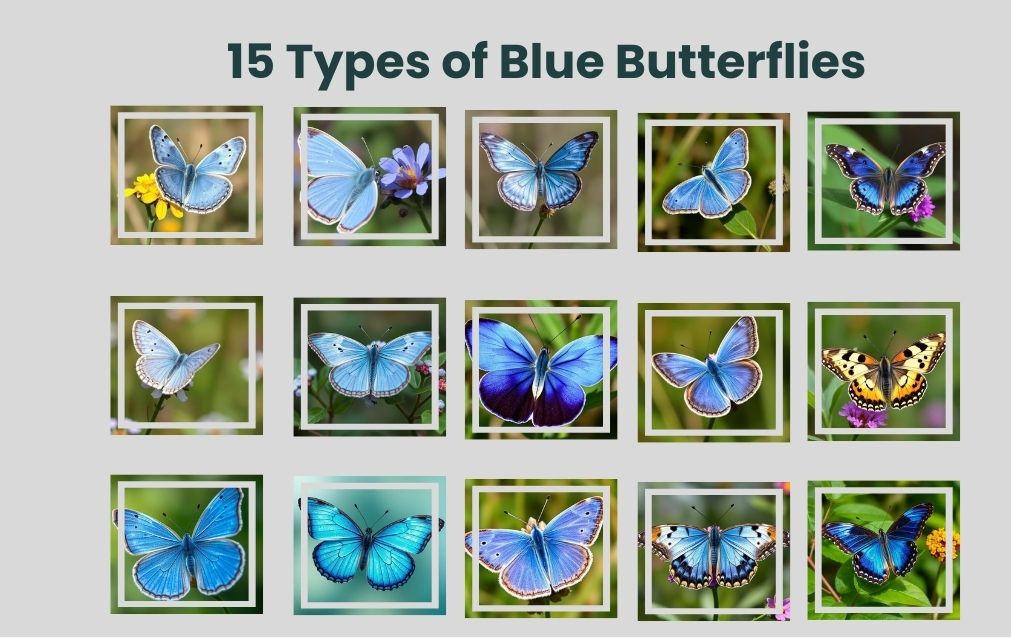
Blue butterflies are some of the most eye-catching and beautiful insects in the world. Their vibrant blue wings and delicate patterns make them popular among butterfly watchers, photographers, and gardeners. In this guide, you’ll discover 15 stunning types of blue butterflies, along with identification tips and photos to help you recognize them easily.
Let’s begin with one of the most iconic blue butterflies—the Blue Morpho.
1. Blue Morpho (Morpho menelaus)

The Blue Morpho is one of the most recognizable butterflies in the world, famous for its bright blue wings and large size. It’s mainly found in the tropical rainforests of Central and South America, especially in countries like Brazil, Costa Rica, and Peru. This butterfly often flies low through the forest, flashing its brilliant color with every beat of its wings.
Identification
Blue Morphos have a wingspan of 5 to 6 inches (12 to 15 cm), making them one of the largest butterfly species. The upper side of their wings is a vivid, metallic blue caused by light reflection from tiny scales. The underside, in contrast, is brown with several eye spots, providing excellent camouflage when resting.
Behavior & Habitat
These butterflies prefer warm, humid rainforest environments. They are often seen flying near the forest floor or along streams and open paths. Blue Morphos feed mainly on fermenting fruit and tree sap. Their flight is slow and graceful, and despite their bright wings, they can easily vanish into the forest when they close their wings to rest.
2. Common Blue (Polyommatus icarus)
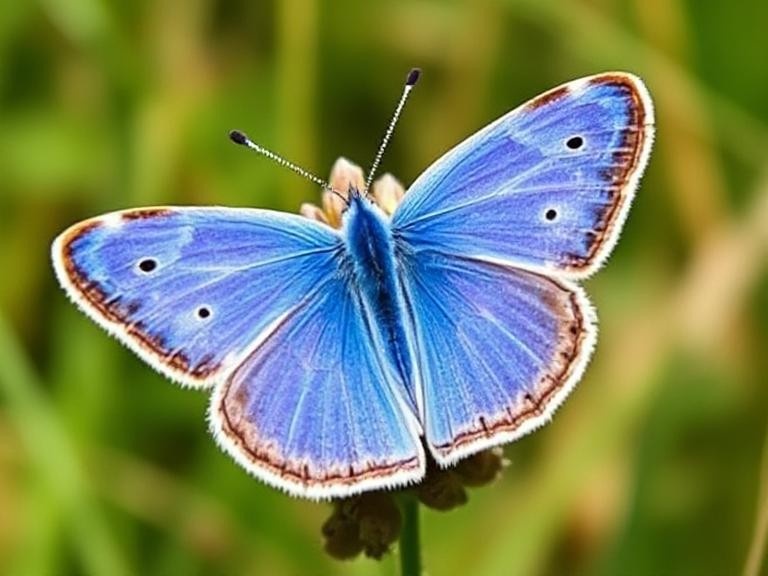
The Common Blue is a small but beautiful blue butterfly often seen fluttering through meadows and grasslands. It is widely distributed across Europe, Asia, and parts of North Africa. As one of the most widespread blue butterflies, it’s easy to spot during the warmer months, especially in open, sunny areas.
Identification
This butterfly features bright sky-blue wings with a thin black border and white fringe. Males are more vibrantly blue, while females are usually brown with hints of blue near the body. The wingspan ranges from 1 to 1.4 inches (2.5 to 3.5 cm), making it a relatively small butterfly. The underside of the wings is light brown or grayish with tiny black and orange spots.
Behavior & Habitat
The Common Blue prefers open habitats such as grasslands, wildflower meadows, and roadside verges. It flies from late spring through early autumn and is commonly seen basking in the sun with wings open. Caterpillars feed on legumes like clover and bird’s-foot trefoil, while adults feed on nectar from small flowers. They are active during the day and often seen in large numbers where wildflowers are plentiful.
3. Karner Blue (Plebejus melissa samuelis)

The Karner Blue is a rare and endangered blue butterfly found mainly in parts of the United States. It is known for its delicate beauty and close connection to wild lupine plants. As a true blue butterfly, its shimmering wings and unique lifecycle make it one of the most fascinating species to observe and protect.
Identification
Karner Blue butterflies are small, with a wingspan of about 1 inch (2.5 cm). Males have silvery to deep blue upper wings with a narrow black border. Females are more grayish with orange spots along the edges. The underside of the wings is pale gray with black spots and a row of orange crescents near the outer edge.
Behavior & Habitat
This butterfly is native to sandy pine barrens and oak savannas in parts of the northeastern and midwestern United States, including New York, Michigan, and Wisconsin. It relies heavily on wild lupine plants, which serve as the only food source for its caterpillars. Adults are typically active from late May to mid-June and again in mid-July to August, producing two generations per year. Conservation efforts are ongoing to protect its limited habitat and ensure the survival of this striking blue butterfly.
4. Ulysses Butterfly (Papilio ulysses)
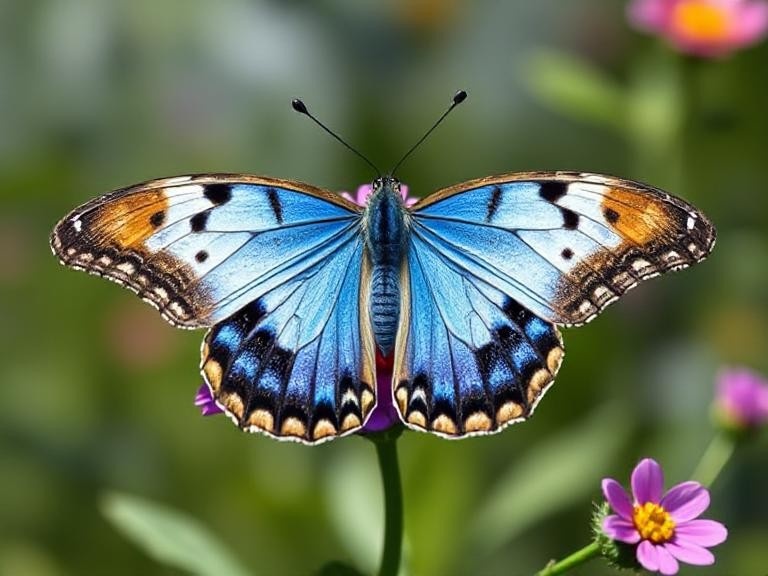
The Ulysses Butterfly is a dazzling blue butterfly native to the rainforests of Australia, Papua New Guinea, and nearby islands. Its bold color and quick flight make it a striking presence in tropical gardens and forests. It’s also known as the Blue Mountain Swallowtail.
Identification
This butterfly has large, bright electric-blue wings edged with black. The wingspan can reach up to 5.5 inches (14 cm), making it a medium-to-large butterfly. The underside is mostly dark brown or black, helping it blend in when at rest. The vivid blue color stands out strongly in sunlight, making it easy to spot while flying.
Behavior & Habitat
Ulysses Butterflies are commonly found in tropical rainforests and along forest edges. They are fast flyers and often flit around flowering trees and shrubs in search of nectar. They are also known to be attracted to the color blue, including clothing and signs, mistaking it for rival butterflies or potential mates.
5. Holly Blue (Celastrina argiolus)

The Holly Blue is a small but charming blue butterfly often found in urban gardens, parks, and woodland areas across Europe and parts of Asia. It’s one of the first blue butterflies to appear in spring, making it a welcome sight after winter.
Identification
Males and females both have pale, silvery-blue wings, though males are generally brighter. The upper side of the wings is light blue with narrow dark borders. The underside is light gray with tiny black dots, which helps distinguish it from other similar species. Wingspan is about 1 to 1.4 inches (2.5 to 3.5 cm).
Behavior & Habitat
This butterfly favors areas with holly and ivy plants, which serve as food for the caterpillars. It is usually seen flying high around shrubs and trees, unlike many other blue butterflies that stay closer to the ground. Holly Blues have two broods per year and are often seen from early spring to late summer.
6. Eastern Tailed-Blue (Cupido comyntas)
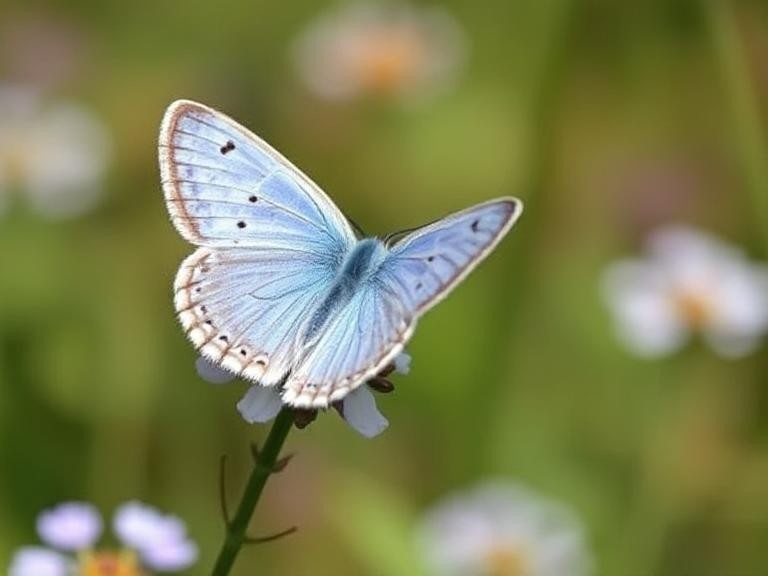
The Eastern Tailed-Blue is a common blue butterfly in North America, often seen in gardens, fields, and along roadsides. Despite its small size, it is easy to recognize thanks to the small tails on its hindwings.
Identification
Males have vibrant bluish-purple wings with narrow black borders, while females are usually gray-brown with hints of blue. Both sexes have a pair of tiny tails on their hindwings and orange spots near the tails. The wingspan is small—just 0.75 to 1 inch (2 to 2.5 cm).
Behavior & Habitat
These butterflies are active from spring through fall and are frequently seen feeding on nectar from clover, milkweed, and other wildflowers. They stay low to the ground and are often found in sunny, open areas like lawns, pastures, and woodland clearings. They are fast flyers and can be quite active, especially on warm days.
7. Silvery Blue (Glaucopsyche lygdamus)
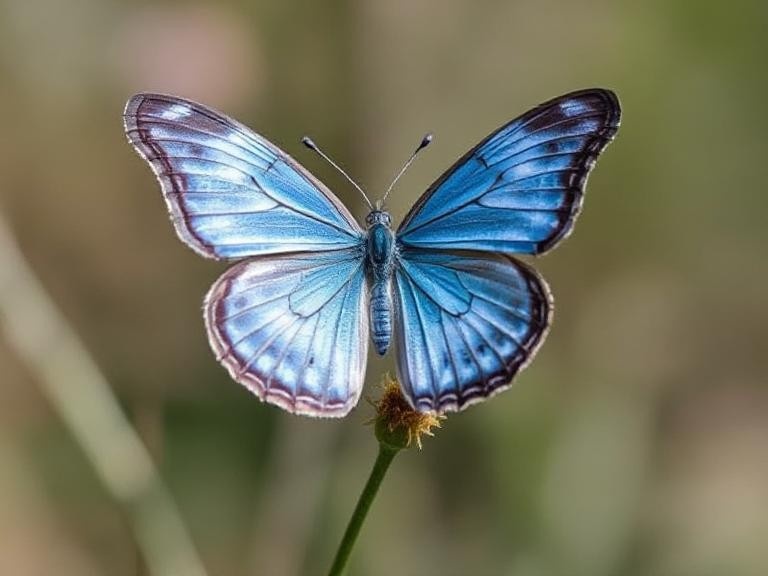
The Silvery Blue is a delicate and widespread blue butterfly found across North America. Its soft, silvery-blue wings and calm behavior make it a gentle beauty in meadows and open spaces during spring and early summer.
Identification
Males have shimmering silvery to powder-blue upper wings, while females are more brownish with subtle blue shades. Both sexes have a pale underside with small black spots, and no orange markings—helping to distinguish it from similar species. The wingspan is about 0.9 to 1.25 inches (2.3 to 3.2 cm).
Behavior & Habitat
Silvery Blues are commonly found in open habitats such as prairies, grasslands, roadsides, and forest edges. They are especially active in spring and are often seen fluttering close to the ground. Caterpillars feed on legumes, and adults feed on a wide variety of wildflowers. They are gentle fliers and not easily startled, which makes them easy to observe.
8. Adonis Blue (Lysandra bellargus)

The Adonis Blue is a striking and vibrant blue butterfly mostly found in southern Europe. It thrives in warm, grassy areas and is considered one of the most brilliant blue butterflies in Europe.
Identification
Males have intense, bright sky-blue wings with a thin black border and white fringe. Females are usually brown with orange spots and may have hints of blue. The underside of both sexes is pale with dark spots. The wingspan ranges from 1.2 to 1.4 inches (3 to 3.5 cm).
Behavior & Habitat
This species prefers chalk grasslands, sunny hillsides, and wildflower meadows. It is usually active from May to September and produces two broods per year. The Adonis Blue is sensitive to habitat changes and is often used as an indicator of healthy grassland ecosystems. Males are highly territorial and often seen flying low and fast over the ground.
9. Southern Blue (Polyommatus thersites)

The Southern Blue is a small blue butterfly found in southern Europe, especially in Mediterranean regions. It closely resembles the Common Blue but can be distinguished by subtle differences.
Identification
Males have soft, sky-blue wings with a narrow black margin, similar to the Common Blue but typically a paler shade. Females are brown with some blue scaling near the body. The underside has small black spots but lacks the orange markings seen on the Common Blue. Wingspan is around 1 to 1.3 inches (2.5 to 3.3 cm).
Behavior & Habitat
Southern Blues are often seen in dry, open habitats like grasslands, scrublands, and roadside verges. They are active from late spring to early autumn and are usually found feeding on wildflowers. This butterfly is often spotted basking in the sun or fluttering low over grassy areas.
10. Boisduval’s Blue (Plebejus icarioides)
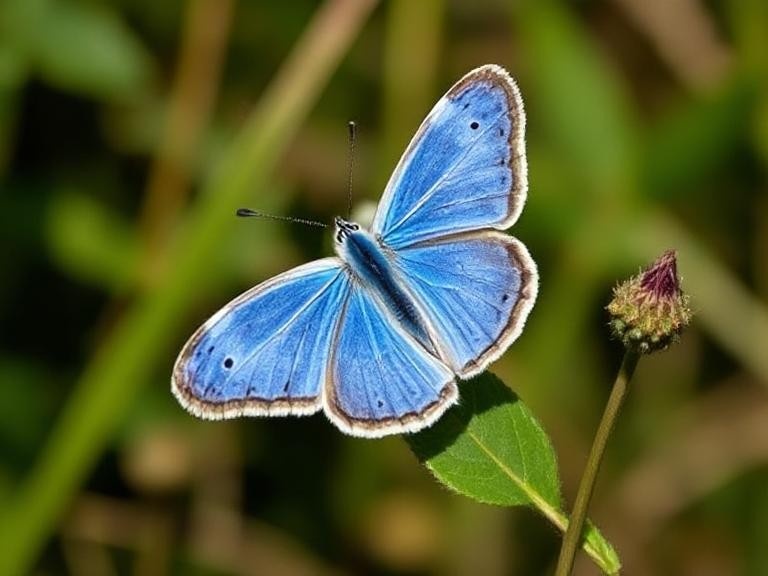
Boisduval’s Blue is a beautiful blue butterfly native to western North America. It’s one of the larger species in the Lycaenidae family and is often seen in mountain meadows and forest openings.
Identification
Males have bright blue wings with a dark outer margin and white fringe. Females are usually brown with some blue shading and orange spots on the hindwings. The underside is gray with black spots and orange crescents. Wingspan ranges from 1.2 to 1.6 inches (3 to 4 cm).
Behavior & Habitat
This butterfly prefers open areas such as alpine meadows, grasslands, and forest edges. It’s commonly found near its host plants—various species of lupine, which its caterpillars feed on. Adults are strong flyers and are usually active from late spring to mid-summer, feeding on wildflower nectar.
11. Mexican Bluewing (Myscelia ethusa)
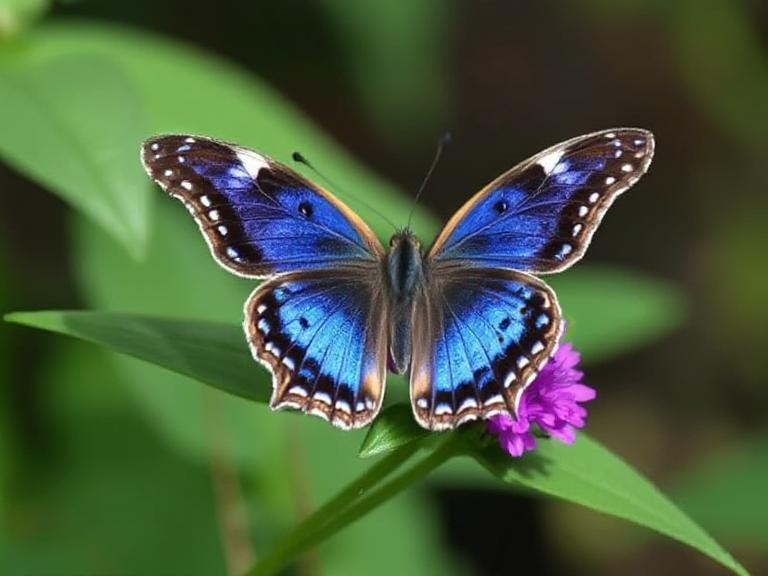
The Mexican Bluewing is a striking tropical butterfly with deep blue and black patterns. It’s found in parts of Mexico, Central America, and occasionally the southern U.S., like Texas.
Identification
Its wings are dark blackish-brown with bright, iridescent blue bands that form a striking contrast. When at rest, the underside resembles dead leaves, offering excellent camouflage. Wingspan is about 3 to 3.5 inches (7.5 to 9 cm).
Behavior & Habitat
Mexican Bluewings prefer warm, tropical environments like forests, parks, and gardens. They are most active during the day and often seen basking in sunny spots or feeding on rotting fruit. When resting, they keep their wings closed, hiding their blue color and blending in with surroundings.
12. Blue Pansy (Junonia orithya)
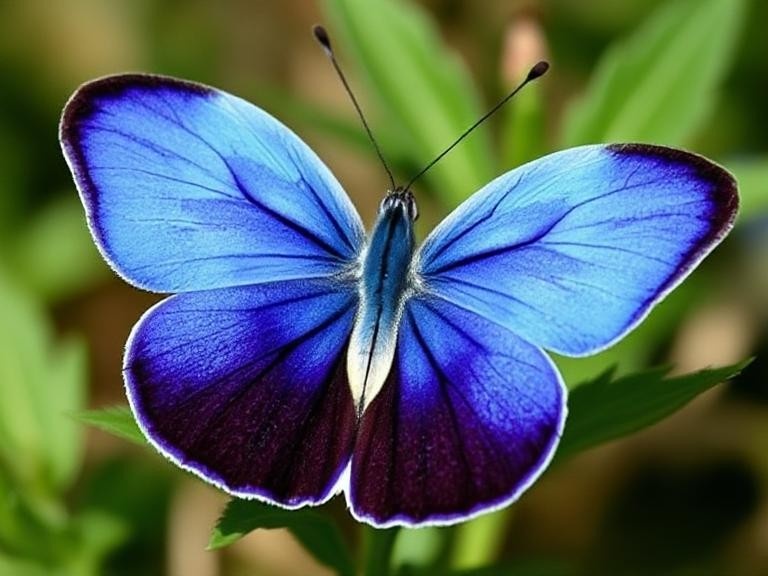
The Blue Pansy is a vibrant and bold butterfly found in South Asia, Southeast Asia, and parts of Africa and Australia. Its colorful wings make it one of the most eye-catching blue butterflies in open habitats.
Identification
Males have deep blue upper wings with black borders, orange eyespots on the forewings, and smaller eyespots on the hindwings. Females are duller in color, usually brownish with less prominent blue. Wingspan is around 2 to 2.5 inches (5 to 6.5 cm).
Behavior & Habitat
Blue Pansies are sun-loving butterflies often seen in gardens, grasslands, and open countryside. They are territorial and frequently bask in sunny patches with wings open. Their caterpillars feed on a variety of host plants, and adults feed on nectar from flowers like lantana and marigold.
13. Pea Blue / Long-tailed Blue (Lampides boeticus)
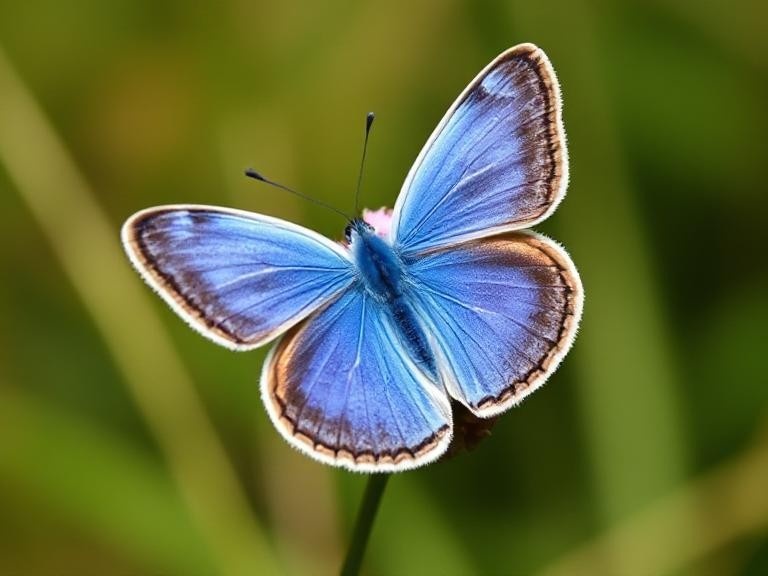
The Pea Blue, also known as the Long-tailed Blue, is a widespread and fast-flying blue butterfly found in Africa, Asia, southern Europe, and Australia. It’s known for the long tails on its hindwings and its ability to adapt to various environments.
Identification
Males have violet-blue wings with a narrow brown border, while females are brown with a bluish tint near the body. Both sexes have two long tails on the hindwings and orange-black eye spots near the tails. The underside is pale brown with fine white lines. Wingspan is about 1 to 1.4 inches (2.5 to 3.5 cm).
Behavior & Habitat
Pea Blues are often found in open, sunny habitats such as gardens, farmland, grasslands, and coastal areas. They are fast flyers and active throughout the day. The caterpillars feed on legumes, especially peas and beans, making them common around agricultural areas. Adults feed on nectar and are often seen near flowering plants.
14. Tailed Cupid (Everes lacturnus)
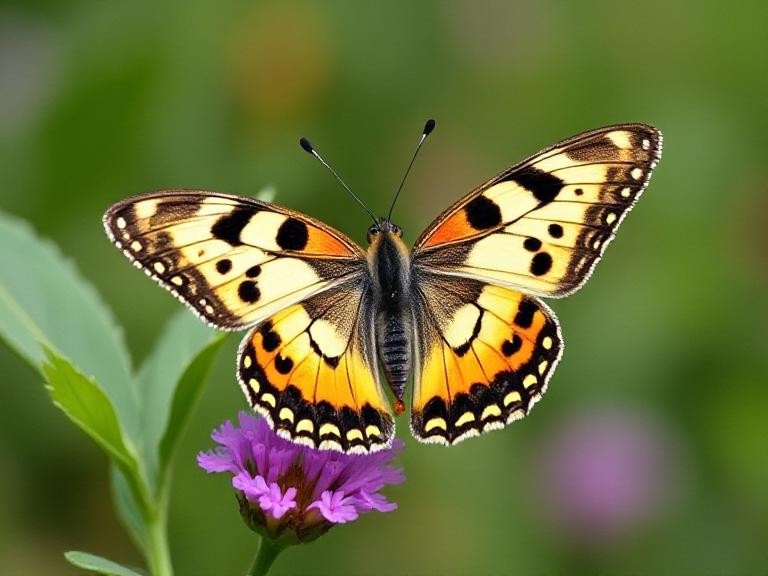
The Tailed Cupid is a tiny blue butterfly native to South and Southeast Asia. Despite its small size, it stands out with its beautiful patterns and subtle blue coloring.
Identification
Males have pale bluish wings with a narrow dark border, while females are usually brown with a bluish base. The hindwings have short tails and a small orange spot near the margin. The underside is grayish with fine lines and dark dots. Wingspan is around 0.8 to 1 inch (2 to 2.5 cm).
Behavior & Habitat
Tailed Cupids are typically found in gardens, forest clearings, and grassy fields. They prefer warm climates and are active year-round in tropical regions. These butterflies stay low to the ground and are often seen fluttering among flowers. Caterpillars feed on leguminous plants, and adults sip nectar from small blossoms.
15. Azure Butterfly (Celastrina ladon)
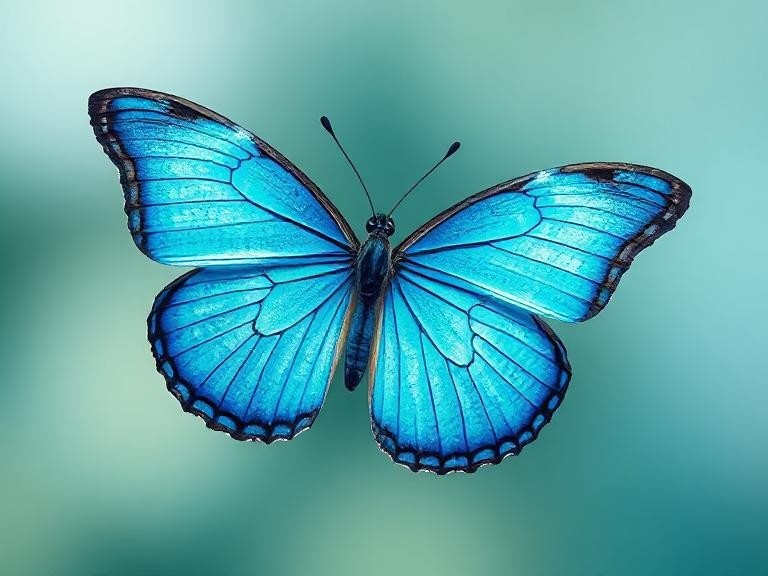
The Azure Butterfly is a soft, sky-blue butterfly found across North America, especially in wooded and semi-open areas. It is often one of the earliest blue butterflies to appear in spring.
Identification
Males have light blue wings with narrow dark margins, while females may appear more silvery or slightly duller. The underside is pale gray with scattered black dots. Wingspan is about 1 to 1.25 inches (2.5 to 3 cm).
Behavior & Habitat
Azure butterflies are commonly seen in woodlands, clearings, gardens, and near streams. They are typically active in early spring and early summer. The larvae feed on flowering shrubs, and adults prefer nectar from a variety of wildflowers. Their gentle flight and pale blue color make them a peaceful presence in natural settings.
