
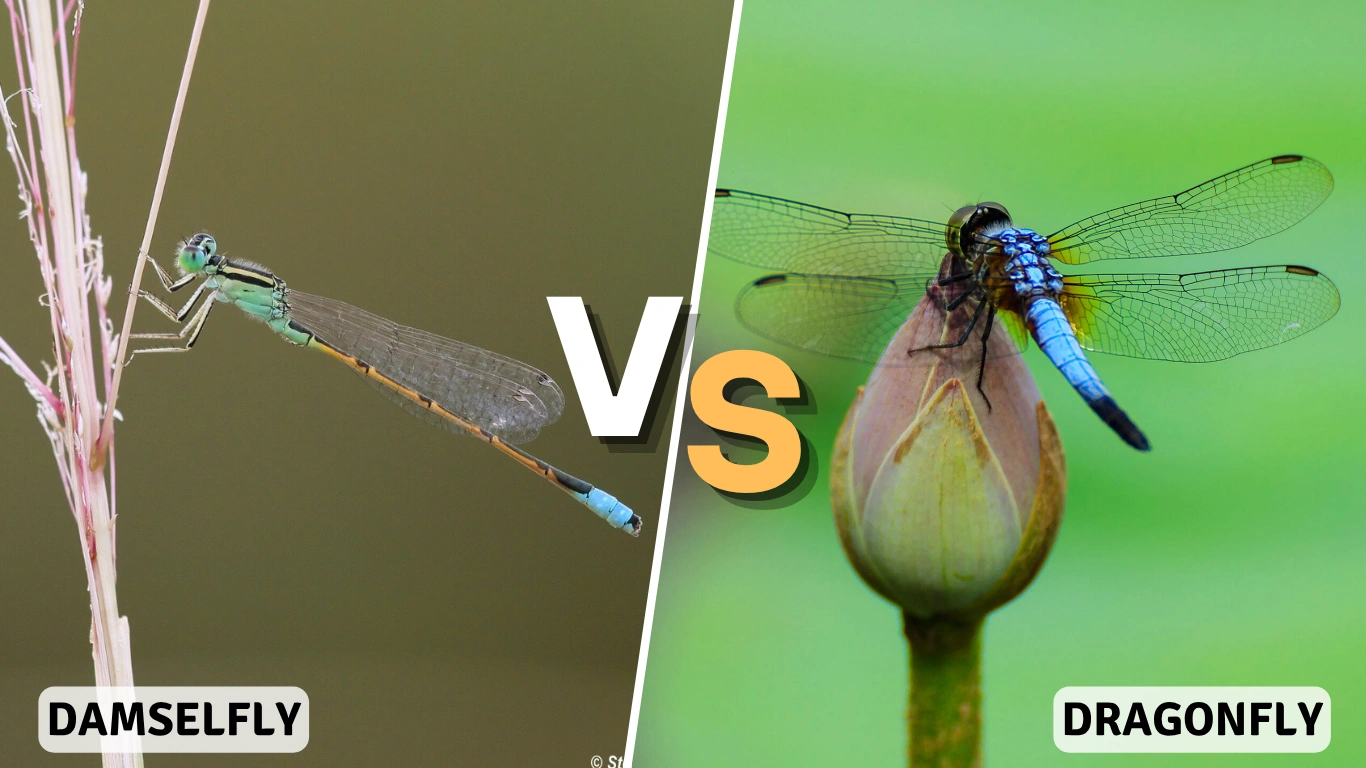
At a glance, damselflies and dragonflies can seem like twins skimming across ponds and rivers. Both are agile flyers, belong to the same insect order (Odonata), and thrive in watery habitats. But look closer, and you’ll spot many differences—from their eye placement to how they rest their wings. In this guide, we’ll break down the physical, behavioral, and ecological traits that set damselflies and dragonflies apart.
Understanding the Odonata Order
Shared Characteristics
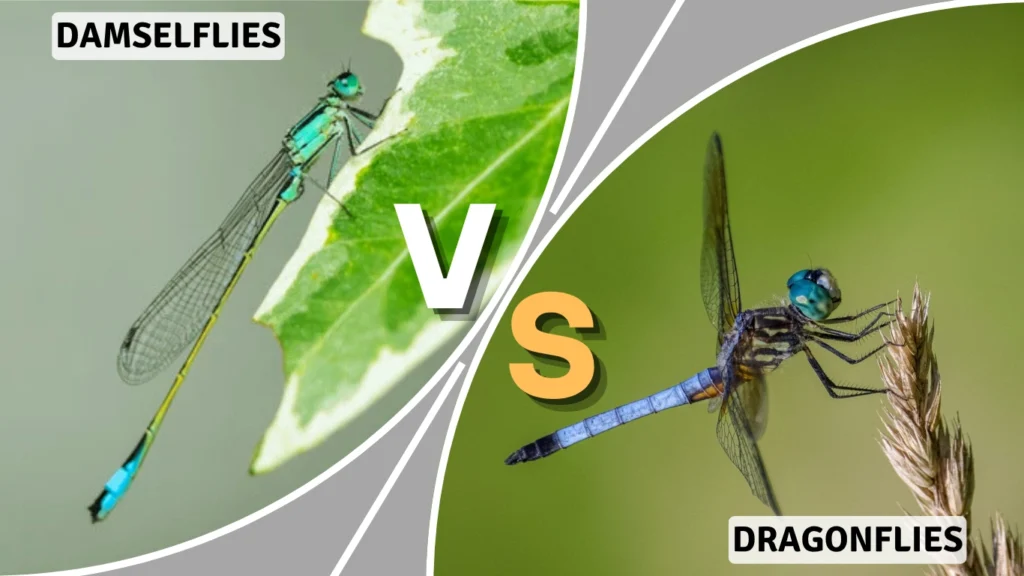
Damselflies and dragonflies both fall under the Odonata order. They’re ancient insects with fossil records dating back over 300 million years. These insects are:
- Carnivorous, feeding on smaller insects
- Known for excellent aerial hunting abilities
- Common near ponds, lakes, streams, and wetlands
- Undergo incomplete metamorphosis with aquatic nymph stages
Two Distinct Suborders
- Zygoptera: Damselflies
- Anisoptera: Dragonflies
These suborders are what create the stark differences between the two, despite their shared ancestry.
Physical Appearance Differences

Body Shape
Damselflies have slim, elongated bodies that resemble delicate sticks. Their lightweight frames make them appear fragile, almost ethereal when flying.
Dragonflies, on the other hand, have broader, more muscular bodies. Their stockier form gives them a sturdier presence and contributes to their stronger flight abilities.
Eye Placement
One of the easiest ways to distinguish them is by looking at their eyes:
- Damselflies: Eyes are located on either side of the head, clearly separated.
- Dragonflies: Eyes are large and often touch or nearly meet at the top of the head, creating a helmet-like appearance.
This feature alone can help with quick identification, especially when the insect is perched.
Wing Shape and Position
- Damselflies: Both sets of wings are the same size and shape. When at rest, they hold their wings closed over their back or slightly open.
- Dragonflies: Their hind wings are broader than the front wings. When resting, dragonflies hold their wings flat and outstretched, similar to airplane wings.
These wing differences affect both their flying style and their resting posture.
Flight Style and Speed
Flight Power
Dragonflies are strong, agile fliers. They can hover, dart, dive, and even fly backward with precision. Their robust build and larger wings allow for longer flight durations and control.
Damselflies are more fluttery and graceful in the air. They aren’t as powerful or quick as dragonflies and tend to stick closer to vegetation and water surfaces.
Wing Movement
Dragonflies can move their wings independently, which contributes to their superior flight control.
Damselflies usually flap both sets of wings in unison, leading to their lighter, more fluttery flight.
Behavioral Differences
Mating Behavior
Both species mate in a unique “wheel” or “heart” shape. However, damselflies often remain connected for longer periods, sometimes even flying while joined. This prolonged connection helps the male guard his mate from rival males.
Dragonflies tend to separate more quickly after mating, though some males may still exhibit guarding behavior.
Hunting Techniques
Dragonflies are aerial predators. They hunt on the wing, snatching insects mid-flight with their legs, which form a kind of basket.
Damselflies often rely on a more passive approach. While they can fly to catch prey, they also ambush insects resting on leaves or near the water surface.
Habitat Preferences
Common Environments
Both species are drawn to water sources, as their nymphs are aquatic. However:
- Damselflies prefer still or slow-moving water like ponds, marshes, and rice fields.
- Dragonflies are more versatile and can be found near both still and fast-moving waters, including rivers and streams.
Global Distribution
Dragonflies have a broader range and are found in more diverse habitats worldwide. Damselflies, while also globally distributed, are more sensitive to environmental changes and are indicators of clean water.
Lifecycle & Nymph Comparison
Aquatic Nymphs
Both insects start life as aquatic nymphs (also called naiads). These stages can last from months to several years depending on the species and environment.
- Dragonfly Nymphs: Larger and more robust. They’re aggressive hunters and use jet propulsion (expelling water from their abdomen) to move quickly.
- Damselfly Nymphs: Slimmer and equipped with three feather-like gills at the tip of their abdomen. They tend to be more passive and crawl more than swim.
Duration of Development
Dragonfly nymphs usually stay longer in the water and may undergo 10–15 molts before emerging. Damselfly nymphs have fewer molts and a shorter aquatic lifespan.
How to Identify Them in the Wild
Key Visual Cues
- Wing position at rest: Wings closed (damselfly) vs. open (dragonfly)
- Eye placement: Separated eyes (damselfly) vs. touching eyes (dragonfly)
- Body shape: Slender (damselfly) vs. thick (dragonfly)
Observation Tips
- Visit freshwater habitats during warm, sunny days.
- Early morning is ideal for spotting resting insects.
- Bring binoculars or macro lenses for better viewing.
Quick Comparison Table
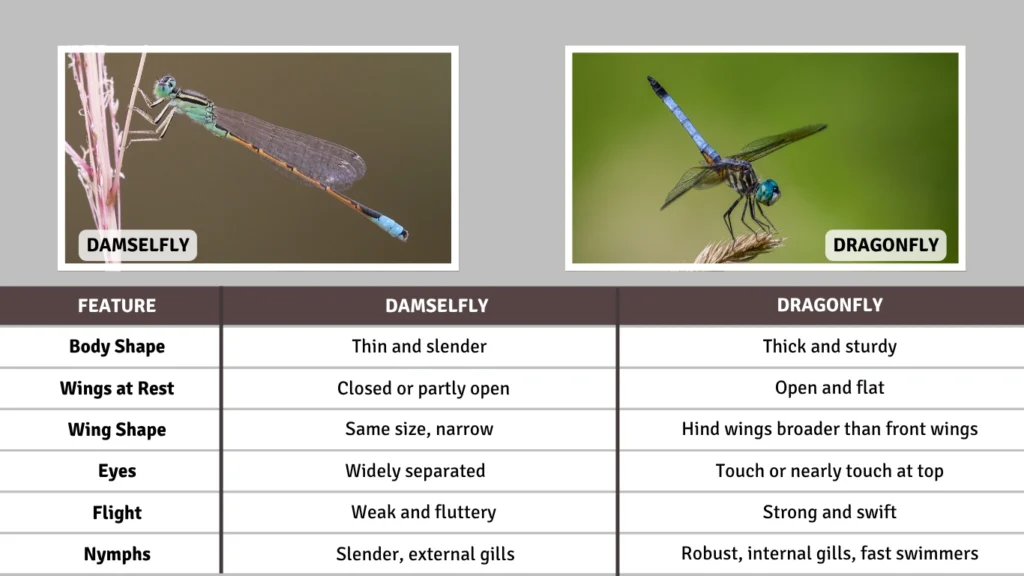
| Feature | Damselfly | Dragonfly |
| Body Shape | Thin and slender | Thick and sturdy |
| Wings at Rest | Closed or partly open | Open and flat |
| Wing Shape | Same size, narrow | Hind wings broader than front wings |
| Eyes | Widely separated | Touch or nearly touch at top |
| Flight | Weak and fluttery | Strong and swift |
| Nymphs | Slender, external gills | Robust, internal gills, fast swimmers |
FAQs About Damselflies and Dragonflies
Are Damselflies and Dragonflies Harmful to Humans?
No. Both are harmless. They don’t bite or sting humans and are actually beneficial because they eat mosquitoes and other pests.
Which One Is Better at Controlling Mosquitoes?
Dragonflies are more effective because of their strong flying skills and aggressive hunting behavior. However, damselflies also contribute to mosquito population control.
Do They Make Good Additions to Garden Ponds?
Yes. Both species lay eggs in or near water, and their larvae help maintain insect balance in ponds. Their presence also indicates clean water.
How Long Do They Live?
- Nymph stage: Several months to years depending on species
- Adult stage: Few weeks to a few months (most live 1–2 months)
Can I Tell Them Apart by Color?
Not always. While dragonflies often have bolder and brighter coloration, there is a lot of overlap. Structural differences are more reliable for ID.
Final Thoughts
Damselflies and dragonflies are more than just beautiful flashes of color over ponds—they are important parts of our ecosystem. While they may look similar to the untrained eye, paying attention to their wing positions, body shapes, and eye placements reveals distinct differences. Whether you’re a nature photographer, a bug enthusiast, or just someone enjoying a quiet walk near the water, now you know how to tell them apart.
