
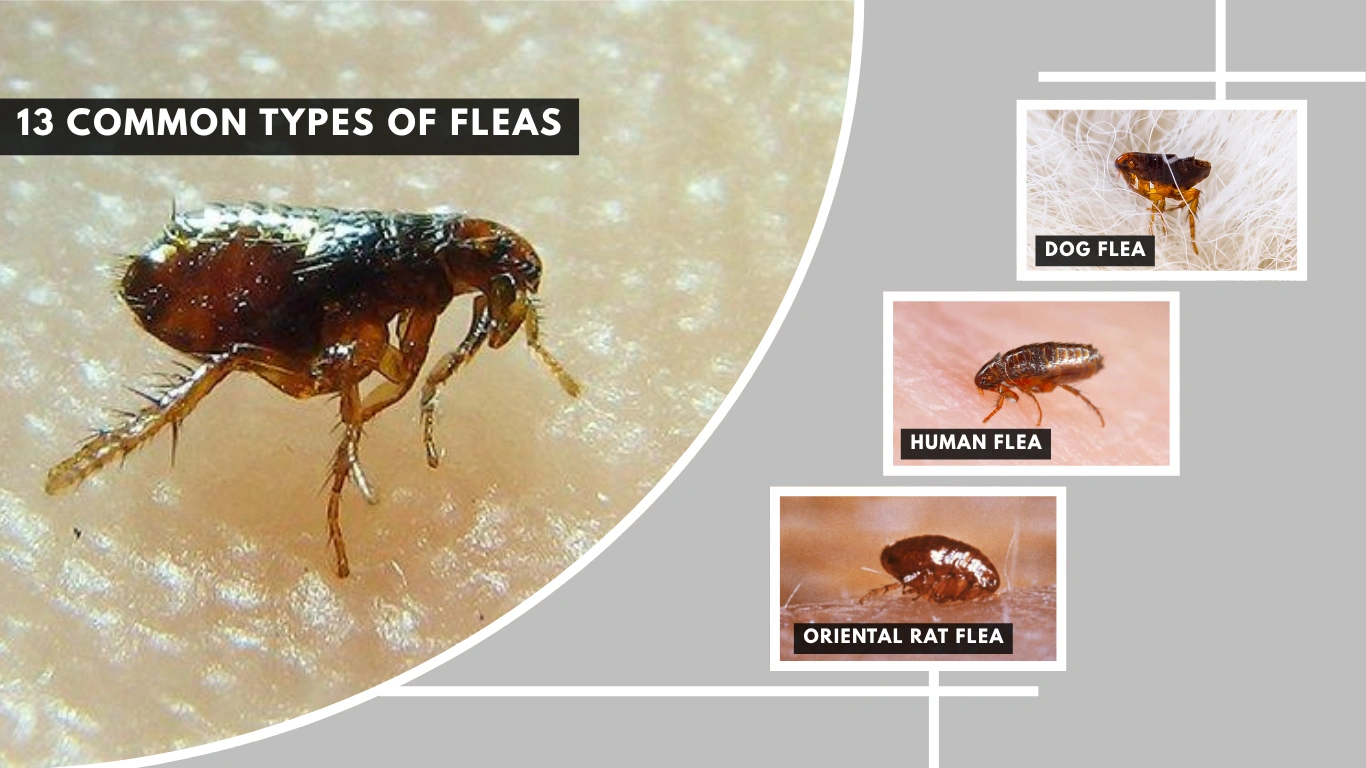
Fleas are tiny, wingless insects known for their jumping ability and blood-feeding habits. While most people associate fleas with pets like cats and dogs, there are actually many different types—each adapted to specific hosts such as birds, rabbits, rodents, and even humans. Understanding these flea species is essential for effective pest control, especially when dealing with infestations at home or on animals. Below is a detailed list of 13 common flea types, including how to identify them, their preferred habitats, and the health risks they pose.
1. Cat Flea (Ctenocephalides felis)

The cat flea is the most common type of flea found on domestic cats, but it can also infest dogs and other mammals, including humans. It thrives in warm, humid environments and can quickly multiply, making it a significant pest both indoors and outdoors.
Identification
- Small and wingless (around 1–3 mm long)
- Flattened body helps it move through fur
- Reddish-brown in color
- Long, powerful hind legs for jumping
- Mouthparts adapted for piercing skin and sucking blood
Habitat and Hosts
Cat fleas typically live on their host animals, hiding in the fur. Off the host, they are commonly found in pet bedding, carpets, furniture, and cracks in flooring. They prefer cats but easily infest dogs, raccoons, opossums, and even humans when pets aren’t available.
Life Cycle
The life cycle includes four stages: egg, larva, pupa, and adult. Eggs are laid on the host but often fall off into the environment. Under ideal conditions, the full cycle can be completed in as little as 2–3 weeks.
Health Risks
Cat fleas are vectors for diseases like cat scratch fever (Bartonella henselae) and tapeworms. Their bites can cause itching, skin irritation, and flea allergy dermatitis in pets.
2. Dog Flea (Ctenocephalides canis)

The dog flea is a species primarily found on dogs but can also infest cats, rabbits, and humans. Though less common than the cat flea, it still poses health risks and discomfort to pets and people alike.
Identification
- Slightly larger than cat fleas (around 2–4 mm)
- Dark brown, wingless body
- Strong legs built for jumping
- Head is more rounded compared to the cat flea
- Comb-like spines (ctenidia) on head and thorax
Habitat and Hosts
Dog fleas live on the host animal and lay eggs in the fur, which fall off into the surrounding environment such as bedding, carpets, and cracks in floors. They prefer dogs but can survive on other mammals, including humans.
Life Cycle
The dog flea has a complete metamorphosis—egg, larva, pupa, and adult. Eggs hatch in a few days, and the full cycle can take from two weeks to several months, depending on environmental conditions.
Health Risks
These fleas can transmit tapeworms and cause flea allergy dermatitis. Repeated bites can lead to skin infections, and in severe infestations, even anemia in puppies or small animals.
3. Human Flea (Pulex irritans)

Although rare today, the human flea was once a widespread nuisance. It can still be found in rural or less hygienic areas and occasionally in homes with pets or livestock.
Identification
- About 1.5–4 mm in size
- Dark reddish-brown, wingless
- Lacks the comb-like spines (ctenidia) seen in cat and dog fleas
- Rounded head with backward-pointing bristles
- Can jump long distances relative to its size
Habitat and Hosts
Despite its name, the human flea can also infest pigs, dogs, raccoons, and other mammals. It hides in bedding, furniture, and crevices, especially in cluttered or unsanitary spaces.
Life Cycle
Human fleas follow the same four-stage life cycle as other fleas. Eggs are laid in the environment, and the entire cycle can be completed in as little as three weeks under favorable conditions.
Health Risks
This flea species can cause painful bites and transmit diseases such as murine typhus and plague (though very rarely today). Reactions to bites include itching, swelling, and in some cases, secondary infections from scratching.
4. Rat Flea (Xenopsylla cheopis)
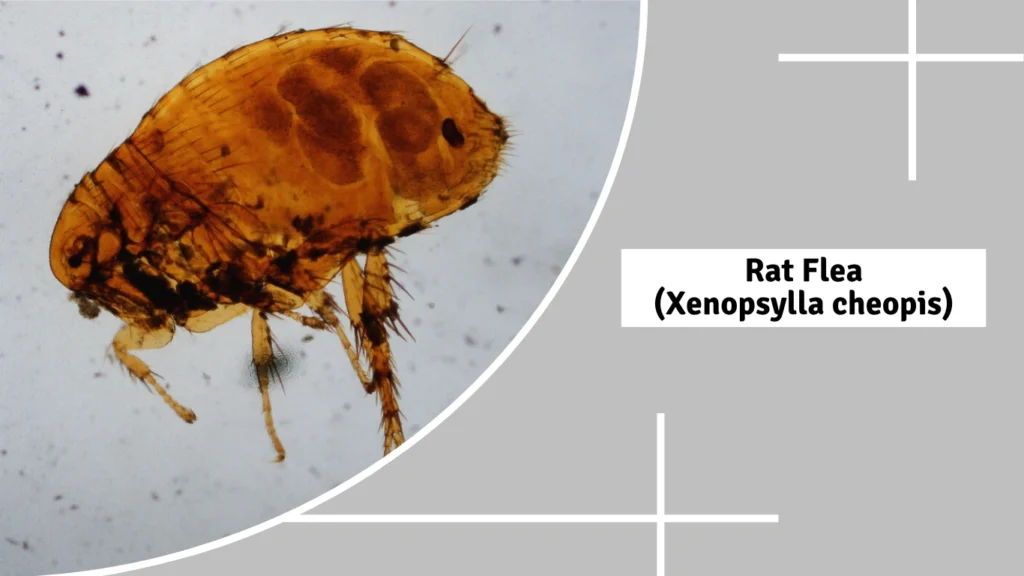
The rat flea, especially the Oriental rat flea, is infamous for its role in spreading serious diseases, including the bubonic plague. It primarily infests rats but will bite humans when necessary.
Identification
- About 1.5–2.5 mm in length
- Brownish body without combs (ctenidia)
- Head is short with large mouthparts
- Smooth body with backward-facing bristles
- Capable of jumping up to 200 times its body length
Habitat and Hosts
Commonly found on black rats and Norway rats, especially in urban and port areas. Their eggs are laid in rat nests, and adults can be found in walls, floors, and sewers where rats nest.
Life Cycle
These fleas follow a complete life cycle of egg, larva, pupa, and adult. The cycle duration varies with temperature and humidity, often completing in 2–4 weeks.
Health Risks
They are best known as vectors of Yersinia pestis, the bacterium that causes the plague. They also transmit murine typhus and can cause itchy bites that may lead to infection if scratched excessively.
5. Sticktight Flea (Echidnophaga gallinacea)
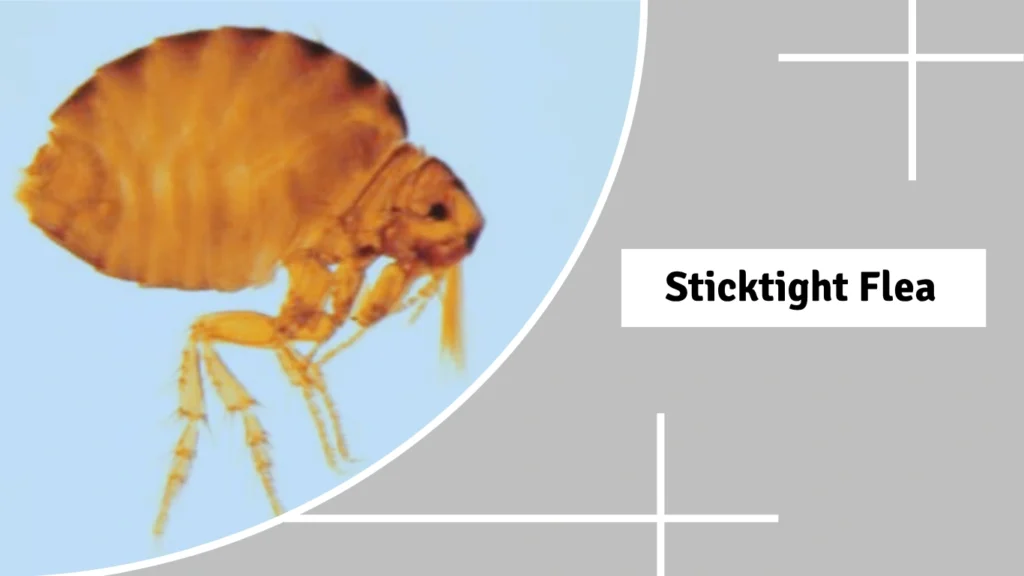
The sticktight flea is a small, tenacious flea that embeds its head into the skin of its host, often causing significant irritation. It primarily targets poultry but can also affect mammals, including humans.
Identification
- Very small (around 1 mm in size)
- Dark brown to black in color
- Head is sharply angled, allowing it to anchor into skin
- Lacks combs (ctenidia)
- Appears almost “stuck” to the skin
Habitat and Hosts
Most commonly found on chickens, turkeys, and other birds around the eyes, wattles, and combs. It can also infest cats, dogs, rodents, and humans, especially in rural settings or where poultry are present.
Life Cycle
After embedding in the skin, females lay eggs that fall to the ground. Larvae develop in soil or bedding, and adults seek out new hosts upon emergence. The cycle can take several weeks to complete.
Health Risks
Infestations can cause swelling, skin necrosis, and secondary infections. In poultry, large infestations may lead to anemia, reduced egg production, and even death. In humans and pets, embedded fleas may require manual removal.
6. Rabbit Flea (Spilopsyllus cuniculi)

The rabbit flea is a specialized species commonly found on wild and domestic rabbits. It plays a role in transmitting myxomatosis, a serious viral disease affecting rabbits.
Identification
- Small (about 1–2 mm long)
- Reddish-brown body
- Narrow head adapted to move through fur
- Possesses combs (ctenidia) on both head and thorax
- Often seen clustered around rabbit ears and face
Habitat and Hosts
Primarily infests rabbits, especially around the ears, nose, and eyes. Occasionally, it may bite cats and other mammals, but it does not thrive on non-rabbit hosts. Rabbit fleas are usually found in hutches, burrows, and nesting areas.
Life Cycle
This flea’s reproduction is closely tied to the reproductive cycle of female rabbits. Hormonal changes in the rabbit trigger flea reproduction, ensuring larvae emerge in suitable environments like nesting burrows.
Health Risks
Rabbit fleas are the main vector of myxomatosis and can also transmit other rabbit-specific illnesses. Bites cause skin irritation and discomfort, and in high numbers, the fleas can contribute to anemia.
7. Northern Rat Flea (Nosopsyllus fasciatus)
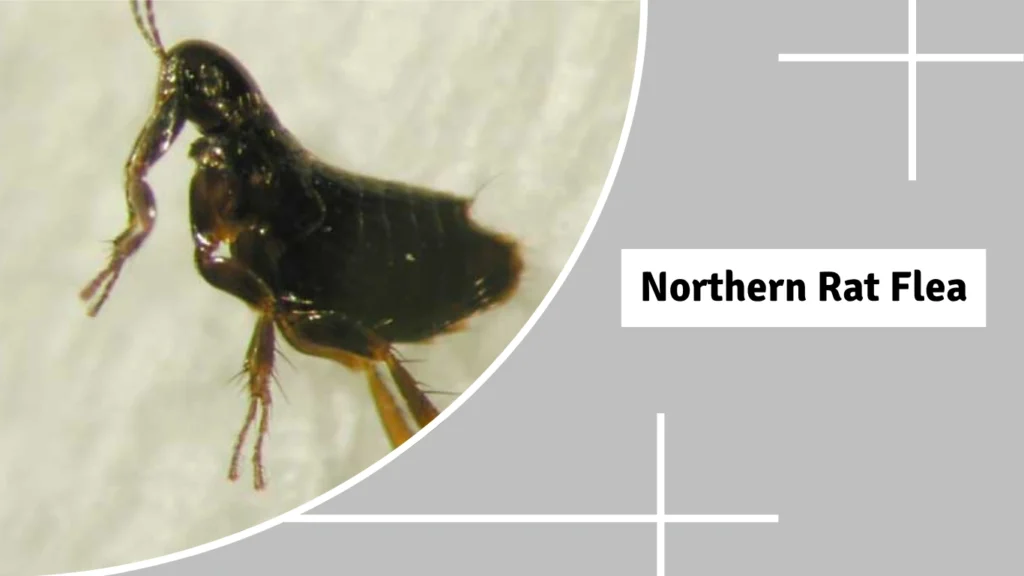
The Northern rat flea is a common parasite of rodents, especially in temperate regions. It is also capable of biting humans and transmitting disease.
Identification
- Medium-sized flea (2–3 mm)
- Dark brown to black in color
- Lacks head combs (ctenidia)
- Long hind legs for jumping
- Slightly flattened body to navigate through fur
Habitat and Hosts
Primarily associated with Norway rats and house mice, this flea is common in urban, agricultural, and warehouse settings. It nests in rodent bedding, walls, and floor cracks, but will readily bite humans when rats are not available.
Life Cycle
Follows the standard four-stage flea cycle. Eggs are laid in the nesting material of rodents, and development from egg to adult can take two weeks to over a month, depending on conditions.
Health Risks
This flea is a potential vector for plague and murine typhus. Though less aggressive than the Oriental rat flea, its bites can cause itching and allergic reactions. Large infestations may become a public health concern if rodent populations are not controlled.
8. Oriental Rat Flea (Xenopsylla astia)

Closely related to the more infamous Xenopsylla cheopis, the Oriental rat flea is another dangerous flea species commonly found on rats in tropical and subtropical regions.
Identification
- Small (1.5–2.5 mm)
- Reddish-brown to black in color
- Lacks combs (ctenidia)
- Body covered in backward-facing bristles
- Short, rounded head with prominent mouthparts
Habitat and Hosts
Prefers tropical climates and is often found on black rats and Norway rats. Commonly located in seaports, warehouses, and densely populated urban areas. Fleas hide in rat nests, crevices, and bedding materials.
Life Cycle
Eggs are laid in the nesting materials of rodents. Larvae feed on organic debris and flea feces. The entire cycle can be completed in 2–3 weeks under ideal environmental conditions.
Health Risks
This flea is a known vector of plague and murine typhus. It can also transmit Rickettsia and cause severe discomfort through bites. Although less common than Xenopsylla cheopis, it poses similar threats in regions where it’s present.
9. Moorhen Flea (Dasypsyllus gallinulae)

The moorhen flea is primarily a bird flea, commonly found on wild birds such as moorhens, pigeons, and ducks. Occasionally, it can bite humans, especially bird handlers or in heavily infested aviaries.
Identification
- Small, dark brown flea (about 2 mm)
- Slender body designed to navigate through feathers
- Long legs for jumping
- No combs (ctenidia)
- Slightly pointed head
Habitat and Hosts
Found on birds and in nests, especially those of moorhens, pigeons, and other waterfowl. These fleas hide in bird nests, feathers, and nearby vegetation.
Life Cycle
Eggs are laid in bird nests. The larvae develop in nesting material, feeding on organic debris. Adults return to the host or stay within the nest, waiting for new birds to infest.
Health Risks
While primarily a bird parasite, moorhen fleas may bite humans, causing irritation and swelling. In birds, infestations may lead to restlessness, anemia, or reduced health, especially in young chicks or nesting mothers.
10. Hedgehog Flea (Archaeopsylla erinacei)

The hedgehog flea is a species specifically adapted to hedgehogs and is commonly found across Europe. While it may bite other animals or humans, it rarely establishes infestations outside its primary host.
Identification
- Small, reddish-brown flea (about 2 mm long)
- Laterally flattened body
- Long hind legs for jumping
- Lacks combs (ctenidia)
- Often seen clustered near the face, belly, or ears of hedgehogs
Habitat and Hosts
Primarily infests European hedgehogs, both wild and captive. The fleas live in the spiny coat and nesting material, often in garden sheds, under bushes, or in woodpiles where hedgehogs sleep.
Life Cycle
Eggs are laid in the hedgehog’s nest or bedding, and larvae feed on organic matter. Adults remain on the host or return to the nest, with the cycle completing in about three weeks under favorable conditions.
Health Risks
These fleas cause skin irritation and scratching in hedgehogs and may lead to anemia in severe infestations. Although they can bite humans and pets, they do not thrive on non-hedgehog hosts.
11. Bird Flea (Ceratophyllus gallinae)

Commonly known as the European bird flea or hen flea, this species infests a wide variety of wild and domestic birds, especially those nesting in wooden coops or trees.
Identification
- Around 2 mm long
- Dark brown body
- Long hind legs and compact body for feather movement
- No combs (ctenidia)
- Often found around the bird’s neck, chest, and vent area
Habitat and Hosts
Mainly infests birds like chickens, pigeons, sparrows, and starlings. Lives in nests and bedding, especially in wooden birdhouses, lofts, and tree cavities. Can also be found in poultry farms.
Life Cycle
The life cycle occurs mostly in the bird’s nest. Eggs hatch into larvae that feed on organic debris, and adults jump onto birds when they return. The cycle can complete in under three weeks in warm conditions.
Health Risks
Bird fleas cause intense irritation, feather loss, and reduced egg production. In some cases, heavy infestations may stress or even kill young birds. They may bite humans and pets, especially in heavily infested environments.
12. European Rabbit Flea (Spilopsyllus cuniculi)

Closely related to the common rabbit flea, the European rabbit flea is primarily found on rabbits across Europe and is an important vector of rabbit diseases.
Identification
- Small flea (1–2 mm in length)
- Dark reddish-brown body
- Possesses both genal and pronotal combs
- Flattened body with strong legs for jumping
- Usually seen around rabbit ears and head
Habitat and Hosts
Specialized to live on European rabbits, particularly in outdoor hutches, burrows, and natural nesting sites. Occasionally, it may be found on hares or transfer briefly to other mammals.
Life Cycle
The flea’s reproductive cycle is synchronized with the host’s reproductive hormones. Females produce eggs when the host rabbit is pregnant, ensuring larvae develop in the warm nest. The cycle takes about 2–3 weeks.
Health Risks
A major carrier of myxomatosis and rabbit hemorrhagic disease virus (RHDV). Though it rarely bites humans, it can cause severe outbreaks in rabbit populations and significant economic loss in rabbit farming.
13. Squirrel Flea (Orchopeas howardi)

The squirrel flea infests both ground and tree squirrels and occasionally comes into contact with humans or household pets, especially in forested or suburban areas.
Identification
- Medium-sized flea (about 2 mm)
- Brown to dark brown body
- Strong, bristle-covered legs
- Lacks combs (ctenidia)
- Elongated head and flattened body for fur movement
Habitat and Hosts
Mainly found on squirrels, including gray, red, and flying squirrels. Nesting sites in attics, hollow trees, or sheds can harbor fleas. It may infest other small mammals if contact occurs.
Life Cycle
Follows the traditional four-stage cycle, with eggs laid in squirrel nests. Larvae feed on debris and adult flea waste, developing into pupae and then adults ready to infest nearby animals.
Health Risks
While it’s not a major human threat, squirrel fleas can bite humans and pets when squirrels nest in or near homes. They may potentially transmit diseases like tularemia or plague, though cases are rare.
FAQs
1. Can different types of fleas live on the same animal?
Yes, multiple flea species can infest the same host. For example, both cat fleas and dog fleas may be found on dogs or cats, especially in mixed-pet households or outdoor environments.
2. Which type of flea is most common in homes?
The cat flea (Ctenocephalides felis) is the most widespread flea found in domestic settings. Despite its name, it infests both cats and dogs and is responsible for most home flea infestations.
3. Can human fleas still infest people today?
Human fleas (Pulex irritans) are rare in modern homes but can still appear in rural or less sanitary conditions. More often, humans are bitten by cat or dog fleas rather than true human fleas.
4. How can I tell which type of flea is infesting my pet?
Accurate identification requires examining the flea’s size, shape, and comb features under magnification. Veterinarians or pest control experts can help confirm the specific flea species based on morphology.
5. Are bird or rabbit fleas dangerous to humans?
Bird and rabbit fleas typically prefer their specific hosts but can bite humans if their usual host is unavailable. While bites may cause irritation, they rarely lead to serious health issues unless the fleas are disease carriers.
