
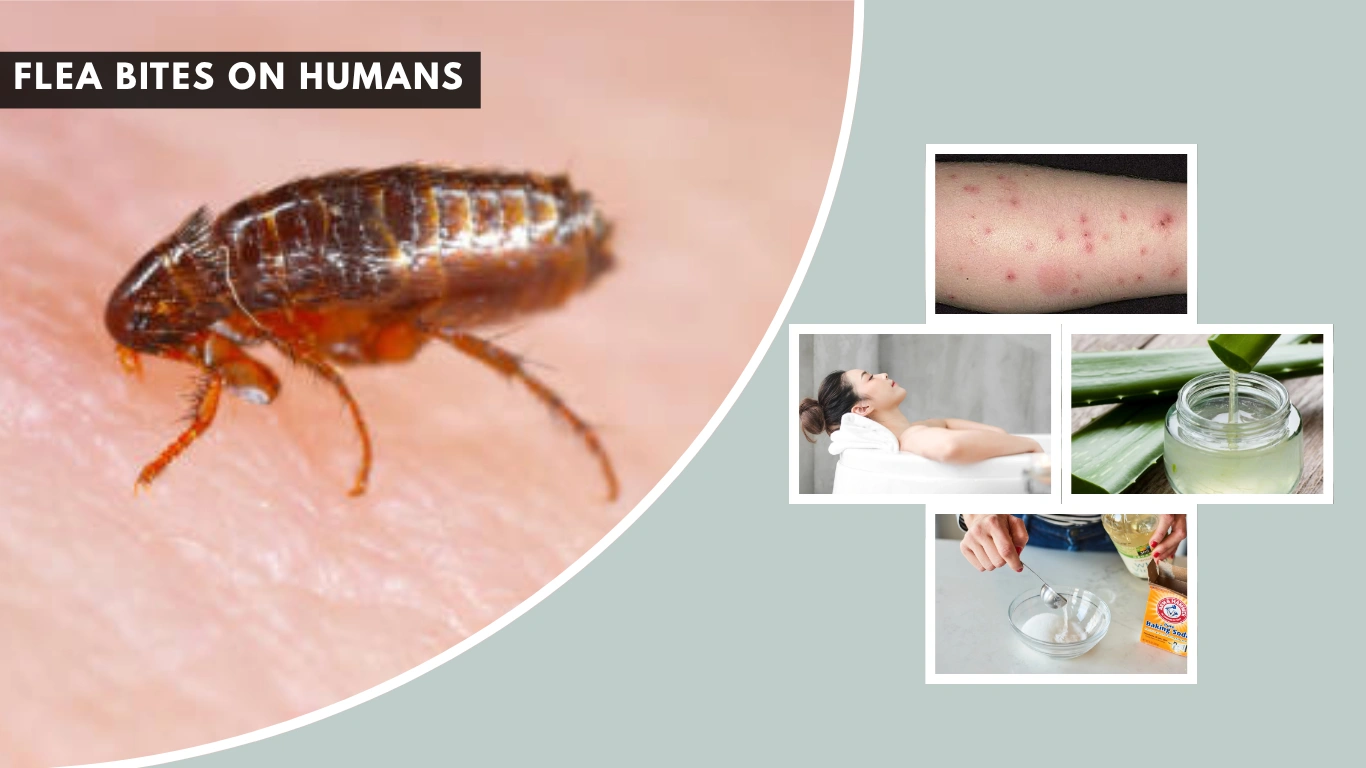
Flea bites on humans can be more than just a nuisance—they can cause intense itching, red bumps, allergic reactions, and even infections in severe cases. These tiny pests, often carried by pets or rodents, bite exposed skin and leave behind irritating marks. In this guide, you’ll learn how to identify flea bites with the help of pictures, understand the symptoms, explore treatment options, and discover how to prevent future bites. Whether you’re dealing with an active infestation or trying to stay bite-free, this article covers everything you need to know.
What Do Flea Bites on Humans Look Like?
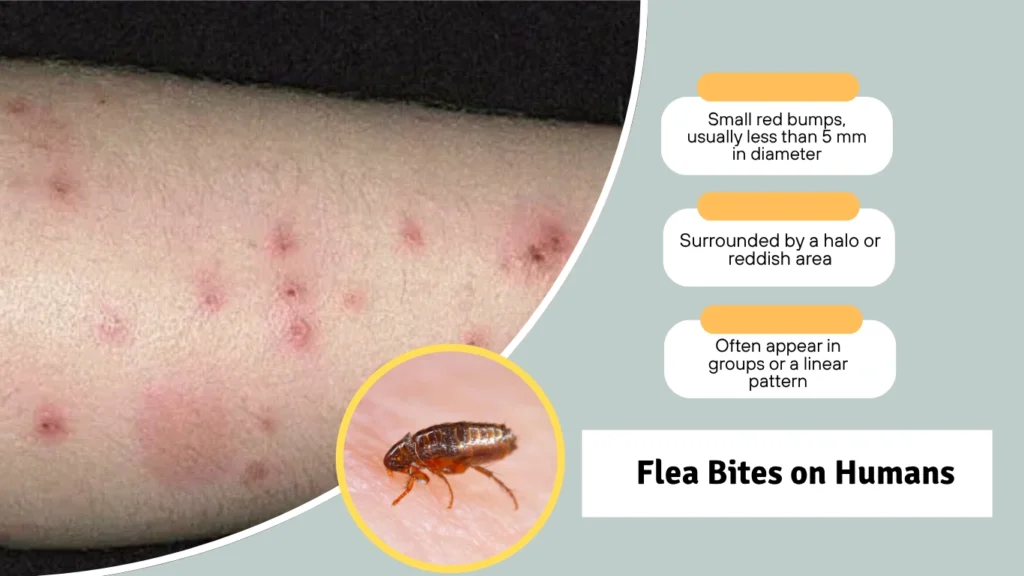
Flea bites on humans are often small but very itchy. They usually appear in clusters or straight lines, especially on areas of the body that are easily accessible—like the ankles, legs, waist, or arms. Fleas tend to bite multiple times, which leads to patches of red, irritated skin. Unlike some insect bites that may go unnoticed, flea bites become itchy almost immediately and worsen with scratching.
Common Visual Features
- Small red bumps, usually less than 5 mm in diameter
- Surrounded by a halo or reddish area
- Often appear in groups or a linear pattern
- Sometimes have a central puncture point
- Can turn into blisters or scabs if scratched
Flea Bites vs. Scratches or Other Insect Bites
Flea bites are commonly mistaken for mosquito or bed bug bites. However, there are a few key differences:
- Mosquito bites are larger, more swollen, and usually solitary.
- Bed bug bites often appear in a neat row or zigzag, but they’re flatter and can take longer to itch.
- Scratches from nails or clothing are more linear and may not itch immediately.
Flea bites develop faster, tend to be grouped in threes or more, and usually focus on the lower half of the body.
Symptoms of Flea Bites on Humans
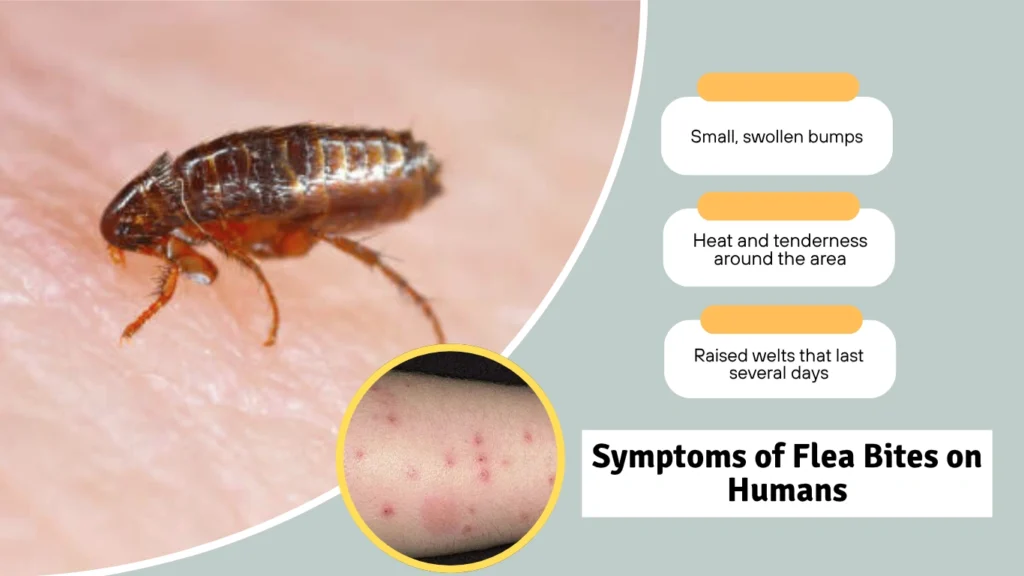
Flea bites may look minor at first, but the symptoms they cause can quickly become uncomfortable. These symptoms vary depending on the individual’s sensitivity, the number of bites, and whether there’s an allergic reaction. For most people, the main complaint is persistent itching—but for others, flea bites can lead to more serious effects like skin infections or allergic rashes.
Itching and Redness
The most immediate and common symptom is intense itching, usually beginning within minutes of being bitten. The skin around the bite may become red and inflamed. Scratching can make the irritation worse and may damage the skin.
Swelling or Inflammation
In some cases, flea bites lead to localized swelling, especially in people with sensitive skin. This may result in:
- Small, swollen bumps
- Heat and tenderness around the area
- Raised welts that last several days
Allergic Reactions and Complications
Some individuals develop an allergic reaction to flea saliva, which can trigger more severe symptoms such as:
- Large, red hives
- Skin rashes or eczema-like patches
- Difficulty breathing (very rare but serious)
- Swollen lymph nodes
Children, people with allergies, or those with weakened immune systems are more prone to these types of reactions.
Delayed Skin Reactions
Not all flea bite symptoms appear right away. In some cases, delayed reactions occur hours later, including:
- Continued itching long after the bite
- Scabbing or crusting from repeated scratching
- Secondary skin infections caused by broken skin and bacteria
Recognizing these symptoms early can help prevent complications and speed up recovery through timely treatment.
Flea Bites vs. Bed Bug Bites
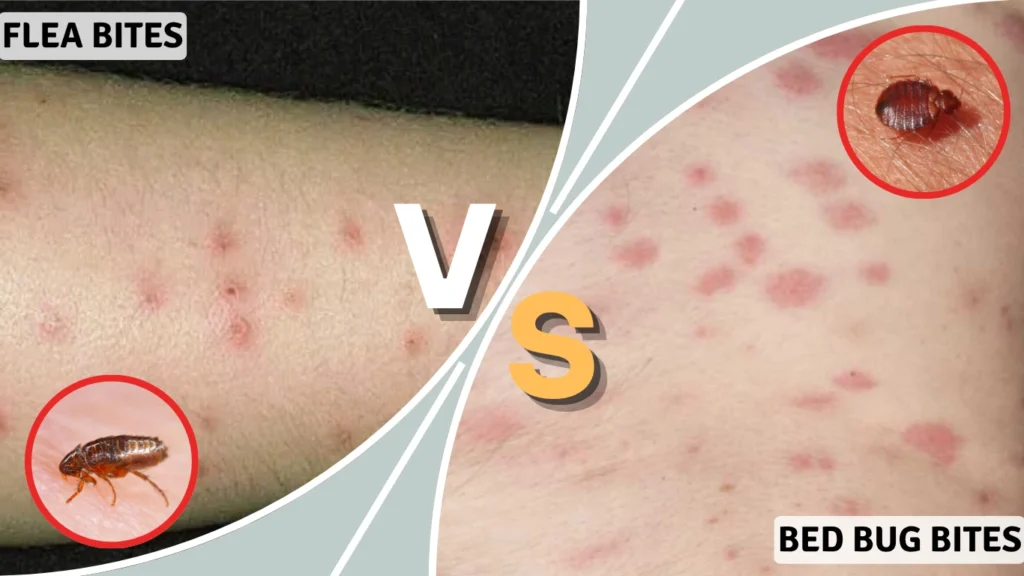
Flea bites and bed bug bites are commonly confused due to their similar size and itchy red appearance. However, there are key differences in the bite pattern, location, and how your body reacts to each. Knowing how to distinguish between them is essential for proper treatment and pest control.
Key Differences in Appearance
- Flea bites are small, red, and often have a central puncture mark.
- Bed bug bites tend to be slightly larger, flatter, and may not have a central spot.
- Flea bites may become scabby from scratching more quickly.
Different Bite Patterns
- Fleas usually bite in clusters or random groups, often 3–4 bites in a small area.
- Bed bugs bite in a linear or zigzag pattern, often referred to as “breakfast, lunch, and dinner.”
- Flea bites are more scattered, especially on legs and ankles.
Location on Body
- Fleas typically target lower body parts like feet, ankles, and legs, but can bite anywhere.
- Bed bugs bite exposed skin while you sleep—neck, arms, shoulders, face, and back.
- Bed bugs don’t crawl under clothes, while fleas can get beneath socks or waistbands.
Pain vs. Itch Comparison
- Flea bites tend to itch immediately and intensely after the bite.
- Bed bug bites might not be felt at first and the itch develops hours later.
- Some people don’t react to bed bug bites at all, while flea bites nearly always cause a noticeable itch.
By comparing these signs, you can better identify the source of the problem and take targeted action—whether it’s treating your pets for fleas or inspecting your mattress for bed bugs.
Flea bites and bed bug bites:
| Feature | Flea Bites | Bed Bug Bites |
| Size | Small (1–3 mm), with central puncture | Slightly larger, flat or raised |
| Itch Onset | Immediate and intense | Delayed; develops within hours |
| Bite Pattern | Clustered or random groupings | Linear or zigzag pattern |
| Common Locations | Ankles, feet, lower legs, waist | Arms, neck, shoulders, back, face |
| Time of Biting | Anytime (especially outdoors or near pets) | Mostly at night while sleeping |
| Puncture Visibility | Central red dot visible | Usually no central puncture |
| Associated With | Pets (cats, dogs), carpets, bedding | Mattresses, furniture, cracks in wood |
| Allergic Reaction Risk | Moderate to high (especially in children) | Varies by individual; less common |
| Blistering/Scabbing | More common due to scratching | Less likely unless severely irritated |
| Preferred Host | Animals (will bite humans if nearby) | Humans (prefer human blood meals) |
How to Treat Flea Bites on Humans

Flea bites are uncomfortable and irritating, but with the right care, they usually heal within a few days. The key is to control the itching, avoid scratching, and keep the area clean to prevent infection. Depending on how your body reacts, you might need home remedies, over-the-counter medications, or medical attention for more serious cases.
At-Home Remedies
Start by gently washing the bite area with soap and lukewarm water. This helps remove flea saliva and any dirt that could lead to infection. Once the area is clean, apply a cold compress for 10–15 minutes to reduce itching and swelling.
Some effective natural options include:
- Aloe vera gel: Soothes skin and promotes healing
- Baking soda paste: Reduces itchiness when applied to the bites
- Oatmeal bath: Calms irritation, especially useful for widespread bites or children
Avoid scratching as much as possible. If itching is unbearable, trimming fingernails or wearing gloves at night can help prevent accidental damage during sleep.
Over-the-Counter Treatments
If home remedies aren’t enough, there are several non-prescription products that can ease symptoms:
- Hydrocortisone cream (1%) helps reduce inflammation and itching
- Calamine lotion can dry out bites and relieve irritation
- Oral antihistamines like Benadryl (diphenhydramine) or Claritin (loratadine) help with allergic reactions and persistent itching
Be cautious when using creams on children or sensitive skin—always read the label or consult a pharmacist for age-appropriate options.
When Medical Attention Is Needed
Most flea bites are harmless, but there are cases when you should seek help from a doctor:
- The area becomes increasingly red, swollen, or warm to the touch
- You see pus, crusting, or streaking from the bite site
- You experience fever, chills, or feel unwell
- Bites trigger widespread hives or difficulty breathing (a sign of a serious allergy)
These symptoms could indicate an infection or a severe allergic reaction that needs professional care.
Preventing Secondary Infections
One of the biggest risks with flea bites is skin infection due to scratching. If the skin breaks, it becomes vulnerable to bacteria. To prevent this:
- Clean the wound with antiseptic
- Keep it covered with a sterile bandage
- Apply an antibiotic ointment like Neosporin if the skin is open
If symptoms don’t improve within a few days or if they get worse, it’s best to consult a healthcare provider. Treating bites quickly and carefully is the best way to avoid complications and get relief.
Preventing Flea Bites
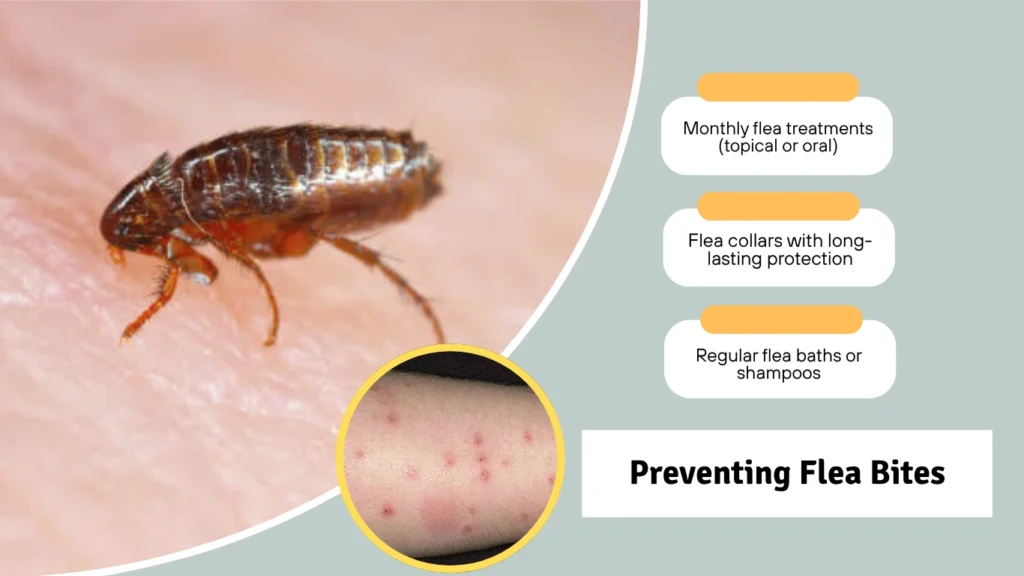
While treatment helps manage flea bites, prevention is the most effective way to avoid discomfort, allergic reactions, and infestations in the first place. Fleas are persistent pests, especially in homes with pets or in warmer climates, so a proactive approach is essential. This includes caring for your pets, maintaining a clean environment, and using repellents when needed.
Treating Pets for Fleas
Pets—especially cats and dogs—are the most common carriers of fleas into the home. Keeping them flea-free is your first line of defense. Use veterinarian-recommended flea control methods such as:
- Monthly flea treatments (topical or oral)
- Flea collars with long-lasting protection
- Regular flea baths or shampoos
- Combing your pet’s fur with a flea comb to check for signs
Also, wash your pet’s bedding weekly in hot water to kill any flea eggs or larvae.
Cleaning and Vacuuming the Home
Even if your pets are protected, fleas can survive in carpets, upholstery, and hidden corners of your home. Regular cleaning breaks their life cycle and reduces the chance of bites. Focus on:
- Vacuuming carpets, rugs, pet beds, and furniture daily during an infestation
- Disposing of vacuum bags or canister contents immediately
- Washing blankets, pillows, and linens in hot water
- Steam-cleaning carpets and upholstery for deep sanitization
Fleas lay eggs that can survive for weeks, so consistency is key.
Using Flea Repellents and Sprays
Flea control doesn’t stop with cleaning. Use indoor flea sprays, powders, or foggers specifically designed for carpets and furniture. For long-term prevention, insect growth regulators (IGRs) can help stop flea development. Outdoors, apply yard sprays in areas where your pets spend time, especially shaded, moist areas.
You can also use natural repellents like lemon spray, essential oils (e.g., lavender, cedarwood), or diatomaceous earth around pet zones—but test on a small area first, especially with pets or children around.
Flea-Proof Clothing and Bedding Tips
If you’re frequently outdoors or near flea-prone areas, wear light-colored clothing so fleas are easier to spot. Tuck pants into socks and avoid sitting directly on the ground. At home, consider these extra steps:
- Use protective mattress covers and wash bed sheets regularly
- Keep pet sleeping areas separate from human beds
- Avoid clutter that gives fleas places to hide and breed
By combining pet care, household hygiene, and proper flea control products, you can create a long-term strategy to avoid bites and infestations altogether.
FAQs
1. Can fleas live on humans?
Fleas can bite humans, but they don’t live or reproduce on us. They prefer animal hosts with fur, like cats, dogs, or rodents. However, fleas will bite humans if their primary host isn’t available.
2. How long do flea bites last?
For most people, flea bites heal in 3 to 7 days. However, if scratched or infected, they can linger longer and may leave marks or scars.
3. Why are flea bites so itchy?
The intense itching is caused by the flea’s saliva, which contains proteins that trigger the body’s histamine response—leading to redness, swelling, and itching.
4. Can flea bites make you sick?
Yes, though rare. Fleas can transmit diseases such as murine typhus or, in some regions, bubonic plague. More commonly, they may cause skin infections or allergic reactions.
5. What’s the fastest way to relieve flea bite itching?
Apply a cold compress followed by hydrocortisone cream or an antihistamine. Avoid scratching the bites and keep the area clean to speed up healing.
