
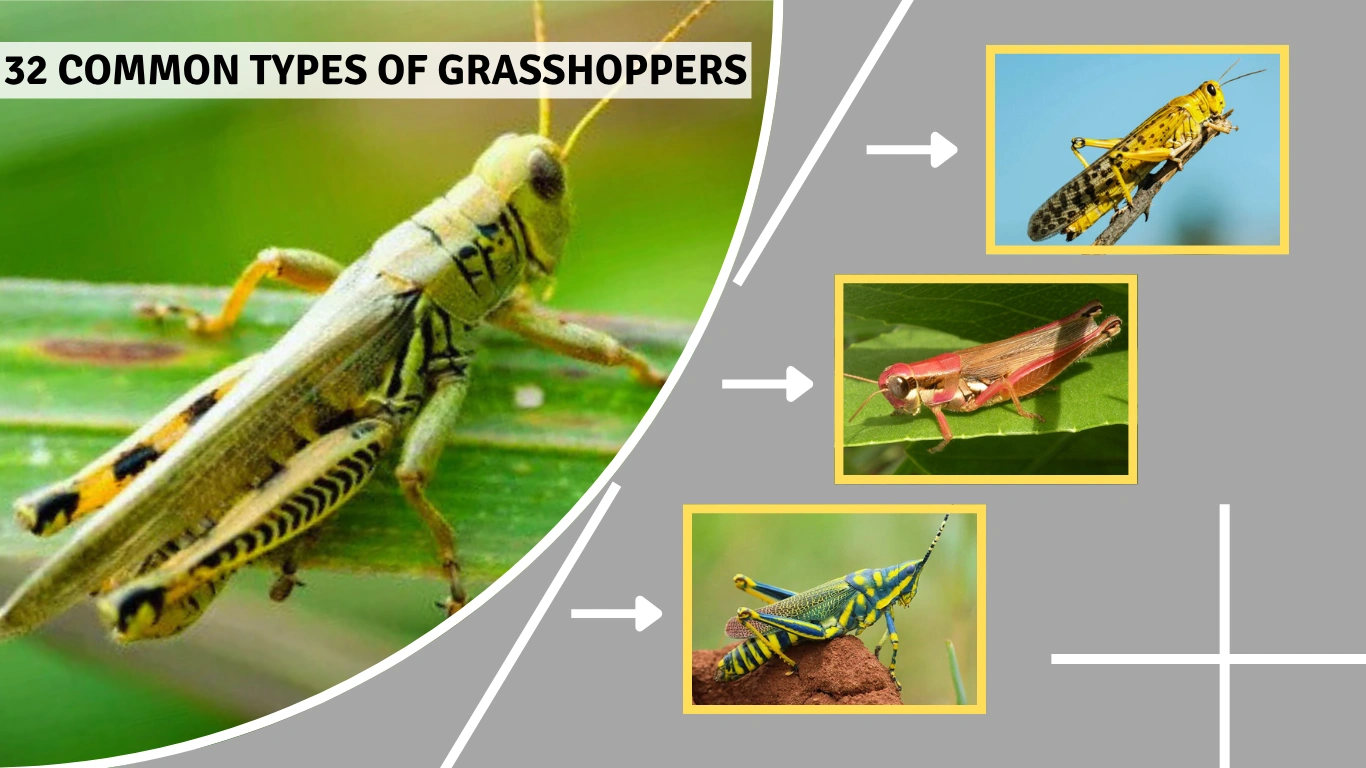
Grasshoppers are among the most recognizable insects found in fields, gardens, forests, and even deserts across the world. With their powerful hind legs and unique chirping sounds, these fascinating creatures play vital roles in ecosystems, but some can also be serious agricultural pests. This guide introduces 32 common types of grasshoppers from around the globe, covering everything from their appearance and habitat to their behavior and diet. Whether you’re a gardener, a farmer, or just curious about insects, this list will help you better understand and identify the many grasshopper species that may hop across your path.
1. Differential Grasshopper

The Differential Grasshopper (Melanoplus differentialis) is one of the most frequently encountered grasshopper species across North America. It’s especially noted for its impact on crops, often causing considerable damage in agricultural fields during the summer months. Recognized by its strong jumping legs and bold leg markings, this species thrives in sunny, open environments like farmlands and grasslands.
Identification
- Color: Yellowish-green to brown
- Hind Legs: Large with black chevron-like bands
- Size: Approximately 1.5 inches (adult)
- Wings: Extend beyond the abdomen
- Antennae: Short and robust
- Body: Slender with a slightly rounded head
Habitat
Differential grasshoppers are most commonly found in open, disturbed habitats such as fields, roadsides, and prairies. They prefer warm environments with plenty of vegetation and exposed soil for egg-laying.
Behavior and Diet
This grasshopper is active during the day, especially in sunny weather. It moves quickly when approached and often uses its powerful hind legs to leap great distances. Though capable of flying, it usually relies on short, fluttering flights to escape threats or find new feeding grounds.
The diet of the differential grasshopper includes a wide variety of plants. It feeds heavily on crops such as corn, soybeans, and alfalfa, but will also consume grasses and garden plants. Its feeding can cause significant defoliation, making it a serious pest during peak infestation years.
2. Desert Locust

The Desert Locust (Schistocerca gregaria) is infamous for its swarming behavior and devastating impact on crops across Africa, the Middle East, and Asia. When environmental conditions are favorable, this grasshopper species can form massive swarms that migrate over long distances, consuming nearly every green plant in their path.
Identification
- Color: Light brown in solitary phase; yellow with black markings in swarming phase
- Hind Legs: Strong and designed for long jumps
- Size: Around 2–3 inches long
- Wings: Long and transparent with veins
- Antennae: Long and thin
- Body: Slender, elongated, with a slightly humped back
Habitat
Desert locusts inhabit arid and semi-arid regions, especially deserts and dry plains. They often breed in areas that receive sudden rainfall, which triggers vegetation growth and population booms.
Behavior and Diet
In their solitary form, desert locusts behave like typical grasshoppers. However, when crowded and triggered by environmental cues, they undergo a dramatic transformation into a gregarious, swarm-forming phase. Swarms can cover hundreds of square kilometers and travel across countries.
They consume a wide range of crops and wild plants, including grains, vegetables, fruit trees, and grasses. Their destructive feeding habits can lead to severe food shortages and economic loss in affected regions.
3. American Grasshopper

The American Grasshopper (Schistocerca americana), also known as the American locust, is a large, robust species found primarily in the southeastern United States. Although not as destructive as true locusts, it can still cause serious crop damage during population outbreaks, especially in sugarcane fields and vegetable gardens.
Identification
- Color: Pale brown to tan with pinkish or greenish tints
- Hind Legs: Thick with subtle banding
- Size: About 1.75 to 2.25 inches long
- Wings: Long with dark and light patterning
- Antennae: Long and straight
- Body: Sturdy and cylindrical, slightly tapering at the rear
Habitat
This species thrives in warm, humid areas including agricultural fields, meadows, marsh edges, and roadside vegetation. It prefers areas with dense plant cover and moist soil for breeding.
Behavior and Diet
The American grasshopper is a strong flier and prefers to feed during early morning or late afternoon. It typically moves slowly on the ground but can take quick, powerful leaps when disturbed.
Its diet includes a variety of plants—grasses, weeds, corn, beans, and ornamental shrubs. While not always present in large numbers, regional outbreaks can lead to notable defoliation in both wild and cultivated areas.
4. Red-legged Grasshopper

The Red-legged Grasshopper (Melanoplus femurrubrum) is a widespread species found throughout North America. It is commonly seen in fields, meadows, and gardens during late summer and early fall. Its reddish hind legs and frequent presence in agricultural areas make it a familiar sight to farmers and gardeners alike.
Identification
- Color: Brownish to greenish with dark markings
- Hind Legs: Reddish with black bands
- Size: About 1 to 1.5 inches (adult)
- Wings: Transparent with a network of veins
- Antennae: Short and slightly curved
- Body: Compact with a rounded thorax
Habitat
Red-legged grasshoppers are commonly found in grassy areas, weedy fields, and along roadsides. They prefer open habitats with plenty of sunlight and vegetation.
Behavior and Diet
These grasshoppers are active during the day and often rest on vegetation or bare ground. They are agile jumpers and may fly short distances when startled.
They feed on a wide variety of plants, including grasses, clover, alfalfa, and garden crops. Their populations can grow quickly under dry, warm conditions, leading to noticeable feeding damage in agricultural regions.
5. Spur-throated Grasshopper

The Spur-throated Grasshopper (Melanoplus spp.) refers to a group of grasshoppers identified by the distinctive spur or projection located between their front legs on the underside of the thorax. This group includes several pest species commonly found across North America.
Identification
- Color: Varies—green, brown, or gray with patterns
- Hind Legs: Strong with ridged bands
- Size: 1 to 2 inches depending on species
- Wings: Well-developed, extending beyond the abdomen
- Antennae: Short and thick
- Body: Muscular with a visible throat spur
Habitat
Spur-throated grasshoppers are found in many environments, including croplands, pastures, and grasslands. They adapt well to disturbed or cultivated soils.
Behavior and Diet
They are typically ground-dwellers that remain active during warm daylight hours. When threatened, they hop away quickly or fly short distances. Their mobility and feeding range make them difficult to manage during outbreaks.
They feed on grasses, grains, and broadleaf plants, often damaging crops like wheat, alfalfa, and corn. Their feeding can significantly reduce yield when infestations are high.
6. Eastern Lubber Grasshopper

The Eastern Lubber Grasshopper (Romalea microptera) is one of the largest and most colorful grasshoppers in the southeastern United States. Despite its size, it is a slow mover and poor flier, relying on its bright coloration to deter predators. It is often found in gardens, wooded edges, and weedy areas.
Identification
- Color: Bright yellow with black markings (color can vary to red or orange)
- Hind Legs: Thick and short, not built for strong jumping
- Size: Up to 3 inches long
- Wings: Short and non-functional for flight
- Antennae: Short and curved
- Body: Bulky with a wide thorax
Habitat
Eastern lubber grasshoppers prefer moist, warm habitats such as pinewoods, roadside ditches, gardens, and fields. They often congregate in dense vegetation or near water sources.
Behavior and Diet
They are slow and clumsy on land and do not rely on flight. Their bright warning colors and toxic body fluids act as strong deterrents against birds and other predators.
Their diet includes ornamental plants, wildflowers, vegetables, and shrubs. While they rarely occur in damaging numbers, their large size allows them to strip leaves quickly, making them a nuisance in gardens and landscaped areas.
7. Two-striped Grasshopper

The Two-striped Grasshopper (Melanoplus bivittatus) is a highly recognizable species due to the two distinct pale yellow stripes running from its eyes down to the wings. It’s a widespread pest in North America and is especially destructive in agricultural fields during the summer.
Identification
- Color: Green or brown with two yellow dorsal stripes
- Hind Legs: Strong with dark crossbands
- Size: Approximately 1.5 to 2 inches
- Wings: Long, extending beyond the abdomen
- Antennae: Short and somewhat thick
- Body: Elongated with a clear stripe pattern
Habitat
This species thrives in tall grasses, weedy margins, and agricultural lands. It prefers warm areas with plenty of plant growth and loose soil for laying eggs.
Behavior and Diet
Two-striped grasshoppers are active during warm daylight hours and often bask in the sun. They can leap and fly readily when disturbed, making them difficult to catch or observe closely.
They feed on a wide range of plants including grains, corn, beans, vegetables, and even flowers. Due to their large appetite and rapid reproduction, they are considered a major pest in many farming regions.
8. Carolina Grasshopper

The Carolina Grasshopper (Dissosteira carolina), also known as the black-winged grasshopper, is a common species found throughout most of the United States. It is well known for its striking black hind wings edged with pale yellow and its powerful flight, which can resemble that of a butterfly when disturbed.
Identification
- Color: Mottled gray or brown to blend with soil or rocks
- Hind Legs: Robust with light and dark banding
- Size: 1.5 to 2.5 inches long
- Wings: Black with pale yellow borders
- Antennae: Short and thick
- Body: Flattened and camouflaged for ground blending
Habitat
This species prefers dry, open areas such as dirt roads, gravel paths, fields, and bare patches of soil. It is often seen basking in the sun on open ground or rocks.
Behavior and Diet
Carolina grasshoppers are quick to escape when approached, using their strong wings for long, fluttering flights. They tend to settle back down in a new open spot, where they continue feeding or basking.
They feed primarily on grasses and weeds but will also eat leaves of low-growing plants. While not a major pest, they can cause localized defoliation in gardens and fields.
9. Green-striped Grasshopper

The Green-striped Grasshopper (Chortophaga viridifasciata) is a small to medium-sized species that is often among the first grasshoppers to appear in spring. It is known for its preference for moist habitats and its green coloration that helps it blend into grassy environments.
Identification
- Color: Bright green or brown with a distinct green stripe along the back
- Hind Legs: Slender with faint bands
- Size: 0.75 to 1.5 inches
- Wings: Transparent or slightly smoky
- Antennae: Short and straight
- Body: Narrow with smooth contours
Habitat
Green-striped grasshoppers are commonly found in moist meadows, grassy fields, ditches, and marshy areas. They thrive in places with lush vegetation and high humidity.
Behavior and Diet
These grasshoppers are active during the day and usually found perched on grass stems or low plants. They are quick to jump when approached and sometimes fly short distances.
Their diet consists mainly of grasses, clover, and other soft plants. Because of their early emergence in spring, they often begin feeding and mating before many other species appear.
10. Migratory Grasshopper

The Migratory Grasshopper (Melanoplus sanguinipes) is one of the most economically significant pest species in North America. It is known for its wide distribution and its ability to migrate long distances in search of food, particularly during hot, dry summers.
Identification
- Color: Brown to tan with faint dark markings
- Hind Legs: Strong with reddish undersides
- Size: About 1 to 1.5 inches
- Wings: Clear with veins, extend past the abdomen
- Antennae: Short and thick
- Body: Slender with a rounded back
Habitat
Migratory grasshoppers thrive in grasslands, crop fields, rangelands, and prairies. They adapt well to disturbed environments and are often found in drier regions of the western U.S. and Canada.
Behavior and Diet
This species is highly mobile and capable of moving large distances in search of new food sources. It is active in full sunlight and may be seen resting on bare ground or vegetation.
Its diet includes a vast variety of plants, including wheat, barley, oats, corn, alfalfa, and wild grasses. Due to its broad feeding habits and tendency to swarm, it is a major threat to agriculture during outbreak years.
11. Obscure Bird Grasshopper

The Obscure Bird Grasshopper (Schistocerca obscura) is a large and fast-flying grasshopper found mostly in the southeastern United States. Though it resembles some locust species, it rarely forms large swarms and is typically found in low numbers.
Identification
- Color: Brown or olive with speckled markings
- Hind Legs: Long and muscular with pale stripes
- Size: 2 to 2.5 inches
- Wings: Long and clear, reaching past the tip of the body
- Antennae: Long and slender
- Body: Large, tapering at the back with visible flight muscles
Habitat
This grasshopper prefers woodland edges, gardens, brushy areas, and crop margins. It often rests in shrubs and trees, making it less visible than ground-dwelling species.
Behavior and Diet
Obscure bird grasshoppers are agile flyers and often escape predators by launching into rapid, sustained flight. They are solitary and not typically found in dense groups.
Their diet consists of leaves from a wide variety of trees, shrubs, and cultivated plants, including citrus, roses, and beans. While not usually a severe pest, they may cause significant defoliation when present in large numbers.
12. Plains Lubber Grasshopper

The Plains Lubber Grasshopper (Brachystola magna) is a large, flightless grasshopper found primarily in the central and southwestern United States. Known for its slow movement and striking appearance, it often surprises observers with its size and vivid coloration.
Identification
- Color: Reddish-brown, olive, or pinkish with mottled patterns
- Hind Legs: Thick and powerful but not used for long jumps
- Size: 2 to 3 inches long
- Wings: Very short and non-functional for flying
- Antennae: Short and thick
- Body: Broad and heavy-bodied
Habitat
This species is typically found in dry grasslands, desert margins, and open scrublands. It prefers sandy or loose soil where vegetation is sparse but consistent.
Behavior and Diet
Plains lubber grasshoppers are slow-moving and rely on their size and chemical defenses to deter predators. They often walk instead of hopping and can appear clumsy.
Their diet includes coarse grasses, herbs, and low shrubs. Although not commonly found in dense populations, their size means they can still consume a significant amount of vegetation individually.
13. Western Lubber Grasshopper

The Western Lubber Grasshopper (Taeniopoda eques) is a striking and colorful grasshopper native to the southwestern United States and Mexico. It is easily recognized by its shiny black body with bright yellow or red markings and its large, lumbering form.
Identification
- Color: Glossy black with yellow or red stripes and accents
- Hind Legs: Short and thick; not built for jumping
- Size: Up to 3 inches in length
- Wings: Short and non-functional for flight
- Antennae: Medium-length and slightly curved
- Body: Heavy with wide, flat thorax
Habitat
This species prefers desert regions, arid grasslands, and rocky foothills. It often shelters under shrubs or cacti and is active during the day in warm weather.
Behavior and Diet
Western lubbers are known for their slow, deliberate movement and their bright warning coloration, which signals toxicity. When threatened, they may hiss or secrete foul-smelling foam as a defense.
They feed on desert vegetation including mesquite, creosote bush, and wildflowers. Though not aggressive feeders, their large size and slow movement make them a fascinating sight in their native habitats.
14. Clear-winged Grasshopper

The Clear-winged Grasshopper (Camnula pellucida) is a common species across North America, especially in the northern United States and Canada. It is often found in large numbers and is considered one of the major pests of cereal crops and rangelands.
Identification
- Color: Pale gray to brown with mottled or speckled patterns
- Hind Legs: Slender with dark bands
- Size: About 1 to 1.25 inches
- Wings: Transparent with no distinct color; extend past the body
- Antennae: Short and slightly curved
- Body: Slender with narrow thorax
Habitat
Clear-winged grasshoppers are most common in open grasslands, rangelands, roadsides, and cultivated fields. They prefer dry regions with sparse vegetation and often thrive in disturbed areas.
Behavior and Diet
These grasshoppers are agile and quick to flee, using both jumping and flying to escape predators or disturbance. They are especially active during warm afternoons and can often be seen moving between grasses.
Their diet primarily consists of grasses and cereal crops such as wheat, barley, and oats. In outbreak years, their feeding can cause serious economic damage to both agriculture and livestock grazing lands.
15. Pasture Grasshopper

The Pasture Grasshopper (Melanoplus confusus) is a small, slender species typically found in grasslands and pastures across the central and southern United States. Although not as destructive as some other grasshoppers, it is common and can be locally abundant.
Identification
- Color: Light brown or gray with faint dark striping
- Hind Legs: Narrow with minimal markings
- Size: Around 0.75 to 1.2 inches
- Wings: Extend just past the body
- Antennae: Short and straight
- Body: Slender and tapered with smooth edges
Habitat
This species is most commonly found in open pastures, meadows, and low grassy fields. It thrives in areas with short grasses and occasional bare ground.
Behavior and Diet
Pasture grasshoppers are relatively shy and quick to jump when approached. They are more active in the early morning and late afternoon, often feeding close to the ground.
Their diet mainly includes native grasses, clover, and other pasture vegetation. While not typically a major pest, large local populations may reduce forage quality for livestock.
16. Wingless Grasshopper

The Wingless Grasshopper (Phaulacridium vittatum), also known as the Australian wingless grasshopper, is a ground-dwelling species found predominantly in Australia. As the name suggests, it lacks functional wings and relies entirely on jumping to move around.
Identification
- Color: Brown, gray, or olive with pale stripes or spots
- Hind Legs: Well-developed for jumping
- Size: 0.5 to 1 inch
- Wings: Absent or greatly reduced
- Antennae: Short and straight
- Body: Compact and rounded, adapted for ground life
Habitat
This species is found in open grasslands, lawns, gardens, and road verges. It prefers areas with low vegetation and dry, bare patches of soil for basking and egg-laying.
Behavior and Diet
Wingless grasshoppers are highly active during the day and move quickly by jumping. They are well-camouflaged against soil and dry grass, making them difficult to spot.
Their diet includes grasses, seedlings, and garden plants. They can become locally abundant in urban lawns and rural pastures, occasionally causing minor plant damage during dry seasons.
17. Painted Grasshopper

The Painted Grasshopper (Poekilocerus pictus) is one of the most colorful grasshoppers in the world, commonly found in India and surrounding regions. Its vibrant appearance acts as a warning to predators about its unpalatable nature.
Identification
- Color: Bright green with blue, yellow, and red patterns
- Hind Legs: Boldly striped, often with red and blue tones
- Size: Around 2 to 2.5 inches
- Wings: Partially developed; used more for gliding than flight
- Antennae: Short and thick
- Body: Stout and highly colorful
Habitat
This grasshopper is often found in dry, scrubby areas, on milkweed plants, and near agricultural fields. It prefers sunny habitats with scattered vegetation.
Behavior and Diet
Painted grasshoppers are slow movers and rely on their aposematic (warning) coloration to deter predators. When threatened, they may excrete foul-smelling fluid as a defense mechanism.
They primarily feed on milkweed and other toxic plants, which makes them distasteful to birds and other predators. Their diet also includes ornamental plants and shrubs in some garden areas.
18. Rainbow Grasshopper

The Rainbow Grasshopper (Dactylotum bicolor), also known as the painted grasshopper, is one of the most visually striking grasshoppers found in North America. Its vivid colors serve as a warning signal to predators, indicating that it may be toxic or distasteful.
Identification
- Color: Black body with bright red, yellow, and green markings
- Hind Legs: Strong and multicolored with red bands
- Size: About 1 to 1.5 inches
- Wings: Short and non-functional for flight
- Antennae: Short and slightly curved
- Body: Compact and rounded with a glossy appearance
Habitat
Rainbow grasshoppers are commonly found in dry grasslands, prairies, and arid regions of the western United States and northern Mexico. They prefer sunny, open areas with sparse vegetation.
Behavior and Diet
They are active during the day and rely on their bold coloration for defense rather than speed or flight. When approached, they often remain motionless, trusting their warning colors to deter threats.
Their diet includes various broadleaf plants, weeds, and wildflowers. Although not considered a major pest, they can locally defoliate plants if populations are high.
19. Slant-faced Grasshopper

The Slant-faced Grasshopper refers to several species within the subfamily Gomphocerinae, recognized by their angled facial profile. These grasshoppers are often camouflaged and found in grassy environments across North America.
Identification
- Color: Green, brown, or gray with subtle striping
- Hind Legs: Slender with faint banding
- Size: Around 0.75 to 1.25 inches
- Wings: Long, narrow, and usually clear
- Antennae: Short and straight
- Body: Elongated with a distinct slanted face
Habitat
Slant-faced grasshoppers inhabit grassy meadows, prairies, pastures, and marsh edges. They prefer areas with tall grass and abundant cover.
Behavior and Diet
These grasshoppers are quiet, shy, and difficult to spot due to their excellent camouflage. They tend to stay low in vegetation and move slowly unless disturbed.
They feed mainly on grasses and sedges and are rarely harmful to crops. Their feeding has little to no economic impact, and they play a natural role in grassland ecosystems.
20. Shorthorned Grasshopper

The Shorthorned Grasshopper belongs to the family Acrididae, which includes many common grasshopper species. Named for their short antennae, these grasshoppers are widespread across various habitats and include both harmless and pest species.
Identification
- Color: Typically green, brown, or gray depending on species
- Hind Legs: Strong and well-developed for jumping
- Size: Ranges from 1 to 2 inches depending on species
- Wings: Usually long and functional
- Antennae: Short and stout
- Body: Medium to large, with a tough exoskeleton
Habitat
Shorthorned grasshoppers are found in grasslands, croplands, meadows, forests, and even urban parks. Their adaptability allows them to thrive in a variety of climates and environments.
Behavior and Diet
These grasshoppers are active during the day and use jumping and flight to escape predators. They may be solitary or found in groups, especially where food is abundant.
They feed on grasses, leaves, and various crops. Some species in this group are major agricultural pests, while others have little impact on vegetation.
21. Northern Green-striped Grasshopper

The Northern Green-striped Grasshopper (Chortophaga viridifasciata viridifasciata) is a subspecies of the green-striped grasshopper and is found mainly in the northern United States and southern Canada. It is one of the earliest grasshoppers to appear in spring.
Identification
- Color: Bright green with pale green or yellow stripes
- Hind Legs: Thin with faint bands
- Size: About 0.75 to 1.25 inches
- Wings: Clear with slight brownish shading
- Antennae: Short and straight
- Body: Slender and streamlined with a striped back
Habitat
This grasshopper prefers moist habitats such as meadows, pastures, and grassy roadside areas. It is especially common in areas with early spring vegetation.
Behavior and Diet
Northern green-striped grasshoppers are active in cooler temperatures compared to many other species. They are quick jumpers and may fly low to escape disturbance.
Their diet includes grasses, weeds, and early-season plants. They typically cause minimal damage but may compete with livestock for forage in dense populations.
22. Melanoplus Grasshopper

The Melanoplus Grasshopper refers to a large genus of grasshoppers in the family Acrididae, which includes several of the most common and economically important species in North America. These grasshoppers vary in appearance but share similar behaviors and habitat preferences.
Identification
- Color: Varies—green, brown, gray with possible striping
- Hind Legs: Well-developed with patterned bands
- Size: Usually 1 to 1.5 inches
- Wings: Often long and functional, but some species have short wings
- Antennae: Short and curved
- Body: Medium-sized with solid build and visible thorax
Habitat
Melanoplus species are found in a wide range of environments, including fields, forests, gardens, and farmlands. They are especially common in disturbed and open areas.
Behavior and Diet
These grasshoppers are primarily ground dwellers and often move by jumping, though many are capable of flight. They are active during the day and favor sunlit areas for feeding and mating.
Their diet consists of grasses, broadleaf weeds, and a variety of crops such as alfalfa, corn, and soybeans. Some species in this genus are notorious for damaging agriculture, particularly during outbreak seasons.
23. Long-horned Grasshopper
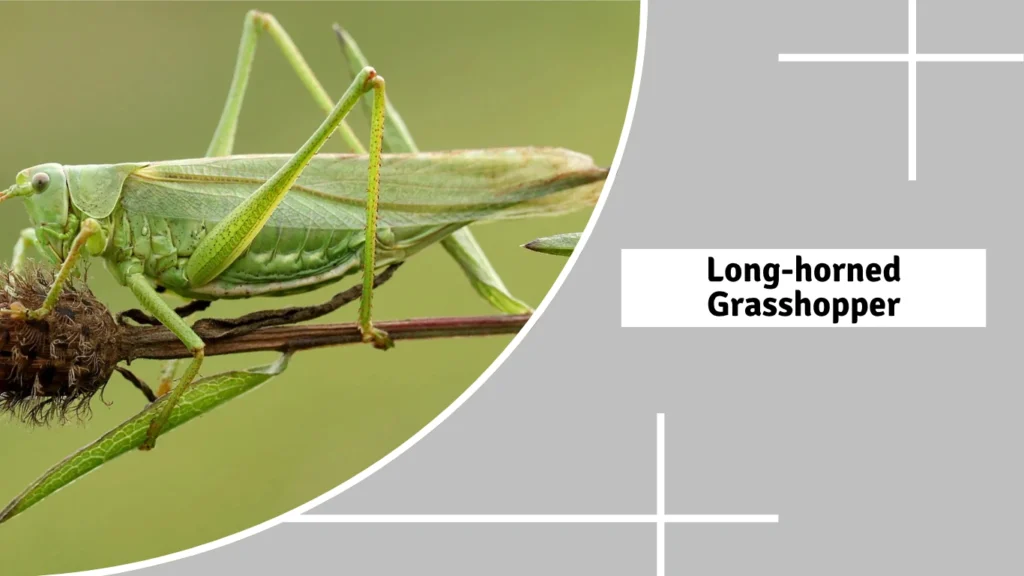
The Long-horned Grasshopper refers to members of the family Tettigoniidae, commonly known as katydids. While not true grasshoppers, they are closely related and easily recognized by their long, thread-like antennae that are often longer than their bodies.
Identification
- Color: Mostly green with leaf-like wings; some are brown
- Hind Legs: Large and strong, suited for jumping
- Size: Varies from 1 to 2.5 inches
- Wings: Leaf-like and often folded flat along the back
- Antennae: Exceptionally long, extending past the body
- Body: Laterally flattened with a soft texture
Habitat
Long-horned grasshoppers are commonly found in trees, shrubs, tall grasses, and garden plants. They prefer areas with dense vegetation and high humidity.
Behavior and Diet
They are mostly nocturnal and often go unnoticed due to their camouflage and quiet nature. Males produce distinctive sounds (stridulation) to attract females.
Their diet includes leaves, flowers, fruits, and even small insects. While generally not serious pests, some species can cause damage to fruit trees and ornamental plants.
24. Meadow Grasshopper
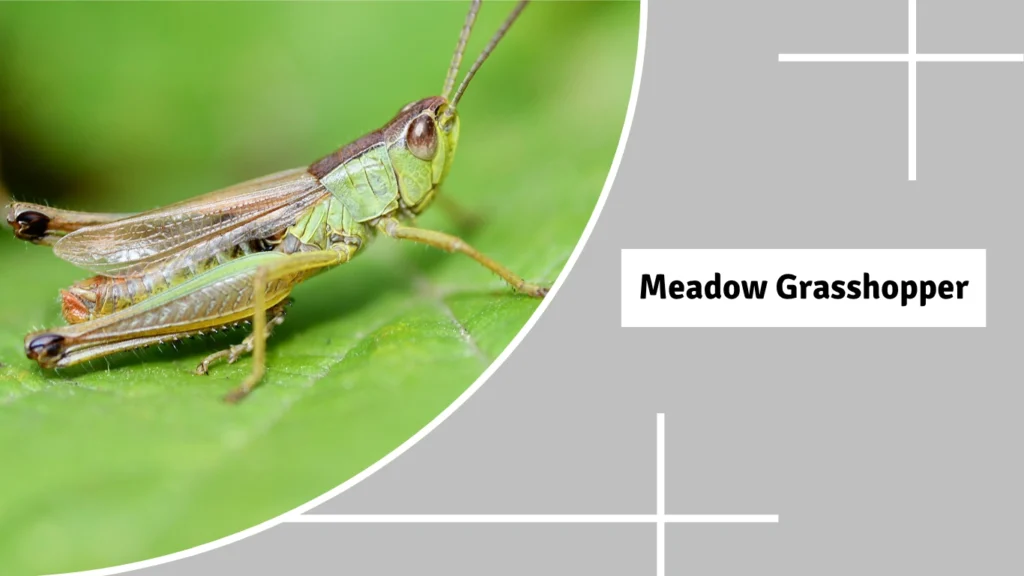
The Meadow Grasshopper (Chorthippus parallelus) is a common grasshopper species found throughout Europe and parts of Asia. It is especially abundant in grassy meadows and is well-known for its short wings and soft buzzing sound.
Identification
- Color: Green or brown with faint stripes along the back
- Hind Legs: Sturdy with dark bands
- Size: Around 0.75 to 1 inch
- Wings: Short, especially in females; not built for long flights
- Antennae: Short and slightly curved
- Body: Compact and slightly humped at the thorax
Habitat
Meadow grasshoppers prefer moist grassy habitats such as meadows, pastures, and marsh edges. They thrive in areas with tall grass and abundant low vegetation.
Behavior and Diet
These grasshoppers are active in warm weather and often found resting on grass stems. Males produce a soft, high-pitched sound by rubbing their legs against their wings during courtship.
Their diet includes various grasses and herbaceous plants. They are generally harmless to crops and play a beneficial role in the ecosystem as part of the natural food web.
25. Rice Grasshopper

The Rice Grasshopper (Oxya hyla hyla) is a species commonly found in Southeast Asia and is particularly associated with rice fields and other wet agricultural environments. It is considered a minor to moderate pest in some rice-growing regions.
Identification
- Color: Bright green with a smooth, shiny texture
- Hind Legs: Long and strong with fine banding
- Size: Around 1 to 1.5 inches
- Wings: Fully developed, often translucent
- Antennae: Medium-length and straight
- Body: Slender with a rounded head
Habitat
Rice grasshoppers are typically found in rice paddies, wet meadows, and grassy lowlands. They prefer moist environments and areas with dense crop cover.
Behavior and Diet
They are active during the day and move quickly through the foliage. When disturbed, they leap into the air or drop into water and swim to safety.
Their diet consists mostly of rice plants and other aquatic or semi-aquatic vegetation. During high population periods, they can contribute to leaf damage and reduce crop yields.
26. Spur-winged Grasshopper

The Spur-winged Grasshopper (Aiolopus thalassinus) is a robust and agile species found across Africa, southern Europe, and parts of Asia. Named for the noticeable spur on its forewings, it is often spotted in cultivated lands and dry grasslands.
Identification
- Color: Olive green to brown with pale striping
- Hind Legs: Powerful with strong banding
- Size: About 1.2 to 1.6 inches
- Wings: Long, reaching or exceeding the body length
- Antennae: Short and thick
- Body: Streamlined with a visible wing spur
Habitat
Spur-winged grasshoppers prefer dry open fields, grasslands, and crop-growing regions. They are commonly found resting on the ground or among vegetation in sunlit areas.
Behavior and Diet
These grasshoppers are excellent jumpers and strong fliers. They are especially active during hot, dry periods and often move in search of new feeding grounds.
Their diet includes grasses and crop plants like millet, maize, and wheat. In large numbers, they can become a regional pest by contributing to defoliation and yield loss.
27. Olive Grasshopper

The Olive Grasshopper (Heteracris leani) is a relatively small and lesser-known grasshopper species found in parts of Asia and Africa. Its greenish-olive color provides excellent camouflage in grassy environments.
Identification
- Color: Olive green or dull brown
- Hind Legs: Slender with faint striping
- Size: Around 0.8 to 1.2 inches
- Wings: Short to medium, usually reaching mid-abdomen
- Antennae: Short and thin
- Body: Slender with minimal surface markings
Habitat
This species is commonly found in dry grassy fields, fallow lands, and weedy agricultural borders. It prefers ground-level vegetation and dry soil.
Behavior and Diet
The olive grasshopper is a quiet, well-camouflaged insect that moves primarily by jumping and brief flights. It tends to avoid open movement and blends well into its surroundings.
Its diet includes grasses, weeds, and occasional low crop plants. While not a major pest, it contributes to the general herbivory in its ecosystem and may be locally abundant.
28. Giant Grasshopper

The Giant Grasshopper (Tropidacris collaris) is one of the largest grasshopper species in the world, native to parts of South America. Its impressive size and colorful appearance make it a striking insect, often found in tropical and subtropical forests.
Identification
- Color: Bright green or brown with vibrant red or blue wings (in some variations)
- Hind Legs: Extremely large and muscular, designed for powerful jumps
- Size: Up to 4 to 5 inches long
- Wings: Broad, colorful, and fully functional for flight
- Antennae: Long and thick
- Body: Sturdy and elongated with noticeable thoracic segments
Habitat
Giant grasshoppers are found in rainforests, open woodlands, and near agricultural fields in Brazil, Argentina, and neighboring countries. They prefer humid environments with abundant vegetation.
Behavior and Diet
They are slow-moving but can fly over long distances when disturbed. Their large size deters many predators, and their bold colors serve as a warning.
Their diet consists of a wide range of plant materials, including leaves, fruits, and ornamental plants. In certain areas, they are considered a nuisance due to their heavy feeding on crops and garden plants.
29. Yellow-winged Grasshopper

The Yellow-winged Grasshopper (Gastrimargus musicus) is a visually striking species known for its bright yellow hind wings, which are revealed during flight. It is native to Australia and found mostly in open grasslands and dry regions.
Identification
- Color: Brown or gray with concealed yellow hind wings
- Hind Legs: Strong with dark banding
- Size: About 1.5 to 2 inches
- Wings: Long; yellow hind wings visible in flight
- Antennae: Short and straight
- Body: Robust with well-defined segmentation
Habitat
This species thrives in dry grasslands, plains, and light woodlands. It is commonly seen along dirt roads, grazing areas, and dry creek beds.
Behavior and Diet
When disturbed, it takes off in a powerful leap and exposes its yellow wings, possibly as a predator startle tactic. It’s highly mobile and active in full sun.
The yellow-winged grasshopper feeds on grasses, grains, and herbaceous plants. In large numbers, they may damage rangelands and crops, especially during dry seasons when food becomes scarce.
30. Southern Green Grasshopper

The Southern Green Grasshopper (Acrida conica) is a slender, grass-like species found in parts of Asia, Africa, and Australia. Known for its cone-shaped head and leaf-like appearance, it blends perfectly into grassy vegetation, making it difficult to detect.
Identification
- Color: Bright green or light brown
- Hind Legs: Long and thin with subtle striping
- Size: Around 1.5 to 2.5 inches
- Wings: Long and narrow, extend beyond the abdomen
- Antennae: Long, thin, and tapering
- Body: Very slender with a pointed head and narrow thorax
Habitat
This species prefers open grasslands, rice fields, and wetlands. It is often found in tall grass or perched vertically on plant stems, camouflaging itself perfectly.
Behavior and Diet
Southern green grasshoppers are quiet and cautious, often remaining motionless to avoid detection. When disturbed, they fly short distances, landing again in vegetation.
Their diet mainly consists of grasses and reeds, especially in wetland environments. They are not considered major pests, but their populations can increase in favorable conditions.
31. Dark-winged Grasshopper

The Dark-winged Grasshopper (Pardalophora phoenicoptera) is a large, ground-dwelling grasshopper native to North America. It is easily recognized by its dark, smoky wings and loud flight behavior, especially in early spring and late summer.
Identification
- Color: Mottled brown or gray with a rugged texture
- Hind Legs: Thick and powerful, well-adapted for jumping
- Size: 1.5 to 2 inches long
- Wings: Dark brown to black, sometimes with reddish tones
- Antennae: Short and slightly curved
- Body: Broad and heavy, often dust-covered for camouflage
Habitat
Dark-winged grasshoppers are found in dry prairies, sandy hillsides, open woodlands, and grassy slopes. They prefer sunlit areas with sparse vegetation and bare soil.
Behavior and Diet
They are strong jumpers and noisy fliers, producing a loud rustling sound when they take flight. These grasshoppers are active during the day, especially in warm weather.
Their diet includes a variety of grasses and low-growing plants. Though not typically a major pest, they can contribute to localized vegetation loss when abundant.
32. Black-kneed Grasshopper

The Black-kneed Grasshopper (Atractomorpha crenulata) is a small to medium-sized species known for its compact body and distinctive dark markings on the knees. It is commonly found in South and Southeast Asia and is often seen resting among vegetation.
Identification
- Color: Light green or brown with noticeable dark joints
- Hind Legs: Short to medium with blackened knees (femur joints)
- Size: About 1 to 1.5 inches
- Wings: Short and narrow, often held tightly against the body
- Antennae: Short and fine
- Body: Tapered and streamlined with a slightly humped thorax
Habitat
This species inhabits gardens, farms, grassy fields, and roadside vegetation. It is particularly common in tropical and subtropical regions with abundant plant life.
Behavior and Diet
Black-kneed grasshoppers are slow-moving and rely on their green coloration to remain hidden among foliage. They usually hop short distances rather than fly.
Their diet includes various leafy plants, including vegetables and weeds. While they generally cause minimal damage, they may feed on tender garden plants in small-scale infestations.
