

Whiteflies are tiny, winged pests known for infesting a wide range of plants and causing damage through sap-sucking, honeydew secretion, and virus transmission. Though they may look similar, several species target different crops, from citrus and ficus to guava and palms. In this guide, you’ll discover 17 common types of whiteflies, how to identify them, their preferred habitats, and the specific problems they cause in both gardens and agriculture.
1. Silverleaf Whitefly (Bemisia tabaci)

The Silverleaf Whitefly is one of the most notorious agricultural pests worldwide. It affects hundreds of plant species and is infamous for its ability to transmit plant viruses. Originally native to the Indian subcontinent, this pest has now spread across tropical and subtropical regions, severely impacting crops in greenhouses and open fields.
Identification
- Color: Pale yellow body with white wings covered in a fine waxy powder
- Size: 1–1.5 mm long
- Shape: Moth-like wings held in a tent-like position over the body
- Eggs/Nymphs: Tiny yellow eggs laid on the underside of leaves; immobile nymphs look like translucent scales
Habitat
Found globally in warm climates and controlled environments like greenhouses. Prefers vegetables (especially tomatoes and squash), cotton, ornamentals, and soybeans.
Behavior and Diet
Feeds by piercing plant tissue and sucking sap, leading to yellowing, leaf curling, and stunted growth. Excretes honeydew, which promotes sooty mold growth. Also acts as a vector for many plant viruses, including Tomato Yellow Leaf Curl Virus (TYLCV) and Cassava Mosaic Virus.
Role in the Ecosystem
Primarily known as a destructive pest. Its adaptability, high reproduction rate, and resistance to pesticides make it difficult to control. Biological controls (like parasitoid wasps), sticky traps, and insecticidal soaps are often used in integrated pest management programs.
2. Greenhouse Whitefly (Trialeurodes vaporariorum)

The Greenhouse Whitefly is a common pest found primarily in indoor environments such as greenhouses and indoor gardens. It infests a wide range of host plants, particularly ornamentals and vegetables, and is known for rapid reproduction and sap-sucking damage.
Identification
- Color: White, with yellowish body and powdery wings
- Size: About 1.2–1.6 mm
- Shape: Wings held flat over the body (not tent-like like Bemisia tabaci)
- Eggs/Nymphs: Eggs are laid in circular patterns; nymphs are flattened and translucent
Habitat
Common in greenhouses, nurseries, and indoor gardens in temperate regions. Especially problematic on cucumbers, tomatoes, peppers, poinsettias, and geraniums.
Behavior and Diet
Feeds on plant sap, causing yellowing, wilting, and reduced growth. Like other whiteflies, it secretes honeydew, encouraging sooty mold development. It may also transmit some plant viruses, though less aggressively than the silverleaf whitefly.
Role in the Ecosystem
A significant pest in controlled environments. Best managed with integrated approaches using sticky traps, parasitic wasps (Encarsia formosa), and biological-friendly insecticides.
3. Bandedwinged Whitefly (Trialeurodes abutiloneus)

The Bandedwinged Whitefly is recognized by the distinct grayish bands across its wings. Although less economically damaging than Bemisia tabaci, it can still harm crops like cotton and ornamentals, especially when present in large numbers.
Identification
- Color: White wings with dark smoky or gray bands
- Size: About 1.5 mm
- Shape: Classic whitefly shape, wings held flat
- Eggs/Nymphs: Eggs laid on leaf undersides; immature stages have a glassy appearance
Habitat
Found throughout the United States and parts of Central America. Prefers warm climates and commonly infests cotton, hibiscus, lantana, and wild plants like Abutilon (Indian mallow).
Behavior and Diet
Feeds on plant sap and causes foliage to yellow and curl. Like others, it produces honeydew, promoting mold growth. Heavy infestations can weaken plants and reduce aesthetic and market value.
Role in the Ecosystem
Primarily a minor pest in most areas. Its presence is more of a nuisance than a major threat, though in combination with other whitefly species, it can worsen infestations. Natural enemies include lacewings, ladybugs, and parasitic wasps.
4. Spiraling Whitefly (Aleurodicus dispersus)

The Spiraling Whitefly is named for its unique egg-laying pattern—females deposit eggs in a distinct spiral formation on the underside of leaves. This species affects a wide range of tropical and subtropical plants and is known for causing heavy honeydew and sooty mold buildup.
Identification
- Color: Adults are white with transparent wings and a yellowish body
- Size: Around 2–3 mm
- Shape: Larger and slightly fuzzier than common whiteflies
- Eggs/Nymphs: Eggs laid in spiral patterns; nymphs covered in waxy filaments
Habitat
Common in tropical and subtropical climates, especially in parts of Asia, Africa, Central America, and southern Florida. Infests banana, mango, avocado, guava, hibiscus, and ornamental palms.
Behavior and Diet
Feeds on plant sap, causing yellowing, leaf drop, and growth delay. Heavy infestations produce thick honeydew that supports black sooty mold, blocking photosynthesis.
Role in the Ecosystem
A widespread nuisance in urban landscapes and agriculture. Controlled with biological agents like Encarsia guadeloupae and neem-based sprays in integrated pest management (IPM) systems.
5. Rugose Spiraling Whitefly (Aleurodicus rugioperculatus)

The Rugose Spiraling Whitefly is a recently recognized pest, first identified in Florida in 2009. Closely related to the spiraling whitefly, it affects many ornamental and fruit trees, producing excessive honeydew and waxy material on leaves and nearby surfaces.
Identification
- Color: White body with large, white wings covered in wax
- Size: 2.5–3 mm
- Shape: Rounded wings held loosely over the body
- Eggs/Nymphs: Spiraled egg-laying pattern; nymphs have a bumpy (rugose) surface and secrete white wax
Habitat
Now widespread in southern Florida and parts of the Caribbean. Targets gumbo limbo, palm species, mango, avocado, black olive, and other tropical plants.
Behavior and Diet
Feeds on sap, causing reduced vigor, leaf drop, and sooty mold from honeydew accumulation. Infestations often leave nearby objects sticky and covered in mold.
Role in the Ecosystem
A serious pest in urban landscapes and orchards. Managed using beneficial insects (like Encarsia spp.) and horticultural oils to disrupt nymph development and reproduction.
6. Giant Whitefly (Aleurodicus dugesii)

The Giant Whitefly lives up to its name—it’s one of the largest known whitefly species and produces dense waxy filaments that hang from infested plants. It poses a serious threat to ornamental plants, especially in warm, humid climates.
Identification
- Color: White wings and body with transparent patches
- Size: 3–5 mm (larger than most whiteflies)
- Shape: Rounded, with wings held loosely over the body
- Eggs/Nymphs: Eggs are laid in spirals; nymphs produce long, cottony wax filaments
Habitat
Native to Mexico and Central America; now found in southern California, Texas, and parts of Florida. Common on hibiscus, banana, guava, and many ornamental shrubs.
Behavior and Diet
Feeds on plant sap, causing yellowing, leaf curling, and premature leaf drop. The dense wax and honeydew promote heavy sooty mold growth.
Role in the Ecosystem
A serious ornamental pest. Management includes pruning heavily infested areas, spraying horticultural oils, and introducing natural enemies like Encarsia noyesi.
7. Woolly Whitefly (Aleurothrixus floccosus)

The Woolly Whitefly is a soft-bodied pest that resembles tiny white cotton tufts due to its waxy secretions. It primarily targets citrus plants and can reduce photosynthesis through its wax, honeydew, and sooty mold coverage.
Identification
- Color: Pale yellowish-white body with white, fuzzy wings
- Size: About 1.5–2 mm
- Shape: Oval with fuzzy appearance due to wax
- Eggs/Nymphs: Laid in irregular clusters under leaves; nymphs are flattened and wax-covered
Habitat
Found in citrus orchards and gardens in warm, humid regions worldwide—especially in the Mediterranean, California, and tropical Asia.
Behavior and Diet
Feeds on the underside of citrus leaves, causing curling, yellowing, and reduced plant vigor. The nymphs produce waxy filaments and sticky honeydew, leading to black sooty mold.
Role in the Ecosystem
A significant pest in citrus farming. Controlled using parasitoid wasps (Cales noacki), insecticidal soaps, and maintaining healthy orchard hygiene.
8. Citrus Whitefly (Dialeurodes citri)

The Citrus Whitefly is a common pest of citrus trees, primarily affecting oranges, lemons, and other related plants. Though less aggressive than other whitefly species, it causes indirect damage through honeydew production and sooty mold.
Identification
- Color: Pale yellow body with pure white wings
- Size: About 1.2–1.5 mm
- Shape: Wings held flat over the body
- Eggs/Nymphs: Eggs are laid in a circular pattern on the underside of leaves; nymphs are smooth, oval, and yellowish
Habitat
Widespread in citrus-growing regions around the world, including the U.S., Mediterranean countries, and parts of Asia.
Behavior and Diet
Feeds on citrus leaves by sucking sap, leading to weakened plants and defoliation. Heavy infestations result in sticky honeydew and subsequent sooty mold growth.
Role in the Ecosystem
Considered a secondary pest but still impactful in commercial citrus production. Controlled with biological agents like Encarsia lahorensis and horticultural oil applications.
9. Ficus Whitefly (Singhiella simplex)

The Ficus Whitefly is a highly destructive pest of ficus (fig) plants, particularly in urban landscapes. It was first reported in Florida in the mid-2000s and has since become a major threat to hedges, trees, and ornamentals.
Identification
- Color: Pale yellow body with white, powdery wings
- Size: About 1.5–2 mm
- Shape: Oval body with slightly tented wings
- Eggs/Nymphs: Eggs are laid on the underside of ficus leaves; nymphs are flat, oval, and pale
Habitat
Primarily infests ficus plants in tropical and subtropical regions. Especially problematic in urban landscaping across southern Florida and the Caribbean.
Behavior and Diet
Sucks sap from the underside of ficus leaves, causing yellowing, wilting, premature drop, and even plant death in severe infestations. Produces large amounts of honeydew and sooty mold.
Role in the Ecosystem
A major invasive pest with few natural enemies in newly invaded areas. Effective management includes systemic insecticides, beneficial insects (e.g., Encarsia protransvena), and pruning infested branches.
10. Palm Whitefly (Aleurotrachelus atratus)

The Palm Whitefly is a serious pest of various palm species, including coconut, areca, and ornamental palms. It is known for creating dense infestations that lead to significant leaf damage and aesthetic decline, especially in tropical landscapes.
Identification
- Color: Pale yellow body with white wings covered in waxy powder
- Size: About 1.5–2.5 mm
- Shape: Typical oval whitefly form with wings held flat
- Eggs/Nymphs: Eggs are laid in uneven clusters; nymphs are flat and covered in wax
Habitat
Common in tropical and subtropical regions, especially in South Florida, the Caribbean, Central America, and parts of Southeast Asia. Infests palm trees in urban and agricultural areas.
Behavior and Diet
Feeds on the undersides of palm fronds, extracting sap and causing yellowing, wilting, and defoliation. Produces honeydew that fosters heavy sooty mold buildup.
Role in the Ecosystem
An invasive threat in ornamental landscaping and coconut production. Control involves systemic insecticides, horticultural oils, and parasitoid wasps like Encarsia noyesi.
11. Bayberry Whitefly (Paraleyrodes minei)

The Bayberry Whitefly is a small but visually distinct species, easily recognized by the waxy filaments its nymphs produce. It typically affects ornamental plants and is mostly found in warmer climates.
Identification
- Color: White wings with a pale yellow body
- Size: About 1–1.2 mm
- Shape: Small and rounded, with wings forming a slight dome
- Eggs/Nymphs: Nymphs are oval and secrete long waxy filaments from their bodies
Habitat
Primarily found in subtropical and tropical areas. Infests bayberry, ficus, and other ornamentals, especially in gardens and urban settings.
Behavior and Diet
Feeds on plant sap, leading to curling, yellowing, and wilting of leaves. The wax and honeydew produced by nymphs contribute to sooty mold formation and block photosynthesis.
Role in the Ecosystem
A minor pest in most regions but problematic in ornamental settings. Managed through pruning, insecticidal soap sprays, and natural predators like lady beetles and lacewings.
12. Ash Whitefly (Siphoninus phillyreae)

The Ash Whitefly is a soft-bodied pest that primarily targets ash trees, pomegranate, citrus, and ornamental plants. It became a significant issue in California in the 1980s but has since been largely managed through biological control.
Identification
- Color: Bright white wings with a pale yellow body
- Size: About 1.5 mm
- Shape: Oval with wings held flat over the body
- Eggs/Nymphs: Laid on the underside of leaves; nymphs appear scale-like and pale with some waxy filaments
Habitat
Native to the Mediterranean region but now found in parts of the U.S., including California and Texas. Prefers urban landscapes and backyard fruit trees.
Behavior and Diet
Feeds on the underside of leaves, causing leaf curling, yellowing, and heavy honeydew production. Often leads to sooty mold problems.
Role in the Ecosystem
Once a major pest, now effectively controlled in many areas by parasitoid wasps like Encarsia inaron. Still monitored due to its potential to rebound under favorable conditions.
13. Litchi Whitefly (Aleurocanthus woglumi)

Also known as the black litchi whitefly, this pest affects a variety of fruit trees, especially citrus and litchi. It is known for its dark nymphs covered in waxy filaments and its capacity to cause severe sooty mold outbreaks.
Identification
- Color: Adults are dark gray to black with transparent wings; nymphs are black with white wax fringe
- Size: About 1.2–1.6 mm
- Shape: Winged adult with rounded body; nymphs are oval and spiny
- Eggs/Nymphs: Eggs are dark and laid in circular clusters
Habitat
Found in citrus and litchi orchards in tropical and subtropical regions including Asia, Africa, the Caribbean, and parts of Central America.
Behavior and Diet
Feeds on leaf sap, weakening plants and promoting dense sooty mold due to heavy honeydew output. Infestations often go unnoticed until the black mold covers fruit and leaves.
Role in the Ecosystem
A significant pest of economic crops, particularly citrus. Controlled with biological agents like Encarsia and Eretmocerus species and neem-based insecticides in IPM programs.
14. Tea Whitefly (Dialeurodes cardamomi)

The Tea Whitefly is a lesser-known but regionally important pest of tea and cardamom plants. It is primarily found in parts of South and Southeast Asia, where it affects the quality and productivity of tea crops by weakening plants and encouraging sooty mold growth.
Identification
- Color: Pale yellow body with white, powdery wings
- Size: About 1.3–1.6 mm
- Shape: Oval-shaped with wings laid flat over the back
- Eggs/Nymphs: Eggs are laid in small groups on the underside of leaves; nymphs are scale-like and translucent
Habitat
Native to tropical regions of India, Sri Lanka, and Southeast Asia. Commonly found in tea gardens, cardamom plantations, and nearby shrubs.
Behavior and Diet
Feeds on sap from the underside of tender leaves, leading to leaf curling, yellowing, and reduced growth. Produces honeydew that supports the development of black sooty mold.
Role in the Ecosystem
A moderate pest in tea agriculture. Controlled using neem oil, biological agents (like Encarsia spp.), and by maintaining proper shade and pruning practices in plantations.
15. Coconut Whitefly (Aleurodicus cocois)
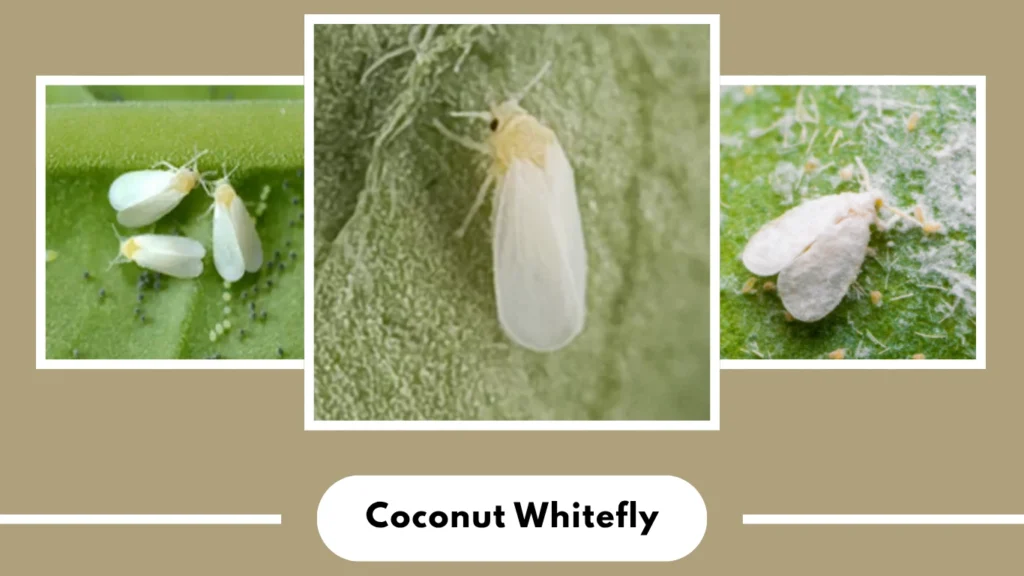
The Coconut Whitefly is a tropical pest that affects coconut palms and other ornamental palms. Though not as aggressive as some other whitefly species, large populations can still cause visual damage and reduce plant health.
Identification
- Color: Adults have white wings and a light yellow body
- Size: About 2–3 mm
- Shape: Broad, oval body with slightly held-up wings
- Eggs/Nymphs: Eggs are laid in circular groups; nymphs are waxy and oval-shaped
Habitat
Found in tropical regions of the Caribbean, Central and South America, and parts of Southeast Asia. Lives on the underside of palm fronds.
Behavior and Diet
Feeds on palm sap, causing yellowing and leaf spotting. Excretes honeydew, which promotes black sooty mold development and aesthetic damage to palms.
Role in the Ecosystem
Typically a secondary pest but can cause significant issues in ornamental and commercial palm production when left uncontrolled. Managed using horticultural oils and biological controls like Encarsia wasps.
16. Guava Whitefly (Trialeurodes ricini)
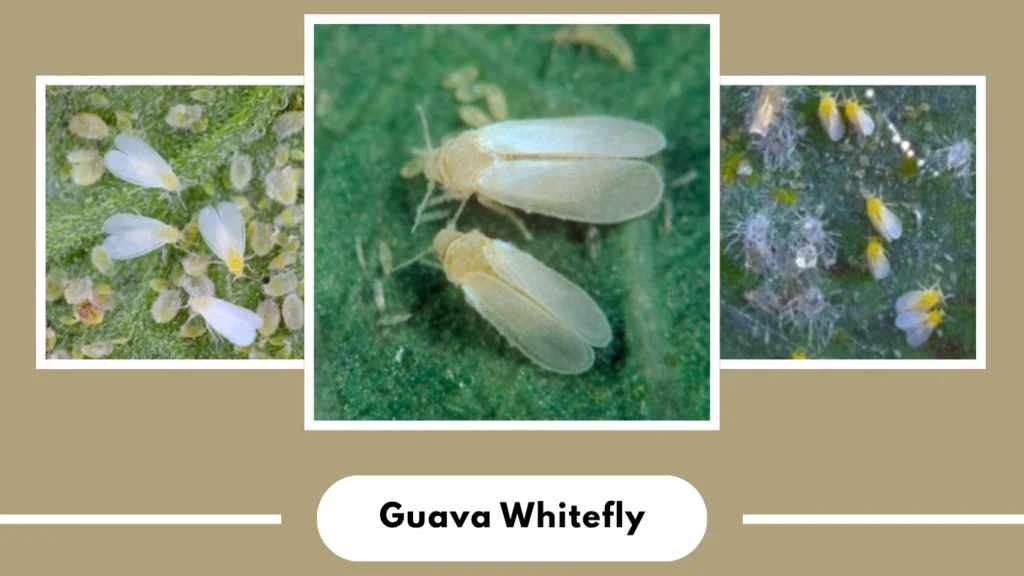
The Guava Whitefly is a polyphagous pest, meaning it feeds on a wide variety of host plants, including guava, castor, cotton, and ornamental species. It’s especially problematic in tropical and subtropical regions due to its rapid reproduction and the heavy honeydew it produces.
Identification
- Color: Pale yellow body with white wings
- Size: About 1.2–1.5 mm
- Shape: Oval body with wings held flat over the back
- Eggs/Nymphs: Eggs are laid on leaf undersides in loose clusters; nymphs are yellowish and oval
Habitat
Found in tropical Asia, Africa, and parts of South America. Common in guava orchards and home gardens.
Behavior and Diet
Feeds on the underside of leaves, extracting sap and causing leaf curling, yellowing, and premature leaf drop. Produces sticky honeydew that leads to sooty mold development.
Role in the Ecosystem
A moderate pest of fruit and ornamental plants. Managed through regular pruning, insecticidal soaps, and parasitoid wasps like Encarsia spp.
17. Pea Whitefly (Aleyrodes proletella)

Also known as the cabbage whitefly, this species primarily infests plants in the Brassicaceae family, such as cabbage, kale, and Brussels sprouts. It’s a common pest in Europe and has become a concern in commercial vegetable farming.
Identification
- Color: White wings with faint gray markings and a yellow body
- Size: About 1.5–2 mm
- Shape: Oval and moth-like with wings held roof-like over the body
- Eggs/Nymphs: Eggs are laid in rings or arcs; nymphs are flattened and yellowish
Habitat
Found in temperate European regions and greenhouses. Prefers cruciferous crops in vegetable farms and garden beds.
Behavior and Diet
Sucks plant sap, causing wilting, stunted growth, and leaf discoloration. Its honeydew leads to sooty mold that reduces photosynthesis and crop quality.
Role in the Ecosystem
A notable pest of brassicas in commercial and home gardens. Controlled using natural predators like ladybugs and lacewings, and with insecticidal soaps or oils in organic farming systems.
