

Weevil beetles are small but persistent pests that can invade both homes and gardens, causing damage to food supplies, plants, and stored products. While they are best known for infesting pantry grains like rice, flour, and pasta, weevils can be found in many other surprising places—from the soil around your potted plants to large grain storage silos.
Understanding where weevil beetles live is key to detecting infestations early and preventing them from spreading. In this article, we’ll explore 20 common locations where weevils hide and thrive—both indoors and outdoors—so you can take proactive steps to keep your home and garden free from these invasive insects.
Common Habitats of Weevil Beetles

Weevil beetles prefer environments where food, shelter, and moisture are available. Their habitats vary depending on the species, but most are either pantry pests or root-feeding insects. Below are the most common places you’ll find them, starting inside the home and expanding to gardens, farms, and natural areas.
1. Kitchen Pantries
One of the most frequent places to find weevil beetles is inside pantry shelves. Grain weevils and rice weevils are commonly found in open or poorly sealed bags of food.
2. Food Storage Containers
Weevils can live and breed inside airtight containers—especially if the food was already infested when purchased. Flour, cornmeal, pasta, and cereals are all vulnerable.
3. Behind Kitchen Cabinets
These beetles are small and capable of hiding in narrow cracks and dark areas. If a food source is nearby, they’ll settle behind cabinets and along baseboards to lay eggs.
4. Under Appliances
Warmth and food crumbs make the area under your refrigerator or oven an ideal place for weevils to live unnoticed for weeks. Regular cleaning can help prevent this.
In Stored Food and Products
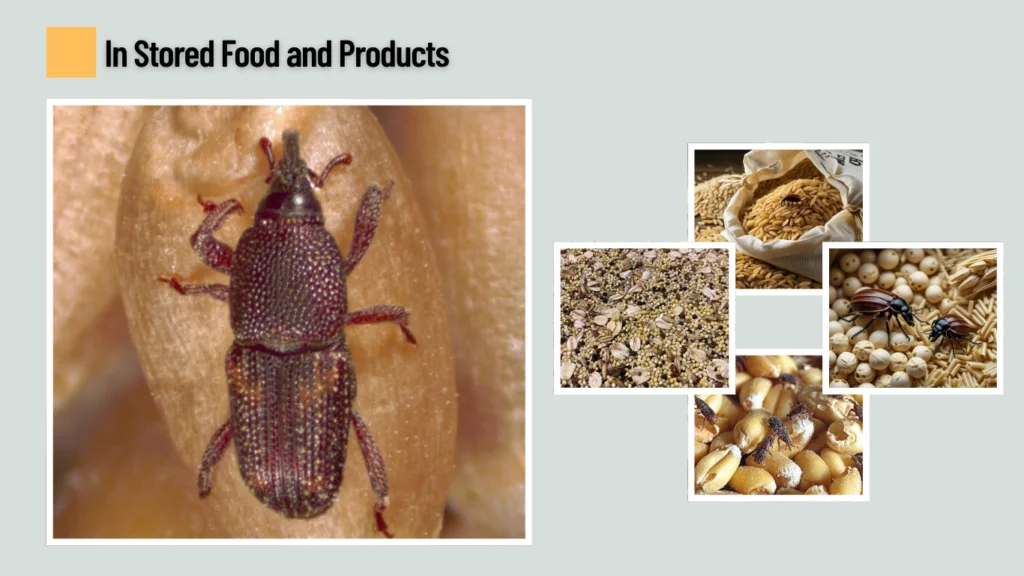
Many weevil beetles are introduced into homes or farms through already infested dry goods. Once inside, they reproduce rapidly and spread to other stored items.
5. Rice and Cereal Bags
Unopened or loosely sealed rice and cereal bags are prime locations for rice weevils and grain weevils. Eggs or larvae can remain undetected until adult beetles emerge.
6. Flour, Pasta, and Grain Bins
Weevils thrive in bins that store large quantities of wheat, cornmeal, oats, or pasta. They lay eggs directly into the food, contaminating it as larvae hatch and feed.
7. Pet Food Containers
Pet food, especially kibble or seed-based mixtures, can attract and harbor weevils. If containers are not sealed tightly, these bugs can quickly move in and multiply.
8. Birdseed and Animal Feed Storage
Bulk birdseed or livestock feed sacks often sit in storage for long periods, making them ideal breeding grounds for weevils. Infestations often go unnoticed until severe damage occurs.
Agricultural and Storage Settings
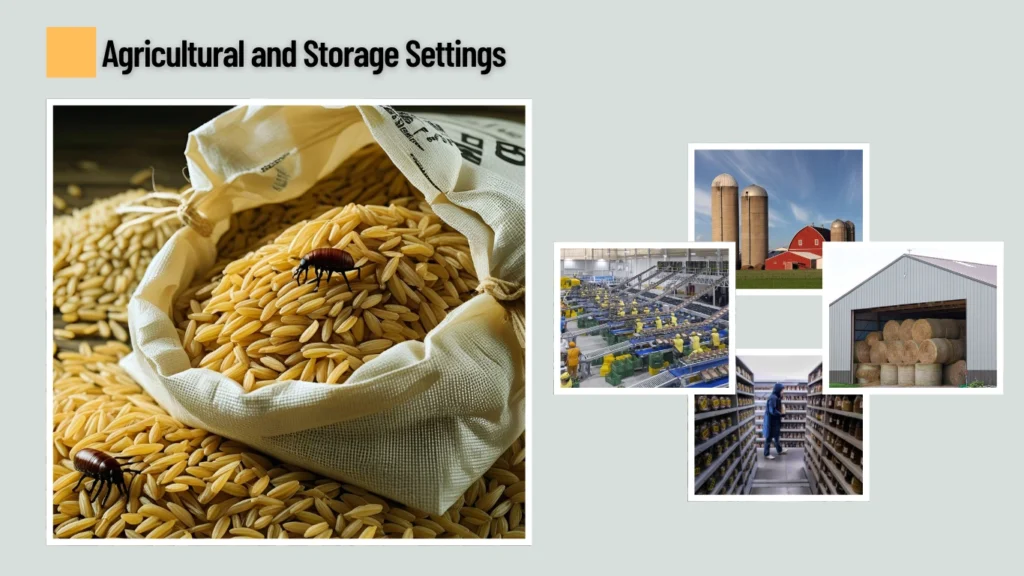
Weevil beetles are a major concern in large-scale grain and seed storage systems. These environments provide an endless food source and ideal conditions for infestation.
9. Grain Silos
Grain weevils are notorious for infesting large silos where corn, wheat, or rice is stored. Once inside, they burrow into kernels and reproduce quickly, causing significant economic loss.
10. Barns and Feed Storage Rooms
Stored grains and animal feed kept in barns or sheds are frequent targets. Humidity, darkness, and lack of disturbance allow weevils to thrive in these spaces.
11. Farm Seed Banks
Stored seeds meant for planting can fall victim to weevil larvae. They often go unnoticed until germination fails due to internal seed damage.
12. Processing Plants and Packaging Facilities
Weevils can infest packaged goods during or after processing. Facilities that don’t implement proper hygiene and pest control measures are particularly vulnerable to infestations.
Outdoors in Gardens and Yards
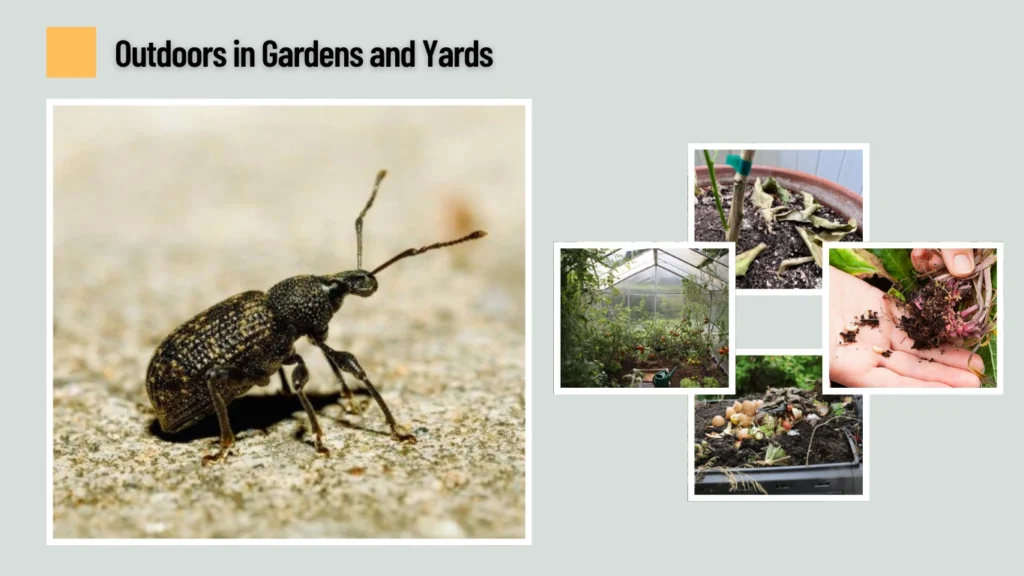
Many species of weevil beetles, such as vine weevils and root weevils, are commonly found in gardens, especially in moist, shaded areas. These environments offer plant roots, leaves, and soil that support their full life cycle.
13. Soil Near Infested Plants
Weevil grubs often live in the soil at the base of infested plants, feeding on roots and stems. Potted plants and raised beds are particularly vulnerable.
14. Root Zones of Container Plants
Black vine weevil larvae prefer container-grown plants, where the confined root zone makes it easy for them to feed and multiply unnoticed.
15. Compost Piles or Mulched Beds
Compost heaps and mulched areas provide warmth and decaying organic matter, attracting certain species of weevils. They may also lay eggs here before moving to live plants.
16. Greenhouses and Potting Sheds
These warm, humid, and plant-rich environments are perfect for both adult and larval weevils. Greenhouse conditions allow them to survive year-round, especially in mild climates.
Wild and Natural Environments
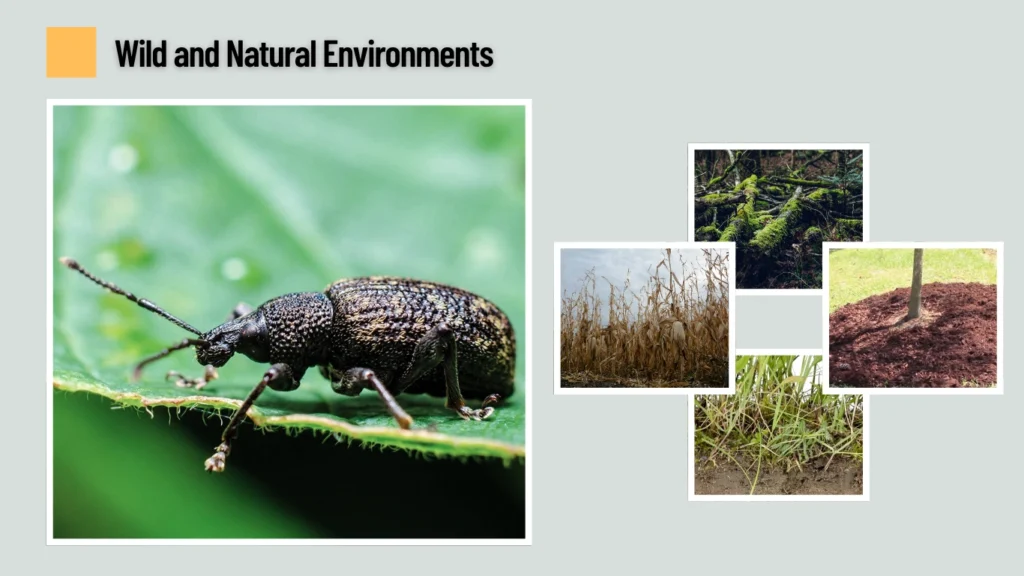
Even beyond the garden or home, weevil beetles can be found in wild habitats where they continue their natural life cycles without human interference.
17. Decaying Wood and Organic Debris
Certain species of weevils prefer decaying logs, stumps, or organic debris as shelter. These moist, undisturbed spots provide protection from predators and climate extremes.
18. Under Leaf Litter and Forest Floor
The shaded, damp layers of fallen leaves and natural mulch are ideal hiding and breeding grounds for various ground-dwelling weevils, particularly root-feeding types.
19. Wild Grasses and Uncultivated Plants
Some field and pasture weevils thrive on wild grasses and weeds. These host plants allow weevils to lay eggs and feed in open landscapes, especially along field borders or roadsides.
20. Unharvested or Abandoned Crops
In fields where crops are left unattended, such as fallen corn or unharvested wheat, weevils can breed and multiply rapidly—later spreading to nearby stored grains or garden beds.
Factors Influencing Weevil Beetle Habitat
Weevil beetles don’t just choose their living spaces randomly. Several environmental and practical factors influence where they hide, feed, and reproduce. Knowing these conditions can help you anticipate and prevent infestations.
Temperature and Humidity
Most weevils prefer warm, humid environments. This is why they are active in late spring through early autumn and why they thrive in greenhouses, pantries, and barns.
Access to Food
Whether it’s dry grains in a kitchen or plant roots in the soil, the presence of food is the main driver for weevil infestations. Grain weevils look for stored foods like rice or flour, while vine weevils seek out leafy ornamentals and container plants.
Shelter and Darkness
Weevils prefer dark, undisturbed places—such as behind cabinets, beneath mulch, or deep inside grain bins—where they are safe from predators and can lay eggs in peace.
Moisture Levels
Moist soils or damp storage areas can attract weevil beetles, especially during the larval stage. Dry, well-aerated conditions are less favorable for development.
How to Detect Weevil Presence in These Places
Early detection is key to preventing a full-blown weevil infestation. Here are signs to look for in each location:
- Kitchen or pantry: Fine powder at the bottom of containers, holes in rice or grains, small beetles crawling in dry goods
- Garden soil: Wilting or yellowing plants, poor root development, visible grubs in the soil when digging
- Containers or pots: Plants that collapse without warning, especially in moist soil
- Grain storage areas: Hot spots in grain piles (due to insect activity), damaged seeds, and decreased germination rates
Use magnifying glasses, sticky traps, or turn over soil to find hidden eggs and larvae. In pantries, inspect even sealed containers—infestations often begin before food reaches your home.
Preventing Weevils in These Areas
Preventing weevils is often easier than getting rid of them once they’re established. Prevention efforts should focus on sanitation, monitoring, and exclusion:
Indoors
- Store grains and dry goods in airtight containers
- Freeze bulk rice or flour for 3–4 days after purchase
- Clean pantry shelves regularly
- Check expiration dates and avoid buying damaged packaging
Outdoors and in Storage
- Rotate crops to avoid weevil buildup in soil
- Use resistant plants and avoid overwatering containers
- Sterilize potting soil before use if unsure of its source
- Apply nematodes to kill root-feeding weevil larvae
- Use traps or sticky barriers to monitor adult activity
Proper hygiene, smart storage, and environmental management are the most reliable defenses against both pantry and root-damaging weevil species.
