

Carpenter bees are large, buzzing pollinators often spotted hovering near wooden structures in spring and summer. While their size and loud flight can seem intimidating, most encounters are harmless. Still, many people wonder if carpenter bees sting and what to do if it happens.
This guide explains their sting behavior, symptoms to watch for, effective home remedies, and how to prevent unwanted bee encounters around your home.
Do Carpenter Bees Sting?
Carpenter bees are generally non-aggressive and rarely sting unless provoked or handled roughly. Interestingly, only female carpenter bees are capable of stinging, while males—often the ones hovering around you—lack stingers entirely. A female bee will usually only sting in self-defense, such as if you trap her or disturb her nest. In most cases, these bees prefer to avoid confrontation and focus on building nests in wood and gathering pollen.
Understanding Carpenter Bee Behavior
Carpenter bees get their name from their unique habit of drilling small, perfectly round holes into wood to create nesting tunnels. They are solitary by nature, meaning each female builds her own nest rather than living in a hive. Males often patrol an area, hovering near people or animals to protect their territory, though this is mostly bluffing since they can’t sting. They are most active during warm, sunny days in spring and early summer, especially around untreated or unpainted wood. This behavior is not a sign of aggression toward humans but a natural part of their life cycle.
Identification of a Carpenter Bee Sting
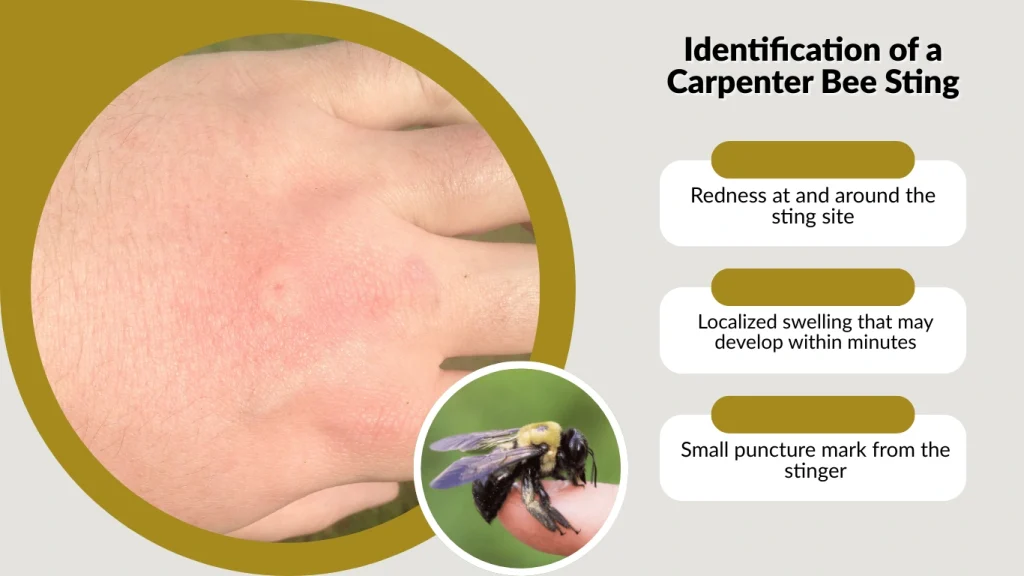
While carpenter bee stings are uncommon, knowing how to recognize them can help you respond quickly and effectively. The sting reaction is usually mild for most people, but it can vary depending on sensitivity to bee venom.
Physical Characteristics of the Sting
- Redness at and around the sting site
- Localized swelling that may develop within minutes
- Small puncture mark from the stinger
- Mild to moderate pain or tenderness in the area
- Possible itching or warmth around the sting
A carpenter bee sting may look similar to that of a honeybee or bumblebee, but unlike honeybees, carpenter bees do not leave their stinger behind. This means they can sting more than once, although they rarely do unless they feel directly threatened.
Symptoms of a Carpenter Bee Sting
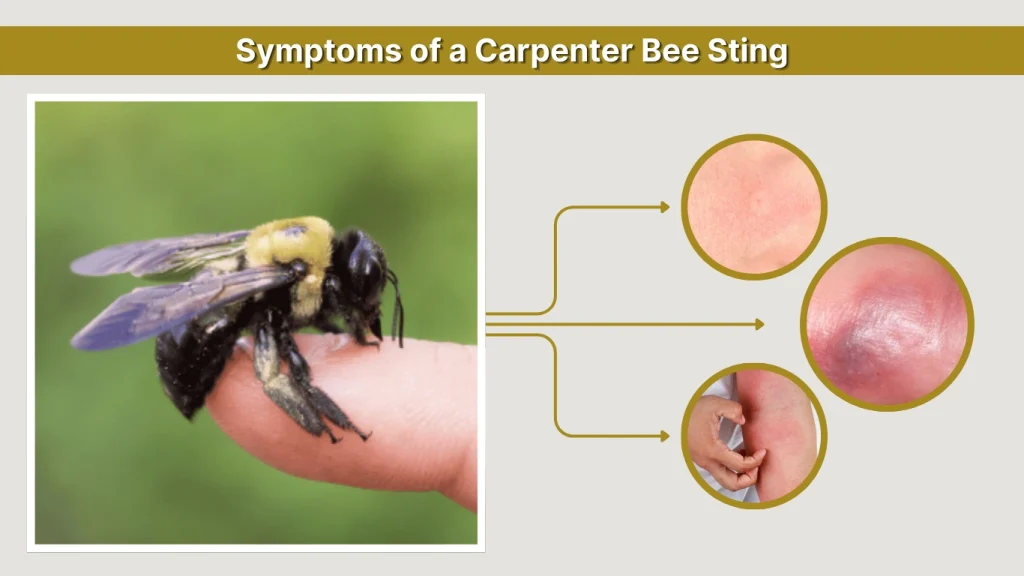
Carpenter bee sting reactions can range from mild discomfort to more serious allergic responses. Most people experience only minor symptoms, but those with bee allergies should be cautious.
Mild Reactions
For most individuals, a carpenter bee sting causes:
- Localized pain and tenderness
- Redness and slight swelling
- Itching or a warm sensation at the sting site
These effects generally fade within a few hours to a day.
Severe Reactions (Allergic)
Some people may have allergic responses, which can include:
- Difficulty breathing or swallowing
- Dizziness or fainting
- Rapid heartbeat
- Hives spreading beyond the sting area
Severe symptoms require immediate medical attention.
First Aid for a Carpenter Bee Sting
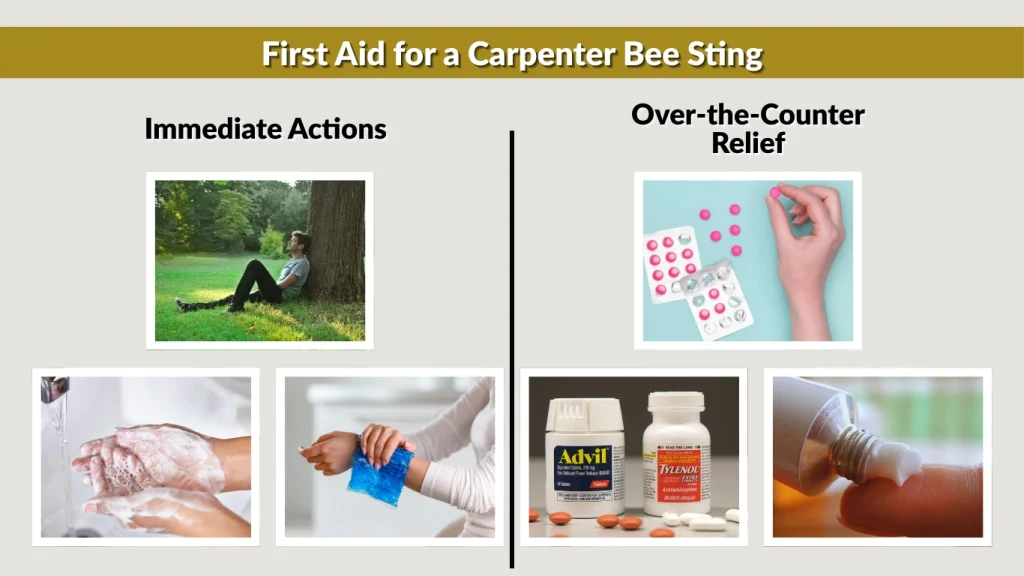
Acting quickly can minimize discomfort and prevent complications from a sting.
Immediate Actions
- Move away from the area to avoid additional stings
- Wash the sting site thoroughly with soap and water
- Apply a cold compress or ice pack for 10–15 minutes to reduce swelling
Over-the-Counter Relief
- Take an antihistamine to control itching
- Use a pain reliever like ibuprofen or acetaminophen
- Apply hydrocortisone cream to reduce inflammation and redness
Home Remedies for Carpenter Bee Stings

If you experience a mild reaction to a carpenter bee sting, simple home remedies can offer quick relief and promote healing. These natural treatments are easy to prepare, gentle on the skin, and often just as effective as store-bought solutions for minor stings.
Ice Pack or Cold Cloth
Cold therapy works by constricting blood vessels, which reduces swelling and numbs pain. Wrap ice cubes in a clean cloth or use a cold gel pack and apply it to the sting site for 10–15 minutes at a time. Repeat several times throughout the day as needed, but avoid applying ice directly to the skin to prevent frostbite.
Baking Soda Paste
Baking soda can help neutralize the bee venom’s acidity, easing pain and irritation. To make a paste, mix 1–2 teaspoons of baking soda with just enough water to form a thick consistency. Apply the paste to the sting site and let it sit for 15–20 minutes before rinsing off. This remedy can be repeated two to three times a day until symptoms improve.
Honey
Honey has natural antibacterial, anti-inflammatory, and soothing properties that can reduce swelling and prevent infection. Dab a small amount of raw honey directly onto the sting site and cover it with a bandage. Leave it on for 20–30 minutes before gently washing it off. This can be repeated several times daily for optimal relief.
Aloe Vera
Fresh aloe vera gel contains compounds that help reduce inflammation, cool irritated skin, and speed up healing. Cut open an aloe vera leaf and apply the gel directly to the sting site. Leave it on for at least 30 minutes before rinsing, or reapply throughout the day as needed. If you don’t have a fresh plant, pure store-bought aloe vera gel can also be used.
Apple Cider Vinegar
The acidity of apple cider vinegar may help neutralize bee venom and relieve itching. Soak a cotton ball in apple cider vinegar and hold it on the sting for 10–15 minutes. This can be repeated twice daily, but avoid this remedy if you have sensitive skin, as vinegar can cause mild irritation.
Preventing Carpenter Bee Encounters

Reducing carpenter bee activity around your home can help you avoid stings and protect your property from wood damage.
Protecting Wooden Surfaces
- Paint or varnish exposed wood to make it less attractive for nesting
- Use hardwoods or treated lumber for outdoor projects
- Seal cracks, nail holes, and other entry points in wooden structures
Reducing Attraction Around the Home
- Avoid wearing floral scents or bright-colored clothing when outside
- Keep outdoor food and sugary drinks covered
- Limit time near untreated wooden fences, decks, or sheds during peak bee season (spring to early summer)
Carpenter Bees vs. Other Stinging Insects
Carpenter bees are often mistaken for bumblebees because of their size and color, but they have key differences in behavior and sting likelihood. Unlike aggressive wasps or hornets, carpenter bees rarely sting and do not attack in swarms. Bumblebees live in colonies and may defend their nest if threatened, while carpenter bees are solitary and more focused on wood tunneling than on human interaction. Recognizing these differences can help you respond calmly when you encounter one.
FAQs
Do male carpenter bees sting?
No. Male carpenter bees cannot sting because they lack stingers. However, they may hover aggressively around you to defend their territory. This behavior is mostly harmless and should not be mistaken for actual aggression.
Are carpenter bee stings more painful than wasp stings?
Generally, carpenter bee stings are less painful than wasp stings. While the initial pain can be sharp, it often subsides quickly and causes only mild swelling or redness unless an allergic reaction occurs.
How long do carpenter bee sting symptoms last?
For most people, redness, swelling, and discomfort last from a few hours to one day. Those with sensitive skin or mild allergic reactions may experience symptoms for up to three days.
