

Carpenter bees may look harmless, but they can cause significant damage to wooden structures by boring holes and creating tunnels for nesting. Over time, this can weaken decks, eaves, railings, and other outdoor woodwork. The good news is there are proven ways to stop them and prevent future infestations. In this guide, we’ll explore 7 effective methods—from traps and repellents to professional services—so you can protect your home and keep carpenter bees away for good.
1. Use a Carpenter Bee Trap
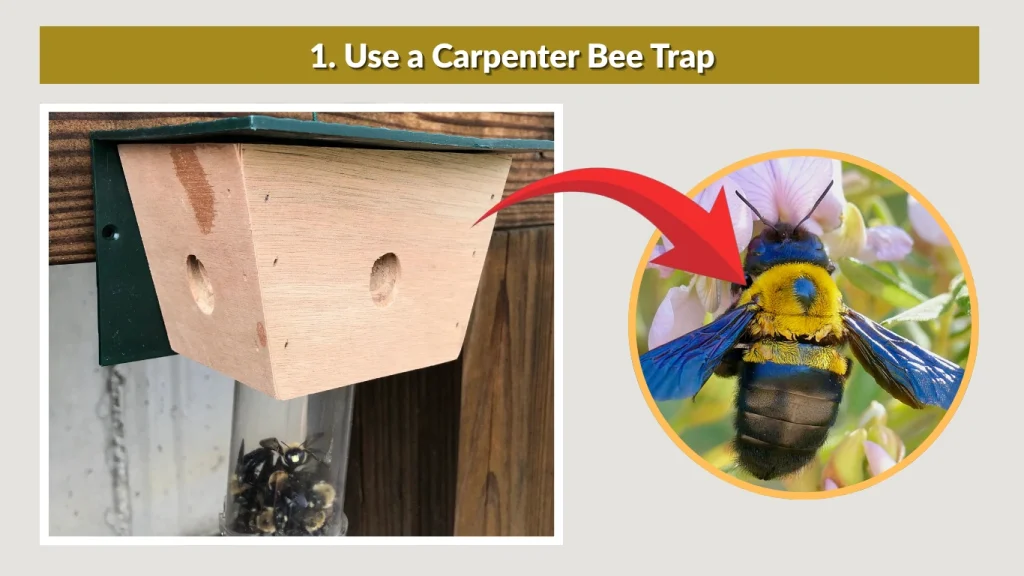
How Carpenter Bee Traps Work
Carpenter bee traps are designed to lure bees into a chamber where they can’t escape. These traps typically mimic the appearance of a wooden nesting hole, attracting carpenter bees looking for a place to bore. Once the bee enters, a funnel-like design guides it into a container or jar where it eventually dies. This method works well because it exploits the bee’s natural nesting instincts, making it a low-effort, non-toxic solution.
Choosing the Right Trap for Your Situation
When selecting a carpenter bee trap, look for models made from durable wood or thick plastic that can withstand outdoor conditions. Traps with multiple entry holes tend to capture more bees. You’ll also want to choose one that’s easy to empty and reset. Some come pre-assembled, while others require a quick DIY setup. For heavy infestations, placing multiple traps around your home’s perimeter can increase success.
Tips for Effective Placement
Placement plays a crucial role in the effectiveness of carpenter bee traps. Position them near areas where you’ve noticed bee activity, such as under eaves, wooden railings, or decks. Ideally, hang traps in sunny spots since carpenter bees are more active in warmer conditions. For maximum results, install traps before spring—when bees emerge and begin searching for nesting sites. Check the traps regularly, empty them as needed, and keep them in place throughout the active season to prevent reinfestation.
2. Apply Insecticidal Dust or Spray
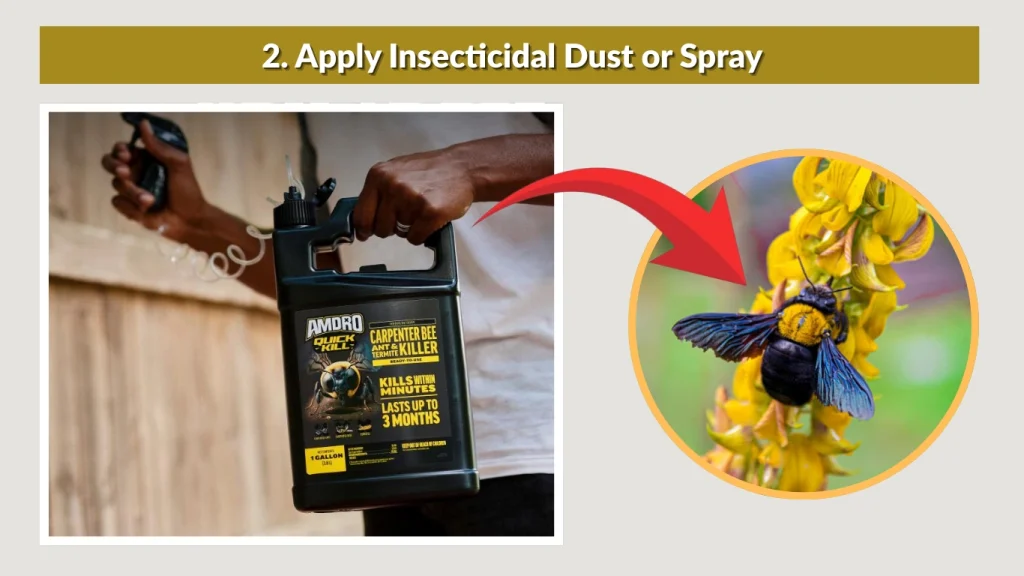
When to Use Dust vs. Spray
Insecticidal dust is ideal for treating active carpenter bee tunnels, as it penetrates deep inside and continues working for weeks. Sprays, on the other hand, are better for surface application or quick knockdowns when you see bees hovering around. Dust works best when the bee is inside its hole at night or early morning, while sprays are more effective during the day when bees are active outside the nest.
How to Apply Safely and Effectively
For dust application, insert the nozzle of a hand duster or applicator into the tunnel entrance and give it a few puffs. This coats the interior with insecticide, killing the bee and preventing others from reusing the hole. When using sprays, apply directly to the bee or around high-traffic nesting areas. Always read and follow the product label instructions, wear gloves, and avoid contact with skin or eyes. Remember that dust is generally more effective for long-term control, while sprays are best for immediate action.
Precautions to Protect Beneficial Insects
Carpenter bees are important pollinators, so avoid treating plants, flowers, or areas where bees forage for nectar. Apply insecticides only to targeted nesting sites and never during peak pollination hours. If you’re concerned about harming beneficial species, opt for insecticidal products labeled as bee-safe when used properly. By limiting chemical exposure and timing your applications strategically, you can manage carpenter bees without significantly impacting the local ecosystem.
3. Seal Existing Holes and Tunnels
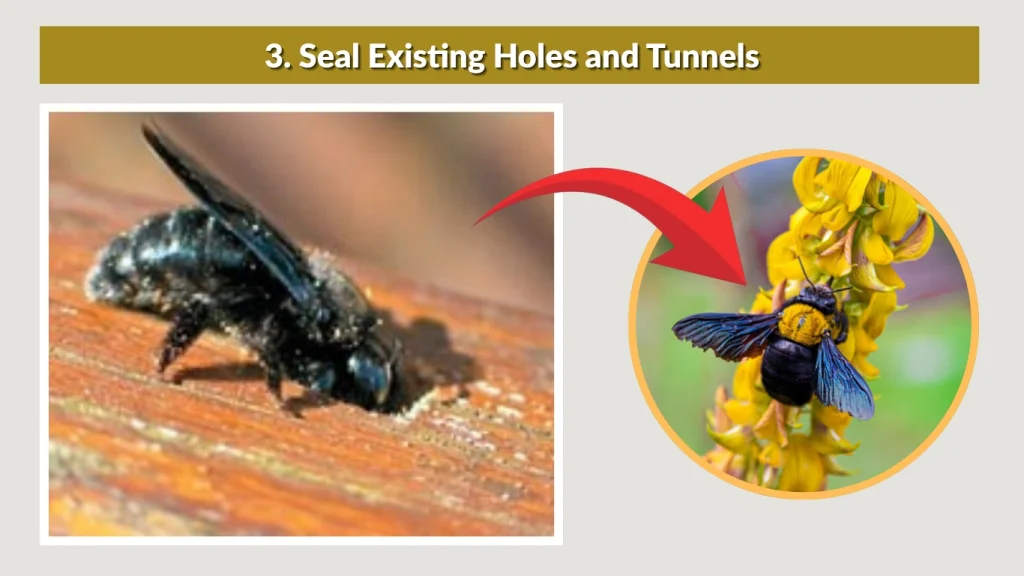
Why Sealing Holes Prevents Reinfestation
Carpenter bees are known to return to old nesting sites year after year. If these holes remain open, they act like an open invitation for new bees to move in. Sealing tunnels cuts off their shelter and reduces the chance of future infestations. It also prevents other pests—like ants or wasps—from using abandoned tunnels as their own nests.
Materials and Sealants to Use
You can use various materials to seal carpenter bee holes effectively:
- Wood dowels – Fit snugly into the hole and blend with wooden surfaces.
- Exterior-grade wood filler – Flexible and weather-resistant for outdoor use.
- Caulk – Great for smaller holes and cracks.
- Putty knife – Helps smooth filler for a neat finish.
Painting or staining over the repair afterward will further discourage future nesting.
Best Time of Year to Seal Holes
The ideal time to seal carpenter bee holes is late summer or early fall, once you’re sure all bees have left the nest. Sealing too early could trap live bees inside, causing them to chew new exit holes. If you need to seal in spring or summer, treat the hole first with insecticidal dust to kill any occupants, then wait a few days before sealing. This ensures you eliminate the problem without creating more damage.
4. Install Hardwood or Treated Wood Surfaces
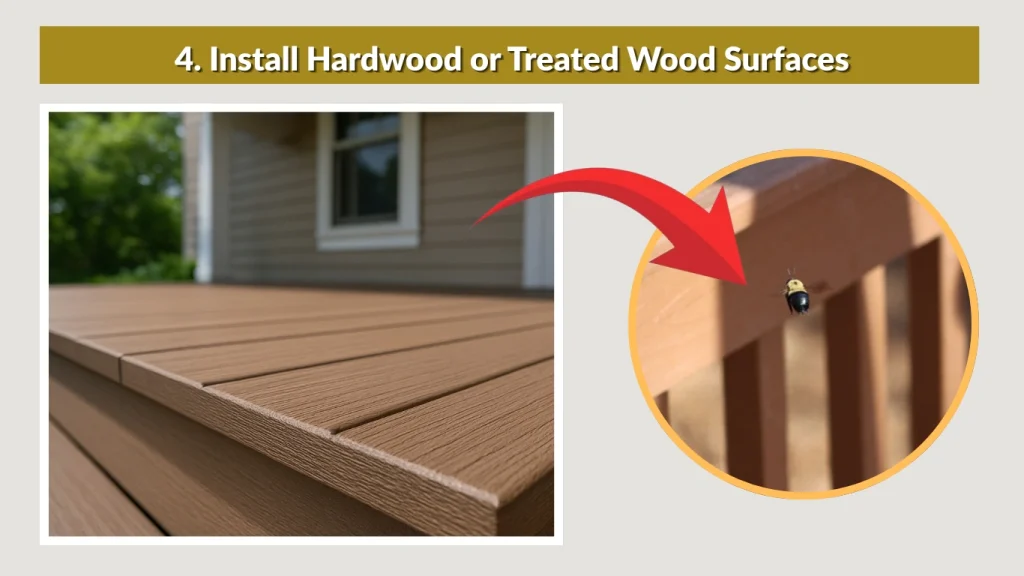
Why Carpenter Bees Prefer Softwood
Carpenter bees usually target untreated softwoods such as pine, cedar, or redwood because they’re easier to bore into. These woods provide less resistance to their mandibles, making them ideal for nesting. Switching to hardwood or pressure-treated lumber creates a tougher barrier, making it more difficult and less appealing for bees to start tunneling.
How Treated Wood Deters Nesting
Pressure-treated lumber is infused with chemicals that repel or harm wood-boring insects, including carpenter bees. Even if a bee tries to bore into treated wood, the chemical compounds make the material less attractive for long-term nesting. Similarly, naturally dense hardwoods—like oak, maple, or mahogany—are physically harder to penetrate, acting as a natural deterrent.
Maintenance Tips to Keep Bees Away
Even hardwood and treated wood require some upkeep to stay effective.
- Seal exposed edges – Bees may target corners or unsealed cuts.
- Reapply protective coatings – Stain or seal every 2–3 years for durability.
- Inspect annually – Look for any early signs of boring holes and address them immediately.
Using hardwood or treated wood in decks, siding, and outdoor furniture not only extends their lifespan but also significantly reduces the risk of carpenter bee infestations.
5. Use Citrus or Essential Oil Repellents

Scents That Carpenter Bees Dislike
Carpenter bees are sensitive to certain strong scents, which can naturally repel them without harmful chemicals. Some of the most effective scents include:
- Citrus oils (lemon, orange, grapefruit)
- Tea tree oil
- Eucalyptus oil
- Peppermint oil
These scents mask the natural smell of untreated wood, making it less attractive for bees to nest.
DIY Repellent Recipes and Application Methods
You can make a simple citrus repellent by boiling citrus peels in water for 10–15 minutes, then straining and pouring the liquid into a spray bottle. For essential oils, mix 10–15 drops with one cup of water and a teaspoon of liquid soap to help it stick to surfaces. Spray the solution directly on wooden areas where you’ve seen bee activity, focusing on eaves, railings, and decks.
Frequency of Reapplication for Best Results
Natural repellents wear off faster than chemical treatments, so regular reapplication is key. Spray every few days during peak carpenter bee season (spring through early summer), especially after rain. For long-term results, pair natural repellents with other preventive measures—like painting or sealing wood—to create multiple layers of protection.
6. Paint or Stain Wooden Surfaces
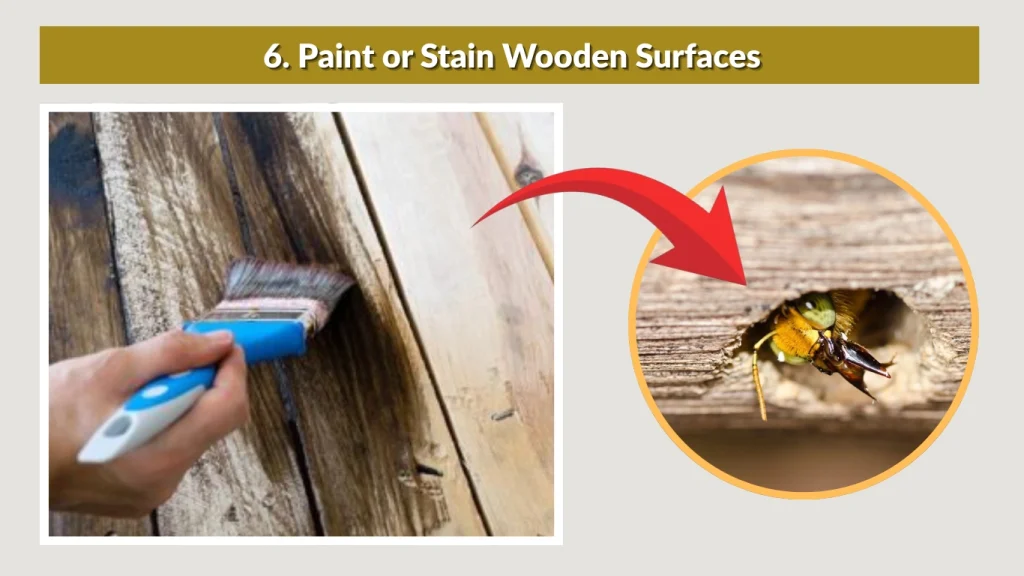
How Paint Acts as a Barrier
Paint creates a protective layer over the wood, masking its natural scent and making it less appealing to carpenter bees. Unlike bare or lightly weathered wood, painted surfaces are harder for bees to recognize as potential nesting sites. A thick coat also adds a physical barrier, making it more difficult for bees to bore through.
Staining vs. Painting: Which is Better?
While painting offers the most protection, staining is a good alternative if you want to preserve the natural look of the wood.
- Painting – Best for complete coverage and strong visual deterrence.
- Staining – Offers some resistance but works best when combined with sealants or repellents.
For maximum effectiveness, apply multiple coats and ensure every corner and edge is covered.
Long-Term Protection and Maintenance
To keep carpenter bees away, inspect painted or stained surfaces yearly.
- Repaint or re-stain every 2–3 years or sooner if you notice peeling.
- Seal cracks or chips promptly to avoid exposing bare wood.
- Combine with other methods like traps or repellents for stronger defense.
A well-painted or stained surface not only deters carpenter bees but also enhances the appearance and longevity of your wooden structures.
7. Call Professional Pest Control Services
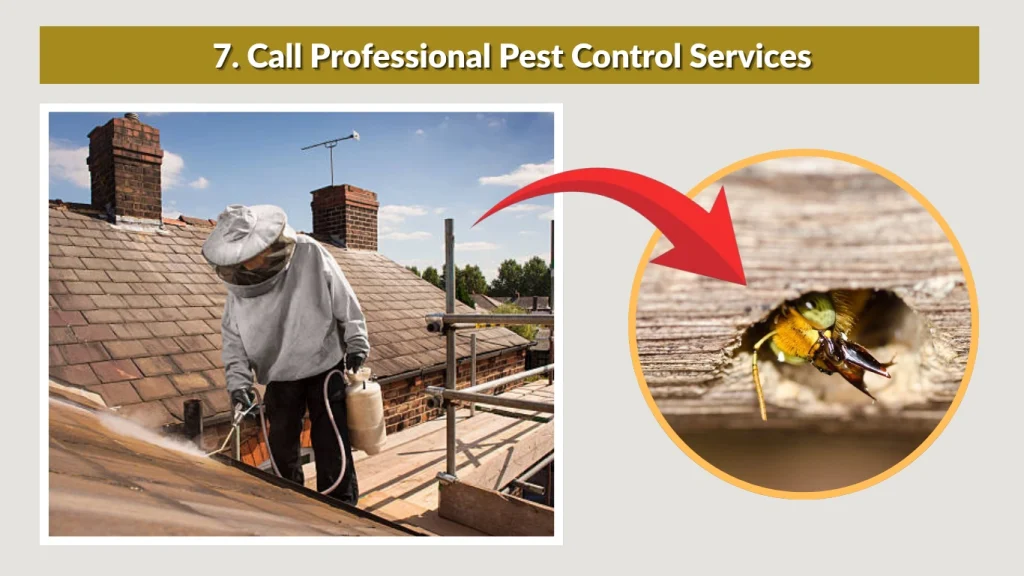
When to Seek Professional Help
If your carpenter bee problem is severe or recurring despite DIY efforts, it’s time to call a pest control professional. Signs you need expert intervention include multiple active nests, extensive wood damage, or bees nesting in hard-to-reach areas like roof eaves or high decks. Professionals have the experience and tools to handle infestations quickly and safely.
What Methods Professionals Commonly Use
Pest control experts typically combine several approaches to ensure complete elimination:
- Insecticidal dust application – Penetrates deep into tunnels to kill bees and larvae.
- Foam or spray treatments – Reaches hidden nests in inaccessible spots.
- Structural repairs – Seals entry points and reinforces vulnerable wood.
Some services also offer long-term prevention plans, including seasonal inspections and treatments.
Expected Costs and Long-Term Benefits
The cost of professional carpenter bee removal can range from $100 to $300 for smaller infestations, with higher prices for extensive damage or large properties. While this may seem expensive, it’s often more cost-effective in the long run because it prevents repeated damage, reduces repair expenses, and eliminates the need for constant DIY treatments. Professionals also ensure safety, especially if ladders, chemicals, or protective gear are required.
FAQs
What time of year is best to get rid of carpenter bees?
Late spring to early summer is ideal, as this is when carpenter bees are most active and nesting. However, sealing and prevention are best done in late summer or early fall after bees have left the tunnels.
Do carpenter bees cause structural damage?
Yes, over time carpenter bees can weaken wood by boring tunnels for nesting. While one or two bees may not cause serious harm, repeated infestations can compromise decks, eaves, and wooden beams.
Are carpenter bees aggressive?
Male carpenter bees may hover near you and act territorial, but they don’t have stingers. Females can sting if provoked but are generally non-aggressive unless directly handled.
Can I get rid of carpenter bees without killing them?
Yes, you can use natural repellents like citrus or essential oils, block nesting sites, or install bee houses nearby to encourage relocation instead of extermination.
How can I tell if carpenter bees are in my wood?
Look for round, dime-sized holes in the wood surface, piles of sawdust underneath, and faint buzzing sounds from inside the structure. These are clear signs of an active infestation.
.
