
Bumble bees are among the most recognizable and beloved pollinators in the world. With their fuzzy bodies, distinctive buzzing sound, and gentle nature, they play a crucial role in maintaining ecosystems and supporting food production. Understanding their lifespan, habitats, and lifecycle provides valuable insight into how to protect these vital insects.
How Long Do Bumble Bees Live?
Bumble bee lifespans vary depending on their role in the colony and environmental conditions. Unlike honey bees, bumble bee colonies do not survive year-round; they follow an annual cycle, with only mated queens living through the winter.
Lifespan by Role
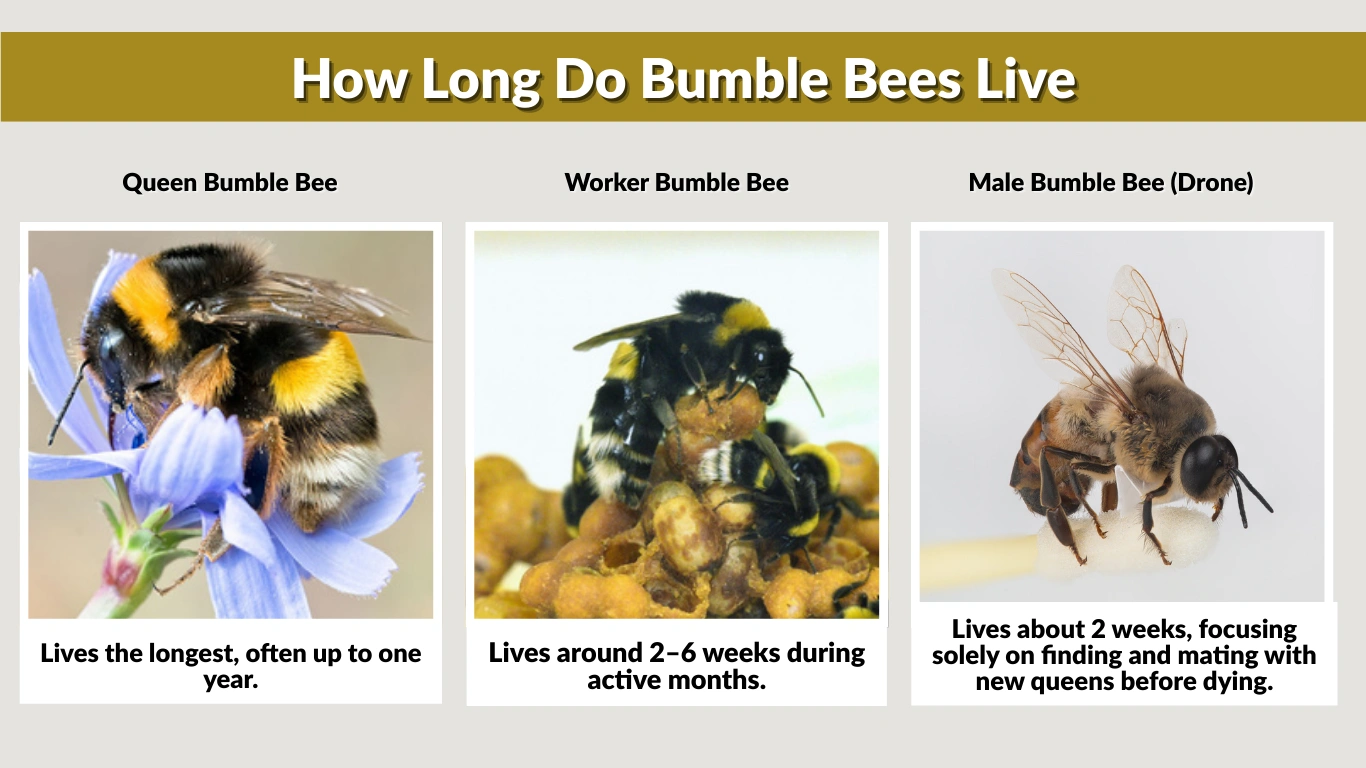
- Queen Bumble Bee – Lives the longest, often up to one year. A queen emerges from hibernation in spring, establishes a new colony, and survives until the following winter.
- Worker Bumble Bee – Lives around 2–6 weeks during active months. Their short lives are spent foraging, defending the nest, and feeding larvae.
- Male Bumble Bee (Drone) – Lives about 2 weeks, focusing solely on finding and mating with new queens before dying.
Factors Affecting Lifespan
- Predation – Birds, wasps, spiders, and small mammals prey on bumble bees, shortening their lives.
- Weather Conditions – Sudden cold snaps, heavy rain, or prolonged drought reduce survival rates.
- Pesticide Exposure – Contact with chemical pesticides can weaken or kill bees within hours or days.
- Nutrition and Food Sources – An abundance of flowers ensures better survival, while scarcity can cause early death.
- Disease and Parasites – Pathogens like Nosema bombi and pests such as wax moth larvae can impact longevity.
In ideal conditions, a bumble bee colony thrives throughout spring and summer, but natural and human-caused threats can significantly reduce their lifespan.
Where Do Bumble Bees Live?

Bumble bees inhabit a wide range of environments across the globe. They are adaptable, but their survival depends on access to flowers and suitable nesting sites.
Geographic Distribution
Bumble bees are mainly found in North America, Europe, and Asia, with some species in South America and isolated areas like New Zealand, where they were introduced for pollination. They are more common in temperate and cooler climates but have adapted to various ecosystems.
Preferred Habitats
- Grasslands and Meadows – Offer abundant flowers for nectar and pollen collection.
- Gardens and Urban Green Spaces – Urban bees thrive where people plant pollinator-friendly flowers.
- Agricultural Lands – Especially organic farms with crop diversity.
- Forest Edges and Hedgerows – Provide shelter, foraging, and protection from strong winds.
Nesting Sites
Bumble bees seek warm, dry, and secure nesting areas such as:
- Abandoned rodent burrows underground, offering natural insulation.
- Thick grass tussocks that provide cover from predators.
- Compost heaps rich in organic material and warmth.
- Under sheds or decking where there’s little disturbance.
- Holes in the ground or rock crevices in rural areas.
Different species have unique nesting preferences. For example, the Early Bumble Bee (Bombus pratorum) often nests above ground, while the Common Eastern Bumble Bee (Bombus impatiens) prefers underground burrows.
Lifecycle of a Bumble Bee
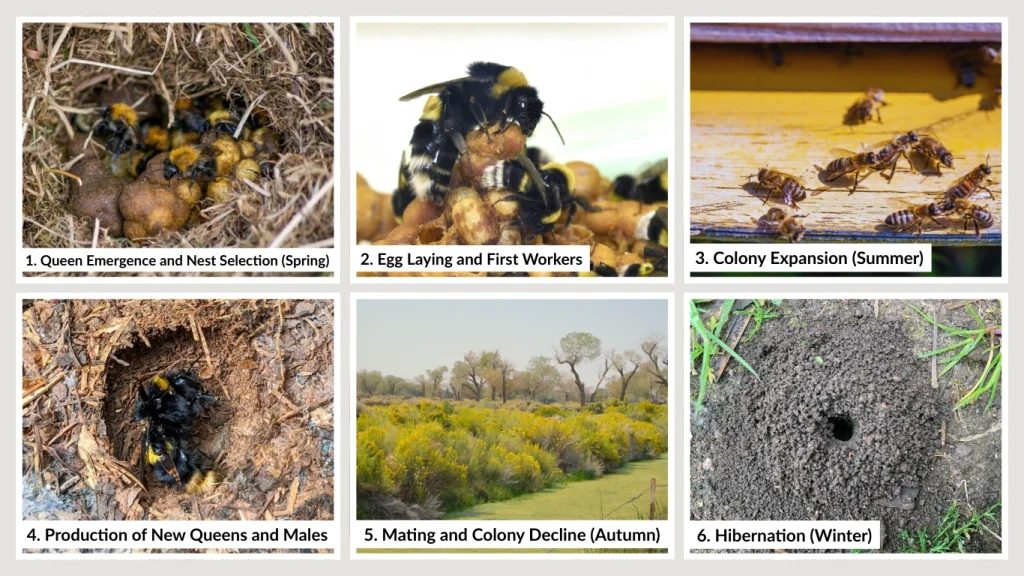
The bumble bee lifecycle is annual, meaning a new colony starts each spring and ends by winter. Only mated queens survive the cold months to restart the process.
1. Queen Emergence and Nest Selection (Spring)
In early spring, the queen awakens from hibernation, often weak and hungry. She forages on early-blooming flowers like crocuses and dandelions, building her strength before searching for a nest. Once she finds a secure site, she lines it with wax and pollen to prepare for laying eggs.
2. Egg Laying and First Workers
The queen lays her first batch of eggs in small wax cells. She incubates them by vibrating her muscles to produce heat. The eggs hatch into larvae, which she feeds with a mixture of pollen and nectar. After pupating, they emerge as worker bees.
3. Colony Expansion (Summer)
With workers now foraging, the queen dedicates herself solely to egg-laying. The colony population grows, sometimes reaching 50–400 bees depending on species and habitat quality. Workers specialize in tasks:
- Foragers collect nectar and pollen.
- Nurse bees care for larvae.
- Guard bees protect the nest entrance.
4. Production of New Queens and Males
As summer progresses, the queen begins laying eggs that will develop into males and new queens. Males leave the nest shortly after emergence to search for mates, while new queens prepare for winter hibernation.
5. Mating and Colony Decline (Autumn)
Males mate with queens, after which males die. The original queen and remaining workers also perish as temperatures drop and food becomes scarce.
6. Hibernation (Winter)
Mated queens find sheltered spots, often a few centimeters underground, to hibernate. They remain dormant until the following spring, restarting the cycle.
Ecological Importance of Bumble Bees
Bumble bees are exceptional pollinators. Their buzz pollination technique, where they vibrate flowers to release pollen, is essential for crops like tomatoes, peppers, and blueberries. Without them, many plants would see reduced yields, directly impacting ecosystems and agriculture.
Conservation Tips
You can help protect bumble bees by:
- Planting bee-friendly flowers such as lavender, sunflowers, and clover that bloom across the seasons.
- Avoiding pesticides and opting for organic gardening methods.
- Leaving wild patches in gardens for nesting and foraging.
- Providing artificial nesting boxes to replace lost habitats.
- Supporting pollinator-friendly farming by buying from sustainable sources.
Small actions collectively make a big difference for bumble bee survival.
FAQs
How long can a bumble bee queen live?
A queen bumble bee can live for up to one year, making her the longest-lived member of the colony. She emerges from hibernation in early spring, establishes a nest, produces workers and future queens, and then hibernates again. Her survival depends heavily on food availability, weather conditions, and protection from predators.
Do bumble bees reuse their nests?
Bumble bees do not reuse their nests. Each year’s colony dies in late autumn, and the nest is abandoned. Even if the site remains suitable, the new queens usually seek fresh nesting locations the following spring. This helps reduce disease buildup and ensures the next colony starts in a clean, parasite-free environment.
Can bumble bees survive in cities?
Yes, bumble bees can thrive in cities if there are enough flowers and safe nesting sites. Urban gardens, balconies with flowering plants, and parks provide excellent food sources. However, they may face challenges like limited green space, pesticide exposure, and higher temperatures from concrete surfaces, so pollinator-friendly practices are important in urban areas.
Why do bumble bees die in the fall?
Bumble bees die in the fall as part of their natural annual cycle. Once temperatures drop and flowers become scarce, workers, males, and the old queen perish. Only the newly mated queens survive by entering hibernation. This seasonal die-off helps control population size and ensures the next generation begins fresh in spring.
How can I help bumble bees in my garden?
You can help bumble bees by planting a variety of nectar-rich flowers that bloom from spring through fall. Avoid using chemical pesticides, leave some wild areas for nesting, and provide shallow water sources. Even a few pollinator-friendly plants can significantly increase the foraging options for local bumble bee populations.
