

Caddisflies (Order: Trichoptera) are fascinating aquatic insects that play a vital role in freshwater ecosystems. With more than 14,000 known species worldwide, they are often used as indicators of clean water and healthy streams. From case-building species to free-living predators, caddisflies display remarkable diversity in form and behavior. In this guide, we’ll explore 27 notable types of caddisflies, highlighting their unique traits, habitats, and ecological importance.
1. Little Black Caddis (Chimarra spp.)

The Little Black Caddis, often called the “Black Caddisfly,” is one of the earliest emerging caddisflies in spring. Anglers frequently notice their heavy hatches along rivers and streams, where trout feed aggressively on them. These small insects are important indicators of clean, well-oxygenated water and are part of the case-less caddisflies that build protective retreats with silk.
Identification
- Scientific Name: Chimarra spp.
- Size: Adults typically 5–8 mm
- Color: Dark black to brown body with smoky wings
- Wings: Tent-shaped when at rest, lightly veined
- Larvae: Small, free-living, without protective cases
Habitat and Distribution
Little Black Caddis are found in clean, fast-flowing streams and rivers across North America, Europe, and Asia. They thrive in riffles with gravel or rocky substrates where oxygen levels are high.
Behavior and Diet
Adults emerge in large numbers during early spring, often creating dense swarms. Larvae feed by filtering fine organic particles from flowing water, while adults primarily focus on reproduction and are short-lived.
2. Grannom Caddis (Brachycentrus spp.)
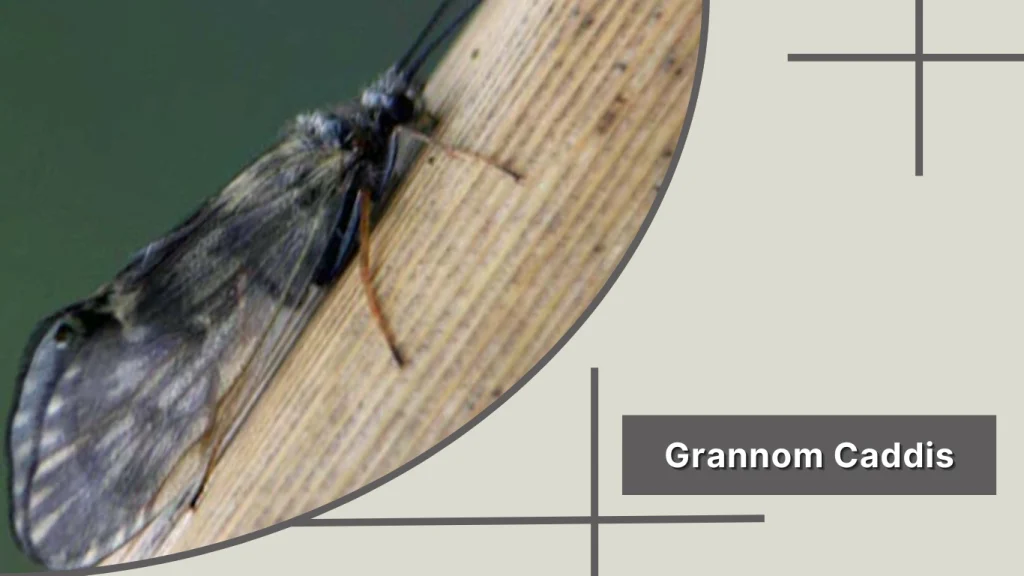
The Grannom Caddis, also known as the Apple Caddis, is one of the most famous spring-emerging caddisflies. Large hatches often occur in rivers and streams, attracting significant fish activity, especially trout. These insects are case-building caddisflies, with larvae that create protective rectangular cases from small bits of plant material or sand.
Identification
- Scientific Name: Brachycentrus spp.
- Size: Adults 8–12 mm
- Color: Dark brown to olive body with mottled wings
- Wings: Tent-shaped, often darker at the tips
- Larvae: Case-making, building four-sided portable cases
Habitat and Distribution
Grannom caddisflies inhabit cool, clean rivers and streams throughout North America and Europe. They prefer riffle sections with abundant vegetation or woody debris, where larvae can anchor their cases.
Behavior and Diet
Adults hatch in dense, synchronized swarms during spring, often carpeting riverbanks. Larvae are filter feeders, using nets or cases to capture fine organic particles from flowing water. Adults live briefly, focusing on reproduction, making their hatches a key seasonal event for fly anglers.
3. October Caddis (Dicosmoecus spp.)
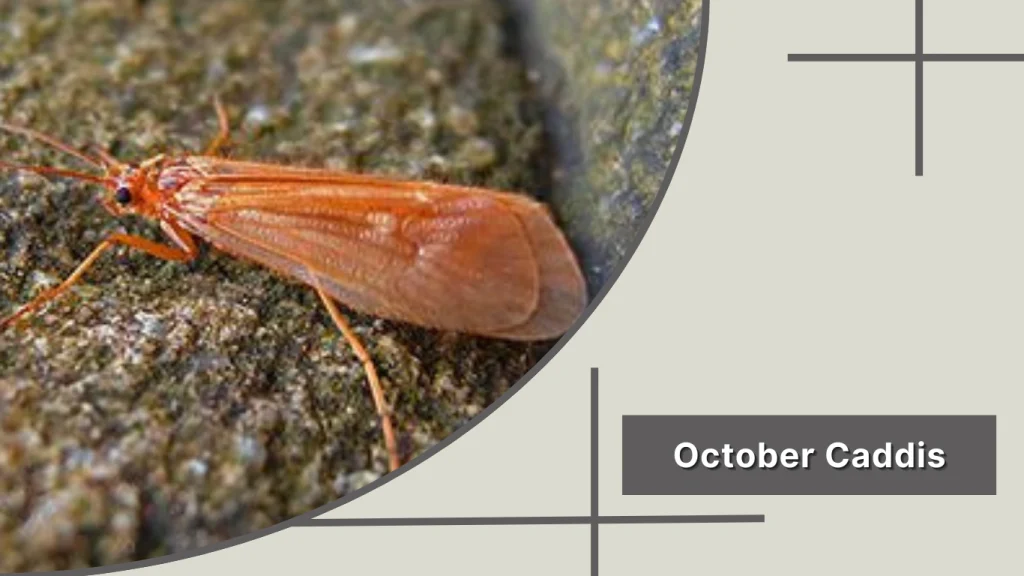
The October Caddis is one of the largest and most recognized caddisflies, emerging in late summer through fall. Its bright orange body makes it stand out, and it plays an important role in autumn fly-fishing, as trout feed heavily on these insects during their hatch. Because of their size, they are often compared to stoneflies and are highly valued as indicators of healthy stream ecosystems.
Identification
- Scientific Name: Dicosmoecus spp.
- Size: Adults 15–25 mm, among the largest caddisflies
- Color: Bright orange abdomen with darker brown wings
- Wings: Tent-shaped, with a leathery appearance
- Larvae: Case-building, using pebbles and small rocks for heavy, protective cases
Habitat and Distribution
October Caddis are found in cold, fast-flowing streams and rivers across western North America. They prefer mountain streams with rocky bottoms where larvae can build secure cases.
Behavior and Diet
Larvae are detritivores, feeding on decaying organic matter and algae. Adults emerge in late summer and fall, often flying in the evenings. Their large size and bright coloration make them an easy target for fish, especially trout, which feed on them aggressively during autumn hatches.
4. Spotted Sedge (Hydropsyche spp.)

The Spotted Sedge, often called the Spotted Caddis, is one of the most abundant and widespread caddisflies. It is especially important in fly-fishing because of its long hatching season, which extends through spring, summer, and fall. Unlike many case-making caddis, Spotted Sedge larvae are net-spinners, constructing silken nets on rocks to trap food from the current.
Identification
- Scientific Name: Hydropsyche spp.
- Size: Adults 8–15 mm
- Color: Brownish body with mottled, spotted wings
- Wings: Tent-shaped when resting, with distinct dark markings
- Larvae: Net-spinning, living under stones or attached to submerged objects
Habitat and Distribution
This species is common in rivers and streams across North America, Europe, and Asia. They thrive in riffles and moderately fast currents where their nets can efficiently capture drifting organic material.
Behavior and Diet
Spotted Sedge larvae feed on fine particles, algae, and small invertebrates caught in their nets. Adults are active for extended periods throughout the year, making them one of the most consistent food sources for fish. Evening flights and egg-laying activities near the water’s surface often trigger heavy trout feeding.
5. Green Sedge (Rhyacophila spp.)
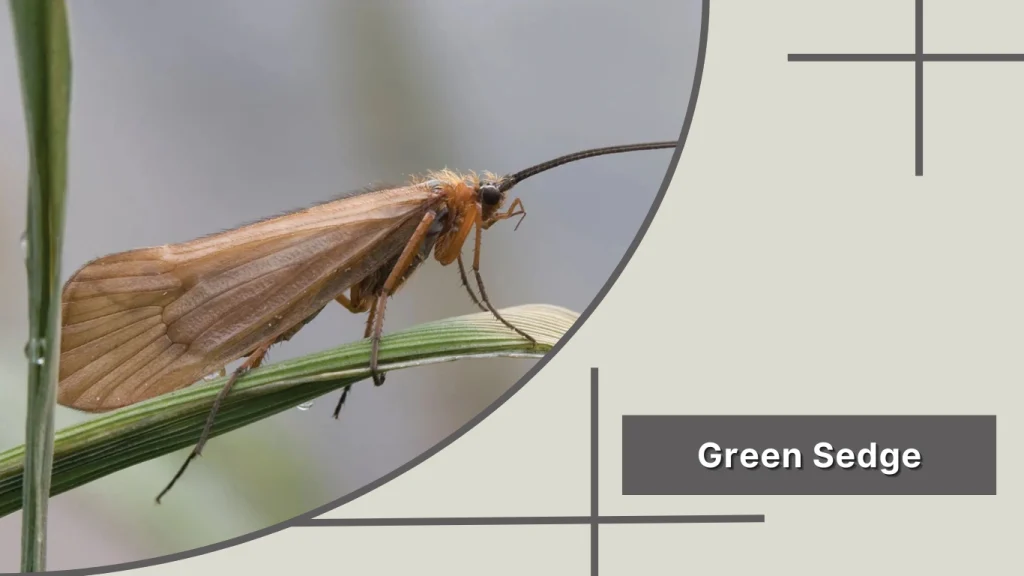
The Green Sedge, sometimes called the Green Rock Worm in its larval stage, is one of the most recognizable free-living caddisflies. Unlike many other species, its larvae do not build cases but instead live exposed among rocks in fast-flowing streams. Known for their bright green coloration, they are highly important in freshwater ecosystems and are considered excellent indicators of clean, oxygen-rich waters.
Identification
- Scientific Name: Rhyacophila spp.
- Size: Adults 10–15 mm
- Color: Greenish body with darker brown wings
- Wings: Tent-shaped, plain with minimal markings
- Larvae: Free-living, case-less, often bright green in color
Habitat and Distribution
Green Sedge caddisflies inhabit cool, fast-flowing rivers and streams across North America, Europe, and Asia. They prefer rocky, high-gradient streams where larvae can cling to stones in swift currents.
Behavior and Diet
Unlike filter-feeding caddis larvae, Green Sedge larvae are predators, feeding on smaller aquatic insects such as mayfly and midge larvae. Adults are short-lived and primarily focused on reproduction, with evening swarms often seen near the water’s edge. Their larvae are especially important in aquatic food chains, serving as a critical prey item for trout.
6. Cinnamon Caddis (Hesperophylax spp.)
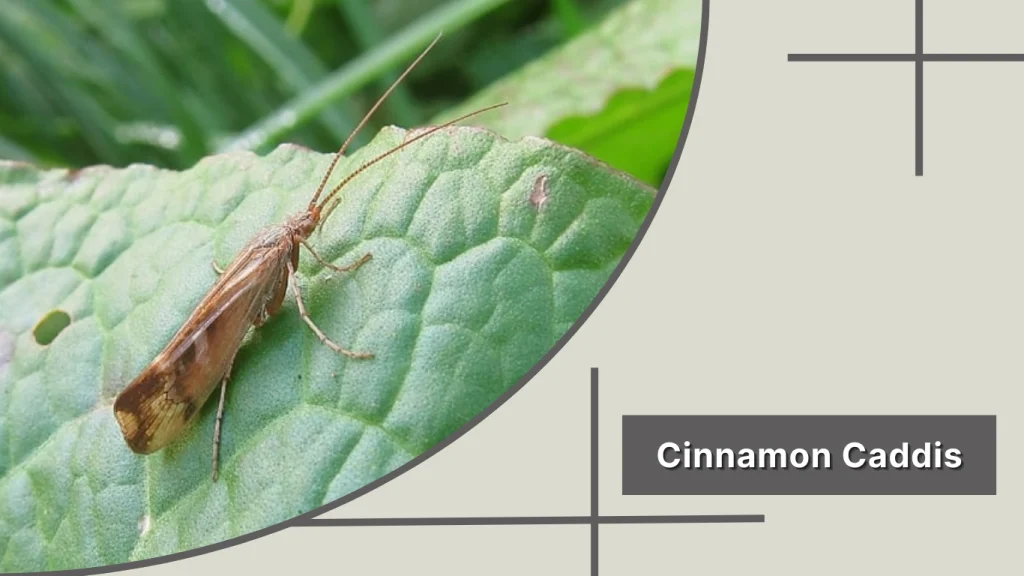
The Cinnamon Caddis is a medium-to-large caddisfly known for its warm, cinnamon-colored wings and its importance to late-season hatches. Anglers often recognize them during late summer and early fall when they appear in large numbers near rivers and streams. Their larvae are case-builders, creating protective homes from sand, small pebbles, and plant material.
Identification
- Scientific Name: Hesperophylax spp.
- Size: Adults 12–20 mm
- Color: Light brown to cinnamon with subtle wing markings
- Wings: Tent-shaped, often uniform in tone without heavy spotting
- Larvae: Case-making, using mixed debris such as sand and gravel
Habitat and Distribution
Cinnamon Caddis are found in cold, well-oxygenated streams and lakes across North America and parts of Europe. They favor slower-moving water margins and lake inlets where organic debris is abundant.
Behavior and Diet
Larvae are shredders and detritivores, consuming decaying leaves, algae, and fine organic matter. Adults typically emerge in late summer or fall, often in the evening. Their presence signals clean water conditions, and trout feed eagerly on them during their peak hatches.
7. Apple Caddis (Brachycentrus appalachia)

The Apple Caddis, a close relative of the Grannom, is a highly regarded spring-emerging caddisfly. Its common name comes from the timing of its hatch, which often coincides with apple trees blooming in many regions. These hatches are eagerly anticipated by anglers because they occur in dense swarms, drawing trout into active surface feeding.
Identification
- Scientific Name: Brachycentrus appalachia
- Size: Adults 8–12 mm
- Color: Olive to light brown body with pale or mottled wings
- Wings: Tent-shaped with soft, slightly patterned texture
- Larvae: Case-making, building distinctive four-sided portable cases
Habitat and Distribution
Apple Caddis are widespread in cool, clean streams and rivers of North America, especially in the Appalachian region. They favor riffles and shallow currents where larvae can secure their cases among rocks and vegetation.
Behavior and Diet
Larvae are filter feeders, capturing small organic particles from flowing water. Adults emerge en masse in spring, often forming spectacular hatches along riversides. Trout respond aggressively to these events, making the Apple Caddis one of the most important insects in fly-fishing during spring months.
8. Black Dancer Caddis (Mystacides spp.)

The Black Dancer Caddis is a slender and elegant caddisfly known for its long antennae and graceful flight patterns over rivers and lakes. Anglers often notice them hovering near the water surface, especially in calm areas. Unlike some other species, these caddisflies are most active during summer evenings, adding variety to late-season hatches.
Identification
- Scientific Name: Mystacides spp.
- Size: Adults 6–10 mm
- Color: Dark black or brown body with smoky, narrow wings
- Wings: Tent-shaped when resting, often elongated and narrow
- Larvae: Case-making, constructing long, slender cases from sand grains and plant fragments
Habitat and Distribution
Black Dancer Caddis are found in lakes, ponds, and slow-moving streams throughout North America and Europe. They thrive in quieter waters where larvae can build stable cases among aquatic vegetation.
Behavior and Diet
Larvae are collectors and filter feeders, capturing fine organic material from still or slow currents. Adults emerge in the warmth of summer, often dancing above calm water in characteristic swarms. Trout and other fish feed heavily on both emerging adults and egg-layers, making them important for anglers targeting summer evening rises.
9. Dark Blue Sedge (Psilotreta spp.)

The Dark Blue Sedge is a striking caddisfly species, known for its darker wing coloration and preference for clean, rocky streams. Its larval stage is especially important in aquatic food webs, as it contributes to nutrient cycling while serving as prey for fish and other invertebrates. The adults emerge primarily in late spring to summer, making them a seasonal but notable presence near streams.
Identification
- Scientific Name: Psilotreta spp.
- Size: Adults 10–15 mm
- Color: Dark brown to bluish-black body, with smoky dark wings
- Wings: Tent-shaped with a slightly glossy, dark hue
- Larvae: Case-making, building sturdy cases from sand grains and fine gravel
Habitat and Distribution
Dark Blue Sedge caddisflies are commonly found in cool, fast-flowing streams of North America, particularly in the eastern and central regions. They prefer rocky streambeds where their larvae can anchor their cases in the current.
Behavior and Diet
Larvae are detritivores and scrapers, feeding on algae, biofilm, and organic matter attached to rocks. Adults typically emerge in late spring and early summer, flying near riffles and shaded stream banks. Though short-lived, their appearance triggers opportunistic feeding by trout, making them important to anglers during their seasonal hatches.
10. Brown Sedge (Limnephilus spp.)

The Brown Sedge is one of the most widespread and diverse groups of caddisflies, with many species adapted to different aquatic environments. These insects are known for their sturdy larval cases and their ability to thrive in ponds, lakes, and slow-moving streams. Anglers often encounter them during summer evenings, though their hatches are not as synchronized as other caddisflies.
Identification
- Scientific Name: Limnephilus spp.
- Size: Adults 10–18 mm
- Color: Brown to tan body with mottled or veined wings
- Wings: Tent-shaped, often broad with noticeable veins
- Larvae: Case-making, building cases from leaves, sticks, or mixed debris
Habitat and Distribution
Brown Sedge caddisflies are widely distributed across North America, Europe, and Asia. They are especially common in still waters such as lakes, ponds, and slow streams, where larvae use abundant plant material for case construction.
Behavior and Diet
Larvae are shredders and detritivores, feeding on decaying leaves and organic debris. Adults emerge from late spring through summer, often flying low over water at dusk. Their staggered emergence makes them a steady, though less concentrated, food source for fish over extended periods.
11. Giant Orange Sedge (Phryganea spp.)

The Giant Orange Sedge is one of the largest and most eye-catching caddisflies, often mistaken for moths due to their size and wing shape. They are common in northern lakes and ponds, emerging in late spring through summer. Because of their large body and bright color, they are a significant food source for fish, particularly in stillwater habitats where hatches can be abundant.
Identification
- Scientific Name: Phryganea spp.
- Size: Adults 20–30 mm, among the largest caddisflies
- Color: Orange to reddish-brown body with mottled wings
- Wings: Tent-shaped, broad, with heavy veining and dark patterns
- Larvae: Case-making, building large cases from plant material and coarse debris
Habitat and Distribution
Giant Orange Sedge are widely distributed across northern regions of North America and Europe. They are especially abundant in lakes, marshes, and slow-moving waters, where larvae have access to abundant vegetation for case construction.
Behavior and Diet
Larvae are shredders and detritivores, consuming decomposed plant matter, algae, and fine detritus. Adults are most active in summer evenings, when they hover near lake edges or slow rivers. Their large size makes them a prized food source for trout and other fish, often inspiring large fly patterns in stillwater fishing.
12. Little Sister Sedge (Cheumatopsyche spp.)

The Little Sister Sedge is a smaller but highly abundant caddisfly that often emerges alongside larger species such as the Spotted Sedge. Despite its size, it plays an important role in freshwater ecosystems and is a staple in the diet of many fish. Its long hatching season and frequent evening flights make it a reliable food source in rivers and streams.
Identification
- Scientific Name: Cheumatopsyche spp.
- Size: Adults 6–10 mm
- Color: Light brown to olive body with faintly mottled wings
- Wings: Tent-shaped, slender, usually paler than related species
- Larvae: Net-spinning, attaching silken retreats to rocks in riffles
Habitat and Distribution
Little Sister Sedge caddisflies are widely distributed across North America, Europe, and Asia. They are particularly common in medium to large rivers with moderate to fast currents, where larvae thrive in riffle habitats.
Behavior and Diet
Larvae spin fine silk nets across rock surfaces to filter organic matter and microorganisms from the water. Adults emerge from late spring through summer, often swarming over riffles and near riverbanks in the evenings. Their small size and high abundance make them a consistent food source for trout throughout the warmer months.
13. Black Caddis (Ironoquia spp.)

The Black Caddis is a distinctive spring-emerging species, known for its dark coloration and its tendency to appear in dense swarms along rivers and streams. While not as widespread as some other caddisflies, it is locally abundant and highly important to both aquatic ecosystems and anglers during its peak emergence.
Identification
- Scientific Name: Ironoquia spp.
- Size: Adults 8–12 mm
- Color: Dark black or charcoal body with smoky wings
- Wings: Tent-shaped, opaque with minimal markings
- Larvae: Case-making, building portable cases from leaf fragments and debris
Habitat and Distribution
Black Caddis are distributed across parts of North America, especially in the northeastern and midwestern United States. They thrive in smaller rivers, creeks, and marshy streams with abundant vegetation and leaf litter.
Behavior and Diet
Larvae are shredders and detritivores, feeding primarily on decomposing plant material and organic debris. Adults emerge in early to mid-spring, often in impressive numbers, creating clouds of black insects over the water. Their dense hatches trigger strong fish feeding activity, making them especially important to fly-fishers in regions where they occur.
14. Green Rock Worm (Rhyacophila dorsalis)

The Green Rock Worm is the larval stage of one of the most well-known free-living caddisflies. Unlike many other species, it does not build a protective case but instead roams freely among rocks in swift currents. Its vivid green coloration makes it easy to identify, and it is an important predator in stream ecosystems. Fly-fishers often imitate this larva, as trout feed on it readily year-round.
Identification
- Scientific Name: Rhyacophila dorsalis
- Size: Adults 10–15 mm
- Color: Bright green larval body; adults are brownish with plain wings
- Wings: Tent-shaped, lightly veined, often unmarked
- Larvae: Free-living, case-less, active crawlers among rocks
Habitat and Distribution
Green Rock Worms inhabit cool, fast-flowing streams across Europe, North America, and parts of Asia. They thrive in rocky riffles and well-oxygenated waters where they can actively hunt prey.
Behavior and Diet
Unlike most caddis larvae, which filter or shred organic matter, Green Rock Worms are predators. They feed on smaller aquatic insects such as midges, mayflies, and even other caddisfly larvae. Adults emerge in summer and autumn, swarming in the evening. Their presence is vital in maintaining ecological balance in freshwater habitats and they serve as a key food source for trout and other fish.
15. Blue Sedge (Macrostemum spp.)

The Blue Sedge is a distinctive caddisfly recognized for its bluish or slate-toned body and wings, which stand out from the more common brown or tan species. Though not as widely distributed as some other caddisflies, it is locally abundant and valued for the role it plays in freshwater food webs. Anglers occasionally imitate this species, particularly in streams where it appears in noticeable numbers.
Identification
- Scientific Name: Macrostemum spp.
- Size: Adults 10–14 mm
- Color: Bluish-gray to slate body with smoky, sometimes iridescent wings
- Wings: Tent-shaped with delicate venation
- Larvae: Net-spinning, building silken retreats attached to submerged rocks and woody debris
Habitat and Distribution
Blue Sedge caddisflies are typically found in tropical and subtropical rivers, though some species extend into temperate regions. They prefer warm, moderately fast-flowing streams where their larvae can attach their nets securely.
Behavior and Diet
Larvae are filter feeders, capturing fine particles of algae, detritus, and microorganisms drifting in the current. Adults emerge mainly in warmer months, with evening flights over rivers and pools. Although their hatches are not always as dense as other caddis species, they are still an important seasonal food source for fish.
16. Silver Stripe Sedge (Micrasema spp.)

The Silver Stripe Sedge is a small but distinctive caddisfly, named for the pale or silvery markings often found along its wings or body. Though tiny compared to larger sedges, it is ecologically important and often emerges in dense numbers. Its larvae are case-builders, making neat, tube-like homes from sand grains or fine gravel.
Identification
- Scientific Name: Micrasema spp.
- Size: Adults 4–7 mm
- Color: Dark brown to black body with faint silvery or pale streaks on the wings
- Wings: Tent-shaped, narrow, and often slightly reflective in sunlight
- Larvae: Case-making, building slender tubular cases from sand and tiny stones
Habitat and Distribution
Silver Stripe Sedge species are found in cool, fast-flowing mountain streams across North America, Europe, and Asia. They are especially common in upland streams with clean, oxygen-rich water.
Behavior and Diet
Larvae are scrapers and collectors, feeding on algae and fine organic matter scraped from submerged rocks. Adults emerge in late spring and summer, often swarming in shaded areas along streams. Despite their small size, they appear in large numbers and provide consistent food for fish, especially trout in high-gradient mountain rivers.
17. Tube Maker Caddis (Molanna spp.)
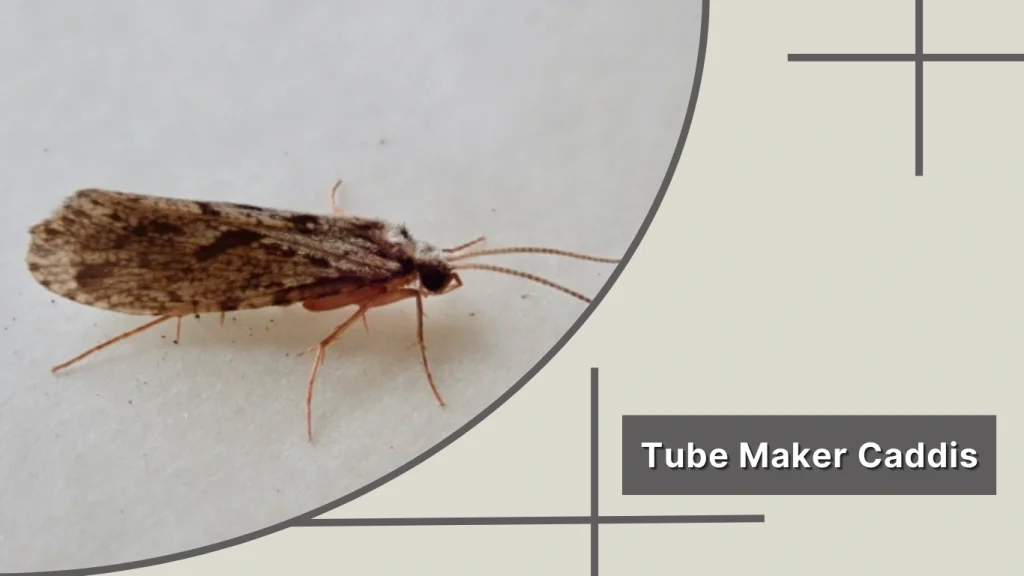
The Tube Maker Caddis is well-known for the unique larval cases it builds, which are long, sand-covered tubes that resemble miniature chimneys. These larvae often burrow into soft sediment or hide among vegetation in lakes and slow streams. The species plays a key role in freshwater food webs, both as a recycler of organic matter and as a prey item for fish.
Identification
- Scientific Name: Molanna spp.
- Size: Adults 8–12 mm
- Color: Brown to grayish body with pale or mottled wings
- Wings: Tent-shaped, with subtle venation and a slightly rounded appearance
- Larvae: Case-making, constructing elongated tubular cases from sand and silt
Habitat and Distribution
Tube Maker Caddis are found in lakes, ponds, and slow-moving streams throughout North America and Eurasia. They prefer fine-sediment habitats where larvae can anchor their long cases securely.
Behavior and Diet
Larvae are detritivores, feeding on fine organic matter and algae that accumulate on sediments. Adults typically emerge in late spring to summer, flying low over water margins in calm conditions. Their larvae, being burrowers in soft substrates, are an important food source for bottom-feeding fish species.
18. Net-Spinning Caddis (Hydropsychidae family)
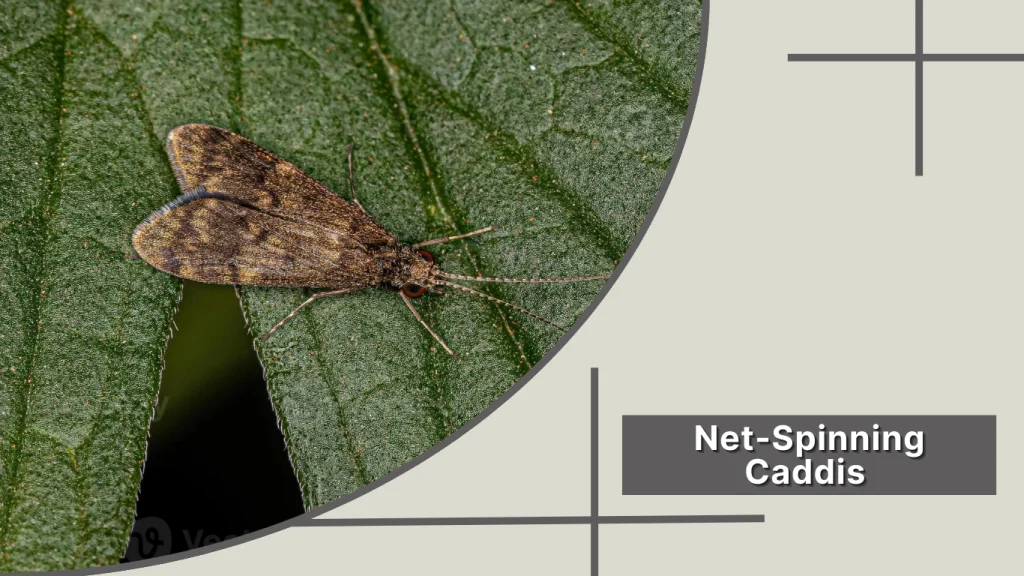
The Net-Spinning Caddisflies are one of the most diverse and ecologically significant groups of caddis. Unlike case-building species, their larvae construct fixed silk nets that act like underwater filters, capturing drifting food particles from the current. These caddis are among the most abundant aquatic insects in rivers and are essential in both nutrient cycling and as prey for fish.
Identification
- Scientific Name: Hydropsychidae family
- Size: Adults 8–16 mm
- Color: Brown to olive body with mottled or striped wings
- Wings: Tent-shaped with distinct venation, often patterned
- Larvae: Net-spinners, living in silk retreats attached to rocks in flowing water
Habitat and Distribution
Net-Spinning Caddis are found worldwide in rivers and streams, from small creeks to large rivers. They are most abundant in riffles and fast currents where water flow helps their nets capture food efficiently.
Behavior and Diet
Larvae are filter feeders, using their nets to trap algae, detritus, and small invertebrates. They are highly important prey for trout and other fish. Adults emerge throughout spring, summer, and fall, often swarming above riffles during evening hours. Their extended emergence and abundance make them one of the most important groups of aquatic insects in freshwater ecosystems.
19. Case-Building Caddis (Limnephilidae family)

The Case-Building Caddisflies are among the most familiar and diverse groups of caddisflies. Their larvae are known for constructing elaborate portable cases using plant fragments, sand, gravel, or even shells. These cases serve as both camouflage and protection, making them one of the most fascinating aquatic insect groups.
Identification
- Scientific Name: Limnephilidae family
- Size: Adults 10–20 mm, depending on species
- Color: Typically brown, tan, or gray with mottled wings
- Wings: Tent-shaped, broad with clear venation
- Larvae: Case-makers, building cases from leaves, twigs, sand, or mixed materials
Habitat and Distribution
Case-Building Caddis are found worldwide, especially in lakes, ponds, and slow-moving streams. They are abundant in cool, clean waters across North America and Europe, with many species adapted to stillwater habitats.
Behavior and Diet
Larvae are primarily shredders and detritivores, feeding on decaying leaves and plant material. Some species may graze on algae or scavenge small invertebrates. Adults emerge in late spring through summer, often flying low over still waters during the evening. Their diversity and adaptability make them one of the most ecologically important caddisfly families.
20. Free-Living Caddis (Rhyacophilidae family)

Free-Living Caddisflies are a unique group within the order Trichoptera because, unlike most caddis species, their larvae do not build protective cases. Instead, they are agile predators that roam freely among rocks and gravel in swift currents. Their active lifestyle and bright green coloration (in many species) make them both ecologically important and highly noticeable to anglers.
Identification
- Scientific Name: Rhyacophilidae family
- Size: Adults 8–15 mm, depending on species
- Color: Adults are brown to gray with plain wings; larvae often bright green
- Wings: Tent-shaped, unmarked or faintly veined
- Larvae: Free-living, case-less, with strong legs for crawling in currents
Habitat and Distribution
These caddisflies are widespread in cold, fast-flowing streams across North America, Europe, and Asia. They prefer rocky riffles and high-gradient mountain streams where oxygen levels are high.
Behavior and Diet
Free-living larvae are predators, feeding on small aquatic insects such as mayfly and midge larvae. This sets them apart from most caddisflies, which filter or shred organic matter. Adults emerge mainly in summer and early autumn, swarming over riffles at dusk. Because of their abundance and predatory larval stage, they play a critical role in stream ecosystems and are a favorite prey for trout.
21. Hood Case-Maker (Brachycentridae family)
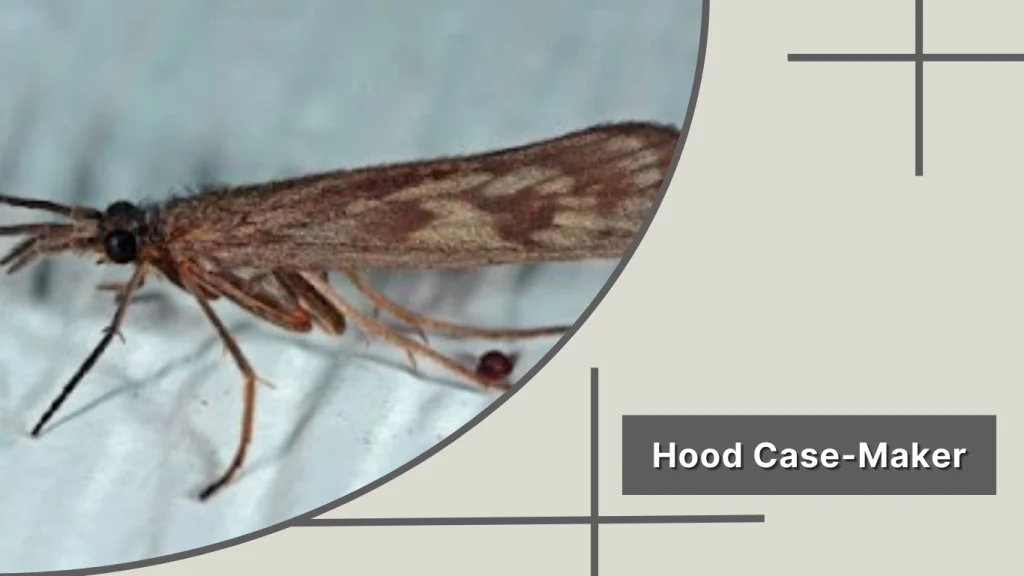
The Hood Case-Maker caddisflies are notable for their distinctive larval cases, which often resemble small, rectangular tubes or “hoods.” These carefully constructed cases provide protection from predators and strong currents, while also blending into the surrounding streambed. They are important members of freshwater habitats and are well known to anglers as reliable seasonal hatches.
Identification
- Scientific Name: Brachycentridae family
- Size: Adults 8–12 mm
- Color: Brown to olive body, wings typically plain or faintly mottled
- Wings: Tent-shaped, medium-length with fine venation
- Larvae: Case-making, producing angular four-sided or hood-shaped cases from plant fragments or sand
Habitat and Distribution
Hood Case-Makers are common in cool, clean rivers and streams across North America, Europe, and Asia. They favor riffle areas with rocky or gravelly bottoms, where larvae can anchor their distinctive cases securely.
Behavior and Diet
Larvae are filter feeders and collectors, gathering fine organic particles from flowing water using silk nets within their cases. Adults emerge in spring and early summer, often in dense localized hatches. Though short-lived, the adults are a vital seasonal food source for fish, particularly trout, which feed aggressively on both emerging insects and egg-layers.
22. Longhorn Caddis (Leptoceridae family)
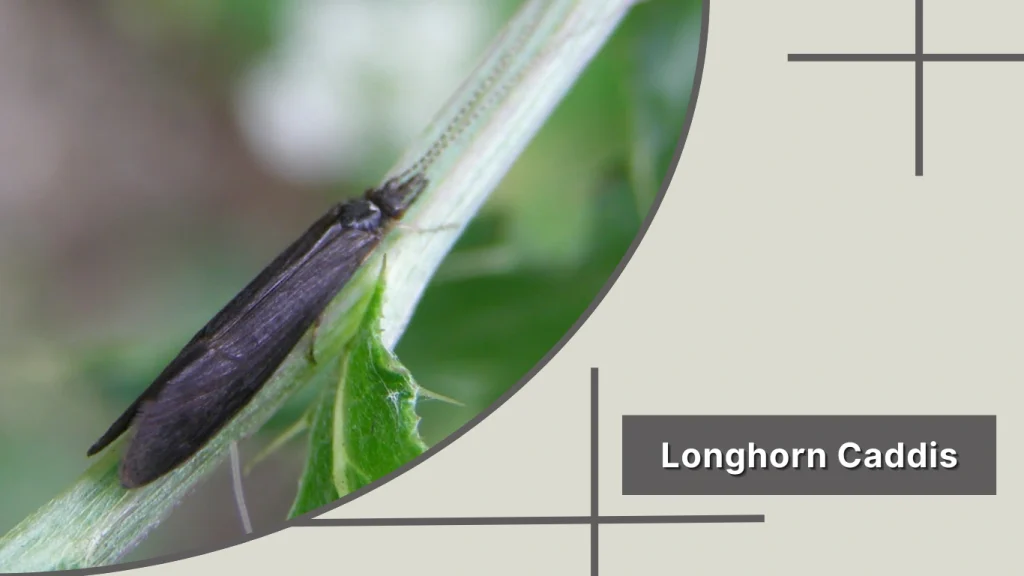
The Longhorn Caddis is an easily recognized group of caddisflies, distinguished by their very long, thread-like antennae, which are often two to three times the length of their body. These delicate insects are common in lakes, ponds, and slow-moving rivers, where their larvae build slender cases from plant fragments. They are among the most graceful caddisflies and are especially noticeable during summer evenings when adults hover in swarms above the water.
Identification
- Scientific Name: Leptoceridae family
- Size: Adults 8–15 mm
- Color: Usually pale brown, tan, or gray with slender bodies
- Wings: Tent-shaped, narrow and lightly veined
- Larvae: Case-making, constructing long, tapered cases from grasses, reeds, or fine plant material
- Antennae: Very long, often 2–3 times body length
Habitat and Distribution
Longhorn Caddisflies are widespread worldwide, especially in temperate and tropical regions. They thrive in lakes, ponds, marshes, and slower sections of rivers, where aquatic plants are abundant for larval case construction.
Behavior and Diet
Larvae are collectors and shredders, feeding on fine detritus and algae scraped from submerged vegetation. Adults are weak fliers and often swarm in the evening near calm water surfaces. Their long antennae make them easy to distinguish from other caddisflies. For fish, particularly trout and panfish, they provide steady food during summer hatches.
23. Northern Case-Maker (Apatania spp.)
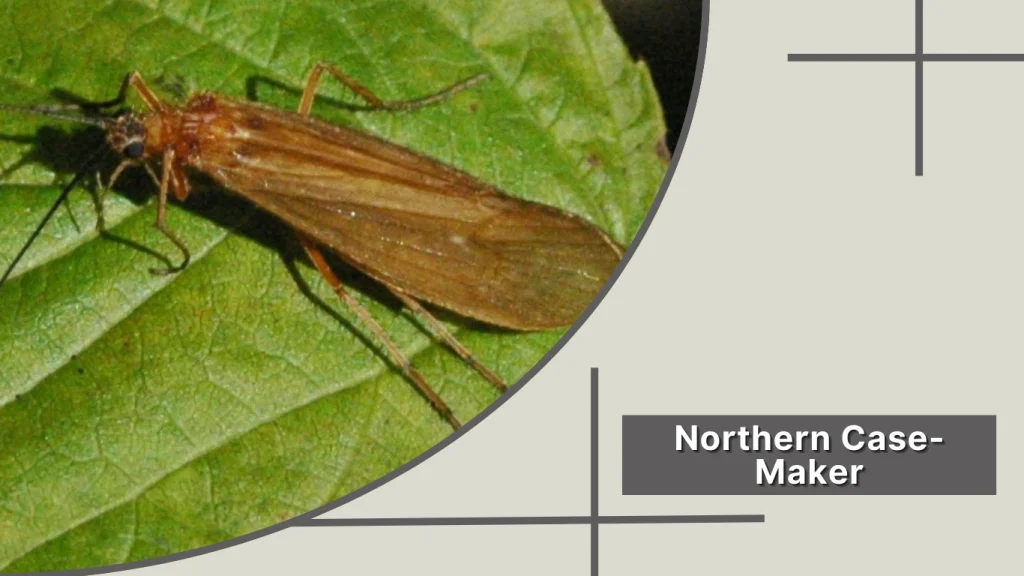
The Northern Case-Maker is a cold-water caddisfly group well adapted to alpine streams, spring-fed creeks, and northern climates. These insects are less familiar to anglers compared to other caddisflies, but they are ecologically important, often serving as early-season food for fish in cold regions. Their larvae construct sturdy, elongated cases and are frequently used as bioindicators of clean, cold-water habitats.
Identification
- Scientific Name: Apatania spp.
- Size: Adults 6–10 mm
- Color: Dark brown to gray body with plain, smoky wings
- Wings: Tent-shaped, short and rounded with simple venation
- Larvae: Case-making, building straight tubular cases from sand grains or fine gravel
Habitat and Distribution
Northern Case-Makers are widespread across North America, Europe, and Asia, particularly in boreal and alpine streams. They thrive in icy spring brooks and high-altitude creeks with rocky or sandy bottoms.
Behavior and Diet
Larvae feed on algae, diatoms, and fine detritus, scraping surfaces of rocks and sediments. Adults emerge in early spring to early summer, often in cool weather when other insects are scarce. Though their hatches are not as spectacular as other caddisflies, they provide an essential early-season food source for trout in cold-water systems.
24. Brown Wing Caddis (Agrypnia spp.)

The Brown Wing Caddis is a large and distinctive species often associated with northern lakes, marshes, and slow-moving streams. Recognized by its broad, earthy-toned wings, this insect is a key component of stillwater ecosystems, where its larvae help break down organic material and provide food for fish.
Identification
- Scientific Name: Agrypnia spp.
- Size: Adults 15–25 mm
- Color: Brown to chestnut body with broad, mottled brown wings
- Wings: Tent-shaped, leathery in appearance with strong venation
- Larvae: Case-making, constructing large, bulky cases from vegetation, sand, and woody fragments
Habitat and Distribution
Brown Wing Caddis are widespread in northern regions of North America and Eurasia. They are most common in lakes, ponds, marshes, and slow-flowing rivers where plant material is abundant for larval case construction.
Behavior and Diet
Larvae are shredders and detritivores, feeding on decomposing leaves, algae, and fine detritus. Adults usually emerge in late spring to midsummer, with flights concentrated in the evenings. Because of their large size and slow flight, they are an easy prey item for trout, perch, and other fish, making them an important link in aquatic food chains.
25. Gray Sedge (Goera spp.)

The Gray Sedge is a medium-sized caddisfly that stands out for its grayish or smoky-colored wings and preference for clean, stony streams. Its larvae are strong case-builders, producing sturdy homes from sand grains and small stones that allow them to anchor safely in swift currents. These insects are important indicators of healthy freshwater systems and are a valuable seasonal food source for trout.
Identification
- Scientific Name: Goera spp.
- Size: Adults 10–15 mm
- Color: Gray to dark brown body with smoky-gray wings
- Wings: Tent-shaped, relatively plain with clear venation
- Larvae: Case-making, building tough stone and sand cases with rounded or cylindrical shapes
Habitat and Distribution
Gray Sedge caddisflies are widely distributed in North America, Europe, and Asia. They favor cool, well-oxygenated streams and rivers with rocky or gravel bottoms where their larvae can cling securely to substrates.
Behavior and Diet
Larvae are scrapers and grazers, feeding on algae and biofilm that cover submerged stones. Adults emerge in summer and early autumn, often swarming during warm evenings near riffles. While their hatches are not always heavy, they provide reliable food for trout in streams where they occur.
26. Dark Brown Caddis (Glyphotaelius spp.)

The Dark Brown Caddis is a larger species that thrives in marshes, lakes, and slow-flowing rivers, often in northern regions. It is distinguished by its dark, chocolate-brown wings and bulky appearance. The larvae of this genus are case-makers, using leaves, bark, and plant fragments to build protective homes, which makes them an important part of the decomposition cycle in freshwater ecosystems.
Identification
- Scientific Name: Glyphotaelius spp.
- Size: Adults 15–22 mm
- Color: Dark brown body with uniformly brown wings
- Wings: Tent-shaped, broad, and leathery in texture
- Larvae: Case-making, often using coarse plant material such as bark or twigs
Habitat and Distribution
Dark Brown Caddisflies are found in lakes, ponds, and sluggish rivers across Europe, Asia, and parts of North America. They are especially abundant in cooler northern latitudes where aquatic vegetation and organic debris are plentiful.
Behavior and Diet
Larvae are shredders and detritivores, feeding on decaying plant matter and contributing to nutrient cycling in freshwater habitats. Adults emerge in late spring through summer, typically flying during warm evenings. Their bulky size makes them easy prey for fish, and they often play a key role in stillwater and marshland food chains.
27. Yellow Sedge (Oecetis spp.)

The Yellow Sedge is a graceful, long-horned caddisfly that stands out for its pale yellowish body and slender shape. It is one of the more common stillwater and slow-river caddisflies, often emerging in summer evenings when fish feed aggressively on egg-laying adults. Its larvae are case-builders, creating elongated cases from plant fragments, sand, and fine debris.
Identification
- Scientific Name: Oecetis spp.
- Size: Adults 8–12 mm
- Color: Pale yellow to light tan body, with narrow wings of similar tone
- Wings: Tent-shaped, slim and lightly veined, often semi-transparent
- Larvae: Case-making, producing long, tapered tubular cases from mixed debris
Habitat and Distribution
Yellow Sedge caddisflies are widespread worldwide, especially in ponds, lakes, marshes, and the slower reaches of rivers. They are well adapted to vegetated stillwaters, where larvae use grasses and plant stems for case material.
Behavior and Diet
Larvae are shredders and collectors, feeding on detritus, algae, and small organic particles. Adults emerge in summer and autumn, with evening flights over still or slow-moving water. They are most active during twilight, when trout and panfish often rise to feed on them, making them significant in warm-season angling.
