
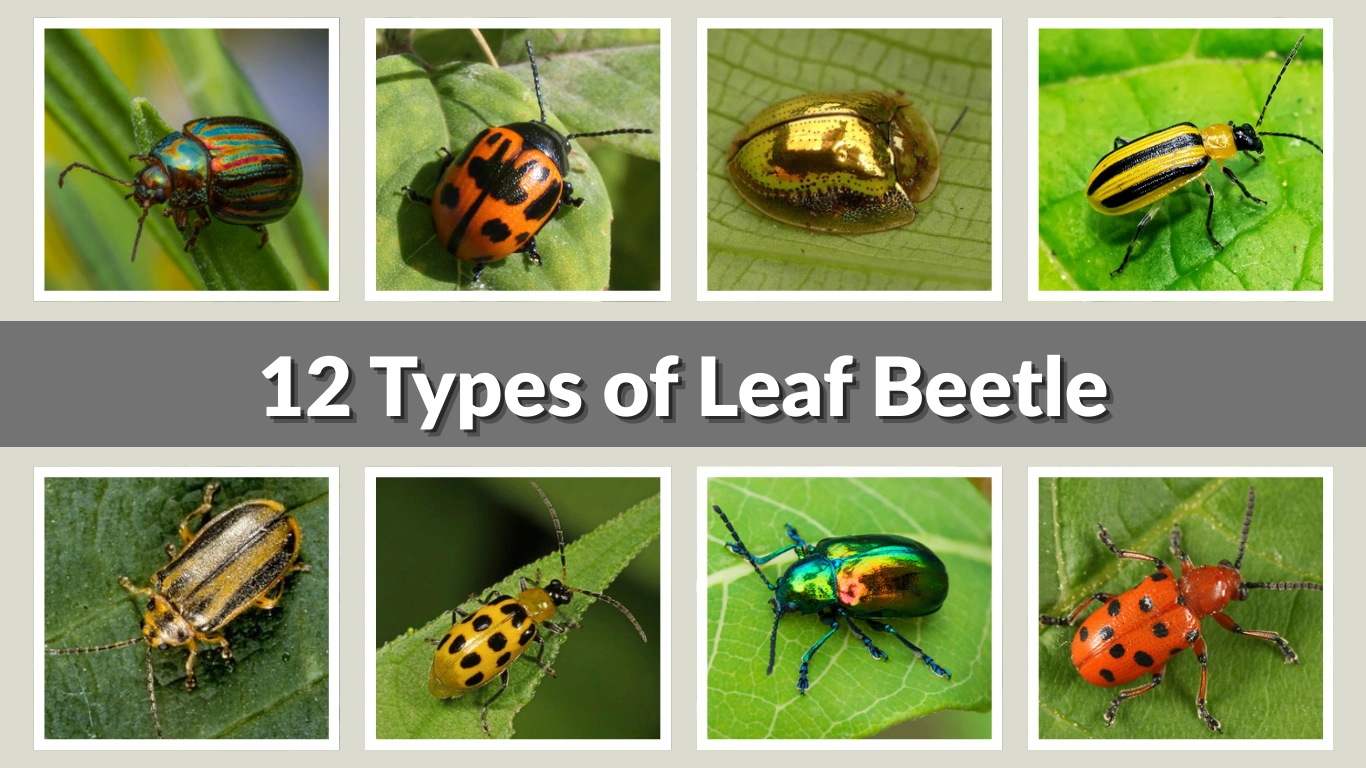
Leaf beetles (Chrysomelidae) are a diverse group of insects found worldwide, known for their bright colors, varied shapes, and strong association with plants. While some species are admired for their beauty, many are significant agricultural pests that damage crops and garden plants. From the notorious Colorado Potato Beetle to the dazzling Golden Tortoise Beetle, these insects reveal both the destructive and fascinating sides of beetle diversity. In this guide, we’ll explore 12 notable types.
1. Colorado Potato Beetle (Leptinotarsa decemlineata)
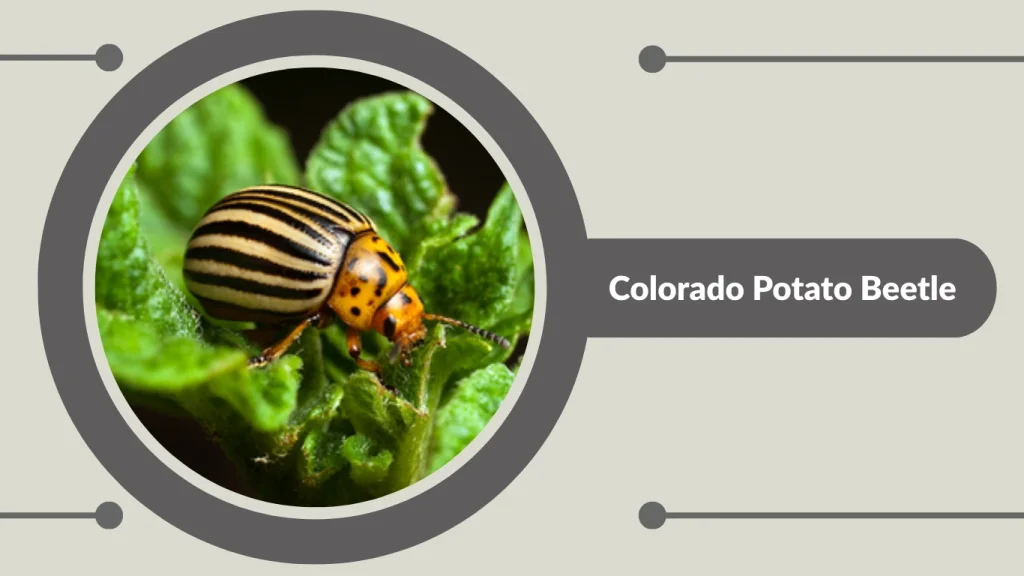
The Colorado Potato Beetle is one of the most infamous agricultural pests, particularly destructive to potato crops, but it also feeds on tomatoes, eggplants, and other plants in the nightshade family. Known for its resilience and ability to develop resistance to insecticides, it has become a serious concern for farmers worldwide. Despite its pest status, it remains a fascinating species in the leaf beetle family.
Identification
- Scientific Name: Leptinotarsa decemlineata
- Size: Adults 8–12 mm long
- Color: Bright yellow-orange body with 10 distinct black stripes on wing covers
- Shape: Oval, convex body with prominent black spots on the head and thorax
- Larvae: Reddish-orange with two rows of black spots on each side
Habitat and Distribution
Originally native to North America, the Colorado Potato Beetle has spread across Europe and Asia. It thrives in agricultural fields, especially where potatoes and other solanaceous crops are cultivated.
Behavior and Diet
Both adults and larvae feed voraciously on the leaves of potato and related plants, often stripping fields bare if uncontrolled. They reproduce rapidly, with females laying hundreds of eggs per season, making population outbreaks common. This beetle’s adaptability and resistance to control methods have made it a persistent challenge in crop management.
2. Red Turnip Beetle (Entomoscelis americana)

The Red Turnip Beetle is a brightly colored leaf beetle that is considered an agricultural pest, particularly on cruciferous crops such as turnips, cabbages, radishes, and canola. Its striking red and black markings make it easy to recognize, but its feeding habits can cause serious damage to both garden and farm crops.
Identification
- Scientific Name: Entomoscelis americana
- Size: Adults 7–10 mm long
- Color: Bright red body with bold black markings on the wing covers
- Shape: Oval and convex, similar in shape to other leaf beetles
- Larvae: Dark-colored, soft-bodied grubs that feed on leaves and roots
Habitat and Distribution
The Red Turnip Beetle is native to North America and is commonly found in agricultural areas, especially fields growing cruciferous vegetables.
Behavior and Diet
Adults and larvae both feed on crucifer leaves, often skeletonizing them by eating the tissue between veins. Their concentrated feeding can severely reduce crop yields. Adults overwinter in soil and reappear in spring, making them a recurring problem for farmers.
3. Dogbane Leaf Beetle (Chrysochus auratus)

The Dogbane Leaf Beetle is one of the most beautiful beetles in North America, known for its iridescent, metallic coloration that shimmers in shades of green, gold, copper, and blue. Unlike many leaf beetles, it is not considered a crop pest, as it feeds primarily on dogbane and milkweed plants.
Identification
- Scientific Name: Chrysochus auratus
- Size: Adults 8–12 mm long
- Color: Metallic green, copper, or golden with a shiny, iridescent surface
- Shape: Oval, convex, and smooth-bodied
- Larvae: Root-feeders that live underground, feeding on dogbane and milkweed roots
Habitat and Distribution
This beetle is widespread across North America and is commonly found in meadows, fields, and woodland edges where dogbane and milkweed grow.
Behavior and Diet
Adults feed almost exclusively on dogbane leaves, with occasional feeding on milkweed. Their metallic colors serve as a warning signal to predators, as these host plants contain toxic compounds that make the beetles distasteful. Unlike agricultural pests, this species plays a neutral or even beneficial role in ecosystems.
4. Cereal Leaf Beetle (Oulema melanopus)
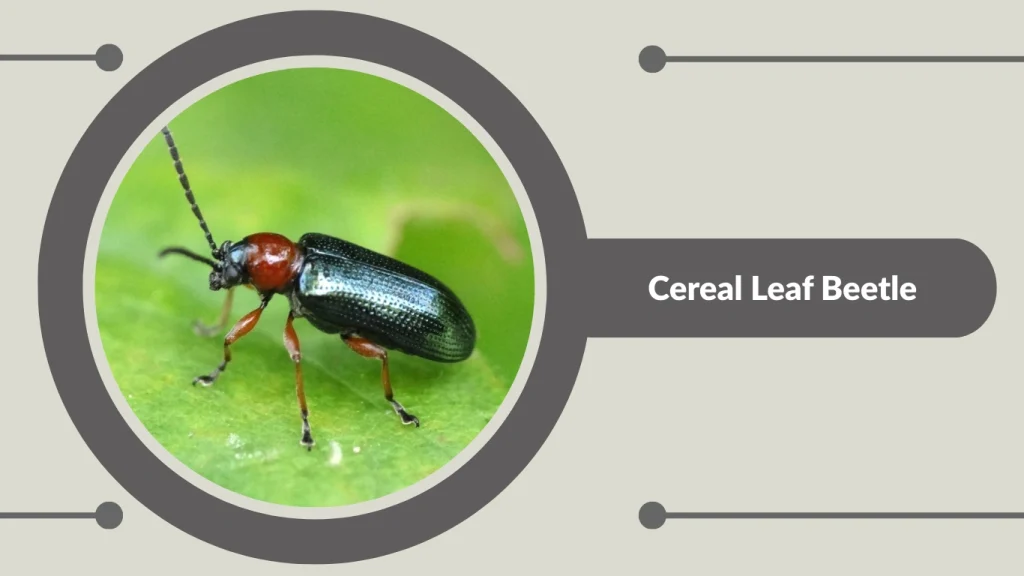
The Cereal Leaf Beetle is a notorious pest of cereal crops, especially wheat, oats, barley, and rye. It is feared by farmers because of the extensive leaf damage caused by both adults and larvae, which reduces photosynthesis and weakens plants. Originally native to Europe, this beetle has spread to North America, where it has become a major agricultural concern.
Identification
- Scientific Name: Oulema melanopus
- Size: Adults 4–6 mm long
- Color: Metallic blue wing covers with reddish legs and thorax
- Shape: Narrow, elongated body
- Larvae: Yellowish grubs, often covered in a slimy, black fecal shield for protection
Habitat and Distribution
Widely distributed across Europe, Asia, and North America, the Cereal Leaf Beetle thrives in agricultural fields with cereal grains.
Behavior and Diet
Both adults and larvae feed on cereal leaves, leaving long parallel strips of tissue removed, creating a “windowpane” effect. Severe infestations can drastically reduce yields. Biological controls, such as parasitic wasps, are often used to manage populations.
5. Blue Mint Beetle (Chrysolina coerulans)

The Blue Mint Beetle is a strikingly beautiful leaf beetle with vivid metallic blue coloration. Unlike many agricultural pests, it is more of a garden nuisance, feeding primarily on mint plants. Its iridescent body makes it easy to spot, and while it can defoliate garden mint patches, it is not considered a major agricultural threat.
Identification
- Scientific Name: Chrysolina coerulans
- Size: Adults 7–11 mm long
- Color: Brilliant metallic blue or violet body
- Shape: Oval, convex, and smooth-bodied
- Larvae: Black or dark green grubs feeding on mint leaves
Habitat and Distribution
Native to Europe and parts of Asia, the Blue Mint Beetle is commonly found in herb gardens, meadows, and edges of woodland areas where wild mint grows.
Behavior and Diet
Both adults and larvae feed on the leaves of mint plants, creating holes and sometimes skeletonizing the foliage. While populations can build up quickly in gardens, they rarely threaten large-scale agriculture. Their dazzling appearance, however, makes them one of the most eye-catching leaf beetles.
6. Asparagus Beetle (Crioceris asparagi)
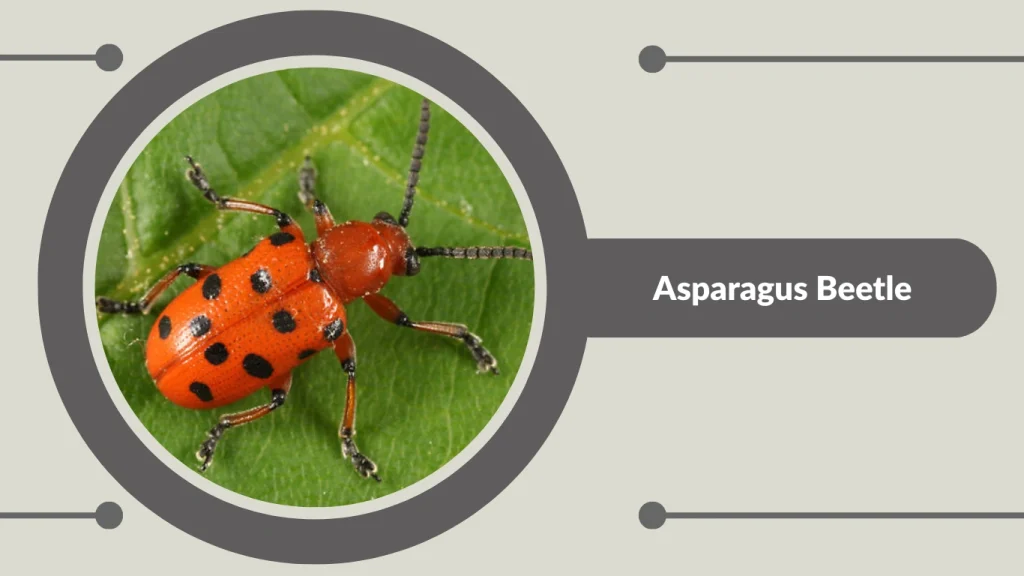
The Asparagus Beetle is a specialized pest that primarily targets asparagus plants. Both adults and larvae feed on young shoots and foliage, often reducing crop quality and yield. While small, they can cause serious economic damage in commercial asparagus production.
Identification
- Scientific Name: Crioceris asparagi
- Size: Adults 6–9 mm long
- Color: Bluish-black wing covers with yellow spots and red thorax
- Shape: Slender, elongated beetle with long legs
- Larvae: Plump, dark gray to black grubs feeding on asparagus foliage
Habitat and Distribution
Native to Europe, the Asparagus Beetle has spread widely and is now common in North America. It thrives in fields, gardens, and wild patches of asparagus.
Behavior and Diet
Both adults and larvae feed exclusively on asparagus, chewing on spears and fronds. They can also scar young shoots, making them less marketable. Populations build quickly in spring and summer, requiring careful management.
7. Spotted Cucumber Beetle (Diabrotica undecimpunctata)

The Spotted Cucumber Beetle is a destructive agricultural pest, notorious for damaging cucumbers, melons, squash, and other cucurbit crops. In addition to direct feeding damage, it can also spread plant diseases, such as bacterial wilt, making it especially problematic.
Identification
- Scientific Name: Diabrotica undecimpunctata
- Size: Adults 6–8 mm long
- Color: Bright greenish-yellow with 12 distinct black spots on wing covers
- Shape: Oval and convex, with long antennae
- Larvae: Known as “corn rootworms,” they live underground feeding on roots
Habitat and Distribution
This beetle is found throughout North America, especially in agricultural regions where cucurbit crops are grown.
Behavior and Diet
Adults feed on leaves, flowers, and stems of cucurbits and other plants, leaving holes and scars. Larvae cause serious underground damage to corn and other crops. Their dual threat as surface feeders and root feeders, combined with their role in transmitting diseases, makes them one of the most challenging beetles for farmers to control.
8. Elm Leaf Beetle (Xanthogaleruca luteola)
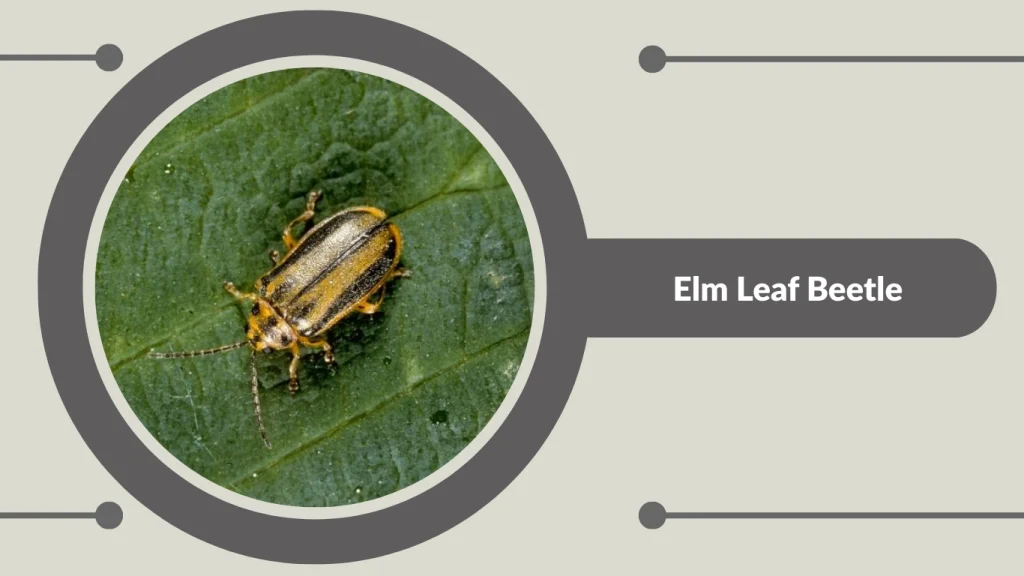
The Elm Leaf Beetle is a well-known defoliator of elm trees and is considered a major pest in urban and forest settings. Both adults and larvae feed on elm leaves, causing severe damage that weakens trees and makes them more vulnerable to disease. Their outbreaks have historically contributed to the decline of elm populations in some areas.
Identification
- Scientific Name: Xanthogaleruca luteola
- Size: Adults 6–8 mm long
- Color: Yellowish-green body with two dark longitudinal stripes on wing covers
- Shape: Narrow and elongated, with long antennae
- Larvae: Dark brown to black grubs with yellow stripes, feeding on leaf undersides
Habitat and Distribution
Native to Europe, the Elm Leaf Beetle has spread to North America, Australia, and New Zealand. It is most common in areas with cultivated or native elm trees.
Behavior and Diet
Adults and larvae skeletonize leaves by feeding between veins, leaving behind lace-like remains. Heavy infestations can cause complete defoliation, leading to tree decline. Adults overwinter in protected areas such as bark crevices and buildings, re-emerging in spring to feed and reproduce.
9. Striped Cucumber Beetle (Acalymma vittatum)
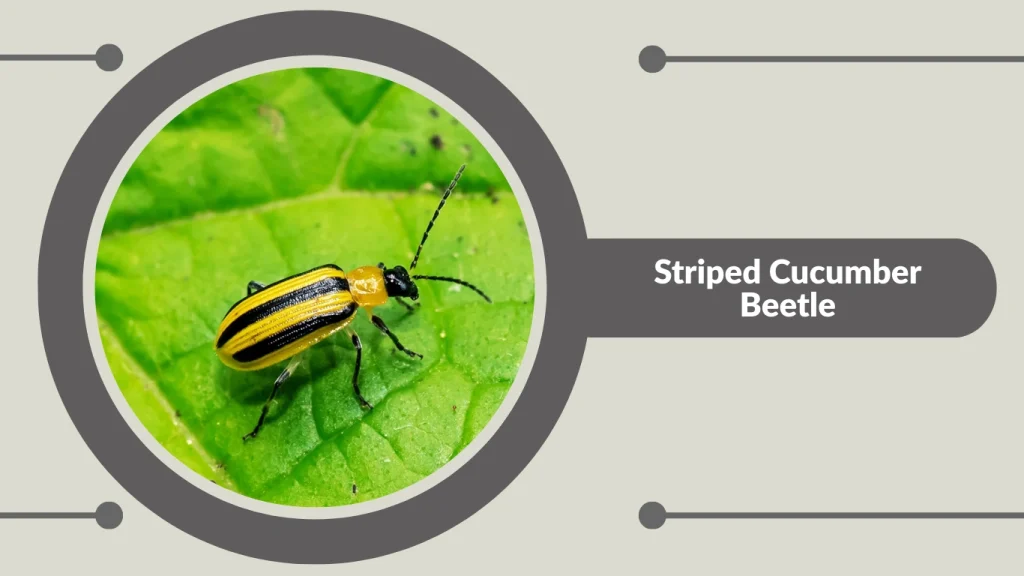
The Striped Cucumber Beetle is one of the most damaging pests of cucurbit crops such as cucumbers, melons, pumpkins, and squash. It causes both direct feeding damage and indirect harm by transmitting bacterial wilt and squash mosaic virus, making it a serious threat to vegetable production.
Identification
- Scientific Name: Acalymma vittatum
- Size: Adults 5–7 mm long
- Color: Bright yellow body with three distinct black stripes running lengthwise on the wing covers
- Shape: Slender, elongated body with long antennae
- Larvae: Small, white grubs that live underground feeding on plant roots
Habitat and Distribution
This beetle is common throughout eastern and central North America. It is especially abundant in agricultural regions where cucurbits are cultivated.
Behavior and Diet
Adults feed on leaves, stems, and flowers of cucurbit plants, creating holes and scars. Larvae attack the root system, weakening plants and reducing yields. Beyond physical damage, their role as vectors of plant diseases makes them particularly destructive, requiring careful monitoring and control in crop systems.
10. Golden Tortoise Beetle (Charidotella sexpunctata)
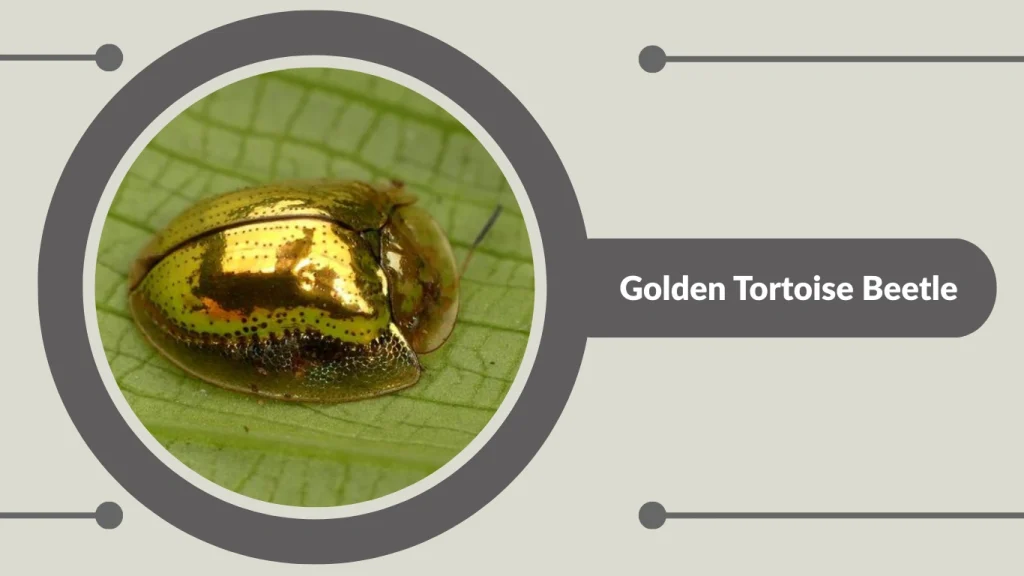
The Golden Tortoise Beetle is a small but striking beetle, famous for its shiny, metallic gold appearance that can shift to reddish or bronze when disturbed. Its unique “tortoise shell” shape and dazzling coloration make it one of the most remarkable leaf beetles. Though occasionally feeding on sweet potato and morning glory plants, it is not considered a serious agricultural pest.
Identification
- Scientific Name: Charidotella sexpunctata
- Size: Adults 5–7 mm long
- Color: Brilliant metallic gold, shifting to reddish or bronze under stress
- Shape: Dome-shaped, rounded like a tortoise shell, with transparent margins on wing covers
- Larvae: Spiny, flattened grubs that carry a “fecal shield” (excrement and cast skins) for protection
Habitat and Distribution
Golden Tortoise Beetles are found throughout North and South America, particularly in areas where morning glories and sweet potatoes grow. They are commonly encountered in gardens, fields, and meadows.
Behavior and Diet
Adults and larvae feed on leaves of plants in the morning glory family, chewing small round holes or creating irregular patterns. Their ability to change color is linked to fluid movement under their cuticle, making them unique among beetles. While not a significant pest, they are admired for their beauty and unusual defenses.
11. Swamp Milkweed Leaf Beetle (Labidomera clivicollis)
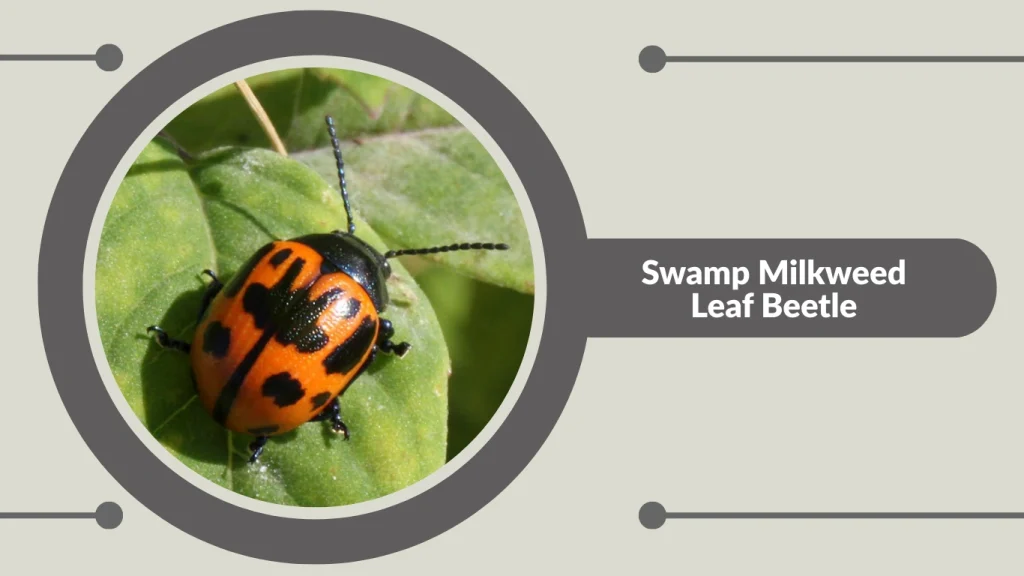
The Swamp Milkweed Leaf Beetle is a brightly colored beetle easily recognized by its orange-red body with striking black markings. As its name suggests, it feeds primarily on milkweed plants, playing a role in the larger milkweed ecosystem along with monarch butterflies. Its bold coloration serves as a warning to predators of the toxic compounds it accumulates from feeding on milkweed.
Identification
- Scientific Name: Labidomera clivicollis
- Size: Adults 7–12 mm long
- Color: Orange to red body with large, irregular black spots
- Shape: Oval and convex, with smooth wing covers
- Larvae: Yellowish grubs with dark heads, feeding on milkweed leaves
Habitat and Distribution
This beetle is native to North America and is commonly found in wetlands, meadows, and gardens where milkweed grows.
Behavior and Diet
Both adults and larvae feed exclusively on milkweed, consuming leaves and sometimes flowers. They are tolerant of the plant’s toxic chemicals, which they store in their bodies for defense. Their bright coloration is aposematic, warning predators of their unpalatability.
12. Rosemary Beetle (Chrysolina americana)
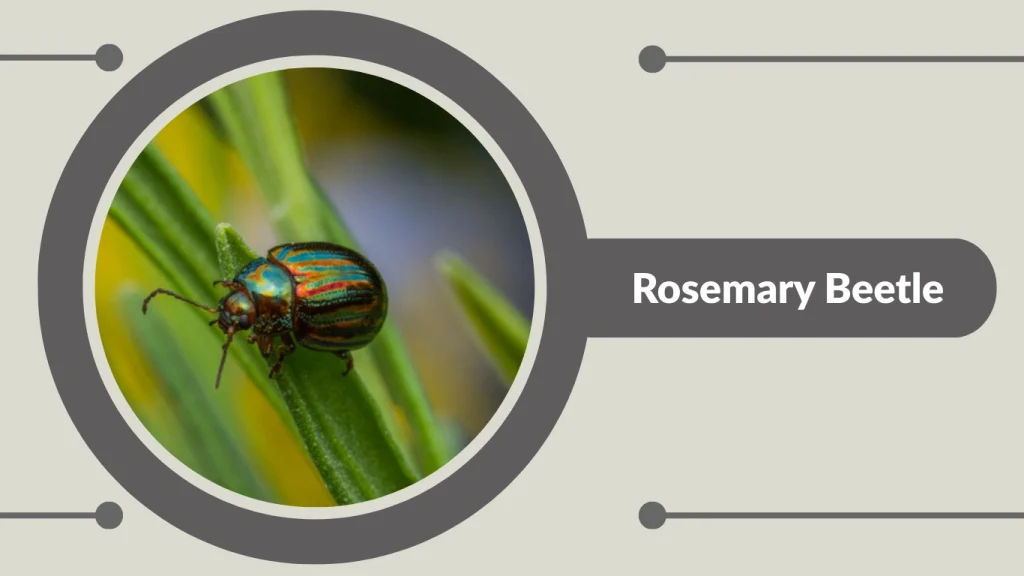
The Rosemary Beetle is a beautiful but sometimes troublesome beetle, notable for its metallic green body with vivid purple stripes. Despite its name “americana,” it is native to southern Europe but has spread to other regions, including the UK. It is a common garden pest on aromatic herbs such as rosemary, lavender, sage, and thyme.
Identification
- Scientific Name: Chrysolina americana
- Size: Adults 6–8 mm long
- Color: Shiny metallic green with purple longitudinal stripes
- Shape: Oval and smooth-bodied with a compact build
- Larvae: Grayish grubs with darker stripes, feeding on herb leaves
Habitat and Distribution
Native to the Mediterranean region, the Rosemary Beetle has expanded its range northward and is now well established in many parts of Europe. It thrives in gardens and landscapes where aromatic herbs are grown.
Behavior and Diet
Both adults and larvae feed on the leaves of rosemary, lavender, thyme, and sage. Feeding damage often appears as ragged holes and chewed leaf edges. Though visually attractive, the beetle can cause significant damage to ornamental and culinary herbs if populations are left unchecked.
