
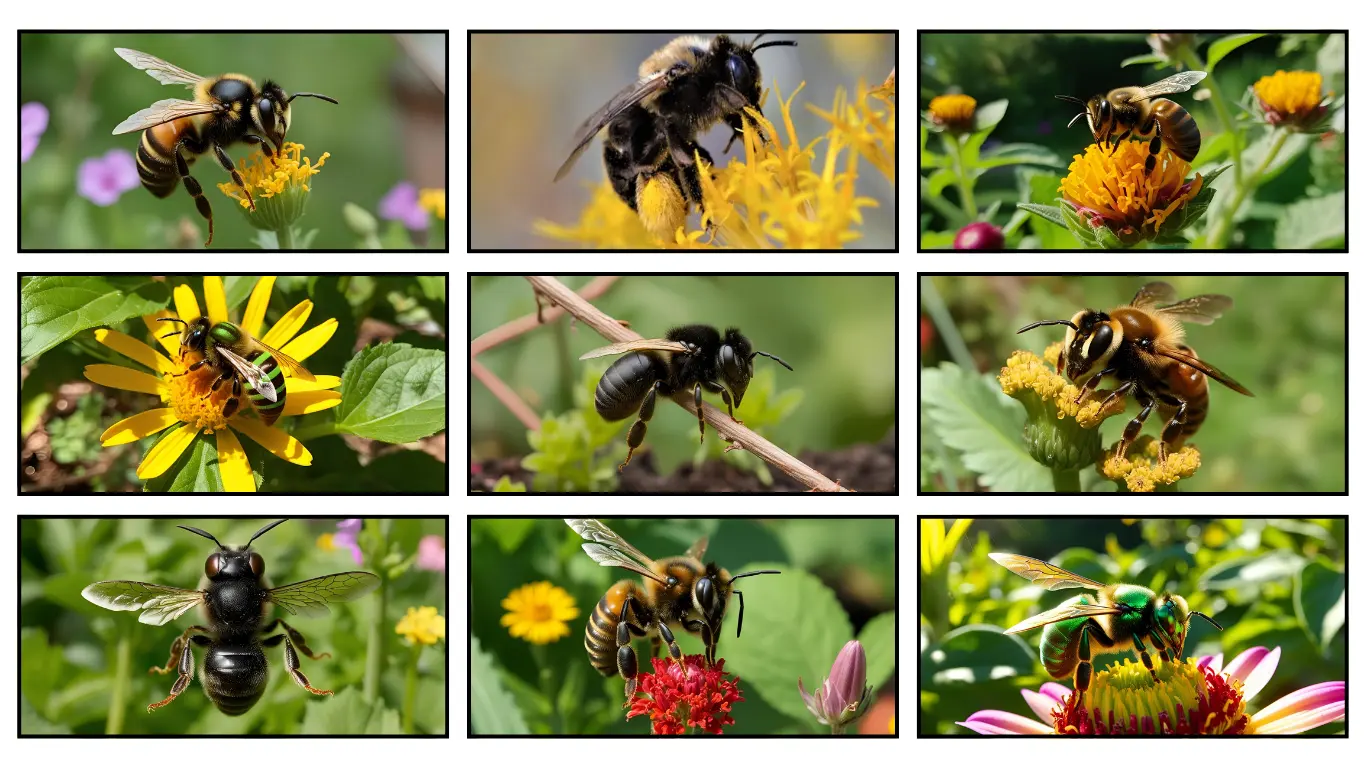
Bees are vital pollinators that come in many shapes, sizes, and colors, each with its unique role in the ecosystem. From the famous Western Honey Bee to the lesser-known Wool Carder Bee, each species has fascinating traits that make it special.
In this guide, we’ll explore 25 different types of bees, including their appearance, nesting behavior, and how to identify them easily in your garden, fields, or forests.
1.Western Honey Bee
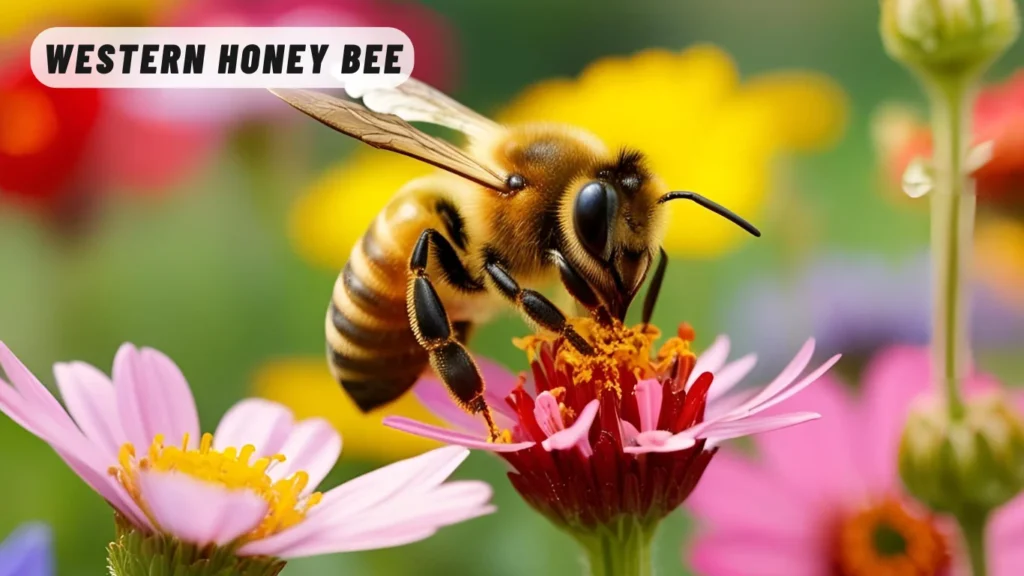
The Western Honey Bee is one of the most important and familiar insects in the world, valued for its ability to produce honey and pollinate crops. It plays a vital role in agriculture and ecosystems, living in highly organized colonies.
Appearance
The Western Honey Bee has a medium-sized body covered in short golden hairs with distinct dark brown or black bands across its abdomen. Its wings are translucent, and its overall appearance is slightly fuzzy and compact.
Identification
- Medium size, typically 12–15 mm in length
- Golden-yellow body with dark brown to black bands
- Fuzzy thorax and smooth abdomen
- Clear, veined wings that fold flat over the body
- Often seen gathering nectar and pollen from flowers
- Builds large, social wax hives housing thousands of individuals
2. Carpenter Bee

Carpenter Bees are large, solitary bees known for nesting in wood. They are important pollinators but often mistaken for bumblebees. Instead of living in hives, they burrow into dead wood or bamboo to create their nests.
Appearance
Carpenter Bees have a robust, shiny black body with minimal hair on their abdomen. Their thorax is often yellow and fuzzy, and their wings may appear dark or slightly metallic in bright sunlight.
Identification
- Large, strong body (around 12–25 mm)
- Shiny, hairless black abdomen
- Yellow, fuzzy thorax resembling a bumblebee
- Slow, loud, hovering flight near wooden structures
- Tunnels and nests inside wood, fences, or dead trees
3. Mason Bee

Mason Bees are solitary, non-aggressive bees famous for using mud to seal their nesting chambers. They are excellent pollinators, often more efficient than honey bees for certain fruits like apples and cherries.
Appearance
Mason Bees are medium-sized, typically dark metallic blue or green, with a compact body. They have dense hairs on their abdomen that collect pollen and strong jaws for manipulating mud.
Identification
- Medium size (about 10–12 mm)
- Metallic blue, green, or black body
- Dense hair patches on the abdomen
- Solitary nesters using mud partitions
- Frequently found near holes in wood or masonry
4. Squash Bee

Squash Bees are specialized pollinators that focus on squash, pumpkin, and gourd plants. Active mainly in the early morning, they are critical for the pollination of many agricultural crops in North America.
Appearance
Squash Bees are medium to large with a tan or orangish-yellow body, and males often have a slightly smaller and slimmer appearance than females. They resemble small bumblebees but are fuzzier and more focused around squash flowers.
Identification
- Medium to large size (12–14 mm)
- Tan to orange-yellow coloring
- Strong, fuzzy appearance for collecting pollen
- Males sometimes seen sleeping inside squash flowers
- Active during early morning around squash or pumpkin plants
5. Ashy Mining Bee

The Ashy Mining Bee is a striking solitary bee easily recognized by its grayish coloring. Emerging in spring, they are excellent early-season pollinators for fruit trees and wildflowers in Europe and parts of North America.
Appearance
Ashy Mining Bees are medium-sized with a striking ash-gray coat covering much of their thorax and face. Their abdomen is dark and smooth, contrasting sharply with their silvery hairs.
Identification
- Medium size (10–14 mm long)
- Silvery gray hairs on head and thorax
- Dark, smooth abdomen
- Burrows small tunnels into sandy or loose soil
- Active mainly in early spring around blooming trees
6. Tawny Mining Bee
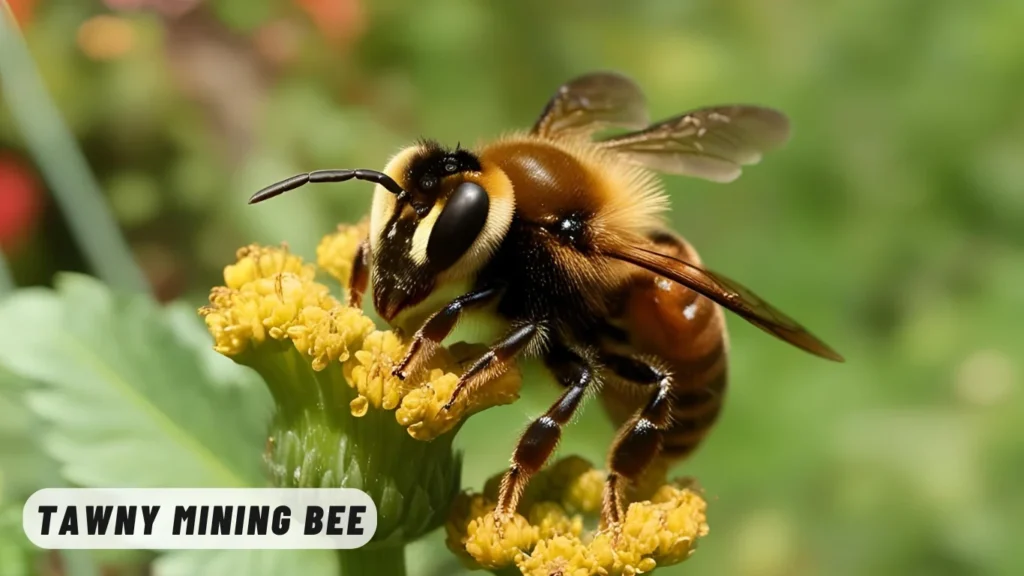
The Tawny Mining Bee is a beautiful solitary bee known for its bright reddish-brown coloring. It prefers sunny gardens, orchards, and meadows where it burrows into soft soil to create its nest chambers.
Appearance
The Tawny Mining Bee has a dense, bright orange-red coat on its thorax and upper body, with a black face and dark hind legs. Females are larger and fuzzier compared to males.
Identification
- Medium size (around 8–12 mm)
- Bright reddish-brown or tawny-colored body
- Black face and legs
- Nests in small holes in loose or sandy soil
- Seen flying low over lawns and meadows in spring
7. Africanized Bee
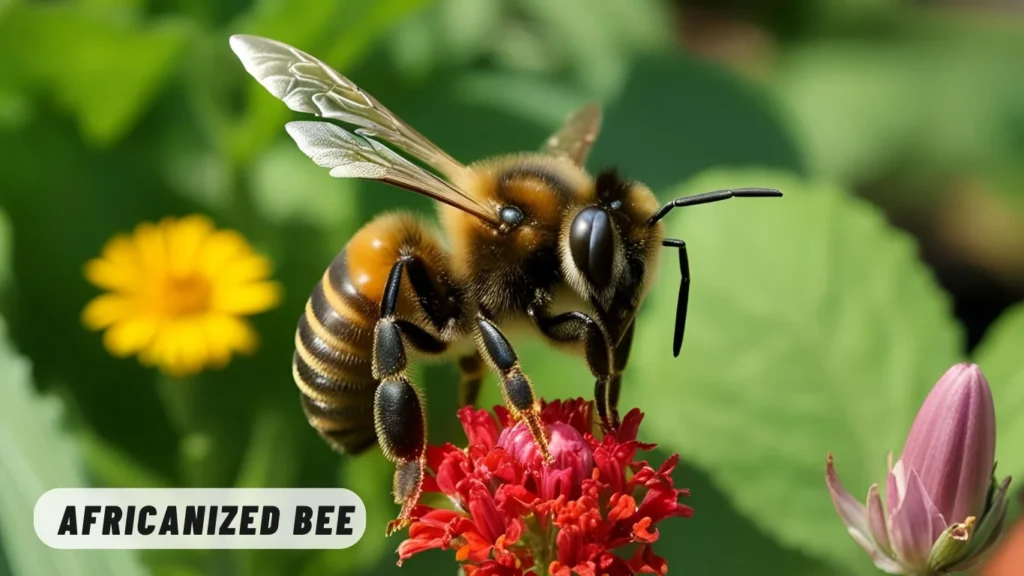
Africanized Bees, often called “killer bees,” are a hybrid of African and European honey bees. They are highly defensive but important pollinators in warmer regions, adapting well to tropical and subtropical climates.
Appearance
Africanized Bees look almost identical to regular honey bees, with a golden-yellow body and dark bands. They are slightly smaller and faster, making visual identification tricky without close inspection.
Identification
- Small to medium size (10–13 mm)
- Golden-yellow color with dark striping
- Slightly smaller than European honey bees
- Very aggressive behavior when disturbed
- Found mainly in South and Central America, southern U.S.
8. Stingless Bee
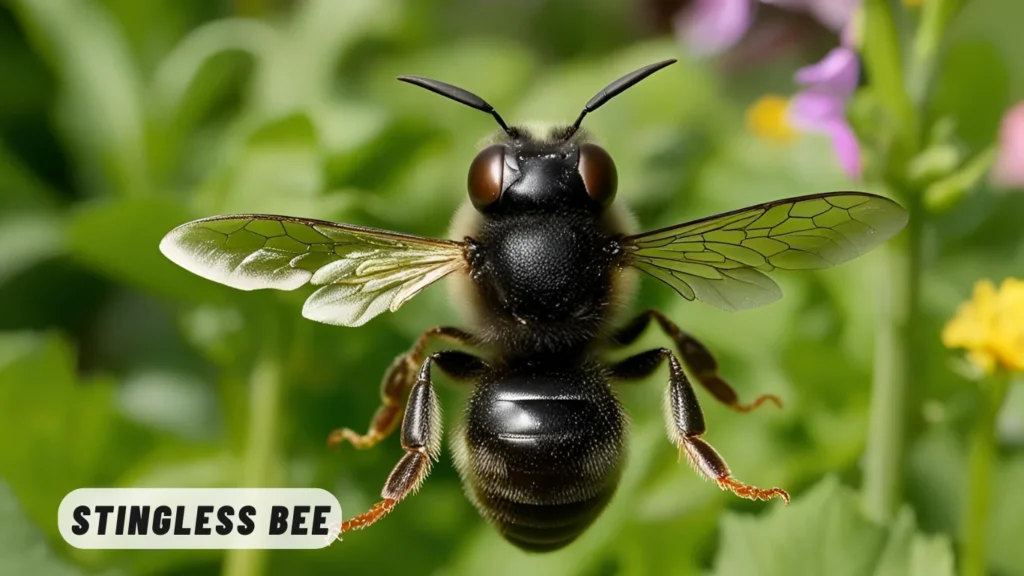
Stingless Bees are tropical social bees known for their complete lack of functional stingers. They produce honey and wax and play a vital role in pollination across South America, Africa, Asia, and Australia.
Appearance
Stingless Bees are generally small, black or dark brown, and may have a slight metallic sheen. Their wings are relatively short, and their bodies are less hairy compared to other bee types.
Identification
- Small body (3–6 mm long)
- Dark brown to black coloration
- Lack of functional stinger
- Lives in large colonies inside tree cavities or ground nests
- Produces a unique tangy-flavored honey
9. Bumble Bee

Bumble Bees are large, fuzzy bees easily recognized by their loud buzzing sound. They are important cold-weather pollinators, able to work in cooler temperatures when many other bees are inactive.
Appearance
Bumble Bees have a stocky, round body covered in soft, dense hair. Their coloration is typically black with yellow, orange, or white bands depending on the species.
Identification
- Large, robust body (13–25 mm)
- Dense fuzzy hair all over the body
- Black body with yellow or orange bands
- Slow, loud buzzing flight
- Nests underground or in abandoned rodent burrows
10. Leafcutter Bee
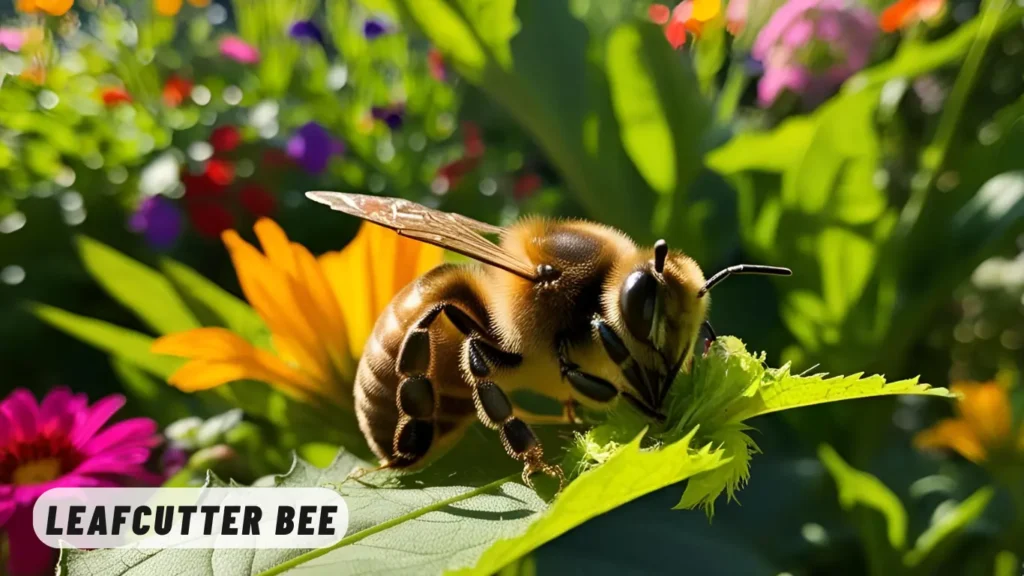
Leafcutter Bees are solitary bees known for their habit of cutting neat circles from leaves to build their nests. They are excellent pollinators, particularly for plants like alfalfa and other crops.
Appearance
Leafcutter Bees are medium-sized with stout bodies, often black or metallic greenish, and covered in short hairs. They carry pollen on the underside of their abdomen rather than on their legs.
Identification
- Medium size (7–18 mm)
- Dark or metallic green-black body
- Short, stout hairs for pollen collection
- Cuts round pieces from leaves to line nest cells
- Nests in wood holes, stems, or ground cavities
11. Long-Horn Bee
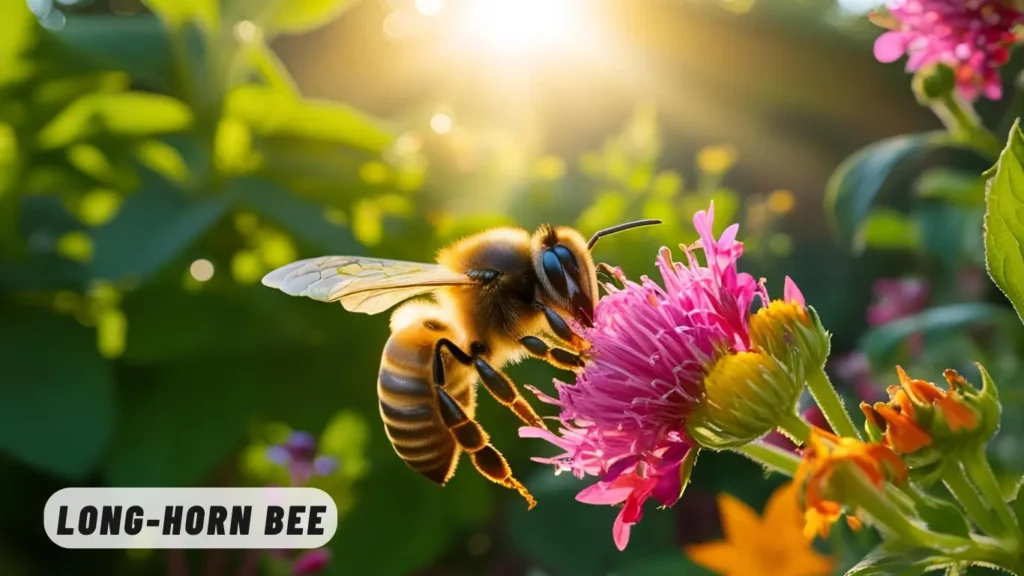
Long-Horn Bees are named for their males’ exceptionally long antennae. These solitary bees are active pollinators, often visiting sunflowers, and are mostly found across North America.
Appearance
Long-Horn Bees have a slender body, often dark brown or black, with noticeable long antennae in males. Their bodies are moderately hairy, helping them trap pollen while foraging.
Identification
- Medium body size (8–14 mm)
- Males have long, curved antennae
- Dark brown or black coloration
- Frequent visitors to sunflowers and wildflowers
- Solitary nesters in soil or sandy areas
12. Green Metallic Sweat Bee

Green Metallic Sweat Bees are small, dazzling pollinators recognized for their brilliant iridescent green color. They are attracted to human sweat for its salt and are important pollinators for many wildflowers and crops.
Appearance
Green Metallic Sweat Bees have a slender, vibrant green or blue-green body that gleams under sunlight. Their body is smooth with fine, short hairs mainly visible on the thorax.
Identification
- Small size (5–10 mm long)
- Brilliant metallic green or blue-green body
- Smooth and shiny surface
- Attracted to human sweat
- Frequently found on wildflowers and in gardens
13. Small Carpenter Bee
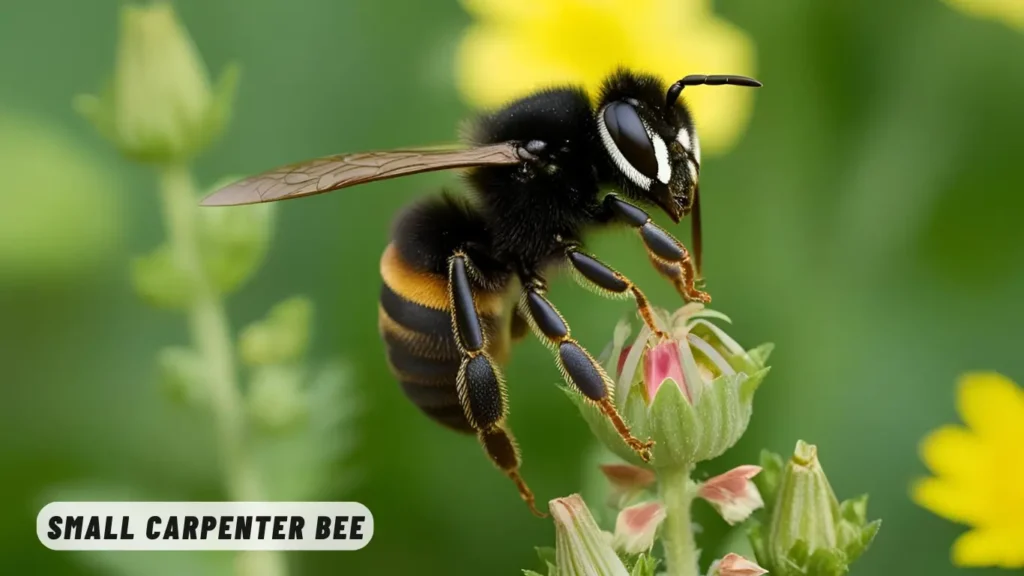
Small Carpenter Bees are solitary bees that prefer nesting in the hollow stems of plants. Unlike their larger relatives, they are less aggressive and have a smaller, sleeker body.
Appearance
Small Carpenter Bees are tiny with a black, shiny body and minimal hair. Their slim appearance makes them resemble small ants but with distinct wings and bee-like features.
Identification
- Tiny size (4–8 mm long)
- Shiny black, hairless body
- Slender and streamlined shape
- Nests in soft plant stems and wood
- Often seen hovering close to vegetation
14. Sweat Bee

Sweat Bees are a diverse group of bees known for their attraction to human sweat. They play a crucial role in pollinating a variety of wildflowers and crops across different climates.
Appearance
Sweat Bees vary greatly in appearance, from metallic green to dull black. Most have a small, slender body with fine hairs, and some species have colorful, shiny surfaces.
Identification
- Small to medium size (3–10 mm)
- Metallic green, dull black, or brown body
- Fine, soft hairs across body
- Attracted to salt from human sweat
- Active in gardens, fields, and forests
15. Carder Bee

Carder Bees are robust, fuzzy bees that gather plant fibers to line their nests. They are often seen flying around patches of flowering plants, aggressively defending their territory from intruders.
Appearance
Carder Bees have a stout, hairy body with a mix of yellow, brown, and black coloring. Their legs and body are adapted for collecting and carrying plant hairs.
Identification
- Medium size (10–14 mm long)
- Thick, fuzzy body with yellow and black patterns
- Strong legs adapted for gathering plant fibers
- Territorial behavior around flowers
- Constructs nests from chewed plant materials
16. Striped Green Sweat Bee
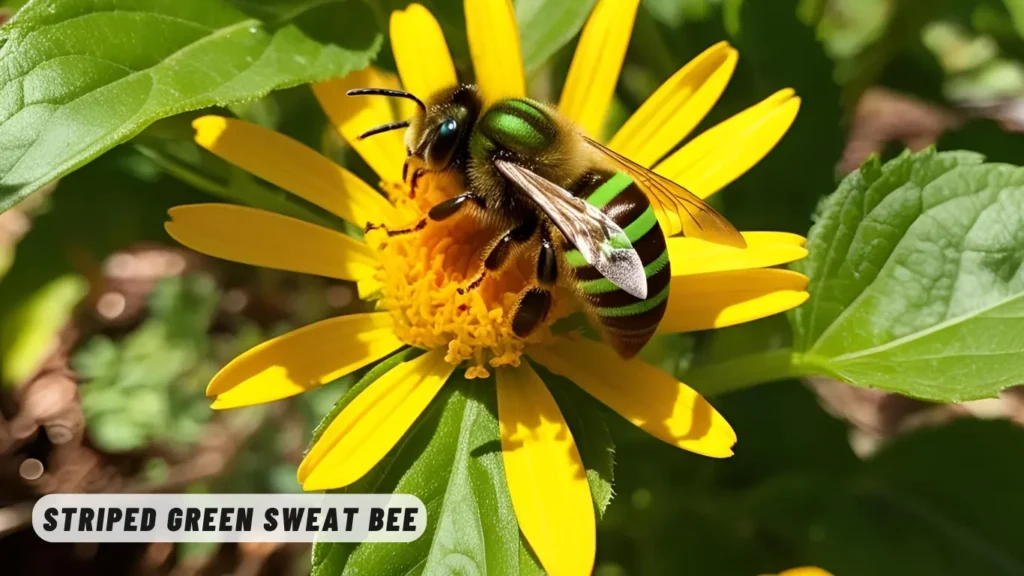
Striped Green Sweat Bees are eye-catching pollinators with vibrant green heads and thoraxes and distinctive striped abdomens. They are energetic and commonly found darting among flowers.
Appearance
Striped Green Sweat Bees have a brilliant green upper body and a black-and-white striped abdomen. Their small, slender shape and shimmering appearance make them easy to recognize among blooms.
Identification
- Small size (5–9 mm long)
- Metallic green head and thorax
- Black abdomen with white stripes
- Quick, agile movements around flowers
- Nests in bare soil or sandy ground
17. Miner Bee

Miner Bees are solitary ground-nesting bees that dig tunnels in sandy or loose soil. They are important early spring pollinators, especially for fruit trees and wildflowers in temperate regions.
Appearance
Miner Bees have a stout, fuzzy body with a dark brown to black coloration. Their legs and body hairs help them carry pollen and dig efficiently through the soil.
Identification
- Medium size (8–15 mm long)
- Dark brown or black, fuzzy body
- Burrows straight tunnels into soil
- Active mainly in early spring
- Solitary nesters but can form dense nesting areas
18. Unequal Cellophane Bee

Unequal Cellophane Bees are solitary bees known for creating waterproof nest linings underground. They emerge in early spring and are gentle, important pollinators for many spring-blooming plants.
Appearance
Unequal Cellophane Bees have a black body with pale hair bands across their abdomen. They appear moderately fuzzy and have a slightly shiny, smooth texture on parts of their thorax.
Identification
- Medium size (10–13 mm long)
- Black body with pale hair stripes
- Slightly shiny thorax
- Nests lined with cellophane-like waterproof material
- Found in sandy or well-drained soils in spring
19. Hairy-Footed Flower Bee

The Hairy-Footed Flower Bee is a fast-flying, solitary bee named for the thick tufts of hair on the males’ legs. It is one of the earliest bees to appear in spring gardens.
Appearance
Hairy-Footed Flower Bees are medium-sized with a fuzzy black or brown body. Males have distinctive long hairs on their middle legs, while females appear plumper and darker.
Identification
- Medium size (10–14 mm long)
- Fuzzy black or brown body
- Males have long, hairy middle legs
- Quick, darting flight near flowers
- Active early in the spring season
20. Ivy Bee

Ivy Bees are autumn specialists, emerging late in the year to feed on ivy flowers. They are solitary ground-nesters but often create large, dense nesting sites when conditions are favorable.
Appearance
Ivy Bees have a striking appearance with golden-yellow bands on a black background. Their thorax is covered in dense, pale hairs, giving them a soft, fluffy look.
Identification
- Medium size (10–13 mm long)
- Golden-yellow and black striped abdomen
- Pale, fluffy thorax hairs
- Nests in sandy or loose soils
- Active mainly in late summer and autumn
21. Yellow-Faced Bee
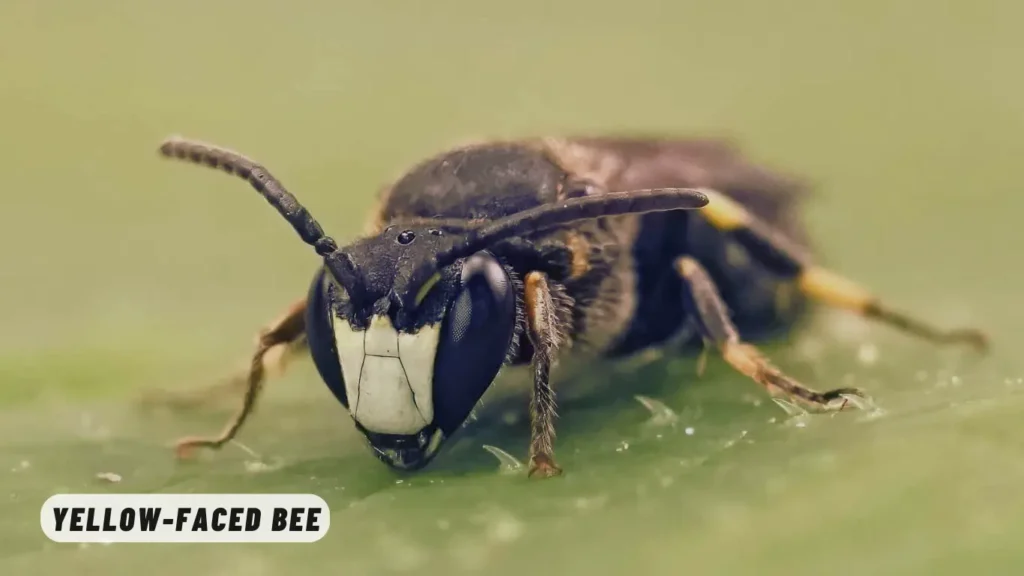
Yellow-Faced Bees are small, slender bees easily identified by the pale yellow or white markings on their face. They are important pollinators, especially in native and coastal ecosystems.
Appearance
Yellow-Faced Bees have a sleek, black body with smooth surfaces and minimal hair. Their face sports distinct yellow or white patterns, and they have narrow, wasp-like waists.
Identification
- Small size (5–8 mm long)
- Smooth, black body with little hair
- Yellow or white face markings
- Resembles tiny wasps
- Nests in plant stems, wood holes, or crevices
22. Furrow Bee
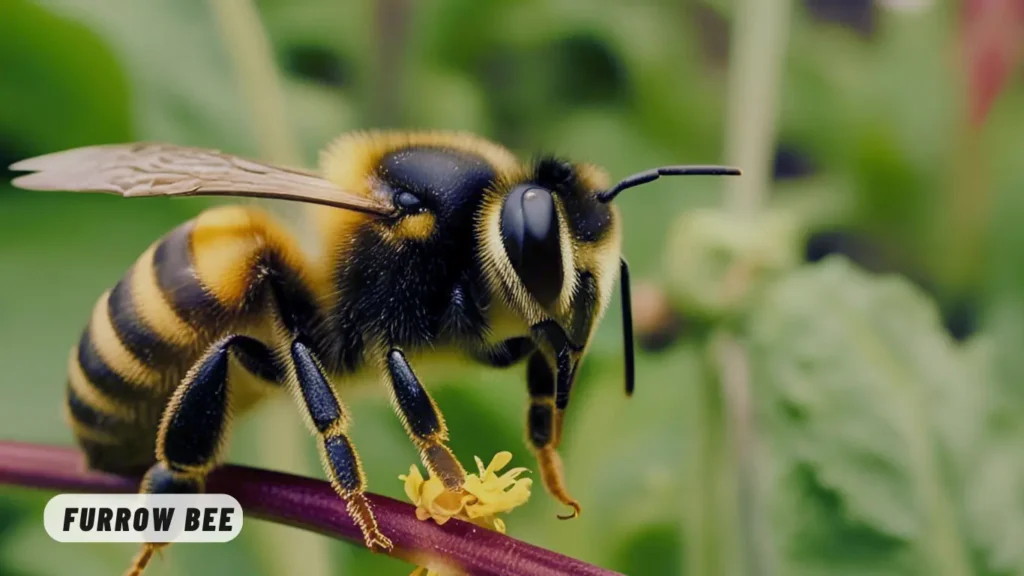
Furrow Bees are solitary ground-nesting bees commonly found in gardens, meadows, and fields. They are efficient pollinators, often seen foraging late into the season when many other bees are less active.
Appearance
Furrow Bees have slender bodies with dark coloring and faint, pale bands across the abdomen. Their legs are moderately hairy, and their wings are clear with subtle dark veining.
Identification
- Medium size (7–12 mm long)
- Dark body with pale abdominal bands
- Slender and streamlined shape
- Nests in furrows or loose soil
- Active from spring through late autumn
23. Box-Headed Blood Bee
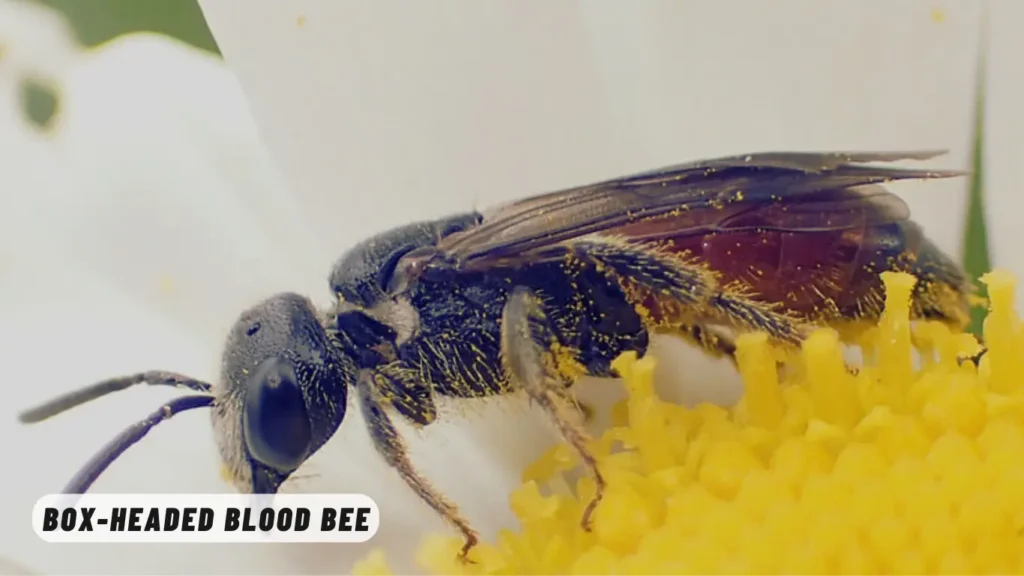
Box-Headed Blood Bees are cleptoparasitic bees that invade other bee nests to lay their eggs. They are named for their reddish abdomen and distinct square-shaped head.
Appearance
Box-Headed Blood Bees have a slender black body with a vivid red abdomen. Their head appears large and boxy compared to their body, giving them a distinctive profile.
Identification
- Small to medium size (6–10 mm long)
- Black body with a bright red abdomen
- Broad, box-shaped head
- Parasitizes the nests of solitary bees
- Often seen low to the ground searching for hosts
24. Southeastern Blueberry Bee

The Southeastern Blueberry Bee is a vital pollinator for blueberries and related plants, native to the southeastern United States. Its buzzing pollination technique helps release pollen from tight flowers.
Appearance
Southeastern Blueberry Bees are medium-sized, resembling small bumblebees with dense, dark gray hairs covering their body. They have a sturdy build perfect for powerful buzzing.
Identification
- Medium size (10–14 mm long)
- Dense gray or black hairs covering body
- Stout, bumblebee-like shape
- Specializes in blueberry pollination
- Active during spring flowering season
25. Wool Carder Bee
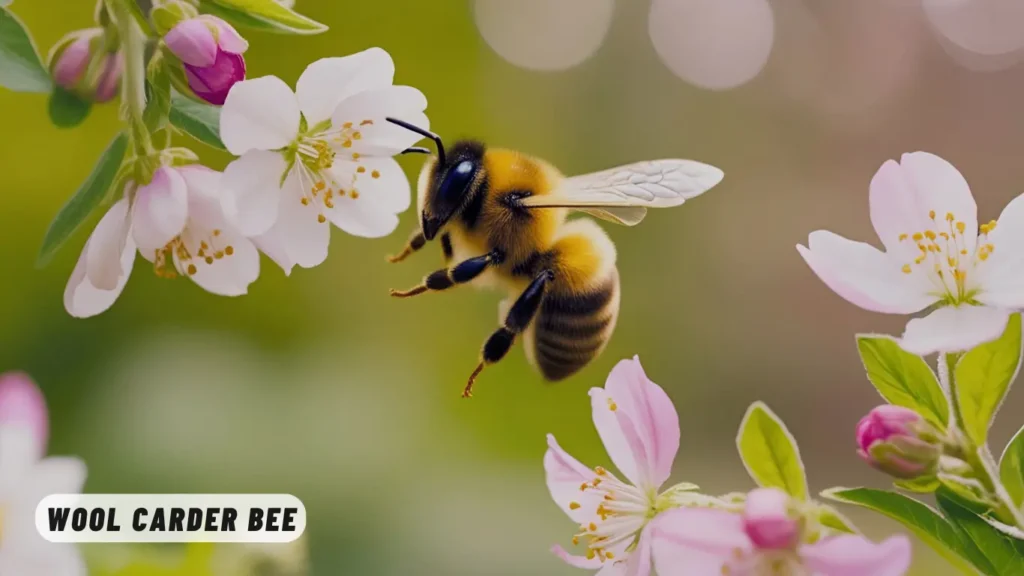
Wool Carder Bees are solitary bees known for collecting plant hairs (“wool”) to line their nests. Males are notably territorial, aggressively guarding flower patches from rivals.
Appearance
Wool Carder Bees have a stout, yellow-and-black striped body with a smooth texture. Males are larger than females and have pointed spines on the end of their abdomen.
Identification
- Medium size (10–14 mm long)
- Yellow-and-black striped abdomen
- Smooth, shiny body with little hair
- Males defend flower territories fiercely
- Collects soft plant fibers to line nests
