

The Lycaenidae family, commonly known as gossamer-winged butterflies, is the second-largest family of butterflies worldwide. These delicate species include blues, coppers, and hairstreaks, all admired for their vivid colors, small size, and intricate wing patterns. Many Lycaenids share fascinating relationships with ants, which protect their caterpillars in exchange for sugary secretions. In this article, we explore 15 remarkable Lycaenidae butterflies, highlighting their identification, habitats, and unique behaviors that make them stand out in the butterfly world.
1. Common Blue Butterfly
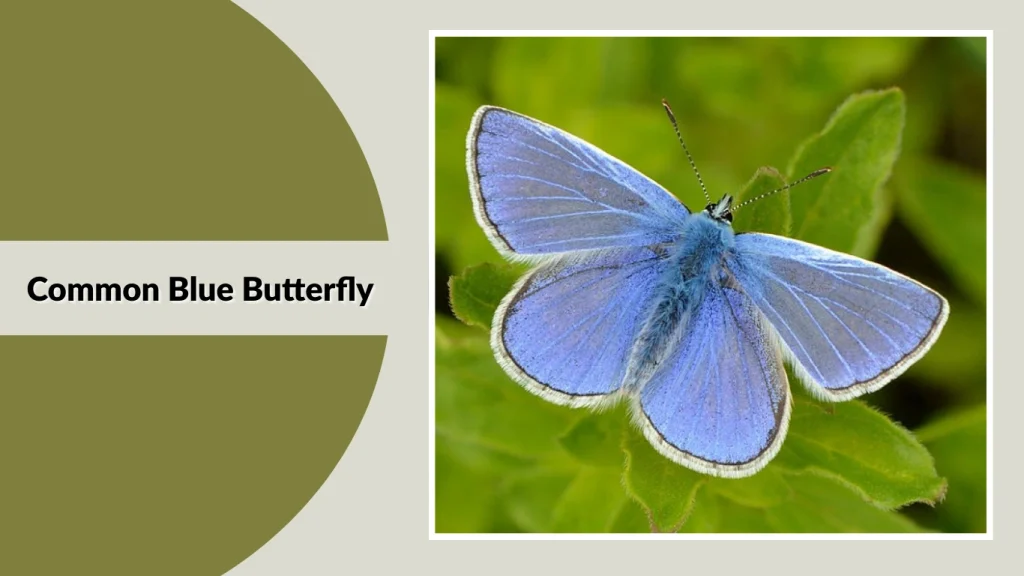
The Common Blue (Polyommatus icarus) is one of the most widespread and well-known members of the Lycaenidae family. Admired for its vivid coloration and graceful flight, it is a familiar sight in meadows, grasslands, and gardens across Europe and Asia. Males display brilliant blue wings, while females are usually browner with orange markings, creating a striking difference between the sexes.
Identification
- Family: Lycaenidae (Gossamer-winged butterflies)
- Wingspan: 2.5–3.5 cm (1–1.4 in)
- Color: Males bright sky blue with thin black borders; females brown with orange spots and sometimes blue dusting
- Underside: Pale grayish with black spots and orange crescents near the hindwing edges
- Caterpillar: Green with faint yellow lines, resembling a small slug in shape
Habitat and Distribution
The Common Blue is widespread across Europe, North Africa, and temperate Asia. It thrives in meadows, grasslands, roadsides, and gardens where host plants like clovers and bird’s-foot trefoil are found.
Behavior and Diet
Adults feed on nectar from wildflowers such as buttercups, knapweed, and daisies. Caterpillars feed on legumes, especially bird’s-foot trefoil. The species produces multiple broods per year, and males are often seen patrolling territories while females search for host plants. Their small size and colorful wings make them one of the most recognizable and admired Lycaenid butterflies.
2. Holly Blue Butterfly
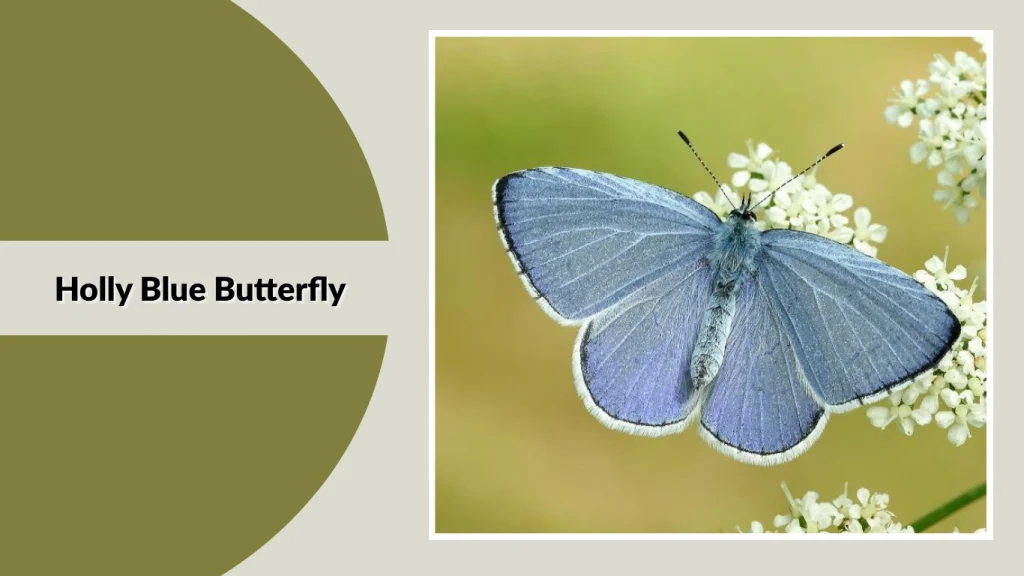
The Holly Blue (Celastrina argiolus) is a small but charming butterfly, easily recognized by its shimmering pale blue wings. Unlike many other blues, it often flies high around shrubs and trees, giving it a distinctive presence in gardens and woodlands. Its name comes from its preference for holly and ivy as host plants.
Identification
- Family: Lycaenidae (Gossamer-winged butterflies)
- Wingspan: 2.5–3.5 cm (1–1.4 in)
- Color: Both sexes pale blue above; males have fewer dark markings, while females show dark edging on forewings
- Underside: Light gray with small black spots, lacking the orange crescents common in other blues
- Caterpillar: Green with faint lines, blending well with holly or ivy leaves
Habitat and Distribution
The Holly Blue is widespread across Europe, North Africa, and Asia. It is often seen in gardens, parks, hedgerows, and woodland clearings, especially in areas with holly and ivy. Unlike many grassland-dwelling blues, it prefers shrubby and tree-rich habitats.
Behavior and Diet
Adults feed on nectar from holly, ivy, dogwood, and other spring and summer flowers. Caterpillars feed mainly on holly in spring broods and ivy in summer broods, making this butterfly unique in its seasonal diet shift. The Holly Blue is one of the earliest blue butterflies to appear in spring, often bringing the first splash of blue to gardens after winter.
3. Eastern Tailed-Blue Butterfly
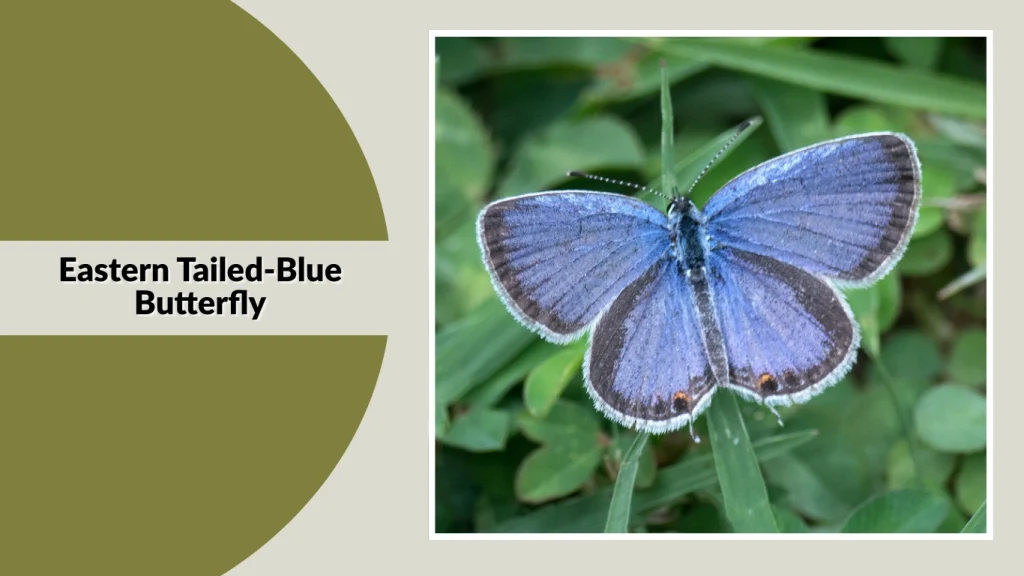
The Eastern Tailed-Blue (Cupido comyntas) is a tiny but vibrant butterfly, best recognized for the small tails extending from its hindwings. Despite its small size, it is one of the most common Lycaenids in North America, often seen fluttering low to the ground in open fields and gardens.
Identification
- Family: Lycaenidae (Gossamer-winged butterflies)
- Wingspan: 2–3 cm (0.75–1.25 in)
- Color: Males are bright blue above; females appear brownish with blue highlights
- Underside: Pale gray with dark spots and a distinctive orange spot near the small tails on hindwings
- Caterpillar: Green with fine hairs, blending with host legumes
Habitat and Distribution
The Eastern Tailed-Blue is widespread throughout North America, from Canada down to Central America. It thrives in grasslands, roadsides, gardens, and open sunny habitats where legume host plants are abundant.
Behavior and Diet
Adults feed on nectar from clovers, asters, and other small wildflowers. Caterpillars feed primarily on legumes such as clover, alfalfa, and vetch. Known for their quick, low, and erratic flight, these butterflies are often seen in groups and are active throughout much of the warm season, producing several broods a year.
4. Small Copper Butterfly
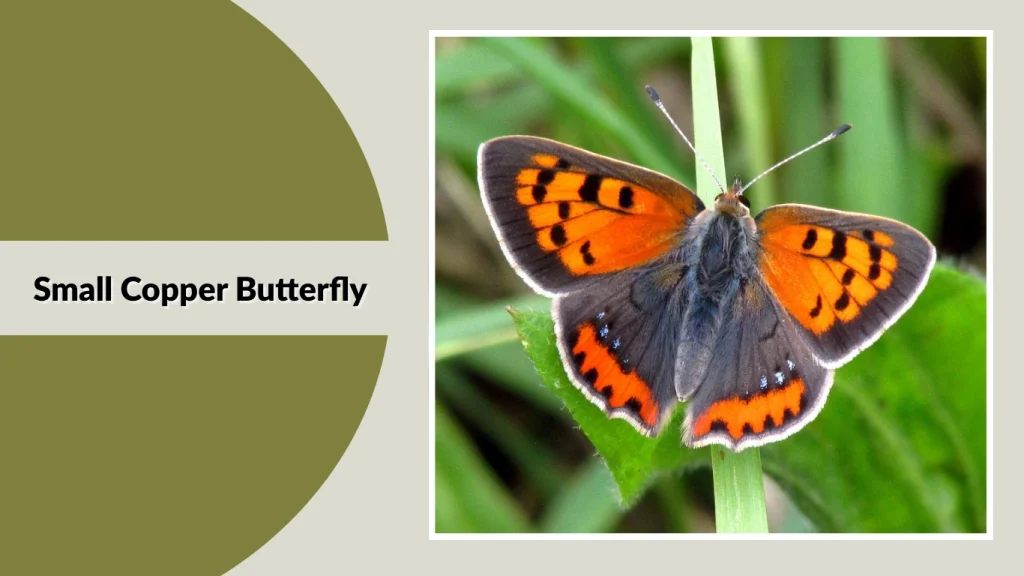
The Small Copper (Lycaena phlaeas) is a fiery little butterfly, loved for its bright orange wings that add a splash of color to grasslands and gardens. Despite its small size, it is bold and active, often perching with wings open to display its brilliant hues. This species is one of the most widespread and easily recognized coppers in the Lycaenidae family.
Identification
- Family: Lycaenidae (Gossamer-winged butterflies)
- Wingspan: 2.5–3.5 cm (1–1.4 in)
- Color: Upperside bright copper-orange with dark borders and spots; hindwings are dark brown with orange edging
- Underside: Pale gray with black spots, providing camouflage at rest
- Caterpillar: Green with fine hairs and faint lines, blending into host plants
Habitat and Distribution
The Small Copper is widespread across Europe, Asia, and North America. It thrives in open grasslands, heaths, meadows, and urban gardens where sorrel and dock plants, its larval hosts, are common.
Behavior and Diet
Adults feed on nectar from wildflowers such as thistles, dandelions, and buttercups. Caterpillars feed mainly on common sorrel and sheep’s sorrel. The butterfly produces multiple broods throughout the summer and autumn, and its territorial behavior often makes males aggressively defend sunny patches from rivals.
5. American Copper Butterfly
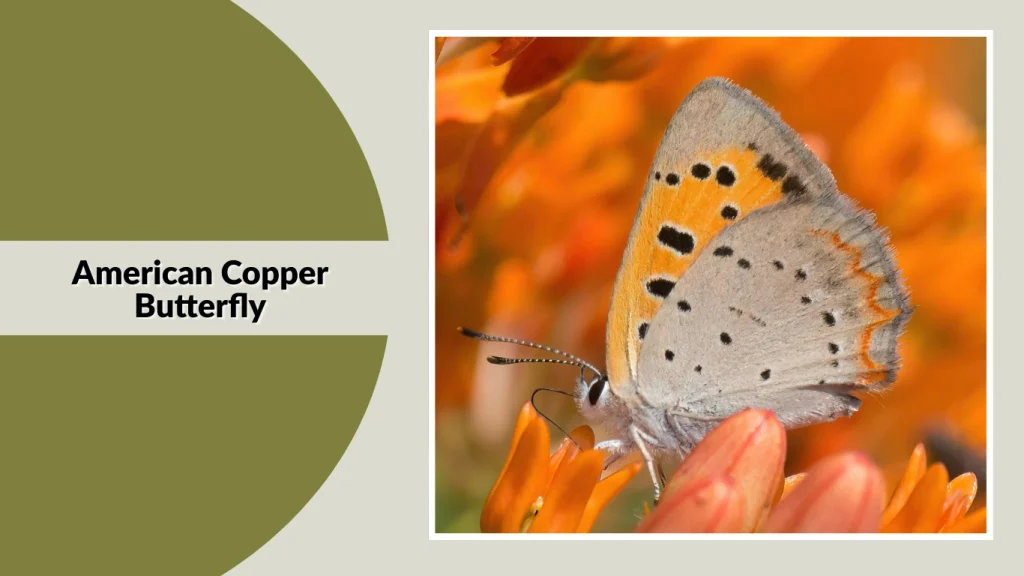
The American Copper (Lycaena phlaeas americana) is a bright and energetic butterfly, closely related to the Small Copper but native to North America. With its vivid orange wings and bold behavior, it is a common sight in open fields and gardens during the summer months. Despite its small size, this butterfly often catches the eye with its fiery coloration.
Identification
- Family: Lycaenidae (Gossamer-winged butterflies)
- Wingspan: 2.5–3.5 cm (1–1.4 in)
- Color: Upperside orange forewings with black spots and dark borders; hindwings dark with orange edging
- Underside: Pale grayish-tan with scattered black spots, providing camouflage
- Caterpillar: Green, slug-shaped with fine hairs, blending with sorrel leaves
Habitat and Distribution
The American Copper is widely distributed across North America, from Canada to the southern United States. It thrives in meadows, fields, roadsides, and gardens where sorrels and docks, its larval host plants, are plentiful.
Behavior and Diet
Adults feed on nectar from clovers, asters, buttercups, and other low-growing flowers. Caterpillars feed mainly on sheep sorrel and curly dock. The species has multiple broods per year, remaining active throughout spring, summer, and autumn. Males are territorial and often perch on low plants, chasing away rivals in defense of sunny patches.
6. Great Purple Hairstreak Butterfly
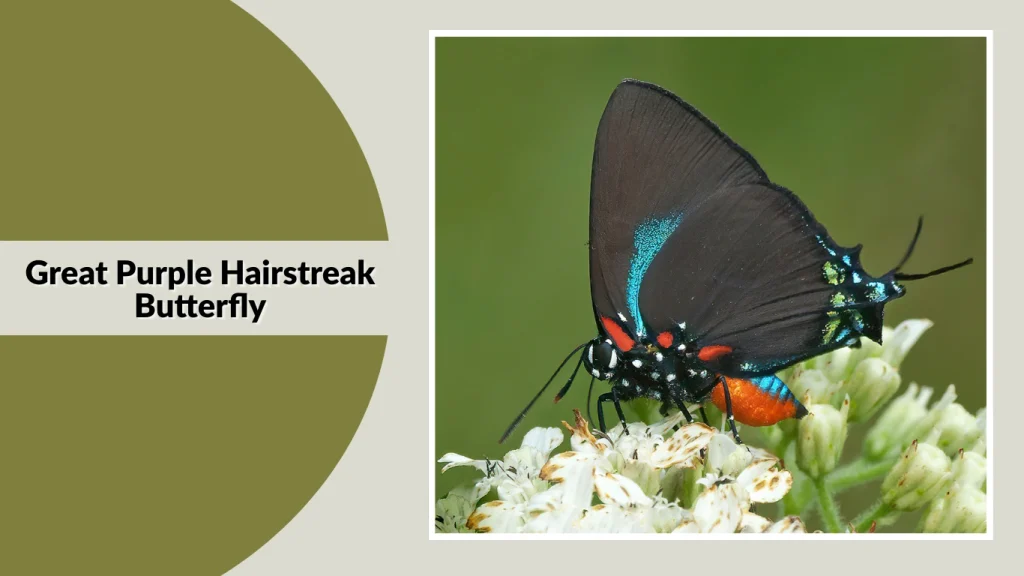
The Great Purple Hairstreak (Atlides halesus) is one of the most stunning butterflies in the Lycaenidae family, admired for its iridescent blue-purple wings and contrasting red and orange markings. It is larger than many other hairstreaks and is a striking sight in sunny woodlands and gardens.
Identification
- Family: Lycaenidae (Gossamer-winged butterflies)
- Wingspan: 3.5–4.5 cm (1.4–1.75 in)
- Color: Upperside shimmering blue-purple with black borders; underside dark brown with orange spots and metallic blue patches
- Hindwings: Small tails resembling antennae, used to distract predators
- Caterpillar: Bright green, slug-shaped, feeding on mistletoe
Habitat and Distribution
The Great Purple Hairstreak is found across the southern United States, Mexico, Central America, and the Caribbean. It thrives in woodlands, gardens, and forest edges, especially in areas where mistletoe grows, as it is the primary host plant.
Behavior and Diet
Adults feed on nectar from a wide range of flowers, including goldenrod, milkweed, and dogbane. Caterpillars feed exclusively on mistletoe, making the species closely tied to this plant. Known for their slow, fluttering flight, these butterflies often perch with wings closed, showing off their bright undersides. Their unique colors and graceful movements make them one of the most admired hairstreak butterflies.
7. Banded Hairstreak Butterfly
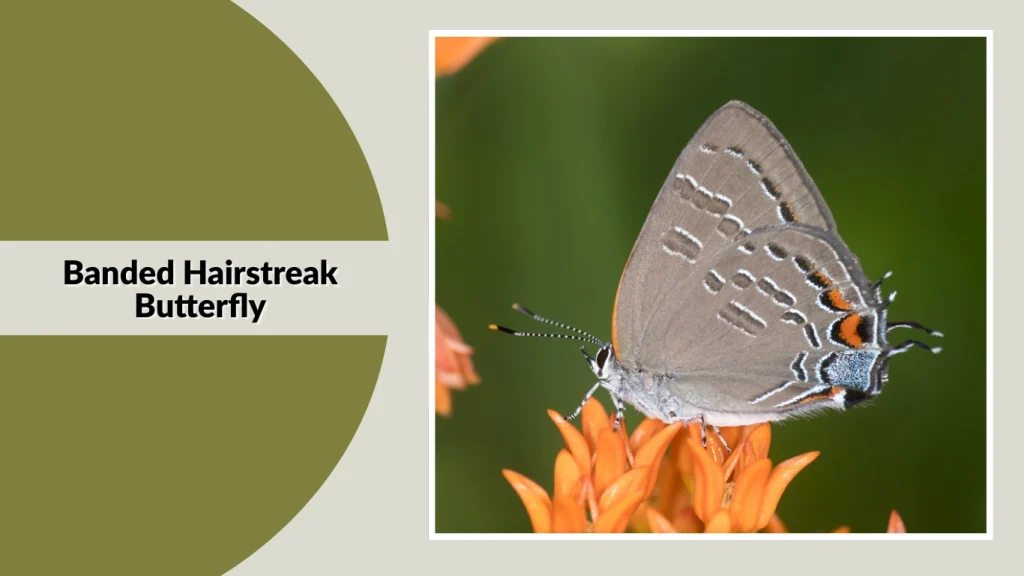
The Banded Hairstreak (Satyrium calanus) is a small but striking butterfly, recognized by the fine white and dark bands that cross its wings. Like many hairstreaks, it has tiny tails on its hindwings that help distract predators, making it appear as if its rear end is its head. This clever adaptation, along with its subtle beauty, makes it a fascinating member of the Lycaenidae family.
Identification
- Family: Lycaenidae (Gossamer-winged butterflies)
- Wingspan: 2.5–3.8 cm (1–1.5 in)
- Color: Brown-gray wings with thin, pale crossbands and small orange spots near the hindwings
- Hindwings: Short tails with a false head pattern to confuse predators
- Caterpillar: Green with yellow lines, blending with oak and hickory leaves
Habitat and Distribution
The Banded Hairstreak is found throughout eastern North America, from southern Canada down to the southern United States. It favors oak and hickory woodlands, forest edges, and sunny clearings where its host plants thrive.
Behavior and Diet
Adults feed on nectar from dogbane, milkweed, sumac, and other summer wildflowers. Caterpillars feed mainly on oak, walnut, and hickory leaves. The butterfly is often seen perching quietly with wings closed, relying on its camouflage and tail pattern to protect itself. Its flight is short and quick, usually close to shrubs and trees.
8. Gray Hairstreak Butterfly
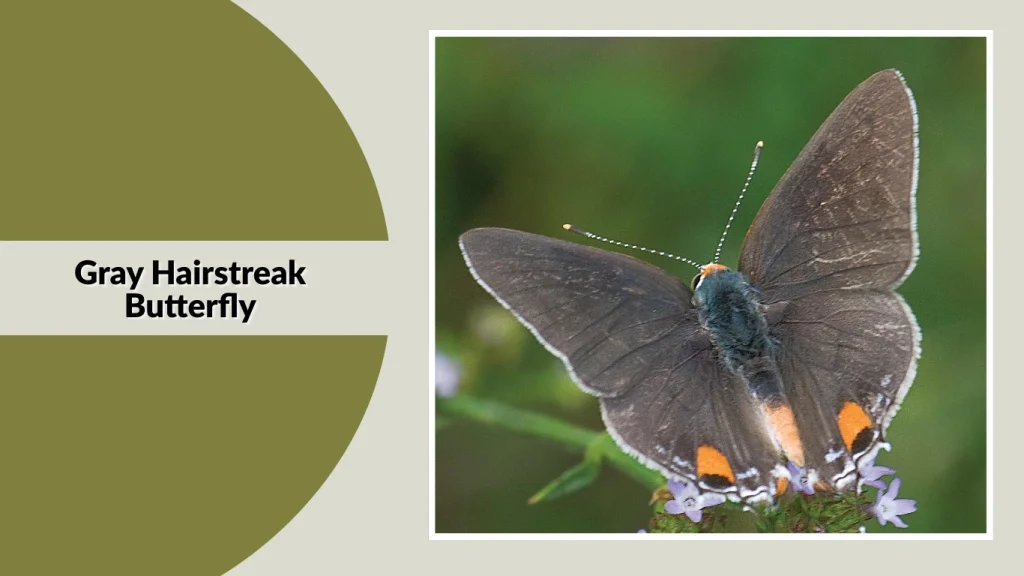
The Gray Hairstreak (Strymon melinus) is one of the most widespread hairstreaks in North America. Recognized for its sleek gray wings and striking orange spot near the hindwings, it is a versatile species that thrives in many habitats. Its small tails on the hindwings, along with the orange and black pattern, serve as a false head to confuse predators.
Identification
- Family: Lycaenidae (Gossamer-winged butterflies)
- Wingspan: 2.5–3.8 cm (1–1.5 in)
- Color: Upper wings smooth gray with a thin white margin; hindwings feature an orange spot near the tails
- Underside: Pale gray with fine white and black lines crossing the wings
- Caterpillar: Green or reddish, slug-shaped, feeding on legumes and mallows
Habitat and Distribution
The Gray Hairstreak is found throughout most of North America, from Canada to Central America. It thrives in open fields, gardens, meadows, roadsides, and disturbed habitats, making it one of the most adaptable hairstreaks.
Behavior and Diet
Adults feed on nectar from a wide variety of flowers including dogbane, goldenrod, clover, and milkweed. Caterpillars feed on many plants, especially legumes, mallows, and cotton. Known for its adaptability, the Gray Hairstreak is often one of the most frequently encountered hairstreaks across its range, active throughout the warm months with multiple generations per year.
9. Coral Hairstreak Butterfly
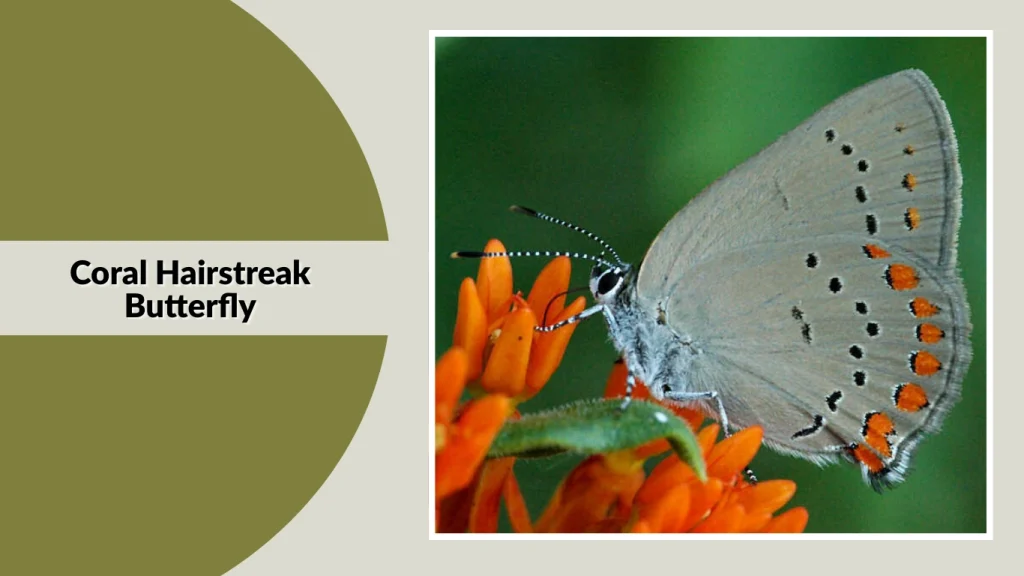
The Coral Hairstreak (Satyrium titus) is a lovely little butterfly, easily recognized by the row of coral-red spots along the edge of its hindwings. Unlike many hairstreaks, it lacks tails, giving it a cleaner wing shape. Its subtle beauty and preference for sunny clearings make it a delightful find during summer months.
Identification
- Family: Lycaenidae (Gossamer-winged butterflies)
- Wingspan: 2.5–3.8 cm (1–1.5 in)
- Color: Upperside grayish-brown without tails; hindwings bordered by bright coral-red spots
- Underside: Pale gray-brown with black dots and the same coral-red edging
- Caterpillar: Green, slug-shaped with faint lines, feeding on cherry and plum leaves
Habitat and Distribution
The Coral Hairstreak is widely distributed across North America, from southern Canada through much of the United States. It thrives in woodland edges, scrubby clearings, meadows, and areas where wild cherries and plums (its host plants) grow.
Behavior and Diet
Adults feed on nectar from milkweed, butterfly weed, dogbane, and other summer flowers. Caterpillars feed mainly on wild cherry and plum. Coral Hairstreaks are most active in midsummer, often seen basking in sunny spots with wings closed, revealing their coral-red markings. Their gentle flight and preference for flowering plants make them a favorite among butterfly watchers.
10. Bronze Copper Butterfly
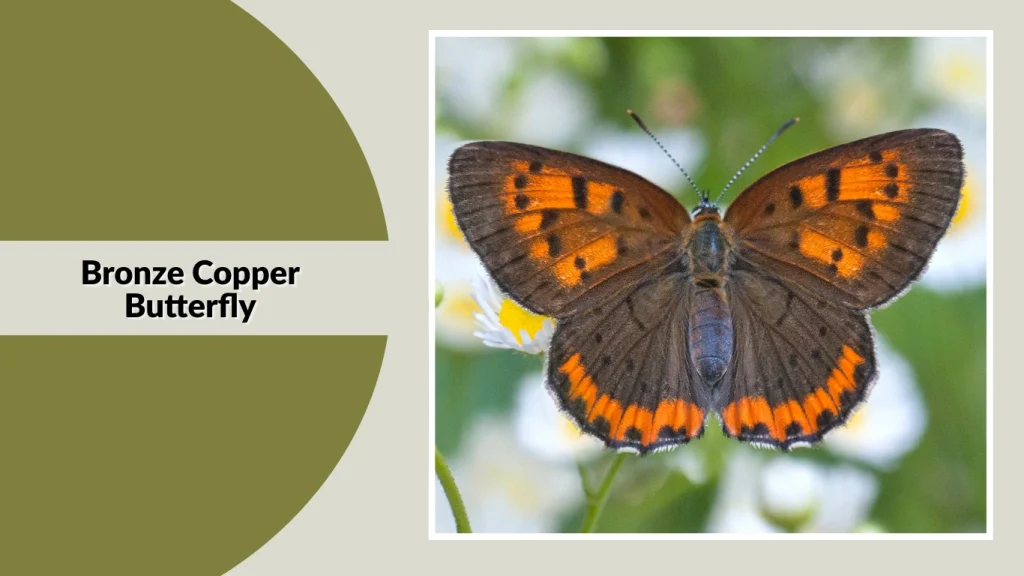
The Bronze Copper (Lycaena hyllus) is a bold and colorful butterfly, noted for its rich copper-orange wings that shimmer with bronze tones. Larger than many other coppers, it is a striking sight when basking in sunny fields and wetlands. Its strong coloration and preference for moist habitats make it an easily recognizable member of the Lycaenidae family.
Identification
- Family: Lycaenidae (Gossamer-winged butterflies)
- Wingspan: 3.2–4.5 cm (1.25–1.75 in)
- Color: Upperside copper-orange with dark brown borders; hindwings often bronzy with orange patches
- Underside: Pale gray with small black spots and faint orange crescents
- Caterpillar: Green, slug-like with faint stripes, feeding on dock and smartweed leaves
Habitat and Distribution
The Bronze Copper is found across much of North America, particularly in the northeastern and midwestern United States and southern Canada. It prefers wet meadows, marshes, and riverbanks where its host plants grow.
Behavior and Diet
Adults feed on nectar from milkweed, clovers, asters, and dogbane. Caterpillars rely on docks and smartweeds as primary host plants. Bronze Coppers are often seen perched with wings spread in sunny spots, showing off their rich copper hues. They are typically active from late spring through early autumn, producing two or more generations each year.
11. Purplish Copper Butterfly
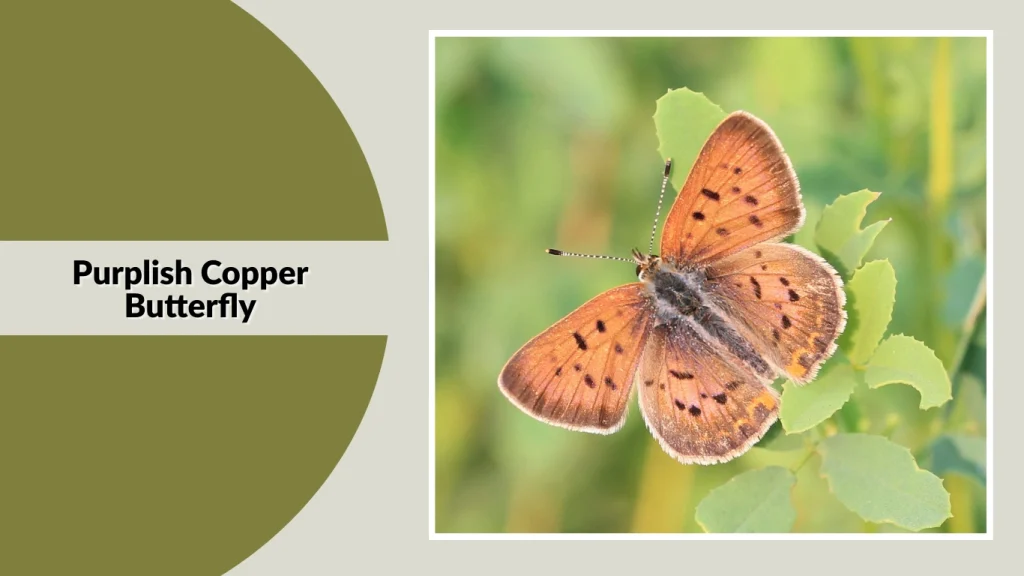
The Purplish Copper (Lycaena helloides) is a small but colorful butterfly, recognized for its coppery-orange wings with a purplish iridescence in males. It is often found in damp meadows and wetland habitats, where it brings a bright splash of color during summer months.
Identification
- Family: Lycaenidae (Gossamer-winged butterflies)
- Wingspan: 2.5–3.5 cm (1–1.4 in)
- Color: Males copper-orange with purplish sheen; females darker with stronger orange markings
- Underside: Pale gray with small black spots and orange crescents on hindwings
- Caterpillar: Green, slug-shaped with faint stripes, feeding mainly on docks and smartweeds
Habitat and Distribution
The Purplish Copper is found across North America, especially in the western and central United States and southern Canada. It favors moist meadows, stream edges, marshes, and low fields with abundant host plants.
Behavior and Diet
Adults feed on nectar from asters, buttercups, clovers, and goldenrods. Caterpillars feed mainly on docks and smartweeds. These butterflies are active from late spring through early fall, producing multiple broods each year. Their quick flight and shimmering wing colors make them a delight to observe in summer landscapes.
12. Silvery Blue Butterfly
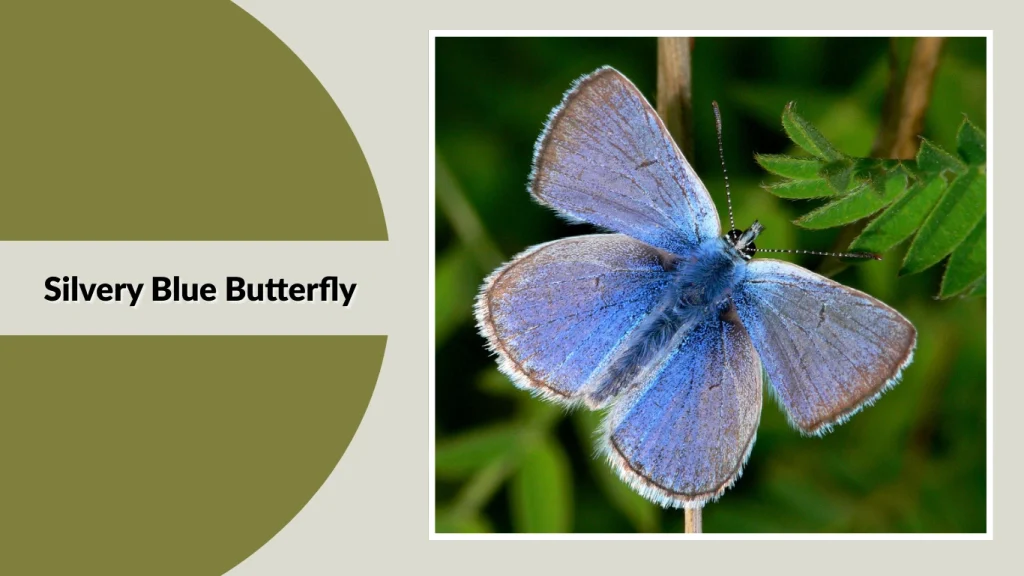
The Silvery Blue (Glaucopsyche lygdamus) is a delicate and enchanting butterfly, admired for the silvery sheen on its wings. Though small in size, it stands out with its shimmering coloration and is a welcome sight in spring and summer meadows.
Identification
- Family: Lycaenidae (Gossamer-winged butterflies)
- Wingspan: 2–3.2 cm (0.75–1.25 in)
- Color: Males are bright blue with a silvery sheen; females are duller with more brownish tones
- Underside: Pale gray with distinct black spots outlined in white
- Caterpillar: Green, flattened, slug-like with fine hairs, feeding mainly on legumes
Habitat and Distribution
The Silvery Blue is widespread across North America, found from Alaska and Canada down into parts of the United States. It prefers open meadows, prairies, forest clearings, and roadsides where host plants are abundant.
Behavior and Diet
Adults feed on nectar from lupines, vetches, and other wildflowers. Caterpillars feed primarily on legumes, especially lupines and vetch. The Silvery Blue often forms small colonies, and adults are typically seen low to the ground, fluttering among flowers during spring and early summer. Its shimmering wings make it one of the most admired “blues” in its range.
13. Green Hairstreak Butterfly
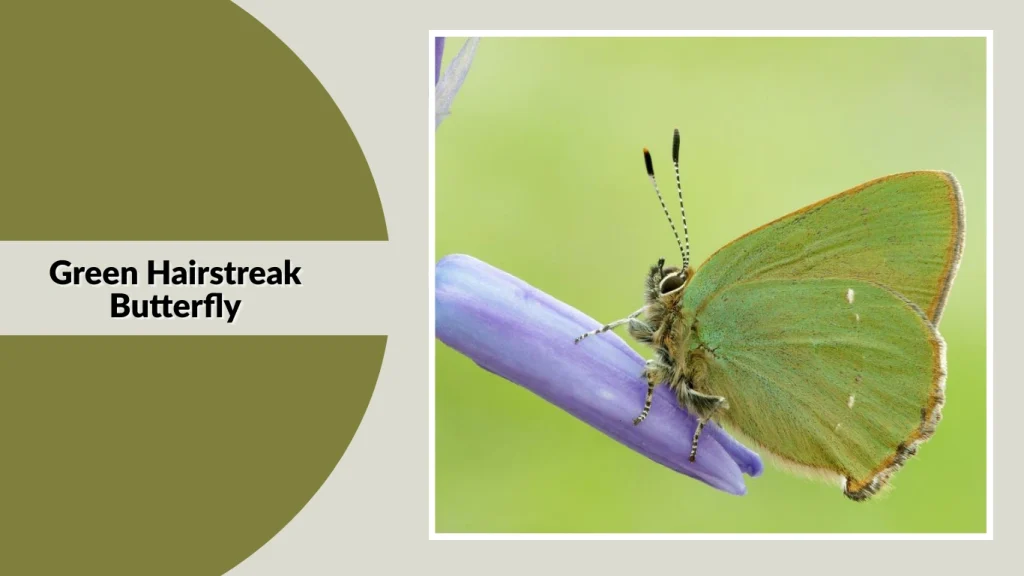
The Green Hairstreak (Callophrys rubi) is a small but dazzling butterfly, best known for its brilliant green undersides that shimmer in the sunlight. Although plain brown above, this iridescent green makes it one of the most attractive hairstreaks in Europe and Asia.
Identification
- Family: Lycaenidae (Gossamer-winged butterflies)
- Wingspan: 2.5–3.5 cm (1–1.4 in)
- Color: Upperwings plain brown, rarely seen since the butterfly usually rests with wings closed
- Underside: Bright metallic green with faint white streaks, excellent for camouflage in vegetation
- Caterpillar: Green with subtle markings, feeding on gorse, broom, and buckthorn
Habitat and Distribution
The Green Hairstreak is widespread across Europe, North Africa, and Asia. It thrives in a variety of habitats including heathlands, grasslands, scrub, and woodland edges. Its adaptability to different host plants allows it to live in diverse environments.
Behavior and Diet
Adults feed on nectar from gorse, hawthorn, buttercups, and bird’s-foot trefoil. Caterpillars feed on a wide range of plants, particularly legumes and shrubs. Green Hairstreaks are often seen basking in sunny spots with wings closed, displaying their vivid green undersides that provide both beauty and camouflage.
14. Acmon Blue Butterfly

The Acmon Blue (Plebejus acmon) is a small but striking butterfly native to western North America. It is known for its bright blue coloration in males and contrasting orange and black markings on both sexes. Its adaptability to various host plants makes it one of the most common and widespread “blues” in its range.
Identification
- Family: Lycaenidae (Gossamer-winged butterflies)
- Wingspan: 2–3 cm (0.75–1.25 in)
- Color: Males bright iridescent blue above; females brown with orange crescents and some blue scaling
- Underside: Pale gray with black spots and bold orange crescents on hindwings
- Caterpillar: Green and slug-like, often tended by ants for protection
Habitat and Distribution
The Acmon Blue is found throughout western North America, from California and Oregon to Nevada and beyond. It thrives in grasslands, deserts, chaparral, and disturbed habitats where host plants such as buckwheat and clover are abundant.
Behavior and Diet
Adults feed on nectar from buckwheat, rabbitbrush, and other wildflowers. Caterpillars feed on various legumes and buckwheats, often in symbiosis with ants that protect them from predators in exchange for sugary secretions. Multiple generations occur annually, making this butterfly active from spring through fall.
15. Marine Blue Butterfly
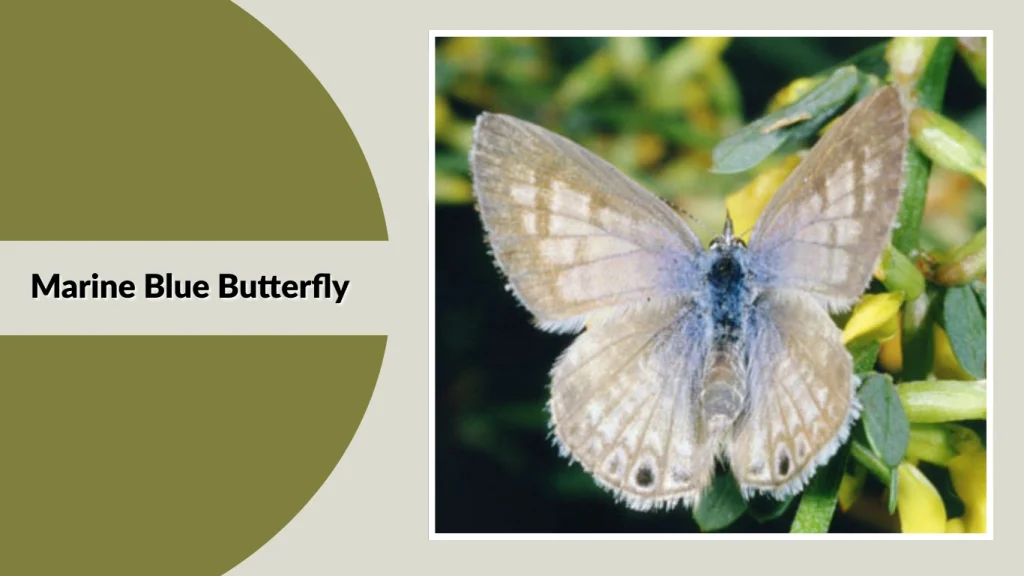
The Marine Blue (Leptotes marina) is a small but beautifully patterned butterfly, known for its soft brown-and-blue coloring with striking striped undersides. Common across much of North America, it is a familiar sight in gardens and open fields during warm months.
Identification
- Family: Lycaenidae (Gossamer-winged butterflies)
- Wingspan: 2.2–3 cm (0.9–1.2 in)
- Color: Upper wings brown with bluish sheen; males often show more blue than females
- Underside: Pale grayish with bold dark brown striping and two small eyespots near hindwings
- Caterpillar: Green or reddish, slug-like, feeding on legumes such as alfalfa and mesquite
Habitat and Distribution
The Marine Blue is widespread across the southern United States, Mexico, Central America, and into South America. It thrives in gardens, fields, deserts, and roadsides where legumes are common.
Behavior and Diet
Adults feed on nectar from alfalfa, lantana, and other wildflowers. Caterpillars feed on legumes including alfalfa, mesquite, and wisteria. Known for its rapid and fluttery flight, the Marine Blue is often seen darting close to the ground in sunny areas. With multiple broods each year, it is active almost year-round in warmer climates.
