
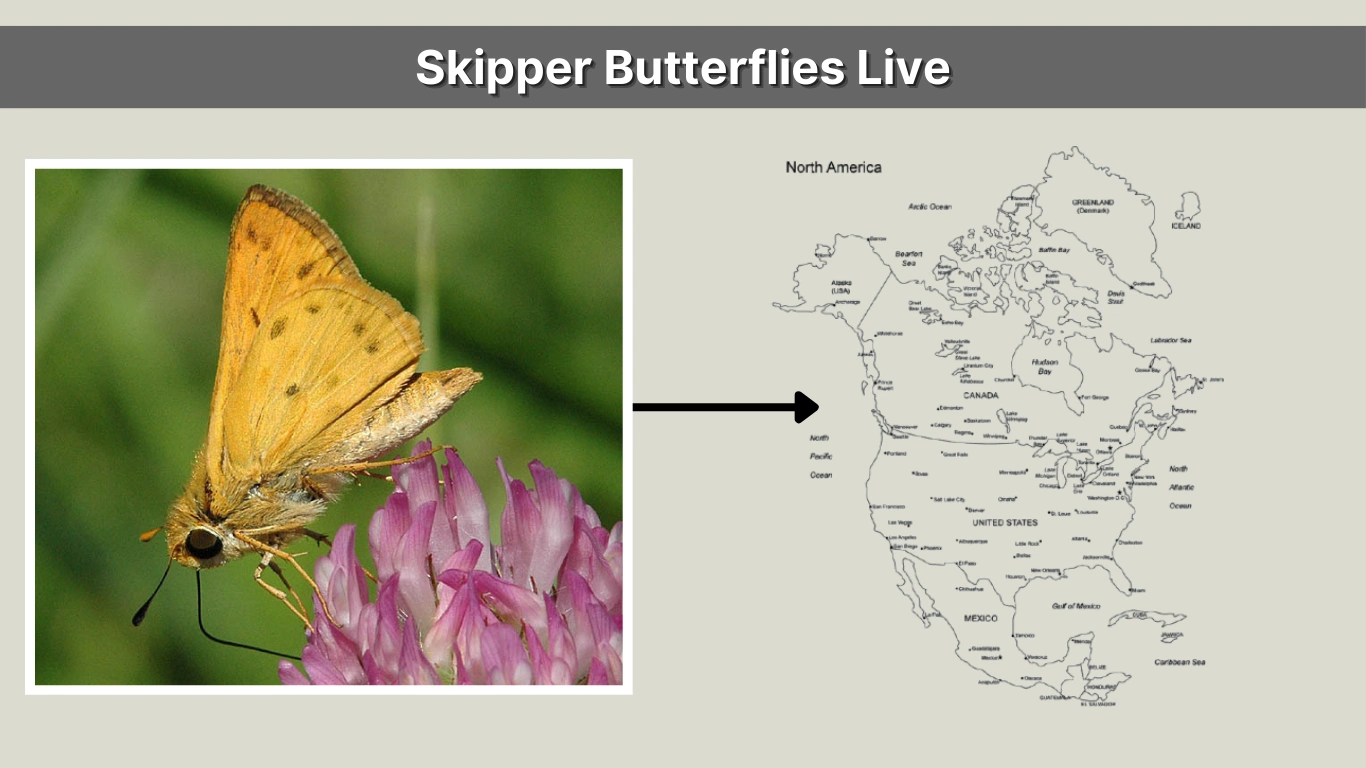
Skipper butterflies, members of the Hesperiidae family, are a unique group of butterflies recognized for their rapid, darting flight and compact body shape. With more than 3,500 species identified worldwide, they are one of the most widespread butterfly families. Unlike many butterflies that thrive only in warm climates, skippers are highly adaptable and can be found on almost every continent except Antarctica. From tropical forests in South America to grasslands in North America and farmlands in Europe, these butterflies have carved out a home in diverse environments across the globe.
Global Distribution of Skipper Butterflies
Presence Across Continents
Skipper butterflies are distributed widely across the world. They are found in North America, South America, Europe, Africa, Asia, and Australia, making them one of the most successful butterfly families in terms of range. Their adaptability allows them to thrive in both temperate and tropical climates, depending on the species.
Exceptions
The only continent where skipper butterflies are not found is Antarctica. The extreme cold and lack of vegetation make it impossible for them to survive there. Apart from this icy exception, skippers are present in nearly every corner of the world where grasses, wildflowers, and open habitats exist.
Countries Where Skipper Butterflies Are Found
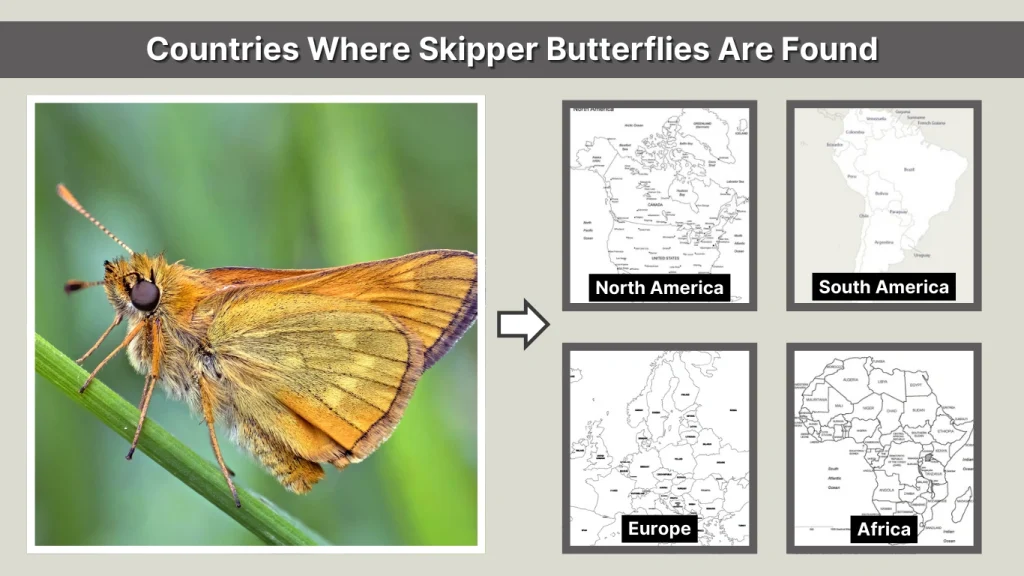
North America
In the United States, skipper butterflies are incredibly common, with species such as the Silver-spotted Skipper and Peck’s Skipper thriving in meadows, fields, and suburban gardens. Canada also hosts several species, especially during the warm months, while Mexico has both temperate and tropical skipper varieties.
South America
South America is home to a remarkable diversity of skipper butterflies. Countries like Brazil, Colombia, and Peru support hundreds of species, particularly in the Amazon rainforest and tropical grasslands. These regions are hotspots of skipper biodiversity, thanks to their warm climate and abundant host plants.
Europe
In Europe, skipper butterflies are widespread, especially in grasslands and open fields. The United Kingdom is home to species like the Small Skipper and Essex Skipper, while France, Spain, Italy, and Eastern Europe host additional species in meadows and farmlands. They are most active during summer when wildflowers are abundant.
Africa
In Africa, skipper butterflies thrive in grassland ecosystems and savannas. Countries such as South Africa, Kenya, and Tanzania support a variety of skipper species, which benefit from year-round warm weather and diverse plant life. Some species are even adapted to drier savanna regions where grasses dominate.
Habitats Skipper Butterflies Prefer
Grasslands and Meadows
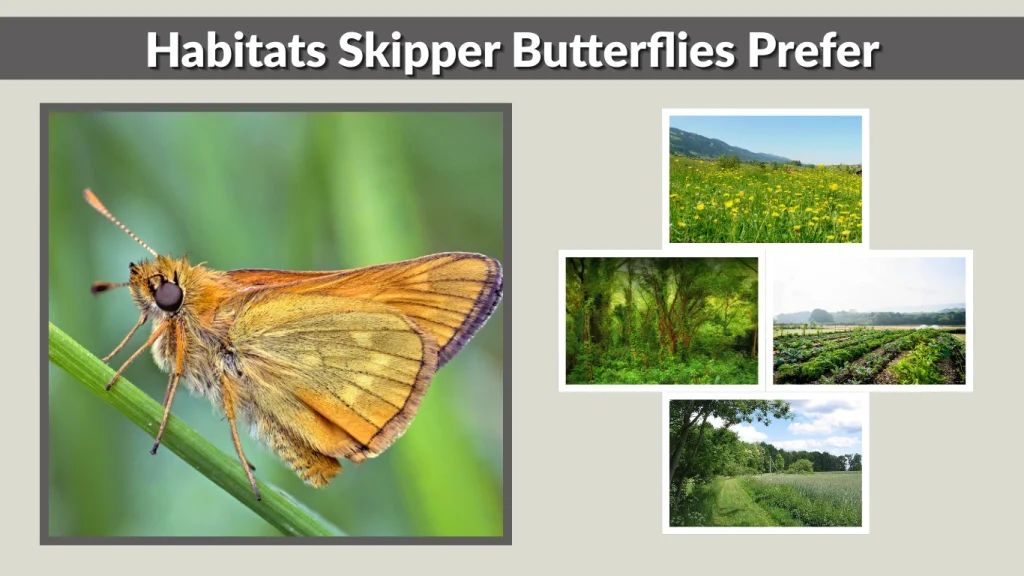
Grasslands are the prime habitat for skipper butterflies because their caterpillars rely heavily on grasses and sedges as host plants. Adults also benefit from the abundance of nectar-producing flowers commonly found in meadows.
Gardens and Farmlands
Human-modified landscapes like gardens, farms, and parks also serve as important habitats for skipper butterflies. They are often seen feeding on clover, alfalfa, and other legume plants in agricultural areas, making them common visitors in both rural and urban environments.
Forest Edges and Open Woodlands
While grasslands are their core habitat, skipper butterflies also thrive along the edges of forests and open woodlands. These areas provide both nectar-rich flowers for adults and shaded host plants for caterpillars. The mix of sunlight and vegetation makes forest margins especially attractive to many skipper species.
Tropical Rainforests
In tropical countries such as Brazil, Colombia, India, and Indonesia, skipper butterflies inhabit rainforests where plant diversity is extremely high. Here, they benefit from year-round warm weather and an abundance of flowering plants and grasses. Some tropical skippers are among the most brightly colored species, adapted to the dense and competitive rainforest environment.
Seasonal and Climatic Influence on Range
Warm-Season Butterflies
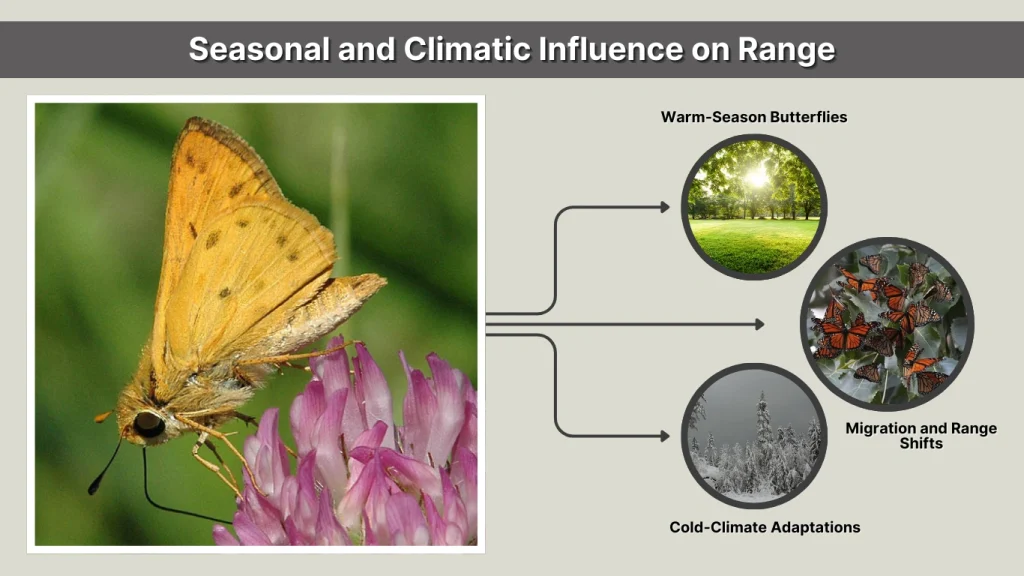
In temperate countries, skipper butterflies are most active during spring and summer. Warmer weather stimulates nectar production in flowers and fresh growth of grasses, providing ideal conditions for both adults and caterpillars.
Migration and Range Shifts
Some skipper species expand their range northward during warm seasons, appearing in areas where they cannot survive the winter. For example, certain skippers in North America move into Canada during summer but retreat south when the cold returns.
Cold-Climate Adaptations
In colder regions such as Canada, Northern Europe, and Japan, skipper butterflies adapt by overwintering as larvae or pupae. This strategy allows them to survive harsh winters and emerge when food becomes available again in spring.
Country Examples of Well-Known Skipper Species
United States – Silver-spotted Skipper
One of the most widespread species in North America, the Silver-spotted Skipper is commonly seen in gardens, fields, and along roadsides. It feeds on nectar from clovers, thistles, and legumes.
United Kingdom – Essex Skipper and Small Skipper
These two species are common in southern and eastern parts of the UK. They thrive in grasslands, pastures, and meadows, making them a familiar sight in summer.
India – Indian Skipper Species
India’s tropical and subtropical regions are home to a wide variety of skipper butterflies. They are especially common in agricultural landscapes where grasses and legumes are abundant.
Australia – Dingy Grass Skipper
Australia hosts several native skippers, including the Dingy Grass Skipper. It is found in open woodlands and grassy areas where native grasses provide food for caterpillars.
Conservation and Human Impact on Skipper Habitats
Habitat Loss
Urbanization, deforestation, and intensive agriculture reduce grassland habitats, threatening skipper butterfly populations. The loss of wildflowers and grasses directly impacts both adults and caterpillars.
Role of Gardens in Supporting Skippers
Gardeners can play an important role in conserving skippers by planting nectar-rich flowers like clover and milkweed, along with grasses that caterpillars use as host plants. Even small patches of wildflowers can support local populations.
Conservation Projects
In regions such as the United States, the UK, and Australia, butterfly conservation projects aim to restore grasslands and monitor skipper populations. These efforts ensure that skipper butterflies continue to thrive despite human pressures.
FAQs
Are skipper butterflies found in the UK?
Yes, skipper butterflies are found in the UK, with species like the Small Skipper, Essex Skipper, and Lulworth Skipper being common in grasslands and meadows. They are most active in summer when nectar flowers are plentiful.
Which country has the most skipper butterflies?
South American countries, especially Brazil, host the greatest diversity of skipper butterflies. The tropical climate and rich vegetation of the Amazon rainforest support hundreds of species, making it one of the most significant regions for skipper biodiversity.
Do skipper butterflies live in Canada?
Yes, skipper butterflies are found in Canada during the warmer months. Species such as the European Skipper and Peck’s Skipper thrive in grasslands and meadows. Many Canadian skippers overwinter as larvae, emerging in spring to take advantage of fresh food sources.
Can skipper butterflies live in deserts?
Skipper butterflies are less common in true deserts due to limited vegetation. However, they can be found in semi-arid regions where grasses and wildflowers grow after seasonal rains. Their survival depends on the presence of host plants for caterpillars and nectar flowers for adults.
Are skipper butterflies common in Asia?
Yes, skipper butterflies are abundant in Asia, especially in countries like India, China, and Japan. They inhabit diverse environments ranging from tropical forests to agricultural fields. Their adaptability makes them one of the most common butterfly groups across the continent.
