
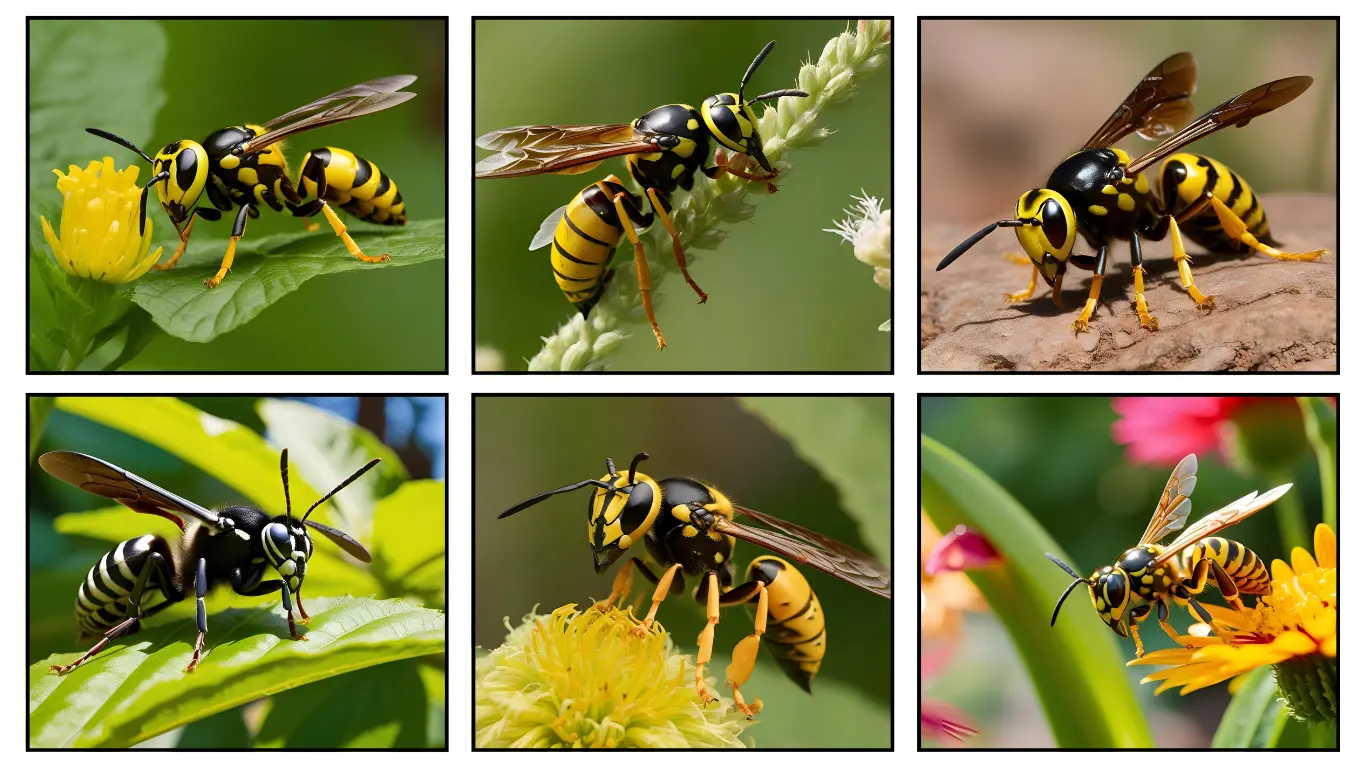
Yellow jackets are aggressive wasps known for their bold black and yellow markings. With several different types found across North America, identifying them correctly is important for safety and awareness.
In this guide, discover seven common yellow jacket species, learn how to recognize them, and understand their behavior and nesting habits.
Eastern Yellow Jacket (Vespula maculifrons)
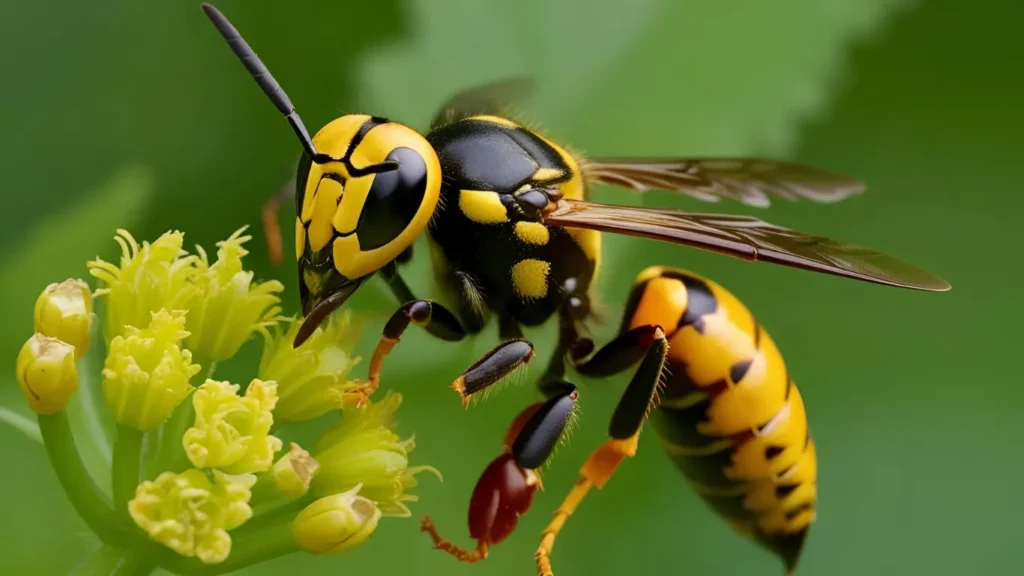
The Eastern Yellow Jacket is a common wasp species found across eastern North America. They are small but aggressive, especially when protecting their underground nests. These social insects are important natural pest controllers but often clash with humans during late summer and fall.
Identification
- Size: 0.5 inches (12–15 mm) in length
- Color and Body Patterns: Bright yellow and black with distinct black bands on the abdomen
- Head: Mostly black with yellow markings near the eyes
- Antennae: Entirely black, slightly curved
- Wings: Clear wings that fold lengthwise when resting
- Legs: Primarily yellow
- Special Features: Queens are noticeably larger and broader than workers
Behavior
Eastern Yellow Jackets are very territorial and can sting repeatedly when defending their nests. They become more aggressive in late summer and fall when food sources are scarce. Workers hunt insects and scavenge for sweet foods and meats.
Nest and Habitat
These wasps usually build underground nests, often using abandoned rodent burrows or sheltered areas under bushes. They thrive in open woodlands, parks, gardens, and residential areas where food and cover are readily available.
2. Western Yellow Jacket (Vespula pensylvanica)
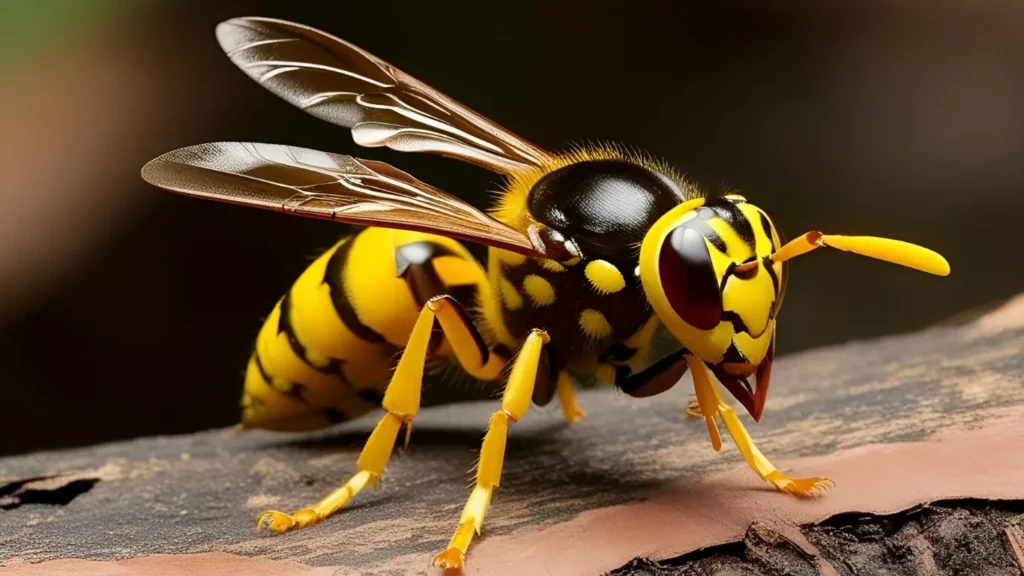
The Western Yellow Jacket is one of the most aggressive wasp species in the western regions of North America. These wasps are often seen around picnics, garbage cans, and outdoor events, searching for sugary foods and meats.
Identification
- Size: About 0.5 inches (12–16 mm) in length
- Color and Body Patterns: Bright yellow and black with jagged black bands on the abdomen
- Head: Black with small yellow spots near the compound eyes
- Antennae: Black and slender
- Wings: Clear wings that fold along the body
- Legs: Yellow with some black shading
- Special Features: Workers and queens look very similar but queens are slightly larger
Behavior
Western Yellow Jackets are extremely aggressive, especially in late summer and fall. They forage widely and are attracted to sugary drinks, rotting fruits, and meats. They are capable of stinging multiple times when threatened.
Nest and Habitat
They commonly build nests underground, but may also build aerial nests in walls, attics, or shrubs. They prefer urban and suburban areas with easy access to food and water sources.
3. German Yellow Jacket (Vespula germanica)
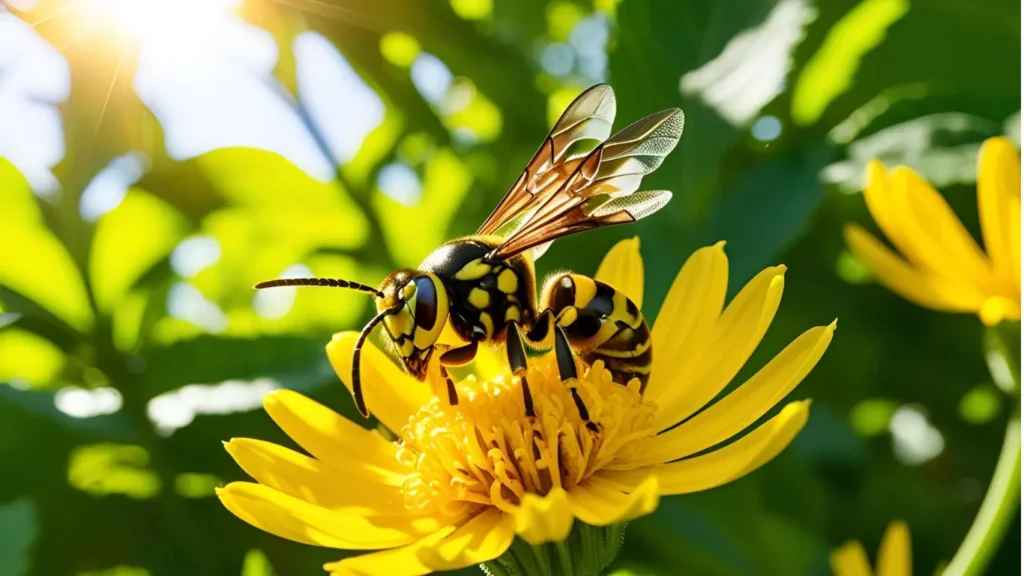
The German Yellow Jacket, originally from Europe, is now widespread in North America. It is highly adaptable and often builds nests inside man-made structures, making it a serious pest in urban environments.
Identification
- Size: 0.5 to 0.6 inches (13–16 mm) in length
- Color and Body Patterns: Bright yellow and black with symmetrical black patterns; three distinct black dots on the face
- Head: Yellow with three small black spots on the front
- Antennae: Black and slightly curved
- Wings: Smoky clear, folding neatly along the body
- Legs: Mostly yellow
- Special Features: Black “anchor-shaped” pattern on the first abdominal segment
Behavior
German Yellow Jackets are aggressive defenders of their nests. They forage for insects and human foods and are particularly drawn to sugary items. They are active from spring through late fall.
Nest and Habitat
They prefer to nest inside structures like walls, attics, and sheds. Nests are large, made of paper-like material, and can house thousands of individuals. They thrive in urban, suburban, and rural environments.
4. Southern Yellow Jacket (Vespula squamosa)
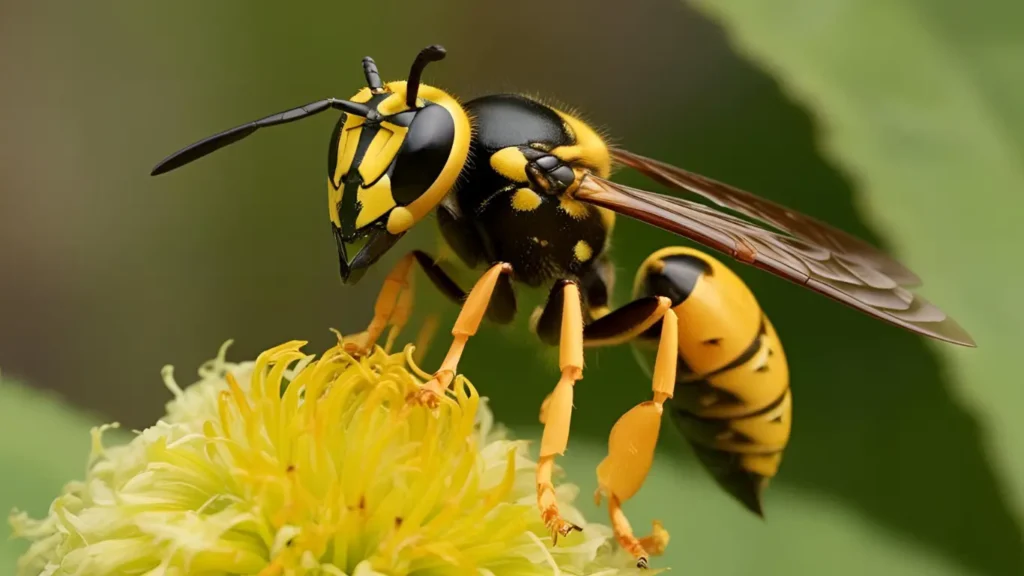
The Southern Yellow Jacket is a large and dominant wasp species found mainly in the southeastern United States. Their colonies can grow massive, especially in warmer climates where nests survive through winter.
Identification
- Size: 0.5 to 0.7 inches (12–18 mm) in length
- Color and Body Patterns: Bright yellow and black, with broader black markings compared to other species
- Head: Mostly black with yellow patches near the eyes
- Antennae: Black, slightly thickened in queens
- Wings: Clear wings folded along the back
- Legs: Yellow
- Special Features: Queens are significantly larger and bulkier than workers
Behavior
Southern Yellow Jackets are aggressive, especially when nests are disturbed. They are active during warm months, feeding on insects, sugary liquids, and proteins. Colonies that survive the winter can contain over 100,000 wasps.
Nest and Habitat
They often build enormous underground nests, but sometimes nests are visible above ground in sheltered spots. They are found in forests, fields, and residential areas across the southeastern U.S.
5. Bald-faced Hornet (Dolichovespula maculata)
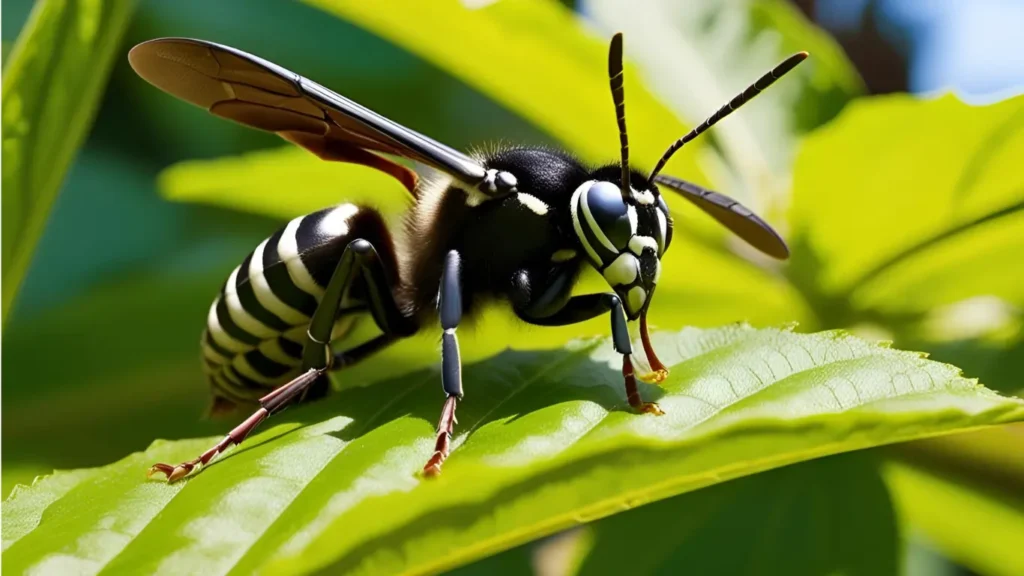
The Bald-faced Hornet, despite its name, is technically a type of yellow jacket. It is easily recognized by its striking black-and-white coloring and is known for building large aerial nests.
Identification
- Size: 0.6 to 0.8 inches (15–20 mm) in length
- Color and Body Patterns: Black body with white markings on the face, thorax, and abdomen
- Head: Black with a prominent white patch on the front
- Antennae: Black
- Wings: Dark smoky wings folding along the body
- Legs: Black with pale markings
- Special Features: Larger and bulkier compared to other yellow jackets; striking white face
Behavior
Bald-faced Hornets are very aggressive when defending their nests. They prey on other insects and also scavenge for sugary substances. They are active mainly during the summer months.
Nest and Habitat
They build large, football-shaped nests that hang from trees, shrubs, or man-made structures. The nests are made of paper-like material and can house several hundred individuals. They prefer forest edges, wooded areas, and suburban landscapes.
6. Prairie Yellow Jacket (Vespula atropilosa)

The Prairie Yellow Jacket is a ground-nesting species commonly found in grasslands and open fields. They are less aggressive than some other yellow jacket species but will defend their nests if disturbed.
Identification
- Size: 0.4 to 0.6 inches (10–15 mm) in length
- Color and Body Patterns: Yellow and black with somewhat narrow black bands
- Head: Black with small yellow spots
- Antennae: Black and thin
- Wings: Clear wings, neatly folded when resting
- Legs: Yellow with slight dark shading
- Special Features: Workers are smaller and more slender than queens
Behavior
Prairie Yellow Jackets primarily hunt other insects and are not as aggressive toward humans unless provoked. They are active during the late spring through early fall.
Nest and Habitat
They usually build underground nests in open grasslands, meadows, or prairies. Their nests are relatively smaller compared to other yellow jacket species.
7. Forest Yellow Jacket (Vespula acadica)

The Forest Yellow Jacket is a more reclusive species, preferring wooded and forested areas. They are less likely to encounter humans compared to other types.
Identification
- Size: 0.5 to 0.6 inches (12–16 mm) in length
- Color and Body Patterns: Yellow and black with broad black bands on the abdomen
- Head: Black with limited yellow markings
- Antennae: Black
- Wings: Clear, folding tightly over the back
- Legs: Mostly yellow
- Special Features: Slightly duller yellow compared to other species
Behavior
Forest Yellow Jackets are less aggressive toward humans unless directly threatened. They are active during the summer and early fall, feeding on insects and nectar.
Nest and Habitat
They build nests underground or in rotting logs within forests. They are mainly found in wooded, less disturbed environments where human interaction is minimal.
Yellow Jacket Types Summary
| No. | Name | Scientific Name | Common Habitat | Notable Feature |
| 1 | Eastern Yellow Jacket | Vespula maculifrons | Eastern North America | Underground nests |
| 2 | Western Yellow Jacket | Vespula pensylvanica | Western North America | Aggressive scavenger |
| 3 | German Yellow Jacket | Vespula germanica | Urban areas | Builds nests in structures |
| 4 | Southern Yellow Jacket | Vespula squamosa | Southeastern U.S. | Huge nests in warm climates |
| 5 | Bald-faced Hornet | Dolichovespula maculata | Forest edges, suburbs | Black and white body |
| 6 | Prairie Yellow Jacket | Vespula atropilosa | Grasslands, meadows | Less aggressive |
| 7 | Forest Yellow Jacket | Vespula acadica | Wooded areas | Duller yellow color |
