
Yellow jackets are aggressive wasps that can become a serious problem if they build a nest near your home. Identifying, locating, and safely removing their nests is crucial to avoid painful stings.
In this guide, we’ll cover everything you need to know about yellow jacket nests, including how to find, treat, and get rid of them effectively.
What Does a Yellow Jacket Nest Look Like?

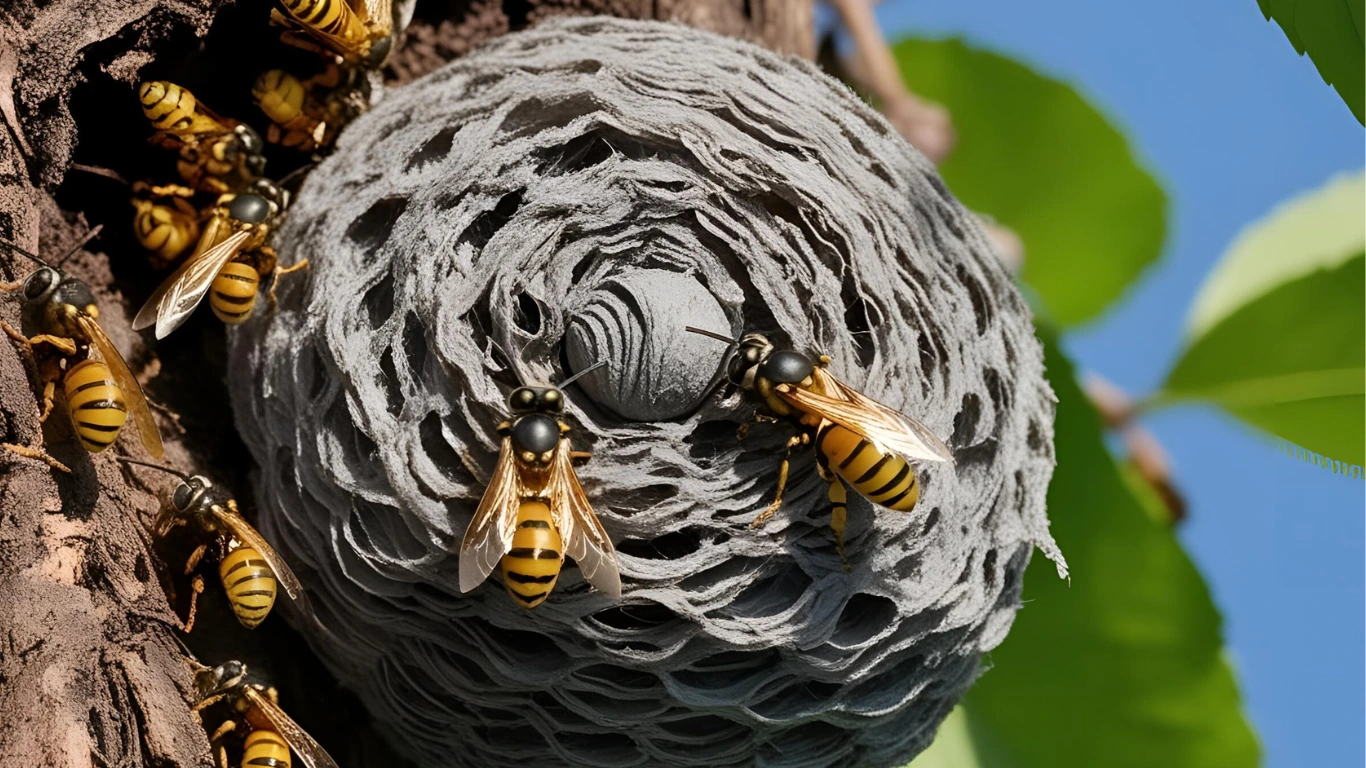
Yellow jacket nests are typically made from chewed wood fibers mixed with saliva, giving them a papery gray appearance. They can be found above ground or hidden underground.
Above ground, the nests often look like large, round, layered balls hanging from trees, bushes, or buildings. The outer layer is smooth but slightly textured.
Underground nests are harder to spot, usually marked only by a small entrance hole with heavy yellow jacket activity around it.
Types of Yellow Jacket Nests
- Above-Ground Nests
Found in trees, bushes, attics, or under eaves. Shaped like a papery ball and visible from a distance. - Underground Nests
Hidden in soil, old rodent holes, or under lawns. Entrance often looks like a small hole with wasp activity. - Wall or Structure Nests
Built inside walls, ceilings, or hollow spaces of buildings. Harder to locate and remove safely.
How to Get Rid of Yellow Jacket Nest (Step-by-Step Guide)

Removing a yellow jacket nest requires careful preparation, the right products, and proper timing. Here’s a detailed step-by-step guide depending on where the nest is located:
1. Above-Ground Yellow Jacket Nest
Step 1: Choose the right time
Plan to attack the nest in the early morning or late evening when yellow jackets are slow and inside the nest.
Step 2: Wear full protective gear
Cover your entire body with thick clothing, gloves, boots, and a face shield or goggles to avoid stings.
Step 3: Use a long-distance wasp spray
Select a commercial wasp and hornet spray that can reach up to 20 feet. Stand back and aim directly at the nest entrance, spraying steadily.
Step 4: Observe the nest
Wait at least 24 hours. Watch from a distance. If you still see activity, spray again.
Step 5: Safely remove the nest
Once no activity is observed, knock down the nest using a long stick or pole. Place it in a heavy-duty trash bag and dispose of it properly.
2. Underground Yellow Jacket Nest
Step 1: Find the entrance hole
Look for yellow jackets flying into a specific hole in the ground, often near trees, sidewalks, or garden beds.
Step 2: Prepare the treatment
Boiling soapy water is a natural method, but for large nests, use insecticidal dust specifically designed for underground wasps.
Step 3: Apply treatment after dark
Carefully pour the boiling soapy water into the hole or puff insecticidal dust around the entrance. Be ready to move away quickly.
Step 4: Cover the hole
After applying, lightly cover the hole with soil to trap the fumes and block escaping wasps.
Step 5: Check the next day
If there’s still activity, reapply the treatment. Sometimes underground nests require a few tries.
3. Yellow Jacket Nest Inside Walls
Step 1: Locate the exact entry point
Watch where yellow jackets are entering cracks, vents, or siding. Listen for buzzing sounds inside walls.
Step 2: Use a special wall void aerosol spray
Apply a wasp spray designed for hidden nests directly into the opening during night hours.
Step 3: Do not seal the entrance immediately
Allow a few days for all wasps to die. Sealing too soon may cause them to find another way into your home.
Step 4: Seek professional help if needed
If the nest is large or deeply built into walls, call pest control professionals. Removing a hidden nest yourself could cause serious damage or personal injury.
Essential Things and Safety Tips Before Removal

Before attempting to remove a yellow jacket nest, always wear protective clothing, including thick gloves, boots, long sleeves, and a face shield.
Use the right products, like long-range wasp sprays or insecticidal dust designed for yellow jackets.
Always treat the nest during early morning or late evening when the insects are less active.
Keep a clear escape path ready in case the yellow jackets swarm.
Never attempt removal if you are allergic to stings — call a professional instead.
Lastly, always stay calm and move slowly to avoid provoking aggressive attacks.
Frequently Asked Questions
1. What does a yellow jacket nest look like in the ground?
A ground nest usually appears as a small hole in the soil, with yellow jackets flying in and out throughout the day. The actual nest structure is hidden underground.
2. How do I find a yellow jacket nest in my yard?
Watch the flight patterns of yellow jackets during the day. They often fly in straight lines leading to their nest, either above ground or underground.
3. When is the best time to spray a yellow jacket nest?
Early morning or late evening is best, when yellow jackets are inside the nest and less active.
4. How deep is a yellow jacket nest underground?
Most underground nests are less than one foot deep, but they can be wide and house thousands of yellow jackets.
