
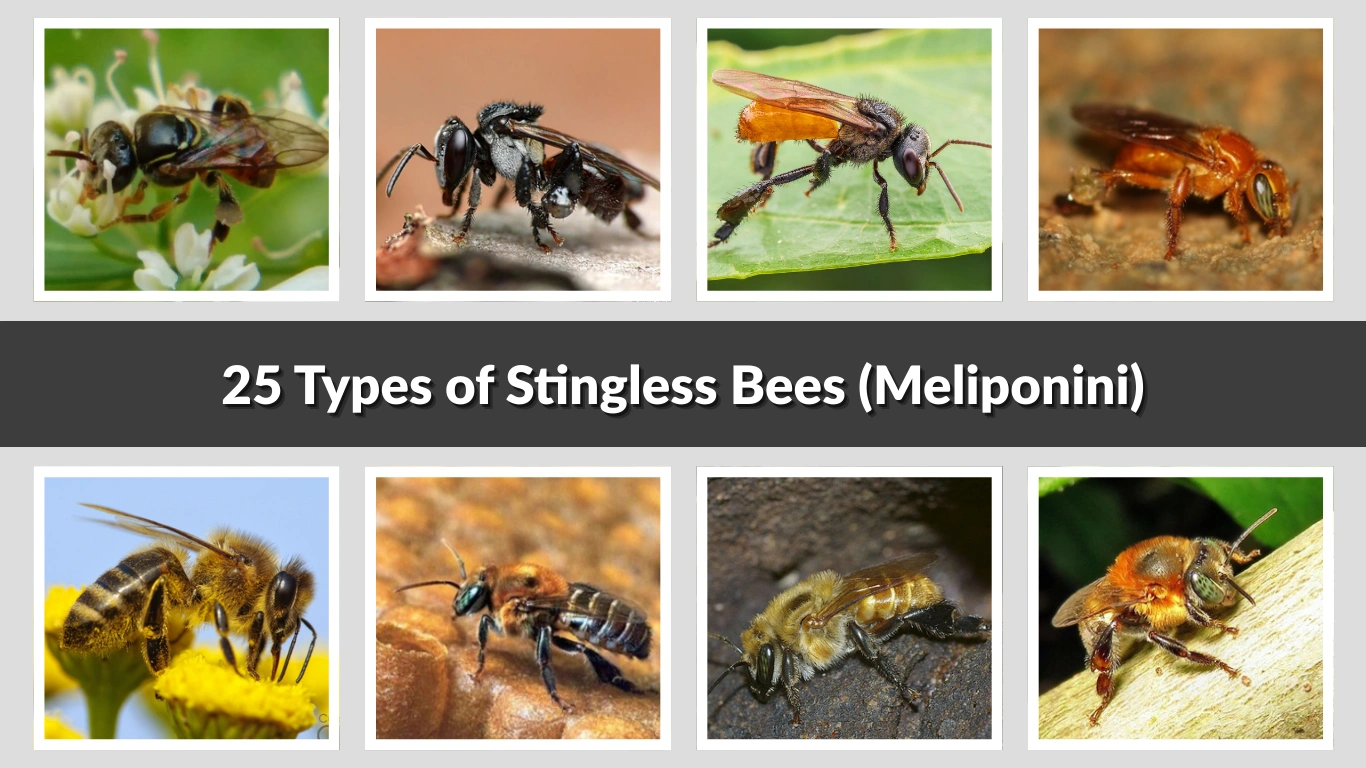
Stingless bees, belonging to the tribe Meliponini, are fascinating social insects found in tropical and subtropical regions worldwide. Unlike honeybees, they cannot sting, but they play an equally vital role in pollination and ecosystem balance. From the powerful Meliora species of South America to the tiny Plebeia in Brazil, these bees produce unique honey and resin while supporting biodiversity. Below are 25 remarkable types of stingless bees.
1. Tetragonula carbonaria
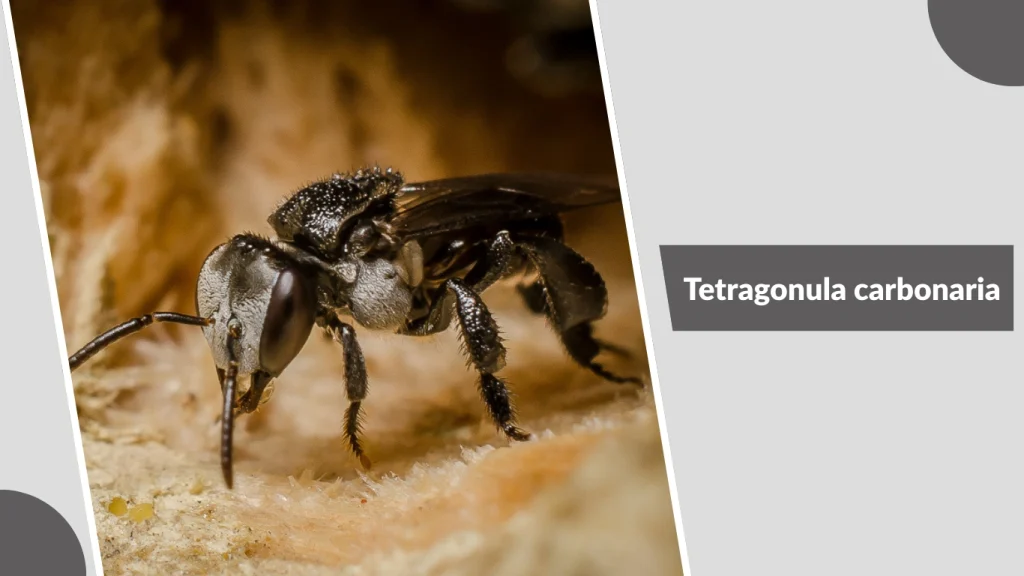
Tetragonula carbonaria, known as the Australian stingless bee, is one of the most studied species in the stingless bee group. These bees play an important role in maintaining biodiversity by pollinating a wide variety of native plants and crops. Unlike honeybees, they do not sting, which makes them safe and popular for keeping in urban gardens and educational settings.
Identification
- Size: Approximately 4–5 mm in length
- Color: Completely black with a slight metallic shine on wings under sunlight
- Body: Compact and slender, covered with fine hairs that aid in pollen collection
- Antennae: Short and slightly curved, adapted for close flower work
- Colony size: Can exceed 10,000 individuals depending on conditions
- Distinct trait: Lacks a sting; defense is based on biting and resin use
Habitat
These bees are naturally distributed across eastern Australia, from Queensland to northern New South Wales. They prefer warm, humid climates and nest inside hollow logs, tree cavities, and occasionally underground crevices. With human support, they also adapt well to wooden hive boxes in beekeeping setups.
Behavior
Tetragonula carbonaria is highly social and relies on teamwork within its colonies. Workers forage up to 500 meters from their nest, visiting flowers throughout the day. They are known for their unique defensive strategy: instead of stinging, they swarm and bite intruders while smearing resin to trap or deter them. Queens are responsible for reproduction, while thousands of workers ensure food supply and colony maintenance.
Importance
This species has a major role in both natural and agricultural ecosystems. It is an excellent pollinator for crops like macadamias, mangoes, and avocados. The honey produced, called “sugarbag honey,” is very limited in quantity—usually less than 1 kg per year per hive—but it is highly prized for its tangy, slightly sour taste and medicinal properties. Beyond honey, these bees are increasingly used in commercial pollination services in Australia due to their efficiency and docile nature.
2. Tetragonula hockingsi
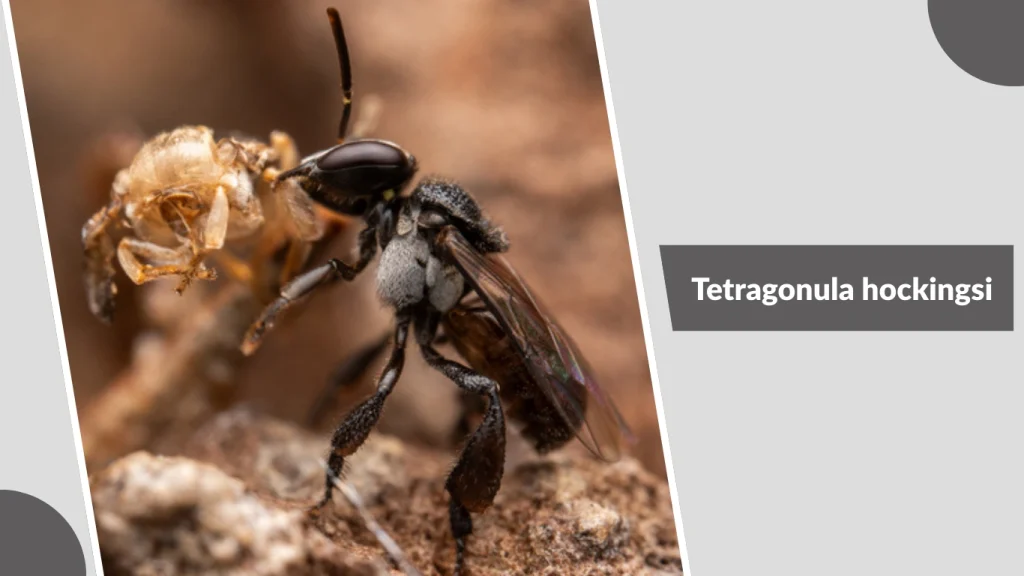
Tetragonula hockingsi is another prominent stingless bee species native to Australia. Closely related to Tetragonula carbonaria, it is also highly valued for its pollination services and honey production. This species is well adapted to tropical and subtropical environments, forming large, resilient colonies that can thrive even under varying conditions.
Identification
- Size: Around 4–5 mm in length
- Color: Entirely black, often appearing slightly shinier than T. carbonaria
- Wings: Transparent with a slight iridescent hue
- Colony size: Frequently larger than T. carbonaria, with populations exceeding 15,000 bees
- Distinct trait: More aggressive than T. carbonaria when defending nests, often engaging in colony “fights” when hives are too close together
Habitat
Tetragonula hockingsi primarily inhabits tropical and subtropical regions of northern Queensland, Australia. Its natural nesting sites include hollow trees, cracks in large branches, and cavities in wooden logs. With beekeeping practices, they are commonly housed in hive boxes designed for stingless bees, allowing easier management and honey collection.
Behavior
This species is highly social, with complex communication systems and strong colony organization. Workers forage extensively, sometimes covering distances greater than 500 meters in search of nectar and pollen. T. hockingsi is particularly known for its aggressive defense tactics against rival colonies, often engaging in prolonged “bee battles” that can last for hours or even days. Instead of stings, they bite and smear sticky resin on invaders to immobilize them.
Importance
Tetragonula hockingsi plays an essential role in crop and native plant pollination. It is often used in agricultural settings, especially for tropical fruit crops like lychee, rambutan, and mango. Their honey, similar to that of T. carbonaria, is produced in small amounts but is highly prized for its tangy and medicinal qualities. Additionally, their strong and resilient colonies make them a preferred species among stingless beekeepers in northern Australia.
3. Tetragonula iridipennis
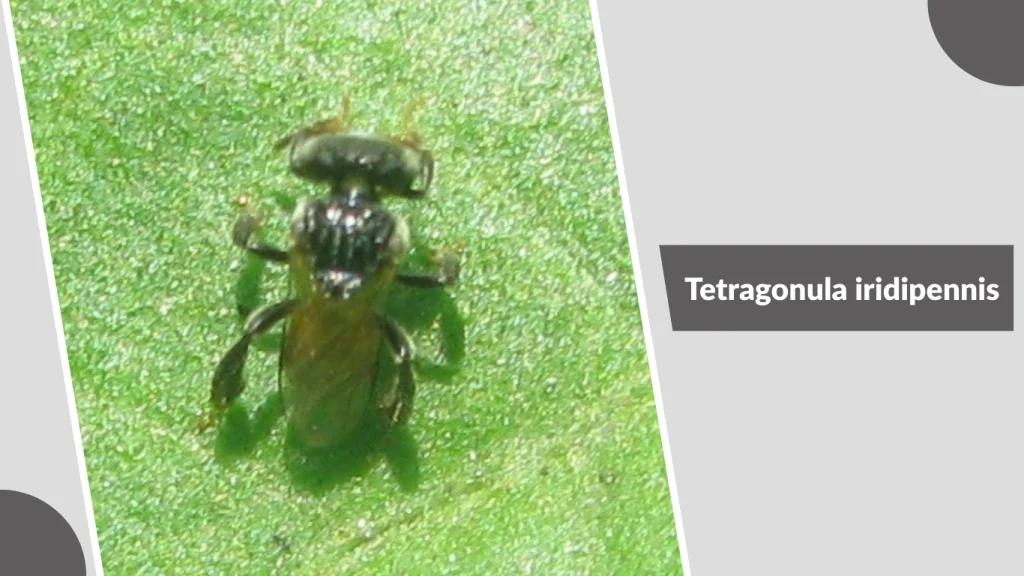
Tetragonula iridipennis is a well-known stingless bee species found mainly in South and Southeast Asia. It is one of the most widespread species in the region and has been traditionally used for honey harvesting and crop pollination for centuries.
Identification
- Size: Small, about 4 mm long
- Color: Black body with slight metallic iridescence on the wings
- Colony size: Often more than 8,000 individuals
- Distinct trait: Builds unique brood comb structures in horizontal layers with a spiral pattern
Habitat
This species is commonly found in India, Sri Lanka, Thailand, and surrounding regions. They naturally nest in tree hollows, rock crevices, and sometimes abandoned termite mounds. In rural areas, locals often keep them in clay pots, wooden boxes, or bamboo tubes for honey collection.
Behavior
T. iridipennis is highly social and forms large, cooperative colonies. It is less aggressive compared to some other stingless bees, making it easy to manage. Foraging workers gather nectar, pollen, and resin, often traveling short distances of up to 500 meters. Colonies are known for their resilience and ability to adapt to human settlements.
Importance
This species is particularly valuable in Asian agriculture, pollinating crops such as coffee, coconut, and fruits. Its honey, though produced in very small amounts, is considered medicinal and is used in traditional remedies. The spiral brood combs also make them unique and fascinating to beekeepers and researchers.
4. Tetragonula laeviceps
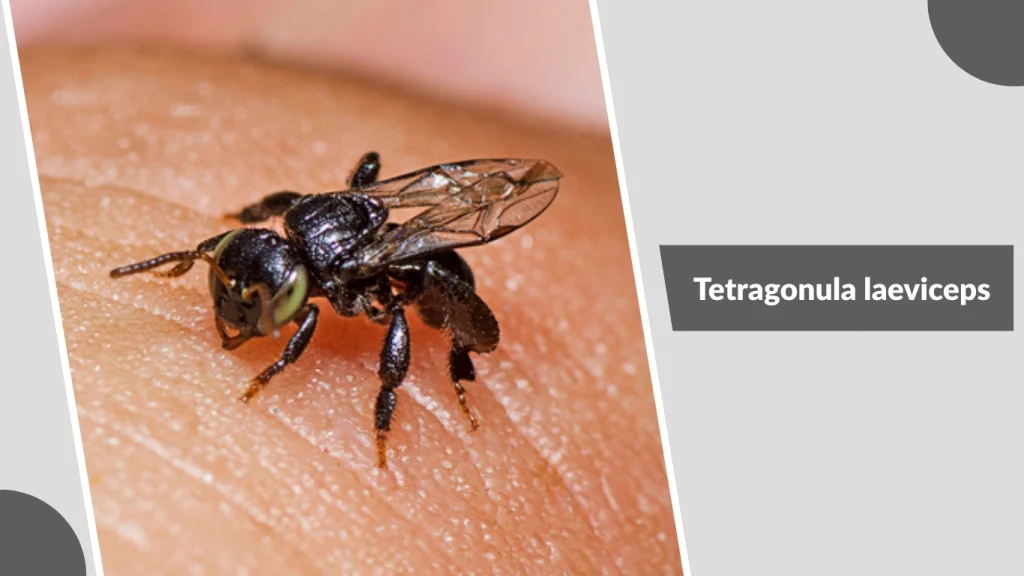
Tetragonula laeviceps is a widely distributed stingless bee across Southeast Asia and is known for its adaptability and strong pollination abilities. It is one of the most common stingless bees kept by small-scale beekeepers in Thailand, Malaysia, and Indonesia.
Identification
- Size: 3.5–4 mm long, slightly smaller than T. iridipennis
- Color: Black body with clear wings
- Colony size: Usually between 5,000–10,000 bees
- Distinct trait: Entrance tubes of nests are often extended and coated with resin for protection
Habitat
T. laeviceps nests in hollow tree trunks, wall crevices, and even under roofs in rural houses. Its adaptability makes it one of the most successful stingless bee species in populated areas. In beekeeping, they are commonly housed in wooden boxes for honey and propolis collection.
Behavior
This species is highly productive and efficient in collecting nectar and pollen. Workers are active throughout the day and are capable of visiting a wide range of flowering plants. Colonies are generally calm but can become defensive when disturbed, using resin to block intruders.
Importance
T. laeviceps plays a critical role in pollination of tropical fruits and crops like mango, rambutan, and longan. The honey is tangy, slightly sour, and used in both food and traditional medicine. Because of their high adaptability and manageable colonies, they are among the most popular stingless bees for meliponiculture in Asia.
5. Tetragonula sapiens
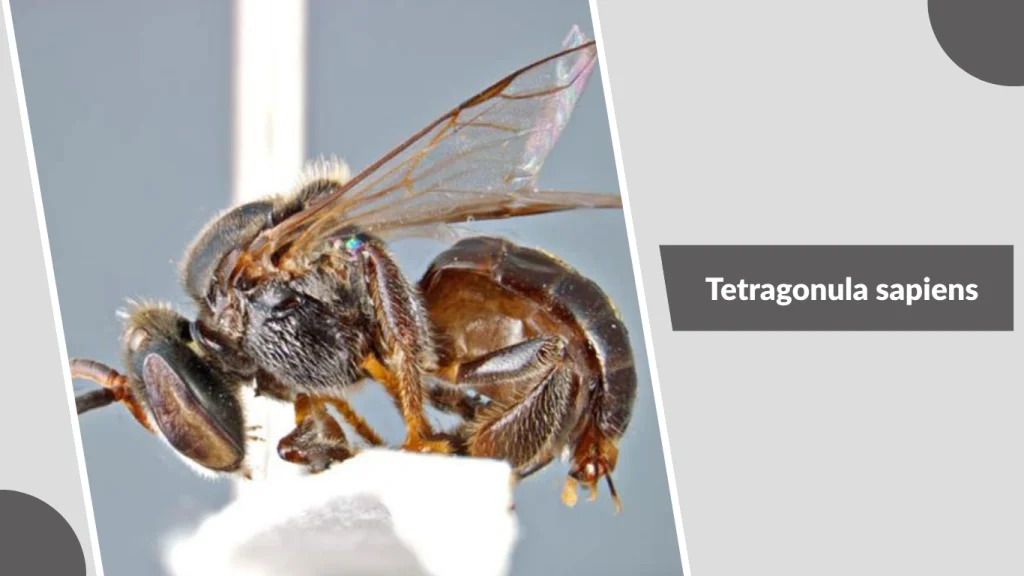
Tetragonula sapiens is a stingless bee species native to Papua New Guinea and northern Australia. It is less common than T. carbonaria and T. hockingsi but equally important in its local ecosystems, contributing to both wild and cultivated plant pollination.
Identification
- Size: About 4–5 mm long
- Color: Dark black body with slightly translucent wings
- Colony size: Often ranges between 5,000–8,000 individuals
- Distinct trait: Produces smaller, neatly arranged brood cells compared to other Tetragonula species
Habitat
This species inhabits tropical and subtropical regions, nesting primarily in tree cavities and hollow logs. They can also adapt to artificial hives, making them suitable for small-scale meliponiculture in Papua New Guinea.
Behavior
T. sapiens is a social bee with a clear division of labor. Workers forage daily for nectar, pollen, and resins. Compared to T. hockingsi, this species is less aggressive, preferring to seal intruders with resin rather than engaging in prolonged fights. Foraging flights usually remain within 300–400 meters from the nest.
Importance
T. sapiens plays a key role in pollination of native plants in Papua New Guinea, supporting forest biodiversity. Its honey is highly acidic and aromatic, often used in traditional medicine. Beekeepers in northern Australia and Papua New Guinea sometimes keep this species to promote sustainable pollination of crops and wild flora.
6. Melipona beecheii

Melipona beecheii is one of the most culturally significant stingless bee species in Central America. For centuries, the Mayans have kept this species for honey production, spiritual rituals, and medicinal use. Known locally as “Xunan Kab” (royal lady bee), it remains deeply embedded in traditional practices.
Identification
- Size: Larger than many Tetragonula species, around 8–10 mm long
- Color: Dark brown to black body with lighter bands
- Colony size: Typically 3,000–5,000 bees
- Distinct trait: Larger workers and queens compared to Asian stingless bees; honey storage pots made of wax are distinctive and irregular in shape
Habitat
M. beecheii is naturally distributed across Mexico, Belize, and parts of Central America. It nests in hollow tree trunks, where colonies can survive for decades if undisturbed. With human support, they are traditionally kept in hollow logs known as “jobones.”
Behavior
This bee is less aggressive and does not defend itself as vigorously as other stingless bees, relying instead on colony resilience and nest secrecy. Workers are efficient foragers, often traveling long distances in search of nectar and resin. Colonies are slower to reproduce but can last for many years under proper care.
Importance
Melipona beecheii is treasured for its honey, which is more liquid, tangy, and medicinal than that of honeybees. The honey has been used in Mayan medicine for eye treatments, wounds, and spiritual ceremonies. Today, it remains an important pollinator for crops and native plants, while also being part of meliponiculture revival projects in Central America.
7. Melipona bicolor
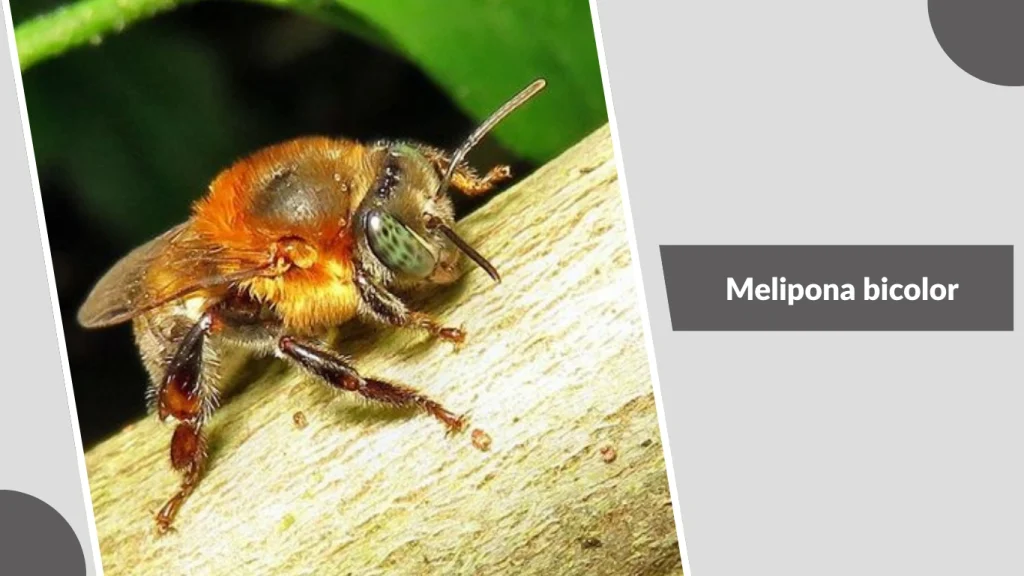
Melipona bicolor is a stingless bee species native to South America, especially Brazil. It is recognized for its adaptability and its importance in forest pollination. Local communities value it for both honey and propolis production.
Identification
- Size: Medium-sized, about 8–9 mm long
- Color: Black body with yellowish to reddish bands on the abdomen
- Colony size: Typically 2,000–5,000 bees
- Distinct trait: Produces relatively large storage pots for honey and pollen inside the nest
Habitat
This species inhabits tropical forests, preferring hollow logs and tree trunks as nesting sites. They adapt well to managed hives in rural and forest-edge communities across Brazil.
Behavior
Melipona bicolor has a calm temperament and is less aggressive than some other stingless bees. Workers forage steadily, visiting a variety of wild and cultivated flowers. Colonies expand slowly, and queens reproduce at a moderate rate compared to other Melipona species.
Importance
This species is highly valued for pollination of native trees and fruit crops such as guava and passion fruit. Its honey is tangy, aromatic, and considered medicinal by local populations. The wax and propolis produced are also collected for traditional remedies and artisanal use.
8. Melipona quadrifasciata
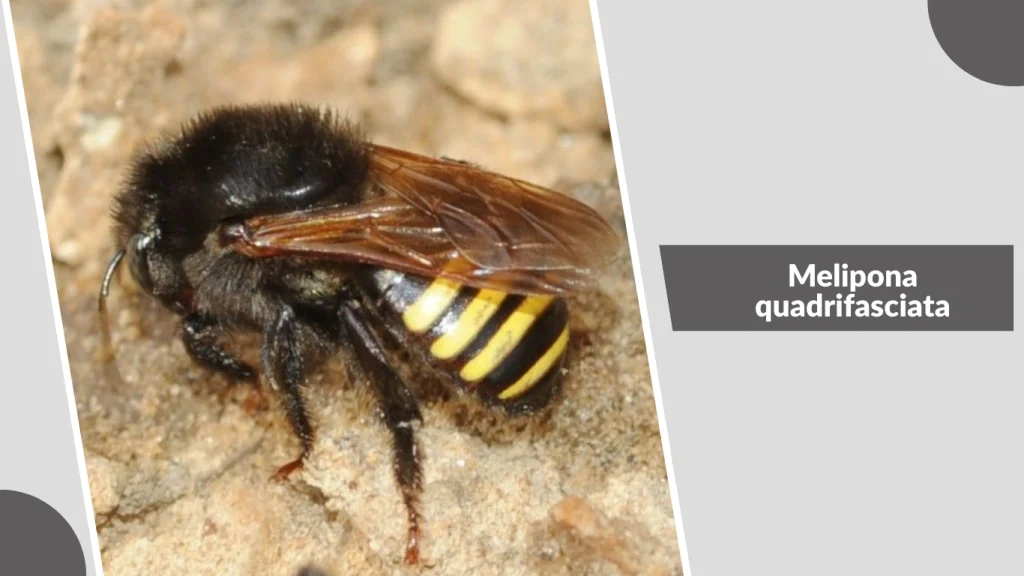
Melipona quadrifasciata, locally known in Brazil as “mandaçaia,” is one of the most recognizable stingless bees in the region. It has distinctive yellow bands on its abdomen, making it easier to identify compared to many dark-bodied stingless bees.
Identification
- Size: About 9–10 mm in length
- Color: Black body with four bright yellow horizontal bands on the abdomen
- Colony size: Around 3,000–6,000 individuals
- Distinct trait: Bright banding pattern that distinguishes it from other Melipona species
Habitat
This bee is native to southern and southeastern Brazil, where it thrives in tropical and subtropical forests. Nests are usually built inside hollow trunks and wooden cavities, often collected by beekeepers to house in wooden hive boxes.
Behavior
M. quadrifasciata is gentle but can become defensive when its colony is disturbed. Workers are active foragers, pollinating a wide variety of wildflowers and fruit crops. Colonies are relatively stable and reproduce at a steady pace, making them popular in meliponiculture.
Importance
This species is particularly important for pollination of fruits like strawberries, guava, and passion fruit. Its honey is highly sought after, with a smooth, slightly acidic taste and medicinal properties. Due to its recognizable appearance and high pollination value, M. quadrifasciata is one of the most studied stingless bee species in Brazil.
9. Melipona fasciata
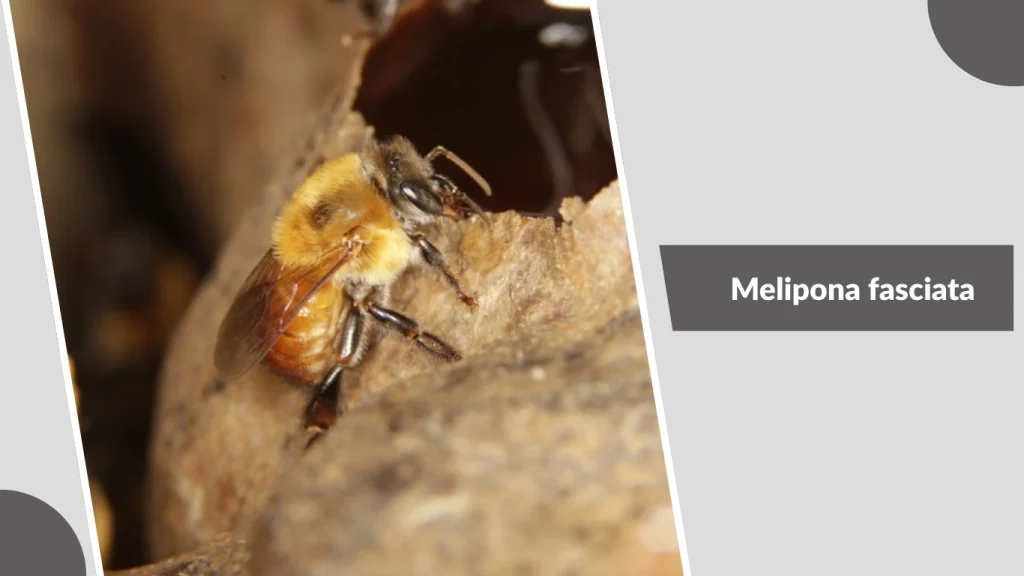
Melipona fasciata is a stingless bee species native to Central and South America. It is less commonly managed than other Melipona species but plays an essential role in maintaining forest biodiversity through pollination.
Identification
- Size: Medium to large, about 9–10 mm long
- Color: Dark body with faint lighter bands on the abdomen
- Colony size: Around 3,000–5,000 individuals
- Distinct trait: Produces large, irregular storage pots for honey and pollen
Habitat
This species prefers tropical lowland forests and is often found nesting in hollow trees or fallen logs. It is mainly distributed across parts of Brazil and neighboring countries.
Behavior
Melipona fasciata is a calm species with cooperative social behavior. Colonies grow slowly and are generally non-aggressive, making them suitable for meliponiculture when discovered in natural habitats. Foragers visit a wide range of flowering plants, contributing significantly to both wild and agricultural ecosystems.
Importance
The honey from M. fasciata is aromatic, tangy, and often used in folk medicine. Its role as a pollinator is particularly valuable in maintaining forest regeneration and enhancing the productivity of fruit crops in rural communities.
10. Melipona subnitida
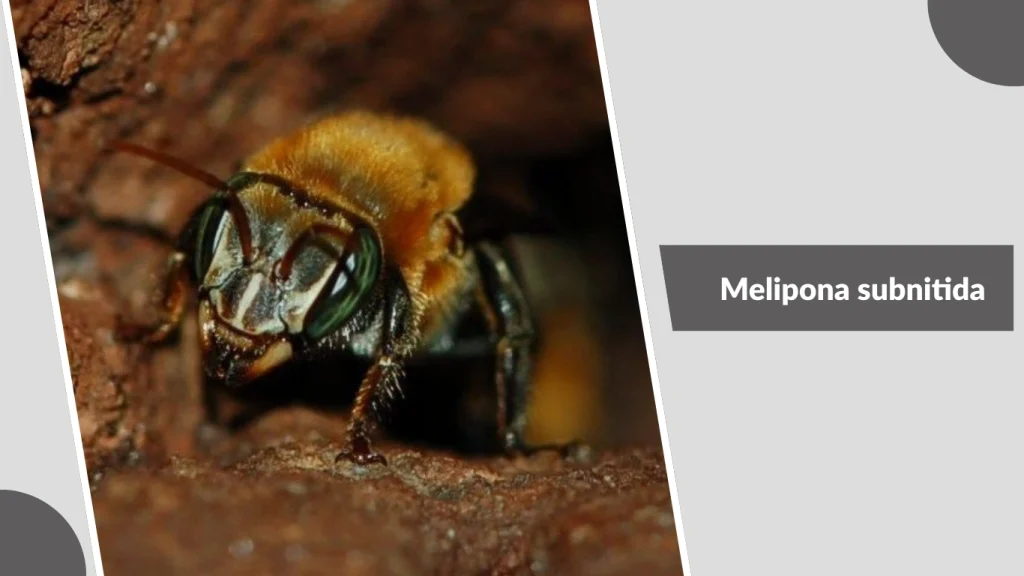
Melipona subnitida, locally known in Brazil as “Jandaíra,” is one of the most culturally and economically important stingless bee species in northeastern Brazil. It has been kept by rural communities for centuries, especially in the semi-arid Caatinga region.
Identification
- Size: Medium-sized, around 8–9 mm long
- Color: Dark brown to black body with lighter abdominal bands
- Colony size: 2,000–4,000 bees
- Distinct trait: Well adapted to dry, semi-arid environments compared to other stingless bees
Habitat
M. subnitida is native to northeastern Brazil, thriving in the Caatinga biome, where rainfall is scarce. It typically nests in hollow trunks and tree cavities but is also commonly managed in hive boxes by traditional beekeepers.
Behavior
This species is highly resilient, capable of surviving drought conditions where other stingless bees struggle. Colonies are stable and relatively gentle, though workers can become defensive if threatened. Foraging ranges are shorter compared to other Melipona species, allowing them to conserve energy in resource-scarce habitats.
Importance
M. subnitida is central to meliponiculture in northeastern Brazil. Its honey, often called “Jandaíra honey,” is famous for its unique taste and strong medicinal properties, especially for respiratory and digestive issues. Beyond honey, this species is vital for pollination of Caatinga plants, helping maintain biodiversity in an otherwise fragile ecosystem.
11. Melipona seminigra

Melipona seminigra is a stingless bee species native to the Amazon region. It is highly valued for its adaptability and its role in pollination of rainforest plants and agricultural crops. In some areas, it is locally referred to as “uruçu-cinzenta” because of its slightly grayish appearance.
Identification
- Size: Medium to large, about 9–10 mm long
- Color: Predominantly black, with faint grayish or lighter abdominal segments
- Wings: Transparent with a slight smoky tint
- Colony size: Usually between 3,000–6,000 individuals
- Distinct trait: Large honey and pollen pots arranged loosely within the nest structure
Habitat
M. seminigra is widely distributed across the Amazon rainforest, occurring in Brazil, Peru, and neighboring countries. It typically nests in large hollow tree trunks, where colonies can remain stable for many years. In beekeeping, wooden hive boxes are used to replicate natural conditions, making honey harvesting easier.
Behavior
This species has a calm disposition compared to more defensive stingless bees. Foragers travel long distances, often exceeding 800 meters, in search of nectar and pollen. Colonies are relatively strong and reproduce at a steady rate. When threatened, the workers rely on biting and resin application rather than aggression.
Importance
M. seminigra is crucial for rainforest regeneration and crop pollination, especially for fruits like cupuaçu, açaí, and guava. Its honey is highly aromatic, with a mild acidity, and is prized both as food and medicine. Indigenous and rural communities traditionally use this honey for treating coughs, wounds, and eye infections. It is also an important species for meliponiculture expansion in the Amazon.
12. Melipona scutellaris
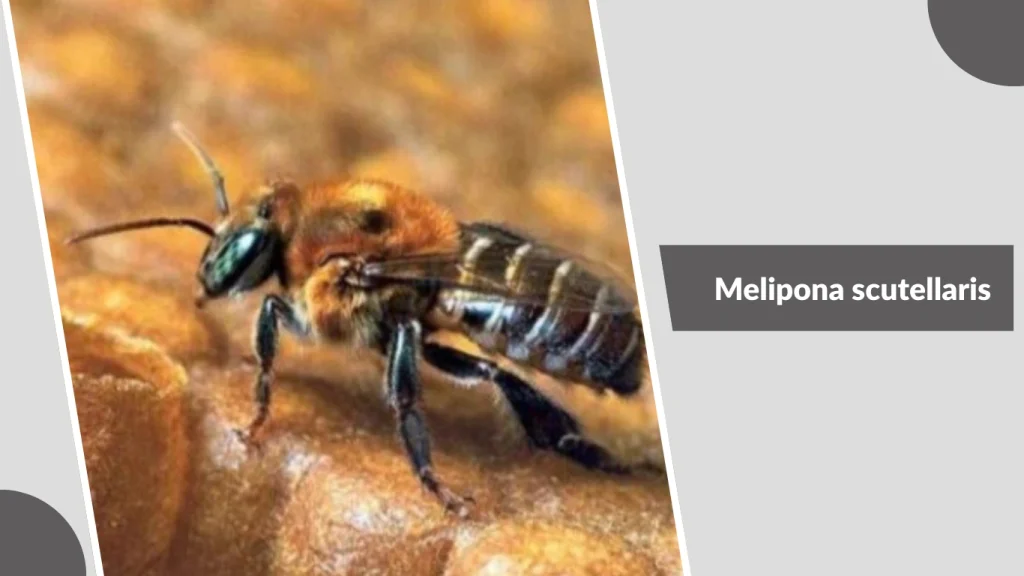
Melipona scutellaris, often called “uruçu-nordestina,” is one of the most iconic stingless bees in northeastern Brazil. It has deep cultural roots, historically used for honey, wax, and medicinal purposes, and remains one of the most domesticated Melipona species.
Identification
- Size: Large for stingless bees, about 10–11 mm in length
- Color: Predominantly black with striking yellow markings on the thorax and abdomen
- Wings: Transparent with a light smoky shade
- Colony size: Typically 3,000–5,000 individuals
- Distinct trait: Bright yellow markings make it visually distinctive compared to other Melipona species
Habitat
This species is native to Brazil’s Atlantic Forest and Caatinga biomes. It usually nests in hollow tree trunks but has adapted well to man-made hive boxes. Due to its popularity, it is one of the most widely managed stingless bees in northeastern Brazil.
Behavior
M. scutellaris is relatively calm but can become defensive when disturbed, often clustering around intruders. Colonies are highly organized, with strong division of labor between workers, soldiers, and the queen. Foraging activity is intense, and workers travel widely to collect nectar, pollen, and resins.
Importance
This species is highly significant both ecologically and culturally. Its honey is produced in small amounts but is considered one of the finest among stingless bees—liquid, tangy, and rich in medicinal properties. Traditionally, it has been used to treat infections, digestive problems, and respiratory illnesses. Farmers also rely on M. scutellaris for pollination of crops such as passion fruit, guava, and acerola. Its cultural heritage value makes it a symbol of stingless beekeeping in Brazil.
13. Melipona compressipes
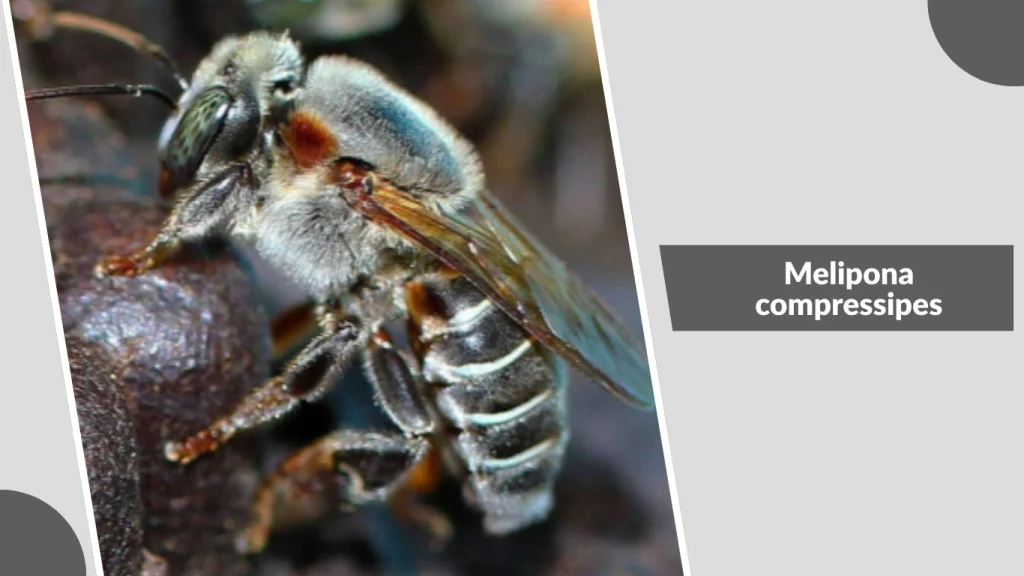
Melipona compressipes is a large stingless bee species native to the Amazon Basin and surrounding tropical regions of South America. It is one of the most productive species in terms of honey yield among stingless bees and has become a central focus of meliponiculture in the Amazon. Locally, it is often called “uruçu-boi.”
Identification
- Size: Large, around 10–11 mm in length, among the biggest stingless bees
- Color: Dark black body with reddish to yellowish abdominal bands
- Wings: Slightly smoky and broader compared to smaller Tetragonula species
- Colony size: 5,000–7,000 individuals on average
- Distinct trait: Strong mandibles and robust build; colonies create large honey pots with thick wax walls
Habitat
M. compressipes is distributed across the Brazilian Amazon and into parts of Peru and Colombia. It prefers dense rainforest habitats, where it nests in large hollow trunks or underground cavities. Colonies can be long-lived and remain in the same nest site for decades if undisturbed.
Behavior
This species is moderately defensive, more protective of its nest than M. scutellaris or M. seminigra. Workers rely on biting and sticky resin as their main defensive strategy. They are very efficient foragers, sometimes flying up to 1 km in search of nectar. Colonies tend to produce more honey than many other stingless bee species, which makes them attractive for beekeepers despite their more protective nature.
Importance
M. compressipes is vital for the pollination of Amazonian fruit crops such as açaí, cupuaçu, and guava. Its honey, known for its rich, slightly sour taste, is highly valued in both local markets and traditional medicine. It is often used to treat respiratory infections, throat inflammation, and digestive issues. The species’ resilience and honey productivity make it a cornerstone of stingless beekeeping in the Amazon region.
14. Melipona rufiventris
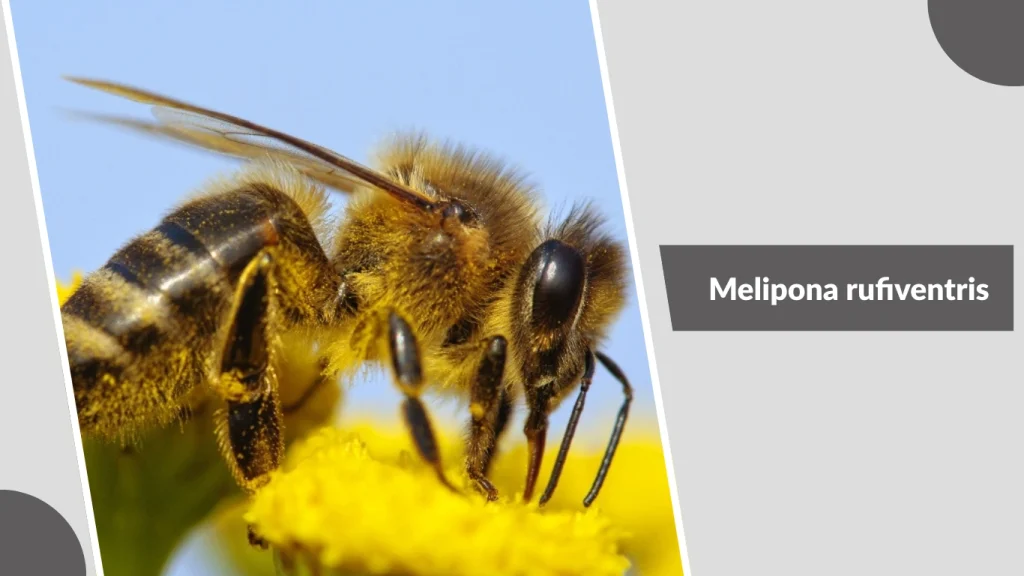
Melipona rufiventris, locally known as “uruçu-amarela,” is another important stingless bee species from Brazil. It is easily recognized by its striking yellow to reddish coloration and has been domesticated for centuries due to its honey and cultural value.
Identification
- Size: Around 9–10 mm long
- Color: Thorax and abdomen have bright yellow to reddish hues, making it visually distinct from darker Melipona species
- Wings: Lightly tinted, transparent
- Colony size: Typically 3,000–5,000 individuals
- Distinct trait: Bright coloration, often used by beekeepers as an easy marker to distinguish from other uruçu bees
Habitat
This species is distributed mainly in the Cerrado and Atlantic Forest regions of Brazil. It prefers hollow trees in both forest and savanna-like habitats, but it has also been widely managed in rural communities using hive boxes. Colonies adapt well to semi-domesticated conditions.
Behavior
M. rufiventris has a relatively calm temperament and is easier to manage than more defensive stingless bee species. Colonies grow at a steady pace and reproduce reliably under good conditions. Foragers collect nectar, pollen, and resin, usually staying within a few hundred meters of the nest. They are also known for their high efficiency in pollinating passion fruit and guava crops.
Importance
This bee holds great ecological and cultural importance in Brazil. Its honey, often called “uruçu honey,” is fluid, tangy, and highly sought after in traditional medicine for treating throat infections, eye conditions, and digestive issues. M. rufiventris also contributes significantly to the pollination of native Cerrado plants, ensuring the survival of species in one of the world’s most diverse but threatened ecosystems.
15. Melipona eburnea
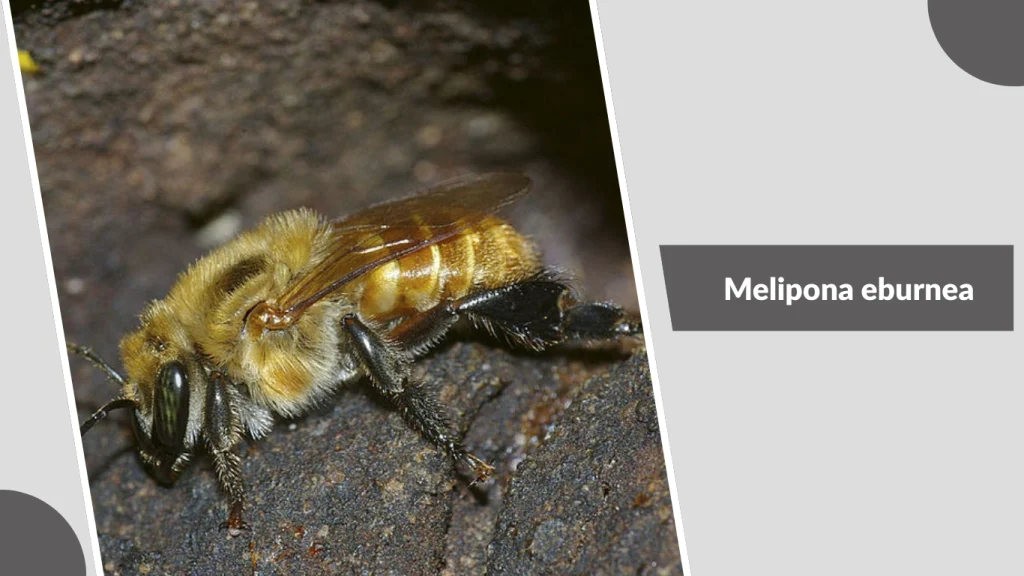
Melipona eburnea is a lesser-known but ecologically important stingless bee species native to the Amazon rainforest. Though not as widely kept in meliponiculture as some other Melipona species, it plays a vital role in forest pollination and biodiversity conservation.
Identification
- Size: Medium to large, about 9–10 mm long
- Color: Predominantly black with subtle lighter shades on the abdomen
- Wings: Transparent with a faint grayish tint
- Colony size: Around 3,000–4,500 individuals
- Distinct trait: Brood cells are often arranged in irregular clusters rather than neat spirals or layers
Habitat
M. eburnea inhabits the dense Amazonian forests of Brazil, Ecuador, and Peru. It nests in large hollow trees and occasionally in underground cavities. Colonies are long-lived but highly dependent on stable, humid environments typical of the rainforest.
Behavior
This species is gentle in temperament and rarely aggressive toward humans. Colonies grow slowly, and reproduction is less frequent compared to other Melipona species. Foraging ranges are moderate, usually within 500–700 meters from the nest. Workers are efficient in collecting nectar, pollen, and resins, particularly from native rainforest trees and shrubs.
Importance
Although M. eburnea is not widely domesticated, it plays an essential ecological role as a pollinator of Amazonian fruits and wild plants. Its honey is produced in small amounts, is slightly acidic, and is used locally for medicinal purposes, especially in treating infections and inflammation. Its conservation is important since the species contributes to rainforest regeneration and ecological balance.
16. Scaptotrigona postica
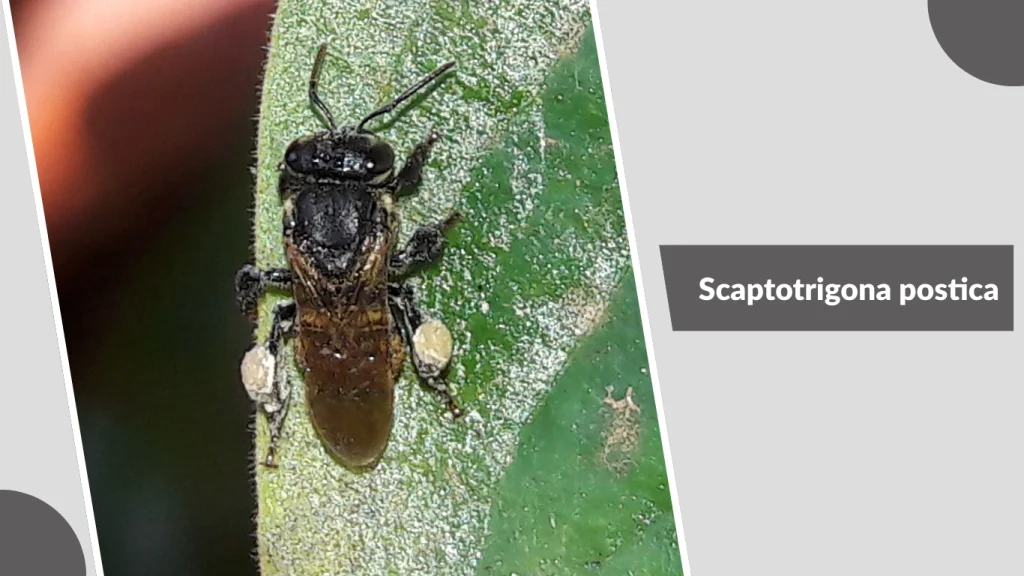
Scaptotrigona postica, locally called “tubiba” in Brazil, is one of the most recognized and widely managed stingless bees in South America. It is highly productive, adaptable, and valued for both honey and propolis production.
Identification
- Size: Medium-sized, about 6–7 mm long
- Color: Predominantly dark black body with a glossy finish
- Wings: Transparent and narrow
- Colony size: Very large, often 20,000+ individuals—much larger than Melipona colonies
- Distinct trait: Known for producing large amounts of dark propolis and resin inside their nests
Habitat
This species is distributed across Brazil and other parts of South America, thriving in both tropical and subtropical regions. It usually nests in hollow trees, wall cavities, and wooden logs. In beekeeping, they adapt well to hive boxes and can be kept close to human settlements due to their resilience.
Behavior
S. postica is highly social, with an advanced colony structure and remarkable communication among workers. Colonies are extremely defensive; while they do not sting, workers aggressively swarm intruders, biting and smearing sticky resin on them. Foragers are highly active and may travel up to 1 km to gather resources.
Importance
This species is of great economic value in meliponiculture. It produces larger amounts of honey than most stingless bees, although the honey has a distinct sour taste. Its propolis, rich in antimicrobial properties, is widely used in natural medicine and commercial health products. Ecologically, S. postica is a powerful pollinator of tropical crops such as coffee, guava, and citrus, making it one of the most beneficial stingless bee species for both ecosystems and agriculture.
17. Scaptotrigona depilis
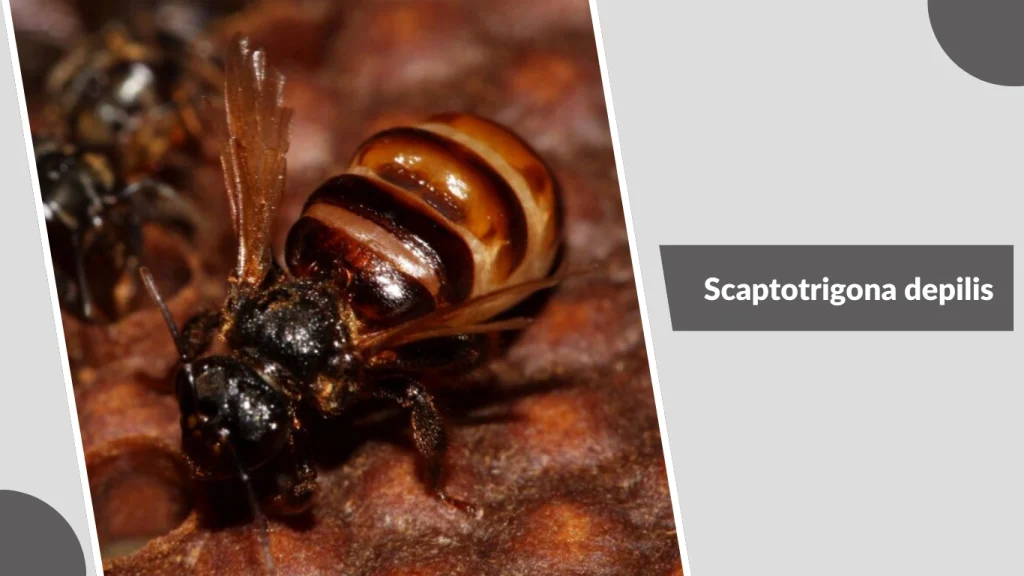
Scaptotrigona depilis is a stingless bee species native to South America, especially Brazil. It is one of the most studied species within its genus due to its productivity, adaptability, and unique colony structure. Beekeepers value it not only for honey but also for its strong propolis production.
Identification
- Size: Small to medium, about 5–6 mm long
- Color: Shiny black body with translucent wings
- Colony size: Can exceed 15,000–20,000 individuals, much larger than most Melipona species
- Distinct trait: Produces abundant propolis, often coating nest entrances and internal structures with sticky resin
Habitat
S. depilis thrives in tropical and subtropical environments, mainly in Brazil’s Atlantic Forest and Cerrado biomes. Natural nests are usually found in hollow trees or wall cavities. They are also highly adaptable to hive boxes, making them popular among meliponiculturists.
Behavior
This species is defensive and reacts strongly to disturbances. Instead of stinging, workers attack intruders by swarming, biting, and covering them with resin. Colonies are highly organized, with efficient worker divisions for foraging, guarding, and brood care. Foraging ranges can extend over 1 km, allowing access to diverse plant sources.
Importance
S. depilis is a key pollinator of agricultural crops such as citrus, coffee, and passion fruit, as well as native forest plants. Its honey is tangy and slightly acidic, with recognized medicinal value. The propolis is particularly prized in natural medicine for its antibacterial and antifungal properties, making this species valuable beyond pollination.
18. Scaptotrigona mexicana
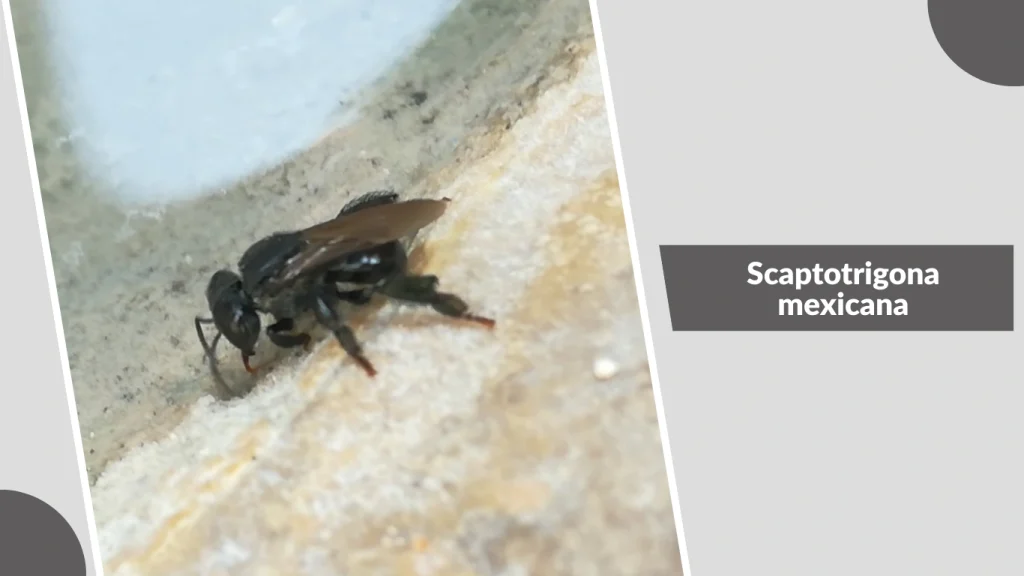
Scaptotrigona mexicana is one of the most important stingless bee species in Mexico and Central America. It has been kept by local communities for centuries, particularly for honey and wax production, and is considered culturally significant.
Identification
- Size: About 6–7 mm long
- Color: Dark black body with slender build
- Colony size: 10,000–15,000 bees on average
- Distinct trait: Produces honey pots with distinctive waxy walls arranged in clusters within the nest
Habitat
S. mexicana is native to Mexico, Guatemala, and other Central American countries. It prefers warm, humid environments, nesting in hollow trees, old logs, and man-made wooden boxes. Colonies are also found in rural house walls where cavities exist.
Behavior
This species is defensive, with workers aggressively swarming intruders when their nest is disturbed. Foragers are efficient and can cover moderate distances in search of nectar, pollen, and resins. Colonies reproduce steadily and can remain viable for many years under proper management.
Importance
S. mexicana holds great ecological and cultural value. It pollinates a variety of local crops, including avocado, coffee, and citrus. Its honey is liquid, tangy, and often used in traditional medicine for eye infections, colds, and digestive issues. Beyond honey, its wax and propolis are also utilized by local communities for crafts, rituals, and healing practices.
19. Scaptotrigona bipunctata
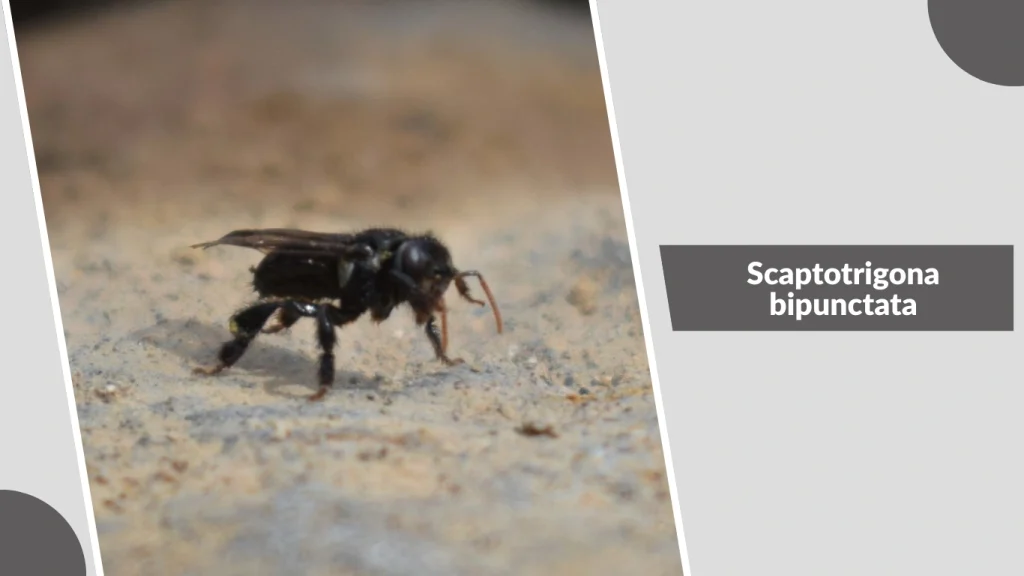
Scaptotrigona bipunctata is another highly adaptable stingless bee species native to South America, particularly Brazil. It is recognized for its strong defensive behavior and its ecological role as a pollinator in both natural and agricultural systems.
Identification
- Size: Medium-sized, about 6–7 mm long
- Color: Glossy black body, sometimes with faint lighter markings
- Colony size: Very large, often exceeding 15,000 bees
- Distinct trait: Named for the small paired markings (“bipunctata”) sometimes visible on its thorax or abdomen
Habitat
S. bipunctata is distributed across Brazil and neighboring South American countries, inhabiting tropical and subtropical forests. It usually nests in hollow trees but can also adapt to walls and hive boxes. Colonies are large, resilient, and capable of lasting for decades under stable conditions.
Behavior
This species is highly defensive. Workers swarm aggressively when the colony is threatened, biting intruders and covering them with sticky resin. Foragers are efficient and travel long distances, often more than 1 km, to collect nectar, pollen, and propolis. Despite their defensive nature, colonies are highly productive, making them important for both natural ecosystems and meliponiculture.
Importance
S. bipunctata contributes significantly to pollination of crops such as coffee, guava, and citrus. Its honey is acidic, aromatic, and widely used in folk medicine. Propolis from this species is especially valued for its antimicrobial properties and is commonly harvested for use in natural remedies.
20. Partamona helleri

Partamona helleri is a stingless bee native to Brazil and one of the most common species of the genus Partamona. It is particularly known for its unique nest architecture and its role in pollination of both wild and cultivated plants.
Identification
- Size: Small to medium, about 5–6 mm long
- Color: Dark body, often with a slightly reddish-brown thorax
- Colony size: Typically 8,000–12,000 individuals
- Distinct trait: Builds distinctive external entrance tubes made of resin and mud, often resembling spiky projections
Habitat
This species inhabits tropical and subtropical regions of Brazil. It often nests in trees, walls, termite mounds, and even on exposed surfaces where its resin-mud entrance tubes provide protection. Colonies are robust and can adapt well to artificial hive boxes.
Behavior
P. helleri is moderately defensive, reacting to intrusions by swarming and biting while using resin to entangle threats. Colonies are very active, with foragers collecting nectar, pollen, and resin throughout the day. Their entrance tubes often serve as a defensive adaptation, narrowing the passage and making it easier for guards to protect the colony.
Importance
This species is vital for pollination of various fruit crops, including passion fruit, acerola, and guava. Its honey, though produced in limited quantities, is tangy and medicinal. Local communities also value its wax and resin, which are used in traditional healing practices. The distinctive nests of P. helleri make it one of the most recognizable stingless bees in Brazil.
21. Partamona cupira
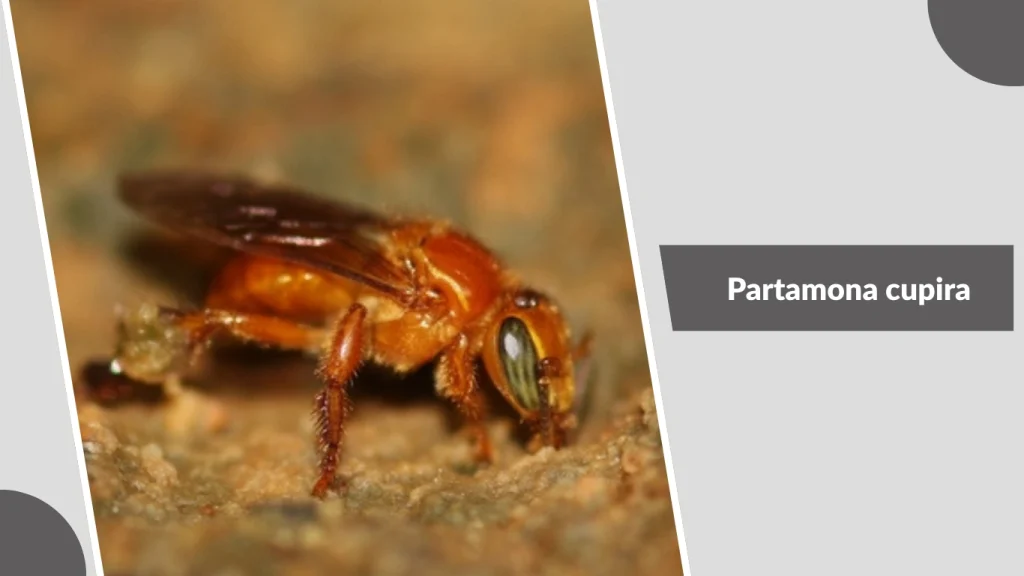
Partamona cupira is a widespread stingless bee species native to South America, especially Brazil. It is one of the most studied members of the genus Partamona and is known for its unusual nest architecture, which often looks like large mud and resin structures attached to trees or walls.
Identification
- Size: Small to medium, about 5–6 mm long
- Color: Dark brown to black body with slight reddish tones on the thorax
- Colony size: 10,000–15,000 individuals
- Distinct trait: Builds elaborate external nests with large mud “fortress-like” structures that can be seen from a distance
Habitat
P. cupira is distributed widely across Brazil, often nesting in exposed places such as tree trunks, rock crevices, and even building walls. Colonies are highly adaptable and can survive in rural and urban settings alike.
Behavior
This species is defensive and uses its unique nest structures as protection against predators. Workers swarm intruders quickly, biting and applying resin. They are persistent foragers, traveling moderate distances to collect nectar, pollen, and resins. Colony entrances are heavily guarded and sometimes lined with mud projections to restrict entry.
Importance
P. cupira is a vital pollinator of both wild plants and crops such as guava, passion fruit, and cashew. Its honey is produced in small amounts but is considered medicinal and slightly acidic in taste. The species’ distinctive nesting behavior also makes it a subject of interest for researchers studying bee architecture and colony defense.
22. Trigona spinipes
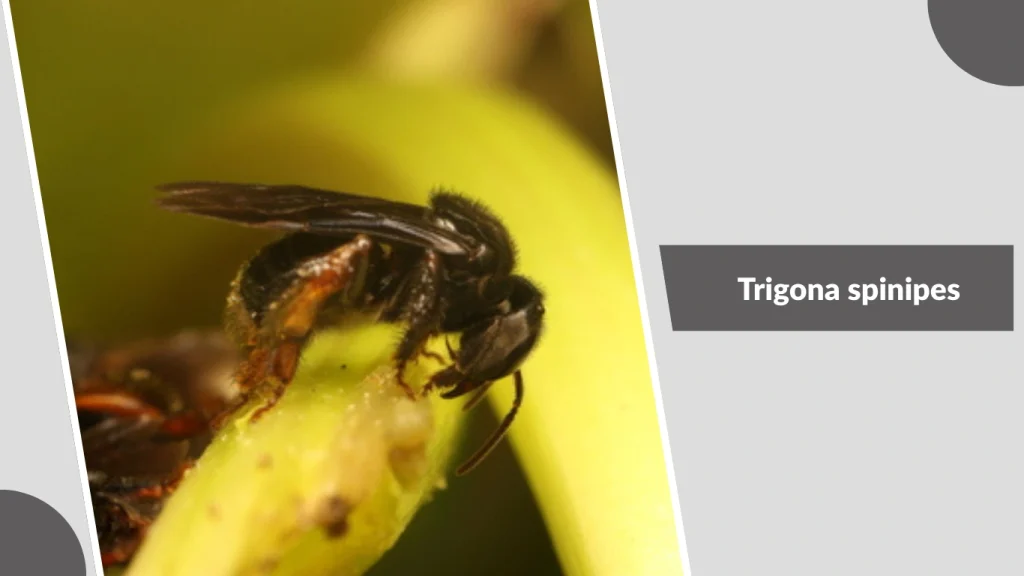
Trigona spinipes, also called “irapuá” in Brazil, is one of the most aggressive and dominant stingless bee species in South America. It is known for its massive colonies and highly defensive nature, often displacing other bee species from their habitats.
Identification
- Size: Medium, about 6–7 mm long
- Color: Dark black-brown body with a strong, robust build
- Colony size: Extremely large, often exceeding 50,000 individuals
- Distinct trait: Highly aggressive; colonies create extensive resin deposits around nest entrances for defense
Habitat
T. spinipes is widespread across Brazil and other South American countries. It prefers nesting in trees, rock crevices, and occasionally man-made structures. Colonies are long-lasting and highly adaptable to diverse environments.
Behavior
This species is notoriously aggressive. Workers immediately swarm intruders, biting persistently and smearing sticky resin on hair, skin, or fur to immobilize enemies. They are also territorial and may attack nearby colonies of other stingless bee species. Despite this, their foraging efficiency is unmatched, with workers covering wide areas and visiting a large variety of flowers.
Importance
T. spinipes is both beneficial and problematic. It is an excellent pollinator of crops such as coffee, passion fruit, and citrus, but its aggression makes it challenging to manage in meliponiculture. Farmers often rely on wild colonies for pollination rather than keeping them in hives. Its honey is edible but produced in small amounts and is considered sour and less desirable compared to Melipona honey. Nonetheless, its ecological role as a dominant pollinator in South America is undeniable.
23. Trigona fulviventris
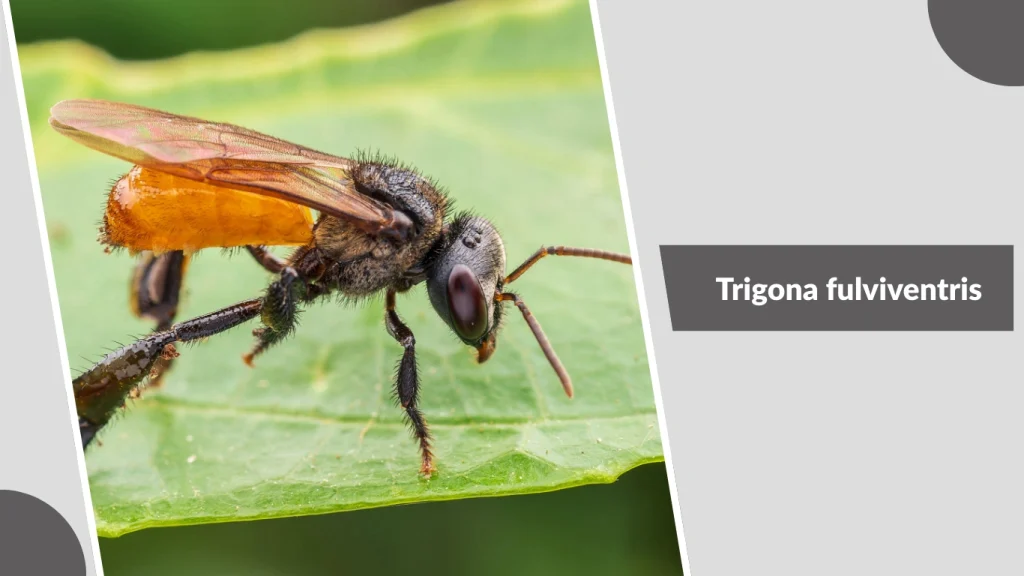
Trigona fulviventris is a stingless bee species found throughout Central and South America. It is easily recognized by its reddish-brown abdomen and is one of the more adaptable members of the Trigona genus, often thriving close to human settlements.
Identification
- Size: Medium, about 6–7 mm long
- Color: Black head and thorax with a reddish-brown abdomen (“fulviventris” means yellowish-brown belly)
- Colony size: Large, typically 20,000–30,000 individuals
- Distinct trait: Characteristic reddish abdominal coloration distinguishing it from other Trigona species
Habitat
T. fulviventris is widely distributed across Mexico, Central America, and northern South America. It nests in hollow trees, soil cavities, and occasionally wall crevices in rural areas. Colonies adapt well to disturbed habitats, making them common in agricultural landscapes.
Behavior
This species is highly defensive and reacts aggressively to intruders. Workers swarm in large numbers, biting and smearing resin as a means of protection. Foragers are active throughout the day, gathering nectar, pollen, and resins from a wide range of plants. Colonies grow rapidly and are resilient, even in environments impacted by human activity.
Importance
T. fulviventris is a major pollinator of tropical crops such as avocado, mango, and citrus. Its honey, though strongly acidic and less sweet than Apis honey, is valued for medicinal use in local communities. This bee’s adaptability makes it important in both natural ecosystems and agricultural systems.
24. Trigona recursa
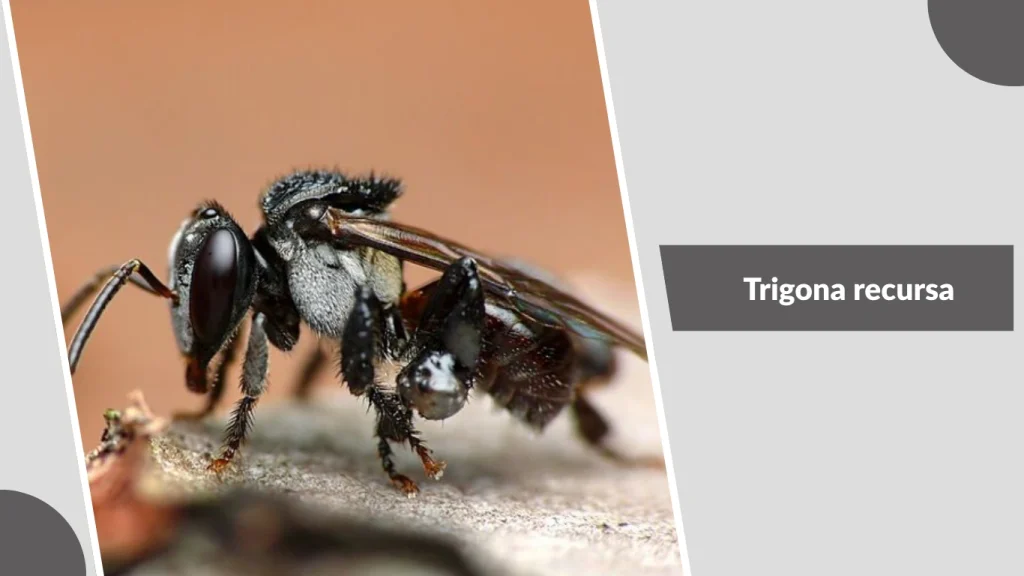
Trigona recursa is a stingless bee species native to South America, particularly Brazil. Known for its aggressive nature, it is often considered a dominant competitor within the stingless bee community.
Identification
- Size: About 6–7 mm long
- Color: Dark black body with shiny wings
- Colony size: Can reach 30,000–40,000 individuals
- Distinct trait: Extremely defensive and territorial, often attacking nearby colonies of other bee species
Habitat
This species is common in tropical and subtropical forests of Brazil. Nests are often found in hollow trees, large logs, or cavities in rocky areas. Colonies are long-lived and can expand significantly in favorable conditions.
Behavior
T. recursa is one of the most aggressive stingless bee species. Colonies quickly swarm intruders, biting persistently and using resin to disable them. They are known to attack nearby stingless bee colonies, sometimes leading to colony collapse of weaker species. Despite this, they are efficient foragers and collect nectar and pollen from a wide range of flowers.
Importance
Ecologically, T. recursa plays a role as a dominant pollinator, ensuring coverage of large areas and many plant species. However, its aggression makes it unsuitable for meliponiculture. The honey is tangy and sour, produced in small quantities, and is occasionally used in folk medicine. Farmers benefit from their pollination services, but they are more often tolerated in the wild than actively managed.
25. Plebeia droryana
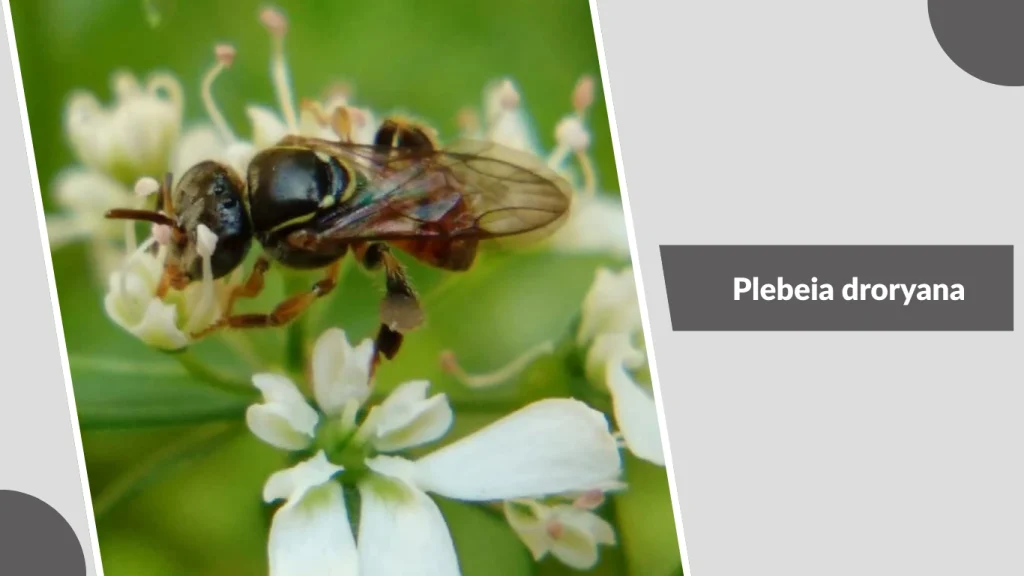
Plebeia droryana is a small stingless bee species found in Brazil and parts of South America. Unlike the aggressive Trigona bees, this species is gentle and has long been kept in small-scale meliponiculture for honey and pollination.
Identification
- Size: Very small, about 3–4 mm long
- Color: Black body with faint yellowish markings on the thorax
- Colony size: 1,000–2,500 individuals, much smaller than Trigona or Melipona colonies
- Distinct trait: Tiny size and gentle temperament, often described as “miniature stingless bees”
Habitat
P. droryana inhabits tropical and subtropical forests, nesting in tree cavities, soil crevices, or small hollows in rocks. They are also frequently managed in tiny hive boxes due to their small colony size.
Behavior
This species is docile and rarely shows defensive aggression. Colonies are smaller and slower growing than those of Melipona or Trigona bees. Foragers travel short distances, usually less than 300 meters, to collect nectar and pollen. Their small size allows them to pollinate delicate flowers that larger bees often overlook.
Importance
Plebeia droryana is ecologically valuable because it pollinates small-flowered plants and contributes to biodiversity in forest ecosystems. Its honey is produced in very small amounts, usually less than 500 g per year per colony, but is considered medicinal and aromatic. Due to their gentle nature, these bees are popular among hobbyists and researchers studying stingless bee behavior.
