

Water striders are fascinating insects that can glide effortlessly across the surface of ponds, lakes, and streams. Using their long legs and water-repellent bodies, they move with remarkable speed and precision while hunting insects trapped on the water. Found worldwide in calm freshwater habitats, these agile predators play an important role in controlling insect populations. Below, we explore 25 unique types of water striders and their characteristics.
1. Gerris lacustris
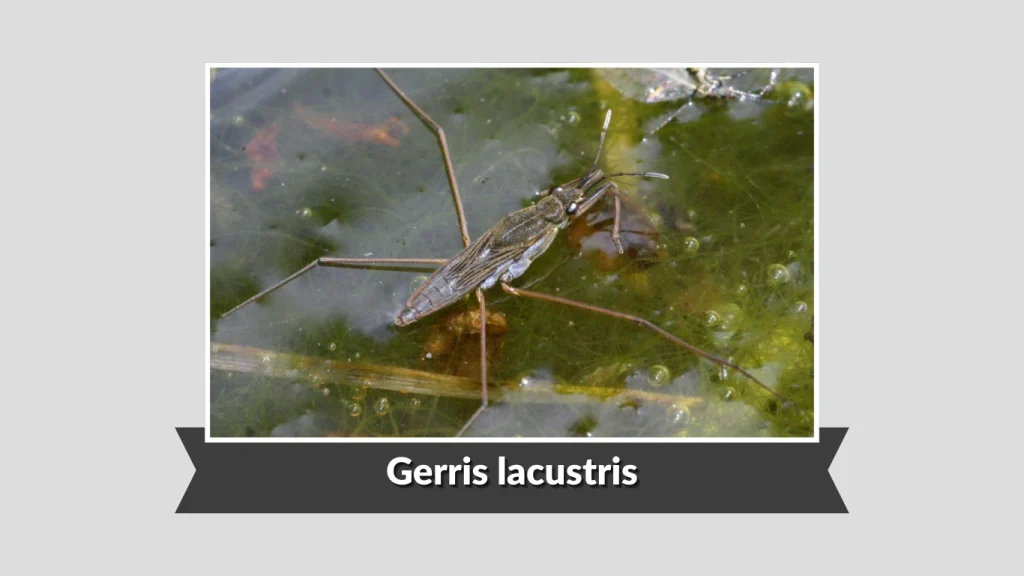
Geris lacustris, often called the common pond skater, is one of the most familiar water striders in Europe and Asia. It glides effortlessly across the surface of still or slow-moving waters using surface tension, making it a recognizable insect for anyone exploring ponds, lakes, or streams.
Identification
- Slender brownish-black body, usually 8–10 mm long
- Long, thin legs with middle legs adapted for propulsion
- Short forelegs used to catch and hold prey
- White or silvery underside to help with buoyancy
Habitat
This species is usually found in freshwater habitats such as ponds, lakes, and slow rivers. It prefers calm water surfaces where it can detect vibrations of struggling prey like insects trapped on the water.
Behavior
Gerris lacustris is a surface predator. It uses its sensitive legs to detect ripples caused by insects that fall into the water. Once located, it quickly paddles toward the prey, seizes it with its forelegs, and pierces it with its beak to suck out the body fluids.
2. Gerris remigis

Gerris remigis, commonly known as the common water strider of North America, is one of the most widespread species across ponds, lakes, and streams. It is easily recognized by its quick, darting movements on the water surface and plays an important role in controlling insect populations.
Identification
- Body length ranges between 12–15 mm
- Dark brown to black coloration with a slender form
- Long middle legs adapted for rowing across water
- Short forelegs specialized for grasping prey
Habitat
This species thrives in calm freshwater environments such as ponds, marshes, and slow-moving streams. It avoids turbulent waters, preferring smooth surfaces that allow it to skim effortlessly.
Behavior
Gerris remigis uses its legs to sense surface vibrations, allowing it to detect prey struggling on the water. It is an efficient predator, capturing insects like mosquitoes and flies. When threatened, it can leap short distances across the water to escape danger.
3. Gerris marginatus

Gerris marginatus is a widely distributed water strider often seen gliding on ponds, marshes, and streams. It is slightly smaller than some related species but is just as agile, making quick movements to chase down prey on the water surface.
Identification
- Body length around 8–11 mm
- Dark brown to black body with lighter margins
- Long, slender legs with middle pair used for propulsion
- Forelegs shorter, adapted for catching prey
Habitat
This species is commonly found in still or slow-moving waters, such as ponds, ditches, and lakeshores. It prefers areas with abundant vegetation that provide shelter and hunting grounds.
Behavior
Gerris marginatus is a predatory insect that hunts by detecting ripples on the water surface. It feeds on small insects trapped in the water film and can move swiftly across large areas to capture multiple prey items.
4. Gerris lateralis

Gerris lateralis is a smaller water strider species known for its agility and adaptability in various freshwater habitats. It is often observed in shaded ponds and streams, moving quickly across the surface in search of prey.
Identification
- Body length about 7–9 mm
- Dark brown to black coloration with slightly lighter side margins
- Long middle legs designed for rapid propulsion
- Short front legs used for seizing prey
Habitat
This species inhabits still waters like ponds, marshy pools, and the edges of slow rivers. It is particularly common in shaded areas where vegetation provides cover and a steady food supply.
Behavior
Gerris lateralis hunts by sensing vibrations on the water surface. It is an opportunistic predator, capturing any small insects or larvae that fall into the water. It often moves in short bursts, gliding quickly before pausing to detect ripples.
5. Gerris buenoi

Gerris buenoi is one of the most common water striders in North America, especially abundant during warm months. It is slightly larger than some European relatives and is well adapted to living in both natural and man-made water bodies.
Identification
- Body length ranges from 10–13 mm
- Dark brown to black body, sometimes with a faint metallic sheen
- Long, slender legs with middle pair adapted for rapid movement on water
- Short front legs specialized for grabbing and holding prey
Habitat
This species thrives in ponds, lakes, reservoirs, and slow-flowing streams. It can also be found in artificial habitats such as garden ponds and water troughs, showing its adaptability.
Behavior
Gerris buenoi actively patrols the water surface, using its legs to sense vibrations caused by prey. It quickly rows across the surface to capture insects, feeding mainly on flies, gnats, and mosquito larvae. It is also known to form small groups in favorable habitats.
6. Gerris gillettei
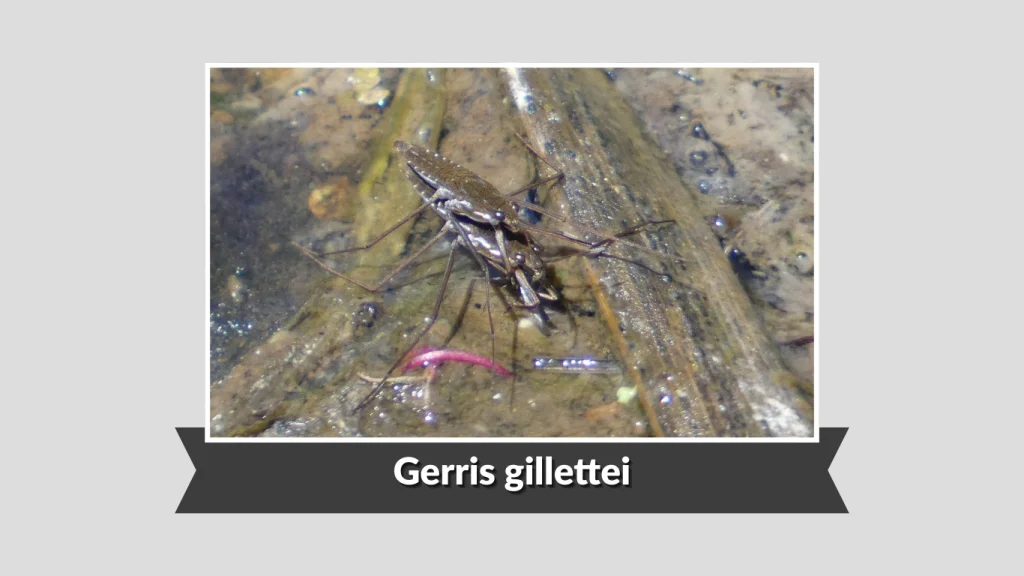
Gerris gillettei is a North American water strider species that prefers cooler freshwater habitats. Though not as widespread as some of its relatives, it is well adapted to gliding smoothly over calm waters and plays an important role as a predator of small insects.
Identification
- Body length about 9–11 mm
- Slender, dark-colored body with subtle pale markings
- Long, thin middle legs designed for surface skating
- Shorter forelegs used for catching and securing prey
Habitat
This species inhabits ponds, small lakes, and slow-moving streams, particularly in shaded or forested regions. It tends to favor cleaner water environments with less disturbance.
Behavior
Gerris gillettei hunts by detecting the surface ripples of insects trapped on the water. It swiftly rows toward its target and pierces it with its beak to consume body fluids. It usually remains solitary but may be seen sharing space with other water strider species.
7. Gerris thoracicus
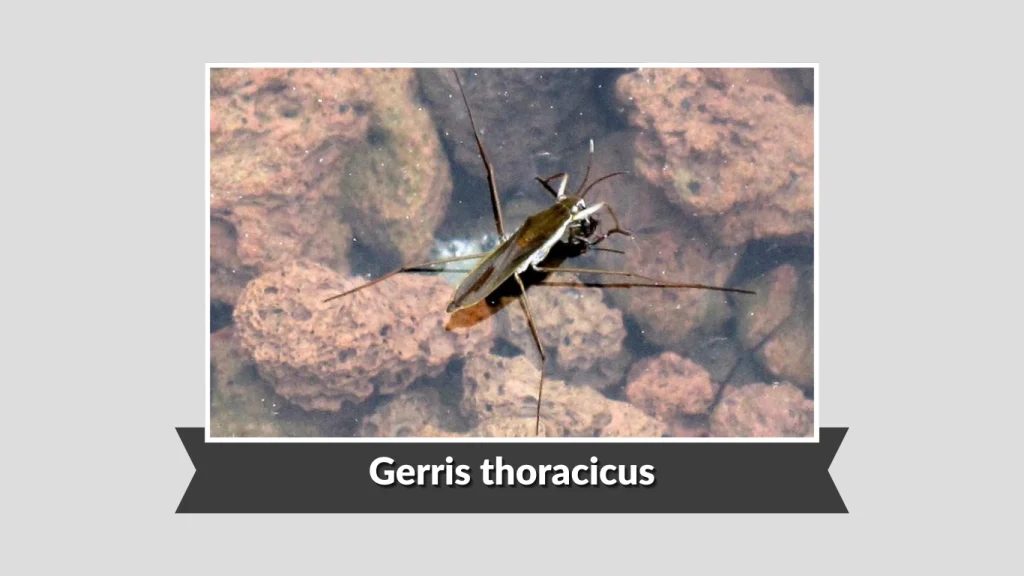
Gerris thoracicus is a distinctive water strider found across Europe and parts of Asia. Known for its slightly broader thorax compared to related species, it is a skilled surface predator that glides across ponds and slow rivers with ease. It is often spotted in spring and summer, actively hunting on calm water surfaces.
Identification
- Body length ranges from 8–11 mm
- Elongated, dark brown to black body with a noticeably broad thorax
- Long middle legs adapted for quick propulsion on water
- Shorter forelegs specialized for grasping prey
- Silvery underside that helps prevent sinking by repelling water
Habitat
This species inhabits ponds, lakes, ditches, and the margins of rivers. It prefers habitats with floating vegetation, which provide cover and support for egg laying. Gerris thoracicus often shares its environment with other water strider species but can be distinguished by its slightly different build.
Behavior
Gerris thoracicus is highly sensitive to vibrations on the water surface. It quickly detects ripples made by struggling insects and rows toward them with precision. Once it captures prey, it injects digestive enzymes with its piercing mouthparts and consumes the liquefied tissues. It is also territorial, often defending small stretches of water against other striders.
8. Gerris odontogaster
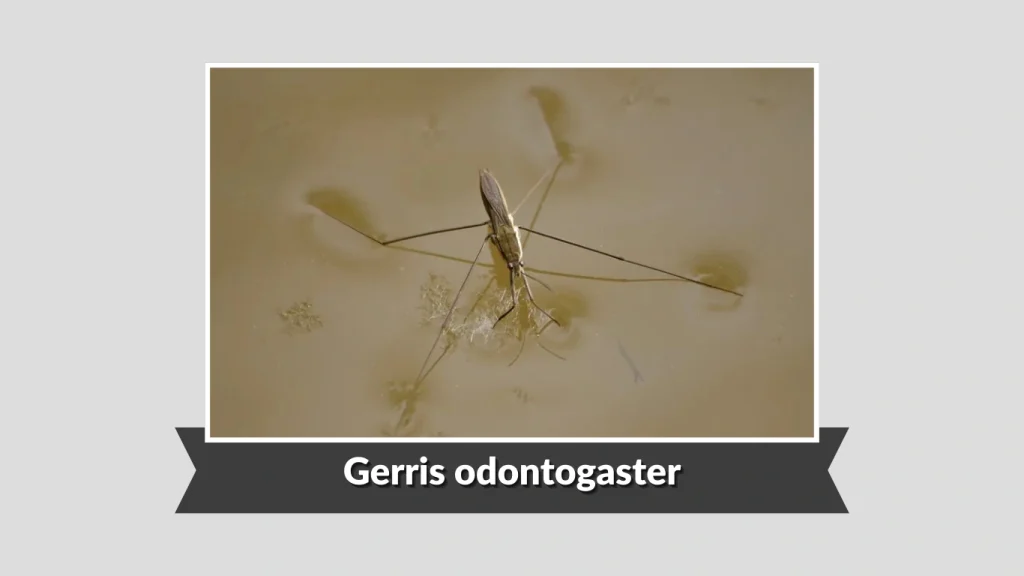
Gerris odontogaster is a medium-sized water strider commonly seen across Europe and Asia. It is easily recognized by its elongated body and swift, confident movements on calm water. This species is often spotted in small groups, gliding across ponds or sheltered riverbanks where prey is abundant.
Identification
- Body length usually 9–12 mm
- Slender, dark brown to black body with subtle lighter markings
- Long middle legs designed for rowing and fast surface movement
- Short forelegs adapted for seizing insects
- Fine hairs on the legs that prevent sinking by repelling water
Habitat
Gerris odontogaster inhabits ponds, lakes, canals, and the edges of rivers with slow currents. It thrives in sunny, open waters where aquatic vegetation provides shelter and egg-laying sites. Unlike some striders, it is less common in highly shaded or fast-flowing environments.
Behavior
This species is an efficient predator of insects trapped on the water surface. It uses its middle legs to skate quickly toward ripples caused by prey and captures them with its forelegs. Gerris odontogaster is highly responsive to disturbances and can dart away rapidly if threatened, often skipping several centimeters across the surface in a single jump.
9. Gerris najas
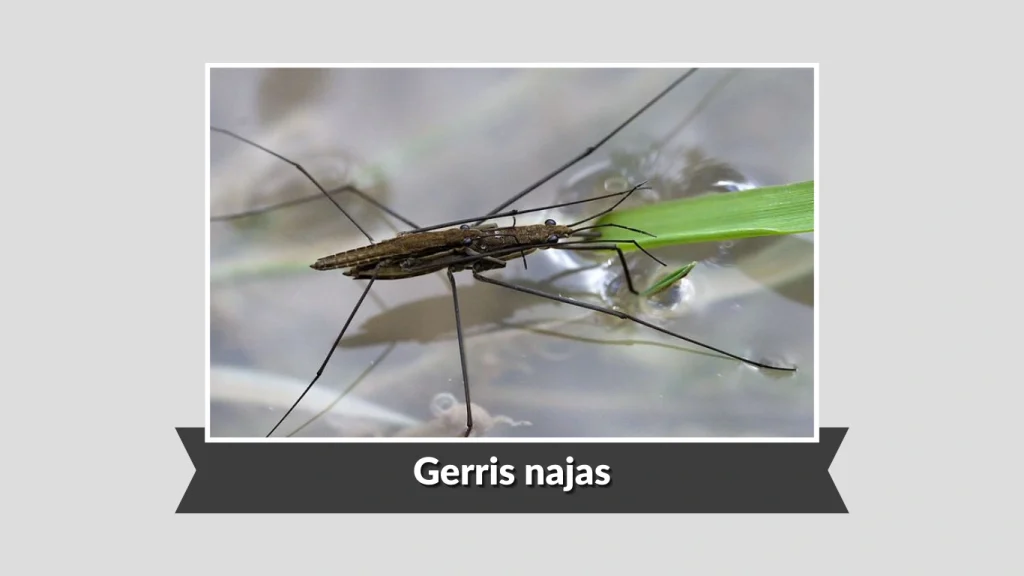
Gerris najas is a slender and agile water strider that is widespread in freshwater habitats across Europe and Asia. It is known for its graceful movements and preference for calm waters with plenty of vegetation. This species is often seen gliding in groups, especially during warm sunny days when insect prey is plentiful.
Identification
- Body length typically 8–10 mm
- Narrow, dark brown to black body with a glossy appearance
- Long, delicate middle legs specialized for skating on water
- Short forelegs used for catching and holding prey
- Underside coated with fine hairs to resist water penetration
Habitat
This species prefers still or slow-flowing waters such as lakes, ponds, ditches, and canals. It often inhabits areas with dense aquatic plants, which provide cover and breeding sites. Gerris najas thrives in relatively clean waters but can also adapt to semi-urban ponds and reservoirs.
Behavior
Gerris najas hunts actively on the water surface, feeding mainly on small insects like flies, gnats, and mosquitoes. It relies on detecting vibrations to locate prey and can move swiftly across wide stretches of water. When disturbed, it darts away in sudden, rapid strokes to avoid predators. It often forms loose colonies where multiple individuals share the same habitat.
10. Gerris costae
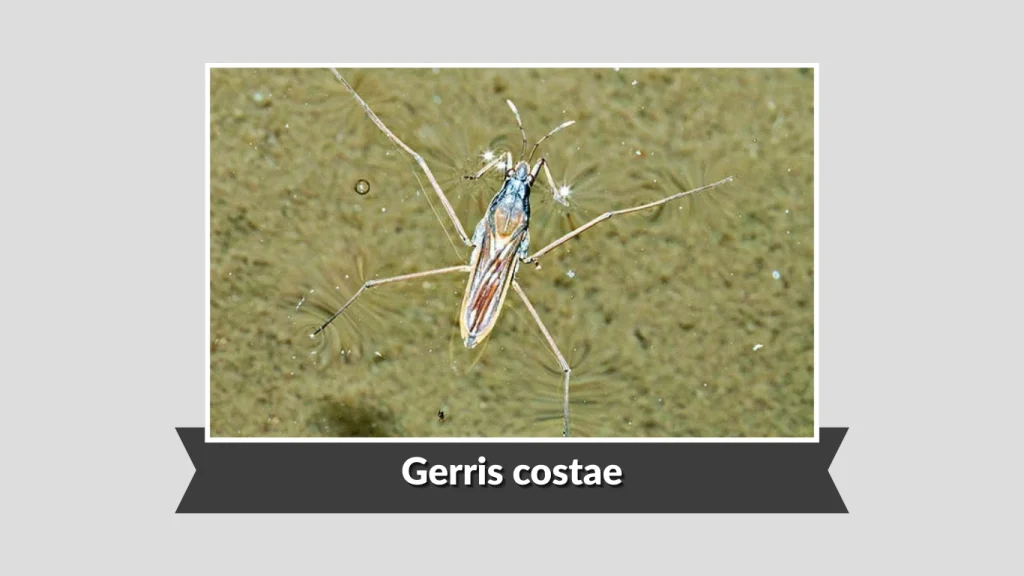
Gerris costae is a lesser-known water strider species, but it is still an important predator in freshwater ecosystems. It is recognized for its slim body structure and rapid, controlled gliding movements across ponds and slow streams. This species plays a role in maintaining insect balance by feeding on small invertebrates trapped on the water surface.
Identification
- Body length about 8–10 mm
- Slender, dark-colored body with faint lighter edging
- Long middle legs designed for swift propulsion on calm waters
- Short forelegs adapted for capturing prey quickly
- Hydrofuge hairs on legs and body surface that prevent sinking
Habitat
This species is usually found in still or gently flowing waters, including ponds, canals, and the sheltered edges of streams. It tends to prefer waters with partial vegetation where it can rest and hide from predators.
Behavior
Gerris costae uses its highly sensitive legs to detect surface vibrations caused by insects in distress. It skates smoothly across the surface to attack prey and feeds by piercing and sucking out body fluids. When threatened, it can make rapid escape movements, skipping across the water to safety.
11. Gerris alacris

Gerris alacris is a nimble water strider that inhabits calm freshwater habitats across parts of Europe and Asia. It is less commonly observed than some related species but shares the same efficient hunting style, skating swiftly across the water surface in search of prey.
Identification
- Body length around 7–9 mm
- Slim, dark brown to black body with subtle pale markings
- Long, slender middle legs used for gliding and propulsion
- Short front legs adapted for seizing insects
- Underside covered with water-repellent hairs to stay afloat
Habitat
This species prefers ponds, lakes, and slow-moving streams with plenty of aquatic plants. It often occupies sunny, open stretches of water where prey is abundant, though it may also be found near shaded banks.
Behavior
Gerris alacris hunts by detecting ripples made by insects that fall onto the water surface. It rows quickly toward the disturbance, grabs the prey with its forelegs, and feeds by piercing and sucking out the fluids. It is highly alert to danger and can leap or dart across the water to escape predators.
12. Gerris asper

Gerris asper is a freshwater water strider species recognized for its strong build and quick movements across calm water surfaces. Though not as commonly discussed as other Gerris species, it plays an active role as a surface predator in its habitat.
Identification
- Body length about 8–11 mm
- Dark brown to nearly black body, slightly more robust than some relatives
- Long middle legs adapted for skating and sudden bursts of speed
- Short forelegs designed to capture and hold struggling insects
- Fine hydrophobic hairs along the legs to prevent sinking
Habitat
This species is typically found in still or slow-flowing waters such as ponds, marshy pools, and stream edges. It prefers waters with vegetation cover, which offers protection from predators and provides resting surfaces.
Behavior
Gerris asper is a skilled hunter, relying on surface vibrations to locate prey like flies, gnats, and mosquito larvae. It is fast-moving and often hunts alone, patrolling its chosen stretch of water. When disturbed, it can quickly dart away or leap short distances to avoid danger.
13. Gerris argentatus
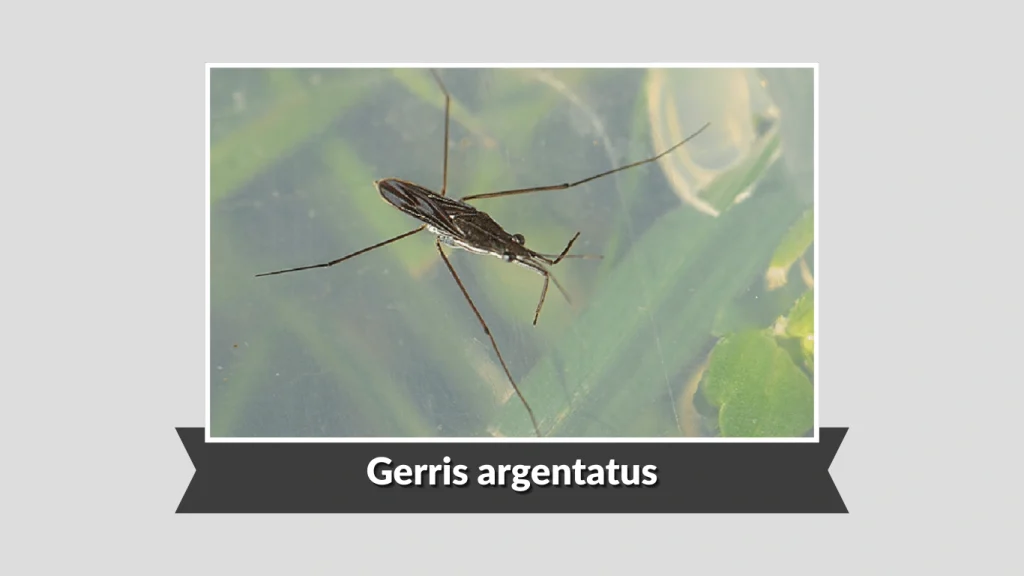
Gerris argentatus is a striking water strider species known for the silvery reflection on its underside, which helps it stay buoyant and hidden from underwater predators. It is agile, fast, and one of the more easily recognized Geris species due to its sleek appearance.
Identification
- Body length typically 8–10 mm
- Dark brown to black body with a noticeable silvery underside
- Long, thin middle legs used for rowing across the water surface
- Short forelegs adapted for seizing and holding prey
- Slightly shiny body surface that gives a metallic look in sunlight
Habitat
This species inhabits ponds, lakes, ditches, and the margins of slow streams. It prefers clear, calm waters with abundant vegetation and often stays close to the edges, where insects frequently fall onto the surface.
Behavior
Gerris argentatus hunts by detecting tiny ripples and vibrations on the water surface. It moves swiftly toward prey and uses its forelegs to grasp insects before feeding with its piercing mouthparts. When disturbed, it can dart quickly to another area, making it difficult for predators to catch.
14. Aquarius remigis

Aquarius remigis, often called the large water strider, is one of the most widespread and well-studied water striders in North America. It is bigger than most Gerris species, making it easy to identify on ponds, lakes, and slow-moving streams.
Identification
- Body length ranges from 15–18 mm, larger than many other striders
- Dark brown to black, elongated body shape
- Very long middle legs specialized for powerful propulsion
- Short forelegs used for grabbing prey efficiently
- Silvery underside that helps repel water and maintain buoyancy
Habitat
This species thrives in ponds, lakes, and slow-flowing streams. It prefers calm waters with open surfaces but can also adapt to human-made habitats like reservoirs and garden ponds.
Behavior
Aquarius remigis is an active predator, feeding mainly on insects such as flies and mosquitoes that fall onto the water. It uses its long legs to sense vibrations across wide areas, then rows quickly to capture prey. It is also territorial, often defending its hunting zone from other striders.
15. Aquarius paludum
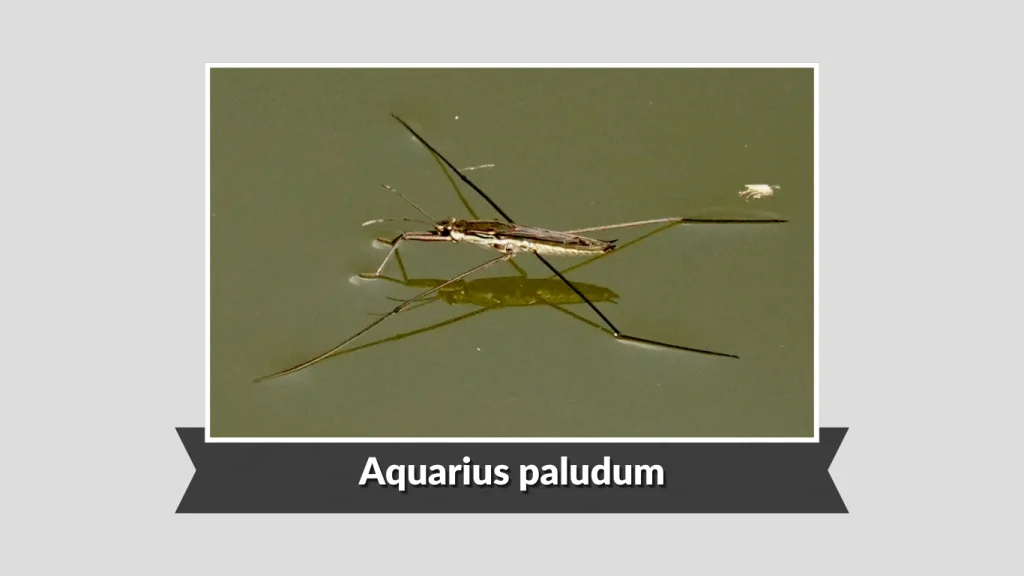
Aquarius paludum is one of the largest and most common water striders in Europe and Asia. Its size and strong movements make it stand out from smaller Gerris species, and it is often observed gliding confidently across lakes, ponds, and rivers.
Identification
- Body length about 12–16 mm
- Dark brown to black, elongated body
- Very long middle legs adapted for strong rowing strokes
- Short front legs specialized for seizing prey
- Silvery ventral surface to resist wetting and maintain buoyancy
Habitat
This species prefers calm freshwater habitats such as ponds, lakes, canals, and slow-moving rivers. It often occupies open stretches of water but can also be found near vegetation along the edges.
Behavior
Aquarius paludum is an efficient surface predator, feeding mainly on flies, gnats, and mosquito larvae. It detects ripples caused by struggling prey and glides swiftly to capture them. Known for its aggressive feeding style, it sometimes competes with other striders when food is abundant.
16. Aquarius ventralis

Aquarius ventralis is a medium-to-large water strider species commonly found in parts of Asia. Known for its streamlined body and swift rowing strokes, it is well adapted to life on calm water surfaces where it actively hunts small insects.
Identification
- Body length ranges from 12–15 mm
- Slender, dark brown to black body with a glossy appearance
- Very long middle legs used for fast and steady gliding
- Short forelegs adapted for grasping prey quickly
- Silvery underside coated with fine hairs that repel water
Habitat
This species inhabits ponds, lakes, ditches, and sheltered streams with slow currents. It is usually seen on sunny, open stretches of water where prey is abundant, but it may also remain near vegetation for cover.
Behavior
Aquarius ventralis is a skilled predator, detecting ripples caused by insects trapped on the water surface. It glides rapidly toward disturbances, seizes the prey with its forelegs, and consumes it using its piercing-sucking mouthparts. When threatened, it escapes with sudden, powerful strokes across the surface.
17. Aquarius elongatus
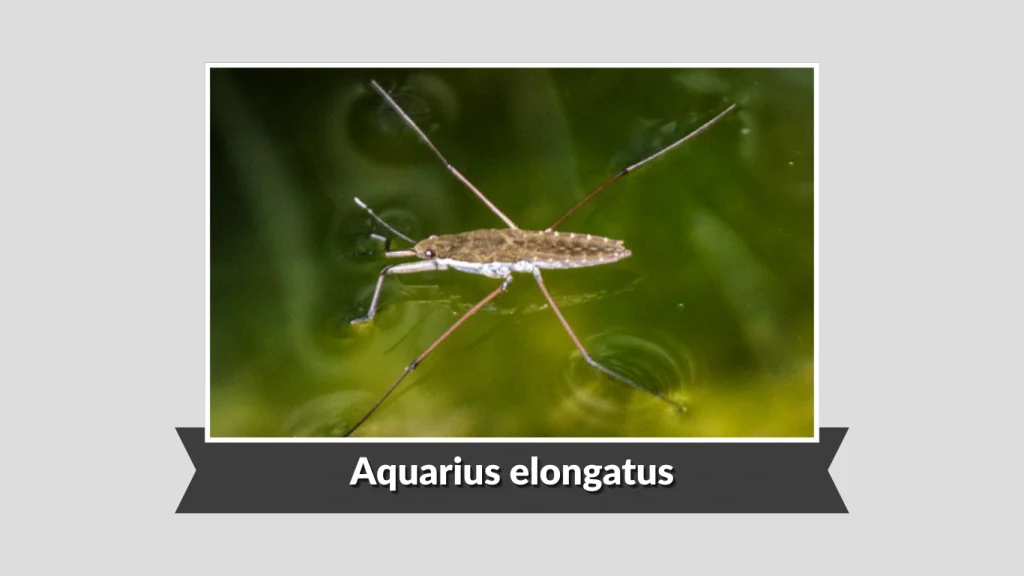
Aquarius elongatus is a large and slender water strider that stands out due to its elongated body shape and long legs. It is a strong surface hunter, often found in wide stretches of calm water where it glides smoothly while searching for prey.
Identification
- Body length about 13–16 mm
- Very slim, elongated dark brown to black body
- Extremely long middle legs adapted for fast rowing movements
- Short front legs designed for capturing and holding insects
- Silvery underside with fine hairs that prevent waterlogging
Habitat
This species prefers ponds, lakes, canals, and slow-flowing rivers. It favors open water surfaces with little disturbance, though it may also be seen near aquatic plants at the margins.
Behavior
Aquarius elongatus is a swift predator, relying on surface vibrations to detect prey such as mosquitoes, flies, and other small insects. It glides rapidly toward the source of ripples and captures the prey with precision. When disturbed, it darts quickly across the water to avoid predators.
18. Aquarius conformis

Aquarius conformis is a widespread North American water strider recognized for its larger size and dominance in calm freshwater habitats. It is an active hunter and one of the more noticeable species skimming across ponds and lakes.
Identification
- Body length around 14–16 mm
- Dark brown to nearly black, elongated body form
- Long, slender middle legs specialized for rapid propulsion
- Short forelegs adapted for seizing prey on the water surface
- Silvery underside that aids in buoyancy and camouflage from fish below
Habitat
This species is typically found in ponds, lakes, marshes, and sheltered stream edges. It prefers open waters with minimal disturbance but can also thrive in small, man-made water bodies like reservoirs.
Behavior
Aquarius conformis is a skilled predator, feeding mainly on flies, gnats, and other small insects that land on the water. It detects vibrations across a wide area and glides swiftly toward prey. It can be territorial, with individuals often defending their feeding zones from other striders.
19. Limnoporus rufoscutellatus
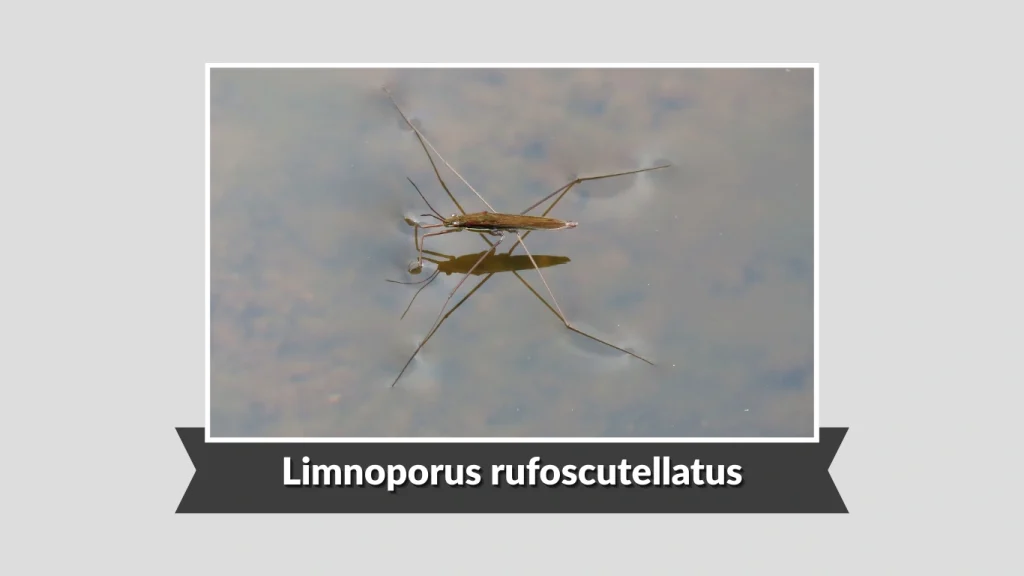
Limnoporus rufoscutellatus is a notable water strider species found across Europe and parts of Asia. Recognized for its reddish-tinted scutellum (the small triangular plate behind the thorax), it is a strong and agile skater on freshwater surfaces.
Identification
- Body length about 11–13 mm
- Dark brown to black body with a reddish or rusty scutellum
- Long middle legs adapted for swift movement across water
- Short forelegs used for grabbing and holding prey
- Silvery underside with water-repellent hairs that maintain buoyancy
Habitat
This species thrives in lakes, ponds, marshes, and slow-moving rivers. It prefers open stretches of calm water and is often observed gliding in sunny areas where insect prey is abundant.
Behavior
Limnoporus rufoscutellatus is an active predator that detects ripples created by struggling insects. It glides quickly toward the disturbance, captures prey with its front legs, and feeds by piercing and sucking body fluids. It is also alert and can escape rapidly if threatened.
20. Limnoporus canaliculatus

Limnoporus canaliculatus is a medium-to-large water strider commonly found in North America. It is one of the more noticeable striders due to its size and active surface movements, often gliding confidently across still waters.
Identification
- Body length about 12–15 mm
- Slender, dark brown to black body
- Long, powerful middle legs designed for fast propulsion
- Short front legs specialized for seizing insects
- Silvery underside that keeps the insect buoyant and water-repellent
Habitat
This species inhabits ponds, lakes, marshes, and slow-moving streams. It prefers calm, open surfaces where it can easily patrol for prey but may also be seen along vegetated edges.
Behavior
Limnoporus canaliculatus is an efficient predator, feeding on flies, gnats, and other insects that fall onto the water. It detects vibrations with its sensitive legs and rows quickly toward disturbances. When threatened, it can dart away in rapid bursts across the surface.
21. Limnoporus notabilis
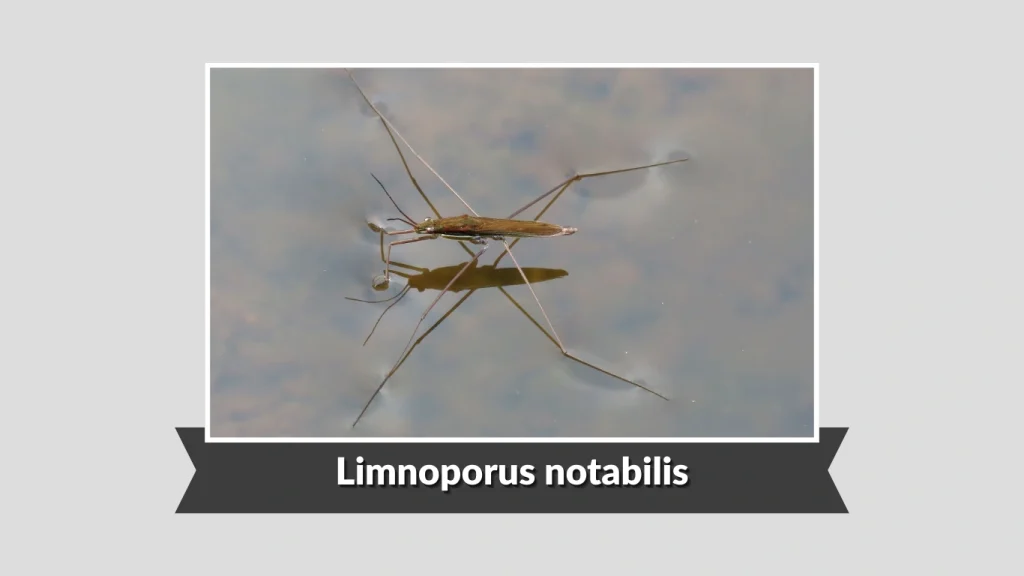
Limnoporus notabilis is a relatively large water strider species native to North America. Known for its strong, deliberate movements, it is often observed patrolling wide stretches of calm water, where it dominates as a surface predator.
Identification
- Body length about 13–16 mm
- Elongated, dark brown to black body with a slim appearance
- Very long middle legs designed for steady gliding and fast rowing
- Short forelegs adapted for capturing and holding prey securely
- Silvery underside with fine hairs that help repel water
Habitat
This species inhabits ponds, lakes, and slow-moving rivers. It prefers open water surfaces with little disturbance but can also be seen near aquatic vegetation that provides cover and resting spots.
Behavior
Limnoporus notabilis is highly skilled at detecting ripples caused by prey insects trapped on the surface. It rows powerfully toward its target, seizes it with its front legs, and feeds by piercing and extracting body fluids. When threatened, it can escape quickly with long, forceful strokes across the water.
22. Trepobates pictus

Trepobates pictus is a smaller but distinctive water strider species found in the Americas. Unlike the larger Gerris and Aquarius species, it has a more compact body but is equally agile, often darting across calm waters in search of prey.
Identification
- Body length about 6–8 mm
- Dark brown to black body with pale or yellowish markings
- Shorter and more compact build compared to larger water striders
- Long middle legs designed for quick, darting movements
- Silvery underside that helps maintain buoyancy
Habitat
This species prefers ponds, marshes, ditches, and slow-moving streams. It is often found in shallow, vegetated waters and can tolerate smaller, temporary water bodies better than larger strider species.
Behavior
Trepobates pictus is an active surface hunter, feeding on tiny insects and larvae that fall into the water. It uses rapid, short bursts of movement to reach prey quickly. This species often gathers in small groups, making them more visible than solitary striders.
23. Rheumatobates rileyi

Rheumatobates rileyi is a delicate and slender water strider species found mainly in North and Central America. Known for its graceful, lightweight build, it is one of the smaller representatives of surface-dwelling striders, moving swiftly across quiet waters.
Identification
- Body length about 5–7 mm
- Very slender, dark brown to black body
- Extremely long and thin middle legs for rapid skating
- Short forelegs specialized for grabbing tiny prey
- Silvery underside covered with fine hairs that repel water
Habitat
This species inhabits ponds, marshes, and sheltered edges of streams. It prefers shallow, calm waters and is often found among aquatic vegetation that provides cover and egg-laying sites.
Behavior
Rheumatobates rileyi hunts by detecting minute ripples on the water surface, preying on very small insects such as gnats and mosquito larvae. It moves lightly and swiftly, often darting in short bursts. Unlike larger species, it tends to stay closer to vegetation for protection.
24. Metrocoris histrio

Metrocoris histrio is a colorful and active water strider species native to tropical regions of Asia. Unlike many dark-toned striders, it often displays striking patterns, making it stand out on the water surface. It is agile and quick, thriving in both natural and man-made water bodies.
Identification
- Body length about 6–9 mm
- Dark body with distinct yellow or orange markings
- Long, slender middle legs designed for agile surface movement
- Short forelegs specialized for seizing prey
- Silvery ventral hairs that help maintain buoyancy
Habitat
This species prefers ponds, streams, rice paddies, and other calm or gently flowing waters in tropical environments. It often thrives in sunny, open habitats where insect prey is abundant.
Behavior
Metrocoris histrio is an alert and energetic predator. It hunts small insects and larvae by detecting surface vibrations, quickly rowing to capture them. Its bright markings are thought to play a role in species recognition during mating. It often forms groups and can be seen actively moving across the water surface in clusters.
25. Tenagogonus fluviorum

Tenagogonus fluviorum is a distinctive water strider species found in freshwater habitats across Asia and parts of the Pacific region. It is known for its slender body, rapid movements, and adaptability to both natural and disturbed aquatic environments.
Identification
- Body length about 7–10 mm
- Slender, dark brown to black body with subtle pale markings
- Long middle legs designed for fast, agile rowing
- Short forelegs specialized for seizing and handling prey
- Silvery underside with water-repellent hairs that ensure buoyancy
Habitat
This species inhabits rivers, streams, ponds, and calm lakeshores. It is especially common in tropical and subtropical regions and may also be found in man-made water bodies such as rice fields and reservoirs.
Behavior
Tenagogonus fluviorum is an active predator that detects prey through ripples on the water’s surface. It quickly rows toward small insects like flies and mosquitoes, capturing them with precision. This species often gathers in loose groups, skimming across large stretches of water while hunting.
