

Planthoppers are small sap-sucking insects belonging to the order Hemiptera. Found worldwide, they thrive in gardens, farms, and forests, with some species becoming serious agricultural pests. While tiny in size, planthoppers can cause significant crop damage and spread plant viruses. Each type has unique traits, habitats, and behaviors, making them both ecologically important and economically impactful. This guide highlights 10 notable planthoppers, their identification features, and roles in nature and farming.
1. Brown Planthopper (Nilaparvata lugens)

The Brown Planthopper is one of the most destructive pests of rice crops in Asia. Known for causing “hopper burn,” these insects suck sap from rice plants and can transmit viral diseases. Their infestations often lead to severe crop losses, making them a major concern for farmers.
Identification
- Color: Brown to dark brown body
- Size: About 3–4 mm long
- Wings: Long, narrow wings that may extend beyond the abdomen
- Shape: Slim and elongated body structure
- Antennae: Short and thin
Habitat and Distribution
Brown Planthoppers are primarily found in rice fields across Asia, including countries like Bangladesh, India, China, and the Philippines. They thrive in warm, humid climates where rice is cultivated extensively.
Behavior and Impact
These insects feed in large numbers, weakening rice plants and causing them to wither. When populations rise, they cause hopper burn—a condition where plants dry out completely. In addition, they are vectors of viral diseases such as grassy stunt and ragged stunt, further compounding crop damage.
2. White-Backed Planthopper (Sogatella furcifera)
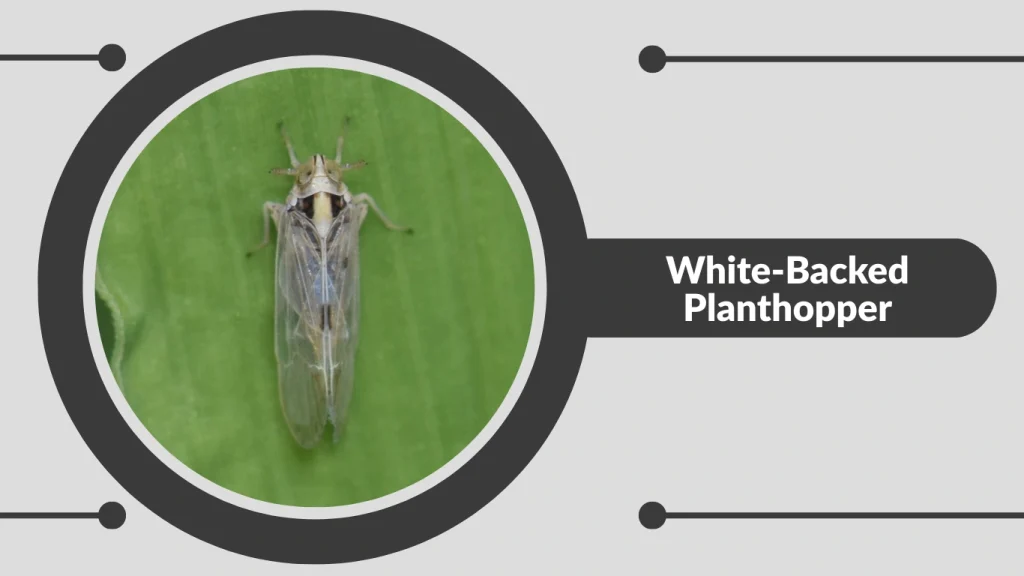
The White-Backed Planthopper is another serious pest of rice, notorious for damaging crops by sucking plant sap and spreading viral diseases. Its name comes from the distinctive white band running along its back. This insect is particularly problematic in Asia, where rice cultivation is widespread.
Identification
- Color: Light brown to grayish with a distinct white band on the back
- Size: Around 3–4 mm long
- Wings: Transparent wings with a slight grayish tint
- Body: Slender with a pointed head
- Marking: Characteristic white line along the dorsal side
Habitat and Distribution
This planthopper is commonly found in irrigated rice fields across South and Southeast Asia, including countries like India, Vietnam, Thailand, and China. It prefers wet, warm conditions that favor rice growth.
Behavior and Impact
The White-Backed Planthopper feeds on the base of rice plants, leading to wilting and reduced yield. Large infestations cause “hopper burn,” similar to the Brown Planthopper. It is also a vector for plant viruses, including the southern rice black-streaked dwarf virus, making it a dual threat to food security.
3. Green Rice Planthopper (Nephotettix virescens)

The Green Rice Planthopper is a well-known pest in rice-growing regions, often responsible for transmitting viral diseases rather than causing direct damage through feeding. Its bright green body makes it easy to distinguish from other planthopper species.
Identification
- Color: Bright green body with a yellowish underside
- Size: Around 3–4.5 mm long
- Wings: Transparent with green veins
- Head: Slightly pointed with prominent eyes
- Markings: Sometimes shows small black spots near the wings
Habitat and Distribution
This species is common in rice fields across South and Southeast Asia, including India, Bangladesh, the Philippines, and Indonesia. They thrive in paddy fields with abundant standing water and dense rice growth.
Behavior and Impact
The Green Rice Planthopper is best known as a vector of the rice tungro virus, one of the most devastating rice diseases in Asia. While their feeding causes only mild plant stress, the transmission of tungro leads to stunted growth, yellowing leaves, and significant yield loss.
4. Spotted Planthopper (Lycorma delicatula)

The Spotted Planthopper, commonly known as the Spotted Lanternfly, is an invasive pest that has gained global attention in recent years. Originally native to China, it has spread to countries like the United States, where it poses a major threat to fruit trees, vines, and hardwoods.
Identification
- Color: Grayish wings with black spots
- Size: About 20–25 mm long (larger than most planthoppers)
- Wings: Forewings are gray with black spots; hindwings are red with black and white markings
- Body: Black head with a yellowish abdomen marked with black bands
- Shape: Broad, lantern-like body compared to slender rice planthoppers
Habitat and Distribution
This species is native to parts of China, India, and Vietnam but has become invasive in South Korea, Japan, and the United States. It prefers areas with abundant tree hosts, especially Ailanthus altissima (Tree of Heaven), but also feeds on grapes, apples, and maples.
Behavior and Impact
The Spotted Planthopper feeds by piercing plant tissues and sucking sap, weakening hosts and leaving behind honeydew that fosters sooty mold growth. Its infestations cause significant agricultural and ecological damage, especially in vineyards and orchards. Because of its invasive nature, it is closely monitored by agricultural authorities.
5. Flatid Planthopper (Flatidae family)
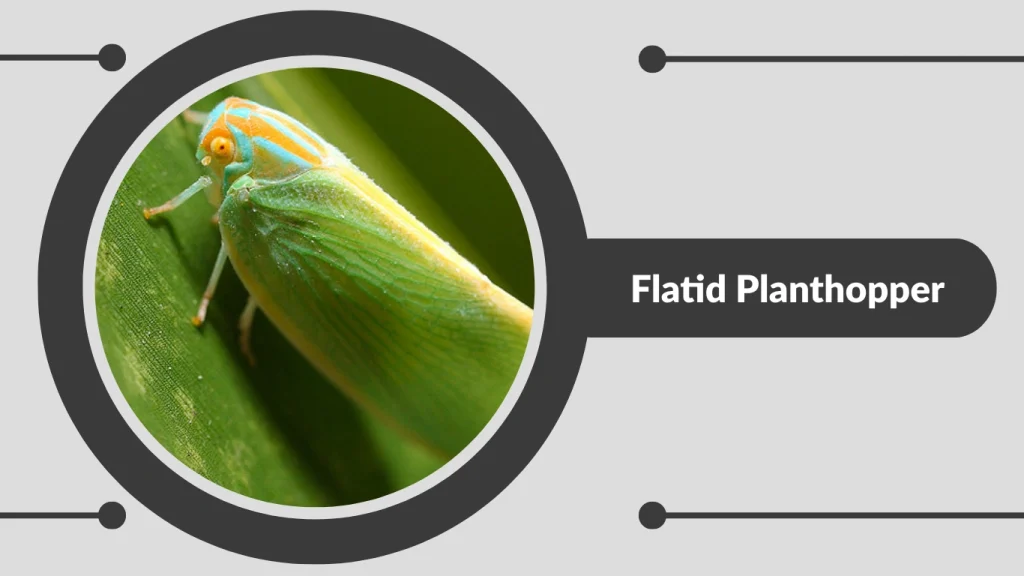
Flatid Planthoppers are easily recognized by their flat, leaf-like wings and pastel-colored bodies. They are not as destructive as rice planthoppers but can still be pests in gardens, orchards, and farms. Their delicate appearance often makes them look more ornamental than harmful.
Identification
- Color: Often pale green, bluish, or whitish wings
- Size: Typically 6–8 mm long
- Wings: Flat and held vertically, resembling small leaves
- Body: Slender with short antennae
- Nymphs: Covered with waxy filaments, giving them a fuzzy appearance
Habitat and Distribution
Flatid Planthoppers are widespread and can be found in tropical and temperate regions worldwide. They are commonly seen on shrubs, trees, and garden plants where they feed on plant sap.
Behavior and Impact
While they are not usually major agricultural pests, heavy infestations can weaken plants by sap-sucking and encourage the growth of sooty mold due to honeydew secretion. In gardens and orchards, they may cause aesthetic damage but rarely lead to severe crop losses.
6. Lanternfly (Fulgoridae family)

Lanternflies are some of the most striking members of the planthopper group, often recognized for their bright colors and unusual head shapes. Despite their name, they do not produce light. Some species have elongated or bulbous snouts that give them a lantern-like appearance.
Identification
- Color: Brightly patterned wings, often with red, yellow, green, or orange hues
- Size: Ranges from 15–30 mm depending on the species
- Wings: Colorful forewings with spotted or banded patterns; hindwings may be vividly colored
- Body: Strong, broad body compared to slender rice planthoppers
- Head: Sometimes elongated into a beak-like or bulbous structure
Habitat and Distribution
Lanternflies are found in tropical and subtropical regions around the world, especially in South America, Asia, and Africa. They prefer forested habitats and orchards where host plants are abundant.
Behavior and Impact
While many lanternflies are primarily ornamental in appearance, some species feed on economically important crops such as coffee, fruit trees, and hardwoods. Their feeding causes sap loss, wilting, and honeydew secretion that leads to sooty mold. A few invasive species, like the Spotted Lanternfly, have become serious agricultural threats.
7. Derbid Planthopper (Derbidae family)

Derbid Planthoppers are small, delicate insects that often display transparent or lightly patterned wings. They are usually associated with tropical and subtropical habitats and feed on a variety of host plants. Though less studied than other planthoppers, they are an important part of the ecosystem.
Identification
- Color: Usually pale or translucent with subtle wing patterns
- Size: Small, typically 3–6 mm long
- Wings: Transparent or slightly smoky, often held roof-like over the body
- Body: Slender and delicate with long legs
- Antennae: Filiform and relatively long compared to body size
Habitat and Distribution
Derbid Planthoppers are mostly found in tropical regions, particularly in Central and South America, Southeast Asia, and Africa. They live on shrubs, trees, and grasses, preferring humid environments with dense vegetation.
Behavior and Impact
While not considered major agricultural pests, Derbid Planthoppers feed on plant sap and can transmit certain plant pathogens. In natural ecosystems, they serve as food for predators like spiders, birds, and other insects. Their ecological role is more significant than their economic impact.
8. Kinnarid Planthopper (Kinnaridae family)

Kinnarid Planthoppers are a relatively small family of planthoppers, less familiar than others but distinctive for their compact body shape and simple wing patterns. They are usually inconspicuous and blend well into their plant surroundings.
Identification
- Color: Generally brown, gray, or earthy tones
- Size: Small, about 3–5 mm long
- Wings: Short and rounded, usually plain without vivid markings
- Body: Compact, oval-shaped with a slightly humped appearance
- Antennae: Short and less prominent than in many other planthoppers
Habitat and Distribution
These planthoppers are distributed mainly in tropical and subtropical regions, often found on grasses and low vegetation. They are less widespread compared to Delphacids or Flatids but still occur in Asia, Africa, and the Americas.
Behavior and Impact
Kinnarid Planthoppers feed by sucking plant sap, but they are not considered significant agricultural pests. Their impact on crops is minor compared to major species like Brown or White-Backed Planthoppers. They play a small role in ecosystems as part of the food chain for insectivores.
9. Ricaniid Planthopper (Ricania speculum)

The Ricaniid Planthopper is a distinctive species known for its striking wing patterns. It is considered an emerging pest in some regions, particularly affecting fruit crops and ornamental plants. Its dark wings with white patches make it easy to recognize among other planthoppers.
Identification
- Color: Dark brown to black wings with prominent white patches
- Size: Medium-sized, about 7–9 mm long
- Wings: Broad and triangular, held roof-like over the body
- Body: Stout and compact with a slightly rounded shape
- Markings: White, mirror-like spots that give the species its name (speculum = mirror)
Habitat and Distribution
This species is found mainly in parts of Asia, including India, China, and Southeast Asian countries. It thrives in orchards, plantations, and gardens where fruit trees and shrubs provide abundant food sources.
Behavior and Impact
Ricaniid Planthoppers feed on plant sap, weakening their hosts and leaving behind honeydew that fosters sooty mold. Infestations are particularly harmful in orchards, where they can reduce fruit yield and quality. Because of their growing presence in agriculture, they are increasingly monitored as potential pests.
10. Delphacid Planthopper (Delphacidae family)

Delphacid Planthoppers form one of the largest and most economically important families of planthoppers. Many species within this family are serious pests of cereal crops, especially rice, maize, and sugarcane. They are known for their jumping ability and are often seen moving quickly between plants.
Identification
- Color: Typically pale brown, gray, or greenish
- Size: Small, usually 2–5 mm long
- Wings: Transparent and held roof-like over the body
- Body: Slender with a pointed head and prominent eyes
- Feature: A movable spur (calcar) on the hind legs, a key trait of delphacids
Habitat and Distribution
Delphacid Planthoppers are globally distributed and thrive in agricultural landscapes. They are particularly abundant in Asia, Africa, and the Americas, wherever cereal crops are widely grown.
Behavior and Impact
Many delphacids are notorious crop pests. They suck plant sap, causing stunted growth and yield loss, and act as vectors of plant viruses, such as the rice ragged stunt virus and maize mosaic virus. Because of their economic impact, they are closely studied and monitored by agricultural scientists.
