

Green beetles are among the most striking insects in nature, with their shimmering, metallic hues and diverse ecological roles. Found across the world in gardens, fields, forests, and even farms, these beetles are admired for their beauty but sometimes feared due to their impact on plants. From the well-known Green June Beetle to the vibrant Figeater Beetle, their appearances and habits vary, making them both fascinating and important to study.
What Are Green Beetles?
Green beetles are a group of beetles characterized by their metallic green exoskeleton, created by structural coloration rather than pigment. This means their shiny, iridescent hues change with the angle of light. They belong to various beetle families, including Scarabaeidae (scarab beetles), Chrysomelidae (leaf beetles), and Buprestidae (jewel beetles).
While many green beetles are beneficial pollinators or decomposers, some species are agricultural pests. They live in diverse habitats—meadows, orchards, gardens, woodlands, and even compost piles—making them a highly visible part of the insect world.
Types of Green Beetles

Green beetles include many unique species and groups, such as:
- Green June Beetle (Cotinis nitida)
- Figeater Beetle (Cotinis mutabilis)
- Metallic Green Beetles like Rose Chafer and Malachite Beetle
- Green Fruit Beetle
- Green Leaf Beetles (e.g., Mint Beetle, Dock Beetle)
- Green Dung Beetles with iridescent sheen
Each has distinct characteristics, behaviors, and ecological roles that make them either beneficial allies or troublesome pests.
Green June Beetle (Cotinis nitida)
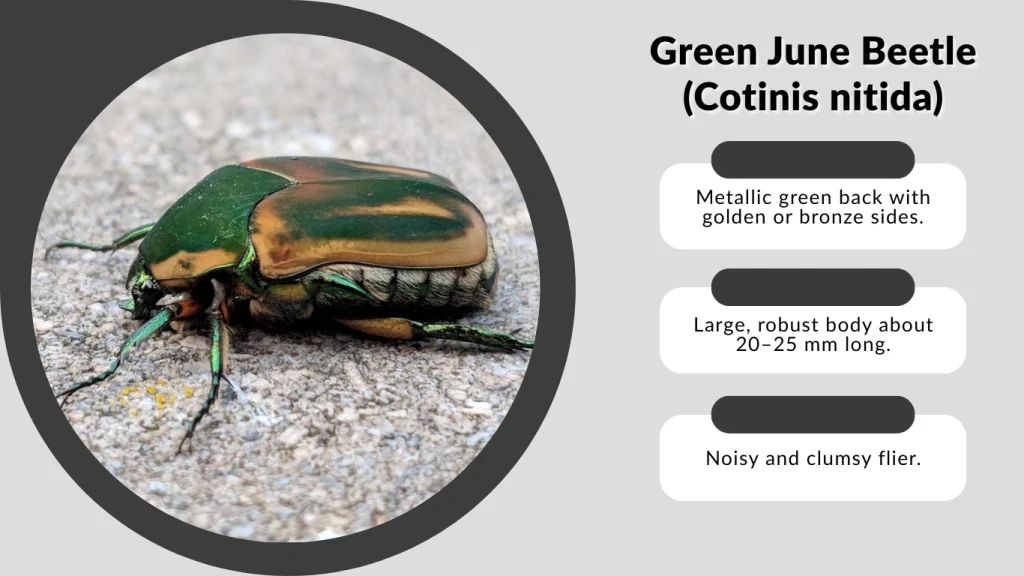
The Green June Beetle is one of the most recognized green beetles in North America. Its buzzing flight on summer mornings and shimmering emerald body make it easy to spot in gardens and fields.
Identification
- Metallic green back with golden or bronze sides.
- Large, robust body about 20–25 mm long.
- Noisy and clumsy flier.
- White grubs that live underground in soil.
Habitat
This beetle thrives in the southeastern and central United States, particularly in sunny areas like lawns, pastures, orchards, and compost piles. Adults are often seen flying low to the ground, while larvae burrow beneath soil rich in organic matter.
Behavior
Adults feed mainly on ripe fruits such as figs, peaches, and grapes, sometimes causing significant crop damage. The larvae feed on organic matter and roots in soil, occasionally damaging lawns and turfgrass. Unlike many grubs, Green June Beetle larvae can crawl above ground on their backs, a unique behavior.
Figeater Beetle (Cotinis mutabilis)
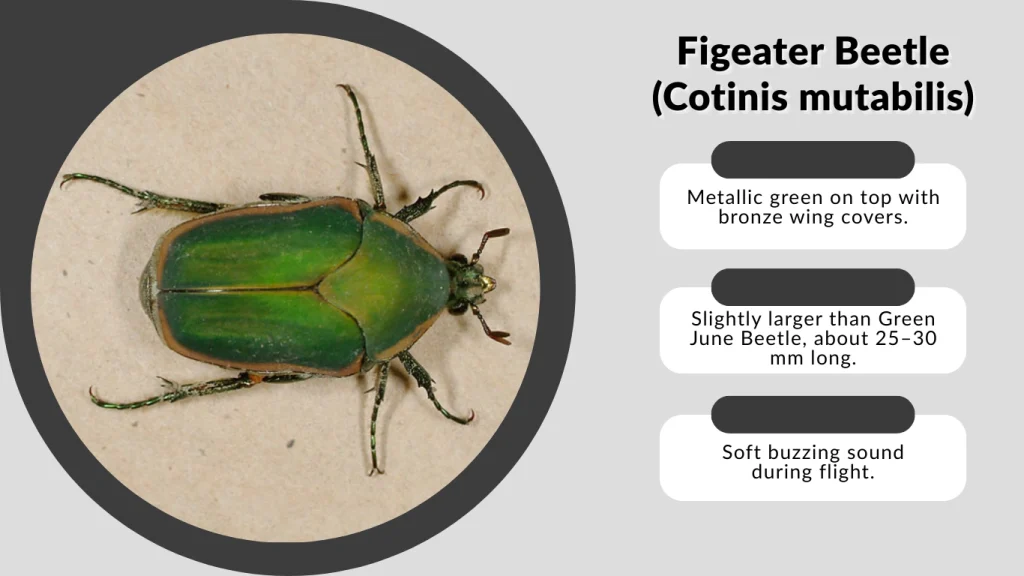
The Figeater Beetle, a close relative of the Green June Beetle, is native to the southwestern United States and Mexico. Its shiny green body and preference for fruits make it a familiar insect during late summer.
Identification
- Metallic green on top with bronze wing covers.
- Slightly larger than Green June Beetle, about 25–30 mm long.
- Soft buzzing sound during flight.
Habitat
Found in warm, arid regions, especially in southern California, Arizona, and Texas. These beetles are abundant in gardens, orchards, and urban landscapes where fruit trees grow.
Behavior
Figeater Beetles feed on ripe and overripe fruits such as figs, grapes, and peaches. They are not as destructive as Japanese Beetles, but large swarms can cause noticeable fruit loss. Their larvae, known as “crawly backs,” live in compost piles and decaying organic matter, aiding decomposition.
Metallic Green Beetles
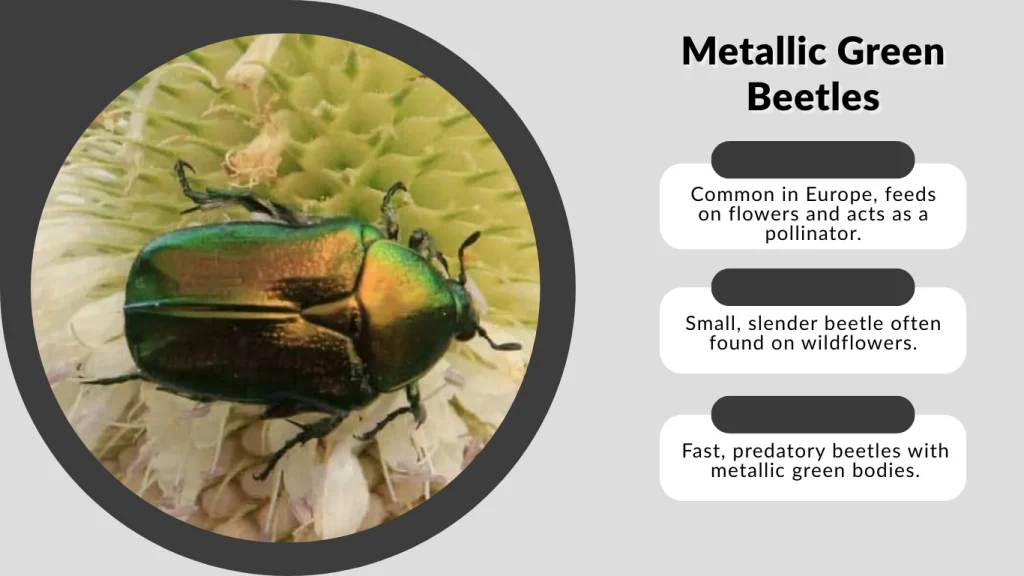
The term “metallic green beetle” often refers to several species that shimmer with jewel-like colors. This metallic effect comes from microscopic structures in their exoskeleton that reflect light, not from pigments.
Examples
- Rose Chafer (Cetonia aurata) – Common in Europe, feeds on flowers and acts as a pollinator.
- Malachite Beetle (Malachius bipustulatus) – Small, slender beetle often found on wildflowers.
- Tiger Beetles (Cicindela spp.) – Fast, predatory beetles with metallic green bodies.
Importance
These beetles are admired for their beauty and ecological roles. Many are pollinators, while predatory species like tiger beetles help control insect populations.
Are Green Beetles Dangerous?
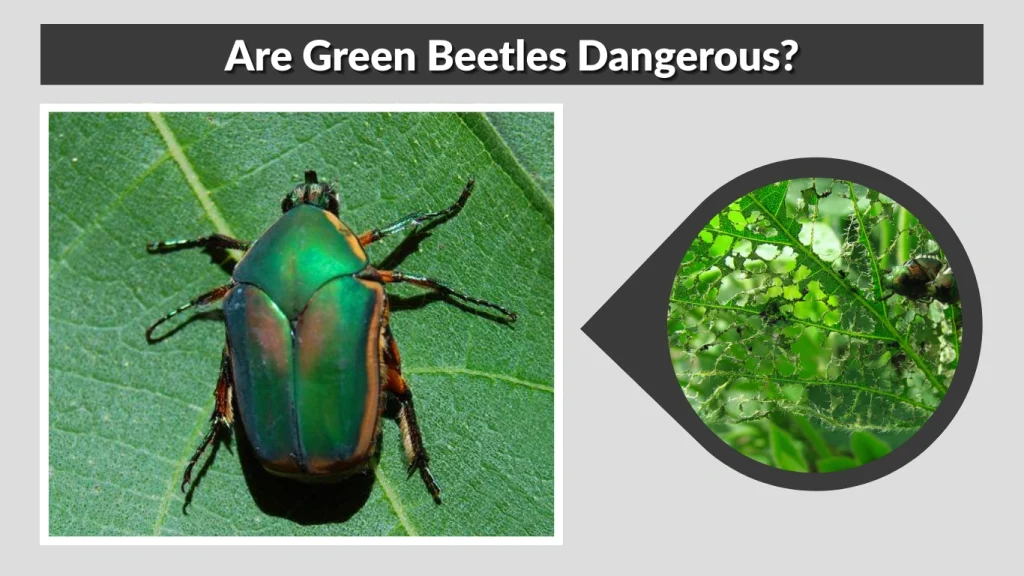
Most green beetles are harmless to humans. They do not bite, sting, or spread disease. However, their impact on plants can sometimes create problems.
- Harmless: Many species, such as Rose Chafers and Malachite Beetles, simply feed on flowers and act as pollinators.
- Potentially Harmful: Green June Beetle larvae may damage lawns and crops, while Japanese Beetles (metallic green and bronze) are notorious agricultural pests.
In general, green beetles pose no threat to people or pets but can cause frustration for gardeners and farmers when populations grow large.
Are Green June Beetles Harmful?

Green June Beetles can be considered harmful in certain contexts, especially to turfgrass and crops.
- Lawn Damage: Their white grubs feed on grassroots, creating brown, dying patches in turf.
- Fruit Damage: Adults feed on soft fruits like peaches, grapes, and figs, causing spoilage.
- Economic Impact: Large infestations can reduce yields in orchards and vineyards.
Despite this, they also play a role in recycling organic matter by feeding on decaying vegetation, which benefits soil health.
Green Fruit Beetle
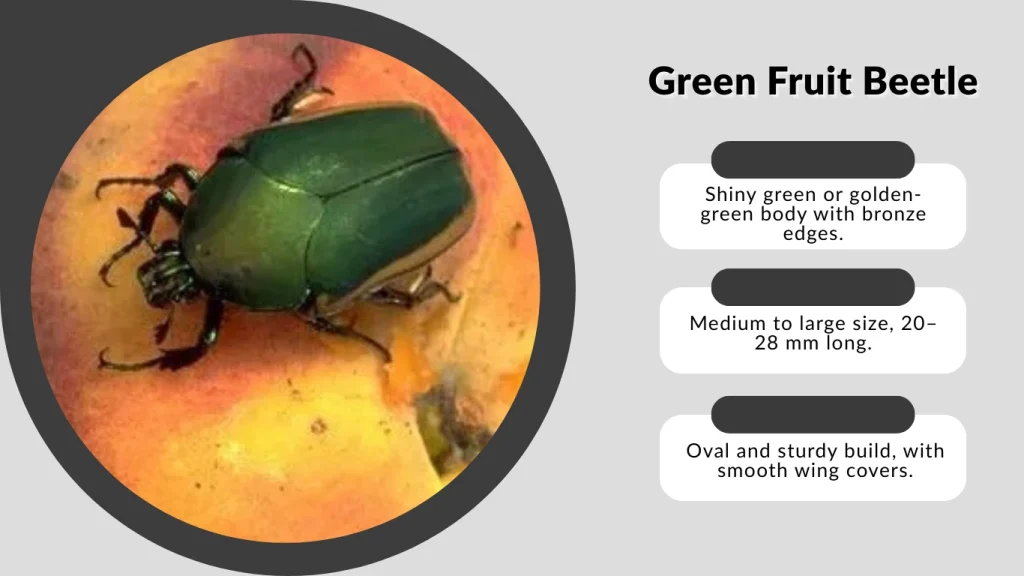
The Green Fruit Beetle is another member of the scarab beetle family, closely related to the Green June and Figeater beetles. It is admired for its metallic emerald sheen but can quickly become a nuisance when feeding on ripe fruits.
Identification
- Shiny green or golden-green body with bronze edges.
- Medium to large size, 20–28 mm long.
- Oval and sturdy build, with smooth wing covers.
Habitat
Green Fruit Beetles thrive in orchards, gardens, and vineyards, especially in warm climates. They are most active in summer when fruits are ripening.
Behavior
Adults feed on figs, grapes, peaches, and other soft fruits, leaving ragged holes. They are often found swarming around overripe or fermenting fruit. Larvae live in compost piles and soil, feeding on decaying matter.
Metallic Green Beetle Dangerous – Myth vs. Reality
Many people assume that shiny, metallic insects might be poisonous or harmful. In reality, most metallic green beetles are harmless. Their bright colors are not warnings of toxicity but rather structural effects of light reflection.
- Myth: Metallic beetles are dangerous to humans.
- Reality: They do not bite, sting, or inject venom.
- Pest Impact: Some metallic beetles (like Japanese Beetles) are harmful to crops, but only due to their feeding habits.
Their “danger” lies in agriculture and horticulture, not in any threat to human health.
Green June Beetle Life Cycle
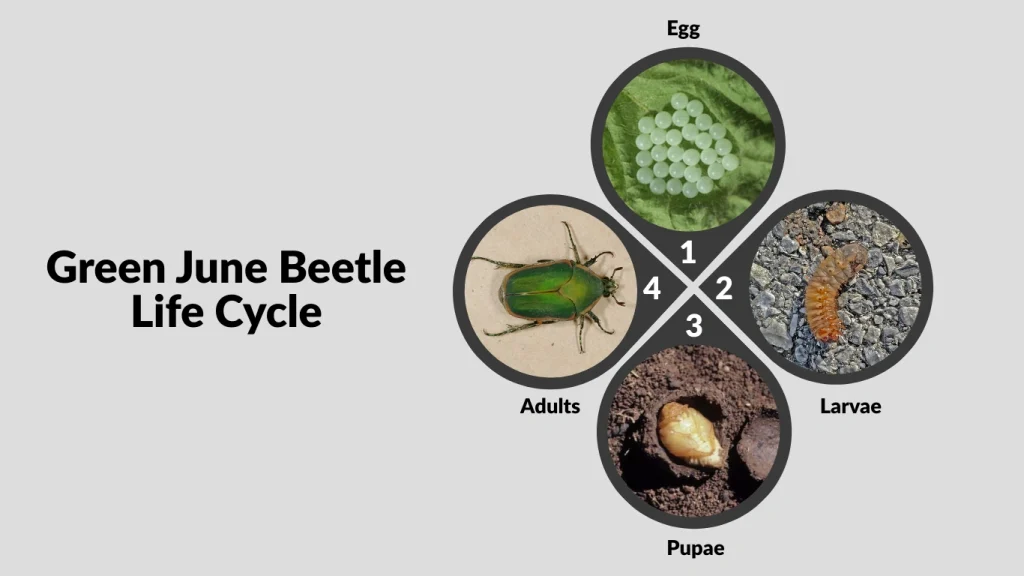
The Green June Beetle follows a complete metamorphosis:
- Eggs: Laid in soil during summer.
- Larvae (Grubs): White C-shaped grubs live underground, feeding on roots and decaying matter.
- Pupae: Form in soil chambers, transforming into adults.
- Adults: Emerge in late spring and summer, buzzing over fields and orchards.
This life cycle can last one to three years, depending on climate and conditions, which is why infestations can persist for multiple seasons.
Dung Beetles (Green Species)
Some dung beetles display metallic green coloration. These beetles are essential to ecosystems because they recycle nutrients, aerate soil, and reduce waste.
- Role in Nature: By rolling and burying dung, they return nutrients to the soil and reduce fly populations.
- Appearance: Shiny green, bronze, or blue bodies, depending on species.
- Habitat: Grasslands, farmlands, and forests where herbivores are present.
Dung beetles, despite their association with waste, are highly beneficial insects.
Green Beetles in the UK
Several striking green beetles are common across the UK:
- Rose Chafer (Cetonia aurata) – A pollinator often seen on roses and elderflowers.
- Green Dock Beetle (Gastrophysa viridula) – Found on dock plants, often skeletonizing leaves.
- Mint Beetle (Chrysolina herbacea) – Feeds heavily on garden mint, both admired and disliked.
These beetles are generally harmless to humans but may occasionally be pests in herb and flower gardens.
Green June Beetle Spiritual Meaning
In many cultures, beetles symbolize transformation, renewal, and the cycles of life. The Green June Beetle, with its shimmering color and seasonal emergence, is often associated with abundance and growth.
- Spiritual Symbolism: Renewal, prosperity, and change.
- Cultural Views: In some traditions, metallic beetles are seen as messengers of fertility and good fortune.
- Nature Connection: Their presence in summer reminds people of cycles of death, decay, and rebirth in ecosystems.
FAQs
Are green beetles good for gardens?
Yes, many green beetles act as pollinators or decomposers. However, some species, like Japanese Beetles, may damage crops and ornamental plants.
Do green beetles bite humans?
No, green beetles do not bite or sting humans. Their danger lies only in their feeding habits on plants.
Why are some beetles metallic green?
Their coloration comes from structural light reflection in their exoskeleton, not pigment. This creates shimmering, jewel-like colors.
How do I control green beetles in my yard?
Handpicking, using traps, or applying organic controls like neem oil can reduce populations. Maintaining healthy soil also helps manage grub infestations.
What is the difference between Green June Beetle and Figeater Beetle?
Green June Beetles are smaller, noisier fliers found in the eastern U.S., while Figeater Beetles are larger, quieter, and more common in the southwestern U.S.
