

Mosquito bites are more than just a nuisance. For many people, the intense itching that follows a bite can become distracting, uncomfortable, and even disruptive to sleep. While scratching might feel like instant relief, it often worsens the irritation and may even lead to infection. Fortunately, there are several proven ways to stop mosquito bites from itching, from immediate first-aid measures to natural home remedies and medical treatments.
Why Mosquito Bites Itch
When a mosquito bites, it injects a small amount of saliva into the skin. This saliva contains proteins that prevent blood clotting and help the mosquito feed more easily. However, the human immune system sees these proteins as foreign invaders. In response, the body releases histamines—a chemical that causes blood vessels to dilate and white blood cells to rush to the site of the bite.
This immune response is what triggers the redness, swelling, and itching. Some people experience stronger reactions than others. For example, children or people with sensitive skin may find mosquito bites itchier and more swollen, while others might hardly notice them.
Immediate Actions After a Mosquito Bite
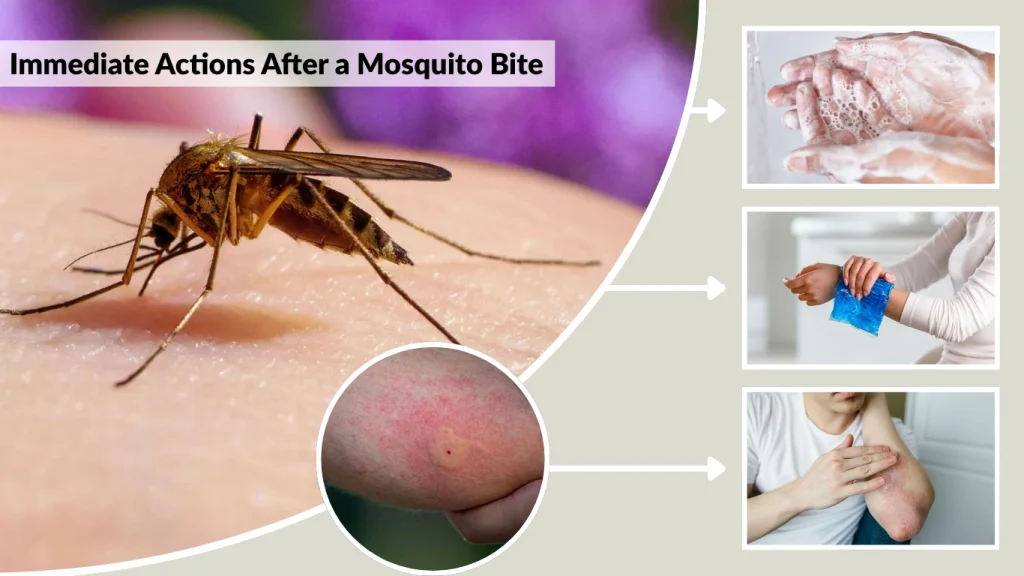
The first few minutes after being bitten can determine how severe the itching becomes. Taking quick steps reduces irritation and lowers the risk of infection.
- Clean the area: Wash the bite gently with soap and cool water to remove any dirt or bacteria that could enter if the skin breaks.
- Apply cold: Pressing an ice cube or cold compress against the bite numbs the skin and reduces swelling.
- Resist scratching: Scratching may tear the skin, making the bite prone to infection and potentially leaving scars.
These immediate actions are simple but crucial. Even if the itch seems mild at first, mosquitoes often leave multiple bites, and early care prevents them from becoming overwhelming.
Home Remedies for Itch Relief
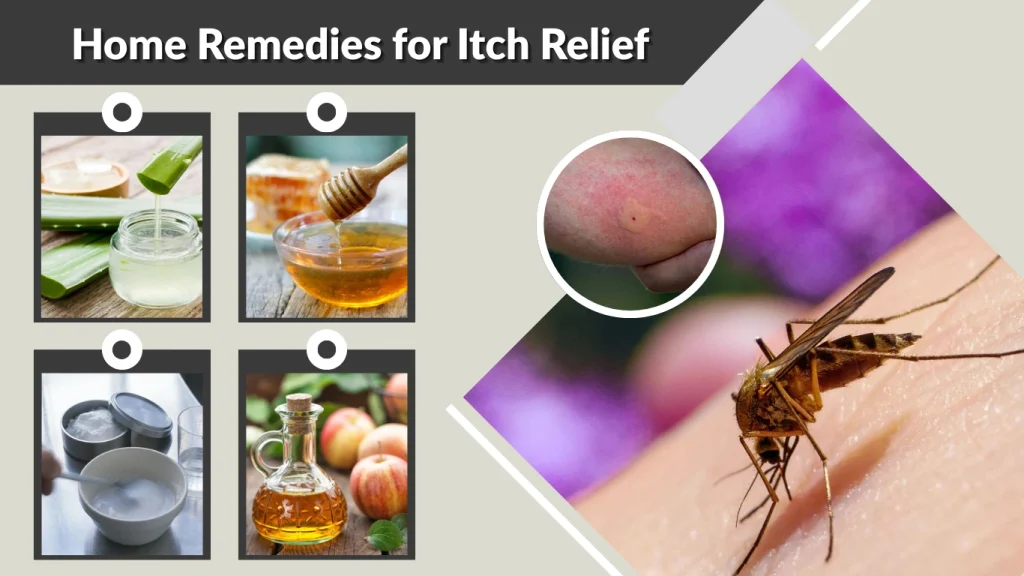
Many people prefer natural remedies over medicines, especially for children or when bites are mild. Several household items can calm the itch and reduce swelling.
Cold and Heat Therapy
Cold and heat both play a role in soothing mosquito bites, though they work differently. Applying ice or a chilled spoon constricts blood vessels, numbs nerve endings, and provides quick, short-term relief. On the other hand, brief exposure to warmth—such as a warm compress or running hot water over the bite—can help break down proteins in the mosquito’s saliva, reducing the itch response.
Natural Remedies
- Aloe vera gel: Fresh aloe vera cools irritated skin and has natural anti-inflammatory properties. Applying a thin layer directly on the bite can bring relief within minutes.
- Honey: Known for its antibacterial benefits, honey not only reduces itching but also prevents infection if the bite is scratched.
- Baking soda paste: Mixing baking soda with a few drops of water creates a soothing paste that balances the skin’s pH and calms irritation.
- Apple cider vinegar: Just a drop applied to the bite can reduce itching and act as a mild antiseptic.
Kitchen Ingredients That Help
Some common kitchen items also work surprisingly well on mosquito bites. A drop of lemon or lime juice can disinfect and reduce itching, though sun exposure should be avoided afterward since citrus can make skin more sensitive to light. Onion or garlic slices are old home remedies thought to reduce swelling because of their natural anti-inflammatory compounds. Another effective option is an oatmeal paste, which helps calm irritated skin and creates a protective layer that stops further itching.
Over-the-Counter Treatments
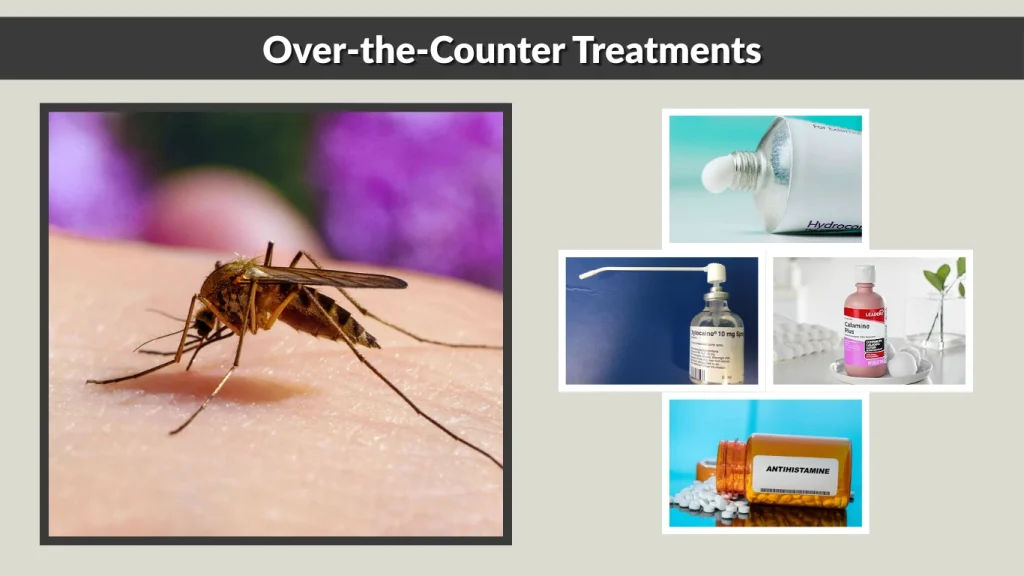
If home remedies don’t bring enough relief, over-the-counter options are widely available and effective.
- Hydrocortisone cream: This mild steroid cream reduces inflammation and itching almost immediately.
- Calamine lotion: A classic remedy, calamine dries the bite area while soothing the skin.
- Antihistamines: Both oral tablets and topical antihistamine creams can reduce the allergic reaction that causes itching.
- Topical anesthetic sprays: Products containing lidocaine or pramoxine can temporarily numb the skin, stopping the itch signal from reaching the brain.
These treatments are especially useful for people who react strongly to mosquito bites or who need longer-lasting relief during sleep or work.
Why You Should Avoid Scratching
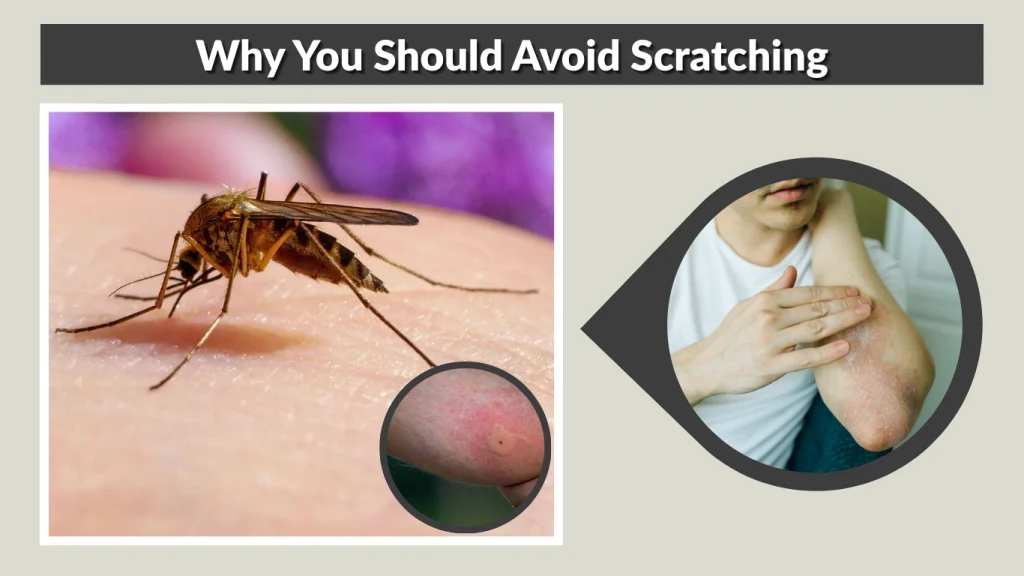
Scratching mosquito bites might feel satisfying for a moment, but it almost always makes things worse. When you scratch, the skin around the bite becomes inflamed and more histamines are released, which intensifies the itch. Persistent scratching can also break the skin, creating tiny wounds that make it easier for bacteria to enter. This may lead to secondary infections such as impetigo, which causes painful sores and scabs.
In children, scratching is a common habit, and bites can quickly turn into scabs that leave scars. To help prevent this, parents can cover the bite with a bandage, trim the child’s nails, or distract them with activities until the itch subsides. Adults should also be mindful, especially at night when scratching may occur unconsciously.
Preventing Mosquito Bites in the First Place
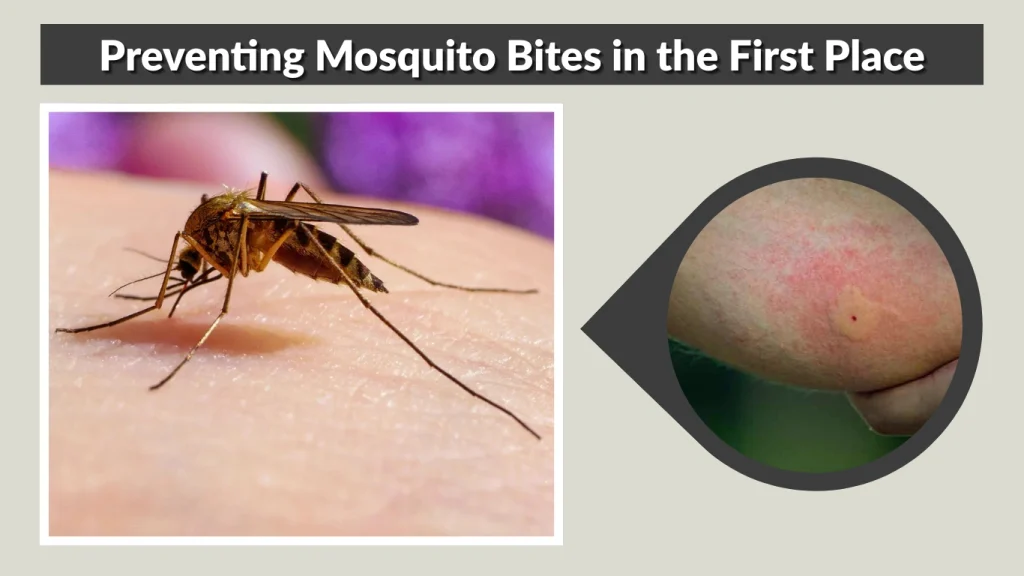
The best way to avoid the itching altogether is to prevent mosquito bites before they happen. Protection involves a mix of personal precautions and environmental control.
Personal Protection
Simple changes in clothing and habits go a long way in keeping mosquitoes away. Wearing long sleeves and pants during dawn and dusk—when mosquitoes are most active—reduces exposed skin. Applying insect repellents is also highly effective. Products containing DEET, picaridin, or oil of lemon eucalyptus are proven to repel mosquitoes for several hours. For infants and people with sensitive skin, repellents with lower concentrations are available and safe when used as directed.
Sleeping under a mosquito net is another excellent method, especially in tropical areas where mosquito-borne diseases are common. In addition, using fans indoors can help, as mosquitoes are weak fliers and struggle in moving air.
Environmental Control
Mosquitoes breed in stagnant water, so reducing their population around the home is essential. Emptying containers that collect rainwater, unclogging gutters, and regularly changing pet water bowls can significantly cut down breeding sites. Adding screens to windows and doors provides a physical barrier, keeping mosquitoes outside.
For outdoor spaces, mosquito traps and citronella candles can help reduce activity, although they are less reliable than repellents. Homeowners in heavily infested areas may also consider professional pest control services for long-term management.
When to Seek Medical Help
Most mosquito bites are harmless and only cause temporary discomfort. However, there are situations where medical attention is necessary.
- Allergic reactions: Some people may experience large swelling, hives, or even difficulty breathing. These symptoms require immediate medical help.
- Infections: If the bite becomes very red, swollen, warm, or starts oozing pus, it may be infected and needs treatment with antibiotics.
- Mosquito-borne diseases: In certain regions, mosquitoes can transmit illnesses such as malaria, dengue fever, West Nile virus, chikungunya, and Zika virus. If you develop fever, headache, muscle pain, or unusual fatigue after being bitten, it’s important to consult a doctor promptly.
Long-Term Strategies
Beyond short-term relief, some people look for ways to minimize their overall reaction to mosquito bites. While complete immunity is unlikely, maintaining a healthy immune system through proper diet, hydration, and sleep may reduce the severity of itching.
At home, installing mosquito-repellent plants such as lavender, citronella, and marigolds can act as natural deterrents. Using mosquito zappers or CO₂-based traps can also cut down their numbers in outdoor areas. For communities dealing with heavy infestations, professional mosquito control programs—including spraying and biological control—are often the most effective solutions.
FAQs
What stops mosquito bites from itching fast?
Applying a cold compress or an ice cube provides the fastest relief by numbing the skin. Hydrocortisone cream or an antihistamine can also stop itching within minutes.
Does toothpaste help with mosquito bites?
Yes, some people find relief from toothpaste because it contains menthol, which cools the skin. However, it should be used sparingly to avoid irritation.
Why do mosquito bites itch more at night?
At night, the body releases fewer natural hormones that reduce inflammation. Increased blood flow to the skin during rest also makes itching feel more intense.
Can scratching make the bite worse?
Absolutely. Scratching breaks the skin and can lead to infections, prolonged swelling, and even scars. It’s better to use remedies that calm the itch.
Are some people naturally more prone to itchy bites?
Yes. Genetics, skin sensitivity, and even blood type influence how the body reacts to mosquito saliva. People with stronger immune responses tend to experience itchier, more swollen bites.
