

Butterflies are some of the most admired insects on Earth, known for their vibrant colors and graceful flight. Beyond their beauty, they play an essential role in ecosystems as pollinators and indicators of environmental health. Yet, growing evidence shows that many butterfly species are in decline worldwide. While not every species is endangered, a significant number are threatened or vulnerable due to habitat loss, climate change, and human activity—raising concerns about their future survival.
Understanding Butterfly Conservation Status
What Does “Endangered” Mean?
The term “endangered” is defined by the International Union for Conservation of Nature (IUCN), which maintains the Red List of Threatened Species. A butterfly species is considered endangered when it faces a very high risk of extinction in the near future due to declining population, restricted distribution, or threats to its habitat. Categories range from “Least Concern” to “Vulnerable,” “Endangered,” and “Critically Endangered.”
For butterflies, being classified as endangered means their natural environments are disappearing faster than they can adapt, or human influence is causing population crashes.
Global Overview of Butterfly Populations
There are more than 17,500 butterfly species worldwide, and while many are still relatively stable, researchers estimate that nearly half of all species are in decline. In regions like North America and Europe, monitoring has shown dramatic reductions in butterfly numbers over the last 50 years. Tropical areas, which host the greatest diversity, are also experiencing losses due to deforestation and climate change.
This decline does not mean every butterfly is endangered, but it does highlight a troubling trend. When species that were once common start disappearing, it suggests widespread ecological imbalance.
Examples of Endangered Butterflies Worldwide
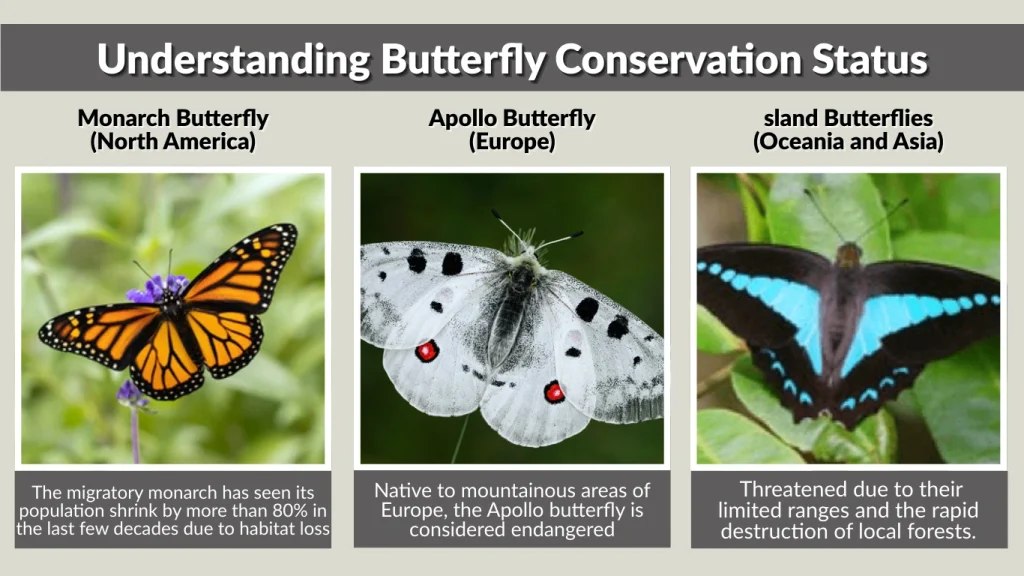
- Monarch Butterfly (North America): Perhaps the most famous case, the migratory monarch has seen its population shrink by more than 80% in the last few decades due to habitat loss, climate change, and reduced availability of milkweed, the only plant its caterpillars eat.
- Apollo Butterfly (Europe): Native to mountainous areas of Europe, the Apollo butterfly is considered endangered because warming climates and human development have reduced its alpine habitats.
- Island Butterflies (Oceania and Asia): Several island species, such as those in the Philippines and Pacific islands, are threatened due to their limited ranges and the rapid destruction of local forests.
These examples highlight that while some butterflies are resilient, many others are now highly vulnerable to extinction.
Why Are Butterflies Becoming Endangered?
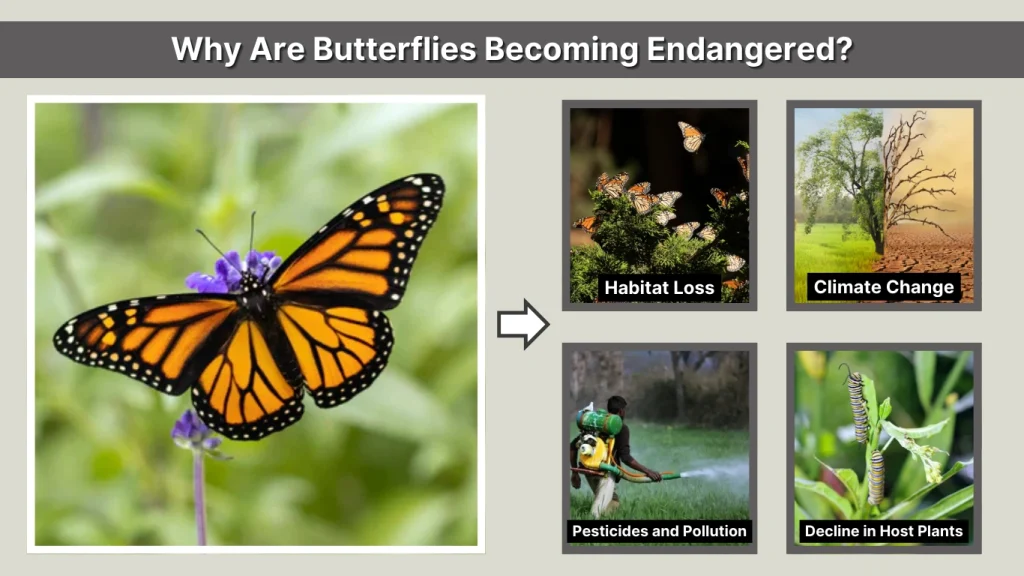
Butterflies are sensitive creatures, and even small changes in their environment can have large impacts. Multiple factors contribute to their decline, and often these threats overlap.
Habitat Loss
One of the greatest threats to butterflies is habitat loss. Grasslands, meadows, and forests are cleared for urban expansion, agriculture, and industry. Many butterflies have specific host plants required for their caterpillars, and when these plants disappear, the entire lifecycle of the butterfly collapses. For example, monarch caterpillars can only survive on milkweed; without it, they cannot reach adulthood.
Climate Change
Butterflies are highly sensitive to temperature and seasonal changes. Climate change alters flowering times, disrupts migration patterns, and pushes some species outside of their suitable climate zones. In mountainous areas, butterflies are being forced to higher altitudes to escape rising temperatures, but eventually, they run out of space to adapt.
Pesticides and Pollution
The widespread use of pesticides in agriculture is deadly for butterflies. Chemicals designed to kill pests also harm caterpillars and adult butterflies, while herbicides eliminate wildflowers that provide nectar and host plants. Air and water pollution further reduce the quality of their habitats, making survival more difficult.
Decline in Host Plants
Butterfly larvae (caterpillars) are often highly specialized, feeding on only one or a few plant species. When these host plants decline due to farming practices, urban landscaping, or climate shifts, entire butterfly populations vanish. The monarch butterfly’s reliance on milkweed is a prime example of this delicate relationship.
Invasive Species and Predators
Invasive plants and animals can outcompete native species, reducing the availability of food and shelter for butterflies. Additionally, predators such as birds, wasps, and spiders naturally feed on butterflies, but human changes to habitats often make butterflies more exposed and vulnerable.
Regional Perspectives on Endangered Butterflies
North America
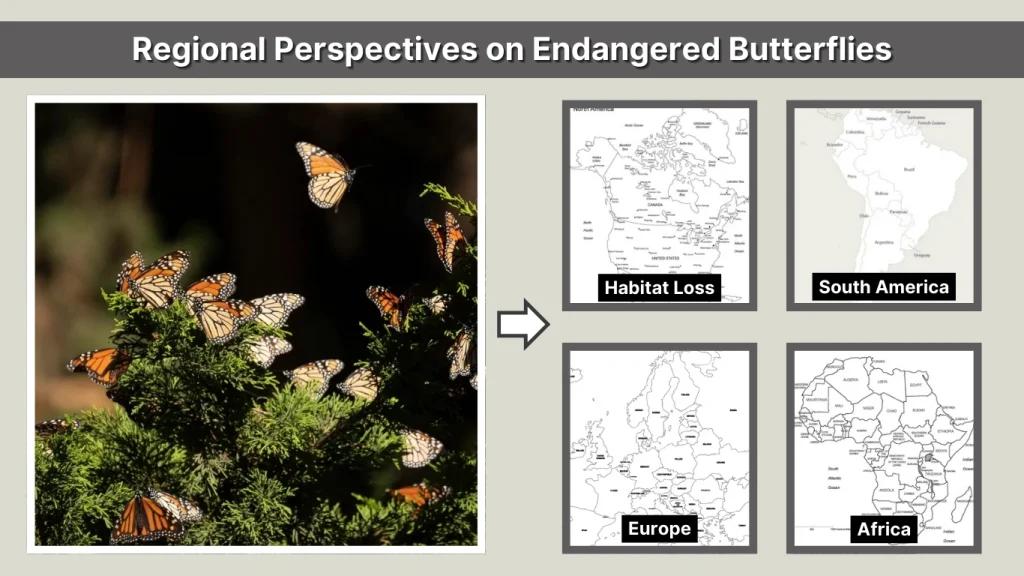
The Monarch butterfly is the most well-known species at risk in North America. Once numbering in the hundreds of millions, their populations have declined dramatically due to the loss of milkweed and changing weather patterns. Other species, such as the Karner Blue butterfly, are also endangered due to habitat loss and fragmentation.
Europe
Europe’s grasslands and meadows are shrinking, leaving butterflies with fewer places to thrive. The Apollo butterfly, which lives in alpine regions, is listed as endangered in many European countries. The Large Blue butterfly, once extinct in the UK, was reintroduced through conservation efforts, proving that with the right measures, species recovery is possible.
Asia
Asia hosts a vast diversity of butterfly species, particularly in India, China, and Southeast Asia. Unfortunately, deforestation and rapid urbanization threaten many tropical butterflies. Limited monitoring means some species may already be endangered without researchers fully realizing it.
Africa
Africa’s savannas and forests provide ideal habitats for many butterfly species, but these environments are under pressure from land conversion, agriculture, and drought. In some regions, butterfly populations are declining alongside other pollinators such as bees.
Australia and Oceania
Australia has several unique butterfly species, some of which are vulnerable due to climate change and habitat destruction. The Richmond Birdwing butterfly is one example, threatened by the loss of its host plant. In smaller Pacific islands, limited habitats make butterflies even more susceptible to extinction pressures.
Why Butterflies Matter in Ecosystems

Pollination Role
Butterflies are important pollinators, transferring pollen from one flower to another while feeding on nectar. Though not as efficient as bees, they play a vital role in supporting wildflower populations and contributing to the pollination of crops like fruits and vegetables.
Food Chain Importance
Butterflies and caterpillars are a key food source for birds, lizards, amphibians, and small mammals. A decline in butterfly populations ripples through the food web, affecting other species that depend on them for survival.
Indicators of Ecosystem Health
Scientists often use butterflies as bioindicators because they respond quickly to environmental changes. A decrease in butterfly numbers often signals wider ecological problems such as habitat degradation, pollution, or climate imbalance.
Conservation Efforts to Protect Butterflies

International Conservation Programs
Organizations like the IUCN and World Wildlife Fund (WWF) monitor butterfly populations and raise awareness about their decline. Pollinator conservation programs now include butterflies alongside bees.
Protected Areas and Habitats
National parks, butterfly reserves, and protected grasslands are critical for butterfly survival. For instance, Mexico’s monarch reserves protect overwintering grounds that are vital to the species’ life cycle.
Community and Citizen Science Projects
Public participation plays a big role in butterfly conservation. Butterfly counts, habitat restoration projects, and school programs help track populations and engage people in protecting pollinators.
Success Stories
One of the best success stories is the Large Blue butterfly in the UK. Once extinct, it was successfully reintroduced through careful habitat management and conservation breeding. These examples show that butterfly recovery is possible with dedicated action.
How Humans Can Help Protect Butterflies
Creating Pollinator-Friendly Gardens
Individuals can make a difference by planting native flowers, milkweed, clover, and grasses in their gardens. These plants provide nectar for adults and host plants for caterpillars.
Reducing Pesticide Use
Avoiding or limiting chemical pesticides helps protect butterflies and other pollinators. Eco-friendly alternatives or natural pest control methods allow both plants and pollinators to thrive.
Supporting Butterfly-Friendly Policies
By supporting conservation organizations and advocating for environmental policies, people can help protect butterfly habitats on a larger scale.
Raising Awareness
Educational programs in schools, community gardens, and social media campaigns help spread awareness about the importance of butterflies and inspire action to protect them.
FAQs
Are all butterfly species endangered?
No, not all butterfly species are endangered. Many populations are stable, but a significant number are in decline due to human activity, climate change, and habitat loss. Some species, such as the monarch and Apollo butterflies, are already classified as endangered or vulnerable.
Is the monarch butterfly endangered?
Yes, the migratory monarch butterfly is considered endangered by the IUCN. Its populations have declined by more than 80% in the past few decades, primarily due to the loss of milkweed plants, climate change, and destruction of overwintering habitats in Mexico and California.
Which countries are most affected by butterfly decline?
Countries with high levels of urbanization, deforestation, and agriculture are seeing the greatest butterfly losses. The United States, Mexico, India, Brazil, and parts of Europe are particularly affected. Tropical regions, despite hosting many species, are also facing rapid declines.
What is the main cause of butterfly extinction?
The primary cause of butterfly extinction is habitat loss. When natural grasslands, forests, and meadows are destroyed for development or agriculture, butterflies lose their host plants and food sources. Other major factors include climate change and pesticide use.
Can butterfly populations recover?
Yes, butterfly populations can recover if their habitats are restored and protected. Conservation efforts, such as planting native flowers, reducing pesticides, and creating protected reserves, have already helped species like the Large Blue in the UK return from extinction.
