
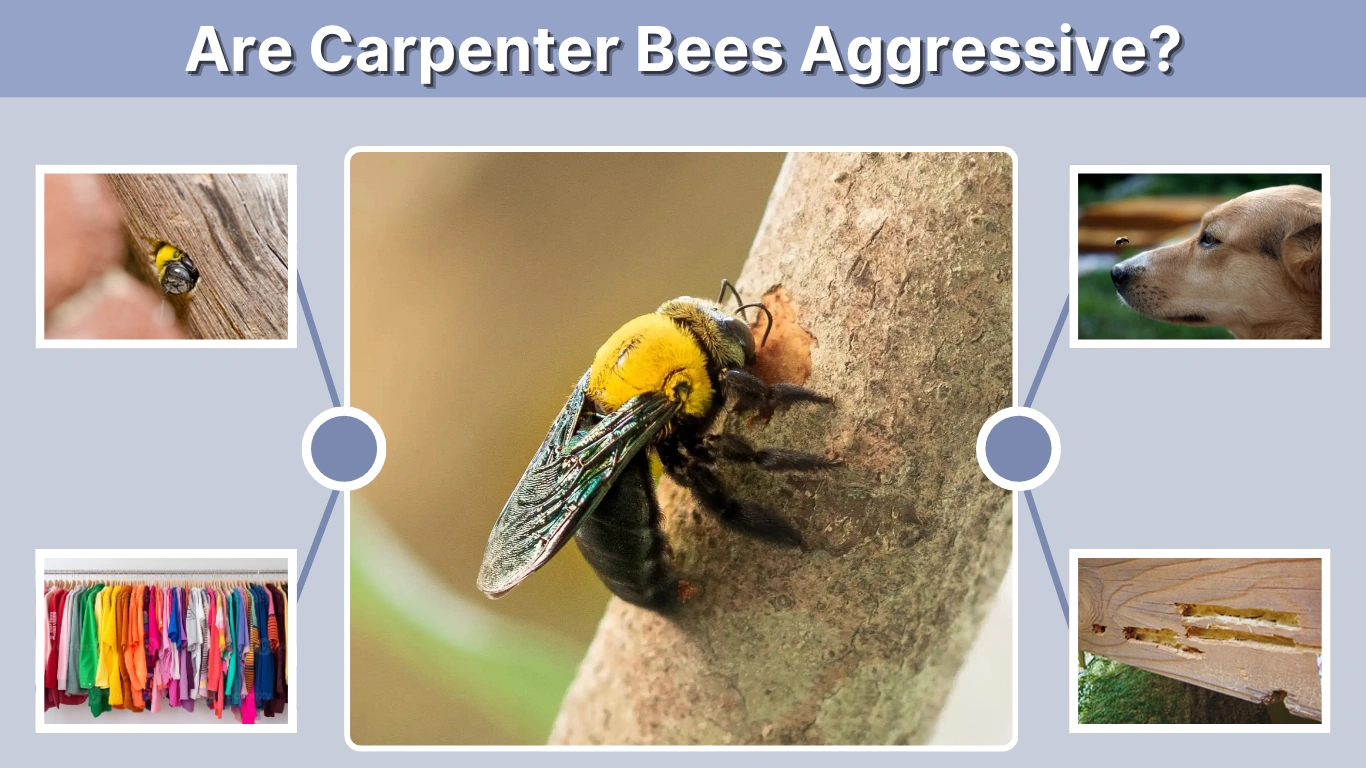
Carpenter bees are large, buzzing insects that often hover close to people, wooden decks, and garden structures. Their size and sound can make them seem intimidating, leading many to believe they’re aggressive. In reality, carpenter bees are calm and non-threatening creatures that only appear confrontational because of their territorial instincts.
This guide explores whether carpenter bees are truly aggressive, why they behave the way they do, and how you can coexist with them safely around your home.
What Makes Carpenter Bees Seem Aggressive?

Carpenter bees have a habit of flying close to humans, pets, or objects near their nesting area. This behavior is commonly mistaken for aggression, but it’s mostly a defensive display — not an attack.
Male carpenter bees are highly territorial. When they see movement near their nesting site, they hover nearby to investigate or warn off perceived threats. Their deep buzzing and darting flight pattern can seem alarming, yet these males are completely harmless because they lack a stinger.
Females are less visible and spend most of their time drilling into wood and caring for their brood. They only sting if handled roughly or threatened directly.
So, while carpenter bees may look aggressive, their boldness is simply nature’s way of protecting their home, not attacking yours.
Are Carpenter Bees Aggressive to Humans?
Despite their noisy and persistent hovering, carpenter bees are not aggressive toward humans. Most encounters occur when people approach their nesting sites — under eaves, in fences, or on decks. Males may fly close, but they cannot sting, and females avoid conflict altogether.
Their goal is protection, not aggression. Unlike wasps or hornets, carpenter bees do not swarm or chase. If you move slowly and avoid swatting at them, they usually back away after a brief inspection.
Even if stung by a female (which is rare), the reaction is mild — comparable to a normal bee sting with temporary redness and slight pain. In short, carpenter bees are much less dangerous than they appear.
Male vs. Female Carpenter Bee Aggression
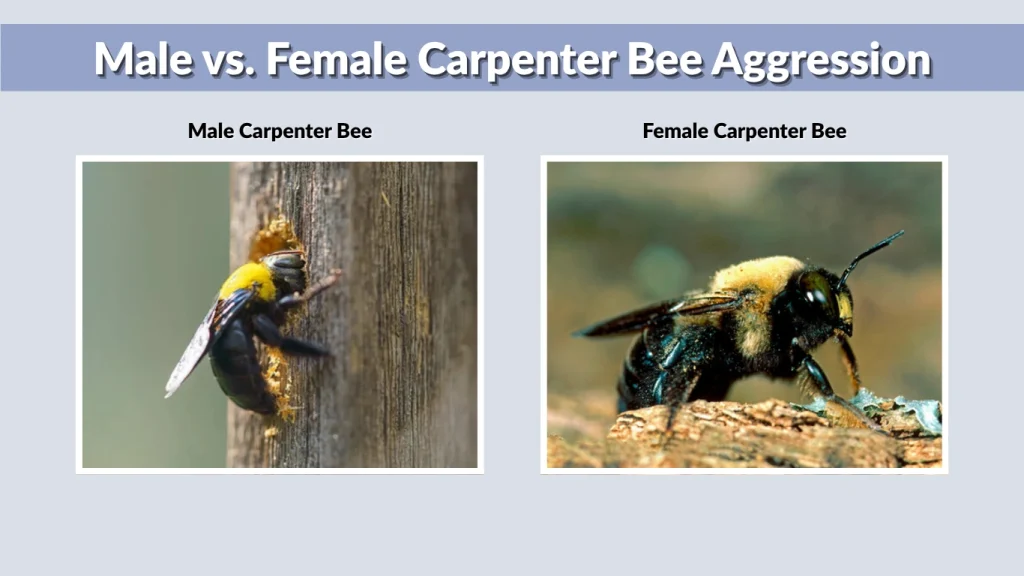
Carpenter bees show two different types of behavior depending on gender.
Male Carpenter Bees
- Highly territorial but stingless.
- Hover in front of people, pets, or other insects.
- Only trying to defend their space during mating season.
Female Carpenter Bees
- Capable of stinging, but extremely docile.
- Focused on boring holes, laying eggs, and collecting pollen.
- Sting only if squeezed or trapped.
Most of the “aggressive” behavior people notice comes from males performing territorial displays. Their buzzing and hovering are meant to scare off intruders — but it’s all bluff.
Why Do Carpenter Bees Act Aggressively?
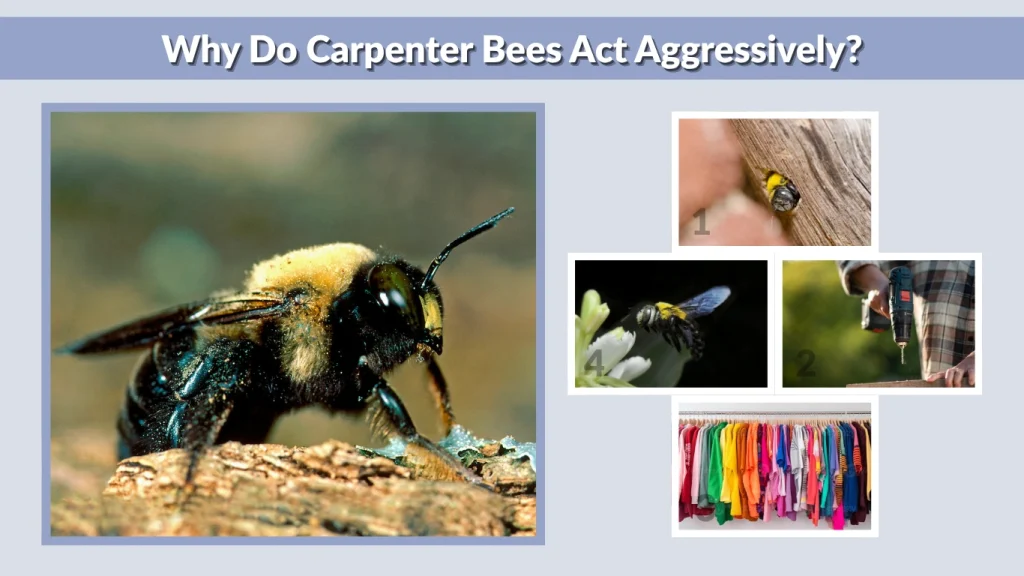
The reason carpenter bees appear aggressive lies in their protective and mating instincts. Males guard the nesting area where females lay eggs, and during the breeding season (spring through early summer), they become more active and bold.
Common triggers for defensive behavior include:
- Sudden movements near their nesting holes.
- Loud noises such as machinery or power tools.
- Bright clothing or reflective surfaces near their habitat.
- Competing males in the same area.
Their flight patterns can seem erratic or confrontational, but these bees are just standing guard. Once the nesting season ends, their activity and “aggressiveness” quickly decline.
Are Black Carpenter Bees Aggressive?
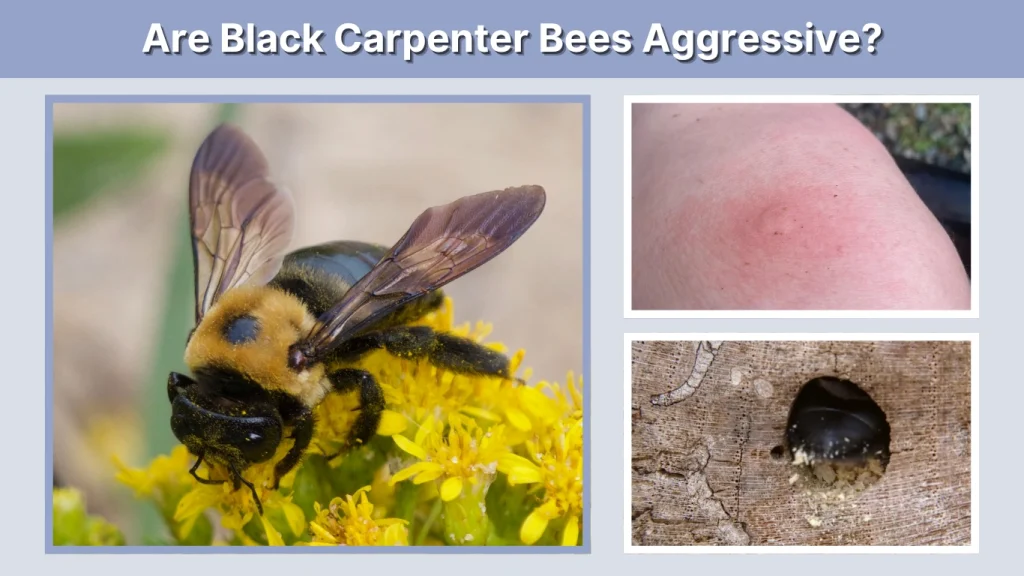
The black carpenter bee (Xylocopa violacea) looks especially fearsome due to its shiny black body and loud, droning buzz. However, appearances are deceiving — this species is not aggressive at all.
Males hover near wooden beams or fences to defend their territory, while females quietly tunnel into untreated wood to build nests. The dark coloration and deep sound make them look menacing, but they rarely sting or attack.
In truth, black carpenter bees are gentle pollinators that help fertilize fruit trees, flowers, and crops. Their bold behavior is just a show of confidence — not hostility.
Are Carpenter Bees Aggressive Toward Each Other?
Carpenter bees aren’t only territorial with humans — they can also be aggressive toward other bees. Males compete fiercely for nesting territories during mating season, chasing away rival males that enter their area.
However, these encounters are harmless. The bees rarely make contact or cause injury; their aggressive displays are mostly aerial “fights” that look dramatic but end quickly. Once the females settle into their nests, the males calm down, and activity returns to normal.
This natural competition helps maintain population balance while ensuring healthy breeding among carpenter bees.
Are Carpenter Bees Aggressive to Pets?
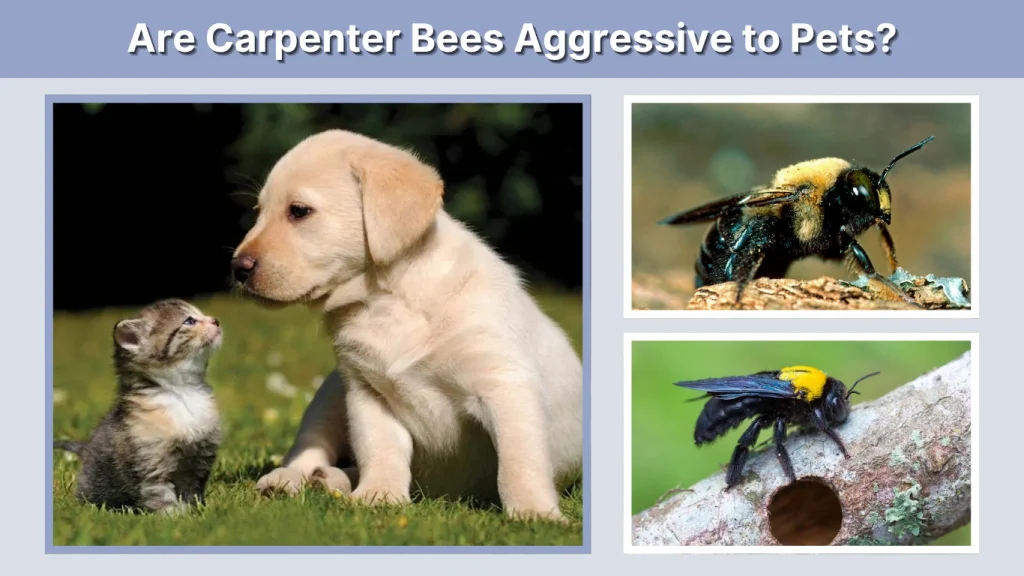
Carpenter bees may buzz near pets like dogs or cats out of curiosity or territorial instinct, but they are not dangerous to animals. Males hover around but can’t sting, while females remain near their tunnels and only defend if directly attacked.
If your pet tries to chase or snap at a bee, the most that might happen is a mild sting, which typically causes short-lived redness or swelling. Applying ice or aloe can help soothe irritation.
Keeping pets from digging or chewing around wooden areas — such as decks, fences, or garden sheds — reduces the risk of unwanted encounters.
Regional Behavior: Are Eastern Carpenter Bees Aggressive?
The Eastern Carpenter Bee (Xylocopa virginica), common in the United States, is often mistaken for being aggressive because it frequently hovers near people’s heads. This behavior peaks during April through June, the height of mating season.
However, just like other species, Eastern carpenter bees are not aggressive. Males display territorial behavior but are stingless, and females remain calm while nesting. Their buzzing and close flight patterns are merely warnings to stay clear of their wood tunnels, not attacks.
These bees contribute significantly to pollination, especially for flowering plants, fruits, and vegetables — making them far more helpful than harmful.
How to Handle “Aggressive” Carpenter Bees Safely
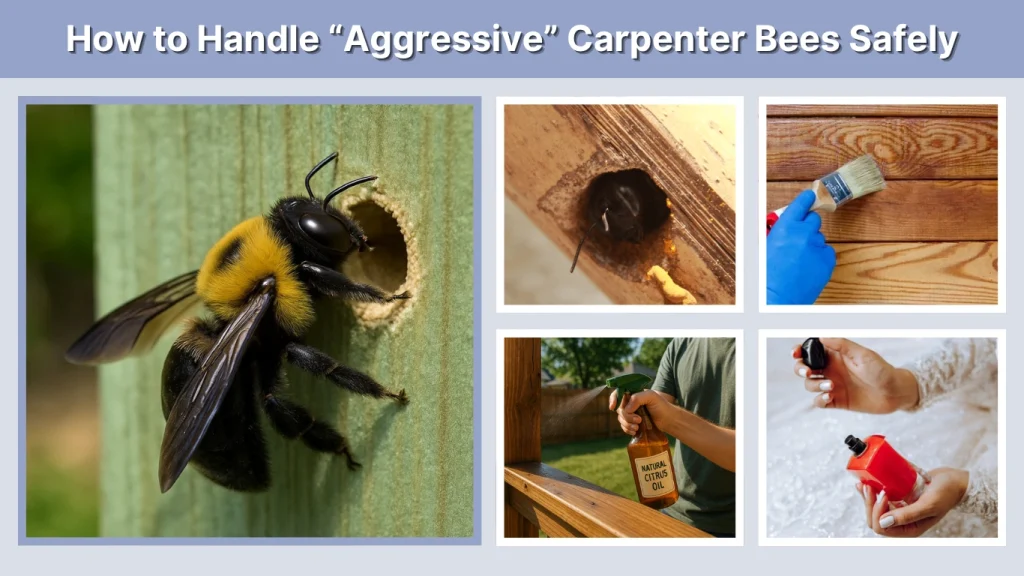
If carpenter bees seem aggressive around your home, a few calm, preventive steps can help you avoid unpleasant encounters:
- Stay calm: Avoid swatting or making sudden movements.
- Don’t disturb nests: Keep distance from wooden areas with visible holes.
- Paint or seal wood: Bees avoid treated or painted surfaces.
- Use natural repellents: Spray citrus or almond oil near nesting spots.
- Avoid bright colors and scents: Bees may be attracted to perfumes or floral clothing.
When you encounter a buzzing carpenter bee, remember — it’s not preparing to sting; it’s simply checking that you’re not a threat.
How Aggressive Are Carpenter Bees Compared to Other Bees?
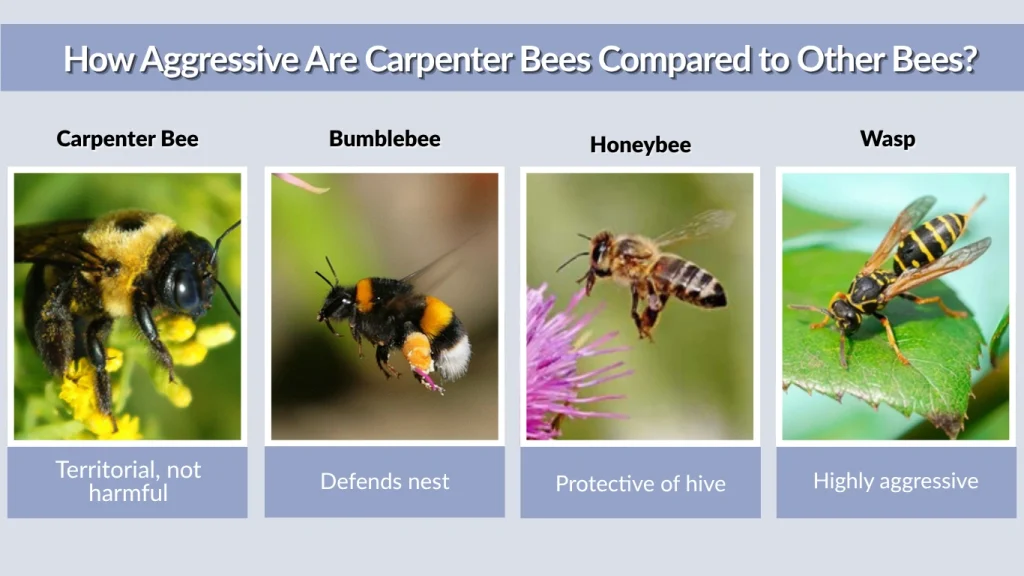
Carpenter bees are among the least aggressive species in the bee world. Their behavior may look bold, but their sting risk is extremely low.
| Bee Type | Aggression Level | Sting Risk | Behavior Toward Humans |
| Carpenter Bee | Very Low | Rare (only females sting) | Territorial, not harmful |
| Bumblebee | Moderate | Painful sting when provoked | Defends nest |
| Honeybee | Low | Single sting, dies afterward | Protective of hive |
| Wasp/Hornet | High | Multiple painful stings | Highly aggressive |
Carpenter bees rank as the most peaceful large bee species, more likely to hover and observe than to sting.
Why Carpenter Bees Are Important (Despite Their Behavior)
Carpenter bees play a crucial role in the ecosystem. They are buzz pollinators, meaning they vibrate flowers to release pollen that other insects can’t access. This makes them valuable for pollinating plants like tomatoes, eggplants, peppers, and many wildflowers.
While they may seem intimidating, these bees are vital to maintaining healthy gardens and natural biodiversity. Respecting their space helps preserve their ecological contribution while keeping your property safe.
FAQs
Are carpenter bees aggressive toward humans?
No. They only hover near people to guard their nests. Males are stingless, and females only sting if provoked.
Why are carpenter bees so aggressive in spring?
Spring is their mating season. Males become territorial and patrol nesting areas, but this is temporary and harmless.
Are black carpenter bees aggressive?
They may look intimidating due to their dark color and loud buzz, but they are calm and rarely sting humans.
Are female carpenter bees aggressive?
No. Females are gentle, focusing on nesting and pollination. They sting only when trapped or threatened.
How can I stop carpenter bees from acting aggressive?
Avoid disturbing their nests, keep wood painted, and use mild repellents like citrus oil to deter them from nesting near your home.
