

Carpenter bees are large, buzzing insects that often hover near wooden structures and gardens, making many people wonder if they’re dangerous. Despite their intimidating size and noise, carpenter bees are among the most peaceful insects you’ll encounter. They rarely sting, don’t attack humans or pets, and their only real concern is the damage they can cause to wood over time.
This article explores whether carpenter bees pose any real danger — to humans, animals, or property — and how to manage them safely.
Understanding Carpenter Bees
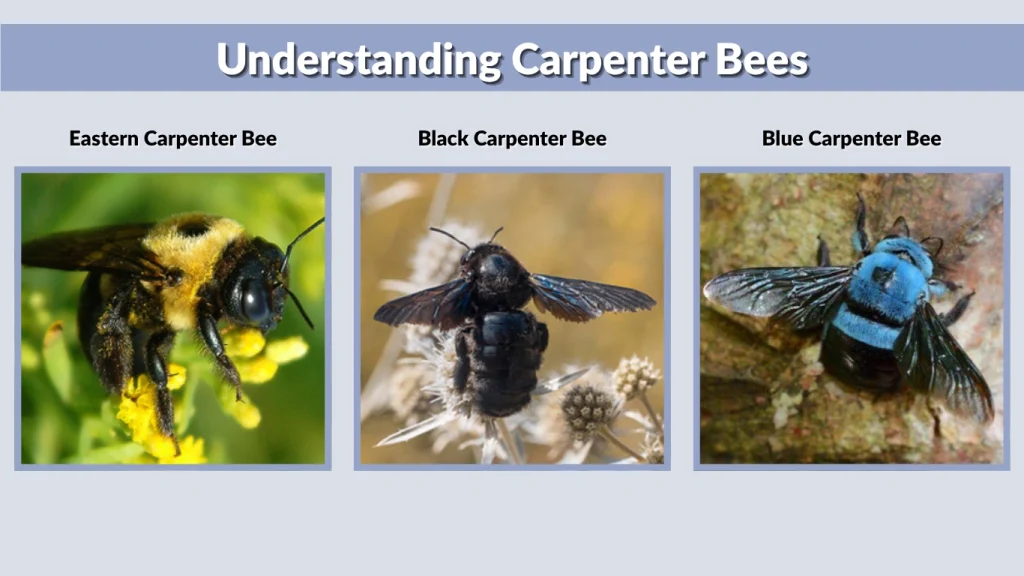
Carpenter bees belong to the genus Xylocopa, a group of solitary wood-boring bees found worldwide. Unlike honeybees or bumblebees that live in colonies, carpenter bees live and work alone. They’re called “carpenter” bees because females bore round holes into wood to create tunnels for nesting.
Common species include:
- Eastern Carpenter Bee (Xylocopa virginica) – Found across North America
- Black Carpenter Bee (Xylocopa violacea) – Common in Europe and Asia
- Blue Carpenter Bee (Xylocopa caerulea) – Known for its metallic-blue body in Asia and Australia
These bees are vital pollinators, helping fruits, vegetables, and flowers reproduce. Though they may look aggressive, they’re generally docile and uninterested in humans.
Appearance and Behavior

Carpenter bees are often mistaken for bumblebees due to their size and color patterns. However, their smooth, shiny abdomen is a key identifier.
Key features include:
- Size: ½ to 1 inch long
- Color: Black, blue, or black-and-yellow
- Abdomen: Glossy and hairless compared to fuzzy bumblebees
- Sound: A deep buzzing hum while flying
- Nature: Solitary and non-aggressive
Carpenter bees prefer warm weather and are most active during spring and summer when females build nests and males patrol territories.
Are Carpenter Bees Dangerous to Humans?

Carpenter bees look intimidating, but they’re not dangerous to humans. Males are territorial and may fly close to people’s faces to protect their area, but they cannot sting. Females can sting but rarely do unless directly provoked or handled roughly.
Their sting is mild and not medically significant. It causes temporary pain, mild swelling, or redness that subsides quickly. Carpenter bees are not venomous, do not swarm, and don’t attack unprovoked.
In short:
- Male carpenter bees: Cannot sting at all.
- Female carpenter bees: Can sting, but rarely do.
- Aggression level: Extremely low.
If left alone, they simply go about their business pollinating flowers and maintaining ecological balance.
Are Carpenter Bee Stings Dangerous?

Carpenter bee stings are considered harmless to most people. They’re comparable to a typical bee sting and cause minor discomfort. Only individuals with bee allergies need to be cautious, though stings from carpenter bees are rare.
If stung:
- Wash the area with soap and water.
- Apply a cold compress to reduce swelling.
- Use antihistamine cream or aloe vera to ease itching.
- Seek medical help if you experience dizziness, shortness of breath, or severe swelling.
Unlike wasps or hornets, carpenter bees don’t sting repeatedly and don’t release pheromones to attract others. That makes encounters with them relatively safe.
Male vs. Female Carpenter Bees
Carpenter bees show distinct differences between males and females, both in behavior and appearance.
- Male Carpenter Bees:
- Often hover around nesting areas and appear aggressive.
- Have a pale spot on the face.
- Do not sting, making them completely harmless.
- Often hover around nesting areas and appear aggressive.
- Female Carpenter Bees:
- Slightly larger and darker in color.
- Possess a functional stinger but use it only in defense.
- Focus primarily on nesting and caring for larvae.
- Slightly larger and darker in color.
Understanding these differences helps eliminate fear — most “aggressive” bees hovering near people are harmless males guarding territory, not trying to attack.
Are Black Carpenter Bees Dangerous?

Black carpenter bees (Xylocopa violacea and Xylocopa virginica) are large, shiny insects often mistaken for aggressive pests. However, they’re not dangerous and rarely sting.
Their dark, glossy bodies and loud buzzing can seem intimidating, but they serve as excellent pollinators. Females focus on nesting in untreated wood, while males protect the area by patrolling — without posing any threat.
They’re active during warm months and especially beneficial for gardens and fruit trees, making them a species worth preserving.
Are Blue Carpenter Bees Dangerous?
The blue carpenter bee (Xylocopa caerulea) is one of the most beautiful bees in the world, known for its striking metallic-blue color. Despite its impressive size and sound, it is not dangerous or aggressive.
Males hover near flowers or wood, while females create tunnels for eggs. Only females can sting, and they do so only when handled or trapped. Their calm, solitary nature makes them safe to observe and admire up close.
Are Carpenter Bees Dangerous to Dogs or Pets?
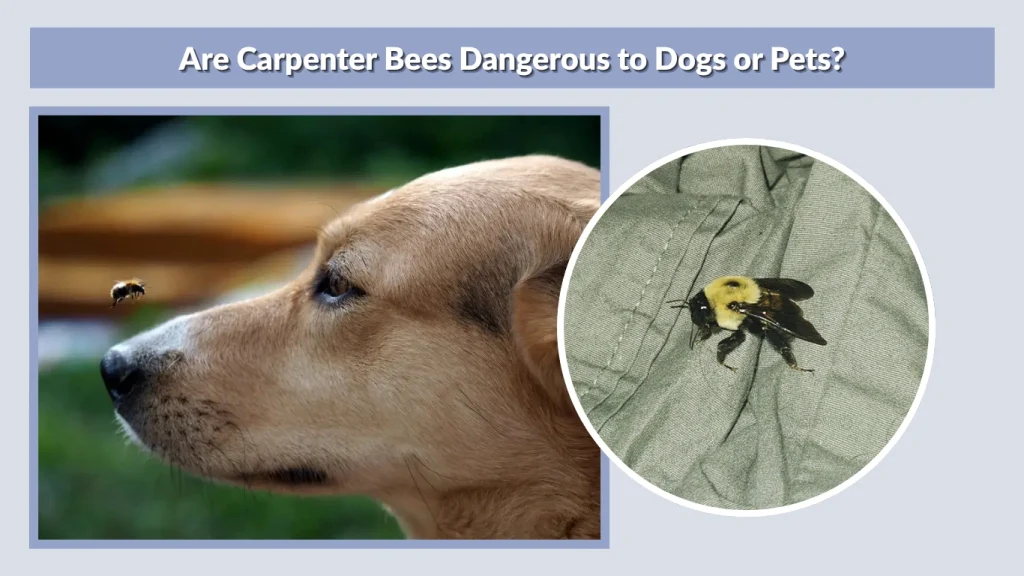
Carpenter bees are harmless to pets. Dogs and cats may get curious about these large buzzing insects, but carpenter bees rarely sting animals. Males are completely stingless, and females avoid confrontation.
If a dog snaps at a bee, it might get stung once, but the reaction is usually mild — slight redness or swelling that fades within a day. Applying ice or aloe can soothe irritation. Serious allergic reactions in pets are extremely rare.
For safety, keep pets away from nesting areas during active bee seasons. Otherwise, carpenter bees pose no genuine danger to dogs, cats, or other animals.
Are Carpenter Bees Dangerous to Your House?
While carpenter bees aren’t a threat to people, they can cause gradual damage to wooden structures. Females drill small, round holes (about ½ inch wide) into untreated or weathered wood to create nesting tunnels. Over time, multiple generations reusing the same area can weaken beams or siding.
Common nesting spots include:
- Roof eaves and fascia boards
- Porch railings and decks
- Wooden furniture or fences
- Pergolas and sheds
Their drilling doesn’t happen overnight, but long-term infestations can hollow out interior wood. The solution is prevention and maintenance — not extermination.
Prevention Tips
- Paint or varnish exposed wood surfaces.
- Fill existing holes with wood putty and repaint.
- Spray citrus or almond oil near nesting sites (bees dislike the scent).
- Offer untreated bamboo or wood blocks as alternate nesting spots away from structures.
These simple actions help you coexist peacefully while preserving a vital pollinator species.
Are Female Carpenter Bees Dangerous?
Female carpenter bees are capable of stinging, but they’re calm, focused, and non-aggressive. They sting only when squeezed, trapped, or persistently disturbed. Most of the time, they are busy excavating tunnels, collecting pollen, and protecting larvae.
Even if stung, the reaction is mild. Unlike wasps, females do not defend a colony or swarm. Their life revolves around individual nesting — not confrontation.
So, while technically they can sting, they almost never do, making female carpenter bees safe to observe and even beneficial around gardens.
How Dangerous Are Carpenter Bees Compared to Other Bees?

Carpenter bees are among the least aggressive of all stinging insects. Here’s how they compare to others:
| Insect | Aggression Level | Sting Danger | Primary Risk |
| Carpenter Bee | Very Low | Mild, rare sting | Wood damage |
| Bumblebee | Moderate | Painful sting | Hive defense |
| Honeybee | Low | One sting only | Defensive when hive threatened |
| Wasp/Hornet | High | Multiple painful stings | Aggressive behavior |
Carpenter bees focus on nesting and pollination rather than defense. Their buzzing and hovering are territorial displays, not acts of aggression.
Regional Variants and Their Behavior
Several species of carpenter bees exist globally, and while they share common traits, their behavior can vary slightly depending on environment:
- California Carpenter Bees: Large and black-yellow, common in gardens; rarely sting but may tunnel into redwood.
- Eastern Carpenter Bees (USA): Hover near porches in spring; males are active defenders but harmless.
- Violet Carpenter Bees (Europe): Shiny violet-black color, very docile, and excellent pollinators of fruit trees.
- Valley Carpenter Bees (South Africa): Giant black bees, visually intimidating but gentle.
- Blue Carpenter Bees (Asia & Australia): Metallic-blue sheen; calm and non-aggressive, nesting mostly in bamboo or deadwood.
Across continents, carpenter bees share a peaceful temperament, proving their value as pollinators far outweighs any risks.
How to Safely Coexist with Carpenter Bees
The best approach is peaceful coexistence. Carpenter bees are beneficial to the environment, and with small adjustments, you can protect both your property and the bees.
Coexistence Tips:
- Avoid spraying chemical pesticides.
- Maintain painted or treated wood surfaces.
- Use decoy nests to divert females.
- Hang bee houses in the yard to attract them away from your home.
- Encourage birds like woodpeckers carefully — they’re natural bee predators but may cause secondary wood damage.
By preventing overpopulation near buildings, you can enjoy these gentle pollinators without concern.
When to Call Pest Control
In most cases, carpenter bees can be managed without professional help. However, if you notice structural weakening or recurring infestations each spring, it’s wise to call a specialist.
You should seek expert assistance when:
- Dozens of holes appear across wooden surfaces.
- Sawdust piles up near eaves or beams.
- Wood shows signs of splitting from repeated tunneling.
Professional pest controllers use bee-safe treatments and sealants, ensuring the insects are removed without harming nearby pollinators like honeybees.
FAQs
Are carpenter bees aggressive?
No. They are solitary and calm by nature. Males may hover protectively near nests but are stingless, while females sting only when provoked.
Can carpenter bees damage houses?
Yes, over time. Multiple generations nesting in the same wood can cause gradual weakening. Painted or treated wood deters them effectively.
Are carpenter bee stings poisonous?
No. Their sting is mild and non-venomous. It causes brief pain and redness that fades quickly.
Are carpenter bees harmful to pets?
Not at all. Dogs and cats rarely get stung, and any reaction is mild. Carpenter bees avoid confrontation with larger animals.
How dangerous are female carpenter bees?
Female carpenter bees can sting, but they almost never do. They’re far more focused on nesting and pollination than defending territory.
