

Every few years, the familiar summer buzz of cicadas fills the air — a sound so loud it can reach 100 decibels. For many people, especially during mass emergences, the sight of thousands of red-eyed insects covering trees and fences can be alarming. Their large size, strange shells, and intense noise often spark questions like: Are cicadas dangerous? Can they bite or sting? Are they harmful to pets or trees?
The truth is much less scary than their appearance suggests. Cicadas are harmless, non-aggressive insects that play a vital role in nature. They don’t bite, sting, or spread disease. Even their more intimidating relatives — the cicada killer wasps — are gentler than they look. In this article, we’ll explore the myths and facts about cicadas, their impact on humans, pets, and plants, and whether anything about them is truly dangerous.
Are Cicadas Dangerous to Humans?
Do Cicadas Bite or Sting?
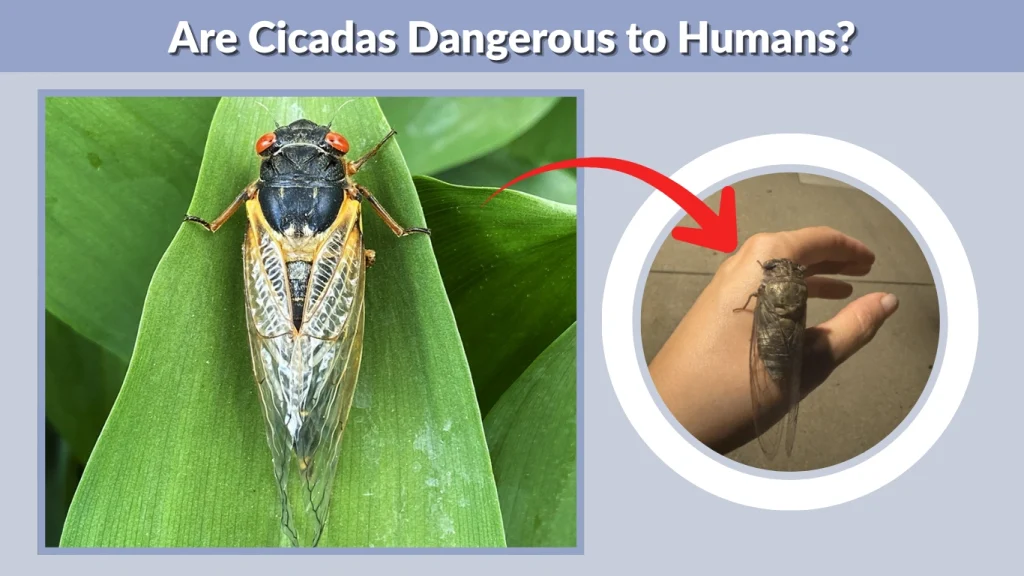
Let’s clear up the biggest myth first: cicadas don’t bite or sting. Unlike wasps or mosquitoes, cicadas don’t have jaws or stingers. Instead, they have a long, straw-like mouthpart called a proboscis, which they use to drink sap from trees. Their feeding method is gentle — they pierce tree branches to sip fluid, not to harm.
Occasionally, a curious cicada might mistake a person’s arm or finger for a tree branch and gently poke at the skin, but it’s completely harmless. You might feel a light pinch, but it doesn’t draw blood or cause pain. Cicadas are not venomous, don’t carry diseases, and aren’t interested in humans at all.
Are Cicadas Aggressive?
Despite their loud calls and clumsy flying, cicadas are actually shy insects. They don’t attack or defend themselves. If one lands on you, it’s likely by accident — they can be attracted to vibrations or the sound of engines, mistaking them for other cicadas. Simply brushing them away is enough.
Cicadas spend most of their short adult lives singing, mating, and laying eggs. They aren’t territorial, and they don’t sting when touched. Their intimidating buzz is just a love song, not a warning.
Are Cicada Shells Dangerous?
Another source of concern is the empty shells cicadas leave behind on trees, walls, and fences. These light brown casings are actually the remains of the cicada’s exoskeleton — a protective outer shell shed when the insect emerges from underground and transforms into an adult.
Cicada shells are completely harmless and non-toxic. They don’t carry parasites or bacteria and are safe to handle. Many children collect them out of curiosity — they’re fascinating reminders of a cicada’s transformation. Made of chitin, the same material found in shrimp shells, they pose no risk to humans or pets.
Are Cicadas Dangerous to Pets?
Are Cicadas Dangerous to Dogs or Cats?
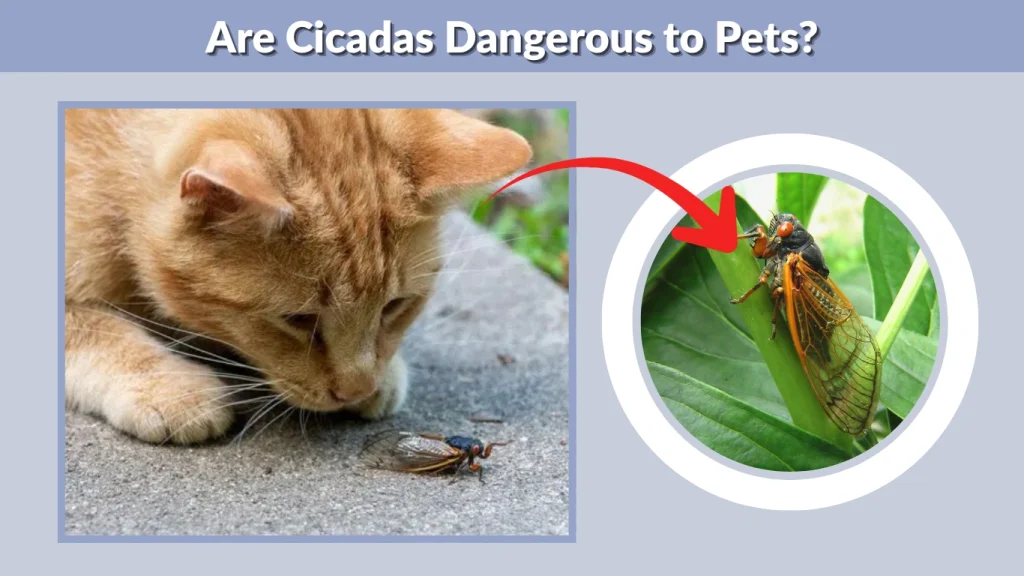
Cicadas are not poisonous to pets, but eating too many can cause mild digestive issues. Dogs, in particular, often find cicadas irresistible and may gobble them up during outdoor walks. While a few won’t hurt, the insects’ tough exoskeletons are difficult to digest and can lead to vomiting, constipation, or stomach discomfort if eaten in large numbers.
Most symptoms are temporary, and your dog or cat should recover naturally. However, if your pet consumes dozens of cicadas and shows signs of severe vomiting or loss of appetite, it’s best to consult a veterinarian.
Are Cicadas Dangerous for Other Animals?
Cicadas are actually a valuable food source for many wild animals. Birds, reptiles, squirrels, raccoons, and even fish feast on them during emergence seasons. Because cicadas contain no toxins, they are safe and nutritious for wildlife.
Are Cicadas Dangerous to Dogs Long-Term?
No long-term harm has been linked to cicada consumption. The main issue is the indigestible outer shell, which can irritate a dog’s stomach if consumed in excess. Most pets learn quickly that cicadas aren’t the tastiest snack after a few unpleasant experiences.
To be safe, pet owners can supervise outdoor playtime during cicada season and discourage eating them in large amounts.
Are Cicadas Dangerous to Trees or Plants?
Do Cicadas Damage Trees?
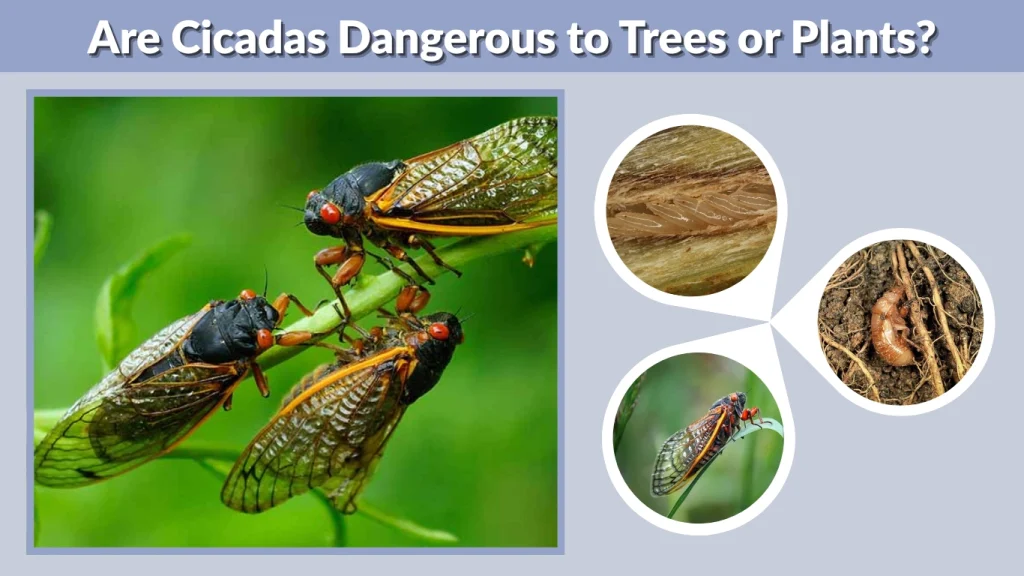
Cicadas don’t eat leaves or destroy vegetation the way locusts do. Their diet consists entirely of plant sap, which they drink from branches. However, female cicadas can cause minor twig damage during egg-laying. They use a sharp organ called an ovipositor to carve small slits into branches, where they deposit hundreds of eggs.
This process can cause young twigs to wilt and die — a condition known as flagging. On small or newly planted trees, heavy egg-laying can sometimes snap thin branches. Mature trees, however, suffer little to no long-term damage.
Are Cicadas Dangerous to Crops or Gardens?
Cicadas are often confused with crop-destroying locusts, but they’re not agricultural pests. They don’t chew or eat crops, fruits, or vegetables. Garden plants, flowers, and shrubs are safe from cicadas’ activity. The worst a gardener might notice is a few broken twigs or tiny holes on branches from egg-laying females.
Cicadas, in fact, help the ecosystem: their burrowing aerates the soil, and their decomposing bodies after death enrich the earth with nutrients.
Are Cicadas Dangerous to Live Oaks or Other Trees?
Certain trees, like oaks, maples, and fruit trees, may show light damage during massive periodical emergencies. Females tend to choose thinner branches for laying eggs, so saplings are more at risk than older trees. Wrapping small trees with mesh or netting during peak cicada season can prevent this. Once the season ends, the trees recover quickly, sprouting new healthy growth by fall.
Are Cicada Killer Wasps Dangerous?
What Are Cicada Killers?
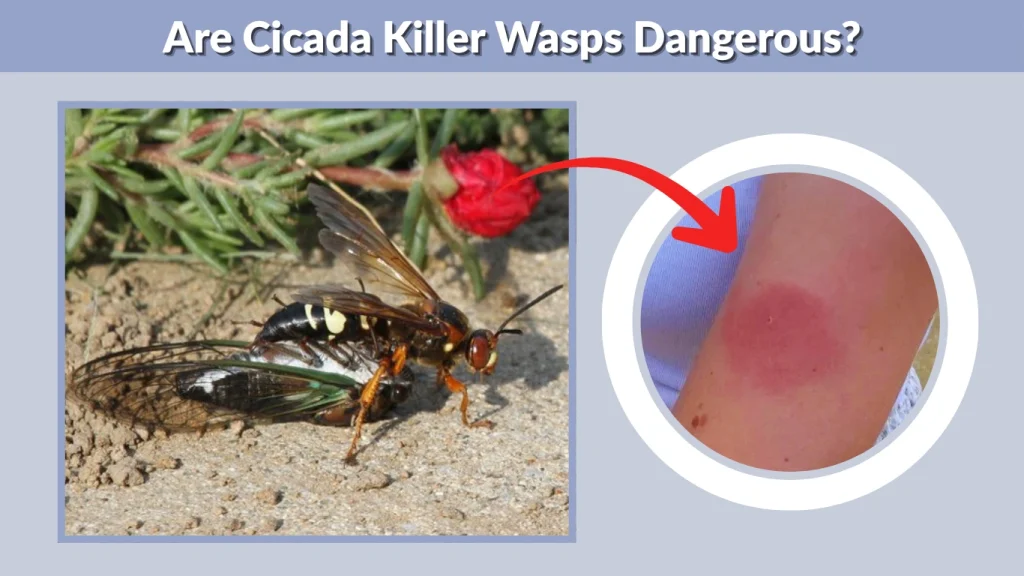
If cicadas seem big, their predators look even scarier. The cicada killer wasp (Sphecius speciosus) is a large, solitary wasp that hunts cicadas to feed its young. Females capture and paralyze cicadas with a sting, then carry them into burrows to serve as food for their larvae. Despite their fearsome name and size — up to 2 inches long — these wasps are not aggressive toward humans.
Are Cicada Killers Dangerous to Humans?
Cicada killers are generally gentle giants. Males may buzz around protectively near their burrows but cannot sting. Females can sting, but only if grabbed or threatened directly. Their sting is mild — comparable to a bee’s — and rarely requires medical attention.
Unlike social wasps such as yellowjackets or hornets, cicada killers are solitary and don’t defend a hive. They dig small holes in sandy soil, often in lawns or gardens, but they’re more of a curiosity than a threat.
Are Cicada Mites or Zombie Cicadas Dangerous?
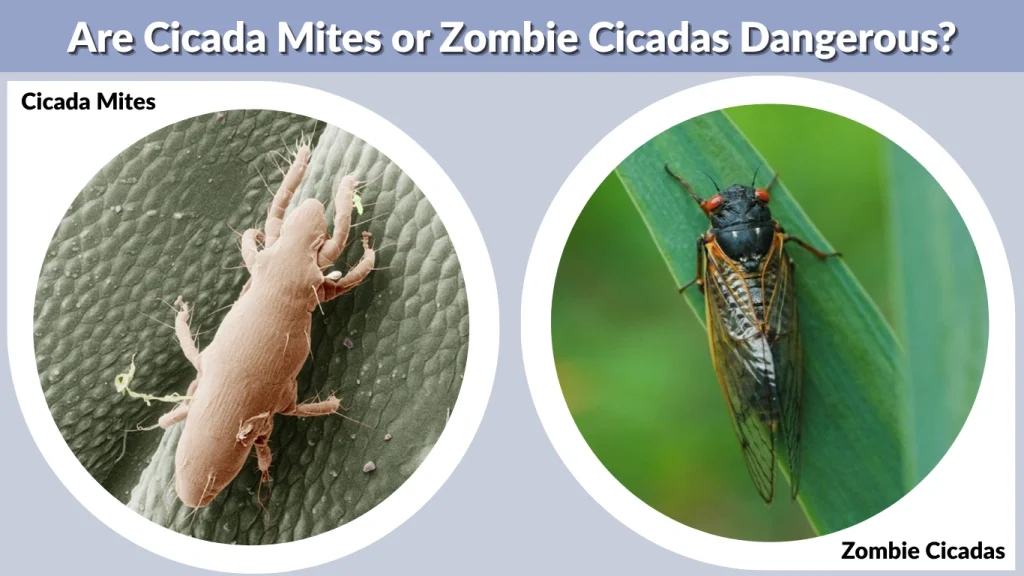
What Are Cicada Mites?
During large cicada emergences, you might notice tiny red or orange dots clinging to cicadas’ wings or bodies — these are cicada mites. They are small parasites that use cicadas as transport, feeding on their bodily fluids or hitching rides to new trees. While their appearance can be unsettling, they are harmless to humans and pets.
These mites cannot survive on people, cats, or dogs. They’re specialized to live only on cicadas and die off naturally once the insects do. So if you see a cicada covered in small red dots, it’s not dangerous — just part of a natural, short-lived parasitic cycle.
Are Cicada Mite Bites Dangerous?
True cicada mites don’t bite humans at all. However, some people mistake chigger bites (from a different mite species) for cicada mite bites. Chiggers can cause itchy red bumps, but cicada mites cannot. If you do experience bites after being outdoors, it’s likely from another insect entirely.
If bitten by any small outdoor mite, washing the area with soap and applying an anti-itch cream or calamine lotion is sufficient. No serious treatment is required.
Are “Zombie Cicadas” Dangerous?
In recent years, you may have heard of “zombie cicadas.” These are cicadas infected by a fungus called Massospora cicadina. The fungus alters the cicada’s behavior, causing it to continue flying and mating attempts even after parts of its abdomen have disintegrated.
Although eerie, zombie cicadas are not dangerous to humans, pets, or plants. The fungus is species-specific and cannot infect any other creature. It’s a fascinating — and harmless — example of nature’s strange complexity.
Are Cicadas Dangerous to Humans During Mass Emergences?
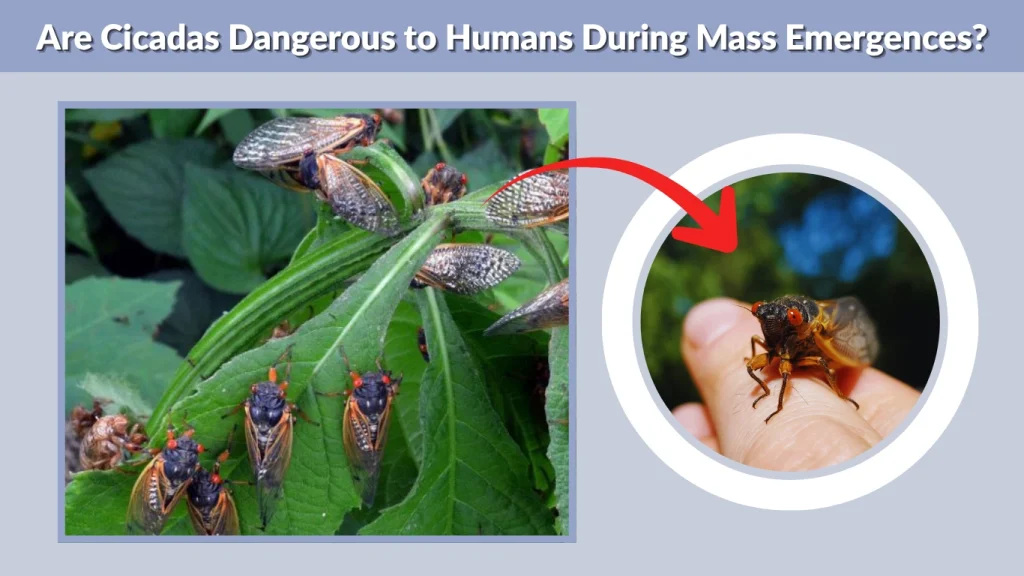
Do Cicadas Attack or Swarm People?
When billions of cicadas emerge, their collective presence can be overwhelming — but there’s no need to panic. Cicadas do not swarm or attack people. They might fly toward moving objects or loud noises (like lawnmowers or leaf blowers), mistaking them for other cicadas. Their flight paths are random, and they can be clumsy flyers, which is why they occasionally bump into people.
If one lands on you, it’s best to stay calm and gently brush it off. They won’t sting, bite, or release any defensive chemicals.
Are Periodical Cicadas Dangerous?
Periodical cicadas, such as the famous 13-year and 17-year Broods (like Brood X in the eastern U.S.), are completely harmless despite their massive numbers. Their noise can be loud enough to drown out conversations, but they pose no physical threat to humans or animals.
The most “dangerous” part of a cicada emergence is the noise pollution — males sing to attract females, creating a constant droning that can reach the volume of a chainsaw. For those sensitive to sound, earplugs or noise-cancelling headphones may help.
Are Cicadas Dangerous to Touch?
No — it’s safe to touch cicadas. They don’t bite, sting, or carry diseases. However, since they live underground for years, it’s always good hygiene to wash your hands afterward. Children often enjoy holding them to observe their wings and bright eyes — a safe and educational experience when done gently.
Why People Think Cicadas Are Dangerous
Their Size and Sound
Cicadas are among the largest flying insects in many regions, with bodies over an inch long and wide transparent wings. Combined with their piercing buzz, it’s easy to mistake them for something aggressive like a hornet. In reality, cicadas are delicate and defenseless — they can’t sting or even bite in self-defense.
Media and Cultural Confusion
Part of the fear comes from historical confusion between cicadas and locusts. When early settlers saw periodical cicadas emerging in massive numbers, they called them “17-year locusts,” linking them to the crop-destroying insects described in the Bible.
This myth persists in news reports and online discussions today, giving cicadas an undeserved reputation for destruction.
Unfamiliar Behavior
Because periodical cicadas emerge only once every decade or two, many people have never experienced them before. Seeing billions of insects appear seemingly overnight can trigger alarm — but once people learn the truth, they realize cicadas are completely benign and short-lived.
The Real Risks of Cicadas (Summarized)
| Category | Risk Level | Explanation |
| Humans | None | Cicadas don’t bite, sting, or carry disease. |
| Pets | Mild | Eating too many may cause digestive upset. |
| Trees | Low | Minor twig damage from egg-laying; no long-term harm. |
| Crops & Gardens | None | Cicadas don’t eat plants or crops. |
| Homes/Property | None | Don’t chew, nest, or damage structures. |
| Cicada Killer Wasps | Very Low | Rarely sting; non-aggressive. |
| Mites or Fungal “Zombies” | Harmless | Not contagious to humans or pets. |
Cicadas are often blamed for damage or discomfort caused by unrelated insects, like wasps or locusts. In truth, their brief adult phase brings more benefits than risks: aerating soil, enriching ecosystems, and feeding countless birds and small mammals.
FAQs
Are cicadas dangerous to humans or pets?
No. They’re harmless to both. The only possible issue is if pets eat too many.
Can cicadas bite or sting?
No — they lack jaws and stingers. They can’t harm skin or inject venom.
Are cicada killer wasps dangerous?
Only if grabbed or provoked. They’re solitary and rarely sting humans or pets.
Do cicadas damage trees or crops?
Only minimal twig damage during egg-laying. Mature trees recover quickly, and crops remain unaffected.
Are “zombie cicadas” dangerous?
Not at all. The fungus affects only cicadas, not humans, animals, or plants.
