

Paper wasps are a common sight during the warmer months, often seen flying around gardens, attics, and porches. While their appearance and papery nests can seem intimidating, these insects are not naturally aggressive. Understanding when and why paper wasps become aggressive helps reduce the risk of being stung and allows peaceful coexistence with these beneficial insects.
Understanding Paper Wasp Behavior
Paper wasps belong to the Polistes genus, a group of social wasps known for their slender bodies and umbrella-shaped nests. Unlike yellow jackets or hornets, paper wasps are primarily defensive rather than aggressive. They spend most of their time foraging for nectar and hunting caterpillars to feed their larvae.
Aggression in paper wasps usually occurs as a protective response rather than unprovoked hostility. Their main goal is to defend the colony, especially during nesting season when the queen and larvae are vulnerable. In most cases, if left undisturbed, paper wasps will ignore humans completely.
Are Paper Wasps Aggressive to Humans?

Paper wasps are not aggressive toward humans unless they perceive a threat. Most stings occur when someone accidentally gets too close to the nest or makes sudden movements near it. Vibrations, loud noises, or attempts to remove a nest can quickly trigger defensive behavior.
When threatened, a single paper wasp releases alarm pheromones, signaling others to attack. This is why even a calm nest can become defensive within seconds if disturbed. However, away from their nest — such as when they’re collecting nectar or hunting insects — paper wasps are generally docile and uninterested in people.
To minimize risk:
- Avoid swatting or waving your arms near them.
- Do not touch or attempt to move their nest during daylight hours.
- Stay calm and slowly back away if a wasp approaches.
How Aggressive Are Paper Wasps Compared to Other Wasps?
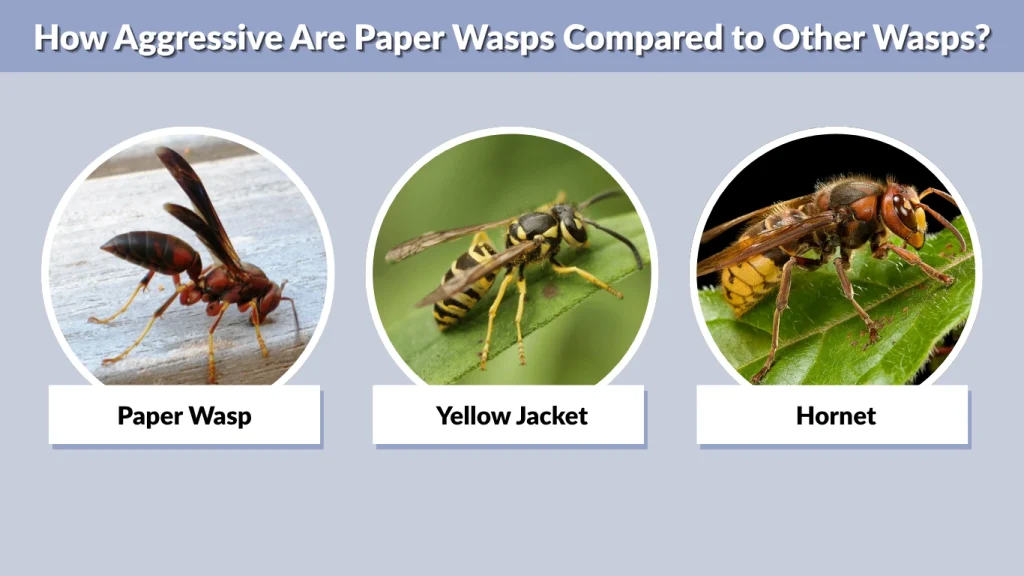
Among common stinging insects, paper wasps are considered moderately aggressive. They defend their nests but rarely attack unprovoked.
Here’s how they compare with other species:
| Insect Type | Aggression Level | Typical Behavior |
| Paper Wasp | Defensive only when disturbed | Ignores humans unless nest threatened |
| Yellow Jacket | Highly aggressive | May attack in swarms, often unprovoked |
| Hornet | Very defensive and territorial | Protects large colonies vigorously |
Paper wasps act primarily out of defense, while yellow jackets and hornets often behave aggressively around food or nesting sites. This distinction is important — paper wasps can coexist peacefully near humans when their nests remain undisturbed.
Are Red Paper Wasps Aggressive?

The red paper wasp (Polistes carolina) is one of the most recognized and territorial species in the southern United States. They are slightly more aggressive than other paper wasps, especially when their nests are approached. Red paper wasps prefer building nests under eaves, porches, and roof edges — areas that bring them closer to human activity.
They are most defensive in hot summer months, when colonies are large and filled with larvae. Even then, red paper wasps will not attack unless they feel threatened. Remaining calm and giving them space is usually enough to prevent conflict.
European Paper Wasps: More Defensive by Nature
The European paper wasp (Polistes dominula) is more assertive than its American counterparts. Introduced to North America, it has adapted well to urban environments, often nesting in mailboxes, attics, and roof vents. Because of this proximity to people, European paper wasps appear more aggressive, though their behavior is mostly defensive.
These wasps patrol their nests actively and are quicker to react to perceived threats. They also tolerate less disturbance compared to native species. However, just like all paper wasps, they sting only when they feel cornered or when their nest is in danger.
Aggression Outside the Nest
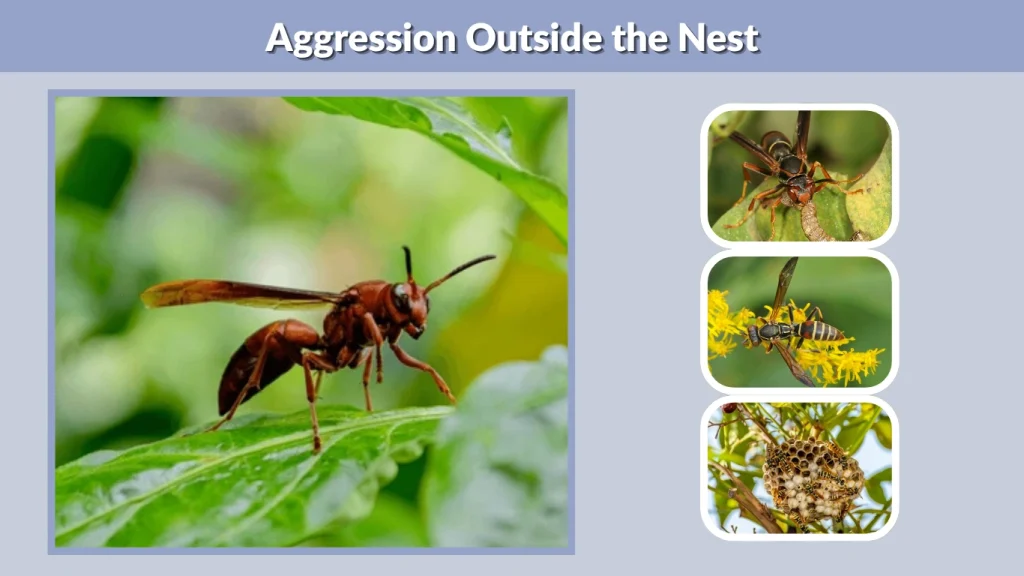
When paper wasps are away from their nests — foraging for nectar, hunting caterpillars, or gathering materials — they are not aggressive. In these situations, their focus is on collecting food, not defending territory. You can often observe them around flowers or garden plants without risk, as long as you remain calm and avoid sudden movements.
Aggression occurs only within a few feet of the nest, where wasps instinctively guard their queen and larvae. If you accidentally come too close, they may buzz loudly or circle around you as a warning. This is your signal to slowly back away. Unlike yellow jackets, paper wasps will not chase you long distances once you leave their defensive zone.
Seasonal Changes in Aggression
Paper wasp behavior changes throughout the year, becoming more defensive at certain times:
- Spring: Queens emerge from hibernation and begin building new nests. Aggression levels are low because colonies are small.
- Summer: Peak aggression. Colonies are large, and wasps are protective of their eggs and larvae.
- Fall: Wasps become unpredictable as food becomes scarce and the colony declines.
- Winter: Most wasps die off; only fertilized queens survive in hibernation.
This seasonal pattern explains why stings are most common during midsummer and early fall when colonies are at their strongest.
Are Male Paper Wasps Aggressive?

No. Male paper wasps cannot sting because they lack stingers. The stinger is a modified ovipositor — an organ used by females to lay eggs. Males may appear territorial or hover near nests, but they pose no danger.
Only female workers and queens are capable of stinging, and they do so purely in defense of the colony or themselves.
Why Paper Wasps Become Aggressive
Paper wasps are not naturally hostile but can become defensive due to specific triggers. Understanding these helps you avoid accidental encounters.
Common Triggers of Aggression
- Nest disturbance: Touching or shaking a structure that holds a nest (e.g., eaves, fences, porch roofs).
- Vibrations or loud noises: Mowing, drilling, or hammering near a nest can provoke them.
- Quick movements: Waving arms or swatting sends a threat signal.
- Scent signals: If one wasp stings, it releases pheromones that alert others to attack.
Remaining calm and moving slowly around wasps can prevent triggering their defensive instincts.
Paper Wasps vs Yellow Jackets: Aggression Comparison

Paper wasps are often mistaken for yellow jackets because of similar coloration, but their behavior differs significantly. Here’s how they compare:
| Feature | Paper Wasps | Yellow Jackets |
| Aggression Level | Defensive only when provoked | Highly aggressive and territorial |
| Nest Type | Open, umbrella-shaped nests | Enclosed or underground nests |
| Response to Threat | Warns first, stings if threat continues | Attacks quickly, may sting multiple times |
| Pain of Sting | Sharp but short-lived | More painful and lingering |
| Human Interaction | Usually calm near humans | Frequently invades outdoor eating areas |
Paper wasps defend their colonies but prefer avoidance over confrontation, while yellow jackets often sting with little warning.
How to Avoid Paper Wasp Aggression
Avoiding aggressive encounters with paper wasps is simple with the right precautions:
Practical Safety Tips
- Stay calm and avoid swatting at wasps.
- Do not approach or touch their nests.
- Wear light-colored clothing — bright or floral patterns can attract wasps.
- Keep food, sweet drinks, and garbage bins sealed outdoors.
- Use peppermint oil or vinegar spray to deter wasps from building nests near patios and decks.
- If a wasp lands on you, remain still until it flies away.
By maintaining distance and avoiding sudden actions, you can safely coexist with paper wasps even when they nest nearby.
Why Paper Wasps Are Important Despite Their Aggression
Although paper wasps can become aggressive when threatened, they play an important ecological role. They help control garden pests by feeding on caterpillars, flies, and beetle larvae. They also pollinate flowers while collecting nectar, contributing to plant growth and biodiversity.
Destroying every wasp nest isn’t always necessary — unless it’s in a high-traffic area or close to living spaces. Allowing distant colonies to thrive benefits your garden and the surrounding environment.
FAQs
Are paper wasps aggressive by nature?
No. Paper wasps are defensive rather than aggressive. They only sting when provoked or when their nest is disturbed.
Are red paper wasps more aggressive than others?
Yes. Red paper wasps are slightly more territorial, especially in summer when defending large colonies. Still, they won’t attack without reason.
Do European paper wasps act aggressively toward humans?
They can be more defensive because they build nests close to human structures, but they still only sting when threatened.
Do paper wasps attack outside their nest?
Rarely. Foraging wasps are peaceful and uninterested in people unless trapped or swatted.
Why are paper wasps more aggressive in summer?
Colonies are larger, food is plentiful, and larvae need protection. Wasps are more alert and defensive during this period.
