
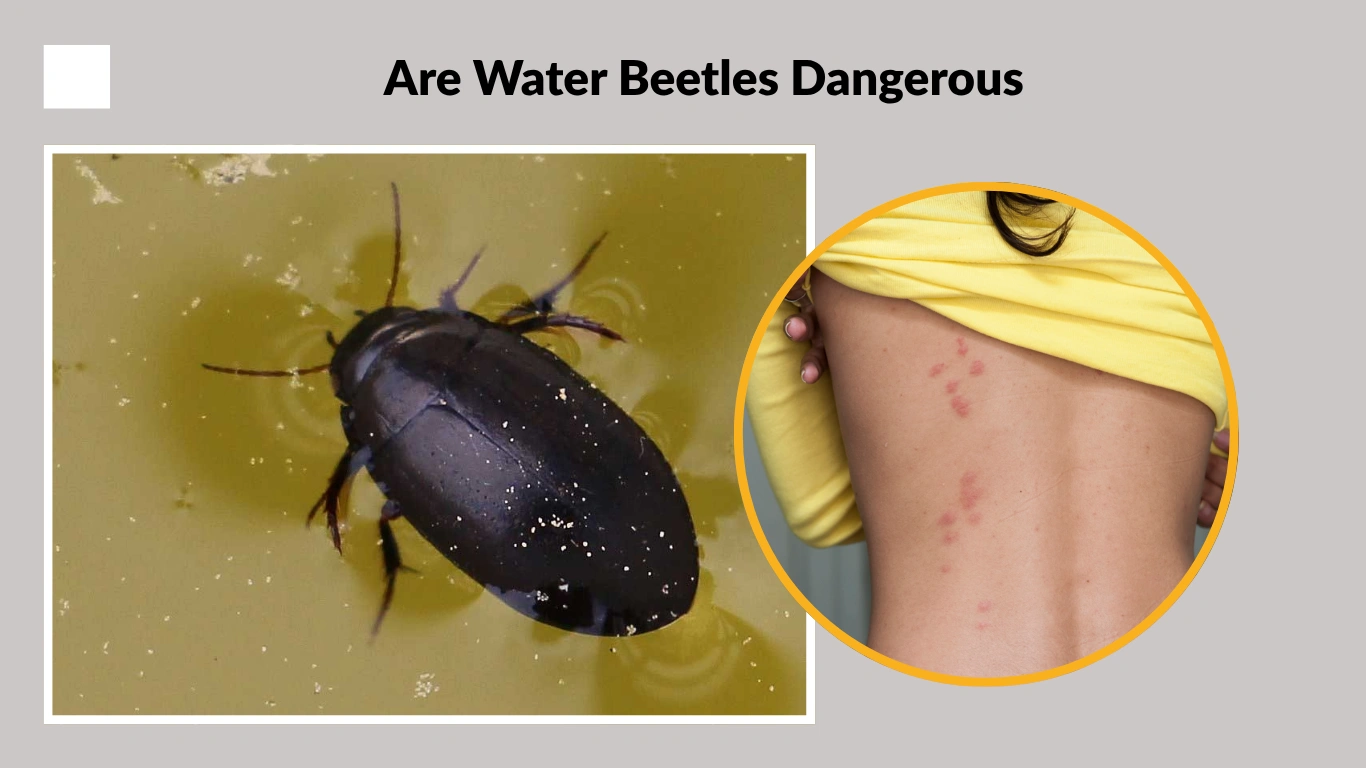
Water beetles are a common sight in ponds, lakes, and even backyard swimming pools. With their shiny bodies, strong swimming legs, and quick movements, they often spark curiosity—and sometimes concern. Many people wonder if these aquatic insects can bite, carry diseases, or harm pets and wildlife. In this guide, we’ll take a closer look at water beetles, explore whether they pose any real danger, and share tips on how to handle encounters with them safely.
Understanding Water Beetles
What Are Water Beetles?
Water beetles are a diverse group of aquatic insects belonging to several families, such as Dytiscidae (predaceous diving beetles) and Gyrinidae (whirligig beetles). They are well adapted to life in water, spending most of their time swimming, diving, and hunting for food. Found in freshwater environments worldwide, they play an important role in maintaining ecological balance by controlling other insect populations.
Physical Characteristics
Water beetles typically have oval, streamlined bodies that help them move efficiently through water. Their hind legs are often flattened and fringed with hairs, acting like paddles for powerful swimming. Many species are dark brown or black with a glossy appearance, while some have distinctive markings. Most also have strong mandibles for catching prey, which can give a noticeable nip if handled.
Are Water Beetles Dangerous to Humans?
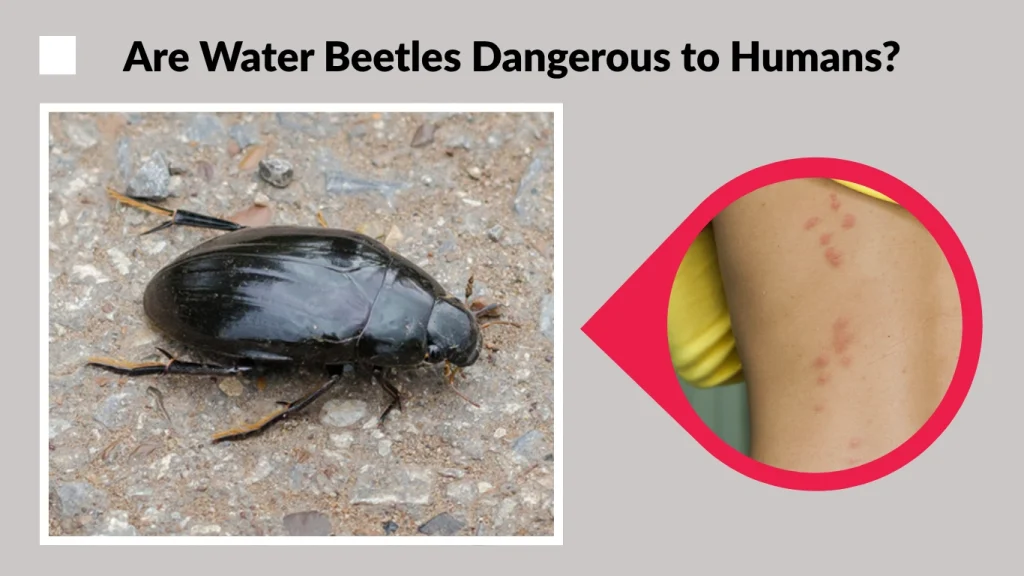
Can Water Beetles Bite?
Some species, especially predaceous diving beetles, are capable of delivering a mild bite when they feel threatened. The bite is not venomous and usually causes only slight discomfort, similar to a mild pinch. Most people experience no lasting effects, though a few may notice temporary redness or minor swelling.
Are Water Beetle Bites Poisonous?
Water beetle bites are not poisonous. They do not inject venom, nor do they carry toxins harmful to humans. While their bite might startle you, it poses no serious health risk. Basic first aid—washing the area and applying a cool compress—can help if there is mild irritation.
Benefits of Water Beetles in the Ecosystem
Water beetles play an important role in maintaining healthy aquatic ecosystems. By preying on mosquito larvae, they help reduce mosquito populations, which can lower the risk of mosquito-borne diseases in nearby areas. They also serve as food for fish, birds, and amphibians, making them a vital part of the food chain. In many cases, their presence is a sign of good water quality, as they thrive in clean, well-oxygenated environments.
When Water Beetles Become a Nuisance
While generally harmless, water beetles can become a nuisance when they appear in large numbers, especially in swimming pools or ornamental ponds. They may be drawn to lights at night or to algae and debris in the water. Although they don’t damage pool structures, their presence can make swimming less enjoyable and may indicate that the water needs cleaning or better maintenance.
How to Safely Remove Water Beetles
If you find water beetles in a pool or pond, avoid handling them with bare hands to prevent accidental bites. Use a pool skimmer, fine-mesh net, or bucket to capture and relocate them to a nearby natural water source. Keeping the water clean, reducing algae growth, and using pool covers when not in use can help deter them. For persistent problems, adjusting pool lighting at night can also reduce their attraction to the area.
Myths and Misconceptions About Water Beetles
Many people believe that water beetles are highly venomous or aggressive toward humans, but this is far from the truth. Most species avoid human contact entirely and will only bite if handled roughly. Another common myth is that they spread diseases like mosquitoes, which is incorrect—they are not disease carriers. These misconceptions often come from confusing water beetles with other aquatic insects or pests.
Final Verdict – Should You Be Worried?
Water beetles are generally harmless to humans and pets. While certain species can bite if provoked, the discomfort is mild and temporary. They play a beneficial role in the ecosystem, helping to control insect populations and contributing to aquatic biodiversity. Unless you’re dealing with a heavy infestation in a swimming area, there’s usually no reason for concern.
FAQs
1. Do water beetles live in swimming pools?
Yes, they can occasionally be found in pools, especially if the water has algae or insects they feed on.
2. Can water beetles kill fish?
They may prey on very small or weak fish but generally do not threaten healthy adult fish.
3. Are water beetle bites dangerous to kids?
No, bites are not dangerous, though children may feel brief pain or irritation.
4. How do you keep water beetles out of pools?
Maintain clean, well-chlorinated water, use pool covers, and reduce nighttime lighting that attracts insects.
5. Are giant water beetles more dangerous than small ones?
Giant water beetles have stronger bites but are still not poisonous or life-threatening.
