

The Asian Giant Hornet (Vespa mandarinia) is the largest hornet species in the world, known for its massive size, painful sting, and threat to honeybee populations. Native to East and Southeast Asia, it has recently caused alarm in North America and Europe due to invasive sightings. Dubbed the “murder hornet,” it’s both feared and misunderstood. Though dangerous when provoked, it also plays a natural role as a predator. This article covers everything from its size and sting to its spread and behavior.
Physical Appearance and Size
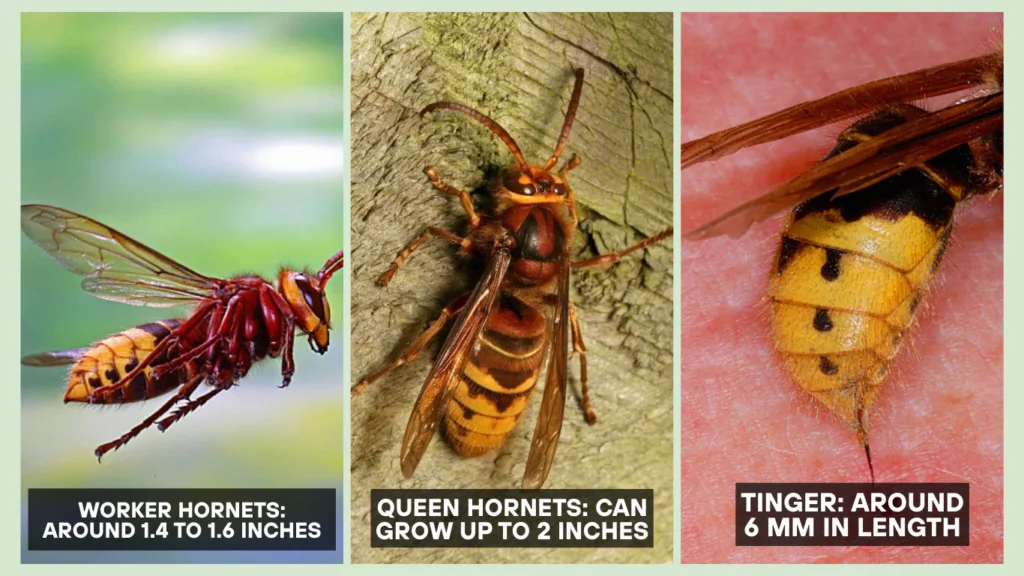
The Asian Giant Hornet is famous for its massive size and fierce appearance. As the largest hornet species in the world, it stands out immediately when seen in the wild. Both intimidating and impressive, its physical traits play a big role in how it hunts, defends itself, and survives in the environment.
Head and Body Features
The hornet has a large, orange-yellow head with prominent mandibles used for tearing prey. Its eyes are dark and curved, giving it strong visual tracking ability. The thorax is dark brown to black, while the abdomen features distinct yellow and black bands.
Size and Dimensions
- Worker Hornets: Around 1.4 to 1.6 inches (3.5 to 4 cm) long
- Queen Hornets: Can grow up to 2 inches (5 cm) or more
- Wingspan: Roughly 3 inches (7.5 cm)
- Stinger: Around 6 mm in length—longer than most other hornets
Size Comparisons
The Asian Giant Hornet dwarfs most bees, wasps, and even other hornets. For comparison:
- It’s nearly twice the size of a European hornet.
- When placed next to a honeybee, it looks 3–4 times larger.
- Its stinger is powerful enough to penetrate thick clothing and bee suits.
Identification and Characteristics
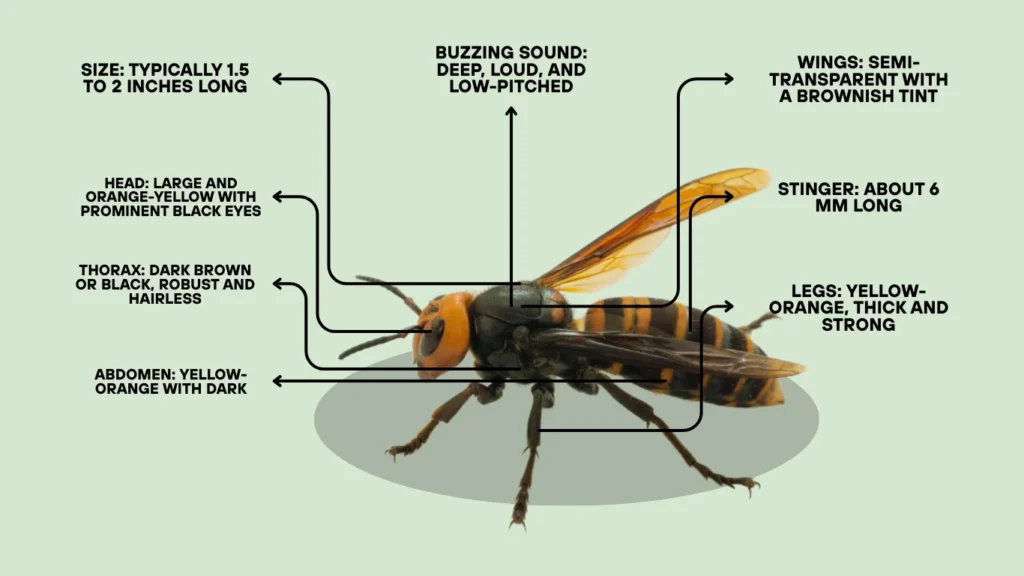
Identifying the Asian Giant Hornet correctly is crucial, especially in regions where invasive sightings may pose risks to local ecosystems or public safety. While its large size is a strong clue, there are several other specific characteristics to help distinguish it from similar species like the European hornet or cicada killer wasp.
Identification :
- Size: Typically 1.5 to 2 inches long; queens can exceed 2 inches
- Head: Large and orange-yellow with prominent black eyes
- Thorax: Dark brown or black, robust and hairless
- Abdomen: Yellow-orange with dark, clearly separated black bands
- Wings: Semi-transparent with a brownish tint, wingspan around 3 inches
- Stinger: About 6 mm long, visible even when not in use
- Legs: Yellow-orange, thick and strong, especially in the front
- Buzzing Sound: Deep, loud, and low-pitched—different from common bees or wasps
- Flight Pattern: Slow and deliberate, often hovering before landing
Distribution and Habitat

The Asian Giant Hornet is native to East and Southeast Asia, including countries like Japan, China, South Korea, and Taiwan. These hornets thrive in low mountain forests and wooded rural areas, where they build nests in the ground or at the base of tree trunks.
In recent years, sightings have been confirmed in parts of North America, especially in Washington State and British Columbia, raising concern about their potential to spread. They prefer warm, humid climates and avoid highly urbanized environments. Their underground nesting habits make them difficult to detect until colonies are well established.
Global Sightings and Invasion
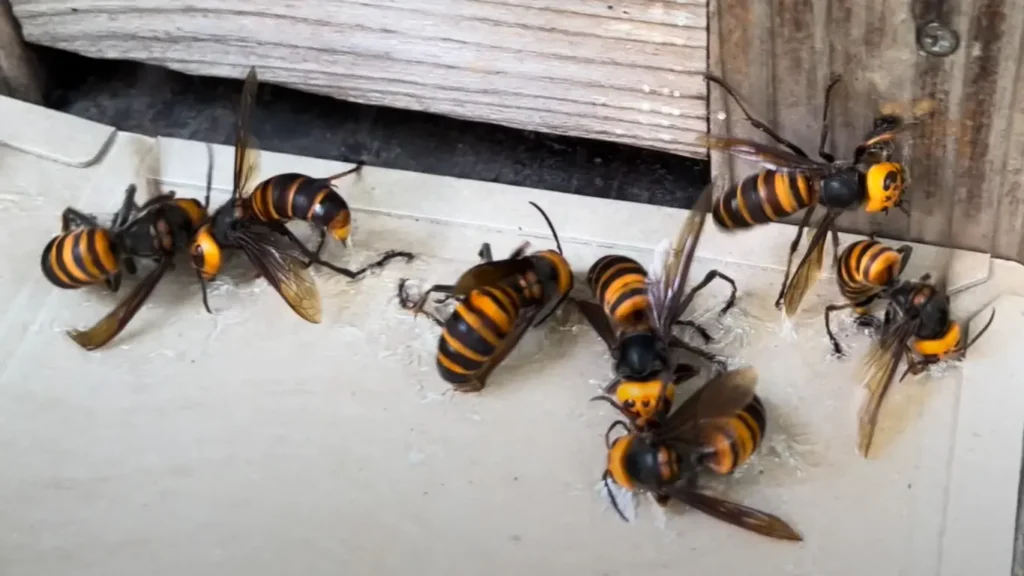
In recent years, the presence of Asian Giant Hornets outside their native range has raised global concerns. Their arrival in North America, particularly the United States and Canada, has led to active monitoring, public alerts, and government-led eradication efforts. These sightings mark a potentially serious invasion that could threaten local pollinator populations and disrupt ecosystems.
First U.S. Sightings and Monitoring
The first confirmed U.S. sighting occurred in late 2019 in Washington State. Shortly after, several dead specimens and active nests were reported near the Canadian border in British Columbia. The Washington State Department of Agriculture (WSDA) quickly launched a tracking and eradication program. These hornets were nicknamed “murder hornets” by the media due to their lethal attacks on honeybee colonies and their painful stings to humans.
Confirmed Locations in North America
- Washington State: Most consistent and verified sightings; active nest removals conducted
- British Columbia, Canada: Several nests located and destroyed since 2019
- Other U.S. States: Unconfirmed or isolated reports in Georgia, Pennsylvania, Texas, New York, and Ohio have circulated online, though many remain unverified
Authorities have set traps and encouraged the public to report sightings. So far, no widespread population has been confirmed outside the Pacific Northwest.
Possible Routes of Introduction
Scientists believe the hornets may have arrived in North America via international shipping routes—possibly in cargo containers from Asia. Once introduced, their ability to establish nests in hidden underground locations made detection difficult.
Invasion Concerns and Impact
The biggest threat posed by these hornets is to native bee populations. Asian Giant Hornets can wipe out entire beehives in hours, decapitating bees and taking their bodies back to feed larvae. This behavior could severely harm already struggling pollinator populations in North America. Invasive presence may also lead to ecosystem imbalances and economic impacts on agriculture.
Nesting Behavior

Asian Giant Hornets are ground-nesting insects, which sets them apart from many other hornet species that build aerial nests. Their nest construction, location, and colony structure are all essential to understanding how they survive and how difficult it can be to manage their presence once established.
Where They Build Nests
These hornets prefer to build their nests in hidden, low-traffic areas such as:
- Abandoned rodent burrows
- Rotting tree roots or stumps
- Underground cavities
- Bases of large trees in forests
- Occasionally, in manmade structures like sheds or compost piles
Because the nests are often concealed underground, spotting them early is very difficult without active tracking efforts.
Nest Structure and Colony Size
The nest is made from chewed wood fibers, forming a papery shell. Inside, it’s organized into horizontal comb layers where the queen lays eggs. Each colony typically includes:
- One queen
- Hundreds of worker hornets
- Dozens of males and new queens during breeding season
A mature nest can house up to 700 individuals by late summer.
Seasonal Nest Cycle
- Spring: A fertilized queen emerges from hibernation and builds a small starter nest
- Summer: The colony grows rapidly as workers take over foraging and nest expansion
- Autumn: New queens and drones are produced and leave to mate
- Winter: The original colony dies off, leaving only the fertilized queens to overwinter
Challenges of Nest Removal
Removing an Asian Giant Hornet nest is dangerous and requires full-body protective suits. Their defensive nature makes them aggressively protect their nest if disturbed. Nests often need to be removed at night when hornets are less active, and specialized vacuum systems are sometimes used to collect live specimens.
Sting and Danger to Humans
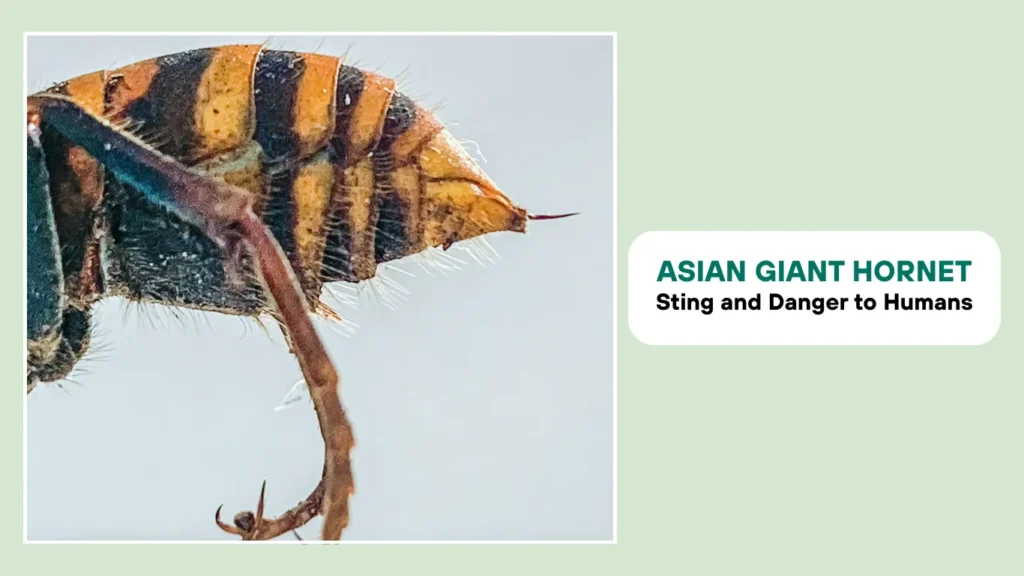
The sting of the Asian Giant Hornet is one of the most painful and potentially dangerous in the insect world. While these hornets are not aggressive toward humans unless provoked, they fiercely defend their nests and can sting repeatedly, injecting a large amount of venom. Understanding the effects of their sting is essential for public awareness and safety.
Sting Power and Venom
Asian Giant Hornets have stingers about 6 mm long, capable of piercing thick clothing and even beekeeping suits. Unlike bees, they do not lose their stinger after attacking, allowing them to sting multiple times. Their venom contains potent neurotoxins and cytolytic peptides that can cause severe pain, tissue damage, and, in rare cases, allergic reactions or organ failure.
Pain and Symptoms
The sting has been described as feeling like “a hot nail being driven into the skin.” Common symptoms include:
- Immediate, intense pain
- Swelling and redness around the sting site
- Heat and throbbing in the affected area
- Itching or burning sensation
- In more serious cases: dizziness, nausea, difficulty breathing, or anaphylaxis
Sting Risks and Fatalities
While most healthy adults recover from a sting with basic treatment, multiple stings or allergic reactions can be life-threatening. In Japan, where these hornets are native, dozens of deaths are reported annually due to multiple stings and delayed treatment.
Treatment and First Aid
If stung:
- Move away from the nest to prevent further attacks
- Clean the area with soap and water
- Apply a cold compress to reduce swelling
- Take antihistamines if needed
- Seek immediate medical help if severe symptoms develop or multiple stings occur
Behavior and Life Cycle
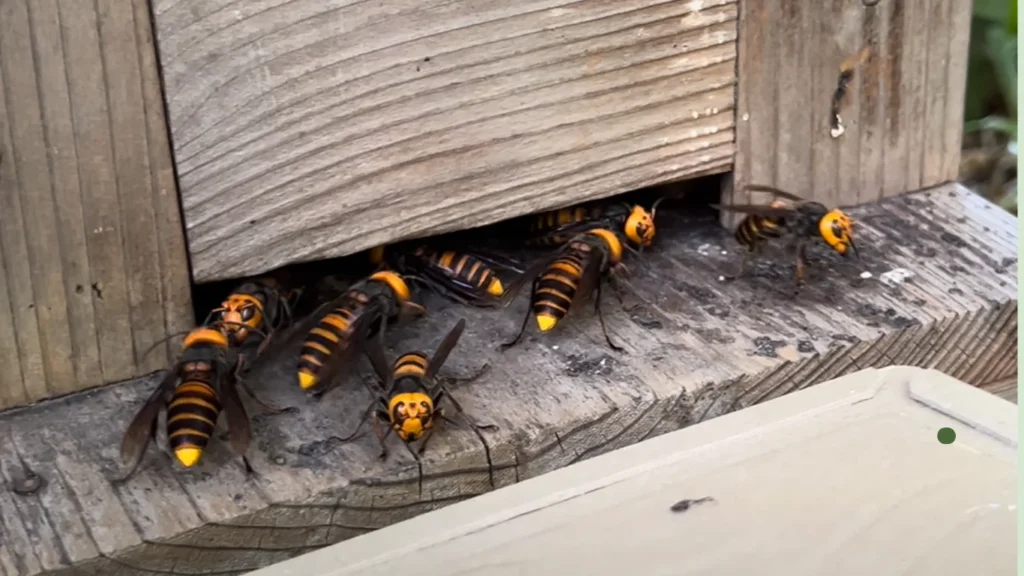
Asian Giant Hornets follow a structured, seasonal life cycle and exhibit highly coordinated behaviors within their colonies. Understanding how they live, breed, and function helps explain both their success as a species and their threat when introduced to new environments.
Seasonal Life Cycle
The life of an Asian Giant Hornet colony is divided into clear phases:
- Spring: A fertilized queen emerges from winter hibernation and starts a new nest, laying the first batch of eggs.
- Summer: The colony grows rapidly. Worker hornets take over foraging, nest-building, and protecting the queen.
- Autumn: The colony reaches peak size. New queens and males are produced for mating.
- Winter: The old colony dies off, and only newly fertilized queens hibernate to start the cycle again.
Colony Roles and Hierarchy
- Queen: The sole egg-layer and center of the colony’s activity.
- Workers: Sterile females responsible for nest maintenance, foraging, and defense.
- Drones (Males): Produced late in the season, their only role is to mate with new queens.
Each hornet knows its role, and the colony works with military-like precision to gather food, expand the nest, and defend its territory.
Foraging and Hunting Behavior
Asian Giant Hornets are aggressive hunters. Workers seek out protein-rich foods like insects, especially bees, to feed their larvae. They can fly up to 60 miles in a single day while foraging and can mark prey colonies with pheromones to direct group attacks.
Defensive Behavior
These hornets defend their nest aggressively. If a human or animal comes too close, they emit warning clicks with their mandibles before launching an attack. Once provoked, they may chase threats for long distances and sting repeatedly.
10 Interesting Facts
Here are 10 fascinating facts about the Asian Giant Hornet that show just how unique and powerful this insect is:
- It’s the largest hornet in the world, with queens growing over 2 inches long and workers reaching up to 1.6 inches.
- The stinger is about 6 mm long, powerful enough to penetrate standard bee suits.
- Its venom contains strong neurotoxins, which can cause extreme pain, tissue damage, and allergic reactions in humans.
- Asian Giant Hornets can fly up to 25 miles per hour, making them swift and efficient hunters.
- A small group can destroy a honeybee hive in hours, killing thousands of bees in what’s called a “slaughter phase.”
- They mark bee colonies with pheromones, allowing others to follow and attack as a group.
- They produce a loud, low buzz, which is noticeably deeper than that of bees or common wasps.
- They make clicking sounds with their mandibles as a warning before attacking.
- Each colony can grow to house up to 700 hornets, especially by late summer.
- Their memory helps them navigate, using landmarks to return to their nest from long distances.
Summary
The Asian Giant Hornet (Vespa mandarinia) is the largest hornet species in the world, known for its powerful sting, aggressive behavior, and devastating impact on honeybee colonies. Native to Asia but recently spotted in North America, this insect has gained widespread attention due to its size, venom, and potential as an invasive species. From its underground nests to its coordinated attacks on prey, the Asian Giant Hornet remains both a biological marvel and an ecological concern worth close monitoring.
