
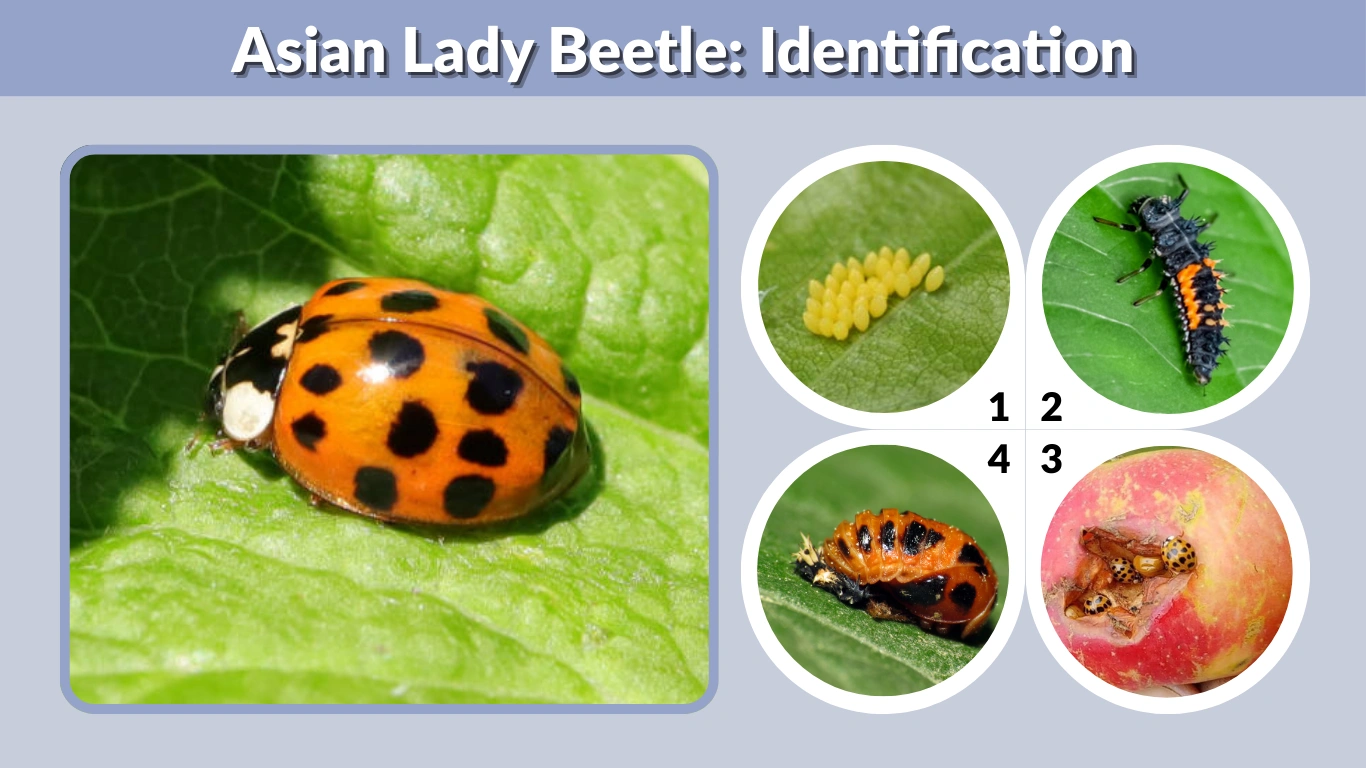
The Asian lady beetle, scientifically known as Harmonia axyridis, is a small but highly noticeable insect found across many parts of the world. Although it closely resembles native ladybugs, this species behaves very differently, especially when it enters homes in large numbers. Originally introduced to control crop pests, it is now considered invasive in many regions. Understanding Asian lady beetle identification, behavior, and life cycle helps people recognize infestations and protect both homes and native insect populations.
What Is an Asian Lady Beetle?
The Asian lady beetle is a beetle species native to East Asia, including China, Japan, and Korea. It was intentionally introduced to North America and Europe as a natural method of controlling aphids and other crop-damaging insects. Over time, it adapted extremely well to new environments and spread rapidly.
Unlike many native ladybugs, Asian lady beetles are aggressive survivors. They reproduce quickly, tolerate cold climates, and compete strongly with local insects for food. This adaptability has allowed them to dominate ecosystems and urban areas alike.
Today, the Asian lady beetle is commonly found in gardens, forests, farms, and residential neighborhoods. During colder months, they frequently move indoors, making them one of the most recognized household beetles in autumn and winter.
Asian Lady Beetle Identification
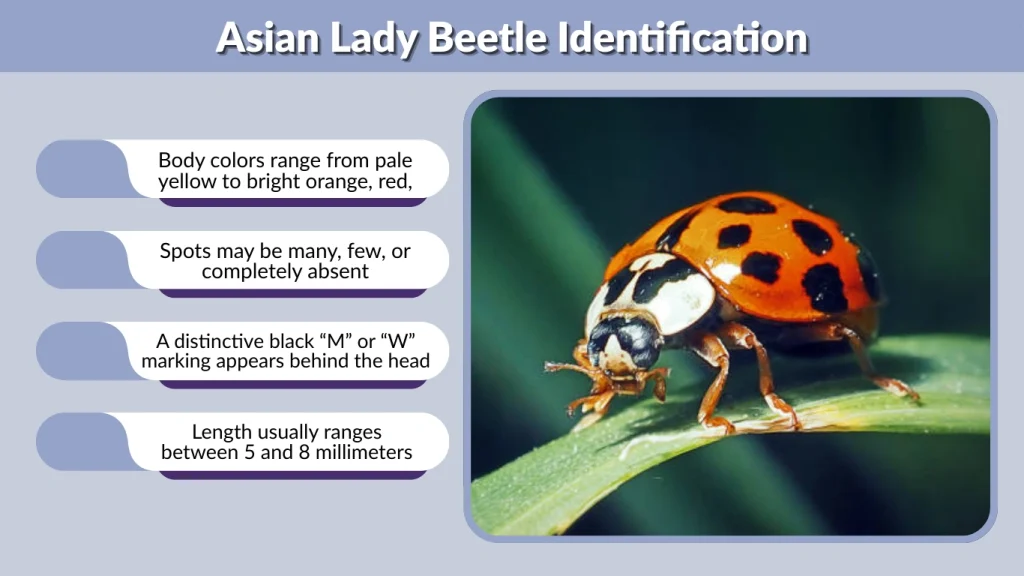
The Asian lady beetle shows wide physical variation, which is one reason people often misidentify it as a harmless ladybug. However, several features make it easier to recognize.
- Body colors range from pale yellow to bright orange, red, or even black
- Spots may be many, few, or completely absent
- A distinctive black “M” or “W” marking appears behind the head
- Oval, dome-shaped body similar to ladybugs but slightly larger
- Length usually ranges between 5 and 8 millimeters
- Legs and underside are often light brown rather than black
These beetles can change slightly in appearance depending on climate and season, which further adds to confusion. The most reliable identification sign remains the dark marking behind the head combined with their tendency to gather in large groups.
Asian Lady Beetle vs Ladybug
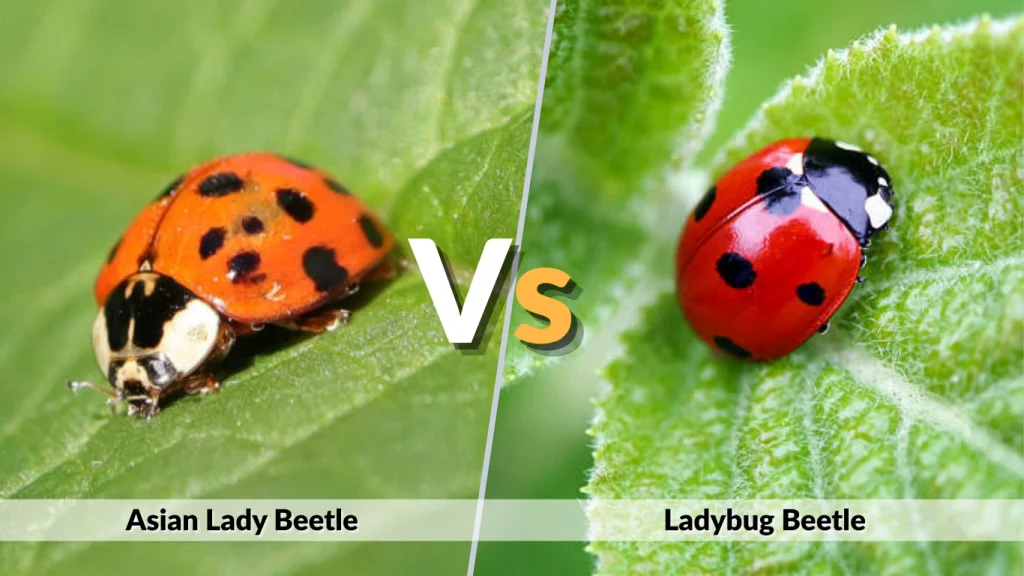
Although they look similar, Asian lady beetles and native ladybugs differ in behavior, impact, and even personality.
Asian Lady Beetle
Asian lady beetles are highly adaptable and often aggressive. They frequently enter houses, cluster on walls, and may bite if handled. Their color patterns vary widely, and they are known to release a yellow defensive fluid when threatened, which can stain surfaces.
They are also considered invasive in many countries because they outcompete native species for food and habitat.
Native Ladybug
Native ladybugs usually live outdoors and rarely infest homes. They are less aggressive, do not swarm inside buildings, and almost never bite people. Their coloring is more consistent, typically red with black spots, and they play a balanced role in local ecosystems.
A side-by-side comparison in the full article can visually highlight these differences and improve identification accuracy.
Habitat and Global Distribution
Asian lady beetles were originally limited to parts of eastern Asia, but today they are established across North America, Europe, South America, and parts of Africa. Their success comes from their ability to live in many environments, from farmland and forests to city parks and residential areas.
Outdoors, they prefer places where aphids and scale insects are abundant. Trees, shrubs, crops, and gardens are common habitats. They are especially active during warm months when food is plentiful.
As temperatures drop, Asian lady beetles seek shelter to survive winter. This is when they become a household problem. They are attracted to light-colored buildings, sun-warmed walls, and small cracks around windows, doors, and roofs. Once inside, they gather in wall spaces, ceilings, and corners, sometimes appearing in large numbers.
Life Cycle of the Asian Lady Beetle
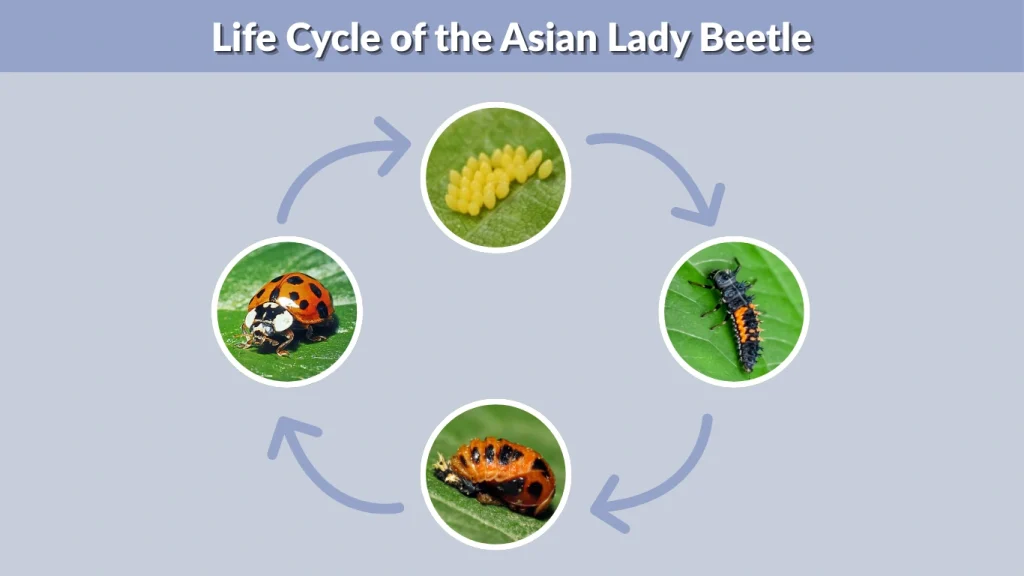
The Asian lady beetle undergoes a complete life cycle with four distinct stages. Each stage supports rapid population growth and survival.
- Egg stage: Females lay clusters of yellow eggs on leaves near aphid colonies.
- Larval stage: Larvae are elongated, dark, and covered with small spikes. They are active hunters and consume large numbers of pests.
- Pupal stage: The larva attaches to a surface and transforms inside a protective casing.
- Adult stage: Fully developed beetles emerge, capable of flying, feeding, and reproducing.
- Seasonal cycle: Multiple generations can occur each year, especially in warm regions.
- Lifespan: Adults may live several months, with many surviving through winter indoors.
This fast and efficient life cycle is a major reason Asian lady beetles spread so successfully and become difficult to control once established.
Diet and Feeding Behavior

Asian lady beetles are primarily predatory insects. Their main food sources include aphids, scale insects, mites, and other soft-bodied pests. Because of this, they were originally introduced as a natural form of agricultural pest control and are still considered beneficial to farmers.
However, when natural prey becomes scarce, Asian lady beetles turn to alternative food sources. They may feed on fruit juices, damaged crops, pollen, nectar, and even the eggs and larvae of other beneficial insects. This opportunistic feeding habit contributes to their invasive success and negatively affects native ladybug populations.
Indoors, Asian lady beetles usually do not reproduce or feed heavily, but they may survive on moisture, crumbs, or sugary residues. Their presence inside homes is mainly for shelter rather than food.
Behavior and Seasonal Activity
Outdoor Behavior
During spring and summer, Asian lady beetles are active hunters. They spend most of their time on plants, trees, and crops where pests are abundant. They are strong fliers and can travel long distances to locate food. When threatened, they release a yellow defensive fluid that smells unpleasant and can deter predators.
They also show grouping behavior, especially in late summer when they begin preparing for colder conditions.
Indoor Behavior
In autumn, Asian lady beetles search for warm, protected places to overwinter. Homes, apartment buildings, and offices become ideal shelters. They are attracted to sun-exposed walls and often enter through cracks, vents, and gaps around windows and doors.
Once inside, they cluster in wall voids, ceilings, and corners. On warmer winter days, they may become active and appear indoors, confusing homeowners who believe new insects are entering.
Do Asian Lady Beetles Bite Humans?
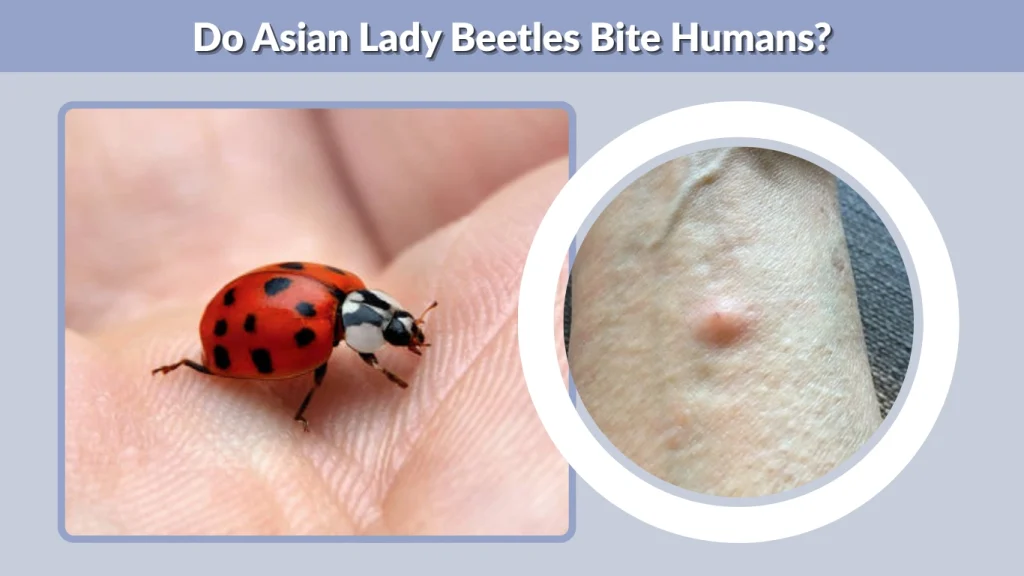
Asian lady beetles are not aggressive toward humans, but they can bite if handled or trapped against skin. Their bite is usually mild, often described as a small pinch or prick. In most cases, it does not break the skin.
Some people experience allergic reactions, including redness, swelling, itchy eyes, or respiratory irritation. The yellow fluid they release as a defense can also stain fabrics and walls and may cause skin irritation in sensitive individuals.
Bites are most common during indoor infestations when beetles come into frequent contact with people.
Asian Lady Beetle Infestation Signs
Large numbers of Asian lady beetles usually indicate an overwintering infestation.
- Groups of beetles around windows and doors
- Clusters on ceilings, walls, and light fixtures
- Yellow stains or streaks on surfaces
- Strong odor when beetles are disturbed
- Recurring appearance every fall and winter
Infestations often return to the same buildings year after year because the beetles release chemical signals that attract others to previously used shelter sites.
How to Get Rid of Asian Lady Beetles
Managing Asian lady beetles focuses more on prevention than extermination.
- Seal cracks, gaps, and openings around doors, windows, and roofs
- Repair damaged screens and install door sweeps
- Use a vacuum to safely remove beetles indoors
- Release captured beetles outside far from buildings
- Reduce outdoor lighting near entrances
- Apply exterior sealants and preventive treatments
Chemical sprays are usually not recommended indoors because they provide limited benefit and may harm other organisms.
Ecological Impact and Invasive Status
Although Asian lady beetles help control crop pests, they also create serious ecological problems. They compete directly with native ladybugs for food and habitat, often reducing local populations. They are known to eat the eggs and larvae of other beneficial insects.
Their dominance can disrupt natural predator-prey relationships and reduce biodiversity. For these reasons, many scientists classify the Asian lady beetle as an invasive species that requires long-term population management.
Asian Lady Beetle Facts and Myths
Many people believe Asian lady beetles are simply “orange ladybugs,” but this is inaccurate. They are a distinct species with different behavior, survival strategies, and ecological effects.
Another myth is that they are dangerous. While they can bite and cause allergic reactions, they are not poisonous and do not spread disease. An interesting fact is that their extreme color variation helps them survive in different environments and confuses predators.
FAQs
Are Asian lady beetles harmful to humans?
Asian lady beetles are not dangerous, but they can bite if handled. Their bites usually cause mild discomfort rather than injury. Some people experience allergic reactions, including itchy skin, eye irritation, or breathing sensitivity. They can also release a yellow fluid that stains surfaces and irritates skin.
Why do Asian lady beetles come into houses?
Asian lady beetles enter houses to survive winter. They search for warm, dry, and protected places when outdoor temperatures drop. Sun-exposed walls attract them, and they slip inside through cracks and gaps, where they gather in wall spaces until spring arrives.
How can I tell an Asian lady beetle from a ladybug?
Asian lady beetles often have a black “M” or “W” marking behind the head and show wide color variation. They also tend to invade homes in large groups. Native ladybugs usually have more consistent coloring and rarely enter buildings.
Do Asian lady beetles really bite?
Yes, Asian lady beetles can bite, especially when trapped against skin. The bite feels like a small pinch and rarely breaks the skin. It is usually harmless but may cause mild redness or irritation in sensitive individuals.
What is the best way to prevent Asian lady beetles?
The best prevention method is sealing entry points before autumn. Caulking cracks, repairing screens, and installing door sweeps greatly reduce infestations. Keeping exterior walls maintained and minimizing light near entrances also helps discourage beetles from gathering.
