
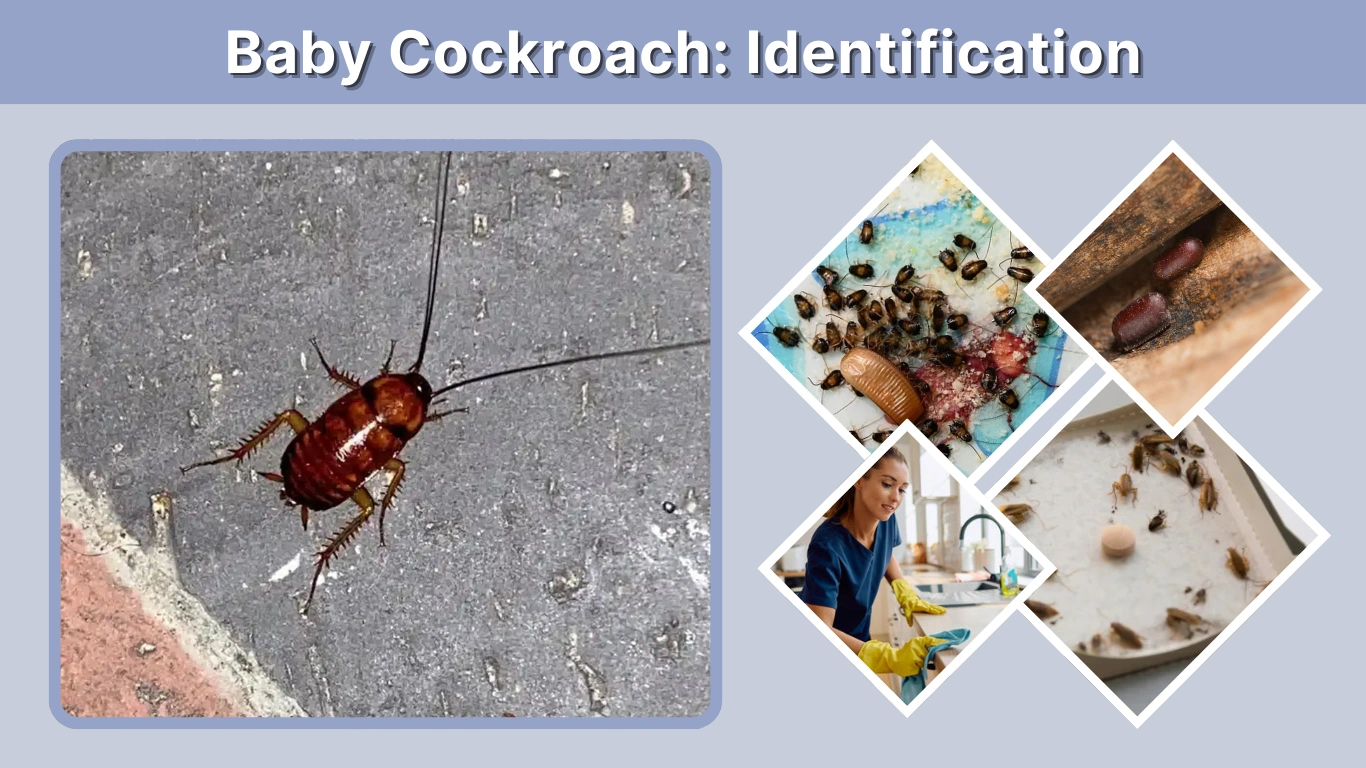
Cockroaches are one of the most common household pests, and spotting a baby cockroach can be alarming. Many people don’t realize that these tiny insects are actually young cockroaches called nymphs. Even though they are small, their presence often indicates a larger infestation nearby. Understanding how baby cockroaches look, where they come from, and how they grow can help homeowners take early action and prevent serious pest problems inside the house.
What Is a Baby Cockroach?
A baby cockroach is the immature stage of a cockroach, scientifically known as a cockroach nymph. Unlike many insects that go through a larval stage, cockroaches develop through gradual growth. After hatching from an egg, the young cockroach looks similar to the adult but is smaller and lacks wings.
Cockroach nymphs grow by molting, which means they shed their outer shell several times as they mature. Each molt allows the baby cockroach to grow larger until it eventually becomes a fully developed adult.
Some key characteristics of baby cockroaches include:
- Small and wingless bodies
- Light-colored shell just after hatching
- Gradual darkening as they grow
- Rapid movement similar to adult roaches
Because they resemble adult cockroaches in shape, many people mistake them for small versions of the same insect. However, their size and lack of wings are the main differences.
What Does a Baby Cockroach Look Like?
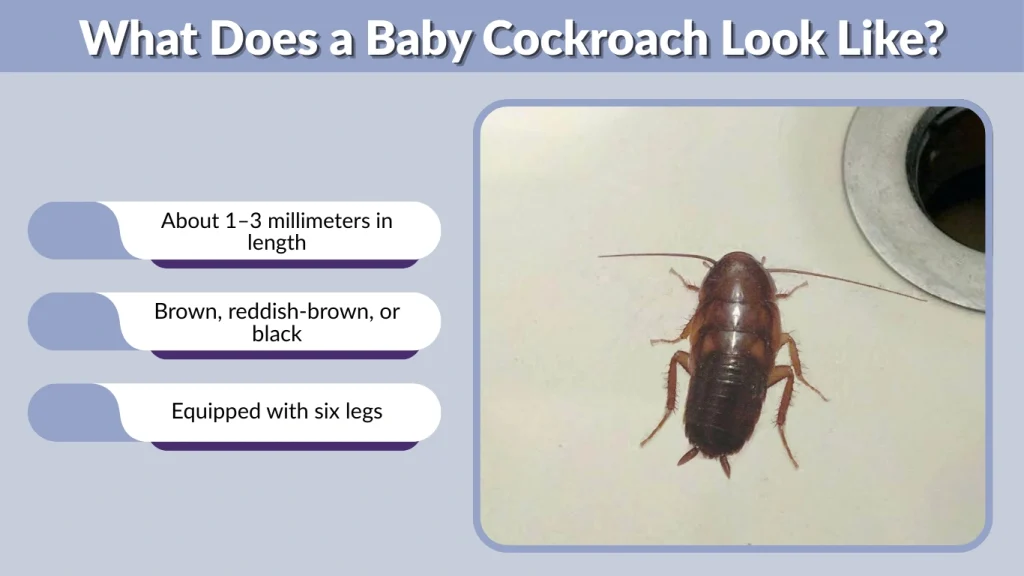
Identifying a baby cockroach can help determine whether you are dealing with a possible infestation. Although the exact appearance varies by species, most baby cockroaches share several common features.
Size of Baby Cockroaches
Baby cockroaches are extremely small when they first hatch. In many species, they measure about 1–3 millimeters in length, which is roughly the size of a grain of rice or smaller.
As they grow and molt, they gradually increase in size. By the final nymph stage, they may be almost as large as adult cockroaches.
Color and Body Shape
Newly hatched cockroach nymphs are often white or very light in color. This pale color occurs because their outer shell has not yet hardened.
Within a few hours, their body darkens into shades of brown, reddish-brown, or black, depending on the species.
Their body shape is:
- Oval and flat
- Equipped with six legs
- Long antennae
- Fast-moving
This flat body allows them to hide easily in narrow cracks and crevices.
Baby Cockroach vs Adult Cockroach
Although they look similar, there are several differences between baby and adult cockroaches.
Baby cockroaches:
- Smaller body size
- No wings
- Lighter color in early stages
Adult cockroaches:
- Larger body
- Fully developed wings in many species
- Darker and harder outer shell
These differences make it easier to identify the stage of the insect if you spot one inside your home.
Cockroach Life Cycle
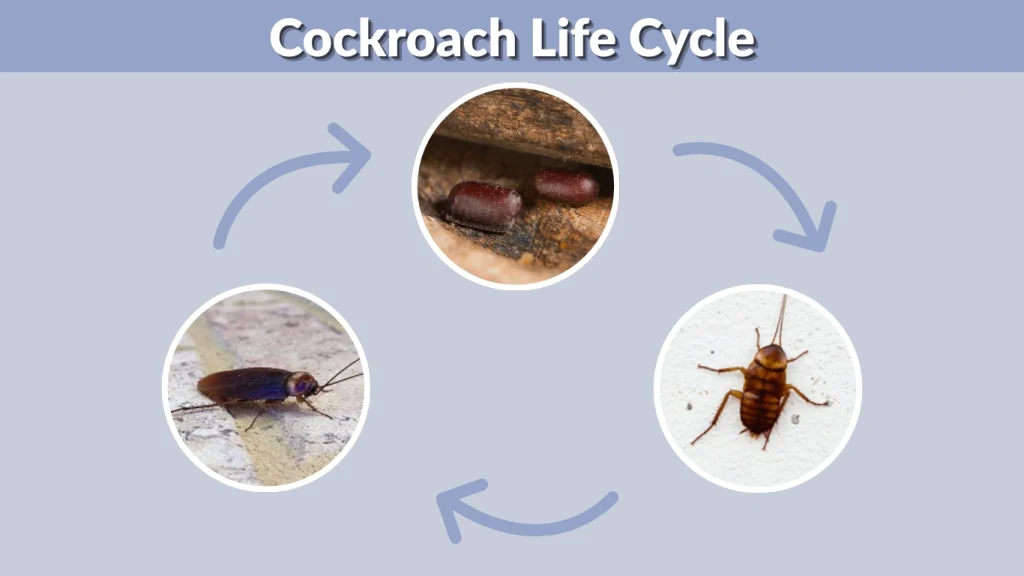
Understanding the cockroach life cycle helps explain why seeing baby cockroaches may indicate a larger problem.
Cockroaches develop through three main stages: egg, nymph, and adult.
Egg Stage
Female cockroaches produce eggs inside a protective capsule called an ootheca. This egg case can contain 10 to 50 eggs, depending on the species.
Some cockroaches carry the egg case until it is ready to hatch, while others hide it in safe places such as:
- Cracks in walls
- Behind furniture
- Inside kitchen cabinets
- Near food sources
The eggs typically hatch within a few weeks.
Nymph Stage
Once the eggs hatch, baby cockroaches enter the nymph stage. During this phase, they grow through multiple molts.
Each time the nymph sheds its exoskeleton, it becomes slightly larger and more developed. This process may occur five to ten times before the insect reaches adulthood.
The nymph stage can last from several weeks to several months, depending on the species and environmental conditions.
Adult Stage
When the cockroach reaches adulthood, it becomes capable of reproduction. Adult cockroaches can live for several months and produce multiple egg cases during their lifetime.
This rapid reproduction is the main reason cockroach infestations can grow quickly if not controlled early.
Why Do You See Baby Cockroaches in Your House?
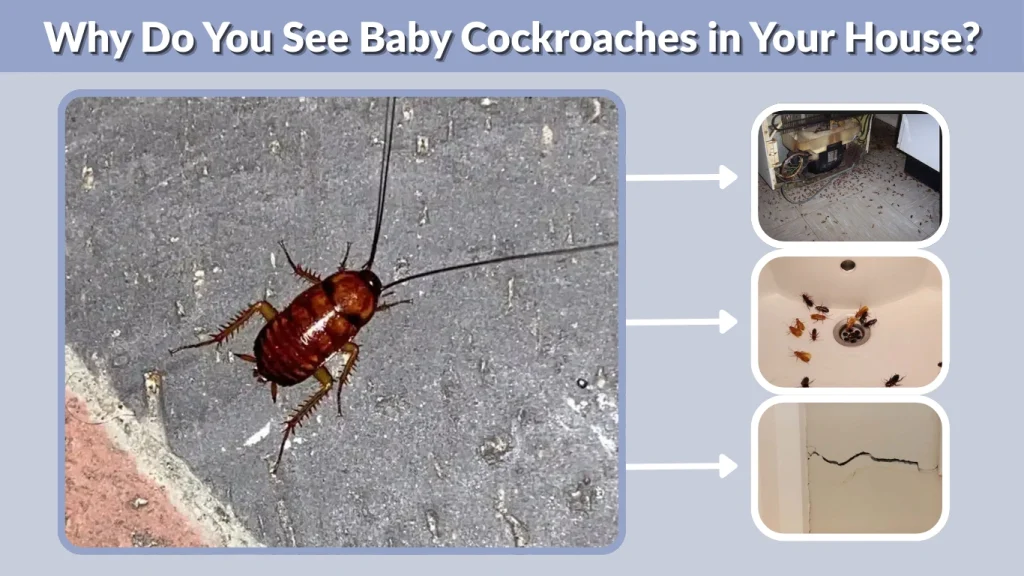
Seeing a baby cockroach inside your home is usually a warning sign. Unlike adult cockroaches that may wander in from outside, baby cockroaches often indicate that a nest is located nearby.
There are several reasons why cockroaches may thrive in your home.
Hidden Nest Nearby
If you frequently see baby cockroaches, it likely means that eggs have hatched somewhere inside your house. Common nesting areas include:
- Behind refrigerators
- Under sinks
- Inside wall cracks
- Behind kitchen cabinets
Cockroaches prefer dark, warm environments where they can remain hidden.
Food and Moisture Sources
Cockroaches are attracted to homes that provide easy access to food and water. Even small crumbs or spills can attract them.
Common sources include:
- Food crumbs on kitchen floors
- Uncovered trash bins
- Pet food left out overnight
- Leaking pipes or damp areas
These resources allow cockroaches to survive and reproduce quickly.
Are Baby Cockroaches Dangerous?
Although baby cockroaches are small, they can still pose health risks. Like adult cockroaches, nymphs often crawl through dirty areas such as drains, garbage bins, and sewage systems. When they move across kitchen counters or food surfaces, they can transfer bacteria and other harmful microorganisms.
Some common health concerns associated with cockroaches include:
- Food contamination – Cockroaches can carry bacteria such as Salmonella and E. coli.
- Allergies – Their droppings, saliva, and shed skins may trigger allergic reactions.
- Asthma problems – Cockroach allergens are known to worsen asthma, especially in children.
Even though baby cockroaches are less likely to bite humans, their presence in large numbers can still create an unhealthy environment inside the home.
Signs of a Baby Cockroach Infestation
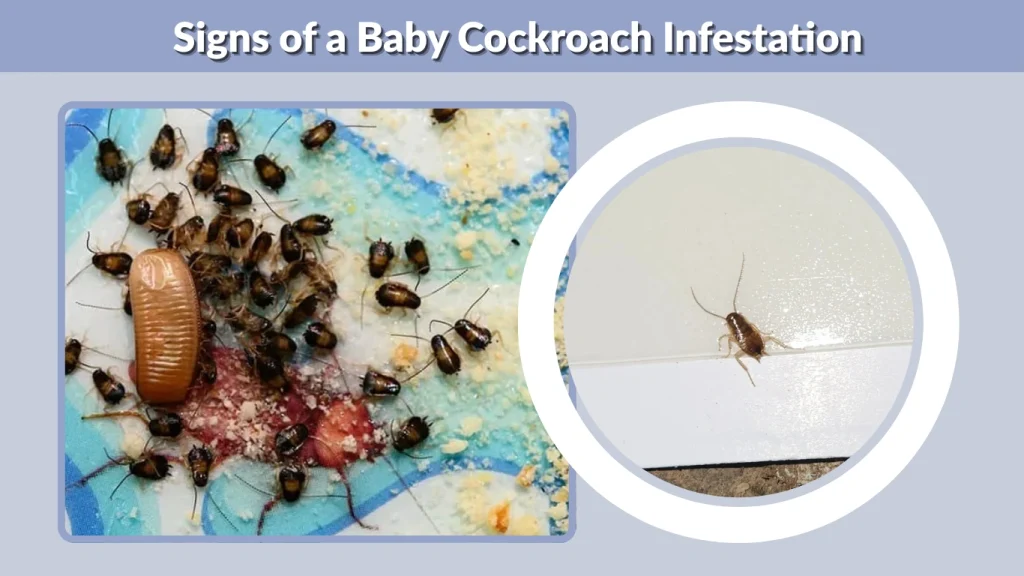
Seeing a single cockroach may not always mean there is a serious problem. However, spotting multiple baby cockroaches often indicates that a colony is living somewhere nearby.
Here are some common signs of a cockroach infestation:
Frequent Sightings of Small Roaches
If you regularly notice tiny cockroaches in your kitchen, bathroom, or other rooms, it usually means eggs have recently hatched nearby. Baby cockroaches often stay close to their nesting area.
Cockroach Egg Cases
Cockroach egg capsules, known as oothecae, may be found in hidden places around the home. These cases are small, brown, and oval-shaped. Finding one of these egg cases is a strong indication that cockroaches are reproducing in your house.
Droppings and Smell
Cockroach droppings look like small black specks or coffee grounds. In larger infestations, cockroaches may also produce a musty or oily odor that becomes noticeable over time.
Shed Skins
As baby cockroaches grow, they shed their outer shell during the molting process. Finding these discarded skins in cupboards, drawers, or behind appliances can be another sign of an infestation.
How to Get Rid of Baby Cockroaches
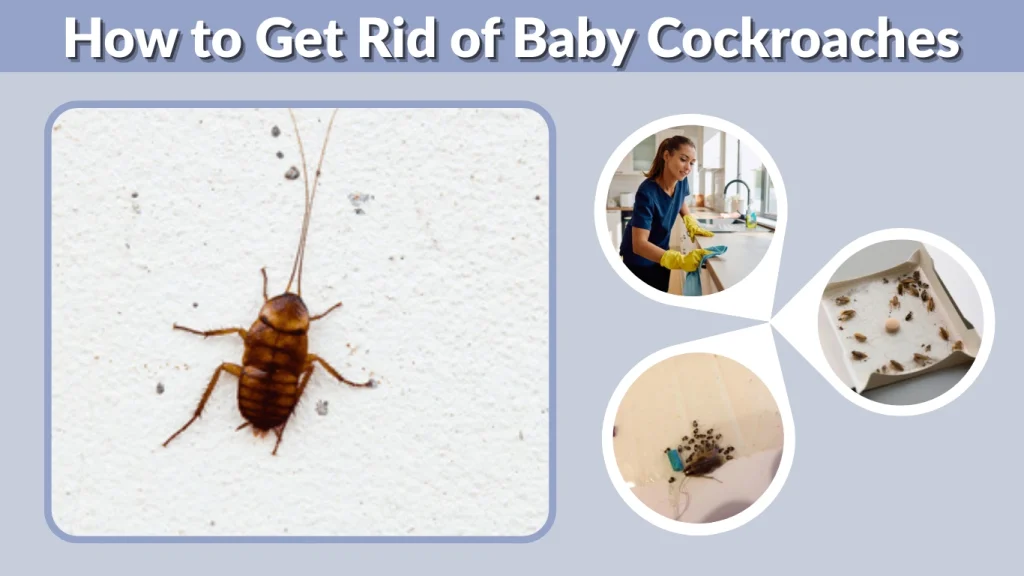
Eliminating baby cockroaches requires a combination of cleaning, prevention, and pest control methods. Acting quickly is important because cockroaches reproduce rapidly.
Clean Your Home Thoroughly
Keeping your home clean removes the food sources that attract cockroaches.
Important cleaning steps include:
- Sweeping and vacuuming floors regularly
- Wiping kitchen counters after cooking
- Storing food in sealed containers
- Taking out the trash frequently
A clean environment makes it harder for cockroaches to survive.
Use Roach Baits and Traps
Cockroach baits and traps are effective tools for controlling infestations.
Common options include:
- Gel bait placed in cracks and corners
- Sticky traps that capture roaming roaches
- Bait stations that attract and poison cockroaches
These products help reduce the population by targeting both adult cockroaches and nymphs.
Seal Entry Points
Cockroaches often enter homes through small gaps and cracks. Sealing these openings can prevent new pests from entering.
Check areas such as:
- Wall cracks
- Spaces around pipes
- Gaps around windows and doors
- Baseboards and cabinets
Using caulk or sealant can block many of these entry points.
Call Professional Pest Control
If the infestation becomes severe, professional pest control services may be necessary. Experts can locate hidden nests and apply treatments that eliminate cockroaches more effectively.
Professional treatments may include specialized baits, insect growth regulators, and safe chemical applications.
How to Prevent Baby Cockroaches
Prevention is the best long-term solution for keeping cockroaches out of your home. By reducing food, water, and hiding places, you can make your home less attractive to these pests.
Some effective prevention tips include:
- Clean kitchen surfaces daily
- Store dry foods in airtight containers
- Fix leaking pipes or faucets
- Avoid leaving dirty dishes overnight
- Declutter storage areas where cockroaches may hide
Regular home maintenance can significantly reduce the chances of a cockroach infestation.
FAQs
What is a baby cockroach called?
A baby cockroach is called a nymph. It is the immature stage of a cockroach that develops into an adult through several molting stages.
How small are baby cockroaches?
Most newly hatched cockroaches measure around 1–3 millimeters long, though the size can vary depending on the species.
Do baby cockroaches bite humans?
Cockroaches rarely bite humans. Baby cockroaches are more likely to hide and avoid contact with people.
Does seeing baby cockroaches mean an infestation?
In many cases, yes. Seeing multiple baby cockroaches usually indicates that eggs have hatched nearby and a nest may be present inside the home.
Conclusion
Baby cockroaches may appear small and harmless, but they are often a warning sign of a larger pest problem. These tiny insects, known as nymphs, grow rapidly and can quickly turn into a full infestation if left untreated. Learning how to identify baby cockroaches, understanding their life cycle, and taking immediate action can help protect your home from these persistent pests. By maintaining cleanliness and sealing potential entry points, homeowners can greatly reduce the chances of cockroach problems in the future.
