
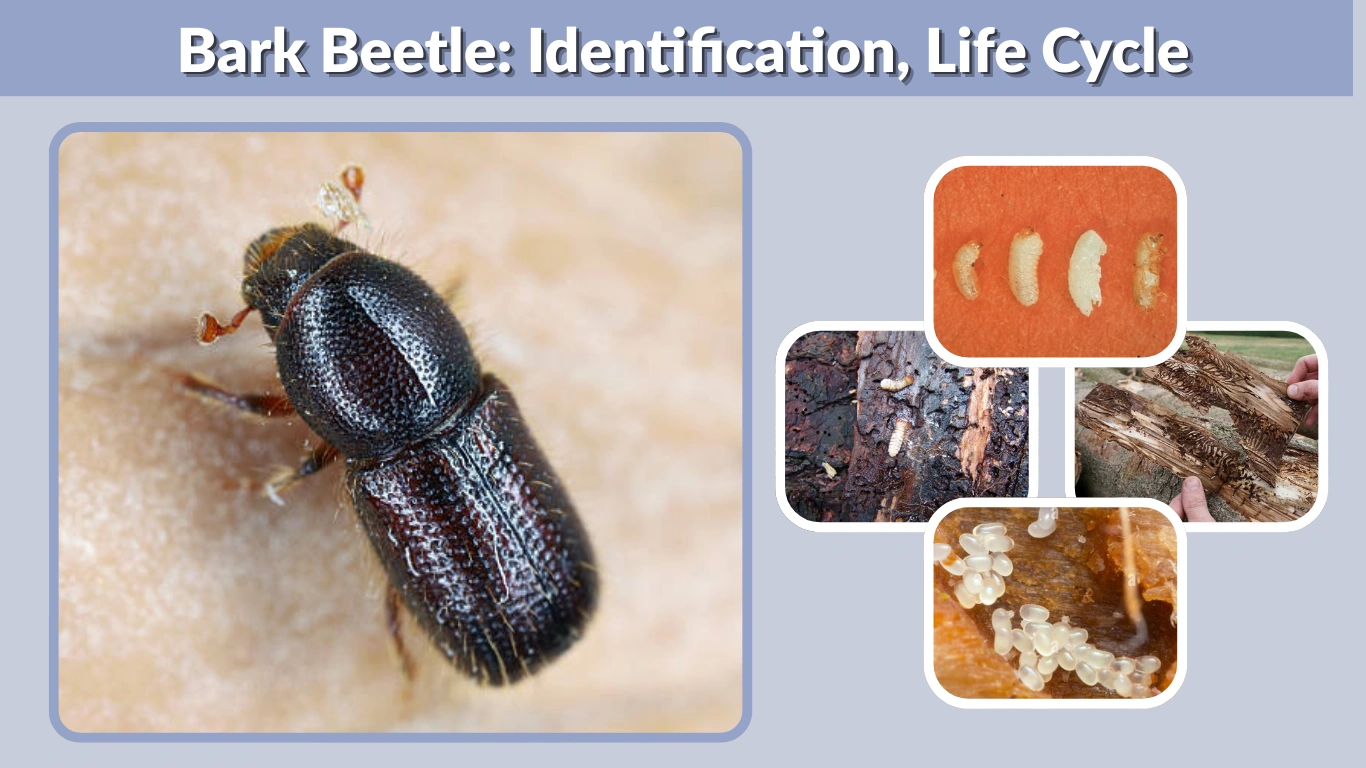
Bark beetles are small wood-boring insects that live and reproduce under the bark of trees. Although tiny in size, they can cause significant damage to forests, landscapes, and timber industries. These beetles belong to a group of insects that attack weakened or stressed trees, sometimes killing them completely. Understanding bark beetle identification, life cycle, infestation signs, and potential damage can help homeowners and forest managers detect problems early and protect trees from severe outbreaks.
What Is a Bark Beetle?
A bark beetle is a small insect that belongs to the Curculionidae family, specifically the Scolytinae subfamily. These beetles are closely related to weevils and are known for their ability to bore into tree bark. Once inside, they create tunnels where they feed, reproduce, and develop.
Bark beetles are commonly found in forests and wooded areas around the world. While many species play an important ecological role by helping decompose dead or dying trees, some species attack healthy trees and cause widespread damage during large infestations.
Scientific Classification
Bark beetles are classified as follows:
- Kingdom: Animalia
- Phylum: Arthropoda
- Class: Insecta
- Order: Coleoptera
- Family: Curculionidae
- Subfamily: Scolytinae
There are more than 6,000 species of bark beetles worldwide. Different species often specialize in attacking particular types of trees, such as pine, spruce, or fir.
General Characteristics
Despite their destructive reputation, bark beetles are extremely small insects. Most species measure only 2–8 millimeters in length. Because of their size, they often go unnoticed until the damage to trees becomes visible.
Common characteristics of bark beetles include:
- Small cylindrical bodies
- Dark brown or black coloration
- Short legs and compact shape
- Strong mouthparts used for boring into wood
These beetles spend most of their lives hidden beneath the bark of trees, which helps protect them from predators and environmental conditions.
Bark Beetle Identification
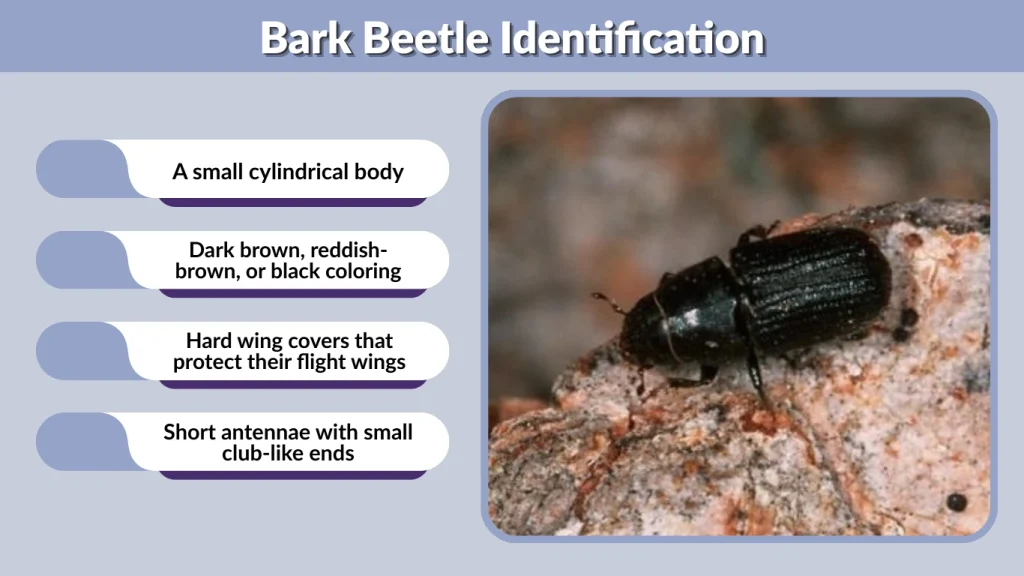
Correctly identifying bark beetles is important for managing potential infestations. Although the beetles themselves are small and difficult to see, their presence often leaves clear signs on affected trees.
Physical Appearance
Bark beetles have a distinct appearance compared to many other beetles.
Typical features include:
- A small cylindrical body
- Dark brown, reddish-brown, or black coloring
- Hard wing covers that protect their flight wings
- Short antennae with small club-like ends
Because of their small size, bark beetles are rarely noticed individually. Instead, they are usually identified by the damage they cause to tree bark and wood.
Signs of Bark Beetles on Trees
Even if the beetles themselves are not visible, trees often show clear warning signs when bark beetles are present.
Common signs include:
- Small round holes in the bark, where adult beetles enter or exit
- Fine sawdust-like material, called frass, around the base of the tree or in bark crevices
- Resin or sap tubes forming on the bark surface
- Yellowing or browning leaves or needles
As the infestation becomes more severe, branches may die and the entire tree may begin to decline.
Common Bark Beetle Species
Several bark beetle species are known for causing significant damage to forests and landscapes.
Mountain Pine Beetle
The mountain pine beetle is one of the most destructive bark beetle species in North America. It mainly attacks pine trees and has caused widespread forest damage in many regions.
Southern Pine Beetle
This species is commonly found in the southeastern United States and is known for rapidly killing large numbers of pine trees during outbreaks.
Spruce Bark Beetle
Spruce bark beetles attack spruce trees and can cause severe damage in forests where these trees dominate.
Bark Beetle Life Cycle
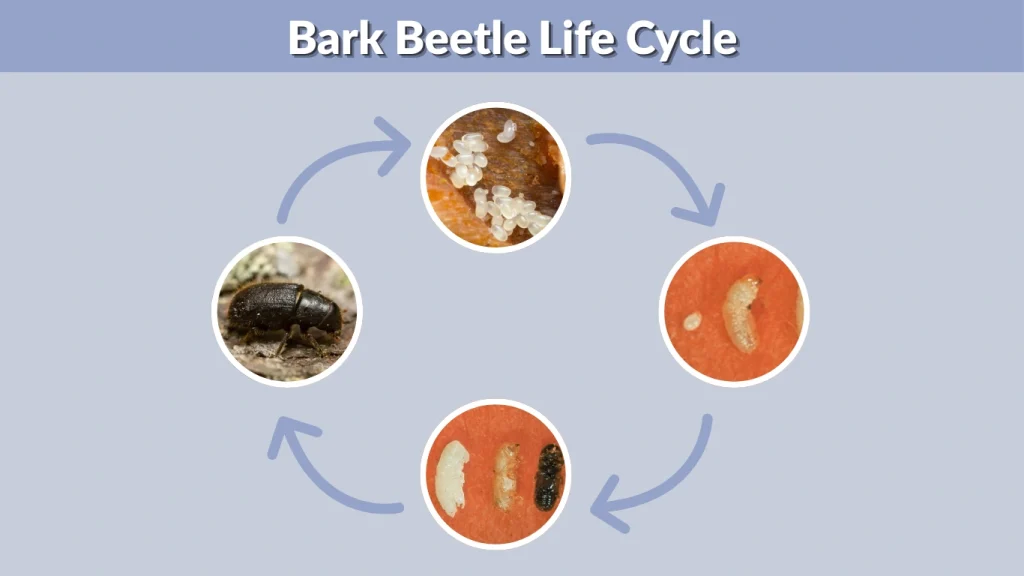
Bark beetles go through a process called complete metamorphosis, which includes four life stages: egg, larva, pupa, and adult. Most of these stages occur beneath the bark of trees.
Egg Stage
The bark beetle life cycle begins when a female beetle bores through the outer bark of a tree. Once inside, she creates a tunnel known as a gallery. Within this gallery, she lays small eggs along the sides of the tunnel.
These eggs are tiny and difficult to see. Depending on the temperature and environmental conditions, they usually hatch within one to two weeks.
Larval Stage
After the eggs hatch, the larvae emerge and begin feeding on the inner bark of the tree. The larvae are small, legless, and typically white or cream-colored.
As they feed, the larvae create branching tunnels that extend away from the main gallery created by the adult beetle. These tunnels disrupt the tree’s ability to transport nutrients and water.
The larval stage is when the most damage to the tree occurs, as large numbers of larvae feeding under the bark can severely weaken or kill the tree.
Pupa Stage
After completing the larval stage, bark beetle larvae enter the pupa stage, which is the transformation stage between larva and adult. At this point, the larvae stop feeding and prepare to develop into mature beetles.
The pupation process usually takes place within chambers under the bark, inside the tunnels that the larvae previously created. During this stage, the insect’s body undergoes major internal changes as adult features such as wings, legs, and antennae form.
The pupa is typically white or cream-colored and remains mostly inactive. Depending on environmental conditions like temperature and humidity, this stage usually lasts one to two weeks before the adult beetle emerges.
Adult Stage
Once the pupal development is complete, the adult bark beetle emerges. Newly formed adults may appear slightly lighter in color at first, but they soon darken as their outer shell hardens.
Adult beetles chew small exit holes through the bark and leave the tree to find new host trees. During this stage, the beetles focus mainly on reproduction and spreading the infestation.
Adult bark beetles are capable of flying short distances to locate nearby trees. Many species also release chemical signals called pheromones to attract other beetles to the same tree, which can quickly lead to large infestations.
Bark Beetle Infestation
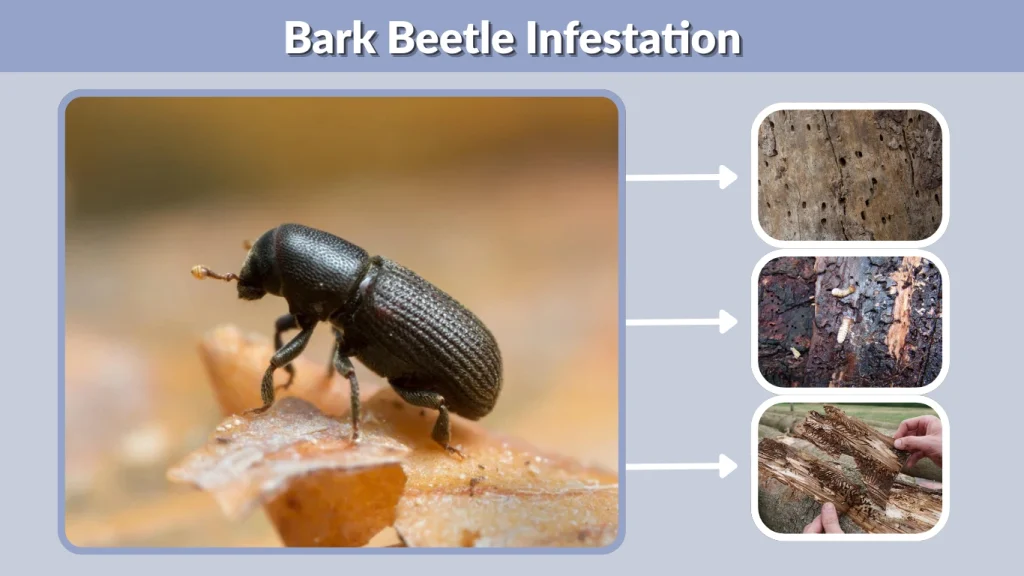
A bark beetle infestation occurs when large numbers of beetles attack a tree or group of trees. While a healthy tree can sometimes defend itself, stressed or weakened trees are more vulnerable to beetle attacks.
How Bark Beetles Attack Trees
Adult bark beetles begin an infestation by boring through the bark of a tree. Once inside, they create tunnels and lay eggs beneath the bark. As the larvae grow and feed, they damage the inner bark layer responsible for transporting water and nutrients.
When enough beetles attack a tree at the same time, the tree’s defenses can be overwhelmed, leading to severe damage or death.
Conditions That Increase Infestations
Certain environmental conditions can make trees more susceptible to bark beetle infestations.
These conditions include:
- Drought stress, which weakens trees
- Overcrowded forests, where trees compete for resources
- Storm damage, which creates wounded trees
- Old or unhealthy trees
When these conditions occur, bark beetle populations can grow rapidly and spread across large forest areas.
Signs of a Bark Beetle Infestation
Detecting an infestation early can help prevent severe damage. Some common warning signs include:
- Small holes in tree bark
- Sawdust-like powder near the trunk base
- Resin or pitch tubes on the bark
- Yellowing or browning needles or leaves
- Peeling or falling bark
If these signs appear on multiple trees in an area, it may indicate a developing beetle outbreak.
Bark Beetle Damage
Bark beetles can cause significant damage to individual trees as well as entire forests. The main damage occurs when larvae feed under the bark and interrupt the tree’s internal transport system.
Damage to Individual Trees
Inside the tree, bark beetle larvae create networks of tunnels that cut through the phloem layer, which is responsible for moving nutrients throughout the tree.
This damage can result in:
- Reduced nutrient flow
- Weakening of the tree
- Gradual decline in tree health
- Eventual tree death
In many cases, heavily infested trees cannot recover.
Large-Scale Forest Damage
During large outbreaks, bark beetles can kill millions of trees across vast forest areas. These outbreaks can have serious economic consequences for the timber industry and forestry operations.
Large-scale tree loss can also impact wildlife habitats and forest ecosystems.
Environmental Impact
Bark beetle damage can also affect the environment in several ways.
For example:
- Dead trees increase the risk of forest fires
- Changes in forest structure may affect wildlife habitats
- Large areas of dead trees can alter ecosystem balance
Because of these impacts, bark beetle outbreaks are closely monitored by forest management agencies.
Bark Beetle Treatment and Control
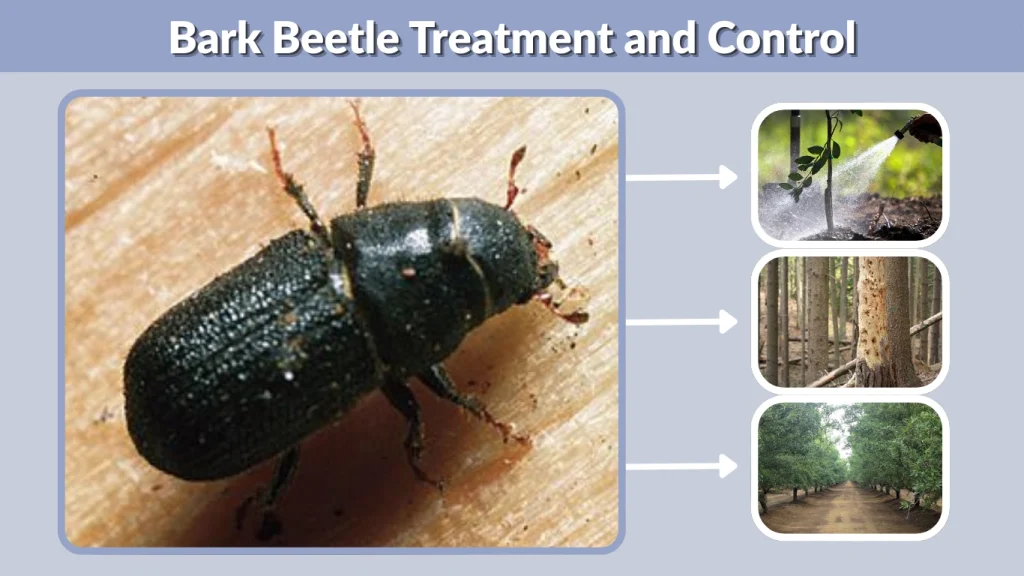
Managing bark beetle populations requires a combination of preventive measures, monitoring, and treatment methods. Early detection is often the key to protecting trees.
Preventive Measures
Keeping trees healthy is one of the best ways to prevent bark beetle infestations. Strong trees are better able to defend themselves against beetle attacks.
Important prevention methods include:
- Proper watering during dry periods
- Avoiding damage to tree bark
- Removing weakened or diseased trees
- Maintaining adequate spacing between trees
These steps help reduce stress on trees and lower the chances of beetle attacks.
Chemical Treatments
In some situations, insecticides may be used to protect valuable trees. These treatments are typically applied to the outer bark to prevent beetles from entering the tree.
Chemical treatments are usually used for:
- High-value landscape trees
- Early infestation control
- Preventive protection in high-risk areas
Professional pest management services are often recommended when chemical treatments are needed.
Forest Management Strategies
In forest environments, bark beetle control may involve larger-scale management practices.
These may include:
- Removing and destroying heavily infested trees
- Thinning forests to improve tree health
- Monitoring beetle populations
These strategies help slow the spread of beetles and protect healthy trees from future infestations.
Interesting Bark Beetle Facts
Bark beetles are small insects, but they have several interesting characteristics.
- There are over 6,000 species of bark beetles worldwide.
- Many species attack only specific types of trees.
- Bark beetles communicate using chemical pheromones to attract others.
- Some beetles carry fungi that help weaken the trees they attack.
- Large outbreaks can destroy millions of trees in forests.
Despite their destructive potential, bark beetles also play an important role in nature by helping break down dead trees and recycle nutrients in forest ecosystems.
FAQs
What is a bark beetle?
A bark beetle is a small wood-boring insect that lives and reproduces under the bark of trees. They belong to the beetle subfamily Scolytinae and are known for attacking and sometimes killing trees.
How do you identify bark beetles?
Bark beetles are very small and cylindrical in shape. Signs of their presence include small holes in tree bark, sawdust-like powder, and resin tubes on the trunk.
What damage do bark beetles cause?
Bark beetles damage trees by tunneling under the bark and feeding on the inner tissue. This disrupts the tree’s ability to transport nutrients and water.
How do you treat a bark beetle infestation?
Treatment may involve improving tree health, removing infected trees, applying insecticides, and managing forest density to reduce beetle spread.
What is the bark beetle life cycle?
The bark beetle life cycle includes four stages: egg, larva, pupa, and adult. Most of these stages occur beneath the bark of trees.
