
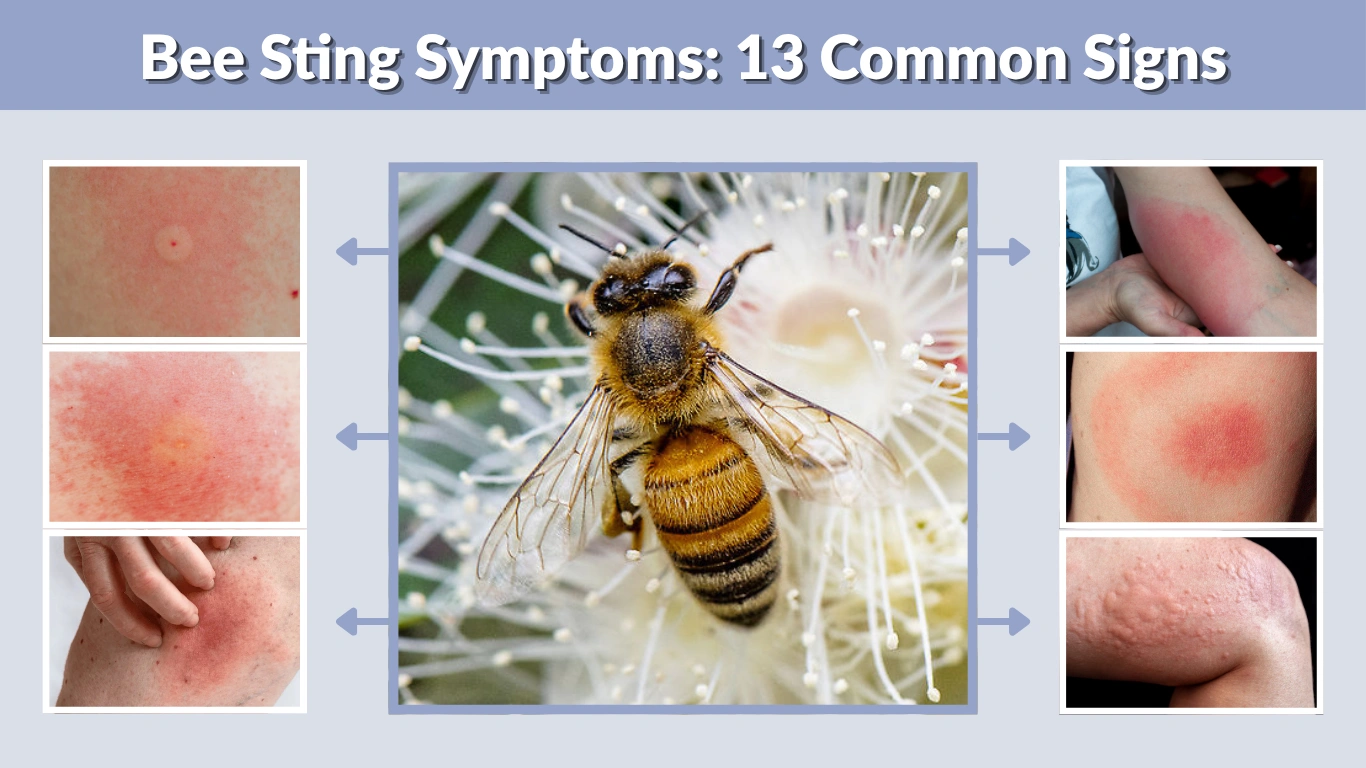
Bee stings are common during outdoor activities, and while most are mild, some can cause serious allergic reactions. Recognizing symptoms early helps you treat the sting properly and seek medical help when needed. Below are the first seven of the 13 most common bee sting symptoms, explained in detail for better understanding.
Sharp Pain and Immediate Burning
A bee sting begins with an instant, sharp pain that feels like a needle prick followed by a burning sensation. This occurs as the bee’s stinger injects venom into the skin. The pain often lasts a few minutes, though tenderness may persist for hours. For most people, this discomfort subsides on its own. However, if the sting is on sensitive areas such as the face, lips, or neck, it can be more intense and take longer to heal.
Redness Around the Sting Site
Redness is a natural response as your body reacts to the bee venom. The affected skin often appears inflamed and warm to the touch. Mild redness is normal and usually fades within 24 to 48 hours. However, if the redness spreads beyond 2–3 inches from the sting or persists longer than three days, it may signal an infection or a stronger allergic reaction that needs attention.
Swelling (Localized or Widespread)
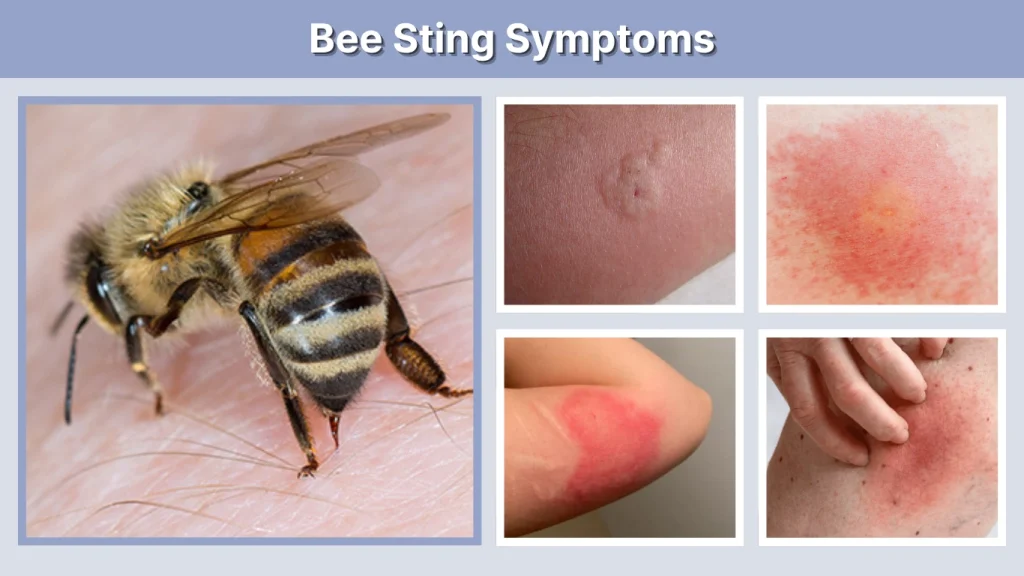
Swelling commonly develops within minutes of being stung. It may remain localized to the sting site or, in some cases, spread to nearby areas. For example, a sting on the hand might cause swelling up to the wrist or forearm. Applying a cold compress can reduce inflammation and discomfort. However, if swelling occurs on the face, eyelids, or throat, it could indicate an allergic reaction and should be treated as a medical emergency.
Itching and Irritation
Itching is one of the most persistent symptoms following a bee sting. The body releases histamines in response to the venom, triggering an itchy sensation around the sting site. Although scratching offers temporary relief, it can break the skin and lead to infection. Instead, applying calamine lotion or an antihistamine cream can help soothe the area and prevent further irritation.
Warmth and Tenderness
A bee sting often causes localized warmth as blood flow increases to fight off the venom’s effects. The skin may feel hot and tender, especially within the first 24 hours. This warmth is part of your body’s natural inflammatory response and usually resolves on its own. However, if tenderness increases instead of improving, it could suggest infection or a delayed allergic reaction that requires medical evaluation.
Hives and Skin Rash

In allergic individuals, hives may appear within minutes of being stung. These red, itchy welts can form around the sting site or spread across the body. The rash often comes with swelling and discomfort, lasting from a few hours to several days. Hives are a sign of the immune system overreacting to the bee venom. If accompanied by dizziness, throat tightness, or breathing difficulty, immediate emergency care is necessary.
Difficulty Breathing or Swallowing (Anaphylaxis)
The most severe bee sting symptom is anaphylaxis, a life-threatening allergic reaction. It causes throat swelling, wheezing, rapid heartbeat, and difficulty breathing or swallowing. Some people may also experience a sudden drop in blood pressure leading to dizziness or loss of consciousness. Anaphylaxis requires immediate treatment with an epinephrine injection and emergency medical attention. Individuals with known bee sting allergies should always carry an epinephrine auto-injector (EpiPen) and seek urgent care after using it.
These seven symptoms cover the most immediate and potentially dangerous reactions to bee stings. In the next part, we’ll explore symptoms eight through thirteen, including nausea, fever, infection, pet reactions, and delayed effects—helping you recognize every possible outcome of a bee sting for humans and animals alike.
Dizziness or Fainting
Dizziness or fainting can occur when the body experiences a severe allergic reaction to bee venom. This symptom often develops alongside a rapid drop in blood pressure, known as anaphylactic shock. Victims may feel lightheaded, weak, or lose consciousness temporarily. It’s a dangerous sign that the body is struggling to circulate oxygen effectively. Anyone experiencing dizziness after a sting should lie down immediately and seek emergency medical help, as untreated anaphylaxis can quickly become fatal.
Nausea or Vomiting
Bee venom affects the digestive system in sensitive individuals, sometimes leading to nausea, abdominal cramps, or vomiting. This reaction usually appears within minutes of a sting, especially in people allergic to bee venom or those who have suffered multiple stings. These symptoms occur when the immune system releases histamines and other chemicals into the bloodstream, causing inflammation throughout the body. Persistent vomiting can also signal an escalating allergic response that requires medical attention.
Fever or Flu-like Symptoms

In some cases, a bee sting may cause fever, fatigue, and muscle aches a day or two after the incident. These flu-like symptoms can indicate a mild immune system reaction or the beginning of an infection. If the fever exceeds 101°F (38.3°C), or if chills and fatigue worsen, medical assessment is necessary. Delayed fever can also result from multiple stings or venom hypersensitivity, especially if other allergic symptoms accompany it.
Pus or Skin Infection
If the sting site becomes increasingly painful, red, swollen, or develops pus, this suggests infection. Scratching or improper cleaning of the area allows bacteria to enter the skin, leading to cellulitis or abscess formation. Infected bee stings are often warm to the touch and may spread redness outward from the wound. Cleaning the sting site with antiseptic and applying antibiotic ointment helps prevent infection. Severe cases, however, may require oral antibiotics prescribed by a doctor.
Swelling in Pets (Dogs or Cats)
Bee stings in dogs and cats can look similar to those in humans. Common symptoms include swelling of the face, paws, or muzzle, along with licking, whining, or scratching the affected area. Some pets may develop hives or drooling, while others experience more serious allergic reactions like vomiting, diarrhea, or difficulty breathing. If a pet’s throat or tongue swells, it’s a sign of anaphylaxis and requires immediate veterinary care. Keeping antihistamine medication (under vet guidance) can be helpful in emergencies.
Delayed or Persistent Symptoms
While most bee sting symptoms appear immediately, some reactions develop hours or even days later. These delayed effects include prolonged swelling, itching, or a rash appearing several days post-sting. In rare cases, individuals may experience serum sickness, an immune condition that causes joint pain, fatigue, and fever about a week later. Persistent redness or swelling lasting more than seven days should be examined by a doctor, as it might indicate infection or ongoing allergic inflammation.
