

Beneficial insects play a vital role in healthy ecosystems and sustainable agriculture. From predators that control garden pests to pollinators that boost crop yields, these insects reduce the need for chemical pesticides and support biodiversity. This list features 21 of the most helpful insects found in gardens, farms, and wild habitats—each contributing in its own unique way to plant health, productivity, and natural balance.
1. Ladybug (Coccinellidae)
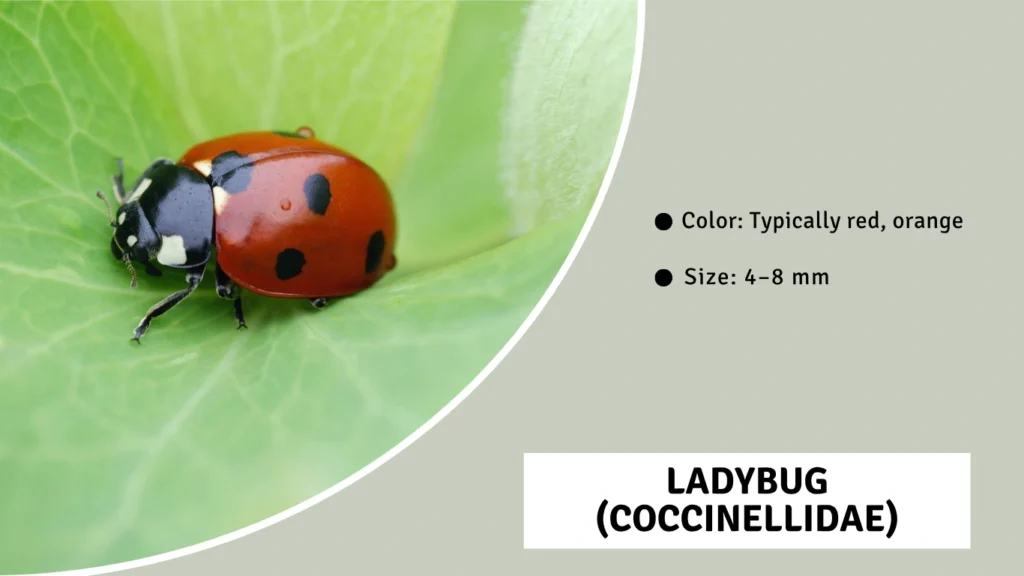
Ladybugs, also known as ladybirds or lady beetles, are one of the most well-known beneficial insects. They are highly valued in gardens and farms for their voracious appetite for plant-damaging pests, especially aphids.
Identification
- Color: Typically red, orange, or yellow with black spots
- Size: 4–8 mm
- Body Shape: Dome-shaped, rounded, and shiny
- Wings: Hardened forewings (elytra) covering membranous hindwings
- Larvae: Spiny and elongated, often black with orange markings
Habitat and Behavior
Found in gardens, fields, forests, and anywhere aphids are present. Both larvae and adults feed on soft-bodied insects, especially aphids, scale insects, whiteflies, and mites.
Benefits to Plants
A single ladybug can eat up to 50 aphids per day. Their presence naturally reduces the need for chemical pesticides and helps maintain ecological balance in gardens and crop systems.
2. Lacewing (Chrysopidae)
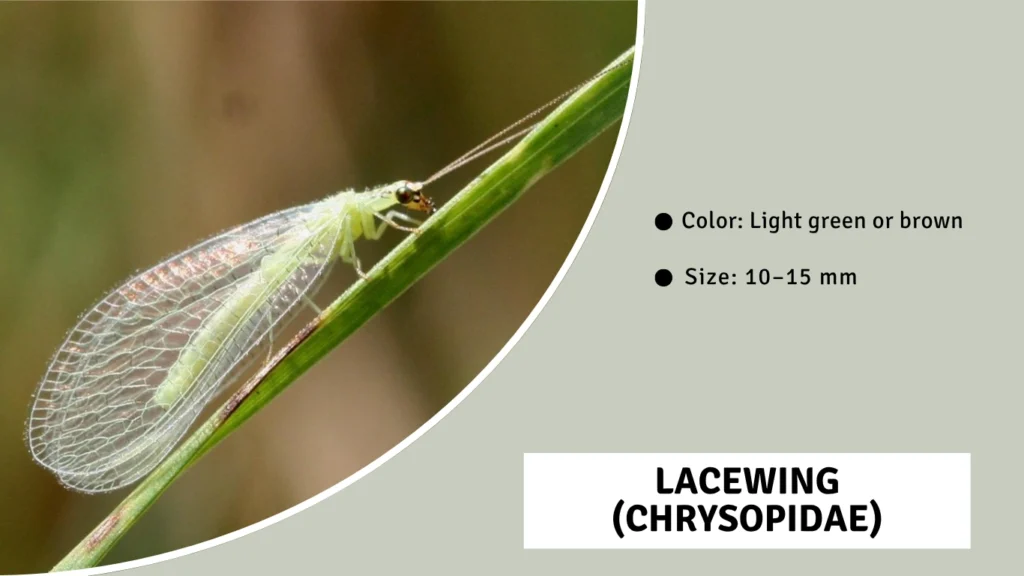
Lacewings are delicate, green or brown insects known for their lace-like wings and exceptional predatory larvae, often called “aphid lions.” They are among the top natural enemies of many soft-bodied garden pests.
Identification
- Color: Light green or brown
- Size: 10–15 mm
- Body Shape: Slender with long antennae
- Wings: Transparent, net-like, held roof-like over the body
- Larvae: Alligator-shaped with curved, piercing mandibles
Habitat and Behavior
Commonly found in gardens, meadows, and crop fields. Adults feed on nectar and pollen, while larvae actively hunt aphids, thrips, whiteflies, and mealybugs.
Beneficial Role
Lacewing larvae can consume hundreds of aphids during development, making them ideal for integrated pest management (IPM) and greenhouse use.
3. Praying Mantis (Mantodea)

The Praying Mantis is a large predatory insect known for its upright posture and raptorial front legs. It is a skilled ambush predator that feeds on a variety of garden pests and even larger insects.
Identification
- Color: Green, brown, or grayish
- Size: 5–10 cm (varies by species)
- Body Shape: Elongated with triangular head and bulging eyes
- Legs: Front legs adapted for grasping prey
- Wings: Present in adults; folded flat over the body
Habitat and Behavior
Found in gardens, shrubs, grasslands, and crops. Lies in wait and grabs passing prey including grasshoppers, flies, caterpillars, and beetles.
Benefit and Caution
While mantises eat many harmful pests, they are generalist predators and may also consume beneficial insects like bees or butterflies. Still, they contribute to natural pest control.
4. Ground Beetle (Carabidae)
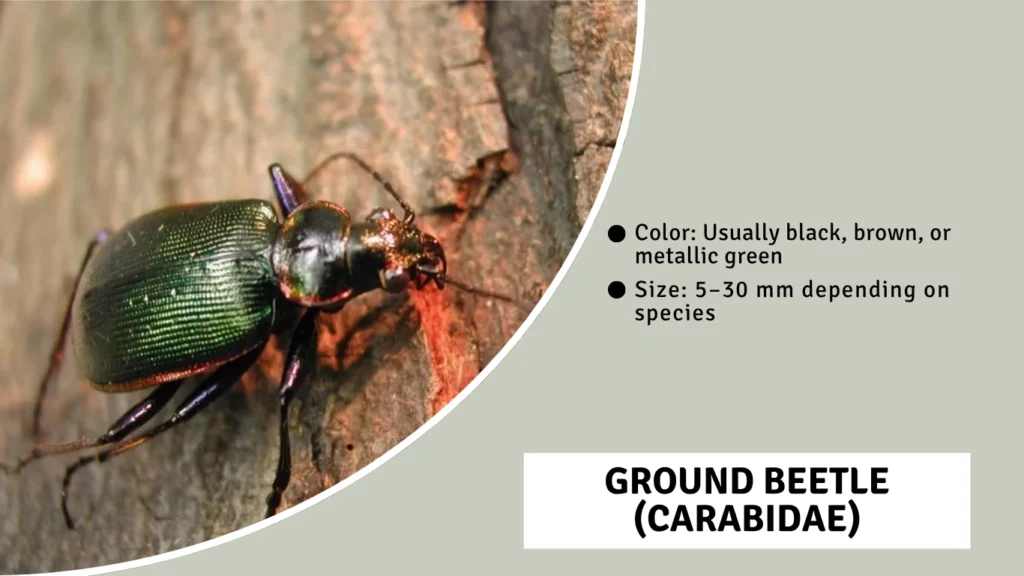
Ground Beetles are fast-moving, nocturnal predators that live in soil and leaf litter. Both adults and larvae feed on a wide variety of pests, making them highly beneficial in gardens and agricultural fields.
Identification
- Color: Usually black, brown, or metallic green
- Size: 5–30 mm depending on species
- Body Shape: Flattened, elongated body with ridged wing covers
- Legs: Long and suited for running
- Antennae: Thread-like and active
Habitat and Behavior
Found under rocks, logs, mulch, and in garden beds. Active mostly at night, they hunt caterpillars, slugs, snails, root maggots, and other soil-dwelling pests.
Role in Pest Control
Valued for their ability to suppress pests at the soil level. One ground beetle can eat its weight in pests daily, helping protect root systems and seedlings.
5. Hoverfly (Syrphidae)
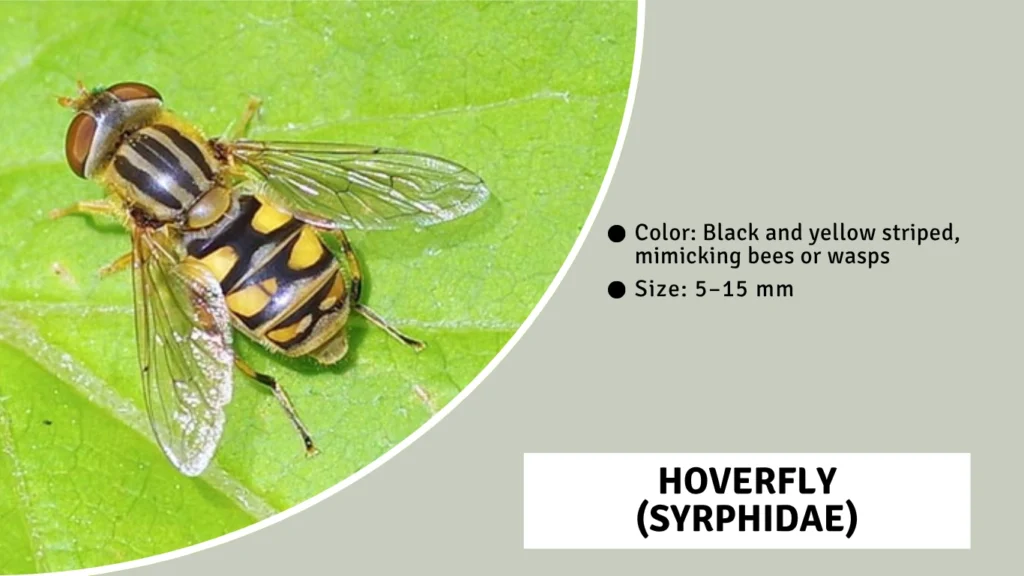
Hoverflies, also known as flower flies or syrphid flies, are important pollinators and pest controllers. Their larvae are predators of aphids, while adults feed on nectar and assist in pollination.
Identification
- Color: Black and yellow striped, mimicking bees or wasps
- Size: 5–15 mm
- Body Shape: Slender, fly-like with short antennae
- Wings: One pair (as with all true flies)
- Flight Pattern: Ability to hover in place, then dart quickly
Habitat and Behavior
Common in flower gardens, crop fields, and meadows. Adults visit flowers, while larvae feed on aphids and other soft-bodied insects.
Dual Benefit
Hoverflies provide both pest control and pollination. Their presence helps support plant health, fruit development, and reduce aphid infestations naturally.
6. Assassin Bug (Reduviidae)

Assassin Bugs are fierce predatory insects that use a sharp, curved proboscis to inject toxic saliva into their prey. They play a valuable role in controlling a wide range of harmful insects.
Identification
- Color: Varies—brown, black, red, or patterned
- Size: 10–25 mm
- Body Shape: Elongated body with a narrow “neck” behind the head
- Legs: Long with strong front legs for grabbing prey
- Mouthpart: Long, beak-like piercing-sucking proboscis
Habitat and Behavior
Found in gardens, fields, forests, and around lights at night. They ambush or stalk insect prey such as caterpillars, beetles, flies, and aphids.
Usefulness and Caution
While excellent predators, assassin bugs may bite humans if handled roughly, causing a painful sting. Still, they are highly beneficial for natural pest control.
7. Parasitic Wasp (Various Families: Braconidae, Ichneumonidae, Trichogrammatidae)
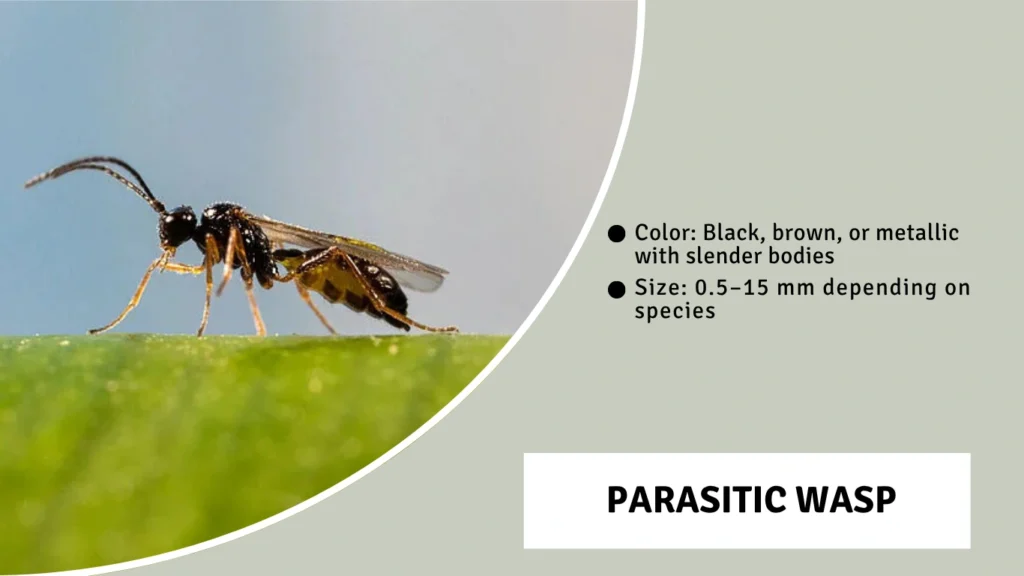
Parasitic Wasps are tiny to medium-sized insects that lay their eggs inside or on other insects. Their larvae feed on the host, eventually killing it. They are vital for controlling caterpillars, beetles, flies, and aphids.
Identification
- Color: Black, brown, or metallic with slender bodies
- Size: 0.5–15 mm depending on species
- Wings: Clear with reduced venation
- Antennae: Long and fine
- Ovipositor: Long egg-laying organ, often used to reach into hosts
Habitat and Behavior
Common in gardens, orchards, forests, and greenhouses. Many are specific to one pest species, making them ideal for targeted pest control.
Biological Control Agents
Used widely in agriculture and greenhouse systems. They help manage pests like tomato hornworms, aphids, and corn borers without harming beneficial insects or plants.
8. Tachinid Fly (Tachinidae)

Tachinid Flies are robust, hairy flies known for their parasitic larvae that develop inside pests such as caterpillars, beetles, and true bugs. They are vital natural enemies of many crop-damaging insects.
Identification
- Color: Gray, black, or brown—often resemble houseflies
- Size: 5–15 mm
- Body Shape: Stocky with bristly hairs and large eyes
- Wings: One pair, clear with strong veins
- Distinct Feature: Bristled abdomen and prominent thorax
Habitat and Behavior
Found in gardens, fields, and wooded areas. Adults feed on nectar and pollen, while females lay eggs on or near host insects.
Pest Control Benefit
Larvae invade and feed internally on pests like armyworms, squash bugs, and gypsy moths. Used in biological control programs for natural pest suppression.
9. Dragonfly (Anisoptera)
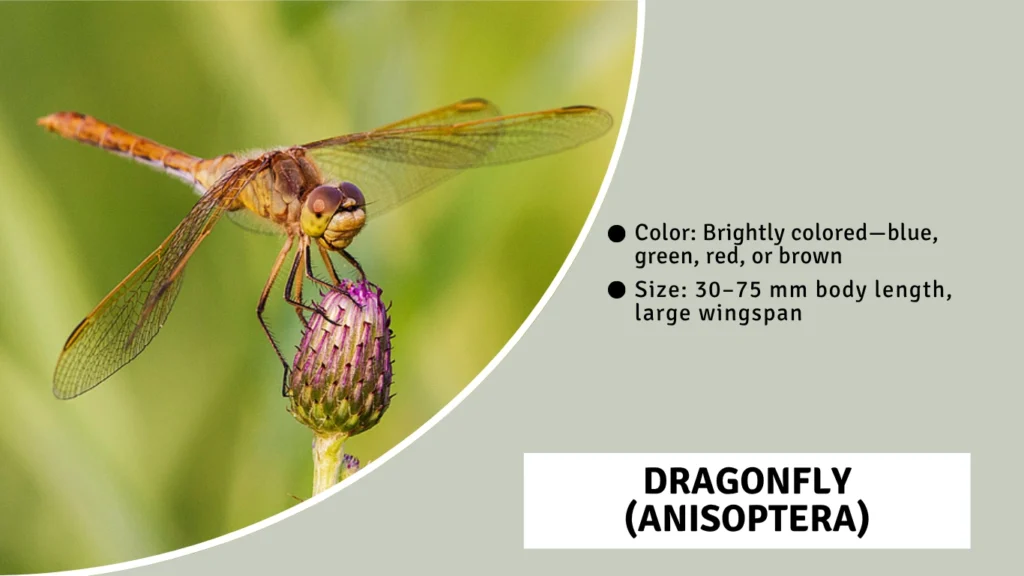
Dragonflies are fast, agile predators both in their aquatic larval stage and as flying adults. They feed on mosquitoes, flies, gnats, and other flying pests, making them beneficial in controlling insect populations near water.
Identification
- Color: Brightly colored—blue, green, red, or brown
- Size: 30–75 mm body length, large wingspan
- Wings: Two pairs, transparent and always held open at rest
- Eyes: Very large and compound, covering most of the head
Habitat and Behavior
Found near ponds, lakes, wetlands, and rivers. Adults patrol above water surfaces and gardens; nymphs live underwater and feed on aquatic insect larvae.
Ecosystem Role
Excellent mosquito control agents, with nymphs preying on larvae and adults consuming mosquitoes mid-air. Also serve as bioindicators of healthy aquatic ecosystems.
10. Damselfly (Zygoptera)

Damselflies are close relatives of dragonflies, sharing similar predatory behaviors and habitats. Though smaller and more delicate, they are equally effective in controlling flying pests like mosquitoes and gnats.
Identification
- Color: Metallic blue, green, or dull brown
- Size: 25–45 mm in body length
- Wings: Two pairs, held closed along the body when at rest
- Body Shape: Slender with a narrow abdomen
- Eyes: Large but spaced apart (unlike dragonflies)
Habitat and Behavior
Found near freshwater sources such as ponds, lakes, and wetlands. Larvae are aquatic predators, while adults feed on flying insects.
Benefits
They contribute to mosquito control and indicate healthy, well-balanced wetland ecosystems. Their graceful presence is also a visual delight in gardens and natural landscapes.
11. Spined Soldier Bug (Podisus maculiventris)

The Spined Soldier Bug is a predatory stink bug species native to North America. Unlike plant-feeding stink bugs, this one feeds on harmful pests like caterpillars and beetle larvae.
Identification
- Color: Mottled brown or tan with pointed “shoulders”
- Size: 8–12 mm
- Body Shape: Shield-shaped with a pointed spine on each shoulder
- Wings: Overlapping on back; tips form an X-pattern
- Distinct Features: Does not emit foul odor unless threatened
Habitat and Behavior
Found in gardens, crop fields, and orchards. Preys on corn earworms, cabbage loopers, and Colorado potato beetles.
Agricultural Role
Widely used in biological pest control. Its broad diet of pest species makes it a valuable ally in integrated pest management programs.
12. Robber Fly (Asilidae)

Robber Flies are aggressive predators known for catching other insects mid-air. They help control populations of flies, wasps, grasshoppers, and beetles, making them important allies in natural pest management.
Identification
- Color: Gray, brown, or black—often hairy or bristly
- Size: 10–25 mm
- Body Shape: Elongated with a tapered abdomen
- Eyes: Very large and bulging
- Mouthparts: Strong piercing-sucking proboscis
Habitat and Behavior
Found in open, sunny habitats like meadows, forest edges, and gardens. Perch on twigs or leaves and dart out to capture prey in flight.
Predatory Advantage
Capable of subduing prey even larger than themselves, robber flies inject enzymes to paralyze and digest victims, keeping pest populations in check.
13. Damsel Bug (Nabidae)

Damsel Bugs are slender, soft-bodied predators that feed on a wide range of garden pests. They are common in fields and gardens and are especially helpful in controlling caterpillars and aphids.
Identification
- Color: Light brown, gray, or tan
- Size: 6–12 mm
- Body Shape: Narrow with long legs and antennae
- Wings: Folded flat over the body
- Mouthparts: Long, curved beak for stabbing prey
Habitat and Behavior
Active in gardens, pastures, and crop fields. They move swiftly through foliage, preying on aphids, leafhoppers, mites, and insect eggs.
Role in Pest Control
Often overlooked due to their modest appearance, damsel bugs are excellent generalist predators and are compatible with other beneficial insects in integrated pest control programs.
14. Big-Eyed Bug (Geocoris spp.)

Big-Eyed Bugs are small but highly effective predators of soft-bodied pests. Named for their disproportionately large eyes, these bugs are widely distributed and play a valuable role in both gardens and crop fields.
Identification
- Color: Gray, black, or brown
- Size: 3–5 mm
- Body Shape: Oval with a short, broad head and large, bulging eyes
- Wings: Held flat over the back, forming an X pattern
- Antennae: Short and straight
Habitat and Behavior
Common in lawns, flower beds, vegetable gardens, and agricultural fields. Feeds on aphids, thrips, whiteflies, mites, and small caterpillars.
Garden Value
Big-eyed bugs are generalist predators and adaptable to various environments. They’re especially useful in arid and semi-arid regions where pest pressure can be high.
15. Minute Pirate Bug (Orius spp.)
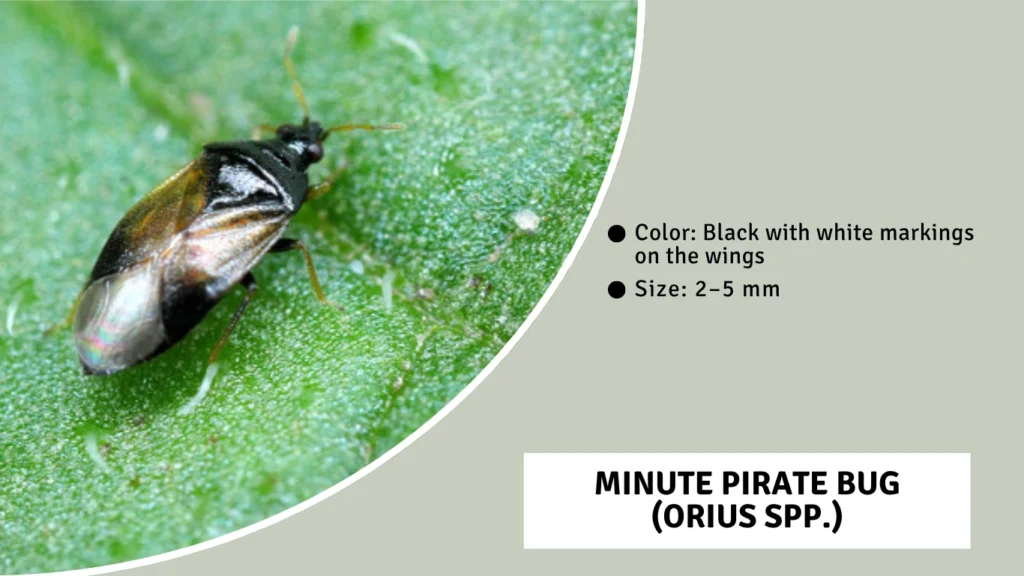
Minute Pirate Bugs are tiny, fast-moving predators that are highly valued in greenhouses and gardens. Despite their small size, they feed aggressively on a variety of insect pests.
Identification
- Color: Black with white markings on the wings
- Size: 2–5 mm
- Body Shape: Oval and flattened
- Wings: Distinctive X-pattern when folded
- Mouthparts: Needle-like, used to pierce and suck fluids from prey
Habitat and Behavior
Common in flowers, vegetables, and ornamental plants. Preys on thrips, spider mites, aphids, whiteflies, and insect eggs.
Agricultural Importance
Widely used in commercial biocontrol, especially in greenhouses. Their high reproduction rate and appetite for pests make them ideal for both organic and integrated pest management (IPM) programs.
16. Braconid Wasp (Braconidae)

Braconid Wasps are tiny parasitic wasps that lay their eggs inside or on pest insects. The larvae then consume the host from the inside, helping to naturally suppress pest populations.
Identification
- Color: Black or dark brown, sometimes with orange markings
- Size: 2–15 mm depending on species
- Body Shape: Slender with long antennae
- Wings: Clear with minimal venation
- Ovipositor: Long and needle-like in females for egg-laying
Habitat and Behavior
Common in gardens, orchards, and crop fields. Parasitizes aphids, caterpillars, beetle larvae, and other soft-bodied insects.
Natural Pest Control
Used extensively in agriculture to manage pests like tomato hornworms and cabbage worms. They are harmless to humans and a cornerstone of biological control systems.
17. Trichogramma Wasp (Trichogrammatidae)

Trichogramma Wasps are among the tiniest beneficial insects, yet they are powerful allies against pests. They parasitize the eggs of hundreds of insect species, especially moths and butterflies.
Identification
- Color: Yellowish to dark brown
- Size: Less than 1 mm (barely visible to the naked eye)
- Body Shape: Compact and wasp-like
- Wings: Short with few veins and long fringes
- Behavior: Locates pest eggs using smell and visual cues
Habitat and Behavior
Used widely in greenhouses, farms, and gardens. Females lay their eggs inside pest eggs, preventing hatching.
Biological Control Role
Target pests like corn borers, armyworms, and codling moths. Mass-released in agriculture to protect crops naturally, with no harm to people, pets, or plants.
18. Honeybee (Apis mellifera)
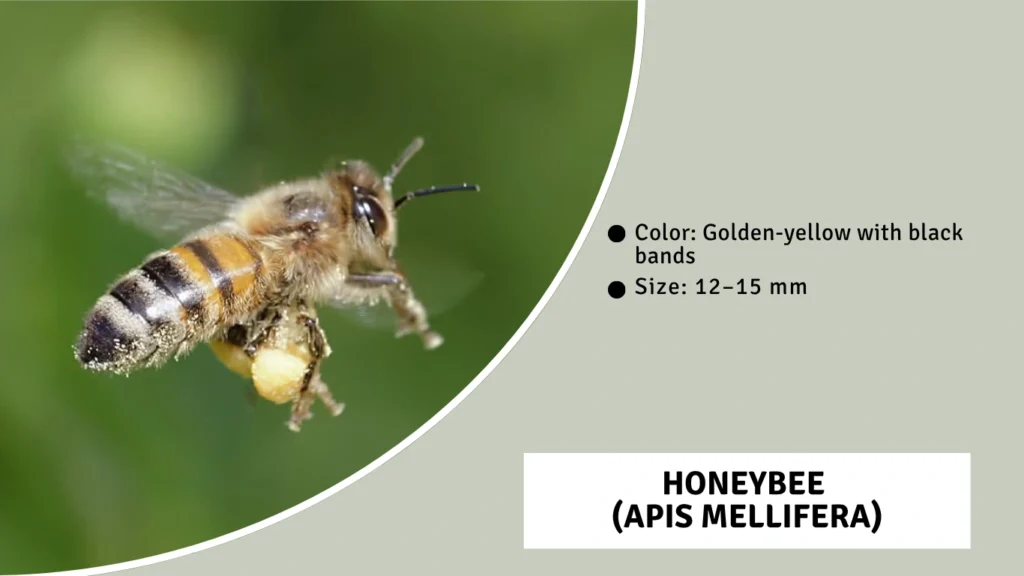
Honeybees are essential pollinators for both wild plants and agricultural crops. While not predators, their role in fertilizing fruits, vegetables, and flowers makes them one of the most important beneficial insects on Earth.
Identification
- Color: Golden-yellow with black bands
- Size: 12–15 mm
- Body Shape: Fuzzy, robust with a defined waist
- Wings: Two pairs, translucent
- Other Features: Pollen baskets on hind legs
Habitat and Behavior
Live in colonies inside hives (wild or managed). Forage on flowers during the day to collect nectar and pollen.
Ecological and Agricultural Role
Responsible for pollinating over 80% of flowering crops. Their contribution boosts yields of apples, almonds, berries, melons, and more. Honeybees also produce honey, wax, and royal jelly.
19. Bumblebee (Bombus spp.)
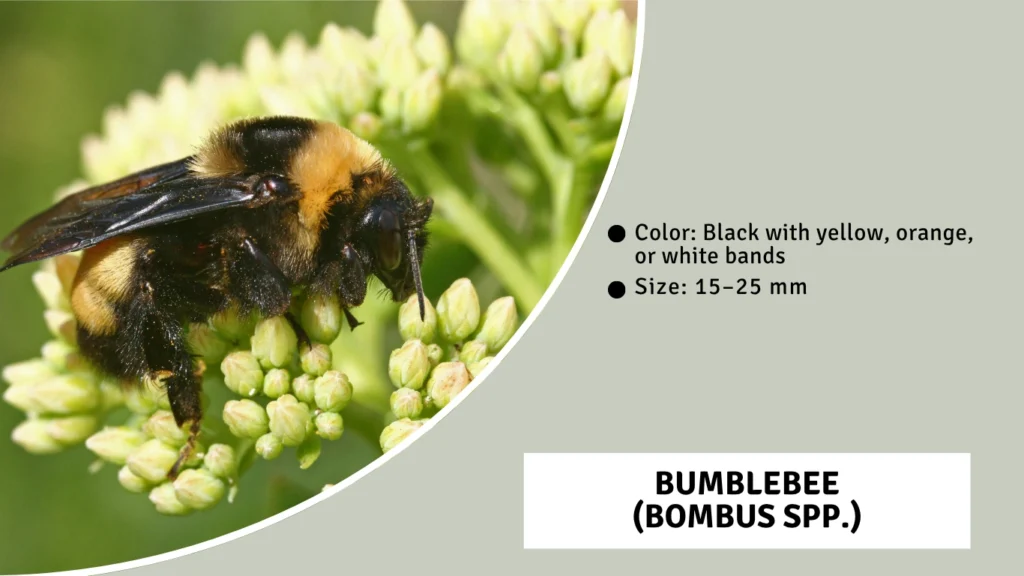
Bumblebees are large, fuzzy pollinators that thrive in temperate climates. They are vital for pollination, especially in cool or cloudy weather when honeybees are less active.
Identification
- Color: Black with yellow, orange, or white bands
- Size: 15–25 mm
- Body Shape: Round and hairy
- Wings: Short, strong, and rapid-beating
- Sound: Loud buzz when flying
Habitat and Behavior
Nest in underground burrows, grassy tussocks, or cavities. Active in gardens, meadows, and farms, visiting a wide range of flowers.
Benefits to Plants
Excellent pollinators of tomatoes, peppers, blueberries, and clover. Their “buzz pollination” technique helps release pollen from deep flower structures, enhancing crop fertility and fruit development.
20. Leafcutter Bee (Megachile spp.)
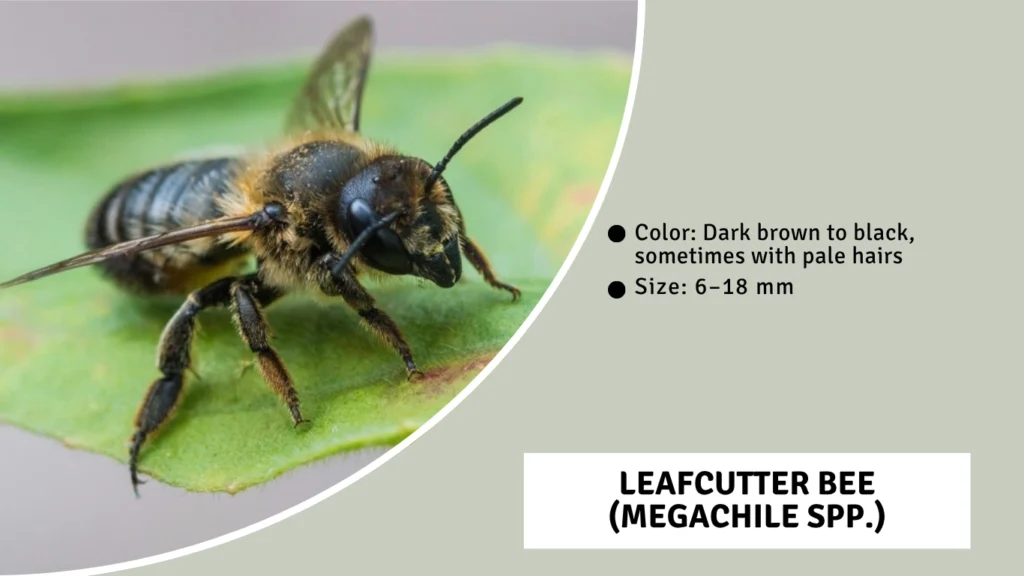
Leafcutter Bees are solitary pollinators known for cutting neat, circular pieces from leaves to construct their nests. They are highly efficient pollinators, especially for alfalfa and other legumes.
Identification
- Color: Dark brown to black, sometimes with pale hairs
- Size: 6–18 mm
- Body Shape: Stocky with a large head and strong mandibles
- Wings: Clear with a slight sheen
- Pollen-Carrying: Pollen is carried on the underside of the abdomen, not on legs
Habitat and Behavior
Nest in hollow stems, wood holes, or bee blocks. Found in gardens, farms, and meadows. Non-aggressive and solitary.
Role in Pollination
Excellent for pollinating vegetables, fruits, and native wildflowers. Their leaf-cutting behavior causes minimal damage and poses no harm to plant health.
21. Mason Bee (Osmia spp.)
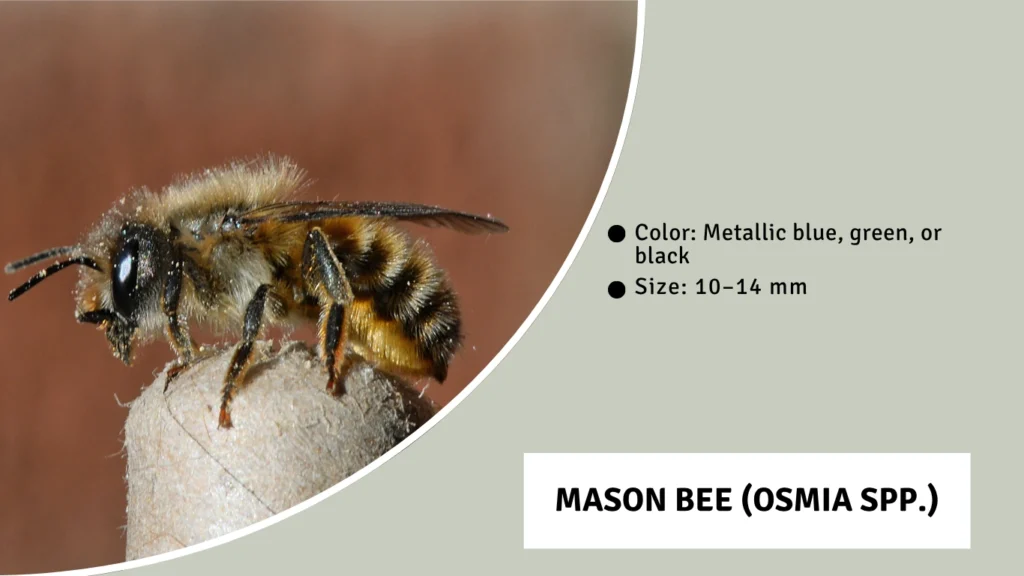
Mason Bees are solitary bees named for their habit of using mud to build nests. They are incredibly effective pollinators—especially in early spring—and are far more efficient than honeybees on a per-visit basis.
Identification
- Color: Metallic blue, green, or black
- Size: 10–14 mm
- Body Shape: Robust and slightly hairy
- Wings: Transparent and strong
- Pollen-Carrying: Pollen is carried on the underside of the abdomen
Habitat and Behavior
Nest in natural cavities, holes in wood, or man-made bee houses. Active during cool spring months when many fruit trees bloom.
Agricultural Value
Pollinate apples, cherries, almonds, and other early-blooming crops. Because they are solitary and gentle, they are favored for home gardens and orchard pollination projects.
